Category: TRAI

  • “DoT should regulate carriage and I&B can look at content”: Rahul Khullar

    “DoT should regulate carriage and I&B can look at content”: Rahul Khullar

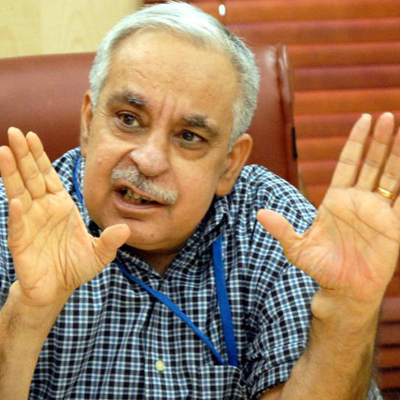
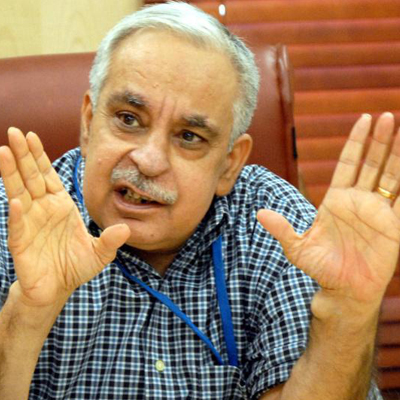
    NEW DELHI: The Telecom Regulatory Authority of India (TRAI) chairman Rahul Khullar has once again spoken loud and clear. The 62-year-old Khullar has proposed that while the Department of Telecom should exclusively focus its attention on carriage and carriage related issues while the Information and Broadcasting Ministry (I&B), considering its history, should be only regulating content.


    “And I think that is the way we need to go,” he said while addressing the gathering at the recently concluded CII Big Summit 2014.


    He also came down heavily on the politicians and political parties. He said, “The Supreme Court through its ruling has clearly stated that airwaves are not the monopoly of the state.”


    So, while Prasar Bharati must exist and it must be independent; politicians, governments, state governments and their organs have “absolutely no business whatsoever to be in broadcasting space,” he announced and suggested that the government must announce this as an integral part of the National Media Policy.


    Khullar also gave his perspective on the other components of the National Media Policy. “Firstly, there must be a clear articulation that we want a free media, unhampered and unrestricted by the government in any way possible,” he said while also suggesting that the media itself must be subject to safeguards. “It could come from other forms of independent regulators. You cannot have an institution which has rights but no duties,” he added.  


    Secondly, there must be commitment in National Media Policy to uphold plurality of views and opinion. “And this must be a commitment,” he said.


    Thirdly, time has come that we start talking about infrastructure. “If this National Media Policy is actually going to work, are we or are we not going to be in a digitised world? We cannot be flipping and flopping the dates as we send out wrong signals to the rest of the world about your credible commitment towards any policy,” he stated.


    Khullar also pointed out the issues with spectrum availability. “It is a nightmare to deal with ISRO. The organisation neither gives you a transponder nor does it allow you to get a transponder of your own,” he informed.  
  • TRAI extends date for stakeholders’ views on AGR and on licensing of NSOs and SDOs

    TRAI extends date for stakeholders’ views on AGR and on licensing of NSOs and SDOs

    NEW DELHI: The Telecom Regulatory Authority of India (TRAI) has extended till 7 October the date for written submissions on a pre-consultation paper on ‘delinking of license for networks from delivery of services by way of virtual network operators’.


    In this paper, stakeholders have been asked by the TRAI to give their views on their definition of adjusted gross revenue.


    The paper is on what the model of agreement is between network service operator (NSO) license and service delivery (SDO) operator license created under the draft National Telecom Policy 2011 will be.


    It has asked if this would be left to the market or regulated like mandating NSOs to provide services to SDO licensees and mandating charges etc.


    In its policy, the Department of Telecom (DoT) had said that NSOs would be licensed to set up and maintain converged networks capable of delivering various types of services such as voice, data, video, broadcast, IPTV, VAS etc in a non-exclusive and non-discriminatory manner.


    SDOs would be licensed to deliver the services such as teleservices (voice, data, video), internet/broadband, broadcast services, IPTV, VAS and content delivery services etc.


    In its latest reference to TRAI, the DoT has envisaged the entry of virtual network operators (VNOs) for delivery of services by delinking them from licensing of networks.


    VNOs are SDO licensees who do not own the underlying network(s) but rely on the network and support of the infrastructure providers, telecommunications operators (who are owner(s) of towers, radio access networks, spectrum etc) for providing telecom services to end users/customers. As these operators do not have their own networks, they are termed as VNOs. They can provide any telecom service being provided by network providers viz teleservices (voice, data, video), internet/broadband, IPTV, VAS, content delivery services etc. The most popular among VNOs are mobile virtual network operators (MVNOs).


    India is a diverse country, large in size and had very poor telecom networks when the Government decided to open the sector to private participation. Therefore, in order to ensure development and proliferation of telecom infrastructure across the length and breadth of the country, the Government took a conscious decision that all TSPs would have their own network for providing services to their customers. To meet this end, each TSP was mandated to comply with certain roll-out obligations and even sharing of infrastructure was not permitted initially. To encourage tower sharing amongst operators, the Government initiated a project ‘Mobile Operator Shared Tower (MOST)’ in March 2006, and later on, in April 2008 sharing of active infrastructure, except spectrum, was also permitted.


    At present, most access providers are integrated operators who have their own infrastructure for both access and long distance services. Having already established their networks, the issue to deliberate upon is whether delinking the network from service delivery will have any effect on the working of these TSPs. The new licence regime has come into existence only about a year back.


    In the proposed licencing framework, based on the VNO model, one issue could be whether the existing TSPs, will have to obtain an NSO licence or both NSO and SDO licences on migration to the new licensing regime.


    A linked issue for deliberation will be about the necessity of changing the licensing regime at all, at such a short interval since unified licencing (UL) was introduced.


    At present, there are 7-13 licensees in various service areas. Therefore, another issue for deliberation could be about the need for introduction of more competition in the form of VNOs.


    Apart from access services, for other services like V-SAT, PMRTS/CMRTS, GMPCS, it needs to be deliberated whether any business case/revenue potential exists for a standalone virtual operator for these services.


    In India, the TSPs have infrastructure, including spectrum, which is just about sufficient to cater to their own requirements. Would they really be able to spare their infrastructure for new SDOs, TRAI wants to know.


    It can also be deliberated whether the reference of DoT envisaged an entirely new licensing regime or could be considered to mean that a chapter may be added to the existing UL for facilitating licenses to the VNO.

  • Govt sending wrong signals to foreign investors by delaying digitisation: Rahul Khullar

    Govt sending wrong signals to foreign investors by delaying digitisation: Rahul Khullar

    MUMBAI: Recently, a letter written by Telecom Regulatory Authority of India (TRAI) chairman Rahul Khullar pointed out that the government was committing a mistake by extending the deadline for digitisation. Khullar has many more points to present on the regulator and the industry.


    In a conversation with Bloomberg, he said that his views on digitisation were very clear. “It is a very bad decision to defer it. It is bad for digital India, broadband delivery and not in public interest,” he said.


    While the government says that its main aim is to push indigenous production of seven crore set top boxes (STBs) in two years, Khullar feels that this is a ‘pipe dream.’


    Khullar said that last year several investors met him and conveyed that it was a miracle that they managed to get two crore boxes digitised. They also asked that by when will digitisation be completed because they are desperately interested in investments in cable. “By delaying digitisation, you are sending a signal to foreign investors that India isn’t ready for investment yet. This does great harm to public credibility,” he said.


    Meanwhile, rumours are afloat that the government is mulling creation of a ‘super regulator’ that will oversee the communications sector. Khullar believes that it is necessary to keep content and carriage separate. “If your aim is to strengthen TRAI then you don’t need a super regulator, just empower the existing one. But if it is to regulate carriage and content, this is an experiment that hasn’t succeeded in the world,” he said.


    According to him, issues concerning content immediately ‘stir up a hornet’s nest’ that usually involves freedom of speech. “My own sense would be to keep carriage and content separate and ensure that the content regulator has nothing to do with the government. Then you have some sort of fighting chance of regulatory survival,” he said.


    Broadband is a growing medium of revenue that is catching the attention of all in media space. The TRAI is due to come out with a paper on ‘policy issues relating to broadband’ in the next 10 days. “Broadband and convergence is still five to 10 years away. If we are to deliver broadband we need to know how to do it in the cheapest way, who should be involved, what to be done in terms of application and software development,” he highlighted. It will focus on building infrastructure and delivering content.

  • Not much growth in broadband in July: TRAI

    Not much growth in broadband in July: TRAI

    NEW DELHI: Broadband subscribers grew by a mere 2.87 per cent in the month of July to 70.81 million in the country.


    The Telecom Regulatory Authority of India (TRAI) said the number of subscribers at the end of June were 68.83 million.


    For the second month in a row, the largest growth was seen in mobile device users (Phones + Dongles) with a growth of 3.56 per cent. The change in wired subscribers was a mere 0.45 per cent and the growth in fixed wireless (Wi-Fi, Wi-Max, Point-to-Point Radio & VSAT) was 1.54 per cent.


    The top five broadband service providers constitute 85.12 per cent market share of total broadband subscribers at the end of July. They are BSNL (18.14 million), Bharti (15.61 million), Vodafone (11.23 million), Idea Cellular (9.06 million) and Reliance Communications Group (6.23 million).


    The top five Wired Broadband Service providers are BSNL (9.98 million), Bharti (1.40 million), MTNL (1.13 million), Beam Telecom (0.40 million) and YOU Broadband (0.40 million).


    The top five Wireless Broadband Service providers are Bharti (14.21 million), Vodafone (11.23 million), Idea Cellular Ltd (9.06 million), BSNL (8.16 million) and Reliance Communications Group (6.12 million).


    Wireless subscribers with less than 1MB data usage in a month are not considered as internet/broadband subscribers by Reliance Communication Group and Idea Cellular.

  • TRAI extends deadline for pre-consultation paper on standards of QoS amendments

    TRAI extends deadline for pre-consultation paper on standards of QoS amendments

    MUMBAI: Nearly a week after issuing the notification that the Telecom Regulatory Authority of India (TRAI) is looking at making amendments to the Standards of Quality of Service (digital addressable cable TV systems) (amendment) regulation 2012 (12 of 2012) for ensuring better billing practices by MSOs and LCOs, it has decided to extend the date for receiving comments from stakeholders.


    The earlier deadline of 8 September 2014 has been extended to 12 September 2014 on the request of stakeholders. However it states that no further extensions will be entertained.


    The amendment, when approved, will come into effect 30 days from the date of publication and will be called Standards of Quality of Service  (digital addressable cable TV systems) (amendment) Regulations 2014.


    TRAI says that the main purpose of issuing this new amendment was because it kept receiving complaints from subscribers about not getting proper bill and receipt. The regulator feels that financial disincentives should be levied on non-compliant MSOs and LCOS, similar to how it happens in the telecom field where this action has yielded result.

  • TRAI extends deadline to respond to consultation paper on AGR

    TRAI extends deadline to respond to consultation paper on AGR

    MUMBAI: The Telecom Regulatory Authority of India (TRAI) has given a fresh lease of life to stakeholders to respond to its consultation paper on ‘Definition of Revenue Base (AGR) for the Reckoning of Licence Fee and Spectrum Usage Charges.’


    The extension has come after some stakeholders  requested for additional time of two weeks to complete the discussions among themselves to develop a unified approach by resolving various contentious issues.


    The  Authority has  considered their request and   decided  to  extend the  last date for  submission of  written comments to  15 September and   for counter  comments,  if  any,   to  22 September. TRAI has also clarified that there is no change in the date of the Open House Discussion on the consultation paper and will be held on 1 October in New Delhi.  


    It can be noted that the Authority had issued the consultation paper on  ‘Definition of Revenue Base  (AGR) for the  Reckoning of Licence  Fee and Spectrum Usage Charges’ on 31 July 2014 inviting comments  by  1 September and counter-comments by  8 September.

  • TRAI asks stakeholders to give views on AGR

    TRAI asks stakeholders to give views on AGR

    NEW DELHI: The Telecom Regulatory Authority of India (TRAI) has asked the stakeholders to give their views on their definition of adjusted gross revenue (AGR).


    In a pre-Consultation Paper on ‘Delinking of license for networks from delivery of services by way of virtual network operators,’ TRAI has also sought the views by 17 September on what will the model of agreement be between Network Service Operator (NSO) license and Service Delivery Operator license created under the draft National Telecom Policy 2011.


    It has asked if this would be left to the market or regulated like mandating NSOs to provide services to SDO licensees and mandating charges etc.


    In its Policy, Department of Telecom had said NSOs would be licensed to set up and maintain converged networks capable of delivering various types of services e.g. voice, data, video, broadcast, IPTV, VAS etc. in a non-exclusive and non-discriminatory manner.


    SDOs would be licensed to deliver the services e.g. teleservices (voice, data, video), internet/broadband, broadcast services, IPTV, Value Added Service and content delivery services etc.


    In its latest reference to TRAI, the DoT has envisaged the entry of Virtual Network Operators (VNOs) for delivery of services by delinking them from licensing of networks.


    Virtual Network Operators (VNOs) are SDO licensees who do not own the underlying network(s) but rely on the network and support of the infrastructure providers, telecommunications operators (who are owner(s) of towers, radio access networks, spectrum etc.) for providing telecom services to end users/customers. As these operators do not have their own networks, they are termed as Virtual Network Operators. VNOs can provide any telecom service being provided by the network providers viz. tele-services (voice, data, video), internet/broadband, IPTV, Value Added Services, content delivery services etc. The most popular among VNOs are Mobile Virtual Network operators(MVNOs).


    India is a diverse country, large in size and had very poor telecom networks when the government decided to open the sector to private participation.


    Therefore, in order to ensure development and proliferation of telecom infrastructure across the length and breadth of the country, the government took a conscious decision that all TSPs would have their own network for providing services to their customers. To meet this end, each TSP was mandated to comply with certain roll-out obligations and even sharing of infrastructure was not permitted initially. To encourage tower sharing amongst operators, the government initiated a project ‘Mobile Operator Shared Tower (MOST)’ in March 2006, and later on, in April 2008 sharing of active infrastructure, except spectrum, was also permitted.


    At present, most access providers are integrated operators who have their own infrastructure for both access and long distance services. Having already established their networks, the issue to deliberate upon is whether delinking the network from service delivery will have any effect on the working of these TSPs. The new licence regime has come into existence only about a year back.


    In the proposed licencing framework, based on the VNO model, one issue could be whether the existing TSPs, will have to obtain a NSO licence or both NSO & SDO licences on migration to the new licensing regime.


    A linked issue for deliberation will be about the necessity of changing the licensing regime at all, at such a short interval since UL was introduced.


    At present, there are 7-13 licensees in various service areas. Therefore, another issue for deliberation could be about the need for introduction of more competition in the form of VNOs.


    Apart from access services, for other services like V-SAT, PMRTS/CMRTS, GMPCS, it needs to be deliberated whether any business case/revenue potential exists for a standalone Virtual Operator for these services.


    In India, the TSPs have infrastructure, including spectrum, which is just about sufficient to cater to their own requirements. Would they really be able to spare their infrastructure for new SDOs, TRAI wants to know.


    It can also be deliberated whether the reference of DoT envisaged an entirely new licensing regime or could be considered to mean that a chapter may be added to the existing UL for facilitating licenses to the VNO.

  • ‘Super Regulator’ to replace TRAI, TDSAT

    ‘Super Regulator’ to replace TRAI, TDSAT

    MUMBAI: After scrapping the planning commission, the Modi government is thinking about clipping the wings of the Telecom Regulatory Authority of India (TRAI).


    According to a CNBC TV-18 story, the government is planning on a new super regulator for the communications sector. To be called Communications Commission, it will not only retain powers that TRAI enjoys, but also look into other matters concerning other regulators as well like Censor Board, some clearances from Ministry Of Environment, Competition Commission of India and the Department of Telecommunications.


    Moreover, the bill will also replace the Telecom Disputes Settlement Appellate Tribunal (TDSAT) with a new appellate body called the Communications Appellate Tribunal, which will have three members and a chairman. According to the report, this tribunal will also have the power to oversee dispute resolution.


    The communications bill seeks to replace all old and redundant legislations which include the Telegraph Act and TRAI Act. The Bill proposes a six member regulator with one chairman, who will have five year tenure. The member will include one each from sectors like telecom, broadcasting, finance, management, accountancy and either law or consumer affairs.

  • One more week to respond to TRAI paper on resolving issue of the controversial AGR for broadcast, telecom

    One more week to respond to TRAI paper on resolving issue of the controversial AGR for broadcast, telecom

    NEW DELHI: The Telecom Regulatory Authority of India (TRAI) has decided to give one last opportunity to stakeholders to respond to its consultation paper on a review of the definition of Gross Revenue (GR) and the permissible deductions to arrive at Adjusted Gross Revenue (AGR) in the context of the National Telecom Policy 2012 in view of a multitude of cases by both telecom and broadcast operators.


    Stakeholders have been given one extra week and can respond to the 24 questions raised by the Authority by 8 September with counter comments if any by 15 September. This is being done in view of the important issues involved, but TRAI said no further opportunities would be given.


     The Authority will also examine the components of GR, AGR and minimum presumptive AGR, rates of licence fee and spectrum usage charges, formats of statements of revenue and licence fee, and audit and verifiability of revenue and licence fee.


    The paper on ‘Definition of Revenue Base (AGR) for the Reckoning of Licence Fee and Spectrum Usage Charges’ will also examine the changes made in the licensing regime, the transition from the administrative allocation regime towards market-determined prices for spectrum, and the conclusion of tenure of many licences. The paper provides the relevant background information on the subject covering various issues involved.


    On the definition of AGR specifically, the Authority had in 2012 recommended that only the revenue from the wireless services shall count towards AGR calculation for the limited purpose of calculation of Spectrum Usage Charges (SUC) that would continue to be determined on service area basis, and should be levied only in respect of those service areas where the Licensee holds any access spectrum.


    TRAI wants to know whether there is a need to review/revise the definition of GR and AGR in the different licences at this stage; the guiding principles for designing the framework of the revenue sharing regime; and whether the rate of licence fee (LF) be reviewed instead of changing the definitions of GR and AGR, especially with regard to the component of USO levy In the interest of simplicity, verifiability, and ease of administration.


    The paper also wants to know whether the revenue base for levy of licence fee and spectrum usage charges include the entire income of the licensee or only income accruing from licenced activities if the definitions are to be reviewed/revised.


    It has asked whether LF be levied as a percentage of GR in place of AGR in the interest of simplicity and ease of application, and should the revenue base for calculating LF and SUC include ‘other operating revenue’ and ‘other income’.


    The government prepared a draft licence agreement for International Long Distance (ILD) services in September 2000 containing a provision that LF was payable as a percentage of revenue. For the Public Mobile Radio Trunk Service (PMRTS) too, the revenue share regime was made applicable from 1 November 2001.


    The definition of AGR has been litigated since 2003. TSPs questioned the inclusion of various components of revenue in the reckoning of AGR as well as the legality of the definition before TDSAT. In 2006, TDSAT, after noting that revenue from non-licensed activities needed to be excluded from the reckonable revenue, asked TRAI to make recommendations on the inclusion or exclusion of the disputed items in the AGR. TRAI made its recommendations on 13 September 2006 and the Tribunal gave its final order in the matter on 30 August 2007 after accepting most (but modifying some) of TRAI’s recommendations.


     In the course of finalising the recommendations of the Authority on the reference from TDSAT, the views of DoT were obtained by the Authority through its representative and incorporated in the “Recommendations on components of Adjusted Gross Revenue” dated 13 September 2006. The Authority was informed that the basic rationale adopted by the government while formulating the definition of AGR was that it should be easy to interpret – so as to pose fewer problems in application and less disputes and litigations, and to make it less prone to reduction in LF liability by way of accounting jugglery; and it should be easy to verify.


    The TDSAT’s judgment of 30 August 2007 was taken in appeal by DoT to the Supreme Court and was set aside by its judgment on 11 October 2011 on the grounds, among others, that TDSAT had no jurisdiction to decide the validity of the terms and conditions of the licence including the definition of AGR incorporated in the licence agreement. It was for DoT – and not TRAI and TDSAT – to take a final decision on the definition of AGR. The Supreme Court also held that a licensee can raise a dispute about the computation of AGR relating to a particular demand and that TDSAT can then examine whether the demand was in accordance with the licence agreement and the definition of AGR. 


    The judgment of the Supreme Court settled important points of law and has clarified the nature of the contractual relationship between the government as licensor and the TSPs. The judgment also laid down the parameters of institutional responsibility in arriving at the contractual terms and conditions; it held that: Litigation regarding the computation of LF continues before the TDSAT in the case of individual demands made on TSPs. It has also been reported that writ petitions re-agitating the revenue share definition have been filed by TSPs in different High Courts.

  • Community Radio Stations to get extension for up to 5 years at a time

    Community Radio Stations to get extension for up to 5 years at a time

    NEW DELHI: Even as the term of permission for community radio stations (CRS) should continue to be five years, the extension should also be for five years at a time.


    In recommendations made relating to community radio stations in the country, the Telecom Regulatory Authority of India (TRAI) has said CRS seeking extension should submit an application and verification to the terms and conditions of the permission in the fourth year of operation.


    CRSs should be allowed to broadcast news and current affairs content, sourced exclusively from AIR, in its original form or translated into the local language/ dialect. It will be the responsibility of the CRS permission holder to ensure that the news is not distorted during translation.


    CRSs should be allowed to take advertisements from other sources to encourage self-sustainability and enhance its relevance to the community, and the stipulation that Directorate of Advertising and Visual Publicity approved rates are their lowest rates and cannot be offered to any other agency should be relaxed.


    The Information and Broadcasting Ministry should develop a performance evaluation format in consultation with the stakeholders and place it in the public domain.


    CRSs applying for extension beyond 10 years should submit the performance evaluation report, duly filled in, along with their application one year before end of the permission period. The application for extension will be considered along with other fresh applications, if any.


    The same procedure will be adopted for all applications for extension beyond 10 years of operation.


    The duration of advertisement on a CRS should continue to be five minutes per hour.


    The Ministry should establish an online ‘single window’ system that will reengineer and integrate the entire process from the stage of filing application with MIB; grant of the Wireless Operating Licence (WOL) by WPC and signing of the GOPA. The online system must provide feedback on stage and status of the application in accordance with the time-lines already prescribed by the Ministry.


    The National Disaster Management Authority in consultation with the I& B Ministry and WPC establish detailed guidelines for use of CRSs in disaster management operations. The guidelines should include the procedure to be followed in case relocation of an existing CRS is required or for the establishment of a new CRS in the disaster affected region.


    As on 1 July 2014, 200 Grant of Permission Agreements (GOPA) have been signed. Of these 170 CRSs are operational 101 CRSs of which are run by educational institutes and universities, six by Krishi Vigyan Kendras and the rest 63 by civil society organisations. Currently, CRSs in rural and remote areas are generally being run by NGOs and campus CRSs by educational institutions mostly in urban and semi-urban areas.


    The TRAI recommendations are in response to a letter sent by the government on 8 January. As validity of GOPA for some of the CRSs had already expired on completion of five years, TRAI suggested some interim measures on 23 January. TRAI also issued a Consultation Paper on the subject on 21 May.


    The government announced its policy for the grant of permission for setting up of CRS in December 2002. Under those guidelines well established educational institutions, including IITs and IIMs, were permitted to setup CRSs.


    In December 2006, the government revised the policy for CRSs, bringing non-profit community based organisations, apart from other educational institutes, within its ambit. Non-profit organisations like civil society and voluntary organisations, state agriculture universities (SAU), Indian council of agricultural research (ICAR) institutions, Krishi Vigyan Kendras, registered societies and autonomous bodies and public trusts registered under Societies Act or any other such Act relevant for the purpose, were permitted to operate CRSs.


    The period of permission was increased three years to five years. All the operational CRS permission holders under the 2002 guidelines were permitted to migrate to the new policy regime without any financial implications.