Category: TRAI

  • MSOs facing problems in signing interconnect deals with b’casters to inform TRAI by 24 August

    MSOs facing problems in signing interconnect deals with b’casters to inform TRAI by 24 August

    NEW DELHI: With just over four months left for implementation of Phase III of the Digital Addressable System (DAS) for cable operators, the Telecom Regulatory Authority of India (TRAI) has asked multi-system operators and broadcasters to expedite signing of inter-connect agreements.


    Apart from pointing out that it had placed on its website a standardized form for this, TRAI stressed that the rules provide that an agreement has to be signed by registered MSOs with broadcasters within 60 days of receiving a request.  


    TRAI said it had notified a comprehensive regulatory framework encompassing interconnection, quality of service, consumer complaint redressal regulation and tariff orders for implementation of   DAS.


    The MSOs who have been granted registration for providing cable TV services through DAS are required to enter into interconnection agreements with pay TV broadcasters for re-transmission of pay TV channels to subscribers.


    The Regulatory framework for DAS provides that every broadcaster shall provide the signals of TV channels to an MSO in accordance with its reference interconnect offer or as may be mutually agreed, within 60 days from the date of receipt of the request.


    The Authority said that in case the request for providing signals of TV channels is not agreed to, the reasons for such refusal to provide signals will be conveyed to the person making a request within 60 days from the date of request. 


    The MSOs who have approached pay TV broadcasters for providing signals of TV channels in accordance with the provisions of the interconnection regulations but have not been able to enter into interconnection agreements even after the passage of 60 days from the date of making request and also not received the reasons for not entering into interconnection agreement from the broadcaster may write to TRAI by 24 August through e-mail at das@trai.gov.in for initiating action in such cases according to the TRAI Act.


    As the cutoff date for Phase-III areas – 31 December – is fast approaching, the registered MSOs were advised by TRAI to make a written request to the broadcasters of pay channels for provisioning of the signals of TV channels as per their business requirement, so that they get signals of pay TV channels well before the cutoff date.


    The Authority said it had taken a number of initiatives to facilitate timely signing of interconnection agreements between broadcasters and MSOs. The Authority and broadcasters have uploaded standardised application form and contact details on their respective websites. For the convenience of the stakeholders, the details have also been uploaded on TRAI website.

  • TRAI open house: Broadcasters root for tariff distinction between subscribers

    TRAI open house: Broadcasters root for tariff distinction between subscribers

    MUMBAI: With an aim to get the broadcasters’ viewpoint on tariff issues related to commercial subscribers, the Telecom Regulatory Authority of India (TRAI) held an open house discussion in Delhi on 18 August.


    While welcoming the open house initiative held under TRAI chairman Ram Sewak Sharma, the Indian Broadcasting Foundation (IBF) member channels discussed issues including differentiation between domestic and commercial subscribers for provision of TV signals, the criteria for drawing distinction between ordinary subscribers and commercial subscribers, tariff framework both at wholesale and retail levels, transparency and accountability in value chain to effectively minimise disputes and conflicts among stakeholders and engagement of broadcasters in the determination of retail tariffs for commercial subscribers.


    IBF president and Star India CEO Uday Shankar said, “It is inconceivable that any sector regulator would actually equate five star hotels and commercial establishments with domestic consumers as far as tariffs are concerned. But that’s exactly what TRAI has done with rates for pay TV channels. I am not sure what exactly the regulator is trying to achieve with the present dispensation, i.e. five star hotels availing TV content at subsidised rates especially when they charge a leg and arm for a room, a meal or even a bottle of water? It appears to be a case of misguided regulatory zeal. I hope better sense prevails and the regulator does what is in the interest of its primary stakeholders, i.e. broadcasters and distribution platforms and not five star and four star hotels.”


    IBF secretary general Girish Srivastava added, “In keeping with the priorities of the current government of improving ease of doing business in India, such fixation is not warranted and forbearance should be the way forward. We believe that the regulator will factor that putting a ceiling on tariff will not help in promoting and protecting the interests of the ordinary consumers but will serve as an aberration to the growth story of the sector. Broadcasters have been unvarying and undeviating on this front and the regulator will hopefully keep this in mind before deciding on a regulation.”


    According to Multiscreen Media Limited general counsel Ashok Nambissan, commercial and residential subscribers are two completely different categories. “The residential subscriber consumes television content for his or her own use whereas the commercial subscriber provides television content for his customers to propagate the business of his establishment. Tariff regulation in today’s age is an anomaly: in any event it should not exist for commercial subscribers as a category whether at the wholesale or retail level and should be left to the market,” he said.


    Zee Entertainment president – legal & regulatory A. Mohan opined, “All along it has been TRAI’s consistent stand that there is a distinction between ordinary and commercial subscribers and the same has been recognised by various judicial forums such as the Hon’ble TDSAT and the Hon’ble Supreme Court of India.  This stand of TRAI is also reflected in various tariff orders of TRAI, except the last one, that the tariff applicable to commercial subscribers is under forbearance. Since the commercial establishments will use the television services for commercial exploitation, whether directly or indirectly, the tariff applicable for ordinary subscriber, which is frozen since the year 2004 (which is a subsidised tariff) cannot be applied to commercial subscribers.”


    Star India president – legal & regulatory Deepak Jacob said, “The Supreme Court has time and again in sectors such as oil and gas and power, clearly upheld the principles of differential tariffs for commercial and domestic subscribers. The rationale of differentiation is based on an understanding of motive and purpose i.e. commercial establishments have a clear profit motive and that the end usage is for a valuable benefit that accrues to and is built in to the charges paid by the consumer. It is also important that the regulator respects the mandate of Parliament and acts in accordance with laws laid down by the legislature by ensuring that the TRAI regulations/tariff orders are not in derogation of or repugnant to the provisions of Copyright Act, which is the principle legislation that governs content owners including broadcasters. The Copyright Act unequivocally provides for a separate dispensation in so far as commercial establishments are concerned and hence we hope that the regulator keeps the same in mind while formulating the new tariff regime.”


    BBC India COO Naveen Jhunjhunwala added, “We strongly advocate a distinction between ordinary and commercial subscribers as far as tariff is concerned since the place of viewing the TV signal and type of usage of TV signals is inherently different in both these categories. Having a global presence, we have seen that the regulators have left determination of tariffs to forbearance thereby ensuring dynamic competition.  With Government focus on making India an easier place to do business, leaving things to market forces will ensure growth and be in line with international scenario.” 

  • No plans to remove 12 mins ad cap for TV channels: TRAI sources

    No plans to remove 12 mins ad cap for TV channels: TRAI sources

    NEW DELHI: The Telecom Regulatory Authority of India (TRAI) is not considering any move to do away with the advertising cap of 12 minutes per hour for all television channels.


    A TRAI source told Indiantelevision.com that even otherwise, a notification issued by the Authority can only be amended through another notification after the issuance of a consultation paper and consultation with stakeholders.


    When his attention was drawn to the reported statement of a union minister to the effect that the ad cap served no purpose, the source said that TRAI had not received any instructions in this regard and would in any case take its own decision. He also drew attention to the fact that the matter was pending in court.


    Meanwhile, the National Cable & Telecommunication Association and the Malwa Cable Operator Sangh have urged the Authority not to consider a blanket rolling back of its own decision – Standards of Quality of Service (Duration of Advertisements in Television Channels) Regulations 2012 – of an ad cap of 12 minutes per hour for all TV channels.


    In separate but similar letters to TRAI chairman R S Sharma, the two bodies have said that it is imperative to appreciate the difference between those channels, which charge subscriptions and those that are free to air (FTA) before any decision is taken.


    In their letters, Vikki Choudhary and Rahul Rawat who head the two organisations respectively have said it is important to categorise TV channels into three groups – FTA channels, FTV (Free To View) channels and Pay TV channels.


    The FTA and the FTV channels do not charge any subscription while Pay TV Channels charge a monthly subscription fee from consumers, collected through the Distribution Platform Operators (DPOs).


    They have therefore said there should be no advertisement duration permitted on these Pay TV channels. The duo pointed out that this is also an international norm and a logical way of doing the TV channel broadcast business worldwide.

  • TRAI plans open house before finalising tariff recos for commercial subs

    TRAI plans open house before finalising tariff recos for commercial subs

    NEW DELHI: The Telecom Regulatory Authority of India (TRAI) will be holding an Open House meeting relating to tariff issues for commercial subscribers on 18 August.


    Following directions by the Telecom Disputes Settlement and Arbitration Tribunal (TDSAT) earlier this year that there was need for a fresh look at tariff orders, TRAI had issued a new paper on “Tariff issues related to Commercial Subscribers” exactly a month earlier. Stakeholders were asked to give their comments by 31 July and counter-comments by 7 August.


    The Open House is the final stage before TRAI makes recommendations on the issue.


    In the paper, TRAI asked commercial subscribers whether there is need to define and differentiate between domestic subscribers and commercial subscribers for provision of TV signals and the basis for such classification.


    The regulator had also asked if there was a need to enable engagement of broadcasters in the determination of retail tariffs for commercial subscribers on a case-to-case basis.


    TRAI wanted to know how it can be ensured that TV signal feed is not misused for commercial purposes wherein the signal has been provided for non-commercial purpose.


    It has asked if there was a need to have a different tariff framework for commercial subscribers (both at wholesale and retail levels) and what should be the suggested tariff framework for commercial subscribers (both at wholesale and retail levels).


    Following the Supreme Court’s order of 16 April, 2014, TRAI had notified the Telecommunication (Broadcasting and Cable) Services (Second) tariff (Twelfth Amendment) order & the Telecommunication (Broadcasting and Cable) Services (Fourth) (Addressable Systems) Tariff (Fourth Amendment) order on 16 July, 2014.


    These two tariff amendment orders prescribing the tariff framework for commercial subscribers were challenged before TDSAT, which in its order of 9 March, 2015 had set aside these Tariff Amendment Orders. TRAI was asked to examine the issue afresh and come out with a new tariff dispensation for commercial subscribers within six months from the date of its order.

  • 35 million DTH subscribers inactive, 7 private channels not operational till March 2015: TRAI

    35 million DTH subscribers inactive, 7 private channels not operational till March 2015: TRAI

    NEW DELHI: Almost 34.90 million subscribers of direct-to-home (DTH) operators in India were inactive as against the total registered subscriber base of 76.05 million until the quarter ending March this year.


    Citing the number of subscribers across platforms such as DTH, television, multi-system operators (MSOs), internet, broadband, radio etc, the Telecom Regulatory Authority of India (TRAI) in its latest quarterly report revealed the following:


    DTH


    The number of active subscribers of the six private DTH operators namely Tata Sky, Dish TV, Videocon d2h, Airtel Digital, Sun TV and Reliance Digital TV stands at 41.15 million.


    TELEVISION CHANNELS


    Seven television channels are still not active, if one goes by TRAI’s quarterly report, according to which the Information and Broadcasting (I&B) Ministry had said that it had cleared 829 private television channels by 31 March, 2015. It may be recalled that Minister of State for I&B Rajyavardhan Rathore had yesterday told the Parliament that a total of 822 channels had been cleared.


    Of these channels, there were a total of 245 pay channels as reported by the broadcasters as on 31 January, 2015.


    However, six new pay channels namely &TV, &TV HD, Star Sports HD 3, Star Sports HD 4, Asianet Movie and Suvarna Plus – were launched, which took the number of pay channels up to 251 by the end of March.


    In areas served by non-addressable systems, the maximum number of TV channels carried in digital form as reported by multi-system operator (MSO) Hathway Cable & Datacom amongst those who have reported, is 393. On the other hand, the maximum number of TV channels carried in analog form, as reported by Ortel Communications amongst those who have reported is 100.


    MSOs


    There are a total of 155 MSOs, who have been granted Permanent Registration (for 10 years) by the I&B Ministry for providing Cable TV services through Digital Addressable Systems (DAS) by March.


    RADIO


    Apart from the radio stations operated by All India Radio, there were 243 operational private FM Radio stations as on 31 March, 2015. Meanwhile, as against the 208 community radio licenses issued, a total of 180 community radio stations were operational by March this year.


    INTERNET & BROADBAND


    The total number of Internet subscribers increased from 267.39 million at the end of December last year to 302.35 million at the end of March, 2015, registering a quarterly growth rate of 13.08 per cent.


    Out of 302.35 million, Wired Internet subscribers stood at 19.07 million, whereas there were 283.29 million Wireless Internet subscribers.


    The number of Broadband Internet subscribers increased from 85.74 million at the end of December 2014 to 99.20 million at the end of March 2015, showing quarterly growth rate of 15.71 per cent.


    NARROWBAND


    The number of Narrowband Internet subscribers increased from 181.65 million at the end of December last year to 203.15 million at the end of March this year, with quarterly growth rate of 11.83 per cent.

  • RS Sharma takes over as TRAI chairman from 10 August

    RS Sharma takes over as TRAI chairman from 10 August

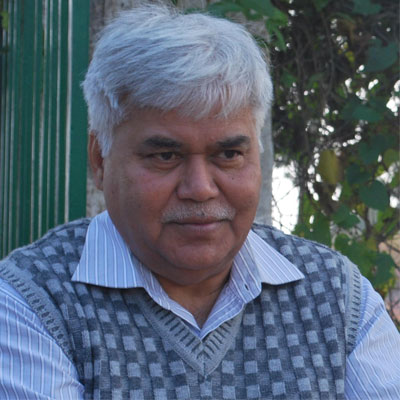
    MUMBAI: The Telecom Regulatory Authority of India (TRAI) new chairman RS Sharma has taken over his new position, effective 10 August. 


    Prior to joining TRAI, Sharma was working as secretary to Government of India in the Department of Electronics and Information Technology. He has also worked as chief secretary to the State Government of Jharkhand (India).


    Sharma’s other assignments include director general and mission director of the Unique Identification Authority of India (UIDAI) where he was responsible for over-all implementation of the project undertaken by the Government for providing Unique Identification to all its  residents. Before his posting with UIDAI, Sharma worked with the Government of Jharkhand as principal secretary of the Departments of Science and Technology, Drinking Water & Sanitation.


    Sharma has held important positions both in the Government of India and State Governments in the past and has been deeply involved in the administrative reforms and leveraging IT to simplify administrative processes.


    During his posting in the Government of India, he worked in the Department of Economic Affairs and dealt with bilateral and multilateral development agencies like World Bank, ADB, MIGA and GEF. He was also in-charge of Financing of Infrastructure projects in the Highways, Ports, Airports and Telecom sectors. 

  • Delhi MSO urges TRAI to draw up comprehensive DAS tariff order pronto

    Delhi MSO urges TRAI to draw up comprehensive DAS tariff order pronto

    NEW DELHI: The Delhi based multi system operator (MSO) Home Cable Network has urged the Telecom Regulatory Authority of India (TRAI) to fix the digital addressable system (DAS) tariff as early as possible in consonance with the directive of the Telecom Disputes Settlement and Arbitration Tribunal (TDSAT) order of 28 April. 


    This had become all the more imperative in the light of the Supreme Court dismissing the appeal by Indian Broadcasting Foundation (IBF) and others challenging the TDSAT directive, it said. 


    Home Cable Network had filed the appeal in TDSAT against the TRAI tariff orders, and IBF had appealed when the Tribunal upheld the appeal.


    In a letter to TRAI chairman R S Sharma, Home Cable Network managing director Vikki Choudhary said the exercise needs to be conducted keeping in view the interest of the consumers at large and to ensure a level playing field, on non-discriminatory terms with parity in conducting this business. 


    “In view of this, we request the Industry Regulator TRAI to re-notify its letter to Pay Broadcasters dated 23 July, 2015 requesting the rates for their respective Pay TV channels with prescribed MRP as well, along with the duration of Advertisements shown on their respective Pay TV Channels,” Choudhary said. 


    He said these issues had been adversely affecting the industry for the past three years and therefore the exercise needed to be completed in a time-bound manner, so the innovations continue with doing business.


    In its order upheld by the apex court, TDSAT had said TRAI “will be well advised to have a fresh look at the various tariff orders in a holistic manner and come out with a comprehensive tariff order in supersession of all the earlier tariff orders.” 


    “While doing so, it may consider all the agreements and relevant data available with it. It may consider differentiating between content which is of a monopolistic nature as against that which is shown by other channels also. It may also consider classifying the content into premium and basic tiers,” the Tribunal had added.

  • TRAI extends deadline for comments on commercial subscribers’ tariff issues consultation paper

    TRAI extends deadline for comments on commercial subscribers’ tariff issues consultation paper

    MUMBAI: The Telecom Regulatory Authority of India (TRAI) has extended the last date for stakeholders to comment on the consultation paper on ‘Tariff Issues related to Commercial Subscribers.’ 


    The extension has been given in keeping with the request of the stakeholders. The regulator, which had released the consultation paper on 14 July, 2015, seeking comments by 31 July and counter comments, if any, by 7 August, has now set 7 August as the deadline for comments and 14 August, for any counter comments. 


    The regulator has also decided that no request for any further extension of time for submission of comments/ counter comments will be entertained.


    The comments can be sent preferably in the electronic form to TRAI advisor (B&CS) Wasi Ahmad.


  • RS Sharma new TRAI chairman; challenges aplenty

    RS Sharma new TRAI chairman; challenges aplenty

    MUMBAI: The position had been lying vacant for almost three months. And his was one of the names mentioned as amongst the front runners to become the next Telecom Regulatory Authority of India (TRAI) chairman. (See: TRAI Chairmanship: An onerous responsibility fraught with delicate diplomacy & balancing acts)


    So when the announcement came that IT secretary Ram Sewak Sharma would be stepping into the shoes of Rahul Khullar whose term ended in May, it didn’t come as much of a surprise.

    The appointment committee of the Cabinet approved his name yesterday. Sharma is an IAS 1978 batch from the Jharkhand cadre. He was heavily involved in the implementation of the Aadhar project apart from designing the road map for the government’s digital India programme. He was director-general and mission director of the Unique Identification Authority of India.

    Sharma holds quite a few scholarly degrees from academia’s best. He has a Masters degree in Mathematics from IIT Kanpur, and a Masters in Computer Science from the University of California.

    Other names, which were being considered for the post, according to Business Standard, included Power Secretary PK Sinha, Information and Broadcasting Secretary Bimal Julka, Commerce Secretary Rajeev Kher, former telecom secretary M F Farooqui, and former Reserve Bank of India deputy governor Subir Gokarn.

    Sharma will have a key role to play on the net neutrality issue and also find solutions for the poor call quality that mobile companies are offering today. This apart, he has challenges facing him on cable TV digitisation, which has been in near limbo for a while now, especially when it comes to phase III and phase IV. The I&B ministry has been unable to push the pace on its own.