Category: TRAI

  • e-CAF not on TRAI’s agenda; willing to assist cable ops to expedite work

    e-CAF not on TRAI’s agenda; willing to assist cable ops to expedite work

    NEW DELHI: While the Telecom Regulatory Authority of India (TRAI) itself has no plans to mandate a system of e-CAF (Customer Acquisition Form), it has no objection if a multi-system operator (MSO) or a local cable operator (LCO) introduced the system.


    Through the e-CAF system, consumers can fill out details of channels wanted by them and provide this information to the service provider.


    A senior TRAI official told Indiantelevision.com that the Regulator had always encouraged progressive steps and would help any MSO or LCO that wanted assistance in this regard.


    The official, who did not wish to be named, said that if banks can take sensitive KYC information on mobiles or through the internet, there was no reason why MSOs or LCOs could not use e-CAF to help expedite their work.


    In fact, the official went on to say that this would aid the process of achieving the target of the last two phases of digital addressable system (DAS).


    However, the official maintained that TRAI had no plans at present to mandate e-CAF forms and felt that this should be voluntary. 

  • Pay channel’s a la carte rate to not exceed two times its RIO rate: TRAI

    Pay channel’s a la carte rate to not exceed two times its RIO rate: TRAI

    NEW DELHI: The Telecom Regulatory Authority of India (TRAI) today said that the a la carte rate of a pay channel forming part of a bouquet offered by any digital platform should not exceed two times its RIO order rate offered by the broadcaster for addressable systems.


    TRAI also said that the sum of a la carte rates of all channels in the bouquet should not exceed three times the bouquet rate. 


    This applies to all multi-system operators (MSOs), direct to home (DTH) operators, internet protocol service (ISP) providers and Headend in the Sky (HITS) operators providing broadcasting services or cable service to its subscribers using a digital addressable system (DAS) and offers pay channels or pay and free-to-air (FTA) channels as part of a bouquet.


    These provisions are contained in the draft Telecommunication (Broadcasting and Cable) Services (fourth) (Addressable Systems) Tariff (Amendment order), 2015 that TRAI has prepared consequent to an order of the Telecom Disputes Settlement and Arbitration Tribunal (TDSAT) of 13 July.


    TRAI has also given the definitions of RIO and RIO rates in the draft, to which comments can be filed by 14 October with counter-comments if any, by 21 October.


    TRAI defines “RIO” as Reference Interconnect Offer published by a service provider specifying terms and conditions on which other service providers may seek interconnection from the service provider making the offer. On the other hand, “RIO rate” is the rate specified by the service provider in its Reference Interconnect Offer.


    The a-la-carte rates of all the channels offered by the service provider should be same for all the bouquet of channels formed by the service provider.


    The matter had gone to TDSAT as some platforms had objected to the “twin conditions” that were prescribed at retail level pricing of TV broadcasting services in order to link the a-la carte rates of channels to the bouquet rates in the Tariff order of 20 September, 2013.


    TDSAT, while disposing off the appeal vide its order of 13 July, stated that the Authority will consider the concerns of the appellants and take a final decision on the matter within four months from the date of the order.

  • TRAI inks MoU with UAE telecom regulator to strengthen collaboration

    TRAI inks MoU with UAE telecom regulator to strengthen collaboration

    MUMBAI: India’s Telecom Regulatory Authority of India (TRAI) has signed a memorandum of understanding (MOU) with the UAE’s Telecommunications Regulatory Authority (TRA) to strengthen the collaboration between the two countries within the Telecommunications and Information and Communications technology (ICT) space. 


    TRAI secretary Sudhir Gupta and TRA director general H.E. Hamad Obaid Al Mansoori signed the MoU.


    The MoU pledges both countries’ commitment to promoting closer co-operation and knowledge exchange pertaining to various aspects of international and regional ICT.


    The two telecom regulators will cooperate in the areas of technological developments and new technologies; universal services, Mobile Number Portability (MNP), spectrum issues, green telecoms, e-government and e-services, participation in international events and forums, amongst other issues.


    The MoU was inked earlier this month during the joint commission meetings that both countries held in India, in the presence of UAE foreign minister H.H. Sheikh Abdullah Bin Zayed Al Nahyan and Minister of State H.E. Reem Bint Ibrahim Al Hashimi.


    Al Mansoori said, “This agreement falls within the framework of bilateral cooperation between UAE and India, and aims to secure optimum utilisation of the telecommunication sector to best serve the development efforts, economy, and knowledge society, which will reflect positively on the competitiveness of both countries. The importance of the telecommunications sector is reflected through the strategic role it plays in our contemporary society, as it contributes significantly in the economic and social development. We regard taking advantage of the global expertise and strengthening the ties with international stakeholders as necessities for the growth and prosperity of this sector.”


    TRA believes that the telecommunications sector is a strategic catalyst that will accelerate the UAE’s competitiveness. Moreover, TRA is always keen to exchange knowledge and experience within the ICT field and implement best practices that contribute positively to developing a knowledge–based economy.


    Additionally, Al Mansoori and TRA senior manager international affairs Nasser Bin Hammad met with Indian Minister of Road and Transport Ravi Shankar Prasad to exchange point of views regarding many significant topics such as UN post-2015 sustainable development agenda that will be validated by the General Assembly during this month. 


    Moreover, meeting attendees exchanged thoughts about the challenges facing the telecommunications sector including broadband services, cyber security, and the promotion of investing in telecommunications and ICT companies. Both parties agreed that discussing such topics further is crucial during bilateral meetings on the sidelines of international forums.

  • Govt. bows to votaries of free social media, withdraws controversial draft on Encryption Policy

    Govt. bows to votaries of free social media, withdraws controversial draft on Encryption Policy

    NEW DELHI: Following protests by votaries of a free social media, the government today withdrew a draft of an encryption policy, thus exempting mass use encryption products, which are currently being used in web applications, social media sites, and social media applications such as Whatsapp, Facebook, Twitter, etc


    In a statement, the Department of Electronics and Information Technology said that it had “noted public sentiments viz-a-viz this draft. It is clarified that the above mentioned draft is not the final view of the Government on the matter.”


    The draft had been prepared by a High-level Committee as part of an attempt to ensure secure transactions in Cyber Space for individuals, businesses and Government and prepare a National Encryption Policy. 


    The statement said the Department had also taken note of the ambiguity in some portions of the draft that may have led to misgivings. “Hence, the draft has been withdrawn and will be put up for consultation after appropriate revision.” 


    The removal of the draft also amounts to exemptions to SSL/TLS (Secure Sockets Layer/ Transport Layer Security) encryption products being used in Internet-banking and payment gateways as directed by the Reserve Bank of India and SSL/TLS encryption products being used for e-commerce and password-based transactions.


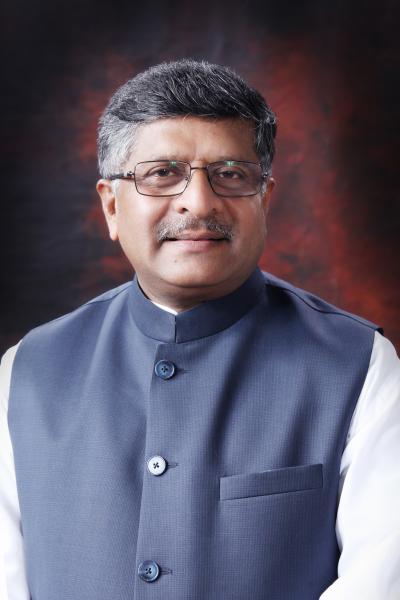
    Communications and IT Minister Ravi Shankar Prasad told newspersons that the draft was not the final view of the government. “The policy will consider the views of the public,” he said.


    Under the draft, which has now been withdrawn, every message that is sent through e-mail, Whatsapp or SMS was required to be stored in plain text format for 90 days from the date of transaction and made available to the law enforcement agencies on demand.


    The draft was to help introduce a New Encryption Policy under Section 84A of the Information Technology Act, 2000, and had called for public comments by 16 October.


    The stated mission of the policy is to provide confidentiality of information in cyber space for individuals, protect sensitive or proprietary information, ensure reliability and integrity of nationally-critical information systems and networks.


    “Users or organisations within B2B group may use encryption for storage and communication. Encryption algorithms and key sizes shall be prescribed by the government through notifications from time to time… On demand, the user shall be able to reproduce the same plain text and encrypted text pairs using the software or hardware used to produce the encrypted text from the given plain text,” the draft said.

  • India wants greater democratisation & broad-basing of Internet governance

    India wants greater democratisation & broad-basing of Internet governance

    NEW DELHI: Stressing that it wanted democratisation and broad-basing of the global affairs of telecommunications and internet governance, the Government has begun a series of meetings with stakeholders in relation to the ongoing overall review by the General Assembly of the implementation of the outcomes of the World Summit on the Information Society (WSIS+10 Review). 


    In pursuance of its declaration towards multi-stakeholder approach to Internet governance, the Information Technology Ministry recently organised discussions involving business, civil society, government, academia and technical community.


    The recent meeting on this issue was held in New Delhi on 18 September. There has also been remote participation from Internet Corporation for Assigned Names and Numbers (ICANN), Asia-Pacific Network Information Centre (APNIC) and Learning Initiatives on Reforms for Network Economics Asia (LIRNEasia) in these meetings.


    The discussion by the Department of Electronics and Information Technology was in collaboration with National Internet Exchange of India (NIXI) under Internet Governance to discuss the priorities and concerns of Indian stakeholder in relation to the ongoing UN review. 


    India wants that the International Telegraphic Union should take leadership and partner with UN and other International/Regional organisations in executing the Information and Communication Technology projects and programs in developing countries. India also wants the ITU to be the supervisory authority of Space Assets. India expressed its desire that ITU should play a more active role in the global Internet governance as envisaged during the World Summit on Information Society (WSIS). 


    The entire Review process will be concluded by a high-level meeting of the UN General Assembly on 15-16 December, 2015 in New York. Currently, the United Nations is facilitating a preparatory process for the WSIS+10 Review in consultation with Member States and relevant stakeholders.

  • Government to link rural areas by optic fibre network for broadband growth

    Government to link rural areas by optic fibre network for broadband growth

    NEW DELHI: In a bid to promote broadband growth in the country, the government is planning to link all the gram panchayats and rural areas through optical fibre cable network.


    Addressing the 11th National Summit e-governance and Digital India inclusive growth through digital empowerment by ASSOCHAM, Bharat Net chairman & MD Aruna Sundarajan said that the country was entering into a new era of digital empowerment. “Our digital project is a giant leap to bridge the digital divide between urban and the rural India by linking all the gram panchayats in the country through the common platform of optical fibre cable. Our vision is to transform our country into a knowledge economy.”


    She said optical fibre is the most economical means of communication as it can carry higher bandwidth applications. “We will ensure high-speed broadband connectivity to all the gram panchayats. This is to be achieved by utilising the existing optical fibre network of public sector companies and extending it to village panchayats,” she added.


    The vision of Digital India aims to transform the country into a digitally empowered society and knowledge economy. The programme is implemented in phases from the current year till 2018. Digital India is transformational in nature and would ensure that Government services are available to citizens electronically. It would also bring in public accountability through mandated delivery of government’s services electronically, a Unique ID and e-Pramaan based on authentic and standard based interoperable and integrated government applications and data basis.


    Telecom Regulatory Authority of India (TRAI) chairman RS Sharma a second warning will be issued to telecom operators about call drops next month. He added opposition to setting up telecom towers in residential areas was based on apprehensions that were baseless. He said the TRAI, telecom operators and government together should promote an awareness campaign on this if service quality has to improve.


    Pointing out that quality was a two-way street, Bharti Enterprises vice chairman Akhil Gupta said that Telecom Minister Ravi Shankar Prasad had written to state chief ministers to provide sites for setting up telecom infrastructure. However, he wanted the State Electricity Boards to take up the electricity supply to telecom towers on a priority basis.


    Deloitte India senior director Santosh Anoo said, “Focused execution using innovative partnership models will expedite the realisation of the Digital India vision. The best of breed localised solutions with focus on total cost of ownership will build on the great start and deliver viable business models.”

  • DAS: TRAI seeks details of disputed cases pending in Bombay HC from MSOs & LCOs

    DAS: TRAI seeks details of disputed cases pending in Bombay HC from MSOs & LCOs

    NEW DELHI: All local cable operators (LCOs) and multi system operators (MSOs) who have any pending problems relating to inter connect agreements for Digital Addressable System (DAS) have been asked to inform the Telecom Regulatory Authority of India (TRAI).


    In a proforma issued today, TRAI asked LCOs and MSOs in the matters pending before the Bombay High Court to give details of the problems they are facing and for which they want the intervention of the Authority.


    The directive by TRAI follows an order of the High Court of 1 September that TRAI should resolve such disputes within four weeks.


    TRAI made it clear that all MSOs and LCOs should respond by 14 September.


    MSOs and LCOs can address their responses to Deputy Advisor (B&CS) G S Kesarvani preferably via e-mail at das@trai.gov.in.

  • TRAI issues separate tariff for commercial subscribers under DAS & non-DAS areas

    TRAI issues separate tariff for commercial subscribers under DAS & non-DAS areas

    NEW DELHI: The Telecom Regulatory Authority of India (TRAI) today issued separate tariff orders for commercial subscribers under digital addressable systems (DAS) and non-DAS areas.


    TRAI described a “commercial subscriber” as one “who causes the signals of TV channels to be heard or seen by any person for a specific sum of money to be paid by such person.” 


    The definition is contained in two Tariff Amendment Orders (TAO) relating to TV services for commercial subscribers, one applicable for TV services being provided through analogue cable TV systems (Non-CAS areas) and the other one applicable for TV services being provided through Digital Addressable cable TV systems were notified today.


    The amendments are to the Telecommunication (Broadcasting and Cable) Services (Second) tariff (Twelfth Amendment) order & the Telecommunication (Broadcasting and Cable) Services (Fourth) (Addressable Systems) Tariff (Fourth Amendment) order.


    For definition of ordinary subscriber, the notification simply says anyone who is not a commercial subscriber under its definition is an ordinary subscriber. 


    Total forbearance has been prescribed both at the wholesale and retail level with respect to tariffs for commercial subscribers and broadcasters have the option to enter into tripartite agreements with the Distribution Platform Operators (DPOs) and the commercial subscribers, if so desired.


    The order says that a broadcaster will offer all its pay channels, for commercial subscribers on a-la-carte basis to distributors of TV channels, and may specify separate a-la-carte rate for each pay channel.


    This is provided the broadcaster may also offer all its pay channels as part of bouquet consisting of pay channels or both pay and free to air (FTA) channels and specify the rate for each such bouquet of channels offered by it; and a broadcaster may enter into a tripartite agreement with the distributors of TV channels and the commercial subscribers for supply of signals of TV channels to the commercial subscribers.


    Broadcasters have been mandated to offer their channels or bouquet of channels for commercial subscribers on non-discriminatory terms and conditions. 


    Broadcasters have also been mandated to file their tripartite agreements, if such agreement is done with commercial subscribers, with TRAI within 30 days of entering into such agreement.


    TV signals to commercial subscribers have to be provided by DPOs only in accordance with policy guidelines for up-linking and down-linking of television channels.


    Following directions by the Telecom Disputes Settlement and Arbitration Tribunal (TDSAT) on 9 March that there was need for a fresh look at tariff orders, TRAI had issued a new paper on “Tariff issues related to Commercial Subscribers.” Stakeholders had been asked to give their comments by 31 July and counter-comments by 7 August and had then held an Open House on 18 August.


    The case in TDSAT had been filed by Indian Broadcasting Foundation (IBF) and others last year. The tariff orders challenged by IBF were issued on 16 July last year following the Supreme Court’s order of 16 April, 2014.


    TRAI said in a press release that it “expected that with the coming into force of these changes in the regulatory framework for commercial subscribers, distribution of TV services to commercial subscribers would be streamlined and would be available to them at competitive rates. It is also envisaged that it would balance the interests of all the stakeholders in the value chain and bring in complete transparency in the business transactions.”


    In the consultation paper, TRAI had asked commercial subscribers whether there is need to define and differentiate between domestic and commercial subscribers for provision of TV signals and the basis for such classification. TRAI wanted to know how it can be ensured that TV signal feed is not misused for commercial purposes wherein the signal has been provided for non-commercial purpose.


    It had also asked if there is a need to have a different tariff framework for commercial subscribers (both at wholesale and retail levels) and what should be the suggested tariff framework for commercial subscribers (both at wholesale and retail levels).

  • STB shortage, lack of awareness continue to plague DAS implementation, DD & AIR to help in publicity

    STB shortage, lack of awareness continue to plague DAS implementation, DD & AIR to help in publicity

    NEW DELHI: With the third phase of digital addressable system (DAS) expected to be implemented by 1 January 2016, the single biggest challenge facing the government and stakeholders is the dire shortage of set top boxes (STBs).


    A senior Information and Broadcasting Ministry source told Indiantelevision.com that the main hurdle was that very few manufacturers were coming forward with proposals despite the government support to the Make in India programme.


    This issue and the problem of adequate publicity about the benefits of DAS perplexed those who attended the tenth Task Force meeting on DAS held on 17 August under the chairmanship of Additional Secretary J S Mathur.


    Meanwhile, Joint Secretary (Broadcasting) R Jaya said Regional Units were being established at twelve places and these would start operating from September to monitor and report the progress of digitisation in each State/UT. 


    While Consumer Electronics and Appliances Manufacturers Association (CEAMA) complained that no major orders were being placed with it by multi system operators (MSOs). A representative of the CEAMA said, “This is the time to place orders if they want the STBs, which are required to be delivered before the cut-off date.”


    A Telecom Regulatory Authority of India (TRAI) representative said under the regulations, MSOs and LCOs have to offer STBs to consumers on rent, installment, outright purchase or any other scheme according to the standard tariff package prescribed by it. Any complaint on this issue should be addressed to TRAI. 


    A representative of the Uttarakhand Government said adequate number of STBs are not provided by MSOs in the State, resulting in slow progress of digitisation. 


    A representative of Maharashtra Cable Operators’ Federation (MCOF) said there are 5000 head-end owners, which are MSOs or LMOs. But many of them had not applied for registration. He apprehended that it may result in some dark areas once the deadline is over. 


    Jaya said MSO registrations were still on and any one can apply. She said 349 MSO registrations had been granted till mid-August including 126 provisional ones. Referring to apprehension of dark areas, she said these will be identified through State nodal officers and broadcasters. 

    Meanwhile, there was a lengthy discussion about publicity about DAS. ASSOCHAM with some broadcasters had planned a Chetna Yatra from next month covering 450 cities/towns/villages in the country. 

    Representatives of direct-to-home (DTH) platforms said they were ready to give free publicity regarding cable TV digitisation if asked. 


    A representative of the News Broadcasters Association (NBA) said there are financial constraints facing broadcasters. However, they will carry advertisement spots and would be preparing these.


    The TRAI representative said it had placed an advertisement on mandatory digitisation on its website. It had also planned to come out with a quarter-page print advertisement in newspapers very soon. 


    TRAI is holding five consumer outreach programmes per quarter in each region. From its perspective, awareness about digitisation is happening. The TRAI representative said the advertisement could be shared with MSOs for publicity by them. 


    All India Radio (AIR) and Doordarshan (DD) have been carrying advertisements on mandatory digitisation for several months. It was suggested that Doordarshan may also give video advertisements on cable digitisation in local languages on their popular regional channels in prime time. The Doordarshan representative agreed to get this done. 


    A representative of the Gujarat MSO GTPL said they have been carrying out a publicity campaign through scrolls on their local channels and public gatherings. 


    A representative of Indusind-Media said a team of about 300 persons had been deployed on this job to carry the campaign.


    On the other hand, a representative of an LCO association from West Bengal said they were unaware of the consumer outreach programme arranged by TRAI. It was suggested that members should regularly check the websites of MIB and TRAI for all such information regarding cable digitisation. 


    According to Jaya, four regional workshops were held by the Ministry with the State nodal officers of some of the States/UTs to sensitise them about their role and responsibilities in implementing cable TV digitisation in their States. Registered MSOs permitted to operate in these States were also invited in these workshops. 


    She said it was heartening to know from these workshops that State Governments are also gearing up to meet the challenge of cable digitisation in their States. The MSOs participating in these workshops said they were carrying publicity awareness campaign on digitisation on their local channels and through pamphlets being distributed by them. 


    She added that seven more regional workshops have been planned by the Ministry in 45 days at different places. Another workshop has since been held with the nodal officers from the states in the North East and the registered MSOs operating there on 21 August at Shillong.


    A representative of an LCO association from Assam said broadcasters were not providing content to them and they were being forced to come to Delhi for filing cases in TDSAT. The TRAI representative said this was a matter of dispute and TDSAT was the only appropriate forum. But for issues related to regulations, the TRAI regional office in Kolkata could be approached. 


    On signing of interconnect agreements, the IMCL representative said it was working on delivery through headend in the sky (HITS) platform besides cable. It was now in the final stage of negotiations with broadcasters. The TRAI representative said all MSOs who had not received any response to their requests for interconnect agreements from broadcasters had been asked to inform TRAI by 24 August and a meeting had been slated with broadcasters on 28 August. 


    A representative of the Indian Broadcasting Foundation (IBF) said deals are happening and parallel negotiations are taking place.
  • TRAI asked to re-notify broadcasters in light of SC judgment rejecting tariff orders

    TRAI asked to re-notify broadcasters in light of SC judgment rejecting tariff orders

    NEW DELHI: The Telecom Regulatory Authority of India (TRAI) has been urged to re-notify its letter to pay broadcasters dated 23 July, requesting the rates for their respective pay TV channels with prescribed MRP as well, along with the duration of advertisements shown.


    In a letter to TRAI chairman R S Sharma, Home Cable Networks (P) Ltd head Vikki Chodhary said, “Needless to say, the exercise needs to be conducted keeping in view the interest of the consumers at large and to also ensure a level playing field on non-discriminatory terms with parity in conducting this business.”  


    The regulator had asked broadcasters on 23 July to revise their wholesale tariffs, even though it had noted that the Supreme Court had declined to stay the order of the Telecom Disputes Settlement and Appellate Tribunal (TDSAT) setting aside the amendments in two tariff orders, which had sought to put an inflation-linked hike of 27.5 per cent on addressable and non-addressable systems.


    The very next day – 24 July – the Supreme Court stayed implementation of this letter in view of appeal by Indian Broadcasting Foundation (IBF) and others challenging the order by TDSAT on Chaudhary’s petition relating to tariff.


    While dismissing the appeal challenging TDSAT’s order, the Supreme Court on 4 August asked TRAI to come up with new tariffs as early as possible.


    The Court also said the multi-system operators (MSOs) will not insist on a refund of their payments to broadcasters but will wait for the new tariff orders.


    Thus, the apex Court held intact the 28 April order of the Tribunal holding as ‘untenable’ the Telecommunication (Broadcasting & Cable) Services (Second) Tariff (Eleventh Amendment) Order, 2014’ and ‘The Telecommunication (Broadcasting & Cable) Services (Second) Tariff (Thirteenth Amendment) Order, 2014’.


    In his letter to Sharma, Chaudhary has drawn TRAI’s attention to observations by TDSAT that the regulator “will be well advised to have a fresh look at the various tariff orders in a holistic manner and come out with a comprehensive tariff order in supersession of all the earlier tariff orders… While doing so, it may consider all the agreements and relevant data available with it. It may consider differentiating between content, which is of a monopolistic nature as against that the like of which is shown by other channels also. It may also consider classifying the content into premium and basic tiers.”