Category: TRAI

  • Hathway leads in digital pay & local channels; Ortel leads in analogue: TRAI

    Hathway leads in digital pay & local channels; Ortel leads in analogue: TRAI

    NEW DELHI: The number of private satellite television channels in the country registered with the Information and Broadcasting Ministry fell by seven in the quarter ending September 2015 from 826 in quarter ending June to 819.

    However, the maximum number of pay channels carried by certain cable operators in non-conditional addressable system (CAS) rose from 214 to 233 in the same period. The maximum number of Free-to-Air (FTA) TV channels carried by certain cable operators in non-CAS areas in the period rose from 179 to 197. 

    The data is based on reports received by the Telecom Regulatory Authority of India (TRAI) from broadcasters and multi system operators (MSOs).

    In areas served by non-addressable systems, the maximum number of TV channels carried in digital form as reported by cable operator – Hathway Cable & Datacom Limited – amongst those who have reported is 458. 

    The maximum number of TV channels carried in analogue form as reported by – Ortel Communications Limited – amongst those who have reported is 100. 

    In these areas, the maximum number of FTA channels carried, as reported by Hathway Cable & Datacom amongst those who have reported is 197. 

    The maximum number of pay channels carried as reported by a cable operator (Hathway Cable & Datacom) amongst those who have reported is 233. The maximum number of local channels carried as reported by a cable operator (Hathway Cable & Datacom) amongst those who have reported is 28.

    As on 30 September, 2015, there were a total of 226 MSOs who had been granted Permanent Registration (for 10 years) by the Ministry apart from 173 MSOs who had been granted Provisional Registration (for 10 years) by the Ministry of I&B for providing Cable TV services through Digital Addressable Systems (DAS).

    There had been a total of 252 pay channels as reported by broadcasters as on 30 June. During the quarter ending September 2015, three new pay channels – Colors Infinity HD, Colors Infinity, and Zee Café HD – were launched. During the quarter, one channel – The MGM was temporarily suspended. 

    During the quarter, the transmission mode of two channels – VH1 and Comedy Central – was changed from SD to HD. The total had risen to 254 pay TV channels by September end. 

    TRAI in its quarterly report said that apart from the free DTH service of Doordarshan Freedish, there are six private DTH operators. The total number of registered subscribers and active subscribers being served by these six private DTH operators were 81.47 million and 41.05 million respectively as on 30 September, 2015. 

    The Ministry had permitted a total of 90 Teleports by September end.
  • Hathway leads in digital pay & local channels; Ortel leads in analogue: TRAI

    Hathway leads in digital pay & local channels; Ortel leads in analogue: TRAI

    NEW DELHI: The number of private satellite television channels in the country registered with the Information and Broadcasting Ministry fell by seven in the quarter ending September 2015 from 826 in quarter ending June to 819.

    However, the maximum number of pay channels carried by certain cable operators in non-conditional addressable system (CAS) rose from 214 to 233 in the same period. The maximum number of Free-to-Air (FTA) TV channels carried by certain cable operators in non-CAS areas in the period rose from 179 to 197. 

    The data is based on reports received by the Telecom Regulatory Authority of India (TRAI) from broadcasters and multi system operators (MSOs).

    In areas served by non-addressable systems, the maximum number of TV channels carried in digital form as reported by cable operator – Hathway Cable & Datacom Limited – amongst those who have reported is 458. 

    The maximum number of TV channels carried in analogue form as reported by – Ortel Communications Limited – amongst those who have reported is 100. 

    In these areas, the maximum number of FTA channels carried, as reported by Hathway Cable & Datacom amongst those who have reported is 197. 

    The maximum number of pay channels carried as reported by a cable operator (Hathway Cable & Datacom) amongst those who have reported is 233. The maximum number of local channels carried as reported by a cable operator (Hathway Cable & Datacom) amongst those who have reported is 28.

    As on 30 September, 2015, there were a total of 226 MSOs who had been granted Permanent Registration (for 10 years) by the Ministry apart from 173 MSOs who had been granted Provisional Registration (for 10 years) by the Ministry of I&B for providing Cable TV services through Digital Addressable Systems (DAS).

    There had been a total of 252 pay channels as reported by broadcasters as on 30 June. During the quarter ending September 2015, three new pay channels – Colors Infinity HD, Colors Infinity, and Zee Café HD – were launched. During the quarter, one channel – The MGM was temporarily suspended. 

    During the quarter, the transmission mode of two channels – VH1 and Comedy Central – was changed from SD to HD. The total had risen to 254 pay TV channels by September end. 

    TRAI in its quarterly report said that apart from the free DTH service of Doordarshan Freedish, there are six private DTH operators. The total number of registered subscribers and active subscribers being served by these six private DTH operators were 81.47 million and 41.05 million respectively as on 30 September, 2015. 

    The Ministry had permitted a total of 90 Teleports by September end.
  • Do not cut spectrum already allocated to TSPs if more needed for Defence or non-commercial purposes: TRAI

    Do not cut spectrum already allocated to TSPs if more needed for Defence or non-commercial purposes: TRAI

    NEW DELHI: Noting that only 1800 MHz spectrum is likely to be affected for diversion for Defence or non-commercial use, the Telecom Regulatory Authority of India (TRAI) has said no TSP should be asked to surrender any spectrum, which it already holds if a level playing field amongst TSPs has to be ensured.

    In a clarification to the Department of Telecom, TRAI reiterated that the same spectrum cap may be made applicable for all the TSPs in a particular local service area (LSA).

    Responding to a letter from the DoT, the Authority said, “Even in case of 1800 MHz also, after the harmonisation exercise with the Defence, additional spectrum will be made available for commercial usages, as Defence has been occupying more than 20 MHz of bandwidth agreed as per Memorandum of Understanding between DoT and the Ministry of Defence. Therefore, the situation, as raised by DoT, is unlikely to arise.”

    This was particularly so in view of the fact that Defence band had already been notified and it was unlikely that any spectrum that was hitherto assigned for commercial use will be assigned for non-commercial use. In the case of 1800 MHz band, frequency harmonisation is required to be taken place amongst TSPs and Defence, implying that Defence and commercial chunk of spectrum are placed in their respective allotted slots.

    In its Recommendations “Valuation and Reserve Price of Spectrum in 700 MHz, 800 MHz, 900 MHz, 1800 MHz, 2100 MHz, 2300 MHz and 2500 MHz bands” dated 27 January, 2016, the Authority has recommended that DoT should ensure that this exercise gets completed before the next auction. It is also mentioned that after completion of this exercise it is expected that additional spectrum of about 200 MHz will be made available for assignment for commercial use.

    There is no other spectrum band where any rearrangement of spectrum with Defence is immediately foreseen.

    In its letter, DoT had sought views of TRAI on modalities to operate two different spectrum caps – one declared at the time of auction and other published as soon as some spectrum is assigned for non-commercial use; and whether existing spectrum holding of operators should be protected as an exception consequent to reduction in band as well as overall cap due to assignment of spectrum for non-commercial use after the auction.

  • Do not cut spectrum already allocated to TSPs if more needed for Defence or non-commercial purposes: TRAI

    Do not cut spectrum already allocated to TSPs if more needed for Defence or non-commercial purposes: TRAI

    NEW DELHI: Noting that only 1800 MHz spectrum is likely to be affected for diversion for Defence or non-commercial use, the Telecom Regulatory Authority of India (TRAI) has said no TSP should be asked to surrender any spectrum, which it already holds if a level playing field amongst TSPs has to be ensured.

    In a clarification to the Department of Telecom, TRAI reiterated that the same spectrum cap may be made applicable for all the TSPs in a particular local service area (LSA).

    Responding to a letter from the DoT, the Authority said, “Even in case of 1800 MHz also, after the harmonisation exercise with the Defence, additional spectrum will be made available for commercial usages, as Defence has been occupying more than 20 MHz of bandwidth agreed as per Memorandum of Understanding between DoT and the Ministry of Defence. Therefore, the situation, as raised by DoT, is unlikely to arise.”

    This was particularly so in view of the fact that Defence band had already been notified and it was unlikely that any spectrum that was hitherto assigned for commercial use will be assigned for non-commercial use. In the case of 1800 MHz band, frequency harmonisation is required to be taken place amongst TSPs and Defence, implying that Defence and commercial chunk of spectrum are placed in their respective allotted slots.

    In its Recommendations “Valuation and Reserve Price of Spectrum in 700 MHz, 800 MHz, 900 MHz, 1800 MHz, 2100 MHz, 2300 MHz and 2500 MHz bands” dated 27 January, 2016, the Authority has recommended that DoT should ensure that this exercise gets completed before the next auction. It is also mentioned that after completion of this exercise it is expected that additional spectrum of about 200 MHz will be made available for assignment for commercial use.

    There is no other spectrum band where any rearrangement of spectrum with Defence is immediately foreseen.

    In its letter, DoT had sought views of TRAI on modalities to operate two different spectrum caps – one declared at the time of auction and other published as soon as some spectrum is assigned for non-commercial use; and whether existing spectrum holding of operators should be protected as an exception consequent to reduction in band as well as overall cap due to assignment of spectrum for non-commercial use after the auction.

  • Adcap violations cases against 15 TV channels put off to April

    Adcap violations cases against 15 TV channels put off to April

    NEW DELHI: Complaints against various television channels before Chief Metropolitan Magistrate relating to adcap violations by the Telecom Regulatory Authority of India (TRAI) are now slated to come up for hearing on 2 April.

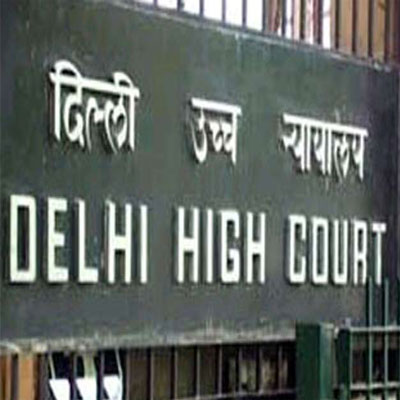
    CMM (Delhi Central) Pooran Chand directed that as the matter was pending in the Delhi High Court, the interim orders would continue.

    TRAI had filed complaints before the Magistrate’s Court against IBN Lokmat News, Zee News, TV Today Network, Sun TV Network, Bennett Coleman & Co. Ltd, NDTV Lifestyle Ltd, Zee Entertainment Enterprises Odisha Television Ltd, Celebrities Management P Ltd, Eenadu Television P Ltd, Panorama Television P Ltd, MAA Television Network, Sarthak Entertainment P Ltd, and Prism TV Pvt. Ltd.

    According to information available with Indiantelevision.com, some of these cases have been pending since 2013. There have also been some instances wherein executives of various channels have been seeking exemption from personal appearance whenever the cases came up.

    In the Delhi High Court TRAI had earlier assured that no coercive action would be taken till the court’s final decision.

    However, the Delhi High Court had directed every channel, which was involved in the case before it, to maintain a register of the advertisement time consumed by them.

    The News Broadcasters Association (NBA) had challenged the adcap rule, contending that TRAI did not have jurisdiction to regulate commercial airtime on television channels. Apart from the NBA, the petitions were filed by Sarthak Entertainment, Pioneer Channel Factory, E24 Glamour, Sun TV Network, TV Vision, B4U Broadband, 9X Media, Kalaignar, Celebrities Management, Eenadu Television and Raj Television.

    Later Home Cable Network, which claims pay channels should not be permitted to carry advertisements, was impleaded. Discovery Communications has also filed for being impleaded and this application is slated to be heard on 29 March.  

  • Adcap violations cases against 15 TV channels put off to April

    Adcap violations cases against 15 TV channels put off to April

    NEW DELHI: Complaints against various television channels before Chief Metropolitan Magistrate relating to adcap violations by the Telecom Regulatory Authority of India (TRAI) are now slated to come up for hearing on 2 April.

    CMM (Delhi Central) Pooran Chand directed that as the matter was pending in the Delhi High Court, the interim orders would continue.

    TRAI had filed complaints before the Magistrate’s Court against IBN Lokmat News, Zee News, TV Today Network, Sun TV Network, Bennett Coleman & Co. Ltd, NDTV Lifestyle Ltd, Zee Entertainment Enterprises Odisha Television Ltd, Celebrities Management P Ltd, Eenadu Television P Ltd, Panorama Television P Ltd, MAA Television Network, Sarthak Entertainment P Ltd, and Prism TV Pvt. Ltd.

    According to information available with Indiantelevision.com, some of these cases have been pending since 2013. There have also been some instances wherein executives of various channels have been seeking exemption from personal appearance whenever the cases came up.

    In the Delhi High Court TRAI had earlier assured that no coercive action would be taken till the court’s final decision.

    However, the Delhi High Court had directed every channel, which was involved in the case before it, to maintain a register of the advertisement time consumed by them.

    The News Broadcasters Association (NBA) had challenged the adcap rule, contending that TRAI did not have jurisdiction to regulate commercial airtime on television channels. Apart from the NBA, the petitions were filed by Sarthak Entertainment, Pioneer Channel Factory, E24 Glamour, Sun TV Network, TV Vision, B4U Broadband, 9X Media, Kalaignar, Celebrities Management, Eenadu Television and Raj Television.

    Later Home Cable Network, which claims pay channels should not be permitted to carry advertisements, was impleaded. Discovery Communications has also filed for being impleaded and this application is slated to be heard on 29 March.  

  • Facebook pulls plug on Free Basics post TRAI’s decision on differential pricing

    Facebook pulls plug on Free Basics post TRAI’s decision on differential pricing

    NEW DELHI: Even as Facebook founder and CEO Mark Zuckerberg voiced his disappointment on the ruling by the Telecom Regulatory Authority of India (TRAI) against differential pricing and in favour of net neutrality, the social media giant has pulled the plug on its Free Basics offering in India.

    Meanwhile, a recent tweet by Silicon Valley investor and a member of the Facebook Board Marc Andreessen, which was later deleted, had created controversy as he criticised India’s opposition to Free Basics.

    Indian users of the net protested against the tweet comparing the opposition to Free Basics in India to anti-colonialism, which did not go well with them.

    Later Zuckerberg had attempted to do some damage control when he put a post on his Facebook page disassociating from Andreessen’s views. He said the comment was “deeply upsetting and doesn’t represent the way Facebook or I think.”

    Facebook has clearly been hit by the decision as it is a popular social media site in the country and was hoping to increase its presence by offering free access to services to the joining user.

    In its ruling on differential pricing for data services, TRAI had said that it would impose a fine of Rs 50,000 per day for anyone violating the same with immediate effect.

  • Facebook pulls plug on Free Basics post TRAI’s decision on differential pricing

    Facebook pulls plug on Free Basics post TRAI’s decision on differential pricing

    NEW DELHI: Even as Facebook founder and CEO Mark Zuckerberg voiced his disappointment on the ruling by the Telecom Regulatory Authority of India (TRAI) against differential pricing and in favour of net neutrality, the social media giant has pulled the plug on its Free Basics offering in India.

    Meanwhile, a recent tweet by Silicon Valley investor and a member of the Facebook Board Marc Andreessen, which was later deleted, had created controversy as he criticised India’s opposition to Free Basics.

    Indian users of the net protested against the tweet comparing the opposition to Free Basics in India to anti-colonialism, which did not go well with them.

    Later Zuckerberg had attempted to do some damage control when he put a post on his Facebook page disassociating from Andreessen’s views. He said the comment was “deeply upsetting and doesn’t represent the way Facebook or I think.”

    Facebook has clearly been hit by the decision as it is a popular social media site in the country and was hoping to increase its presence by offering free access to services to the joining user.

    In its ruling on differential pricing for data services, TRAI had said that it would impose a fine of Rs 50,000 per day for anyone violating the same with immediate effect.

  • TRAI chief R S Sharma defends differential pricing regulation

    TRAI chief R S Sharma defends differential pricing regulation

    NEW DELHI: While defending the decision on differential pricing for data services from telecom companies, Telecom Regulatory Authority of India (TRAI) chairman R S Sharma categorically stated that with the digital landscape changing constantly, the policy would be reviewed every two years.

    Speaking at the 10th India Digital Summit on the theme ‘Stand Up Start Up’ organised by the Internet and Mobile Association of India (IAMAI), Sharma stressed the necessity of augmenting telecom and digital infrastructure to meet the growing demand of a truly digital India.

    On connectivity, he said drive tests are done regularly by TRAI. “Telecom companies have started raising objections pertaining to consulting on the methods TRAI is using. We have started that process also. So this time when we did the test, we have also taken their suggestions into account,” he said.

    “Whatever drive tests we have done, have been very objective. This was done in a transparent manner and if there are any more suggestions for transparency, we are certainly ready to look at it. But by simply saying that what you have done is not really correct is not the right approach,” Sharma voiced.

    Adding that the next test drive is likely to be in April, Sharma said that connectivity was bound to improve with release of more spectrum.

    “Seamless connectivity is the essence of true digitisation. With Digital Locker; e-Sign and Aadhar, India is the only country in the world to have such advanced technology. India is also the only country to have the technicality of checking identity of a person digitally through Aadhar,” he said.

    Earlier, IAMAI chairman Kunal Shah, who is the founder & CEO of FreeCharge, said in his inaugural address that continuous innovation is the key for staying relevant and that the young start-ups should focus on reinventing rather than focusing on raising funds.

  • TRAI chief R S Sharma defends differential pricing regulation

    TRAI chief R S Sharma defends differential pricing regulation

    NEW DELHI: While defending the decision on differential pricing for data services from telecom companies, Telecom Regulatory Authority of India (TRAI) chairman R S Sharma categorically stated that with the digital landscape changing constantly, the policy would be reviewed every two years.

    Speaking at the 10th India Digital Summit on the theme ‘Stand Up Start Up’ organised by the Internet and Mobile Association of India (IAMAI), Sharma stressed the necessity of augmenting telecom and digital infrastructure to meet the growing demand of a truly digital India.

    On connectivity, he said drive tests are done regularly by TRAI. “Telecom companies have started raising objections pertaining to consulting on the methods TRAI is using. We have started that process also. So this time when we did the test, we have also taken their suggestions into account,” he said.

    “Whatever drive tests we have done, have been very objective. This was done in a transparent manner and if there are any more suggestions for transparency, we are certainly ready to look at it. But by simply saying that what you have done is not really correct is not the right approach,” Sharma voiced.

    Adding that the next test drive is likely to be in April, Sharma said that connectivity was bound to improve with release of more spectrum.

    “Seamless connectivity is the essence of true digitisation. With Digital Locker; e-Sign and Aadhar, India is the only country in the world to have such advanced technology. India is also the only country to have the technicality of checking identity of a person digitally through Aadhar,” he said.

    Earlier, IAMAI chairman Kunal Shah, who is the founder & CEO of FreeCharge, said in his inaugural address that continuous innovation is the key for staying relevant and that the young start-ups should focus on reinventing rather than focusing on raising funds.