Category: TRAI

  • TRAI commences exercise to explore growth of internet through Wi-fi networks

    TRAI commences exercise to explore growth of internet through Wi-fi networks

    NEW DELHI: Noting that Wi-Fi networks offer affordable, scalable and versatile technologies that can facilitate the spread of Internet access in rural and urban areas alike, the Telecom Regulatory Authority of India today issued a consultation paper on Proliferation of Broadband through Public Wi-Fi Networks.

    Through a set of twelve questions, the Authority has sought to get the opinion of stakeholders including internet and telecom service providers on how best Wi-fi (an acronym for Wireless Fidelity) can grow in the country. Comments have been invited by 10 August with counter-comments by 24 August.

    At the outset, the regulator has noted that the growth of Internet penetration in India and realisation of its full potential is closely tied to the proliferation of broadband services. “Broadband” is currently defined to mean a data connection that is able to support interactive services, including Internet access, with the capability of a minimum download speed of 512 kbps. It therefore refers to a means of delivering high-speed Internet access services.

    Broadband services can be delivered through a number of different access technologies, both wired and wireless, including Digital Subscriber Lines (DSL), optical fibre technology, cable TV networks and mobile broadband services like 2G/3G/4G. In addition to these, radio frequency signals (or spectrum) can also be used for the creation of “wireless local area networks” (WLANs), offering an effective mechanism for extending the “last-mile connectivity” of broadband connections to a wider segment of users.

    Trai says Modern technology makes it possible to integrate a server with high storage capacity with the Wi-Fi hotspot equipment. As the cost of such servers has come down significantly, along with the cost of storage, and the form factors of such devices are very small, it should be possible to cache or download content for easy browsing even when the backhaul connectivity is not available. Such an arrangement can find great application in storing children’s study materials, educational data, agricultural and health related information, as well as movies and entertainment content, for the benefit of Wi-Fi users in areas with irregular connectivity, such as rural areas.

    The regulator said that strictly speaking, Wi-Fi is a certification provided by the Wireless Broadband Alliance1 (WBA), which owns and controls the “Wi-Fi Certified” logo that can be applied to products that satisfy certain interoperability criteria.

    WBA is a non-profit organization, formed in 1999, that promotes Wi-Fi technology and certifies Wi-Fi products if they conform to certain standards of interoperability.

    The questions raised by Trai are:

    Q1. Are there any regulatory issues, licensing restrictions or other factors that are hampering the growth of public Wi-Fi services in the country?

    Q2. What regulatory/licensing or policy measures are required to encourage the deployment of commercial models for ubiquitous city-wide Wi-Fi networks as well as expansion of Wi-Fi networks in remote or rural areas?

    Q3. What measures are required to encourage interoperability between the Wi-Fi networks of different service providers, both within the country and internationally?

    Q4. What measures are required to encourage interoperability between cellular and Wi-Fi networks?

    Q5. Apart from frequency bands already recommended by TRAI to DoT, are there additional bands which need to be de-licensed in order to expedite the penetration of broadband using Wi-Fi technology?

    Q6. Are there any challenges being faced in the login/authentication procedure for access to Wi-Fi hotspots? In what ways can the process be simplified to provide frictionless access to public Wi-Fi hotspots, for domestic users as well as foreign tourists?

    Q7. Are there any challenges being faced in making payments for access to Wi-Fi hotspots? Please elaborate and suggest a payment arrangement which will offer frictionless and secured payment for the access of Wi-Fi services.

    Q8. Is there a need to adopt a hub-based model along the lines suggested by the WBA, where a central third party AAA (Authentication, Authorization and Accounting) hub will facilitate interconnection,
    authentication and payments? Who should own and control the hub? Should the hub operator be subject to any regulations to ensure service standards, data protection, etc?

    Q9. Is there a need for ISPs/ the proposed hub operator to adopt the Unified Payment Interface (UPI) or other similar payment platforms for easy subscription of Wi-Fi access? Who should own and control such payment platforms?

    Q10. Is it feasible to have an architecture wherein a common grid can be created through which any small entity can become a data service provider and able to share its available data to any consumer or user?

    Q11. What regulatory/licensing measures are required to develop such architecture? Is this a right time to allow such reselling of data to ensure affordable data tariff to public, ensure ubiquitous presence of Wi-Fi Network and allow innovation in the market?

    Q12. What measures are required to promote hosting of data of community interest at local level to reduce cost of data to the consumers?
  • TRAI commences exercise to explore growth of internet through Wi-fi networks

    TRAI commences exercise to explore growth of internet through Wi-fi networks

    NEW DELHI: Noting that Wi-Fi networks offer affordable, scalable and versatile technologies that can facilitate the spread of Internet access in rural and urban areas alike, the Telecom Regulatory Authority of India today issued a consultation paper on Proliferation of Broadband through Public Wi-Fi Networks.

    Through a set of twelve questions, the Authority has sought to get the opinion of stakeholders including internet and telecom service providers on how best Wi-fi (an acronym for Wireless Fidelity) can grow in the country. Comments have been invited by 10 August with counter-comments by 24 August.

    At the outset, the regulator has noted that the growth of Internet penetration in India and realisation of its full potential is closely tied to the proliferation of broadband services. “Broadband” is currently defined to mean a data connection that is able to support interactive services, including Internet access, with the capability of a minimum download speed of 512 kbps. It therefore refers to a means of delivering high-speed Internet access services.

    Broadband services can be delivered through a number of different access technologies, both wired and wireless, including Digital Subscriber Lines (DSL), optical fibre technology, cable TV networks and mobile broadband services like 2G/3G/4G. In addition to these, radio frequency signals (or spectrum) can also be used for the creation of “wireless local area networks” (WLANs), offering an effective mechanism for extending the “last-mile connectivity” of broadband connections to a wider segment of users.

    Trai says Modern technology makes it possible to integrate a server with high storage capacity with the Wi-Fi hotspot equipment. As the cost of such servers has come down significantly, along with the cost of storage, and the form factors of such devices are very small, it should be possible to cache or download content for easy browsing even when the backhaul connectivity is not available. Such an arrangement can find great application in storing children’s study materials, educational data, agricultural and health related information, as well as movies and entertainment content, for the benefit of Wi-Fi users in areas with irregular connectivity, such as rural areas.

    The regulator said that strictly speaking, Wi-Fi is a certification provided by the Wireless Broadband Alliance1 (WBA), which owns and controls the “Wi-Fi Certified” logo that can be applied to products that satisfy certain interoperability criteria.

    WBA is a non-profit organization, formed in 1999, that promotes Wi-Fi technology and certifies Wi-Fi products if they conform to certain standards of interoperability.

    The questions raised by Trai are:

    Q1. Are there any regulatory issues, licensing restrictions or other factors that are hampering the growth of public Wi-Fi services in the country?

    Q2. What regulatory/licensing or policy measures are required to encourage the deployment of commercial models for ubiquitous city-wide Wi-Fi networks as well as expansion of Wi-Fi networks in remote or rural areas?

    Q3. What measures are required to encourage interoperability between the Wi-Fi networks of different service providers, both within the country and internationally?

    Q4. What measures are required to encourage interoperability between cellular and Wi-Fi networks?

    Q5. Apart from frequency bands already recommended by TRAI to DoT, are there additional bands which need to be de-licensed in order to expedite the penetration of broadband using Wi-Fi technology?

    Q6. Are there any challenges being faced in the login/authentication procedure for access to Wi-Fi hotspots? In what ways can the process be simplified to provide frictionless access to public Wi-Fi hotspots, for domestic users as well as foreign tourists?

    Q7. Are there any challenges being faced in making payments for access to Wi-Fi hotspots? Please elaborate and suggest a payment arrangement which will offer frictionless and secured payment for the access of Wi-Fi services.

    Q8. Is there a need to adopt a hub-based model along the lines suggested by the WBA, where a central third party AAA (Authentication, Authorization and Accounting) hub will facilitate interconnection,
    authentication and payments? Who should own and control the hub? Should the hub operator be subject to any regulations to ensure service standards, data protection, etc?

    Q9. Is there a need for ISPs/ the proposed hub operator to adopt the Unified Payment Interface (UPI) or other similar payment platforms for easy subscription of Wi-Fi access? Who should own and control such payment platforms?

    Q10. Is it feasible to have an architecture wherein a common grid can be created through which any small entity can become a data service provider and able to share its available data to any consumer or user?

    Q11. What regulatory/licensing measures are required to develop such architecture? Is this a right time to allow such reselling of data to ensure affordable data tariff to public, ensure ubiquitous presence of Wi-Fi Network and allow innovation in the market?

    Q12. What measures are required to promote hosting of data of community interest at local level to reduce cost of data to the consumers?
  • TRAI’s Consultation Paper on VoIP can affect mobile TV, IPTV

    TRAI’s Consultation Paper on VoIP can affect mobile TV, IPTV

    NEW DELHI: Noting that unified IP based backbone and the benefits associated with the converged telecom access scenario has enabled service providers to launch more and more converged services such as Internet Telephony, IPTV, Mobile TV etc., the Telecom Regulatory Authority of India has sought to know the format of voice over internet telephony (VoIP) in India.

    In a Consultation Paper on Internet Telephony, TRAI has also pointed out that use of Internet Protocol (IP)-based networks, including the Internet, continues to grow around the world due to the multitude of applications it supports and particularly due to VoIP. IP-based networks are capable of providing real-time services such as voice and video telephony as well as non real-time services such as email and are driven by faster Internet connections, widespread take-up in broadband and the emergence of new technologies.

    The terms ‘IP Telephony’, ‘VoIP’, Internet Telephony and other variants often generates confusion as there are many different definitions used by various organizations. Some use them interchangeably while others give them distinct definitions. Further confusion is caused by using the terms to refer to both the IP-based technologies and the services that are enabled by these technologies.

    Convergence is primarily driven by increasing processing power, high capacity memory storage devices, reduced price, lesser power requirement and miniaturization of the devices. High-speed data transfer is now possible which is necessary for delivering innovative and advanced multimedia applications.

    Recent trends indicate that Telecom operators are adopting converged platforms to deliver multimedia rich applications containing voice, video and data. The separation of service provisioning and its management from the underlying network infrastructure in packet based networks is further increasing the acceptability of IP based Networks. It is now possible to separate provision of service contents, configuration and modification of service attributes regardless of the network catering such service. There has been enough evidence to suggest that in future IP networks will play much important role and may ultimately encourage migration of conventional networks towards Next Generation Networks or an All IP Network.

    In view of this, the Regulator has posed around fifteen questions asking stakeholders to send in their comments by 21 July 2016 and counter-comments by 4 August 2016.

    The regulator wants to know what should the additional entry fee, Performance Bank Guarantee (PBG) and Financial Bank Guarantee (FBG) for Internet Service providers be if they are also allowed to provide unrestricted Internet Telephony.

    It says the point of Interconnection for Circuit switched Network for various types of calls is well defined, and should the same be continued for Internet Telephony calls or there is need to change Point of Interconnection for Internet Telephony calls.

    TRAI has asked whether accessing of telecom services of the TSP by the subscriber through public Internet (internet access of any other TSP) can be construed as extension of fixed line or mobile services of the TSP.

    It wants to know whether the present ceiling of transit charge needs to be reviewed or it can be continued at the same level.

    The regulation has asked what the termination charge should be when call is terminating into Internet telephony network and whether an Internet telephony subscriber be able to initiate or receive calls from outside the SDCA, or service area, or the country through the public Internet thus providing limited or full mobility to such subscriber.

    Should the last mile for an Internet telephony subscriber be the public Internet irrespective of where the subscriber is currently located as long as the PSTN leg abides by all the interconnection rules and regulations concerning NLDO and ILDO, asks TRAI.

    It wants to understand the framework if number portability is allowed for Internet Telephony numbers.

    In case it is not possible to provide Emergency services through Internet Telephony, will it be enough to inform limitation of Internet Telephony calls in advance to the consumers, asks TRAI.

    Since the 1960’s when digital voice communication first emerged, the Public Switched Telephone Network (PSTN) has been supported worldwide as the primary means of voice communication. The PSTN is a connection-oriented, circuit-switched network in which a dedicated channel (or circuit) is established for the duration of a communication. Originally transmitting only analogue signals, the PSTN ultimately switched to digital communication, which offered solutions to the attenuation, noise and interference problems inherent in the analogue system. The modern PSTN uses Pulse Code Modulation (PCM) to convert all analogue signals into digital transmissions at the originating network and reverses the processes in the receiving network.

  • TRAI’s Consultation Paper on VoIP can affect mobile TV, IPTV

    TRAI’s Consultation Paper on VoIP can affect mobile TV, IPTV

    NEW DELHI: Noting that unified IP based backbone and the benefits associated with the converged telecom access scenario has enabled service providers to launch more and more converged services such as Internet Telephony, IPTV, Mobile TV etc., the Telecom Regulatory Authority of India has sought to know the format of voice over internet telephony (VoIP) in India.

    In a Consultation Paper on Internet Telephony, TRAI has also pointed out that use of Internet Protocol (IP)-based networks, including the Internet, continues to grow around the world due to the multitude of applications it supports and particularly due to VoIP. IP-based networks are capable of providing real-time services such as voice and video telephony as well as non real-time services such as email and are driven by faster Internet connections, widespread take-up in broadband and the emergence of new technologies.

    The terms ‘IP Telephony’, ‘VoIP’, Internet Telephony and other variants often generates confusion as there are many different definitions used by various organizations. Some use them interchangeably while others give them distinct definitions. Further confusion is caused by using the terms to refer to both the IP-based technologies and the services that are enabled by these technologies.

    Convergence is primarily driven by increasing processing power, high capacity memory storage devices, reduced price, lesser power requirement and miniaturization of the devices. High-speed data transfer is now possible which is necessary for delivering innovative and advanced multimedia applications.

    Recent trends indicate that Telecom operators are adopting converged platforms to deliver multimedia rich applications containing voice, video and data. The separation of service provisioning and its management from the underlying network infrastructure in packet based networks is further increasing the acceptability of IP based Networks. It is now possible to separate provision of service contents, configuration and modification of service attributes regardless of the network catering such service. There has been enough evidence to suggest that in future IP networks will play much important role and may ultimately encourage migration of conventional networks towards Next Generation Networks or an All IP Network.

    In view of this, the Regulator has posed around fifteen questions asking stakeholders to send in their comments by 21 July 2016 and counter-comments by 4 August 2016.

    The regulator wants to know what should the additional entry fee, Performance Bank Guarantee (PBG) and Financial Bank Guarantee (FBG) for Internet Service providers be if they are also allowed to provide unrestricted Internet Telephony.

    It says the point of Interconnection for Circuit switched Network for various types of calls is well defined, and should the same be continued for Internet Telephony calls or there is need to change Point of Interconnection for Internet Telephony calls.

    TRAI has asked whether accessing of telecom services of the TSP by the subscriber through public Internet (internet access of any other TSP) can be construed as extension of fixed line or mobile services of the TSP.

    It wants to know whether the present ceiling of transit charge needs to be reviewed or it can be continued at the same level.

    The regulation has asked what the termination charge should be when call is terminating into Internet telephony network and whether an Internet telephony subscriber be able to initiate or receive calls from outside the SDCA, or service area, or the country through the public Internet thus providing limited or full mobility to such subscriber.

    Should the last mile for an Internet telephony subscriber be the public Internet irrespective of where the subscriber is currently located as long as the PSTN leg abides by all the interconnection rules and regulations concerning NLDO and ILDO, asks TRAI.

    It wants to understand the framework if number portability is allowed for Internet Telephony numbers.

    In case it is not possible to provide Emergency services through Internet Telephony, will it be enough to inform limitation of Internet Telephony calls in advance to the consumers, asks TRAI.

    Since the 1960’s when digital voice communication first emerged, the Public Switched Telephone Network (PSTN) has been supported worldwide as the primary means of voice communication. The PSTN is a connection-oriented, circuit-switched network in which a dedicated channel (or circuit) is established for the duration of a communication. Originally transmitting only analogue signals, the PSTN ultimately switched to digital communication, which offered solutions to the attenuation, noise and interference problems inherent in the analogue system. The modern PSTN uses Pulse Code Modulation (PCM) to convert all analogue signals into digital transmissions at the originating network and reverses the processes in the receiving network.

  • MSOs to display details of nodal officers on their websites and inform linked LCOs

    MSOs to display details of nodal officers on their websites and inform linked LCOs

    NEW DELHI: All multi system operators have been directed by the Telecom Regulatory Authority of India (TRAI) to display details of their nodal officers on their website, to ensure smoother coordination..

    In a letter, TRAI also asked the MSOs to inform their linked local cable operators for ease of business and to reduce disputes.

    The Telecommunication (Broadcasting and cable services) Interconnection (Digital Addressable Cable Television Systems) Regulations 2012 requires that no Multi System Operator shall make available signals of TV channels to any linked local cable operator without entering into a written interconnection agreement. Further it also requires that each & every transaction between the MSO & its linked LCOs must be in writing.

    The Communications and Information Technlogy Ministry saud in a press note that it had been brought to the notice of TRAI that the authorized representatives or nodal persons of MSOs are either inaccessible. Furthermore, they sometimes issue hand written transaction notes to LCOs without any specific authorization and company seal / stamp which is not in line with the regulations in this regard.

    These practices also give rise to disputes as LCOs are not sure whether the contact person is authorized by respective MSO or not.

    All MSOs have been directed to declare their nodal officers, who must be easily accessible to LCOs, physically as well as through Email/ mobile, so that they can interact with each other and resolve their issues in time bound manner.

  • MSOs to display details of nodal officers on their websites and inform linked LCOs

    MSOs to display details of nodal officers on their websites and inform linked LCOs

    NEW DELHI: All multi system operators have been directed by the Telecom Regulatory Authority of India (TRAI) to display details of their nodal officers on their website, to ensure smoother coordination..

    In a letter, TRAI also asked the MSOs to inform their linked local cable operators for ease of business and to reduce disputes.

    The Telecommunication (Broadcasting and cable services) Interconnection (Digital Addressable Cable Television Systems) Regulations 2012 requires that no Multi System Operator shall make available signals of TV channels to any linked local cable operator without entering into a written interconnection agreement. Further it also requires that each & every transaction between the MSO & its linked LCOs must be in writing.

    The Communications and Information Technlogy Ministry saud in a press note that it had been brought to the notice of TRAI that the authorized representatives or nodal persons of MSOs are either inaccessible. Furthermore, they sometimes issue hand written transaction notes to LCOs without any specific authorization and company seal / stamp which is not in line with the regulations in this regard.

    These practices also give rise to disputes as LCOs are not sure whether the contact person is authorized by respective MSO or not.

    All MSOs have been directed to declare their nodal officers, who must be easily accessible to LCOs, physically as well as through Email/ mobile, so that they can interact with each other and resolve their issues in time bound manner.

  • TRAI gives more time for responses on infrastructure sharing for TV distribution

    TRAI gives more time for responses on infrastructure sharing for TV distribution

    NEW DELHI: Even as the Telecom Regulatory Authority of India extended to 4 July the deadline for its pre-consultation paper on infrastructure sharing in broadcasting TV distribution sector, it is yet to receive a single response on its paper on ‘Net Neutrality to ensure National Security and Customer Privacy’ despite an extension of date to 5 July.

    However, a reproduction of a summary of the pre-consultation paper on Net Neutrality on mygov.in has elicited around 80,000 responses from consumers.

    The paper on infrastructure sharing assumes greater importance with the regulator having issued a paper on opening up the Digital Terrestrial Transmission – a domain so far of Doordarshan – to private television channels.

    While the pre-consultation on Infrastructure sharing was issued on 23 May and the deadline for responses was 23 June, the paper on Net Neutrality was issued on 30 May seeking conments by 21 June.

    In its paper on Infrastructure sharing, the regulator wanted to know from stakeholders what could be the operational, commercial, technical and regulatory issues which require to be addressed at the time of developing policy and regulatory framework for enabling infrastructure sharing in the broadcasting TV distribution space.

    TRAI also asked whether stakeholders envisage any requirement for change in the existing licensing/registration framework laid for DTH, DAS and HITS broadcasting services.

    The regulator wants to know what more can be shared by the distributor platform operators (MSOs, HITS, DTH) for better utilization of infrastructure.

    TRAI said the pre-consultation paper had been issued with an aim to solicit stakeholder’s views on issues related to sharing of infrastructure on voluntary basis and separation of network and service provider functions so as to reduce cost of distribution of services and enhance competition in respect of all type of TV distribution platforms.

    With mounting pressure from different quarters for and against net neutrality, TRAI in its paper on Net Neutrality wants to know what India’s policy should be and/or regulatory approach in dealing with issues relating to net neutrality

    India is one of the fastest growing information and communication technologies markets in the world, fuelled largely by the cellular mobile revolution. Starting from a few million connections in 1997, there are more than a billion connections, with 97.5% of them being wireless subscribers. With this, the overall teledensity in India at the end of 2015 stood at 81.83%.

    India has also witnessed tremendous growth in terms of the total number of Internet users. At the end of December 2015, there were over 331 million Internet subscribers in the country, of which about 94% (over 311 million) were wireless Internet users.

    The current nature of telecommunications and internet access services in India is therefore largely wireless. The number of broadband users has also been increasing steadily over the years. At present, India has approximately 136.5 million broadband subscribers, a figure that is expected to rise significantly in the coming years, particularly in light of the Government’s ‘Digital India’ initiative.

    This initiative emphasizes the electronic delivery of services to all citizens as an urgent national priority, with ‘Broadband for All’ as one of its fundamental pillars. Providing broadband to all will require a significant expansion of service providers’ networks, with substantial investments in infrastructure development.

  • TRAI gives more time for responses on infrastructure sharing for TV distribution

    TRAI gives more time for responses on infrastructure sharing for TV distribution

    NEW DELHI: Even as the Telecom Regulatory Authority of India extended to 4 July the deadline for its pre-consultation paper on infrastructure sharing in broadcasting TV distribution sector, it is yet to receive a single response on its paper on ‘Net Neutrality to ensure National Security and Customer Privacy’ despite an extension of date to 5 July.

    However, a reproduction of a summary of the pre-consultation paper on Net Neutrality on mygov.in has elicited around 80,000 responses from consumers.

    The paper on infrastructure sharing assumes greater importance with the regulator having issued a paper on opening up the Digital Terrestrial Transmission – a domain so far of Doordarshan – to private television channels.

    While the pre-consultation on Infrastructure sharing was issued on 23 May and the deadline for responses was 23 June, the paper on Net Neutrality was issued on 30 May seeking conments by 21 June.

    In its paper on Infrastructure sharing, the regulator wanted to know from stakeholders what could be the operational, commercial, technical and regulatory issues which require to be addressed at the time of developing policy and regulatory framework for enabling infrastructure sharing in the broadcasting TV distribution space.

    TRAI also asked whether stakeholders envisage any requirement for change in the existing licensing/registration framework laid for DTH, DAS and HITS broadcasting services.

    The regulator wants to know what more can be shared by the distributor platform operators (MSOs, HITS, DTH) for better utilization of infrastructure.

    TRAI said the pre-consultation paper had been issued with an aim to solicit stakeholder’s views on issues related to sharing of infrastructure on voluntary basis and separation of network and service provider functions so as to reduce cost of distribution of services and enhance competition in respect of all type of TV distribution platforms.

    With mounting pressure from different quarters for and against net neutrality, TRAI in its paper on Net Neutrality wants to know what India’s policy should be and/or regulatory approach in dealing with issues relating to net neutrality

    India is one of the fastest growing information and communication technologies markets in the world, fuelled largely by the cellular mobile revolution. Starting from a few million connections in 1997, there are more than a billion connections, with 97.5% of them being wireless subscribers. With this, the overall teledensity in India at the end of 2015 stood at 81.83%.

    India has also witnessed tremendous growth in terms of the total number of Internet users. At the end of December 2015, there were over 331 million Internet subscribers in the country, of which about 94% (over 311 million) were wireless Internet users.

    The current nature of telecommunications and internet access services in India is therefore largely wireless. The number of broadband users has also been increasing steadily over the years. At present, India has approximately 136.5 million broadband subscribers, a figure that is expected to rise significantly in the coming years, particularly in light of the Government’s ‘Digital India’ initiative.

    This initiative emphasizes the electronic delivery of services to all citizens as an urgent national priority, with ‘Broadband for All’ as one of its fundamental pillars. Providing broadband to all will require a significant expansion of service providers’ networks, with substantial investments in infrastructure development.

  • TRAI issues paper on mobile TV, opening up DTT to pvt players; lists advantages over analog transmission

    TRAI issues paper on mobile TV, opening up DTT to pvt players; lists advantages over analog transmission

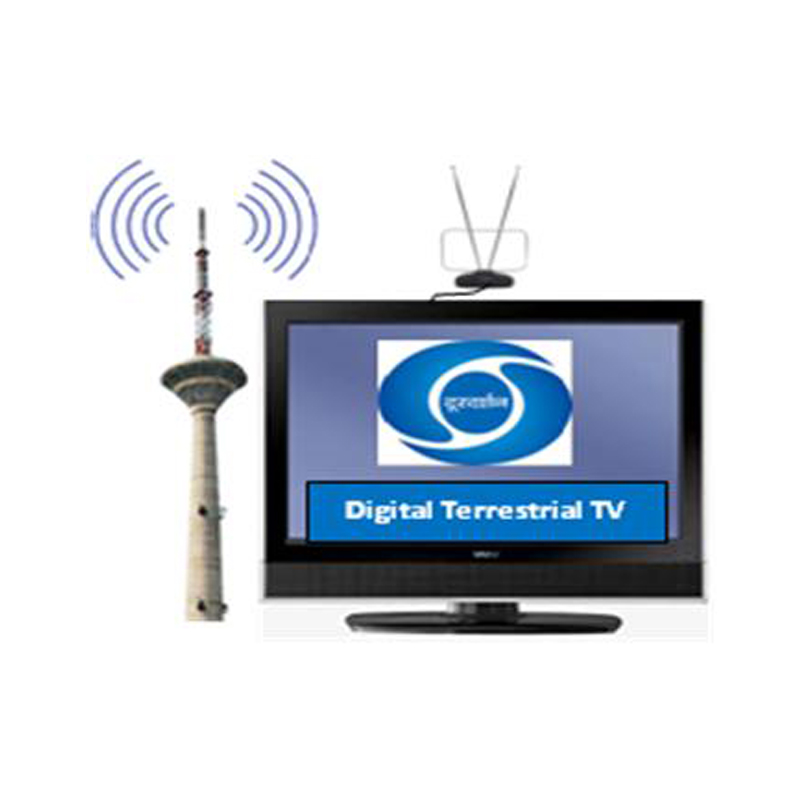
    NEW DELHI: Digital Terrestrial Transmission (DTT), which has until now remained a monopoly of the public broadcaster Doordarshan, is set for being opened up to private players in an effort to reach the largest audiences in the country.

    Similarly, the mobile TV, hanging fire for some years now in an on-off mode with policy-makers and regulators, too could become a reality.

    The Telecom Regulatory Authority of India (TRAI) today issued a consultation paper on DTT and mobile TV, asking stakeholders to respond by 22 July, 2016 with counter-comments by 5 August, 2016.

    Indiantelevision.com had earlier reported that the government was in the final stages of this exercise. Later, the website had also quoted Prasar Bharati Chief Executive Officer Jawhar Sircar as saying that the pubcaster was not afraid of possible entry of private players.

    DD, which presently has exclusive domain over terrestrial broadcasting, is ranked amongst the world’s largest terrestrial television networks. It has a network of 1,412 analog transmitters that provide TV services through two national channels namely, DD National and DD News.

    In addition to this, the DD network also broadcast several regional TV channels over the terrestrial network in a time sharing mode to meet the local and regional needs of people in different parts of the country. All TV channels provided by DD are free-to-air.

    India’s regulator, in its latest consultation paper, has sought feedback from stakeholders regarding DTT and mobile TV primarily on the following issues:

    Q.1 Do you perceive the need for introduction of DTT in presence of multiple broadcasting distribution platforms?

    Q.2 If yes, what should be the appropriate strategy for DTT implementation across the country?

    Q.3 Should DTT be opened for participation by the private players?

    Q.4 What should be the approach for implementing DTT network (MFN/SFN/Hybrid)?

    Q.5 What should be the criteria for arriving at optimum size of DTT multiplex at any location?

    Q.6 How many digital multiplex per DTT operator should be planned for metro, major cities, urban and rural areas and why?

    Q.7 What should be most appropriate frequency band as per National Frequency Allocation Plan 2011 for implementation of Digital 32 terrestrial transmission including mobile TV?

    Q.8 Should spectrum be exclusively earmarked for roll out of DTT services? If so, what should be the quantum considering the broadcasting sector requirement in totality?

    Q.9 What should be the roadmap for digitization of terrestrial TV network in the country?

    Q.10 What should be the analog switch off date(s) for the terrestrial TV channels in context with the suggested roadmap for DTT implementation?

    DTT for broadcasting TV programme services was first introduced in the UK in 1998 by deploying the first generation DVB-T standard developed by the European Digital Video Broadcasting (DVB) group.

    Since then, TRAI says, many new standards have evolved and at this juncture implementation of the second generation standards are underway. The DTT broadcasting spectrum has been harmonized with earlier analog spectrum allocation and therefore DTT makes use of similar analog channel allocations.

    Latest DTT technologies provide a number of advantages over analog terrestrial broadcasting technology. The main amongst them are the following:

    — Better quality TV reception

    — Efficient use of frequency (one DTT transmitter can broadcast multiple TV channels)

    —Possible frequency reuse

    — TV channels can also be received on mobile phones and handheld devices

    — The 7 or 8 MHz TV frequency band can accommodate 10-12 Standard Definition (SD) TV channels or it can be employed as a data pipe to deliver different type of services including radio services.

    — A DTT platform is flexible and content format agnostic as newer formats of TV channels such as HD TV, 3D TV, UHD TV, data and radio services, etc. can be delivered with reduced transmission power requirements.

    —Subsequent digitization also allows for government bodies to reclaim spectrum and repurpose it.

    Analog terrestrial broadcasting has several limitations including transmission being susceptible to Radio Frequency (RF) interference resulting in poorer reception quality; spectrally inefficient as more spectrums per TV channel is required and frequency reuse is limited, apart from other drawbacks.

    Quoting a recent global research report that studied DTT in 138 countries, including India, TRAI says in its paper the global digital TV penetration at the end of 2015 stands at 74.6 percent with 1170 million digital TV households in the world. There are 261.9 million analog terrestrial TV and 252 million DTT TV households. DTT households comprise 239.4 million FTA DTT and 12.6 million pay DTT households globally. Between 2010 and 2015, about 584 million digital TV homes were added, out of which 156 million came primarily from DTT, TRAI stated quoting the report.

    While admitting that many other countries have laid down clear roadmaps to switch-off analog terrestrial TV transmission with a transition to DTT, TRAI points out in India a clear roadmap is unavailable, though work for changeover from analog to digital terrestrial transmission by DD has already commenced.

    The full consultation paper of TRAI on this issue could be accessed at http://www.trai.gov.in/WriteReaddata/ConsultationPaper/Document/Consultation_Paper_24_june_2016.pdf.

  • TRAI issues paper on mobile TV, opening up DTT to pvt players; lists advantages over analog transmission

    TRAI issues paper on mobile TV, opening up DTT to pvt players; lists advantages over analog transmission

    NEW DELHI: Digital Terrestrial Transmission (DTT), which has until now remained a monopoly of the public broadcaster Doordarshan, is set for being opened up to private players in an effort to reach the largest audiences in the country.

    Similarly, the mobile TV, hanging fire for some years now in an on-off mode with policy-makers and regulators, too could become a reality.

    The Telecom Regulatory Authority of India (TRAI) today issued a consultation paper on DTT and mobile TV, asking stakeholders to respond by 22 July, 2016 with counter-comments by 5 August, 2016.

    Indiantelevision.com had earlier reported that the government was in the final stages of this exercise. Later, the website had also quoted Prasar Bharati Chief Executive Officer Jawhar Sircar as saying that the pubcaster was not afraid of possible entry of private players.

    DD, which presently has exclusive domain over terrestrial broadcasting, is ranked amongst the world’s largest terrestrial television networks. It has a network of 1,412 analog transmitters that provide TV services through two national channels namely, DD National and DD News.

    In addition to this, the DD network also broadcast several regional TV channels over the terrestrial network in a time sharing mode to meet the local and regional needs of people in different parts of the country. All TV channels provided by DD are free-to-air.

    India’s regulator, in its latest consultation paper, has sought feedback from stakeholders regarding DTT and mobile TV primarily on the following issues:

    Q.1 Do you perceive the need for introduction of DTT in presence of multiple broadcasting distribution platforms?

    Q.2 If yes, what should be the appropriate strategy for DTT implementation across the country?

    Q.3 Should DTT be opened for participation by the private players?

    Q.4 What should be the approach for implementing DTT network (MFN/SFN/Hybrid)?

    Q.5 What should be the criteria for arriving at optimum size of DTT multiplex at any location?

    Q.6 How many digital multiplex per DTT operator should be planned for metro, major cities, urban and rural areas and why?

    Q.7 What should be most appropriate frequency band as per National Frequency Allocation Plan 2011 for implementation of Digital 32 terrestrial transmission including mobile TV?

    Q.8 Should spectrum be exclusively earmarked for roll out of DTT services? If so, what should be the quantum considering the broadcasting sector requirement in totality?

    Q.9 What should be the roadmap for digitization of terrestrial TV network in the country?

    Q.10 What should be the analog switch off date(s) for the terrestrial TV channels in context with the suggested roadmap for DTT implementation?

    DTT for broadcasting TV programme services was first introduced in the UK in 1998 by deploying the first generation DVB-T standard developed by the European Digital Video Broadcasting (DVB) group.

    Since then, TRAI says, many new standards have evolved and at this juncture implementation of the second generation standards are underway. The DTT broadcasting spectrum has been harmonized with earlier analog spectrum allocation and therefore DTT makes use of similar analog channel allocations.

    Latest DTT technologies provide a number of advantages over analog terrestrial broadcasting technology. The main amongst them are the following:

    — Better quality TV reception

    — Efficient use of frequency (one DTT transmitter can broadcast multiple TV channels)

    —Possible frequency reuse

    — TV channels can also be received on mobile phones and handheld devices

    — The 7 or 8 MHz TV frequency band can accommodate 10-12 Standard Definition (SD) TV channels or it can be employed as a data pipe to deliver different type of services including radio services.

    — A DTT platform is flexible and content format agnostic as newer formats of TV channels such as HD TV, 3D TV, UHD TV, data and radio services, etc. can be delivered with reduced transmission power requirements.

    —Subsequent digitization also allows for government bodies to reclaim spectrum and repurpose it.

    Analog terrestrial broadcasting has several limitations including transmission being susceptible to Radio Frequency (RF) interference resulting in poorer reception quality; spectrally inefficient as more spectrums per TV channel is required and frequency reuse is limited, apart from other drawbacks.

    Quoting a recent global research report that studied DTT in 138 countries, including India, TRAI says in its paper the global digital TV penetration at the end of 2015 stands at 74.6 percent with 1170 million digital TV households in the world. There are 261.9 million analog terrestrial TV and 252 million DTT TV households. DTT households comprise 239.4 million FTA DTT and 12.6 million pay DTT households globally. Between 2010 and 2015, about 584 million digital TV homes were added, out of which 156 million came primarily from DTT, TRAI stated quoting the report.

    While admitting that many other countries have laid down clear roadmaps to switch-off analog terrestrial TV transmission with a transition to DTT, TRAI points out in India a clear roadmap is unavailable, though work for changeover from analog to digital terrestrial transmission by DD has already commenced.

    The full consultation paper of TRAI on this issue could be accessed at http://www.trai.gov.in/WriteReaddata/ConsultationPaper/Document/Consultation_Paper_24_june_2016.pdf.