Category: TRAI

  • TRAI to examine whether 4G offer can ‘Jio’ till Mar ’17

    TRAI to examine whether 4G offer can ‘Jio’ till Mar ’17

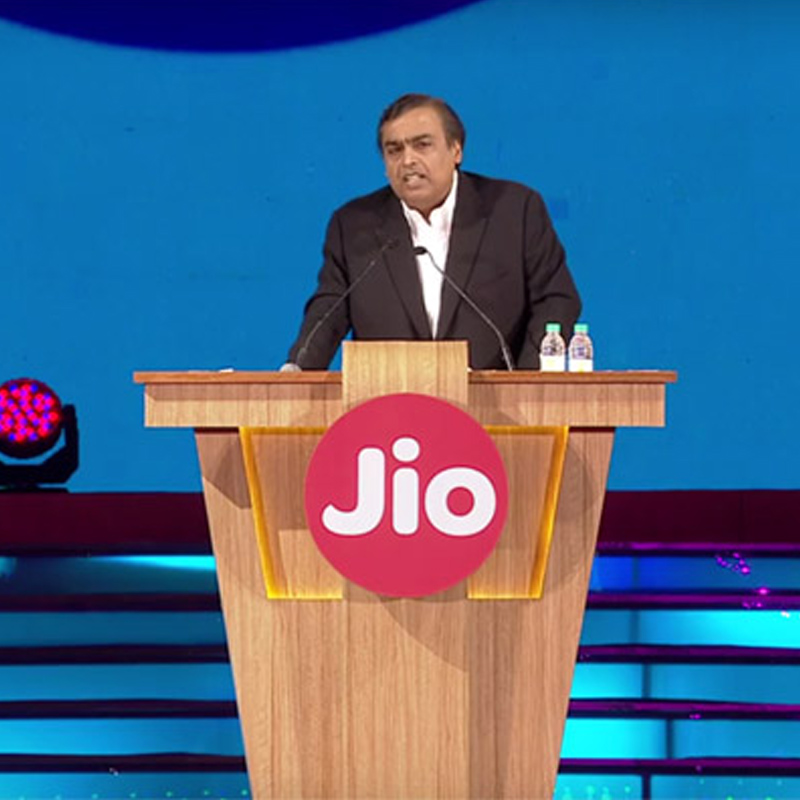
    MUMBAI: In his attempt to arduously chase the 100-million subscriber base, Reliance Jio CMD Mukesh Ambani announced extension of free domestic voice calls and data till 31 March, 2017, having crossed 50 million in 83 days. The Telecom Regulatory Authority of India (TRAI), however, said it will examine Jio’s latest offer providing free 4G services for all till 31 March.

    Jio’s new offer, meanwhile, struck a blow at competing incumbent operators — Idea Cellular, Bharti Airtel, and Vodafone India. The latest offer hurt the rivals’ share price. Airtel was down 1.66% at Rs 319.10 on the Bombay Stock Exchange (BSE), and Idea Cellular and Reliance Communications, respectively, dropped around 6% and 5%. By contrast, RIL price was up 0.45%.

    Ambani, on Thursday, announced the continuation of freebies currently being offered for fourth-generation (4G) long-term evolution (LTE) data and voice services till March next year. TRAI had earlier allowed Reliance Jio to provide free service till the end of this year.

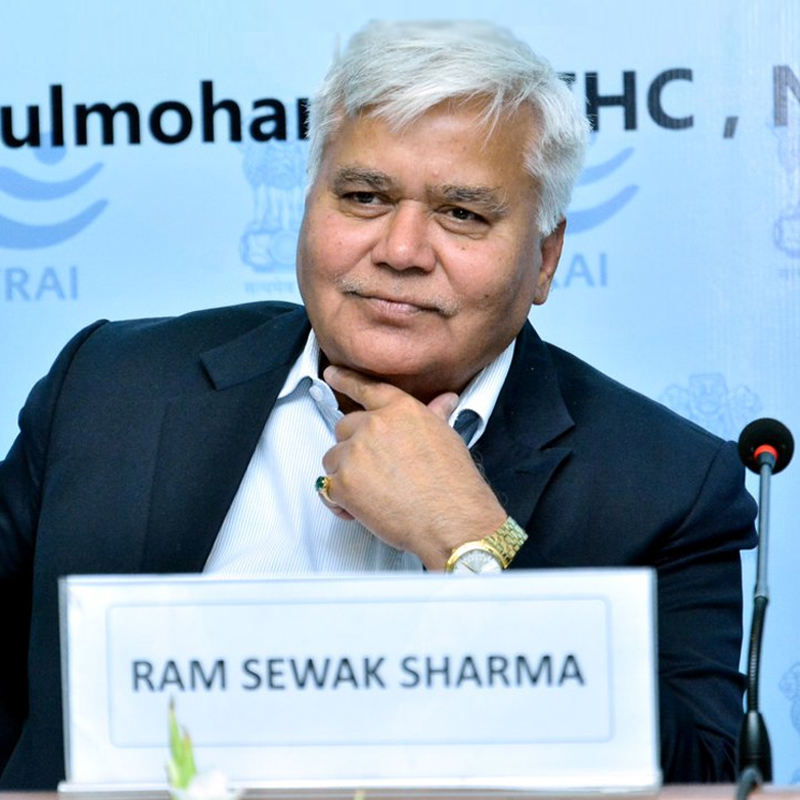
    About the validity of Jio’s offer, TRAI chairman R S Sharma said that they would look into it. Every tariff that was filed before the authority was examined. TRAI would give its response at an appropriate time, Sharma added. TRAI had earlier allowed the new operator to provide free services till the end of 2016 for subscribers who joined till 3 December.

    The Prime Minister’s Office (PMO) meantime stated that it did not formally allow use of the prime minister Narendra Modi’s picture in electronic and print advertisements of Reliance Jio.

    Meanwhile, lower penetration of broadband (7 per cent) may slow down the ‘Digital India’ drive, according to TRAI. Sharma suggested that a potential solution would be to use connections for cable TV for broadband delivery. TRAI has already made the recommendation to the government, he added. Digital India would have to ride on that infrastructure, and if India did not have robust infrastructure, it was not going to achieve the objective of knowledge economy, Sharma added.

    Also read:

    http://www.indiantelevision.com/iworld/telecom/jio-money-merchant-app-helps-transition-to-cashless-economy-161201

    http://www.indiantelevision.com/iworld/telecom/jio-extends-hny-free-data-offer-up-to-31-march-17-161201

  • TRAI to examine whether 4G offer can ‘Jio’ till Mar ’17

    TRAI to examine whether 4G offer can ‘Jio’ till Mar ’17

    MUMBAI: In his attempt to arduously chase the 100-million subscriber base, Reliance Jio CMD Mukesh Ambani announced extension of free domestic voice calls and data till 31 March, 2017, having crossed 50 million in 83 days. The Telecom Regulatory Authority of India (TRAI), however, said it will examine Jio’s latest offer providing free 4G services for all till 31 March.

    Jio’s new offer, meanwhile, struck a blow at competing incumbent operators — Idea Cellular, Bharti Airtel, and Vodafone India. The latest offer hurt the rivals’ share price. Airtel was down 1.66% at Rs 319.10 on the Bombay Stock Exchange (BSE), and Idea Cellular and Reliance Communications, respectively, dropped around 6% and 5%. By contrast, RIL price was up 0.45%.

    Ambani, on Thursday, announced the continuation of freebies currently being offered for fourth-generation (4G) long-term evolution (LTE) data and voice services till March next year. TRAI had earlier allowed Reliance Jio to provide free service till the end of this year.

    About the validity of Jio’s offer, TRAI chairman R S Sharma said that they would look into it. Every tariff that was filed before the authority was examined. TRAI would give its response at an appropriate time, Sharma added. TRAI had earlier allowed the new operator to provide free services till the end of 2016 for subscribers who joined till 3 December.

    The Prime Minister’s Office (PMO) meantime stated that it did not formally allow use of the prime minister Narendra Modi’s picture in electronic and print advertisements of Reliance Jio.

    Meanwhile, lower penetration of broadband (7 per cent) may slow down the ‘Digital India’ drive, according to TRAI. Sharma suggested that a potential solution would be to use connections for cable TV for broadband delivery. TRAI has already made the recommendation to the government, he added. Digital India would have to ride on that infrastructure, and if India did not have robust infrastructure, it was not going to achieve the objective of knowledge economy, Sharma added.

    Also read:

    http://www.indiantelevision.com/iworld/telecom/jio-money-merchant-app-helps-transition-to-cashless-economy-161201

    http://www.indiantelevision.com/iworld/telecom/jio-extends-hny-free-data-offer-up-to-31-march-17-161201
  • Consumers may get 60-day notice from unprofessional telcos

    Consumers may get 60-day notice from unprofessional telcos

    MUMBAI: The latest consultation paper of the Telecom Regulatory Authority of India (TRAI) is about issues related to closure of mobile phone services. TRAI seeks to extend the time mobile users get to change their service-provider if a particular company is shutting shop or selling its spectrum.

    The paper titled ‘Closure of Access Service” will seek feedback from telecom eco-system stakeholders to set up a framework to give an extended time and more options to users facing termination of services. A licence coming to fruition or failure of the service provider to bag spectrum or spectrum trading are normally the reasons behind an entity shutting shop.

    TRAI took note of three significant instances. Reliance Communications stopped CDMA services and migrated to LTE. Airtel acquired spectrum from Aircel and Videocon through trading deals. In some cases, operators do not renew the spectrum and stop offering services in a particular area. Tata Docomo has lost subscribers due to such non-renewal.

    The paper follows complaints from the subscribers who said they did not receive adequate notice or communication from their service-provider and their mobile number was disconnected. If TRAI has its way, cell-phone users will get more time to change their company in such a case.

    A mobile user currently gets 30 days to change its service-provider but this has been found to be far less than expected. The law requires the company to give the department of telecommunications (DoT) a 60-day notice in such a scenario.

    India’s low broadband penetration is a matter of concern and the government needs to do a lot more work in the field to go up in the global ladder, TRAI chairperson RS Sharma said.

    Addressing Assocham summit, Sharma said that, according to an ITU paper, the penetration in India was only 7%. He said the report stated that India was even behind countries such as Singapore, Thailand and Malaysia.

    TRAI has recommended to the government on using cable television network for broadband delivery. In developed US and in Europe, around 50-60 per cent broadband comes from Digital Cable TV, he added.

    Foreign direct investment (FDI) attracted by the telecom sector in India meanwhile has jumped to more than US$10 billion in the first eight months of 2016-17 registering a 6-7 fold increase as compared to 2014-15 and 2015-16, telecom secretary JS Deepak said at the summit.

    Considering about 97% of population was covered by the 2G telecom network provided mostly by private telecom operators, there was a need to both popularise and simplify USSD (unstructured supplementary service data), he added. There was a need to work on a push USSD rather than a pull USSD, merchants should be able to push in a message to feature phone users where-in one just has to okay it for a transaction, he said.

  • Consumers may get 60-day notice from unprofessional telcos

    Consumers may get 60-day notice from unprofessional telcos

    MUMBAI: The latest consultation paper of the Telecom Regulatory Authority of India (TRAI) is about issues related to closure of mobile phone services. TRAI seeks to extend the time mobile users get to change their service-provider if a particular company is shutting shop or selling its spectrum.

    The paper titled ‘Closure of Access Service” will seek feedback from telecom eco-system stakeholders to set up a framework to give an extended time and more options to users facing termination of services. A licence coming to fruition or failure of the service provider to bag spectrum or spectrum trading are normally the reasons behind an entity shutting shop.

    TRAI took note of three significant instances. Reliance Communications stopped CDMA services and migrated to LTE. Airtel acquired spectrum from Aircel and Videocon through trading deals. In some cases, operators do not renew the spectrum and stop offering services in a particular area. Tata Docomo has lost subscribers due to such non-renewal.

    The paper follows complaints from the subscribers who said they did not receive adequate notice or communication from their service-provider and their mobile number was disconnected. If TRAI has its way, cell-phone users will get more time to change their company in such a case.

    A mobile user currently gets 30 days to change its service-provider but this has been found to be far less than expected. The law requires the company to give the department of telecommunications (DoT) a 60-day notice in such a scenario.

    India’s low broadband penetration is a matter of concern and the government needs to do a lot more work in the field to go up in the global ladder, TRAI chairperson RS Sharma said.

    Addressing Assocham summit, Sharma said that, according to an ITU paper, the penetration in India was only 7%. He said the report stated that India was even behind countries such as Singapore, Thailand and Malaysia.

    TRAI has recommended to the government on using cable television network for broadband delivery. In developed US and in Europe, around 50-60 per cent broadband comes from Digital Cable TV, he added.

    Foreign direct investment (FDI) attracted by the telecom sector in India meanwhile has jumped to more than US$10 billion in the first eight months of 2016-17 registering a 6-7 fold increase as compared to 2014-15 and 2015-16, telecom secretary JS Deepak said at the summit.

    Considering about 97% of population was covered by the 2G telecom network provided mostly by private telecom operators, there was a need to both popularise and simplify USSD (unstructured supplementary service data), he added. There was a need to work on a push USSD rather than a pull USSD, merchants should be able to push in a message to feature phone users where-in one just has to okay it for a transaction, he said.

  • TRAI norms violated in VoIP minutes sale

    TRAI norms violated in VoIP minutes sale

    MUMBAI: Norms set by the Telecom Regulatory Authority of India norms were flouted in the sale of voice-over-internet-protocol (VoIP) minutes to illegal call centres in Ahmedabad. An official said that TRAI offered VoIP bandwidth for a certain fee to licence-holders.

    A four-member panel of IPS officers led by Ahmedabad police chief A K Singh, formed to investigate the bogus ‘call centre’ racket, is probing how the TRAI norms were violated in the sale of VoIP minutes to illegal call centres. Illicit call centres utilised VoIP minutes to defraud US citizens worth lakhs a few days ago.

    TRAI had earlier this year planned to set inter-connection charges for Voice over Internet Protocol (VoIP) calls once the Department of Telecom (DoT) amended the relevant clause. The regulator suggested amending the licence provision for inter-connection at the IP level, which would ease Internet-based calls, alternatively known as VoIP calls.

    Officials in Ahmedabad (Gujarat) were studying how other regulatory norms were violated by the alleged racketeers. Other agencies such as the department of industries and department of science and technology could keep a watch on such centres. A police officer said the alleged nexus between the accused and the police was also being probed.

    The crime branch last week arrested Hardik Patel (a namesake of the controversial Patel leader), who had allegedly sold the minutes to a call centre in the Chandkheda area of Ahmedabad. Officials are investigating if Patel had a licence to sell VoIP minutes or if he purchased them from another licence-holder and then sold them to one Pritesh Joshi who managed call centre.

    A telecom company is required to pay inter-connection charges when its subscriber makes a call to one on another network. The charge gets added up in the final price, which the subscriber has to pay. At present, there are no inter-connection charges for VoIP calls as the licence did not have a clause for inter-connection at IP level.

    There was no means of determining the charges till the time licence is amended. Recommending to amend the licence, TRAI said there was no explicit clause relating to inter-connection at the IP level. Since IP-based networks, the regulator said, are continuing to grow, and traditional circuit switch networks are being slowly phased out, there is a requirement to facilitate inter-connection.

  • TRAI norms violated in VoIP minutes sale

    TRAI norms violated in VoIP minutes sale

    MUMBAI: Norms set by the Telecom Regulatory Authority of India norms were flouted in the sale of voice-over-internet-protocol (VoIP) minutes to illegal call centres in Ahmedabad. An official said that TRAI offered VoIP bandwidth for a certain fee to licence-holders.

    A four-member panel of IPS officers led by Ahmedabad police chief A K Singh, formed to investigate the bogus ‘call centre’ racket, is probing how the TRAI norms were violated in the sale of VoIP minutes to illegal call centres. Illicit call centres utilised VoIP minutes to defraud US citizens worth lakhs a few days ago.

    TRAI had earlier this year planned to set inter-connection charges for Voice over Internet Protocol (VoIP) calls once the Department of Telecom (DoT) amended the relevant clause. The regulator suggested amending the licence provision for inter-connection at the IP level, which would ease Internet-based calls, alternatively known as VoIP calls.

    Officials in Ahmedabad (Gujarat) were studying how other regulatory norms were violated by the alleged racketeers. Other agencies such as the department of industries and department of science and technology could keep a watch on such centres. A police officer said the alleged nexus between the accused and the police was also being probed.

    The crime branch last week arrested Hardik Patel (a namesake of the controversial Patel leader), who had allegedly sold the minutes to a call centre in the Chandkheda area of Ahmedabad. Officials are investigating if Patel had a licence to sell VoIP minutes or if he purchased them from another licence-holder and then sold them to one Pritesh Joshi who managed call centre.

    A telecom company is required to pay inter-connection charges when its subscriber makes a call to one on another network. The charge gets added up in the final price, which the subscriber has to pay. At present, there are no inter-connection charges for VoIP calls as the licence did not have a clause for inter-connection at IP level.

    There was no means of determining the charges till the time licence is amended. Recommending to amend the licence, TRAI said there was no explicit clause relating to inter-connection at the IP level. Since IP-based networks, the regulator said, are continuing to grow, and traditional circuit switch networks are being slowly phased out, there is a requirement to facilitate inter-connection.

  • Public Wi-Fi: TRAI extends time for responses

    Public Wi-Fi: TRAI extends time for responses

    NEW DELHI: In view of the importance attached to public Wi-Fi systems, the Telecom Regulatory Authority of India has extended time for responses to its consultation paper till 9 December 2016 but stressed no further extension would be given.

    The paper issued on 15 November was the second one issued on the subject of Wi-Fi and dealt with scalable public interoperability of Wi-Fi networks.

    Earlier, TRAI had said it realised the importance of public Wi-Fi networks as complementary to existing landline and cellular mobile infrastructure in improving broadband penetration and adoption of Digital India. Earlier on 13 July 2016, TRAI had issued a paper on “Proliferation of Broadband through Public Wi-Fi Networks” which was followed by reactions and then a workshop in Bengaluru.

    The objective of the new paper posing six questions is two-fold:

    a) To explore whether the model proposed in this Note can be incorporated in Public Wi-Fi networks to promote appropriate monetisation and business models for sustainable and scalable infrastructure deployment.

    b) To explore the roles of different stakeholders in the Public Wi-Fi network value chain and build an ecosystem for promoting scalable and sustainable partnerships for large scale nation wide deployment.

    Also read:  Public Wi-Fi: TRAI plans to evolve model, releases paper

  • Public Wi-Fi: TRAI extends time for responses

    Public Wi-Fi: TRAI extends time for responses

    NEW DELHI: In view of the importance attached to public Wi-Fi systems, the Telecom Regulatory Authority of India has extended time for responses to its consultation paper till 9 December 2016 but stressed no further extension would be given.

    The paper issued on 15 November was the second one issued on the subject of Wi-Fi and dealt with scalable public interoperability of Wi-Fi networks.

    Earlier, TRAI had said it realised the importance of public Wi-Fi networks as complementary to existing landline and cellular mobile infrastructure in improving broadband penetration and adoption of Digital India. Earlier on 13 July 2016, TRAI had issued a paper on “Proliferation of Broadband through Public Wi-Fi Networks” which was followed by reactions and then a workshop in Bengaluru.

    The objective of the new paper posing six questions is two-fold:

    a) To explore whether the model proposed in this Note can be incorporated in Public Wi-Fi networks to promote appropriate monetisation and business models for sustainable and scalable infrastructure deployment.

    b) To explore the roles of different stakeholders in the Public Wi-Fi network value chain and build an ecosystem for promoting scalable and sustainable partnerships for large scale nation wide deployment.

    Also read:  Public Wi-Fi: TRAI plans to evolve model, releases paper

  • TRAI reduces ceiling tariff for mobile banking services

    TRAI reduces ceiling tariff for mobile banking services

    NEW DELHI: It couldn’t have come at a more opportune moment, especially when the country is reeling under a severe cash crunch in the aftermath of demonetization of Rs 500 and Rs 1,000 currency notes. Telecom Regulatory Authority of India (TRAI) in an order yesterday reduced the ceiling tariff for the use of unstructured supplementary service data (USSD)-based mobile banking services from Rs 1.50 to Rs.0.50.

    TRAI also amended the Mobile Banking (Quality of Service) Regulations to increase the number of stages from 5 to 8 per USSD session.

    These amendments will facilitate banks, their agents or any entity authorized by the Reserve Bank of India for better delivery of banking and payment services to the consumers through mobile phones over USSD.

    Though these regulatory decisions are an outcome of a detailed consultation process initiated in August 2016, the timing cannot be missed as PM Modi-led government’s move on arresting black money and bring about more transparency through digitalization, including digital banking, has led to partial chaos in society and economy in the short to medium terms.

    “The availability of and easy access to banking services for all our citizens is a major objective of public policy. However, the harsh reality is that a large section of our population is still unbanked/under-banked. With a significant penetration of mobile telephony in rural India, the mobile phone can be leveraged to achieve the goal of financial inclusion. Accordingly, in November, 2013, with a view to facilitate mobile banking for financial inclusion, TRAI had established a framework to facilitate the agents of the banks to interface with the access service providers for use of SMS, USSD and IVR channels to provide mobile banking services and prescribed ceiling tariff of Rs. 1.50 per USSD session for USSD-based mobile banking service. However, all these initiatives did not lead to the desired result and both the number of transactions and success rate are below expectation,” TRAI said in a statement while mandating the tariff reductions.

    The latest diktat on USSD tariffs, which come into force with immediate effect, would, according to TRAI, hopefully result in greater financial inclusion in the country and contribute to the fulfillment of an important aspect of Digital India by encouraging a ‘less cash’ society.

    Welcoming the government’s initiatives to accelerate India’s progress into a `less cash’ economy, Vodafone India MD & CEO Sunil Sood said, “Vodafone India is committed to help actualise the government’s several initiatives designed to make India a digital economy. To ease the burden of masses, we are waiving off all USSD charges presently levied for mobile banking till 31 December 2016. As several million customers use feature phones, we are hopeful that this free access to mobile banking will encourage them to adopt it as their preferred and convenient mode for banking.”

  • TRAI reduces ceiling tariff for mobile banking services

    TRAI reduces ceiling tariff for mobile banking services

    NEW DELHI: It couldn’t have come at a more opportune moment, especially when the country is reeling under a severe cash crunch in the aftermath of demonetization of Rs 500 and Rs 1,000 currency notes. Telecom Regulatory Authority of India (TRAI) in an order yesterday reduced the ceiling tariff for the use of unstructured supplementary service data (USSD)-based mobile banking services from Rs 1.50 to Rs.0.50.

    TRAI also amended the Mobile Banking (Quality of Service) Regulations to increase the number of stages from 5 to 8 per USSD session.

    These amendments will facilitate banks, their agents or any entity authorized by the Reserve Bank of India for better delivery of banking and payment services to the consumers through mobile phones over USSD.

    Though these regulatory decisions are an outcome of a detailed consultation process initiated in August 2016, the timing cannot be missed as PM Modi-led government’s move on arresting black money and bring about more transparency through digitalization, including digital banking, has led to partial chaos in society and economy in the short to medium terms.

    “The availability of and easy access to banking services for all our citizens is a major objective of public policy. However, the harsh reality is that a large section of our population is still unbanked/under-banked. With a significant penetration of mobile telephony in rural India, the mobile phone can be leveraged to achieve the goal of financial inclusion. Accordingly, in November, 2013, with a view to facilitate mobile banking for financial inclusion, TRAI had established a framework to facilitate the agents of the banks to interface with the access service providers for use of SMS, USSD and IVR channels to provide mobile banking services and prescribed ceiling tariff of Rs. 1.50 per USSD session for USSD-based mobile banking service. However, all these initiatives did not lead to the desired result and both the number of transactions and success rate are below expectation,” TRAI said in a statement while mandating the tariff reductions.

    The latest diktat on USSD tariffs, which come into force with immediate effect, would, according to TRAI, hopefully result in greater financial inclusion in the country and contribute to the fulfillment of an important aspect of Digital India by encouraging a ‘less cash’ society.

    Welcoming the government’s initiatives to accelerate India’s progress into a `less cash’ economy, Vodafone India MD & CEO Sunil Sood said, “Vodafone India is committed to help actualise the government’s several initiatives designed to make India a digital economy. To ease the burden of masses, we are waiving off all USSD charges presently levied for mobile banking till 31 December 2016. As several million customers use feature phones, we are hopeful that this free access to mobile banking will encourage them to adopt it as their preferred and convenient mode for banking.”