Category: TRAI

  • Wi-fi proliferation: Discussion on 20 Dec

    Wi-fi proliferation: Discussion on 20 Dec

    NEW DELHI: In view of the importance attached to public Wi-Fi systems, the Telecom Regulatory Authority of India will be holding an open house discussion on 20 December 2016 in the capital on its consultation paper on “Proliferation of Broadband through Public Wi-Fi Networks” issued on 13 July 2016.

    The issuance of this paper was followed by reactions and then a workshop in Bengaluru.

    Through a set of 12 questions, the Authority had sought to get the opinion of stakeholders including internet and telecom service providers on how best Wi-fi (an acronym for Wireless Fidelity) can grow in the country.

    At the outset, the regulator had noted that the growth of Internet penetration in India and realisation of its full potential is closely tied to the proliferation of broadband services. “Broadband” is currently defined to mean a data connection that is able to support interactive services, including Internet access, with the capability of a minimum download speed of 512 kbps. It therefore refers to a means of delivering high-speed Internet access services.

    Later, on 16 November, TRAI issued a second paper on model for nation-wide interoperable and scalable wi-fi networks.

    Earlier, TRAI had said it realised the importance of public Wi-Fi networks as complementary to existing landline and cellular mobile infrastructure in improving broadband penetration and adoption of Digital India.

    The objective of the new paper issued last month posing six questions was two-fold:

    a) To explore whether the model proposed in this Note can be incorporated in Public Wi-Fi networks to promote appropriate monetization and business models for sustainable and scalable infrastructure deployment.

    b) To explore the roles of different stakeholders in the Public Wi-Fi network value chain and build an ecosystem for promoting scalable and sustainable partnerships for large scale nation wide deployment.

    Also read:

    Public Wi-Fi: TRAI plans to evolve model, releases paper


  • Wi-fi proliferation: Discussion on 20 Dec

    Wi-fi proliferation: Discussion on 20 Dec

    NEW DELHI: In view of the importance attached to public Wi-Fi systems, the Telecom Regulatory Authority of India will be holding an open house discussion on 20 December 2016 in the capital on its consultation paper on “Proliferation of Broadband through Public Wi-Fi Networks” issued on 13 July 2016.

    The issuance of this paper was followed by reactions and then a workshop in Bengaluru.

    Through a set of 12 questions, the Authority had sought to get the opinion of stakeholders including internet and telecom service providers on how best Wi-fi (an acronym for Wireless Fidelity) can grow in the country.

    At the outset, the regulator had noted that the growth of Internet penetration in India and realisation of its full potential is closely tied to the proliferation of broadband services. “Broadband” is currently defined to mean a data connection that is able to support interactive services, including Internet access, with the capability of a minimum download speed of 512 kbps. It therefore refers to a means of delivering high-speed Internet access services.

    Later, on 16 November, TRAI issued a second paper on model for nation-wide interoperable and scalable wi-fi networks.

    Earlier, TRAI had said it realised the importance of public Wi-Fi networks as complementary to existing landline and cellular mobile infrastructure in improving broadband penetration and adoption of Digital India.

    The objective of the new paper issued last month posing six questions was two-fold:

    a) To explore whether the model proposed in this Note can be incorporated in Public Wi-Fi networks to promote appropriate monetization and business models for sustainable and scalable infrastructure deployment.

    b) To explore the roles of different stakeholders in the Public Wi-Fi network value chain and build an ecosystem for promoting scalable and sustainable partnerships for large scale nation wide deployment.

    Also read:

    Public Wi-Fi: TRAI plans to evolve model, releases paper


  • TRAI draft tariff order skewed in favour of DPOs, will harm industry: IBF

    TRAI draft tariff order skewed in favour of DPOs, will harm industry: IBF

    NEW DELHI: The Indian Broadcasting Foundation (IBF), an apex body of broadcasting companies, has criticised sector regulator TRAI for over-regulating and proposing draft guidelines on tariff and interconnection that are skewed in favour of distribution platform operators (DPOs).

    Responding to Telecom Regulatory Authority of India (TRAI) draft orders relating to tariff, inter-connections and quality of service, IBF said the new regime will lead to “de-growth” of the industry and discourage investments and production of good quality content in the television industry.

    Pointing out that the proposed regulatory regime “regresses rather than advances”, IBF in a lengthy reply has said with over 830 channels for consumers to choose from and a large pubcaster offering of over 100 private and public TV channels, whether there a “need to regulate all aspects of a set of 200 odd pay TV channels”.

    “The question for the Authority would be, is there proven evidence of market failure that a dire need has arisen to over-regulate these 200 odd pay TV channels(?). We are of the firm belief that there is no compelling reason to regulate these channels and, accordingly, only a light touch regulation, if at all, ought to have been proposed,” IBF has submitted justifying its criticism of  draft  guidelines.

    Contending that pay TV channels (read cable and DTH services) were not essential services IBF counters there was no compelling reason to regulate these channels. “The present tariff order is based on the ‘erroneous premise’ that pay TV channels are essential services,” the broadcasting industry body said.

    Citing international copyrights and IPR laws, IBF pointed out that whole exercise undertaken by TRAI was in direct conflict with the provisions of the Indian Copyright Act, 1957.

    According to IBF, the proposed tariff and inter-connect orders conflict with the Copyright Act in the following ways and need to be “harmonised”:

    a.       The proposed tariff order(s) that impose restrictions on nature of content, prices of channels, mandated discount caps and commissions, manner of offering, etc have to be reviewed and modified in the light of specific copyright laws providing freedom to broadcast organisations to charge royalties and any other consideration/fees for their works and BRR in accordance with the market demands and contract laws.

    b.      The draft interconnect regulations issued by TRAI that take away the broadcast organisations’ exclusive rights to deal and imposes restrictions on their contractual abilities and takes away their ability to negotiate the terms of trade need to be reviewed and modified to harmonise the same with the provisions of the Copyright Act pertaining to voluntary licensing and assignments by Broadcast Organisations by permitting mutual negotiations.

    c.       The existing commercial tariff orders and regulations issued by TRAI in relation to commercial establishments is also at odds with copyright laws in as much as the Copyright Act clearly provides broadcast organisations the right to charge differential rates of royalties and license fees on commercial establishments vis-a-vis domestic/residential subscribers.

    Going a step further, IBF has raised questions over transparency and the manner in which draft guidelines were issued: “The draft consultations also do not meet the threshold of transparency mandated by Section 11(4) of the TRAI Act 1997, which requires that the Authority will ensure transparency while exercising its powers and discharging its functions.”

    Also Read:

    TRAI unlikely to take final call on draft orders soon

  • TRAI draft tariff order skewed in favour of DPOs, will harm industry: IBF

    TRAI draft tariff order skewed in favour of DPOs, will harm industry: IBF

    NEW DELHI: The Indian Broadcasting Foundation (IBF), an apex body of broadcasting companies, has criticised sector regulator TRAI for over-regulating and proposing draft guidelines on tariff and interconnection that are skewed in favour of distribution platform operators (DPOs).

    Responding to Telecom Regulatory Authority of India (TRAI) draft orders relating to tariff, inter-connections and quality of service, IBF said the new regime will lead to “de-growth” of the industry and discourage investments and production of good quality content in the television industry.

    Pointing out that the proposed regulatory regime “regresses rather than advances”, IBF in a lengthy reply has said with over 830 channels for consumers to choose from and a large pubcaster offering of over 100 private and public TV channels, whether there a “need to regulate all aspects of a set of 200 odd pay TV channels”.

    “The question for the Authority would be, is there proven evidence of market failure that a dire need has arisen to over-regulate these 200 odd pay TV channels(?). We are of the firm belief that there is no compelling reason to regulate these channels and, accordingly, only a light touch regulation, if at all, ought to have been proposed,” IBF has submitted justifying its criticism of  draft  guidelines.

    Contending that pay TV channels (read cable and DTH services) were not essential services IBF counters there was no compelling reason to regulate these channels. “The present tariff order is based on the ‘erroneous premise’ that pay TV channels are essential services,” the broadcasting industry body said.

    Citing international copyrights and IPR laws, IBF pointed out that whole exercise undertaken by TRAI was in direct conflict with the provisions of the Indian Copyright Act, 1957.

    According to IBF, the proposed tariff and inter-connect orders conflict with the Copyright Act in the following ways and need to be “harmonised”:

    a.       The proposed tariff order(s) that impose restrictions on nature of content, prices of channels, mandated discount caps and commissions, manner of offering, etc have to be reviewed and modified in the light of specific copyright laws providing freedom to broadcast organisations to charge royalties and any other consideration/fees for their works and BRR in accordance with the market demands and contract laws.

    b.      The draft interconnect regulations issued by TRAI that take away the broadcast organisations’ exclusive rights to deal and imposes restrictions on their contractual abilities and takes away their ability to negotiate the terms of trade need to be reviewed and modified to harmonise the same with the provisions of the Copyright Act pertaining to voluntary licensing and assignments by Broadcast Organisations by permitting mutual negotiations.

    c.       The existing commercial tariff orders and regulations issued by TRAI in relation to commercial establishments is also at odds with copyright laws in as much as the Copyright Act clearly provides broadcast organisations the right to charge differential rates of royalties and license fees on commercial establishments vis-a-vis domestic/residential subscribers.

    Going a step further, IBF has raised questions over transparency and the manner in which draft guidelines were issued: “The draft consultations also do not meet the threshold of transparency mandated by Section 11(4) of the TRAI Act 1997, which requires that the Authority will ensure transparency while exercising its powers and discharging its functions.”

    Also Read:

    TRAI unlikely to take final call on draft orders soon

  • Regulation must facilitate tech, not kill it:  TRAI chief

    Regulation must facilitate tech, not kill it: TRAI chief

    NEW DELHI: The chief regulator of India’s telecom and broadcast carriage sectors has said regulation should not kill a technology, fledgling or otherwise, and that consumer interest and a level playing field for all players should be the basis for tech-related regulations.

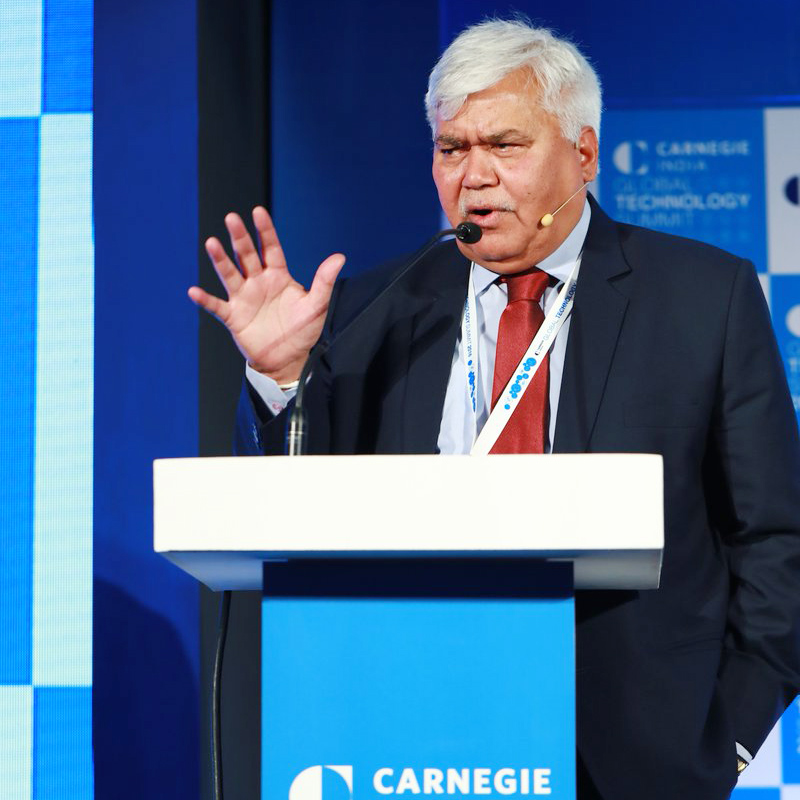
    “Technology must be facilitated by regulation, not throttled by it, “Telecoms and Regulatory Authority of India (TRAI) chairman RS Sharma said on Tuesday while speaking at the opening session of Technology Summit 2016, organised by Carnegie India.

    The TRAI chief, criticised by many for catering to populist measures and bringing in regulations that impede new technology and innovation, said that “consumer protection and creating a level playing field for all are our guidelines for regulating technology.”

    The tech summit was organised with an aim to bring together technologists, entrepreneurs, academics and policy makers to reflect on rapid technological changes and recommend policy measures to harness this transformation for India’s development.

    Pointing out that India the `Digital India’ initiative — one of the pet schemes of PM Modi — is about digital infrastructure, software innovation and empowering citizens to use technology, Sharma said, “ India can lead the world in technology and share the architecture of regulatory principles that has been created.”

    Highlighting the digital innovations introduced by the present government in New Delhi, Sharma said e-signature, for example, was one such move and costs “Rs.1 thanks to #Aadhar, a paperless, robust, digital identity that protects (individual) privacy.” He also stressed that focus of digitisation was to provide digital “identity infrastructure to all the citizens of India”.

    Indiantelevision.com was not present at the Carnegie India tech summit in Bengaluru held on December 6 and 7, 2016 and this news report has been drafted based on a series of tweets by the organisers and re-tweeted by Sharma via his Twitter handle @rssharma3.

  • Regulation must facilitate tech, not kill it:  TRAI chief

    Regulation must facilitate tech, not kill it: TRAI chief

    NEW DELHI: The chief regulator of India’s telecom and broadcast carriage sectors has said regulation should not kill a technology, fledgling or otherwise, and that consumer interest and a level playing field for all players should be the basis for tech-related regulations.

    “Technology must be facilitated by regulation, not throttled by it, “Telecoms and Regulatory Authority of India (TRAI) chairman RS Sharma said on Tuesday while speaking at the opening session of Technology Summit 2016, organised by Carnegie India.

    The TRAI chief, criticised by many for catering to populist measures and bringing in regulations that impede new technology and innovation, said that “consumer protection and creating a level playing field for all are our guidelines for regulating technology.”

    The tech summit was organised with an aim to bring together technologists, entrepreneurs, academics and policy makers to reflect on rapid technological changes and recommend policy measures to harness this transformation for India’s development.

    Pointing out that India the `Digital India’ initiative — one of the pet schemes of PM Modi — is about digital infrastructure, software innovation and empowering citizens to use technology, Sharma said, “ India can lead the world in technology and share the architecture of regulatory principles that has been created.”

    Highlighting the digital innovations introduced by the present government in New Delhi, Sharma said e-signature, for example, was one such move and costs “Rs.1 thanks to #Aadhar, a paperless, robust, digital identity that protects (individual) privacy.” He also stressed that focus of digitisation was to provide digital “identity infrastructure to all the citizens of India”.

    Indiantelevision.com was not present at the Carnegie India tech summit in Bengaluru held on December 6 and 7, 2016 and this news report has been drafted based on a series of tweets by the organisers and re-tweeted by Sharma via his Twitter handle @rssharma3.

  • M2M communications feedback time extended till 12 January

    M2M communications feedback time extended till 12 January

    NEW DELHI: As M2M communication is an upcoming vertical covering variety of issues, the Telecom Regulatory Authority of India has for the second time extended the date for responses to its paper to 12 January 2017 and for counter-comments up to the 19 January 2017.

    Noting that no further extension will be given, TRAI has said that the second extension follows the request by industry associations due to cross sectoral impact of M2M and lnternet of Things.

    TRAI has written to all the state governments and union territories and various ministries of central government seeking their inputs for the sectors those are foreseen to get impacted with the deployment of M2M devices. Inputs from wider consultation with state governments & UTs and various Ministries will be valuable in forming a comprehensive recommendation by the Authority.

    The Consultation Paper is on “Spectrum, Roaming and QoS related requirements in Machine-to-Machine (M2M) Communications” dated 18 October 2016.

    In the paper which posed 16 questions, TRAI said the digital space had witnessed exponential evolution in the last couple of years and would continue to evolve rapidly. The latest entrant to the digital space is the Machine-to-Machine (M2M) communications.

    Expansion and evolution of networks, falling costs of hardware like sensors and actuators, increasing battery life, new business models etc are the major factors leading to the emergence of services like remote monitoring of patients, automatic security systems, connected cars, smart grid etc. The connected devices deliver innovative services by utilising the M2M communication technologies.

    M2M communication has potential to bring substantial social and economic benefits to governments, citizens, end-users and businesses through increase in productivity and competitiveness, improvements in service delivery, optimal use of scarce resources as well as creation of new jobs.

    Although forecasts indicate a significant opportunity in this field, this industry is still in a nascent stage. The M2M ecosystem is composed of a large number of diverse players, deploying innovative services across different networks, technologies and devices. Providing clarity and consistency of regulation for equivalent services, as well as policies that enable growth, will play a significant role in fully capturing its opportunity to stimulate this market.

    The government has recognised the potential of M2M communication and emphasized the same in the National Telecom Policy (NTP) 2012.

    Accordingly in May 2015, the Government had come out with its ‘National Telecom M2M roadmap’ with the purpose of boosting development of M2M based products and to provide efficient citizen centric services in India.

    The paper is available on the TRAI website trai.gov.in

  • M2M communications feedback time extended till 12 January

    M2M communications feedback time extended till 12 January

    NEW DELHI: As M2M communication is an upcoming vertical covering variety of issues, the Telecom Regulatory Authority of India has for the second time extended the date for responses to its paper to 12 January 2017 and for counter-comments up to the 19 January 2017.

    Noting that no further extension will be given, TRAI has said that the second extension follows the request by industry associations due to cross sectoral impact of M2M and lnternet of Things.

    TRAI has written to all the state governments and union territories and various ministries of central government seeking their inputs for the sectors those are foreseen to get impacted with the deployment of M2M devices. Inputs from wider consultation with state governments & UTs and various Ministries will be valuable in forming a comprehensive recommendation by the Authority.

    The Consultation Paper is on “Spectrum, Roaming and QoS related requirements in Machine-to-Machine (M2M) Communications” dated 18 October 2016.

    In the paper which posed 16 questions, TRAI said the digital space had witnessed exponential evolution in the last couple of years and would continue to evolve rapidly. The latest entrant to the digital space is the Machine-to-Machine (M2M) communications.

    Expansion and evolution of networks, falling costs of hardware like sensors and actuators, increasing battery life, new business models etc are the major factors leading to the emergence of services like remote monitoring of patients, automatic security systems, connected cars, smart grid etc. The connected devices deliver innovative services by utilising the M2M communication technologies.

    M2M communication has potential to bring substantial social and economic benefits to governments, citizens, end-users and businesses through increase in productivity and competitiveness, improvements in service delivery, optimal use of scarce resources as well as creation of new jobs.

    Although forecasts indicate a significant opportunity in this field, this industry is still in a nascent stage. The M2M ecosystem is composed of a large number of diverse players, deploying innovative services across different networks, technologies and devices. Providing clarity and consistency of regulation for equivalent services, as well as policies that enable growth, will play a significant role in fully capturing its opportunity to stimulate this market.

    The government has recognised the potential of M2M communication and emphasized the same in the National Telecom Policy (NTP) 2012.

    Accordingly in May 2015, the Government had come out with its ‘National Telecom M2M roadmap’ with the purpose of boosting development of M2M based products and to provide efficient citizen centric services in India.

    The paper is available on the TRAI website trai.gov.in

  • Broadband rose 8.3 per cent till June 16; teledensity fell in urban, hike in rural

    Broadband rose 8.3 per cent till June 16; teledensity fell in urban, hike in rural

    MUMBAI: The number of telephone subscribers in India increased from 1,058.86 million at the end of Mar-16 to 1,059.86 million at the end of Jun-16, registering a growth of 0.09% over the previous quarter. This reflects year-on-year (Y-O-Y) growth of 5.25% over the same quarter of last year. The overall Teledensity in India declined from 83.36 as on 31 March, 2016 to 83.20 as on 30 June, 2016, according to TRAI statistics.

    Trends in Telephone subscribers and Teledensity in India: Subscription in Urban Areas declined from 609.69 million at the end of Mar-16 to 609.45 million at the end of Jun-16, and Urban Teledensity also declined from 154.01 to 153.22. However, Rural subscription increased from 449.17 million to 450.41 million and Rural Teledensity also increased from 51.37 to 51.41 during the same period.

    Of the total subscription, the share of Rural subscription increased from 42.42% at the end of Mar-16 to 42.50% at the end of Jun-16.

    Composition of Telephone Subscribers: With a net addition of 1.49 million subscribers during the quarter, total wireless (GSM+CDMA) subscriber base increased from 1,033.63 million at the end of Mar-16 to 1,035.12 million at the end of Jun-16, registering a growth rate of 0.14% over the previous quarter. The year-on-year (Y-O-Y) growth rate of wireless subscribers for Jun-16 is 5.54%.

    Wireless Tele-density declined from 81.38 at the end of Mar-16 to 81.26 at the end of Jun-16, according to TRAI statistics.

    Wireline subscriber base further declined from 25.22 million at the end of Mar-16 to 24.74 million at the end of Jun-16, registering a quarterly decline rate of 1.90%. The year-on-year (Y-O-Y) decline rate in wireline subscribers for Jun-16 is 5.38%.

    Wireline Teledensity declined from 1.99 at the end of Mar-16 to 1.94 at the end of Jun-16.

    Total number of Internet subscribers increased from 342.65 million at the end of Mar-16 to 350.48 million at the end of Jun-16, registering a quarterly growth rate of 2.28%. Out of 350.48 million, Wired Internet subscribers are 20.76 million and Wireless Internet subscribers are 329.72 million. Composition of internet subscription.

    The Internet subscriber base of 350.48 million at the end of Jun- 16 comprises Broadband Internet subscriber base of 162.06 million and Narrowband Internet subscriber base of 188.42
    million.

    The broadband Internet subscriber base grew by 8.22% from 149.75 million at the end of Mar-16 to 162.06 million at the end of Jun-16. On the other hand, the narrowband Internet subscriber
    base declined by 2.32% from 192.90 million at the end of Mar-16 to 188.42 million at the end of Jun-16.

    Monthly Average Revenue Per User (ARPU) for GSM service increased by 0.96%, from `125 in QE Mar-16 to `126 in QE Jun-16. Monthly ARPU for GSM service grew by 0.09% on Y-O-Y in this
    quarter, according to TRAI statistics.

    Prepaid ARPU for GSM service per month increased from `107 in QE Mar-16 to `108 in QE Jun-16, and Postpaid ARPU per month increased from `488 in QE Mar-16 to `495 in QE Jun-16.

    On an all India average, the overall MOU per subscriber per month for GSM service declined by 1.07% from 381 for QE Mar-16 to 377 in QE Jun-16.

    Prepaid MOU per subscriber for GSM service declined from 356 in QE Mar-16 to 351 in QE Jun-16, and postpaid MOU declined from 892 in QE Mar-16 to 889 in QE Jun-16.

    Monthly ARPU for CDMA full mobility service declined by 4.86%, from `103.50 in QE Mar-16 to `98.51 in QE Jun-16. Monthly ARPU for CDMA full mobility service declined by 7.95% on Y-O-Y
    basis in this quarter.

    The total MOU per subscriber per month for CDMA full mobility service declined by 12.54%, from 260 in QE Mar-16 to 228 in QE Jun-16. The outgoing MOUs declined from 150 in QE Mar-16 to
    130 in QE Jun-16, and incoming MOUs also declined from 110 in QE Mar-16 to 98 in QE Jun-16, according to TRAI statistics.

    Gross Revenue (GR) and Adjusted Gross Revenue (AGR) of Telecom Service Sector for the QE Jun-16 has been `73,344 Crore and `53,383 Crore respectively. GR and AGR increased by 7.33% and 10.34% respectively in QE Jun-16 as compared to previous quarter.

    The year-on-year (Y-O-Y) growth in GR and AGR over the same quarter in last year has been 12.79% and 13.26% respectively.

    Pass-through charges increased from `19,956 Crore in Q.E. Mar- 16 to `19,961 in Q.E. Jun-16. The quarterly and the year-on-year (Y-O-Y) growth rates of pass-through charges for QE Jun-16 are 0.03% and 11.54% respectively.

    The License Fee increased from `3,872 Crore for the QE Mar-16 to `4,314 Crore for the QE Jun-16. The quarterly and the year-onyear (Y-O-Y) growth rates of license fee are 11.43% and 14.05%
    respectively in this quarter.

    Access services contributed 83.84% of the total Adjusted Gross Revenue of telecom services. In Access services, Gross Revenue (GR), Adjusted Gross Revenue(AGR), License Fee and Spectrum Usage Charges(SUC) increased by 9.20%, 12.21%, 13.55% and 12.42% respectively whereas, Pass Through Charges declined by 0.67% in QE Jun-16, according to TRAI statistics.

    Monthly Average Revenue per User (ARPU) for Access Services based on AGR increased from `126.91 in QE Mar-16 to `140.88 in QE Jun-16.

  • Broadband rose 8.3 per cent till June 16; teledensity fell in urban, hike in rural

    Broadband rose 8.3 per cent till June 16; teledensity fell in urban, hike in rural

    MUMBAI: The number of telephone subscribers in India increased from 1,058.86 million at the end of Mar-16 to 1,059.86 million at the end of Jun-16, registering a growth of 0.09% over the previous quarter. This reflects year-on-year (Y-O-Y) growth of 5.25% over the same quarter of last year. The overall Teledensity in India declined from 83.36 as on 31 March, 2016 to 83.20 as on 30 June, 2016, according to TRAI statistics.

    Trends in Telephone subscribers and Teledensity in India: Subscription in Urban Areas declined from 609.69 million at the end of Mar-16 to 609.45 million at the end of Jun-16, and Urban Teledensity also declined from 154.01 to 153.22. However, Rural subscription increased from 449.17 million to 450.41 million and Rural Teledensity also increased from 51.37 to 51.41 during the same period.

    Of the total subscription, the share of Rural subscription increased from 42.42% at the end of Mar-16 to 42.50% at the end of Jun-16.

    Composition of Telephone Subscribers: With a net addition of 1.49 million subscribers during the quarter, total wireless (GSM+CDMA) subscriber base increased from 1,033.63 million at the end of Mar-16 to 1,035.12 million at the end of Jun-16, registering a growth rate of 0.14% over the previous quarter. The year-on-year (Y-O-Y) growth rate of wireless subscribers for Jun-16 is 5.54%.

    Wireless Tele-density declined from 81.38 at the end of Mar-16 to 81.26 at the end of Jun-16, according to TRAI statistics.

    Wireline subscriber base further declined from 25.22 million at the end of Mar-16 to 24.74 million at the end of Jun-16, registering a quarterly decline rate of 1.90%. The year-on-year (Y-O-Y) decline rate in wireline subscribers for Jun-16 is 5.38%.

    Wireline Teledensity declined from 1.99 at the end of Mar-16 to 1.94 at the end of Jun-16.

    Total number of Internet subscribers increased from 342.65 million at the end of Mar-16 to 350.48 million at the end of Jun-16, registering a quarterly growth rate of 2.28%. Out of 350.48 million, Wired Internet subscribers are 20.76 million and Wireless Internet subscribers are 329.72 million. Composition of internet subscription.

    The Internet subscriber base of 350.48 million at the end of Jun- 16 comprises Broadband Internet subscriber base of 162.06 million and Narrowband Internet subscriber base of 188.42
    million.

    The broadband Internet subscriber base grew by 8.22% from 149.75 million at the end of Mar-16 to 162.06 million at the end of Jun-16. On the other hand, the narrowband Internet subscriber
    base declined by 2.32% from 192.90 million at the end of Mar-16 to 188.42 million at the end of Jun-16.

    Monthly Average Revenue Per User (ARPU) for GSM service increased by 0.96%, from `125 in QE Mar-16 to `126 in QE Jun-16. Monthly ARPU for GSM service grew by 0.09% on Y-O-Y in this
    quarter, according to TRAI statistics.

    Prepaid ARPU for GSM service per month increased from `107 in QE Mar-16 to `108 in QE Jun-16, and Postpaid ARPU per month increased from `488 in QE Mar-16 to `495 in QE Jun-16.

    On an all India average, the overall MOU per subscriber per month for GSM service declined by 1.07% from 381 for QE Mar-16 to 377 in QE Jun-16.

    Prepaid MOU per subscriber for GSM service declined from 356 in QE Mar-16 to 351 in QE Jun-16, and postpaid MOU declined from 892 in QE Mar-16 to 889 in QE Jun-16.

    Monthly ARPU for CDMA full mobility service declined by 4.86%, from `103.50 in QE Mar-16 to `98.51 in QE Jun-16. Monthly ARPU for CDMA full mobility service declined by 7.95% on Y-O-Y
    basis in this quarter.

    The total MOU per subscriber per month for CDMA full mobility service declined by 12.54%, from 260 in QE Mar-16 to 228 in QE Jun-16. The outgoing MOUs declined from 150 in QE Mar-16 to
    130 in QE Jun-16, and incoming MOUs also declined from 110 in QE Mar-16 to 98 in QE Jun-16, according to TRAI statistics.

    Gross Revenue (GR) and Adjusted Gross Revenue (AGR) of Telecom Service Sector for the QE Jun-16 has been `73,344 Crore and `53,383 Crore respectively. GR and AGR increased by 7.33% and 10.34% respectively in QE Jun-16 as compared to previous quarter.

    The year-on-year (Y-O-Y) growth in GR and AGR over the same quarter in last year has been 12.79% and 13.26% respectively.

    Pass-through charges increased from `19,956 Crore in Q.E. Mar- 16 to `19,961 in Q.E. Jun-16. The quarterly and the year-on-year (Y-O-Y) growth rates of pass-through charges for QE Jun-16 are 0.03% and 11.54% respectively.

    The License Fee increased from `3,872 Crore for the QE Mar-16 to `4,314 Crore for the QE Jun-16. The quarterly and the year-onyear (Y-O-Y) growth rates of license fee are 11.43% and 14.05%
    respectively in this quarter.

    Access services contributed 83.84% of the total Adjusted Gross Revenue of telecom services. In Access services, Gross Revenue (GR), Adjusted Gross Revenue(AGR), License Fee and Spectrum Usage Charges(SUC) increased by 9.20%, 12.21%, 13.55% and 12.42% respectively whereas, Pass Through Charges declined by 0.67% in QE Jun-16, according to TRAI statistics.

    Monthly Average Revenue per User (ARPU) for Access Services based on AGR increased from `126.91 in QE Mar-16 to `140.88 in QE Jun-16.