Category: TRAI

  • Shift to energy-efficient tech; TRAI seeks ideas by 27 Feb

    Shift to energy-efficient tech; TRAI seeks ideas by 27 Feb

    NEW DEHI: With the world coming to grips with problems of climate change and green house gas emissions, the Telecom Regulatory Authority of India is in the process of preparing a strategy to tackle the problems created by the telecom sector in this regard.

    Following a request received from the Department of Telecom, TRAI has issued the Consultation Paper on Approach towards Sustainable Telecommunications. The paper has raised 14 questions on which stakeholders have to respond by 27 February 2017.

    TRAI had issued a paper on similar issues in 2012 and the DoT had in fact given directions on that basis, but new issues have cropped up with emerging technologies.

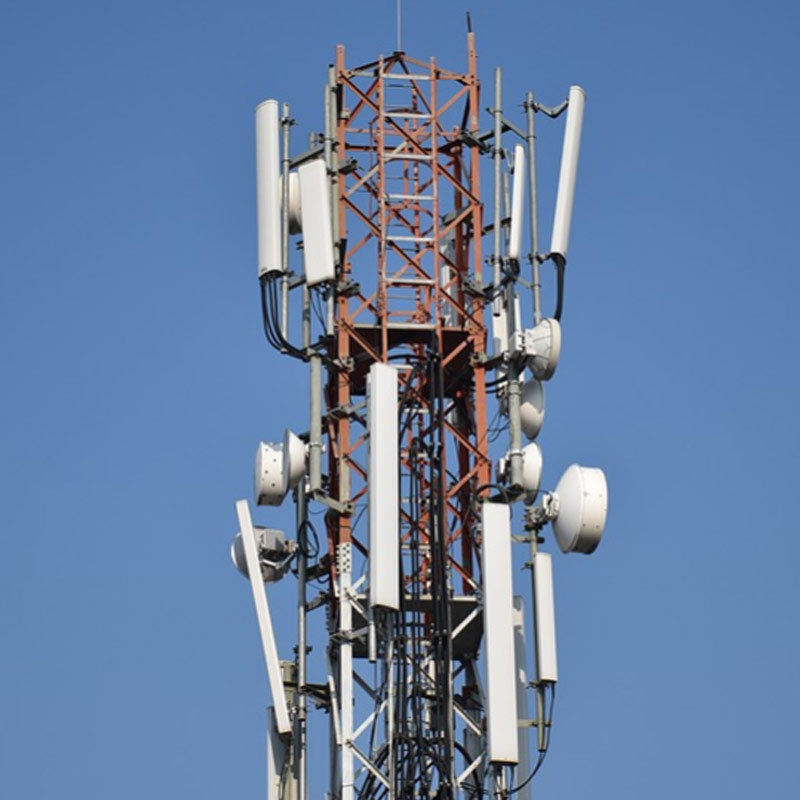
    India has the second largest and fastest growing mobile telephone market in the world. Power and energy consumption for telecom network operations is by far the most important significant contributor of carbon emissions in the telecom industry.

    Hence, it is important for the telecom operators to shift to energy efficient technologies and alternate sources of energy. Moreover, Going Green has also become a business necessity for telecom operators with energy costs becoming as large as 25 per cent of total network operations costs. A typical communications company spends nearly one per cent of its revenues on energy which for large operators may amount to several million rupees.

    The Telecom Sector witnessed substantial growth in the number of subscribers during the year 2015-16 and up to September 2016. As of November 2016, the subscriber base was 1123.95 million, out of which 1099.51 million were wireless subscribers.

    During the year 2015-16, subscriber base recorded an increase from 969.89 million to 1033.63 while the overall teledensity increased from 79.38 to 83.36. The year also saw density from 48.37 to 51.37 while the urban teledensity increased from 148.61 to 154.01.

    The Internet subscriber base in the country as on September 2016 stood at 367.48 million as compared to 324.95 million as on September 2015. This growth also leads to greater carbon dioxide and green house gases and the DoT is working on checking this damage to the environment.

    To develop the roadmap, comprehensive program and viability gap funding for mobilizing the renewable energy technology deployment in telecom sector, DoT constituted a Renewable Energy Technology (RET) committee which submitted its report on 1 August 2014. The recommendations of RET committee were further examined by a departmental committee which has submitted its report in May 2015.

    In light of the above mentioned reports of the Committee and deliberation thereof, DoT has sought recommendations of TRAI on the methodology of measuring Carbon Emission and calibration of Directives issued by DoT in 2012 and approach for implementation (Target on the implementation of RETs).
  • Shift to energy-efficient tech; TRAI seeks ideas by 27 Feb

    Shift to energy-efficient tech; TRAI seeks ideas by 27 Feb

    NEW DEHI: With the world coming to grips with problems of climate change and green house gas emissions, the Telecom Regulatory Authority of India is in the process of preparing a strategy to tackle the problems created by the telecom sector in this regard.

    Following a request received from the Department of Telecom, TRAI has issued the Consultation Paper on Approach towards Sustainable Telecommunications. The paper has raised 14 questions on which stakeholders have to respond by 27 February 2017.

    TRAI had issued a paper on similar issues in 2012 and the DoT had in fact given directions on that basis, but new issues have cropped up with emerging technologies.

    India has the second largest and fastest growing mobile telephone market in the world. Power and energy consumption for telecom network operations is by far the most important significant contributor of carbon emissions in the telecom industry.

    Hence, it is important for the telecom operators to shift to energy efficient technologies and alternate sources of energy. Moreover, Going Green has also become a business necessity for telecom operators with energy costs becoming as large as 25 per cent of total network operations costs. A typical communications company spends nearly one per cent of its revenues on energy which for large operators may amount to several million rupees.

    The Telecom Sector witnessed substantial growth in the number of subscribers during the year 2015-16 and up to September 2016. As of November 2016, the subscriber base was 1123.95 million, out of which 1099.51 million were wireless subscribers.

    During the year 2015-16, subscriber base recorded an increase from 969.89 million to 1033.63 while the overall teledensity increased from 79.38 to 83.36. The year also saw density from 48.37 to 51.37 while the urban teledensity increased from 148.61 to 154.01.

    The Internet subscriber base in the country as on September 2016 stood at 367.48 million as compared to 324.95 million as on September 2015. This growth also leads to greater carbon dioxide and green house gases and the DoT is working on checking this damage to the environment.

    To develop the roadmap, comprehensive program and viability gap funding for mobilizing the renewable energy technology deployment in telecom sector, DoT constituted a Renewable Energy Technology (RET) committee which submitted its report on 1 August 2014. The recommendations of RET committee were further examined by a departmental committee which has submitted its report in May 2015.

    In light of the above mentioned reports of the Committee and deliberation thereof, DoT has sought recommendations of TRAI on the methodology of measuring Carbon Emission and calibration of Directives issued by DoT in 2012 and approach for implementation (Target on the implementation of RETs).

  • Tariff order: Don’t notify without SC nod, TRAI told; Madras HC case to continue

    Tariff order: Don’t notify without SC nod, TRAI told; Madras HC case to continue

    NEW DELHI: Declining to stay proceedings in the Madras High Court, the Supreme Court today said the Telecom Regulatory Authority of India could continue with its work relating to consultation papers and tariff orders, but will not notify these without first referring them to the apex court.

    The apex court direction came on an appeal by TRAI against an order of the Madras High Court. When contacted by indiantelevision.com, TRAI said it has no comments to make on the Supreme Court directive or on the course of action in the high court.

    The high court had, on 12 January 2017, extended the status quo ordered by it on 23 December 2016 with regard to any tariff orders or regulations for the broadcast sector that related to copyrights issue. The HC was informed that India’s telecoms and broadcast regulator had filed an appeal in the Supreme Court. After today’s apex court directive, the case filed by Star TV and Vijay TV will come up in the Madras High Court as slated on 19 January 2017.

    The petitioner-broadcasters had sought to argue that the TRAI orders on tariff regulations were broadly in conflict with the Copyright Act 1957. Pending the full hearing of the case, TRAI would not be able to pass any guidelines for issues such as broadcast tariff, broadcast interconnect, etc.

    A few months ago, TRAI had issued draft guidelines on tariff, interconnect and quality of service wherein it had suggested various parameters for stakeholders of the broadcast and cable sectors.

    It may be recalled that the Indian Broadcasting Foundation (IBF) had said in a submission to the TRAI drafts last year that the exercise was in direct conflict with the provisions of the Copyright Act and other international copyrights laws, especially the Berne Convention. The IBF had said the Copyright Board is fully empowered to adjudicate upon disputes between any person and Content or Broadcast Reproduction Rights owners. Hence the Copyright Act and Rules provide for protection, monetisation, enforcement and adjudication procedures for all copyrightable work and broadcast reproduction rights.

    Meanwhile, weighing in with the IBF, Asian pay TV industry body CASBA today in a statement said that it has long expressed concern about India’s previous rate regulations, which included a cable retail price freeze imposed in 2004 “until the market became more competitive” and never revoked.

    Also read:   TRAI regulations threaten investment, warns CASBAA

    Also read:   Maintain status quo on broadcast guidelines, Madras HC tells TRAI

    Also read:   TRAI tariff: Madras HC extends status quo; SC to hear regulator’s appeal on 16 Jan

  • Tariff order: Don’t notify without SC nod, TRAI told; Madras HC case to continue

    Tariff order: Don’t notify without SC nod, TRAI told; Madras HC case to continue

    NEW DELHI: Declining to stay proceedings in the Madras High Court, the Supreme Court today said the Telecom Regulatory Authority of India could continue with its work relating to consultation papers and tariff orders, but will not notify these without first referring them to the apex court.

    The apex court direction came on an appeal by TRAI against an order of the Madras High Court. When contacted by indiantelevision.com, TRAI said it has no comments to make on the Supreme Court directive or on the course of action in the high court.

    The high court had, on 12 January 2017, extended the status quo ordered by it on 23 December 2016 with regard to any tariff orders or regulations for the broadcast sector that related to copyrights issue. The HC was informed that India’s telecoms and broadcast regulator had filed an appeal in the Supreme Court. After today’s apex court directive, the case filed by Star TV and Vijay TV will come up in the Madras High Court as slated on 19 January 2017.

    The petitioner-broadcasters had sought to argue that the TRAI orders on tariff regulations were broadly in conflict with the Copyright Act 1957. Pending the full hearing of the case, TRAI would not be able to pass any guidelines for issues such as broadcast tariff, broadcast interconnect, etc.

    A few months ago, TRAI had issued draft guidelines on tariff, interconnect and quality of service wherein it had suggested various parameters for stakeholders of the broadcast and cable sectors.

    It may be recalled that the Indian Broadcasting Foundation (IBF) had said in a submission to the TRAI drafts last year that the exercise was in direct conflict with the provisions of the Copyright Act and other international copyrights laws, especially the Berne Convention. The IBF had said the Copyright Board is fully empowered to adjudicate upon disputes between any person and Content or Broadcast Reproduction Rights owners. Hence the Copyright Act and Rules provide for protection, monetisation, enforcement and adjudication procedures for all copyrightable work and broadcast reproduction rights.

    Meanwhile, weighing in with the IBF, Asian pay TV industry body CASBA today in a statement said that it has long expressed concern about India’s previous rate regulations, which included a cable retail price freeze imposed in 2004 “until the market became more competitive” and never revoked.

    Also read:   TRAI regulations threaten investment, warns CASBAA

    Also read:   Maintain status quo on broadcast guidelines, Madras HC tells TRAI

    Also read:   TRAI tariff: Madras HC extends status quo; SC to hear regulator’s appeal on 16 Jan

  • TRAI regulations threaten investment, warns CASBAA

    TRAI regulations threaten investment, warns CASBAA

    MUMBAI: CASBAA, the Association of Asia’s pay-TV Industry, today warmly applauded the judicial review now under way in India of proposed extension and tightening of India’s pay-TV rate regulations.

    The Madras High Court is currently reviewing the clash between the rights of copyright owners around the world and new tariff regulations proposed by the Telecom Regulatory Authority of India (TRAI). The court has ordered the TRAI not to give effect to the rules until the underlying issues are considered, with a hearing now set for January 19th.

    CASBAA CEO Christopher Slaughter observed that the new rules would be a major negative factor for the business environment in the $17 billion Indian media industry. “India’s pay-TV regulations have long been among the strictest in the world”, he said. “The proposed new rules are highly intrusive and would make the environment much worse. Such a heavy-handed regulatory regime will inevitably hit foreign companies’ interest in investing in India.”

    Indian law gives copyright owners the ability to price and sell their creative works. In filing the Madras suit, the petitioner broadcasting organizations denounced the TRAI regulation as contrary to these principles as enshrined in the law, and in international treaties to which India is a signatory. (The TRAI rules would establish a controlled price regime by mandating a la carte channel supply, setting the ceiling, by specific genres, that broadcasting organizations can charge to multichannel program distributors, limiting discounts, prescribing carriage fees, and stipulating a compulsory distribution fee to be paid by Broadcasting Organizations to multichannel program distributors.

    CASBAA has long expressed concern about India’s previous rate regulations, which included a cable retail price freeze imposed in 2004 “until the market became more competitive” and never revoked.

    “Today, India’s television content market is among the most competitive in the world,” said Slaughter. “Modern cable MSOs, six different DTH platforms and now online OTT television are all giving Indian consumers a wide range of viewing options.”

    CASBAA’s Chief Policy Officer John Medeiros observed that “As convergence and greater competition sweep the TV economy, other governments around the world are eliminating rate controls, to give more scope to competition among traditional and new online providers. In the last few years, Korea and Taiwan have both undertaken to liberalize their pay-TV price controls, leaving India as the last market economy in Asia with a hyper-regulatory regime. The proposed new rules would take India in the opposite direction from the rest of the world.

  • TRAI regulations threaten investment, warns CASBAA

    TRAI regulations threaten investment, warns CASBAA

    MUMBAI: CASBAA, the Association of Asia’s pay-TV Industry, today warmly applauded the judicial review now under way in India of proposed extension and tightening of India’s pay-TV rate regulations.

    The Madras High Court is currently reviewing the clash between the rights of copyright owners around the world and new tariff regulations proposed by the Telecom Regulatory Authority of India (TRAI). The court has ordered the TRAI not to give effect to the rules until the underlying issues are considered, with a hearing now set for January 19th.

    CASBAA CEO Christopher Slaughter observed that the new rules would be a major negative factor for the business environment in the $17 billion Indian media industry. “India’s pay-TV regulations have long been among the strictest in the world”, he said. “The proposed new rules are highly intrusive and would make the environment much worse. Such a heavy-handed regulatory regime will inevitably hit foreign companies’ interest in investing in India.”

    Indian law gives copyright owners the ability to price and sell their creative works. In filing the Madras suit, the petitioner broadcasting organizations denounced the TRAI regulation as contrary to these principles as enshrined in the law, and in international treaties to which India is a signatory. (The TRAI rules would establish a controlled price regime by mandating a la carte channel supply, setting the ceiling, by specific genres, that broadcasting organizations can charge to multichannel program distributors, limiting discounts, prescribing carriage fees, and stipulating a compulsory distribution fee to be paid by Broadcasting Organizations to multichannel program distributors.

    CASBAA has long expressed concern about India’s previous rate regulations, which included a cable retail price freeze imposed in 2004 “until the market became more competitive” and never revoked.

    “Today, India’s television content market is among the most competitive in the world,” said Slaughter. “Modern cable MSOs, six different DTH platforms and now online OTT television are all giving Indian consumers a wide range of viewing options.”

    CASBAA’s Chief Policy Officer John Medeiros observed that “As convergence and greater competition sweep the TV economy, other governments around the world are eliminating rate controls, to give more scope to competition among traditional and new online providers. In the last few years, Korea and Taiwan have both undertaken to liberalize their pay-TV price controls, leaving India as the last market economy in Asia with a hyper-regulatory regime. The proposed new rules would take India in the opposite direction from the rest of the world.

  • Copyright owners call for competitive pricing over TRAI regulation

    Copyright owners call for competitive pricing over TRAI regulation

    NEW DELHI: The Film and Television Producers Guild of India has expressed its voice against any mandated tariff as far as television channels are concerned.

    In a reaction to the recent Draft Telecommunication (Broadcasting And Cable Services) (Eighth) (Addressable Systems) Tariff Order 2016 drawn up by the Telecom Regulatory Authority of India, Guild President Siddharth Roy Kapoor said: “As India continues to develop its thriving creative industry, a transparent, market-based environment free from mandated tariffs, is essential to build investor confidence and to foster the creation of quality content benefiting India’s consumers and its economy.”

    Guild secretary-general Kulmeet Makkar said: “We believe that price controls should only be considered when the market lacks competition which harms consumers or where there is clear systemic market failure. It would be advantageous to abolish any restrictions on price and thereby encourage FDI investments in India– as is the case in countries such as Australia, Hong Kong, Indonesia, Japan, Malaysia, Philippines, Singapore, and South Korea, where the retail and wholesale rates are not subject to restrictions. A more economically efficient model would be to allow the market to determine prices while encouraging investment in quality content.”

    Fox Star Studios CEO Vijay Singh said, “Since the availability of content is not an issue in the context of the Indian market, restricting numbers/genres/mix tantamount to predetermination and therefore, pre-empts creativity. There can never be an exhaustive list of genres for governments to determine any mix and TRAI’s intervention will have cataclysmic effect on the creative community as a whole as TRAI effectively has price capped creativity.”

    “Under the Copyright Act 1957, a content owner has the freedom to monetize copyright works and enter into contracts to monetize content in a manner he deems fit. However the price restrictions imposed by TRAI interferes with this basic freedom. It risks stifling creativity and may force smaller companies out of the market – resulting in less choice for consumers,” according to Motion Picture Distributors Association (India) Pvt. Ltd MD Uday Singh.

    Sectoral regulations have seriously impeded the growth of the film sector. Despite active participation by global studios and broadcasters, investments in the sector have trickled down in the past few years. Indian studios and independent producers are also facing similar challenges. An open market environment can best guarantee that the film sector will not be distorted to the detriment of consumers, creators and providers, the Guild said in its reaction.

    The Guild says that the Tariff Order is likely to take effect from 1 April 2017. It says that the current draft order prescribes maximum retail price caps for pay channels, by genre, Rs 10 (USD 0.15) for movie channels (a-la-carte), excluding taxes] and further caps channels into seven genres.

  • Copyright owners call for competitive pricing over TRAI regulation

    Copyright owners call for competitive pricing over TRAI regulation

    NEW DELHI: The Film and Television Producers Guild of India has expressed its voice against any mandated tariff as far as television channels are concerned.

    In a reaction to the recent Draft Telecommunication (Broadcasting And Cable Services) (Eighth) (Addressable Systems) Tariff Order 2016 drawn up by the Telecom Regulatory Authority of India, Guild President Siddharth Roy Kapoor said: “As India continues to develop its thriving creative industry, a transparent, market-based environment free from mandated tariffs, is essential to build investor confidence and to foster the creation of quality content benefiting India’s consumers and its economy.”

    Guild secretary-general Kulmeet Makkar said: “We believe that price controls should only be considered when the market lacks competition which harms consumers or where there is clear systemic market failure. It would be advantageous to abolish any restrictions on price and thereby encourage FDI investments in India– as is the case in countries such as Australia, Hong Kong, Indonesia, Japan, Malaysia, Philippines, Singapore, and South Korea, where the retail and wholesale rates are not subject to restrictions. A more economically efficient model would be to allow the market to determine prices while encouraging investment in quality content.”

    Fox Star Studios CEO Vijay Singh said, “Since the availability of content is not an issue in the context of the Indian market, restricting numbers/genres/mix tantamount to predetermination and therefore, pre-empts creativity. There can never be an exhaustive list of genres for governments to determine any mix and TRAI’s intervention will have cataclysmic effect on the creative community as a whole as TRAI effectively has price capped creativity.”

    “Under the Copyright Act 1957, a content owner has the freedom to monetize copyright works and enter into contracts to monetize content in a manner he deems fit. However the price restrictions imposed by TRAI interferes with this basic freedom. It risks stifling creativity and may force smaller companies out of the market – resulting in less choice for consumers,” according to Motion Picture Distributors Association (India) Pvt. Ltd MD Uday Singh.

    Sectoral regulations have seriously impeded the growth of the film sector. Despite active participation by global studios and broadcasters, investments in the sector have trickled down in the past few years. Indian studios and independent producers are also facing similar challenges. An open market environment can best guarantee that the film sector will not be distorted to the detriment of consumers, creators and providers, the Guild said in its reaction.

    The Guild says that the Tariff Order is likely to take effect from 1 April 2017. It says that the current draft order prescribes maximum retail price caps for pay channels, by genre, Rs 10 (USD 0.15) for movie channels (a-la-carte), excluding taxes] and further caps channels into seven genres.

  • TRAI allowing Jio to contravene rules, Airtel files affidavit in TDSAT

    TRAI allowing Jio to contravene rules, Airtel files affidavit in TDSAT

    MUMBAI: Bharti Airtel has escalated its legal battle against the telecom regulator TRAI, filing an additional affidavit in the telecom tribunal TDSAT in which it has slammed the watchdog for what it termed “tacitly” allowing Reliance Jio Infocomm to break rules around “anti-competitive” promotional offers.

    In the affidavit filed with the Telecom Disputes Settlement Appellate Tribunal (TDSAT) on Tuesday, India’s No. 1 telco Airtel has made the allegations, Sat release stated.

    On 23 December, Airtel had moved TDSAT against TRAI for not acting against Jio despite the latter reportedly violating its regulatory orders that restrain operators from offering free voice calls and providing promotional plans beyond an initial 90-day period.

    TDSAT then asked TRAI to furnish a reply for which the latter sought time even as it sent a notice to Jio. The next date for hearing the matter is 1 February. Meanwhile, TDSAT permitted Jio to also become party to the case so that the operator will also be filing its application on the matter.

    “It is respectfully submitted that the present appeal is at a very initial stage and pleadings are yet to be completed. The appellant is filing the present additional affidavit only to bring on record certain additional grounds of challenge. Since the present appeal is at an initial stage and the pleadings are yet to be completed, no prejudice whatsoever will be caused to the respondent if the present affidavit is taken on record. Moreover, the said grounds are essential to the adjudication of the present appeal and thus grave prejudice will be caused to the appellant if the present affidavit is not taken on record,” Bharti has said in its additional affidavit, the FE reported.

    Bharti has reiterated its allegation that the free services offered by Jio were predatory as they had been introduced only to kill competition rather than encourage it.

    Also Read:

    Jio HNY: TDSAT raps TRAI as contest deepens

    TRAI violations query: Reliance Jio mum on ‘response’

  • TRAI allowing Jio to contravene rules, Airtel files affidavit in TDSAT

    TRAI allowing Jio to contravene rules, Airtel files affidavit in TDSAT

    MUMBAI: Bharti Airtel has escalated its legal battle against the telecom regulator TRAI, filing an additional affidavit in the telecom tribunal TDSAT in which it has slammed the watchdog for what it termed “tacitly” allowing Reliance Jio Infocomm to break rules around “anti-competitive” promotional offers.

    In the affidavit filed with the Telecom Disputes Settlement Appellate Tribunal (TDSAT) on Tuesday, India’s No. 1 telco Airtel has made the allegations, Sat release stated.

    On 23 December, Airtel had moved TDSAT against TRAI for not acting against Jio despite the latter reportedly violating its regulatory orders that restrain operators from offering free voice calls and providing promotional plans beyond an initial 90-day period.

    TDSAT then asked TRAI to furnish a reply for which the latter sought time even as it sent a notice to Jio. The next date for hearing the matter is 1 February. Meanwhile, TDSAT permitted Jio to also become party to the case so that the operator will also be filing its application on the matter.

    “It is respectfully submitted that the present appeal is at a very initial stage and pleadings are yet to be completed. The appellant is filing the present additional affidavit only to bring on record certain additional grounds of challenge. Since the present appeal is at an initial stage and the pleadings are yet to be completed, no prejudice whatsoever will be caused to the respondent if the present affidavit is taken on record. Moreover, the said grounds are essential to the adjudication of the present appeal and thus grave prejudice will be caused to the appellant if the present affidavit is not taken on record,” Bharti has said in its additional affidavit, the FE reported.

    Bharti has reiterated its allegation that the free services offered by Jio were predatory as they had been introduced only to kill competition rather than encourage it.

    Also Read:

    Jio HNY: TDSAT raps TRAI as contest deepens

    TRAI violations query: Reliance Jio mum on ‘response’