Category: TRAI

  • Submit ‘closure of access’ ideas by 6 Feb: TRAI

    Submit ‘closure of access’ ideas by 6 Feb: TRAI

    MUMBAI: The last  date to  receive comments and  counter-comments on TRAI  Consultation  Paper   on ‘Issues  related  to  closure  of   Access Services’ has been extended.

    The  Telecom  Regulatory  Authority  of India (TRAI) had  invited comments  and counter-comments of stakeholders on Consultation Paper ‘Issues related to  closure of  Access Services’ dated 30 November, 2016. The  last date for  receiving written comments and counter-comments from  the  stakeholders were  fixed  as 9 January 2017 and 16 January 2017, respectively.  

    Considering the request received from the  stakeholders, the  last date for submission of written comments was extended  up to  23 January 2017   and for  counter-comments  up to  30 January 2017. 

    Keeping  in  view  the  request of stakeholders for  further extension of time  for  sending their comments, it  has been   decided to  extend the  last date for  submission of written comments up to 6 February 2017  and   for counter-comments  up to   13 February  2017.  No  further  requests   for extension would  be considered.

    The  comments and   counter-comments may   be  sent preferably in electronic form. For  any   clarification/ information, contact Sanjeev Banzai, advisor  (Network  Spectrum & Licensing).

    TRAI seeks to extend the time mobile users get to change their service-provider if a particular company is shutting shop or selling its spectrum.

    The paper titled ‘Closure of Access Service” will seek feedback from telecom eco-system stakeholders to set up a framework to give an extended time and more options to users facing termination of services. A licence coming to fruition or failure of the service provider to bag spectrum or spectrum trading are normally the reasons behind an entity shutting shop.

    TRAI had taken note of three significant instances. Reliance Communications stopped CDMA services and migrated to LTE. Airtel acquired spectrum from Aircel and Videocon through trading deals. In some cases, operators do not renew the spectrum and stop offering services in a particular area. Tata Docomo has lost subscribers due to such non-renewal.

    Also Read: Consumers may get 60-day notice from unprofessional telcos
  • Submit ‘closure of access’ ideas by 6 Feb: TRAI

    Submit ‘closure of access’ ideas by 6 Feb: TRAI

    MUMBAI: The last  date to  receive comments and  counter-comments on TRAI  Consultation  Paper   on ‘Issues  related  to  closure  of   Access Services’ has been extended.

    The  Telecom  Regulatory  Authority  of India (TRAI) had  invited comments  and counter-comments of stakeholders on Consultation Paper ‘Issues related to  closure of  Access Services’ dated 30 November, 2016. The  last date for  receiving written comments and counter-comments from  the  stakeholders were  fixed  as 9 January 2017 and 16 January 2017, respectively.  

    Considering the request received from the  stakeholders, the  last date for submission of written comments was extended  up to  23 January 2017   and for  counter-comments  up to  30 January 2017. 

    Keeping  in  view  the  request of stakeholders for  further extension of time  for  sending their comments, it  has been   decided to  extend the  last date for  submission of written comments up to 6 February 2017  and   for counter-comments  up to   13 February  2017.  No  further  requests   for extension would  be considered.

    The  comments and   counter-comments may   be  sent preferably in electronic form. For  any   clarification/ information, contact Sanjeev Banzai, advisor  (Network  Spectrum & Licensing).

    TRAI seeks to extend the time mobile users get to change their service-provider if a particular company is shutting shop or selling its spectrum.

    The paper titled ‘Closure of Access Service” will seek feedback from telecom eco-system stakeholders to set up a framework to give an extended time and more options to users facing termination of services. A licence coming to fruition or failure of the service provider to bag spectrum or spectrum trading are normally the reasons behind an entity shutting shop.

    TRAI had taken note of three significant instances. Reliance Communications stopped CDMA services and migrated to LTE. Airtel acquired spectrum from Aircel and Videocon through trading deals. In some cases, operators do not renew the spectrum and stop offering services in a particular area. Tata Docomo has lost subscribers due to such non-renewal.

    Also Read: Consumers may get 60-day notice from unprofessional telcos
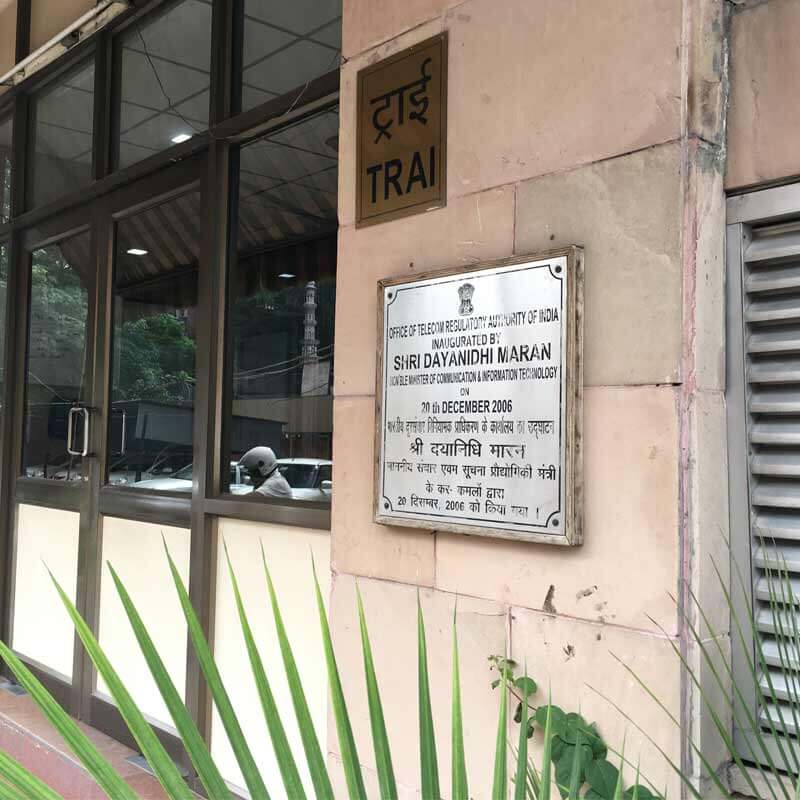
  • TRAI: HC asks Idea, DoT to file affidavit on plea

    TRAI: HC asks Idea, DoT to file affidavit on plea

    MUMBAI: Idea Cellular Ltd. has moved the Delhi High Court against TRAI’s recommendation to impose a penalty of Rs 950 crore for allegedly not providing interconnection to Reliance Jio (RJIO), even as Department of Telecommunications (DoT) said the plea was premature. 

    The DoT claimed before a bench of the justice Sangita Dhingra Sehgal and chief justice G Rohini that Idea’s petition was not maintainable as the Telecom Regulatory Authority of India (TRAI) had only given a recommendation, PTI reported.

    Additional Solicitor General (ASG) Sanjay Jain, appearing for DoT, opposed maintainability of the plea. Once DoT takes a decision, he said, it could become an appealable order.

    The bench, thereafter, issued notice to TRAI and DoT and asked them to file affidavits on the issue of maintainability of Idea’s plea before the next date of hearing on 21 February.

    Idea, in its request, claimed that it complied with the requirements of RJio for points of interconnections (PoIs). As of 19 January 2016, it allocated 19,175 PoIs to RJio and contended that congestion and call failures were a consequence of RJio’s “gross underestimation” of the traffic, volume, and duration of calls on its network due to its free offers.

    In its plea, Idea has also contended that there was inconsistency between TRAI’s Interconnection Regulations and Quality of Service Regulations.

    Earlier, terming it as “premature”, the central government opposed a plea by the telecom major Vodafone Mobile Services challenging TRAI’s recommendation to impose Rs 1,050 crore penalty for not providing interconnectivity to Reliance Jio.

    The government rejected the plea by Vodafone, which operates in 21 circles, against a penalty of Rs 50 crore per telecom circle recommended by TRAI. The Telecom Regulatory Authority of India had suggested the penalty on grounds that Vodafone had violated terms and conditions relating to points of interconnection among service providers.

    Also Read:  Respond to Vodafone’s TRAI challenge in two weeks, govt directed

  • TRAI: HC asks Idea, DoT to file affidavit on plea

    TRAI: HC asks Idea, DoT to file affidavit on plea

    MUMBAI: Idea Cellular Ltd. has moved the Delhi High Court against TRAI’s recommendation to impose a penalty of Rs 950 crore for allegedly not providing interconnection to Reliance Jio (RJIO), even as Department of Telecommunications (DoT) said the plea was premature. 

    The DoT claimed before a bench of the justice Sangita Dhingra Sehgal and chief justice G Rohini that Idea’s petition was not maintainable as the Telecom Regulatory Authority of India (TRAI) had only given a recommendation, PTI reported.

    Additional Solicitor General (ASG) Sanjay Jain, appearing for DoT, opposed maintainability of the plea. Once DoT takes a decision, he said, it could become an appealable order.

    The bench, thereafter, issued notice to TRAI and DoT and asked them to file affidavits on the issue of maintainability of Idea’s plea before the next date of hearing on 21 February.

    Idea, in its request, claimed that it complied with the requirements of RJio for points of interconnections (PoIs). As of 19 January 2016, it allocated 19,175 PoIs to RJio and contended that congestion and call failures were a consequence of RJio’s “gross underestimation” of the traffic, volume, and duration of calls on its network due to its free offers.

    In its plea, Idea has also contended that there was inconsistency between TRAI’s Interconnection Regulations and Quality of Service Regulations.

    Earlier, terming it as “premature”, the central government opposed a plea by the telecom major Vodafone Mobile Services challenging TRAI’s recommendation to impose Rs 1,050 crore penalty for not providing interconnectivity to Reliance Jio.

    The government rejected the plea by Vodafone, which operates in 21 circles, against a penalty of Rs 50 crore per telecom circle recommended by TRAI. The Telecom Regulatory Authority of India had suggested the penalty on grounds that Vodafone had violated terms and conditions relating to points of interconnection among service providers.

    Also Read:  Respond to Vodafone’s TRAI challenge in two weeks, govt directed

  • TRAI recommends e-KYC for outstation customers

    TRAI recommends e-KYC for outstation customers

    MUMBAI: The Telecom Regulatory Authority of India (TRAI) has issued its Recommendations on
    (i) “Verification of existing mobile subscribers through Aadhaar based e-KYC services”
    and
    (ii) “Permitting outstation Aadhaar card holders for e-KYC of mobile subscribers.”

    2.Aadhaar linked e-KYC service provides a robust mechanism to verify the identity of the person electronically and instantaneously from the source itself, based on the biometrics of the person. Thus, it takes care of the issues relating to fake/forged identity proof, manual entry into the system etc.

    3. In this regard, TRAI on 6th January 2016 recommended acceptance and adoption of Aadhaar based e-KYC service alongwith Aadhaar based e-Sign as a valid alternative process. Subsequently, on 16 August 2016, DoT permitted the use of Aadhaar based e-KYC service of Unique Identity Authority of India (UIDAI) for issuing mobile connections to customers. These instructions are applicable only for issue of new SIM cards but excludes the huge existing mobile subscriber base from the ambit of e-KYC. Further, use of e-KYC process was not permitted for outstation customers by DoT.

    4. The existing paper-based KYC process is not robust enough and the possibility of significant number of working SIMs, which may have been acquired on fake/forged identity, cannot be fully ruled out. The owner of such fake identity would not even be aware that SIM(s) are working in his/ her name. The Authority has received several cases from State Police (crime branch) wherein it has been found that hundreds of SIM cards have been obtained on fake documents. The existence of such SIM cards poses a real security challenge. It is essential that not only the new subscribers are enrolled through e-KYC process, but the existing subscriber base should also be verified through e-KYC process in a phased manner within a defined timeframe. Further, barring the e-KYC process for outstation customers results in artificial restriction and avoidable inconvenience.

    5. To overcome these challenges, the Authority has submitted its recommendations to DoT and the same have also been placed on TRAI’s website www.trai.gov.in. The main recommendations are:

    (a) DoT may work with the TSPs, to evolve a framework to verify the existing mobile subscribers through Aadhaar based e-KYC services in a phased manner and within a defined timeframe. However, this process should be optional to the service providers as well as mobile subscribers. The subscribers may have to be given some sops in terms of free talk-time or data to encourage them to undergo the e-KYC process.

    (b) Aadhaar based e-KYC should be permitted for outstation customers also at any place within the service area.

  • TRAI recommends e-KYC for outstation customers

    TRAI recommends e-KYC for outstation customers

    MUMBAI: The Telecom Regulatory Authority of India (TRAI) has issued its Recommendations on
    (i) “Verification of existing mobile subscribers through Aadhaar based e-KYC services”
    and
    (ii) “Permitting outstation Aadhaar card holders for e-KYC of mobile subscribers.”

    2.Aadhaar linked e-KYC service provides a robust mechanism to verify the identity of the person electronically and instantaneously from the source itself, based on the biometrics of the person. Thus, it takes care of the issues relating to fake/forged identity proof, manual entry into the system etc.

    3. In this regard, TRAI on 6th January 2016 recommended acceptance and adoption of Aadhaar based e-KYC service alongwith Aadhaar based e-Sign as a valid alternative process. Subsequently, on 16 August 2016, DoT permitted the use of Aadhaar based e-KYC service of Unique Identity Authority of India (UIDAI) for issuing mobile connections to customers. These instructions are applicable only for issue of new SIM cards but excludes the huge existing mobile subscriber base from the ambit of e-KYC. Further, use of e-KYC process was not permitted for outstation customers by DoT.

    4. The existing paper-based KYC process is not robust enough and the possibility of significant number of working SIMs, which may have been acquired on fake/forged identity, cannot be fully ruled out. The owner of such fake identity would not even be aware that SIM(s) are working in his/ her name. The Authority has received several cases from State Police (crime branch) wherein it has been found that hundreds of SIM cards have been obtained on fake documents. The existence of such SIM cards poses a real security challenge. It is essential that not only the new subscribers are enrolled through e-KYC process, but the existing subscriber base should also be verified through e-KYC process in a phased manner within a defined timeframe. Further, barring the e-KYC process for outstation customers results in artificial restriction and avoidable inconvenience.

    5. To overcome these challenges, the Authority has submitted its recommendations to DoT and the same have also been placed on TRAI’s website www.trai.gov.in. The main recommendations are:

    (a) DoT may work with the TSPs, to evolve a framework to verify the existing mobile subscribers through Aadhaar based e-KYC services in a phased manner and within a defined timeframe. However, this process should be optional to the service providers as well as mobile subscribers. The subscribers may have to be given some sops in terms of free talk-time or data to encourage them to undergo the e-KYC process.

    (b) Aadhaar based e-KYC should be permitted for outstation customers also at any place within the service area.

  • No exclusive pacts with telcos: TRAI to building-owners; CTI mooted

    No exclusive pacts with telcos: TRAI to building-owners; CTI mooted

    MUMBAI: The Telecom Regulatory Authority of India (TRAI) has issued its recommendations on “In-Building Access by Telecom Service Providers”.

    An effective telecommunications infrastructure is an essential component of any building for its connectivity to the outside world. Telecommunications services such as voice, data and wideband multimedia services are indispensable in the modern society. In order to improve in-building coverage and to offer quality high data rate services, installation of in-building solutions (IBS) for wireless services and laying of cables such as copper cables, optical fibre cables (OFC),LANcables etc. is required.

    To lay  cables  or  install  telecom  infrastructure   inside  the  building, Telecom Service Providers (TSP) lnfrastructure Providers (lP-I) require permission of the owner of the building. However, it is seen that generally restrictive practices are adopted by building owners while giving access to the building due to commercial. interests. In many cases, these owners enter into exclusive agreement with one of the TSPs for providing telecom services to dwellers and deny access to other TSPs, thus creating an artificial entry barrier for other TSPs. Such practices not only limit competition, it also leaves no choice to consumers except to avail services from the TSP with whom the contract is done; taking away choice and flexibility from the consumers which they would have had in terms of quality of service (QoS), tariff, redundancy etc.

    In view of the above, a need was felt for policy intervention and to evolve a framework applicable to in-building facilities to enable the telecom operators to obtain efficient access on reasonable terms and conditions. Therefore, the Authority, suo-motu, decided to initiate a consultation process on the issue. Accordingly, a Consultation Paper on “In-Building Access by Telecom Service Providers” was released on 6 June 2016 seeking the comments of the stakeholders. An Open House Discussion (OHD) on the issue was also convened on 30 September 2016 at New Delhi.

    Based on the comments received and further analysis, draft recommendations on ‘In-Building Access by Telecom Service Providers’ have been issued and the same have also been placed on TRAI’s web site. Some of the main recommendations are:

    (i)    TSPs/IP-ls be mandated to share the in-building infrastructure (IBS, OFC and other cables, ducts etc) with other TSPs, in large public places, commercial complexes and residential complexes in transparent, fair and non-discriminatory manner.

    (ii)    Indulgence   into  exclusive  contract   prohibiting   access  to  other TSPs may be treated as violation of the license agreement / registration.

    (iii)    Suitable provisions for  the creation of  Common Telecom Infrastructure (CTI) inside the building should form part of the Model Building Bye-Laws.

    (iv)    The essential requirement for telecom installations and the associated cabling should be formed part of National Building Code of India (NBC), being amended by Bureau of Indian Standards (BIS).

    (v)    Completion certificate to a building to be granted only after ensuring that the CTI as per the prescribed standards is in place.

    (vi)    Access to building including CTI facilities be available to the TSPs on a fair, transparent and non-discriminatory manner and minimum three TSPs/IP-Is should have presence in the building.

    Also Read:

    “There would be a lot on TRAI’s plate in 2017” – RS Sharma

    Wi-fi proliferation, Net Telephony discussion in January


  • No exclusive pacts with telcos: TRAI to building-owners; CTI mooted

    No exclusive pacts with telcos: TRAI to building-owners; CTI mooted

    MUMBAI: The Telecom Regulatory Authority of India (TRAI) has issued its recommendations on “In-Building Access by Telecom Service Providers”.

    An effective telecommunications infrastructure is an essential component of any building for its connectivity to the outside world. Telecommunications services such as voice, data and wideband multimedia services are indispensable in the modern society. In order to improve in-building coverage and to offer quality high data rate services, installation of in-building solutions (IBS) for wireless services and laying of cables such as copper cables, optical fibre cables (OFC),LANcables etc. is required.

    To lay  cables  or  install  telecom  infrastructure   inside  the  building, Telecom Service Providers (TSP) lnfrastructure Providers (lP-I) require permission of the owner of the building. However, it is seen that generally restrictive practices are adopted by building owners while giving access to the building due to commercial. interests. In many cases, these owners enter into exclusive agreement with one of the TSPs for providing telecom services to dwellers and deny access to other TSPs, thus creating an artificial entry barrier for other TSPs. Such practices not only limit competition, it also leaves no choice to consumers except to avail services from the TSP with whom the contract is done; taking away choice and flexibility from the consumers which they would have had in terms of quality of service (QoS), tariff, redundancy etc.

    In view of the above, a need was felt for policy intervention and to evolve a framework applicable to in-building facilities to enable the telecom operators to obtain efficient access on reasonable terms and conditions. Therefore, the Authority, suo-motu, decided to initiate a consultation process on the issue. Accordingly, a Consultation Paper on “In-Building Access by Telecom Service Providers” was released on 6 June 2016 seeking the comments of the stakeholders. An Open House Discussion (OHD) on the issue was also convened on 30 September 2016 at New Delhi.

    Based on the comments received and further analysis, draft recommendations on ‘In-Building Access by Telecom Service Providers’ have been issued and the same have also been placed on TRAI’s web site. Some of the main recommendations are:

    (i)    TSPs/IP-ls be mandated to share the in-building infrastructure (IBS, OFC and other cables, ducts etc) with other TSPs, in large public places, commercial complexes and residential complexes in transparent, fair and non-discriminatory manner.

    (ii)    Indulgence   into  exclusive  contract   prohibiting   access  to  other TSPs may be treated as violation of the license agreement / registration.

    (iii)    Suitable provisions for  the creation of  Common Telecom Infrastructure (CTI) inside the building should form part of the Model Building Bye-Laws.

    (iv)    The essential requirement for telecom installations and the associated cabling should be formed part of National Building Code of India (NBC), being amended by Bureau of Indian Standards (BIS).

    (v)    Completion certificate to a building to be granted only after ensuring that the CTI as per the prescribed standards is in place.

    (vi)    Access to building including CTI facilities be available to the TSPs on a fair, transparent and non-discriminatory manner and minimum three TSPs/IP-Is should have presence in the building.

    Also Read:

    “There would be a lot on TRAI’s plate in 2017” – RS Sharma

    Wi-fi proliferation, Net Telephony discussion in January


  • CASBAA hails judicial review of broadcast & cable tariff

    CASBAA hails judicial review of broadcast & cable tariff

    MUMBAI: CASBAA, the association of Asia’s pay-TV industry, has applauded the judicial review now under way in India of proposed extension and tightening of India’s pay-TV rate regulations.

    The Madras High Court is reviewing the clash between the rights of copyright owners around the world and new tariff regulations proposed by the Telecom Regulatory Authority of India (TRAI). The court has ordered the TRAI not to give effect to the rules until the underlying issues are considered, with a hearing now set for 19 January.

    CASBAA CEO Christopher Slaughter observed that the new rules would be a major negative factor for the business environment in the US$ 17 billion Indian media industry. “India’s pay-TV regulations have long been among the strictest in the world”, he said. “The proposed new rules are highly intrusive and would make the environment much worse. Such a heavy-handed regulatory regime will inevitably hit foreign companies’ interest in investing in India.”

    Indian law gives copyright owners the ability to price and sell their creative works. In filing the Madras suit, the petitioner broadcasting organizations denounced the TRAI regulation as contrary to these principles as enshrined in the law, and in international treaties to which India is a signatory. (The TRAI rules would establish a controlled price regime by mandating a la carte channel supply, setting the ceiling, by specific genres, that broadcasting organizations can charge to multi-channel programme distributors, limiting discounts, prescribing carriage fees, and stipulating a compulsory distribution fee to be paid by Broadcasting Organizations to multichannel programme distributors.

    CASBAA has long expressed concern about India’s previous rate regulations, which included a cable retail price freeze imposed in 2004 “until the market became more competitive” and never revoked.

    “Today, India’s television content market is among the most competitive in the world,” said Slaughter. “Modern cable MSOs, six different DTH platforms and now online OTT television are all giving Indian consumers a wide range of viewing options.”

    CASBAA’s chief policy officer John Medeiros observed, “As convergence and greater competition sweep the TV economy, other governments around the world are eliminating rate controls, to give more scope to competition among traditional and new online providers. In the last few years, Korea and Taiwan have both undertaken to liberalize their pay-TV price controls, leaving India as the last market economy in Asia with a hyper-regulatory regime. The proposed new rules would take India in the opposite direction from the rest of the world.”

    Also Read:  Tariff order: Don’t notify without SC nod, TRAI told; Madras HC case to continue

    Also Read:  Copyright owners call for competitive pricing over TRAI regulation

  • CASBAA hails judicial review of broadcast & cable tariff

    CASBAA hails judicial review of broadcast & cable tariff

    MUMBAI: CASBAA, the association of Asia’s pay-TV industry, has applauded the judicial review now under way in India of proposed extension and tightening of India’s pay-TV rate regulations.

    The Madras High Court is reviewing the clash between the rights of copyright owners around the world and new tariff regulations proposed by the Telecom Regulatory Authority of India (TRAI). The court has ordered the TRAI not to give effect to the rules until the underlying issues are considered, with a hearing now set for 19 January.

    CASBAA CEO Christopher Slaughter observed that the new rules would be a major negative factor for the business environment in the US$ 17 billion Indian media industry. “India’s pay-TV regulations have long been among the strictest in the world”, he said. “The proposed new rules are highly intrusive and would make the environment much worse. Such a heavy-handed regulatory regime will inevitably hit foreign companies’ interest in investing in India.”

    Indian law gives copyright owners the ability to price and sell their creative works. In filing the Madras suit, the petitioner broadcasting organizations denounced the TRAI regulation as contrary to these principles as enshrined in the law, and in international treaties to which India is a signatory. (The TRAI rules would establish a controlled price regime by mandating a la carte channel supply, setting the ceiling, by specific genres, that broadcasting organizations can charge to multi-channel programme distributors, limiting discounts, prescribing carriage fees, and stipulating a compulsory distribution fee to be paid by Broadcasting Organizations to multichannel programme distributors.

    CASBAA has long expressed concern about India’s previous rate regulations, which included a cable retail price freeze imposed in 2004 “until the market became more competitive” and never revoked.

    “Today, India’s television content market is among the most competitive in the world,” said Slaughter. “Modern cable MSOs, six different DTH platforms and now online OTT television are all giving Indian consumers a wide range of viewing options.”

    CASBAA’s chief policy officer John Medeiros observed, “As convergence and greater competition sweep the TV economy, other governments around the world are eliminating rate controls, to give more scope to competition among traditional and new online providers. In the last few years, Korea and Taiwan have both undertaken to liberalize their pay-TV price controls, leaving India as the last market economy in Asia with a hyper-regulatory regime. The proposed new rules would take India in the opposite direction from the rest of the world.”

    Also Read:  Tariff order: Don’t notify without SC nod, TRAI told; Madras HC case to continue

    Also Read:  Copyright owners call for competitive pricing over TRAI regulation