Category: TRAI

  • TRAI & FCC sign LoI on accelerating broadband deployment & aligning spectrum policy

    MUMBAI: The Federal Communications Commission (FCC, U.S.) has taken an important step to strengthen its relationship with one of its foreign regulatory counterparts, the Telecom Regulatory Authority of India (TRAI).

    During a meeting on the sidelines of the GSMA Mobile World Congress in Barcelona, Spain, FCC chairman Pai and TRAI chairman R.S. Sharma signed a Letter of Intent (LoI) for cooperation between the two agencies. The non-binding agreement sets out a framework for the mutually beneficial exchange of ideas through activities such as best practices sharing, bilateral workshops, and digital video conferences.

    To guide these efforts, the FCC and TRAI have determined topics of shared interest, including accelerating broadband deployment and aligning spectrum policy to meet increasing mobile broadband demand.

    FCC chairman Pai said, “I look forward to working with Chairman Sharma and his staff as both of our agencies strive to promote innovation, investment, and growth in communications technologies in order to bring digital opportunity to all of our people.”

    Given the broader bilateral partnership between the United States and India, the FCC has long engaged with Indian counterparts on issues of telecommunication regulatory policy. The new agreement reinforces the ongoing positive working relationship between the FCC and TRAI and identifies opportunities for further collaboration in an increasingly interconnected world.

    Earlier, in a report from the MIB (India), the government admitted that digital cable TV networks were vital infrastructure for penetration of broadband through which e-government services could be deployed.

    According to the latest telecom subscription up to 31 December 2016 released by TRAI, Indian consumers quickly got over the demonetisation hiccup – at least as far as subscribing to mobile broadband, and dongles are concerned. Growth at 8.89 per cent has come back in the December month with the total number of mobile broadband subscribers rising to 217.36 million from 199.61 million subs earlier.

    This increase has come about primarily due to Reliance Jio’s relentless drive to build a user base: it had 72.16 million mobile broadband users, whereas Bharti Airtel (43.56 million), Vodafone (35.02 million), Idea Cellular (27.04 million), and BSNL (20.36 million) followed. The top five Indian service providers constituted 83.93 percent market share of the total broadband subscribers at the end of Dec-16.

    Also Read:

    MIB report: 50% digital STBs seeded during DAS’ first three phases

    TRAI data: Mobile b’band subs get over DeMon in December 2016
    Jio juggernaut rolls on, wired segment wobbles

  • 127 channels violating 12 min/hr ad-cap rule, TRAI releases details

    MUMBAI: TRAI has now released details of pay (104 non-news and 23 news) channels carrying more than 12 minutes average duration/hour of advertisement (commercial & self promotional) during peak hours (7 pm to 10 pm) for 27 June to 25 September 2016.

    Earlier, a Telecom Regulatory Authority of India (TRAI) report had revealed that 27 news and current affairs and 112 general entertainment channels continue to violate the regulations for telecasting a maximum of twelve minutes of advertisements and commercials.

    The report released by TRAI shows that the number of violators among news channels has come down from 36 while that of non-news channels has risen from the 105 as on June 29.

    The Delhi High Court in early January this year adjourned the hearing of the ad cap on television channels again, this time to 20 April 2017, as the concerned bench did not sit. Earlier, on 29 September 2016, the matter was put off as the bench headed by Chief Justice G Rohini did not have time to hear the matter in view of part-heard cases.

    The News Broadcasters Association (NBA) had challenged the ad cap rule, contending that TRAI does not have jurisdiction to regulate commercial airtime on television channels.

    Please see the complete list here:

    http://www.indiantelevision.com/News_Non-news_Channel_0.pdf

    Also Read:

    http://www.indiantelevision.com/regulators/high-court/tv-adcaps-case-in-delhi-hc-deferred-to-20-april-170112

    http://www.indiantelevision.com/regulators/trai/trai-report-139-channels-violating-12-mins-adcap-rule-151208

    http://www.indiantelevision.com/television/tv-channels/gecs/non-news-temporary-uplinking-approvals-in-15-days-160924

  • TRAI data: Mobile b’band subs get over DeMon in December 2016
    MUMBAI: This is good good news for the those in the OTT/SVOD/App ecosystem. According to the latest telecom subscription up to 31 December 2016 released by the Telecom Regulatory Authoriy of India (TRAI), Indian consumers quickly got over the demonetisation hiccup – at least as far as subscribing to mobile broadband, and dongles are concerned.

    Growth at 8.89 per cent has come back in the December month with the total number of mobile broadband subscribers rising to 217.36 million from 199.61 million subs earlier.

    This increase has come about primarily due to Reliance Jio’s relentless drive to build a user base: it had 72.16 million mobile broadband users, whereas Bharti Airtel (43.56 million), Vodafone (35.02 million), Idea Cellular (27.04 million), and BSNL (20.36 million) followed.

    Prime minister Narendra Modi announced the scrapping of Rs 500 and Rs 1,000 notes on 8 November 2016. In that month, the number of users of broadband via mobile and dongles fell by 0.14 per cent from 199.91 million to 199.61 million. Probably, their woes in depositing the old notes and getting cash for themselves kept them preoccupied.

    In the months prior to that (October and September) subscription growth for wireless broadband and dongles was running at double digits at 14.97 per cent to 199.91 million and 13.31 per cent to 173.87 million.

    Reliance Jio accounted for 52.23 million (November), 35.94 million (October), and 16 million subs (September). Bharti Airtel’s figures for the same period were 41.90 million, 46.22 million, and 44.25 million respectively. Whereas the numbers for the respective period for Vodafone were (34.87 million) (40.19 million) and (35.93 million) and for Idea Cellular were (28.40 million) (29.76 million) (30.72 million).

    We will have to wait and watch whether the media blitzkrieg and broadband offers by Idea and Bharti Airtel which commenced a month or so ago will help slow down the uptake of Reliance Jio and swing subscribers back towards them. For Reliance Jio, of course the challenge remains how to convert the large number of free subscribers it has signed on into paying ones.

    As of a month or so ago, it had limited the daily bandwidth consumption to 1 GB at 4G speeds, following which data speeds drop. But users don’t seem to be complaining as they are quite hopeful that the free offer will continue courtesy the largesse of Mukesh Dhirubhai Ambani beyond 31 March 2017.

  • TRAI to review telecoms tariff structure

    NEW DELHI: Changing telecom landscape and increasing convergence happening between telecoms and broadcast services have made Telecom Regulatory Authority of India (TRAI) initiate a fresh consultation process regarding telecoms tariff structures.

    The consultation paper put out by TRAI late last week, while highlighting dealing with “emergent issues and challenges”, said the re-assessment becomes necessary to take care of regulatory principles of tariff issues like “transparency, promotional offers, disclosures and non discrimination, adherence to the principle of non-predatory pricing, meaning of predatory pricing, relevant market (and) assessment of dominant position.”

    “The consultation process aims to bring about greater clarity in interpretation of various regulatory principles set out in the TTO (Telecommunication Tariff Order, 1999) in consonance with the best global practices,” the TRAI paper said.

    Of late various telcos have been opposing and criticising TRAI’s inaction in dealing effectively with predatory pricing and offers, especially a comparative newcomer, Reliance Jio. An extension till March 31, 2017 to Jio’s free data offer to its consumers and targets has been the cause of heartburn in the telecom industry.

    According to a news report in Mint newspaper, Market leader Bharti Airtel Ltd has moved the Telecom Disputes Settlement and Appellate Tribunal (TDSAT), raising questions about the validity of the extension of Reliance Jio free offers till March 2017 and accusing TRAI of inaction against Jio.

    While the regulator in the past has justified its actions on the Jio free offer fracas, in its latest consultation paper it explained the need to go in for a fresh assessment of the tariff structures of telecoms service providers: “Despite the amendments made to the TTO and other regulations issued to factor in various market developments, a need has been felt to undertake a comprehensive review of the TTO framework, albeit in a phased manner, starting with a discussion on the core regulatory principles enshrined in the TTO…The consultation is in line with the decision taken in the meeting held with the CEOs of the TSPs (telecoms service providers) on 6 January 2017 to discuss the annual calendar of activities of TRAI for the year 2017, which, inter-a/ia, included developing a new framework for tariffs in evolving telecommunication sector and on which there was a consensus.”

  • Net Neutrality ideas date open till 28 Feb

    MUMBAI: The Telecom Regulatory Authority of India (TRAI) issued a Consultation Paper on Net Neutrality on 4 January, 2017 inviting written comments from the stakeholders by 15 February, 2017 and counter comments by 28 February, 2017.

    On request from the stakeholders, the last date for receipt of written comments, if any, from the stakeholders has been extended up to 15th March, 2017 and counter comments by 22nd March, 2017.

    Written comments on the Consultation Paper may be sent, preferably in electronic form, to Advisor (QoS). All comments will be posted on the TRAI’s website.

    Also Read:

    http://www.indiantelevision.com/iworld/telecom/trai-issues-fresh-paper-seeking-views-on-net-neutrality-definition-170105

    http://www.indiantelevision.com/regulators/trai/free-data-net-neutrality-discussion-on-trai-paper-to-be-held-161020

    http://www.indiantelevision.com/regulators/trai/trai-chief-pending-das-tariff-interconnect-qos-norms-by-year-end-161212

  • Shifting to green tech: TRAI extends ideas date till 14 March

    NEW DELHI: Stakeholders wanting to give suggestions to the Telecom Regulatory Authority’s efforts towards the effect of telecom on climate change and green house gas emissions have been asked to send in their views by 14 March 2017.

    Stressing this is the last extension, TRAI said the counter-comments can be sent by 28 March 2017.

    Following a request received from the Department of Telecom, TRAI had issued the Consultation Paper on Approach towards Sustainable Telecommunications in mid-January this year. The paper has raised fourteen questions.

    TRAI had issued a paper on similar issues in 2012 and the DoT had in fact given directions on that basis, but new issues have cropped up with emerging technologies.

    India has the second largest and fastest growing mobile telephone market in the world. Power and energy consumption for telecom network operations is by far the most important significant contributor of carbon emissions in the telecom industry.

    Hence, it is important for the telecom operators to shift to energy efficient technologies and alternative sources of energy. Moreover, Going Green has also become a business necessity for telecom operators with energy costs becoming as large as 25 per cent of total network operations costs. A typical communications company spends nearly one per cent of its revenues on energy which for large operators may amount to several million rupees.

    Also read:

    Shift to energy-efficient tech; TRAI seeks ideas by 27 Feb

  • TRAI gets support from Subhash Chandra on inter-connect  guidelines

    TRAI gets support from Subhash Chandra on inter-connect guidelines

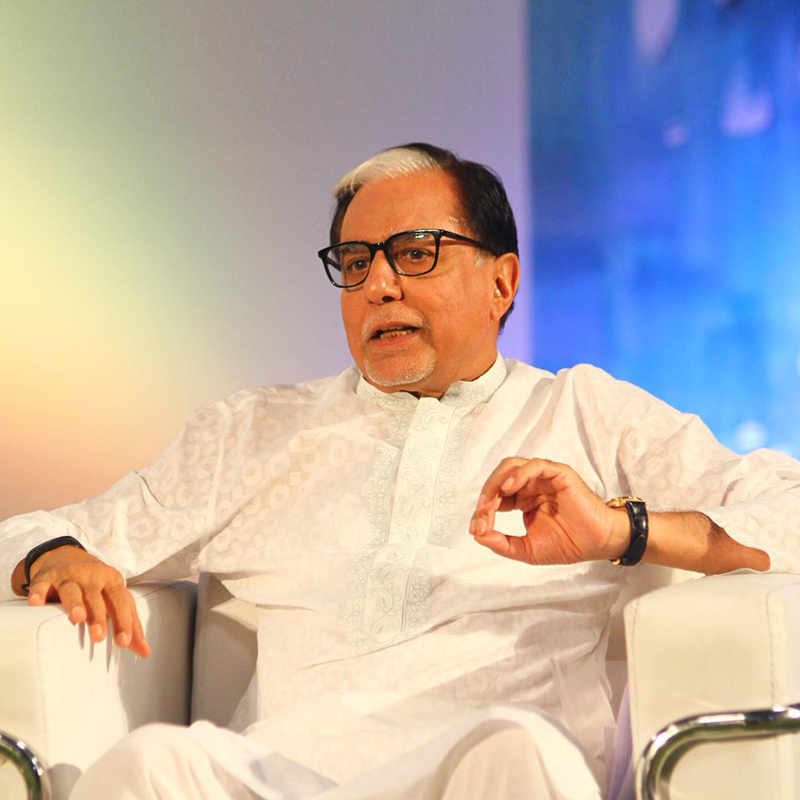
    NEW DELHI: Urging all the stakeholders of the Indian broadcast and cable segments to sink their differences and “come together” for the overall benefit  of the industry, Zee group chairman Subhash Chandra supported regulator TRAI’s draft inter-connect guidelines that, amongst other such broadcast regulations, have been put on hold owing to them legally challenged in courts.  

    “I am a strong supporter of (TRAI’s draft) inter-connect regulations,” Chandra, a Rajya Sabha Member of Parliament from Haryana state, said, adding that in order to reduce litigations amongst stakeholders in the industry it was paramount to “support” such regulations.

    However, Chandra made it clear that though broadcast and cable industry should back TRAI draft guidelines at present — “at least temporarily” — such guidelines should be relaxed over a period of time and jocularly added that rampant litigations financially enriched lawyers only. He was responding to a question from the audience on growing division between broadcasters and distribution platforms, especially the MSOs and LCOs.

    Earlier, delivering the keynote address at the SATCAB meet organized by the All-India Dish Antennae Aavishkaar Sangh, the Zee/Essel Group founder said that there was no reason why the estimated 230,000 (his estimates) local cable operators in the country should not shed allegiance to multiple industry bodies and “unite under one umbrella” to become a force to reckon with so that their voice could be heard more forcefully in the corridors of power.

    Pointing out that not only the MSOs and LCOs should unite, but “all stakeholders” like broadcasters too, Chandra sounded a word of caution, “As an industry we need to be alert to technological evolution.” He added that unless that happens, others, like telcos, “will take a lead over consumer experience”, which will be “our weakness.”

    Chandra said the cable industry had to prepare itself “to catch up with the future” as at present the industry was at “ground level with basic set top boxes”, for example, when technology (like 3D printing) could soon make it possible for viewers to get a different experience in, say, a TV cookery show.

    Referring to various concerns of the LCOs, he said he had ensured that the issue of entertainment tax got subsumed in the Goods and Services Tax (GST), but for him to take up issues relating to the sector stakeholders needed to unite.

    Going back in time to 1992, he dwelt on how the idea of Zee had been drawn up and how when he had given this information to a senior official in the Ministry of Information and Broadcasting (MIB), he had been strongly criticized for the whole idea and was told it would never succeed. “But in just three months of launch”, he said, “Zee had 300,000 television homes subscribing to it.”  

    ALSO READ:

    Top M&E industry honchos see no major benefit from Budget ’17

    MSOs join issues with TRAI tariff plea at Madras HC

    Tariff order: Don’t notify without SC nod, TRAI told; Madras HC case to continue


  • Clarify Rs 3,050-cr PoI penalty norms, telecom panel asks TRAI

    Clarify Rs 3,050-cr PoI penalty norms, telecom panel asks TRAI

    MUMBAI: The Telecom Commission as sought clarity from TRAI in the matter relating to the latter recommending Rs 50 crore per circle penalty on Vodafone India, Bharti Airtel and Idea Cellular in October 2016. The panel directed the department of telecom (DoT) to seek clarity from TRAI on whether the regulator can impose the penalty for violation for interconnect norms.

    The penalty was recommended by TRAI on the three telcos accused of denying interconnectivity to newcomer telco Reliance Jio. According to TRAI, the penalty for Airtel and Vodafone was at Rs 1,050 crore each, while for Idea it was around Rs 950 crore. DoT had earlier sought legal opinion from attorney-general on whether it had the powers to impose the penalty, to which he had opined that DoT could impose the penalty.

    A senior government official reportedly said the panel now asked DoT to seek clarification from TRAI on 10-12 points, including whether the 90-day period was given to the operators for providing point of interconnection (PoI), method of calculating penalty of Rs 50 crore per circle etc.

    Meanwhile, the panel has also okayed demand of Rs 2,834 crore to be raised from operators which provided services between February 2012, when Supreme Court cancelled their licences, and till the time they procured fresh permits after buying spectrum in auction.

    Experts said other issues that needed clarification included whether the penalty was reached after calculating congestion in the network on a monthly average and the fine was based upon the license as contract and not on PoI pact between the operators. Jio had in August submitted to TRAI that it will need 12,727 PoIs for mobile services and 3,068 PoIs for STD facilities before its commercial launch.

    Also Read:

    http://www.indiantelevision.com/regulators/trai/trai-hc-asks-idea-dot-to-file-affidavit-on-plea-170124

    http://www.indiantelevision.com/iworld/telecom/rs-30k-cr-to-enhance-jio-coverage-a-g-clears-dots-power-to-penalise-telcos-170114

    http://www.indiantelevision.com/regulators/tdsat/jio-hny-tdsat-raps-trai-as-contest-deepens-170106

    http://www.indiantelevision.com/regulators/trai/respond-to-vodafones-trai-challenge-in-two-weeks-govt-directed-170104

  • TRAI experiments with investor-led duct-laying plan

    TRAI experiments with investor-led duct-laying plan

    MUMBAI: TRAI is helping out with a pilot project at Baijnath Dham (Deoghar, Jharkhand) where infrastructure providers have been invited to lay ducts based on demand of telecom, Internet and broadcast distribution service providers.

    TRAI is experimenting the investor-led initiative of facilitating the project in Jharkhand where ducts would be laid as per the next 20-year requirement and need of Internet, telecom and broadcast distribution service-providers.

    A TRAI official told moneycontrol that no digging would be permitted once the ducts were laid and the service-provider uses them. Companies might simply push their fibre into and via the ducts as per their requirements.

    The official said it would assist in cutting down operational expenses as the ‘right of way’ fees that was paid to administrative and municipal authorities while digging would also come down.

    The expansion of mobiles and data usage on mobiles notwithstanding, the idea of further spreading fixed broadband through fibre could not be secondary. If the idea was triumphed, on-demand services would be available and that would become a model for media cable companies, telecom and Internet service-providers to follow in rest of India.

    Also Read:

    TRAI advocates help of cable operators to spread broadband

    Government to link rural areas by optic fibre network for broadband growth


  • TRAI experiments with investor-led duct-laying plan

    TRAI experiments with investor-led duct-laying plan

    MUMBAI: TRAI is helping out with a pilot project at Baijnath Dham (Deoghar, Jharkhand) where infrastructure providers have been invited to lay ducts based on demand of telecom, Internet and broadcast distribution service providers.

    TRAI is experimenting the investor-led initiative of facilitating the project in Jharkhand where ducts would be laid as per the next 20-year requirement and need of Internet, telecom and broadcast distribution service-providers.

    A TRAI official told moneycontrol that no digging would be permitted once the ducts were laid and the service-provider uses them. Companies might simply push their fibre into and via the ducts as per their requirements.

    The official said it would assist in cutting down operational expenses as the ‘right of way’ fees that was paid to administrative and municipal authorities while digging would also come down.

    The expansion of mobiles and data usage on mobiles notwithstanding, the idea of further spreading fixed broadband through fibre could not be secondary. If the idea was triumphed, on-demand services would be available and that would become a model for media cable companies, telecom and Internet service-providers to follow in rest of India.

    Also Read:

    TRAI advocates help of cable operators to spread broadband

    Government to link rural areas by optic fibre network for broadband growth