Category: TRAI

  • TRAI’s broadband duct idea be made into a law, govt urged

    TRAI’s broadband duct idea be made into a law, govt urged

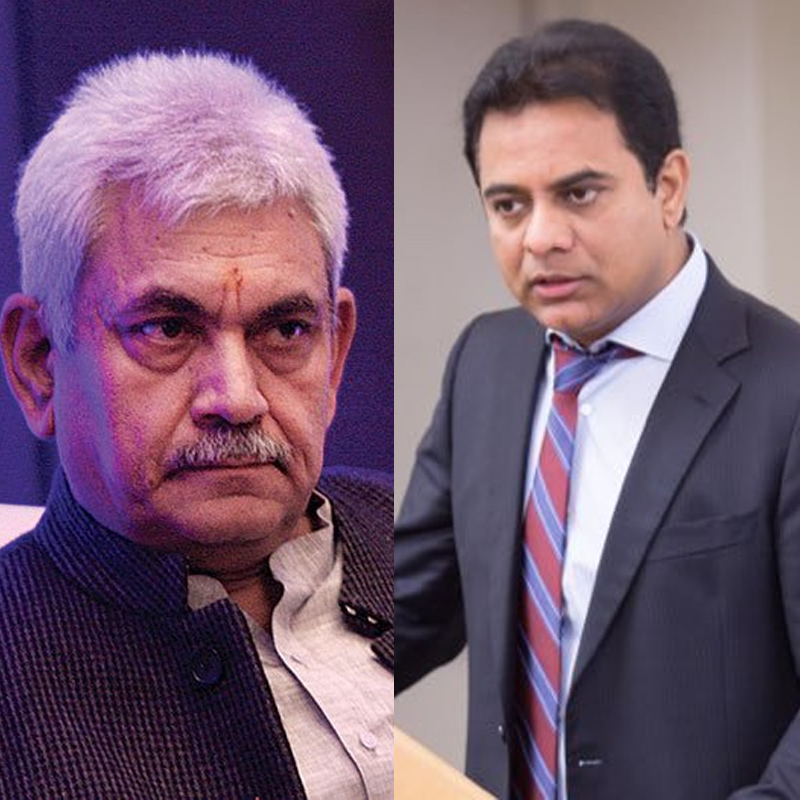
    MUMBAI: The idea that every building plan must have a broadband cable duct should be made into a law, the union minister Manoj Sinha has been urged.

    Telangana IT minister K T Rama Rao, in a letter to Sinha, said that the state expected that the categorisation of broadband service as a utility and mandating duct-laying in building would pave the way for an exponential increase in broadband penetration in India, PTI reported.

    Rao said that the state had created the Telangana Fiber Grid Corporation Limited to build a broadband network to reach every home, institution and government office. Telangana Fiber Grid (T-Fiber) was envisioned to establish a top-class network infrastructure to facilitate the realisation of ‘Digital Telangana’ goal on the back of Mission Bhagiratha, a drinking water project.

    Hailing the TRAI’s suggestion that every building plan must have the duct, Rao requested Sinha to make that into a law to ensure that the last meter connectivity issues for broadband networks were resolved.

    Rao said that they had learnt that the Telecom Commission had approved of the TRAI’s recommendation that a completion certificate (CC) to the building should only be given if it had incorporated the duct in its plan.

    Rao, who is popular as KTR, also sought Sinha’s intervention in directing the ministry of urban development to give similar directive to all state governments to implement the TRAI recommendation.

  • Spectrum payment limit eased, NTP to facilitate data and security

    Spectrum payment limit eased, NTP to facilitate data and security

    MUMBAI: The Telecom Commission has approved the extension of time period for the payment of spectrum bought in auctions by telcos to 16 years from the existing 10 years. This may ease out stress from the industry laden with around Rs 4500 billion debt.

    The Telecom Commission also cleared path for formulating a draft of new National Telecom Policy (NTP) by according its approval. The NTP will focus on affordable and good quality of service, consumer protection, data and cyber security etc, a government source told PTI.

    The draft of the policy may be sent to the union cabinet by January, and its approval could come by March, the source added. NTP’s guiding principal will be a vision as per the ‘Digital India’ programme, and telecom will act as the enabler.

    The commission also approved recommendation of the inter-ministerial group (IMG) — responsible for finding a solution to the financial difficulties of the telecom sector — to lower interest rate charged over penalties imposed on service providers with slight modification, the source said.

    The IMG has given approval to grant Rs 12.3 billion to the Telangana government for rolling out the second phase of Bharat Net (along with its Mission Bhagiratha).

    The IMG also okayed TRAI’s recommendation to mandate that every building plan should have duct for telecom cable and the completion certificate be given only if it has been incorporated.

  • Sunil Kumar Gupta promoted as secretary, TRAI

    Sunil Kumar Gupta promoted as secretary, TRAI

    NEW DELHI: His is a well-known face to most of the Indian broadcasters and TV distributors – whether DTH or cable. Sunil Kumar Gupta, until now Principal Advisor (Broadcasting &  Cable Services) in the  Telecom Regulatory Authority of India (TRAI), has now been appointed Secretary in the Authority.He succeeds Sudhir Gupta who retired on 31 July 2017.

    SK Gupta is a gold medalist of Allahabad University and had done his graduation on “Electronics and Telecommunication” and an MBA from Delhi. He joined Indian Telecom Services (ITS) in 1983 and worked in the Department of Telecommunications in various capacities.

    For the past 10 years, he has been involved in telecom licensing, regulations and its implementation.

    He has dealt with issues relating to broadband, infrastructure sharing, IP addresses, licensing, FM radio and cable TV services.

    He was member of various high profile committees such as “Internet Governance Working Group” constituted by Department of Information Technology, Convener of NGN Expert Committee constituted under the aegis of TRAI, Member of South Asian Telecom Regulatory Council (SATRC) and member of IPv6 focus Group constituted by DOT etc.

    Sunil Gupta has served in TRAI for two terms: first from 2006 to 2011, and again since 2015

  • Prasar Bharati, Dish TV, Star, Zee and BES bat for KU-band open-sky policy

    Prasar Bharati, Dish TV, Star, Zee and BES bat for KU-band open-sky policy

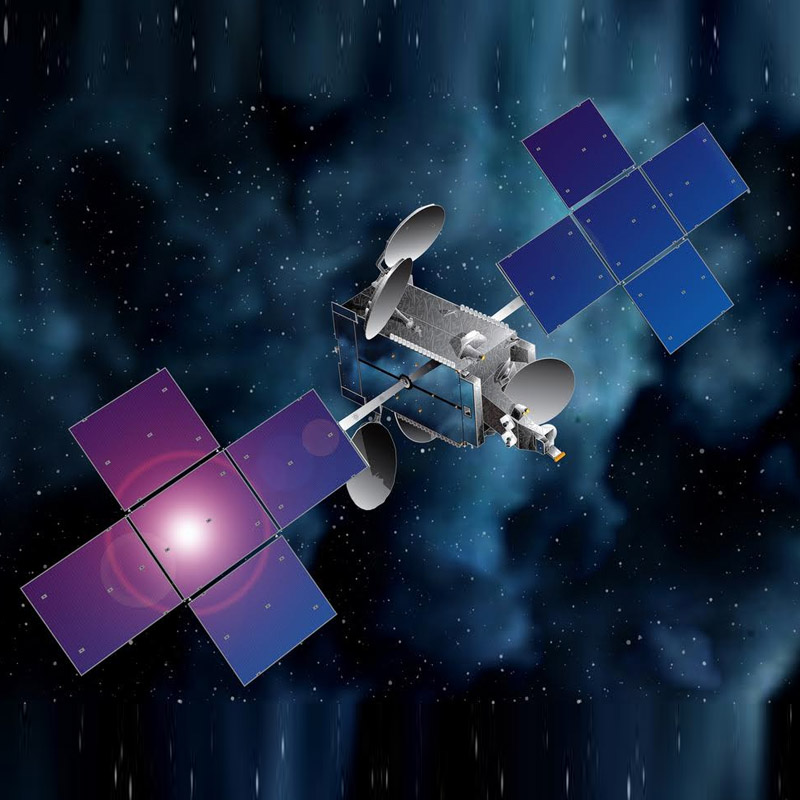
    NEW DELHI: A number of stakeholders in the Indian broadcast and satellite industry, including the country’s first DTH service provider Dish TV, Star India, Zee, the pubcaster Prasar Bharati, and industry organisations such as Broadband India Forum and CASBAA are batting for an open-sky policy relating to KU-band transponders.

    The reason for this support for an open-sky satellite policy is rooted in the need for increasing KU-band transponder capacity. The allotment of KU-band transponder on foreign satellites is regulated by the country’s space agency Indian Space and Research Organisation (ISRO) when it is unable to provide space on Indian satellites to domestic customers.

    While Dish TV does not see “any justification” in the closed-door or regulated policy regime followed for KU-band transponder capacity, Star India is of the opinion that absence of such a policy is limiting DTH platforms’ capacity to provide additional services. Though Prasar Bharati, managers of Doordarshan and All-India Radio, gets preference on Indian satellites, it has also supported an open policy.

    “At present, KU-band is permitted for HITS, DTH, uplinks and DSNGs/VSATs. These applications should be enabled for open-sky policy, which will allow the broadcasters/DTH operators to negotiate long-term contracts. As satellite life is 15-17 years, operators give benefit in long-term contracts to the extent of 50 per cent,” Dish TV has said, adding that, at present, ISRO executes only three-year contracts.

    According to Star India (its parent 21 Century Fox has a minority in DTH operator Tata Sky), “With the introduction of new satellite TV channels, DTH operators require more KU-band capacity with footprint over India to enable to uplink all such channels on such DTH platforms… (but), owing to the lack of open-sky policy in KU-band, DTH platforms are restricted to provide limited value-added services. The open-sky policy for DTH will unlock such value-added services and enable viewers to consume such immersive and interactive content.”

    Why is this clamour for an open-sky policy regarding KU-band transponder?

    At present, any request for additional KU-band capacity on foreign satellites to expand business by Indian customers is hampered as they are unable to negotiate directly, and have to go through ISRO’s commercial arm Antrix that acts as a gate-keeper and, after a deal is concluded with a foreign satellite for KU-band transponders, also charges a commission.

    This happens when ISRO is unable to provide space on Indian satellites, which are increasing in number but have failed to keep pace with the demands of the domestic companies. Incidentally, there is no restriction on leasing C-band transponder capacity on a foreign satellite.

    “For DTH services, acquisition of KU-band transponder capacity is highly regulated and is done through an intermediary (Antrix that is a government organisation). As a result, there has been considerable delay in acquiring KU-band transponders…and also due to non-availability of adequate transponders, DTH service-providers are unable to chalk out their business plans. This is necessitated as the current procedures are fraught with restrictive practices,” said Broadband Forum India, an industry organisation comprising member-companies providing services via satellites.

    Hong Kong-based Asian industry body CASBAA, pointing that it has been seeking a “less restrictive policy” for KU-band for over a decade, has said a PwC-researched paper for it mid-2016 concluded that the policy for KU-band was “in effect a very restrictive satellite policy as presently operated in India,” which “artificially suppress(es) demand, which in turn leads directly to a reduction in growth, profits, and therefore lower tax revenues.”

    Though the bogey of national security is often raised when liberalisation of satellite policies are talked about, CASBAA, while discounting such fears, suggested following medium-term policy tweaks to ease KU-band capacity crunch, which were also listed out by some other stakeholders too:

    i) ISRO/Antrix can regularly publish a list of pre-cleared satellites and operators who are permitted to supply transponders to the Indian market. Indian DTH operators should be free to negotiate and contract capacities directly from them.

    ii) An efficient procedure can be established for DTH operators to obtain security clearance from ISRO before contracting the transponder capacity directly from foreign satellites.

    iii) Contracting for incremental capacity or extending the contracts of existing suppliers can and should be completely left for DTH operators without any need to seek additional, duplicative approvals from ISRO/Antrix. DTH operators would need to keep the ISRO updated with the contracted capacities and contract durations.

    The issue of freeing up KU-band transponder lease regime has been discussed for years, but its gaining momentum as the present PM Modi-led government in New Delhi has been talking about furthering economic liberalization and easing norms for doing business in India.

    Broadcast Engineering Society (BES), a government organisation, too is in favour of  an open-sky policy. “Keeping in view the growing number of TV channels and their carriage on various platforms, it has become inevitable for the government to go for an open-sky policy for KU-band,” BES stated, adding technological advancement and growth of HD channels, apart from experimental 4K services, has necessitated this.

    The stakeholders were expressing their views on KU-band satellite capacity vis-à-vis an open-sky policy as part of a consultation process initiated by sector regulator TRAI on ease of doing broadcast business in India. Incidentally the regulator has been recommending in vain an open-sky policy for several years now.

    ALSO READ :

    ISRO stresses on indigenization; TRAI for Open Sky policy

    ISRO’s ‘South Asia Satellite’ to carry 12 ku-band transponders

    Could India blocking ABS’ FTA TV signals lead to breach of ITU norms?

    MIB: No DPO request for infra sharing, DTH ops’ transponder demand up
  • TRAI workshop on interoperable STBs later this month

    TRAI workshop on interoperable STBs later this month

    NEW DELHI: Following the issuance of a consultation paper by it on 11 August, the Telecom Regulatory Authority of India has now organised a workshop on solution architecture for technical interoperable set top box on 26 September in the capital. The paper had been issued after responses to a pre-consultation paper issued on 4 April this year. 

    TRAI says it had suo moto taken up the issue of STB interoperability in the broadcasting TV sector. Presently, the Distribution Platform Operator (DPO) provides STB, which is compatible with his network to provide services to a subscriber. 

    Over a period of time, variety of technologies has been deployed by DPOs into the networks. It has led to a situation where STBs provided by one operator are not compatible with the system of the other operator. This impedes portability of a subscriber from one operator to another in case he wishes to do so. 

    In the perspective of subscribers, provision of switch-over from one operator to another without replacing the STB is known as technical interoperability, whereby the same STB can be used by the subscriber for availing the services of any other operator after authorisation form that operator. 

    Recognising the significance of choice to the subscribers to change their service provider, TRAI also approached various academia & research organisations to collaborate with them to find solutions for interoperability of STB.

    In response, IIT-Bombay came onboard and has been working on the issue. IIT Bombay was independently charged with studying the feasibility of open STBs and suggest possible paths towards its implementation. This study concluded that open STBs are indeed feasible and recommended that a programme towards its implementation should be undertaken. They suggested an open STB architecture consisting of a secure communication channel between the open STB and the operator dependent  CAS module based on asymmetric cryptography. The keys for such a system are to be managed by a central trusted authority.

    The telecom technology development Centre for Development of Telematics (C-DOT) came up with a framework for interoperable STBs based on Smart Card. Approaches suggested independently by IIT Bombay, and the architecture independently developed by C-DOT have strong similarities. 

    A total of 19 comments have been received.

    TRAI’s objective is to chalk out a framework to facilitate consumer choice, innovation, orderly growth and healthy competition in the industry. The framework should enable an ecosystem to give the market a chance to evolve at its own pace and independently respond to consumer demands.

    This workshop has been organised to deliberate on the proposed architecture solution. TRAI has also contemplated launching a pilot project with a short-term objective of development of a prototype of the interoperable STB & compatible Smart cards. The TRAI notice also contains the technical details of the interoperability framework.

    The workshop has been organised to discuss the feasibility of this pilot with the stakeholders. Objectives of the pilot are:

    1.    Demonstrate that separation of STB & operator specific CAS functionality is possible in a secure manner.

    2.    Frame out & test the specifications for interoperable STBs & SCs in real life conditions, and suggest improvements.

    3.    Jointly develop a business model that fairly allocates value to each provider.

    4.    Fine tune the architecture proposed by C-DOT and finalize the specifications based on pilot.

    5.    Test out integrated and swapping of SCs with STBs in a fully secure manner.

    Also read :

    TRAI starts process of STBs’ interoperability, issues consultation note


  • Net neutrality: TRAI recommendations likely to keep Indian context in mind

    Net neutrality: TRAI recommendations likely to keep Indian context in mind

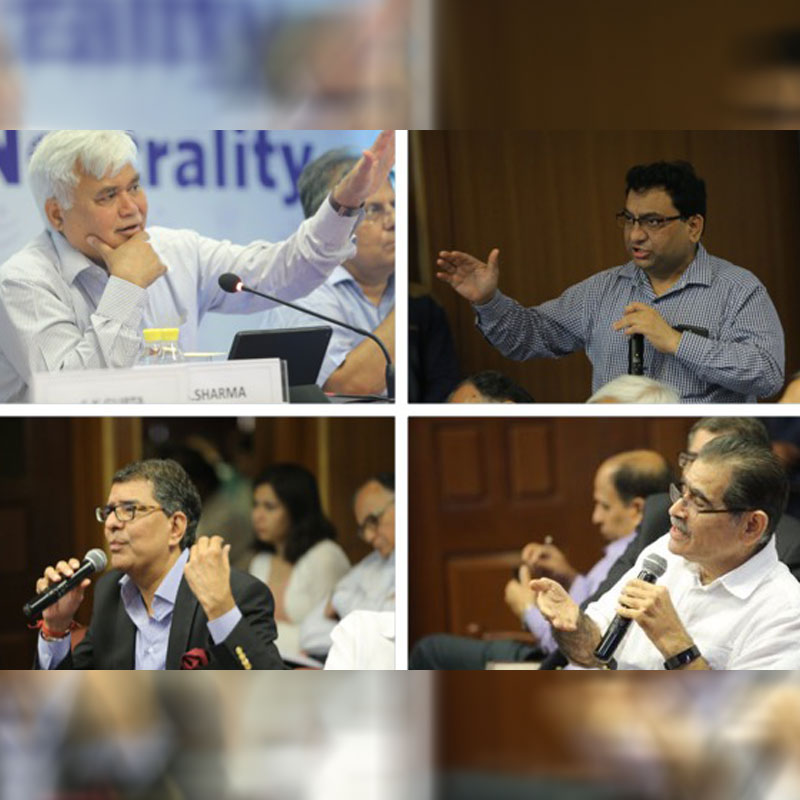
    NEW DELHI: Telecom regulator TRAI which said it is expected to issue recommendations on the controversial issue of net neutrality in about a month, however, may define it more in the Indian context.

    “All stakeholders are actively participating in this (net neutrality) debate. I think TRAI should be able to give appropriate recommendation to the government, which they have asked for,” PTI quoted TRAI chairman RS Sharma as telling reporters here on the sidelines of an open house discussion on the issue. Asked for a timeline for recommendations, he said: “It should not take more than a month.” 

    At today’s open house, lasting several hours, many additional ideas and theories were thrown up at the regulator with participants bringing in issues like IoT (internet of things) and operating systems’ capabilities to block content in the context of net neutrality. For the records, there’s no one single definition of NN that is used globally and many regions and countries define it largely in the context of their nation. 

    The base rate of 2G mobile internet were over 500 times high at Rs 10,000 per GB approximately compared to around Rs 175-180 that companies were charging for 1 GB on the same network under a scheme.

    The debate further heated up after Airtel and social media firm Facebook separately launched free internet platforms. These platforms were banned by TRAI in February 2016.

    ALSO READ:

    TRAI’s final recommendations on net neutrality likely by September

  • Broadcast biz ease exercise progresses, TRAI expects conclusive ideas by 11 Sept

    Broadcast biz ease exercise progresses, TRAI expects conclusive ideas by 11 Sept

    NEW DELHI: More time has been given by the Telecom Regulatory Authority of India for stakeholders to respond to its consultation paper issued last month on the ease of doing broadcast business.

    Stakeholders can send in their comments by 11 September and counter-comments by 18 September 2017 to the paper of 31 August based on views received by it on 19 April’s pre-consultation paper.

    The paper was issued noting that a business-friendly environment is a pre-requisite for the growth of a nation and makes a country a favorite business destination particularly with the fast changing regulatory framework for the media and entertainment sector. Seventeen questions were raised by TRAI.

    Noting that the media and entertainment sector in India is one of the fastest growing sectors, TRAI noted that it not only leads to employment generation but also helps in the growth and development of an economy.

    The economic liberalisation measures initiated in the early 1990s had focused on reduction of regulatory burden on enterprises as an underlying objective of the reform process. The government has launched an ambitious programme of regulatory reforms aimed at making it easier to do business in India. The programme aims at pinpointing the bottlenecks and ease them to create a more business-friendly environment. The efforts have yielded some results with India ranked at 130 according to the World Bank’s “Doing Business” report. But, there is still huge scope for further improvements.

    TRAI notes that the IMF has titled India as the brightest spot in the global economy. Several global institutions have projected India as the leading destination for FDI, and a number of recent global reports and assessments, show that India has considerably improved its policies, practices and economic profile. It is expected that enabling policies and determination to continue with economic reforms, various initiatives taken by the government such as ‘Make in India,’ Smart City Mission, Skill India Mission, Digital India, etc. would further spur the growth of the economy.

    The pre-consultation paper on the “Ease of Doing Business” in broadcasting which covered all media came just a few months after a similar paper on telecom. In the new era of convergence, the two sectors are expected to complement each other.
     
    The aim is also to remove entry barriers by laying down well-defined and transparent procedures and processes thereby creating level playing field and competition in the sector and to facilitate innovation and technology adoption for providing better quality of services to the consumers to steer further growth of the sector by attracting investment through investor friendly policies 

    Subjects to be covered are related to processes and procedures for obtaining permission/ license/ registration for the following broadcasting services and subsequent compliances connected with these permissions. The fields include:

    (a) Uplinking of TV channels 
    (b) Downlinking of TV channels 
    (c) Teleport services 
    (d) Direct-to-home services 
    (e) Private FM services 
    (f) Headend-in-the sky services 
    (g) Local Cable Operators 
    (h) Multi System Operators 
    (i) Community Radio Stations 

    Also read:

    TRAI seeks conclusive views on ease of doing broadcast biz

    TRAI begins work on data protection and government’s role

  • TRAI QoS implementation stayed by Delhi HC awaiting Madras HC verdict

    TRAI QoS implementation stayed by Delhi HC awaiting Madras HC verdict

    MUMBAI: The Delhi High Court has stayed TRAI’s QoS regulations till the time the Madras High Court gives its judgement in TRAI tariff order case.

    Earlier, joining issues with a petition being heard by the Supreme Court on a similar matter, the Madras High Court had, three weeks ago, directed the federal government to clarify on the existing regulatory setup governing contents aired by television channels in India. The Supreme Court is hearing a similar case and has enquired from the central government whether it had a proper mechanism in place to regulate TV content.

    Prior to that, the Madras HC had, on 31 July, reserved orders on the Star India-Vijay TV challenge to the jurisdiction of TRAI to issue tariff orders.  The court received a compliance report from its registry that all parties had filed their written submissions.

    In the most recent development, the Delhi High Court bench, comprising acting chief justice Gita Mittal and justice C Hari Shankar, stated that it would wait for the verdict of the Madras High Court in relation to the tariff order dispute before deciding on the prayers of Tata Sky and Bharti Telemedia. Till that time, the implementation of TRAI tariff order, interconnect regulations and QoS (quality of service) and  consumer protection regulations would not be effected.

    The two companies had questioned the validity of the QoS.

    ALSO READ :

    Star India-TRAI jurisdiction case to come up in Madras HC today

    Govt rules out TV channel categorisation (updated)

    TRAI can only regulate transmission, not broadcast material: Star tells Mds HC

    SC stays new TRAI tariff, asks Madras HC to complete hearing in four weeks

  • TRAI & Malaysian counterpart announce collaboration

    TRAI & Malaysian counterpart announce collaboration

    NEW DELHI: The Telecom Regulatory Authority of India (TRAI) and the Malaysian Communications and Multimedia Commission (MCMC) have agreed to exchange information and regulatory best practices in the fields of broadcasting and telecommunications, including new and emerging areas.

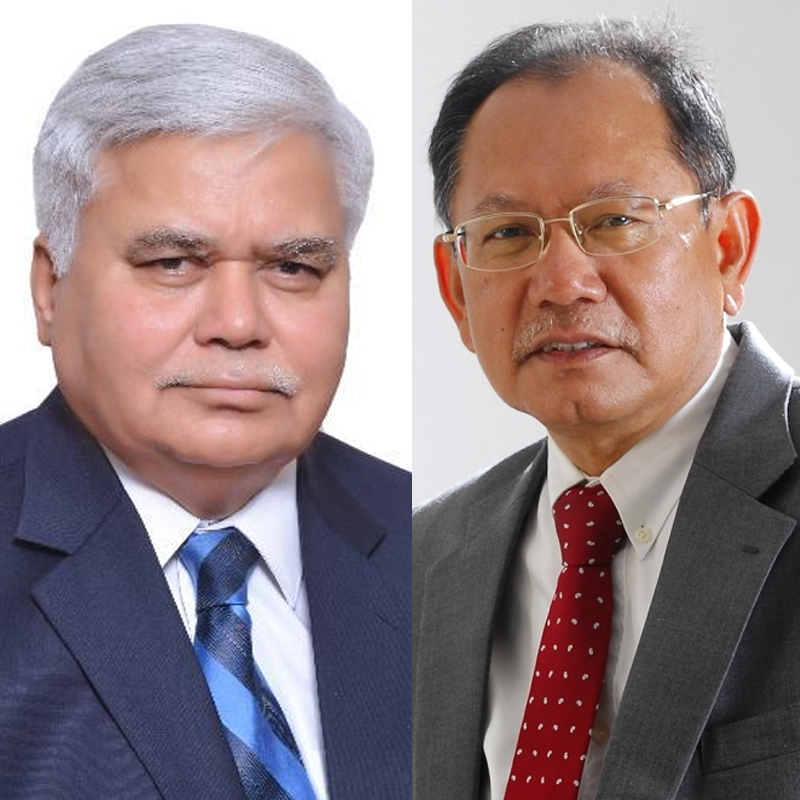
    A Letter of Intent (Lol) was signed by the TRAI chairman R S Sharma and MCMC chairman Halim Shafie in the presence of the Malaysian high commissioner to India Hidayat Abdul Hamid. This historic agreement would help both the regulators to work closely in enhancing mutual cooperation and bilateral relations.

    The signing of this agreement assumes significance for both India and Malaysia as both countries can learn from each other.

    The other activities planned under the agreement to promote international and technical cooperation between the two organizations are:

    Exchange, deployment and attachment of experts, including but not limited to during bilateral consultations;

    Jointly conducting capacity building exercises in the fields of broadcasting and telecommunications regulation;

    Collaboration in various international forums including but not limited to the Association of Southeast Asian Nations (ASEAN), Asia-Pacific Telecommunity (APT) and International Telecommunication Union (ITU); and

    Any other forms of cooperation that are mutually agreed upon by the Parties in the fields of broadcasting and telecommunications regulation.

  • Training programme on collaboration among digital societies commences in capital

    Training programme on collaboration among digital societies commences in capital

    NEW DELHI: Delegates from 24 countries are participating in a training programme on “Collaborative Regulation for Digital Societies” being hosted by the Telecom Regulatory Authority of India (TRAI).

    Teleom Disputes Settlement and Appellate Tribunal Chairman Justice Shiva Kirti Singh inaugurated the programme organized between 23 and 25 August 2017 by TRAI jointly with International Telecommunication Union (ITU) on ‘Collaborative regulation for digital societies.’

    The delegates are particularly from the Asia-Pacific region. Besides, this training programme is being attended by large number of domestic participants representing various stakeholders such as government departments, telecom service providers, telecom vendors, academia etc.

    This ITU-TRAI International Training Programme 2017 aims to build skills to address the policy and regulatory issues in the emerging era beyond convergence of telecommunications and information technology. The Programme will highlight the building blocks required to ensure that regulatory measures remain relevant and appropriate for the new environment. It will bring together international experiences in this area with a focus on India’s experiences and the lessons learnt.

    The theme of this training programme is extremely relevant for all the economies worldwide. Collaborative regulation in ICT sector has various facets. In the converged ICT era, the physical boundaries would cease to exist. The seamless communication would transcend across geographical boundaries and therefore requires fine tuning of existing regulations. The Cloud computing technologies has made revolutionary trends in data storage and management.  The need for developing ecosystems for launch of new services has become inevitable.   With ever increasing subscriber base, there is a great need for optimum utilization of available spectrum through harmonization. With technological development, the task of harmonization of spectrum has become much easier and has become important.

    Cross sectoral collaboration is one of the most important aspects of regulating ICT sector. Governments should aim to improve coordination across regulators for the ultimate benefit of consumers and for coherent and consistent economic regulations across different sectors. Collaboration of regulators with researchers and academicians is another aspect of ICT regulations. Collaborative regulations can result in significant benefits for competition and the economy as a whole if working synergies are created through ongoing dialogue and regulatory cooperation.

    This three day training programme has been divided into 12 sessions and each session will be dealing with pertinent issues related to regulation of digital societies. The sessions will deal with topics such as ‘Regulatory approaches for smart societies’, ‘Converged Licensing Regime’, ‘Spectrum Planning and Management – Strategies for SG’, ‘Building Trust in Digital World’,  ‘Internet  of Things (loT)/Machine  to Machine (M2M) Communications’ etc. This training programme will assist in building institutional capacity by sharing experiences and successful case studies for potential collaboration in all these areas.