Category: TRAI

  • Comment: TRAI uplinks progressive recommendations; now MIB, others need to downlink them

    Comment: TRAI uplinks progressive recommendations; now MIB, others need to downlink them

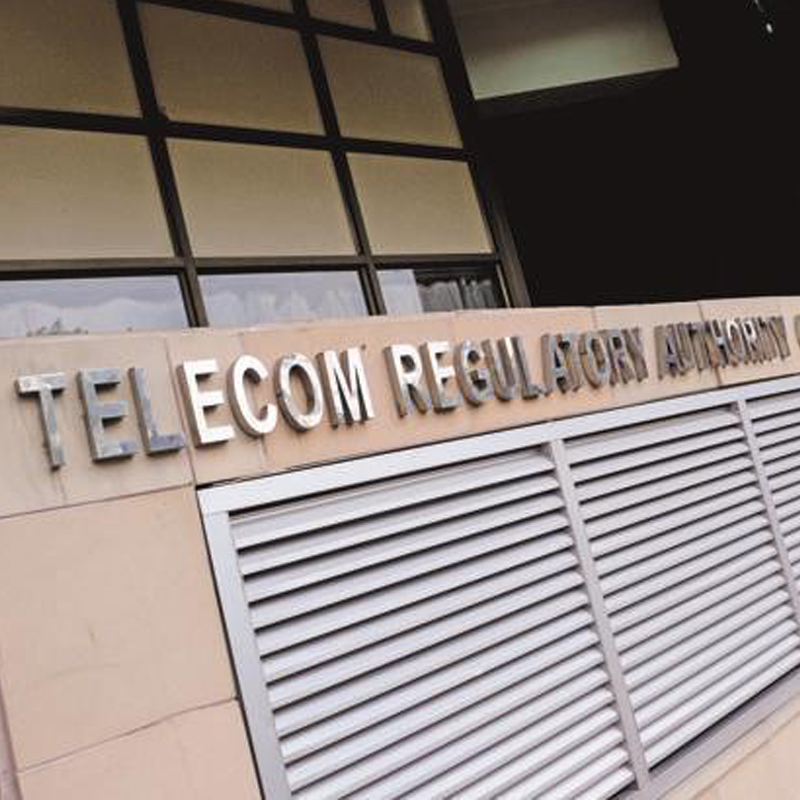
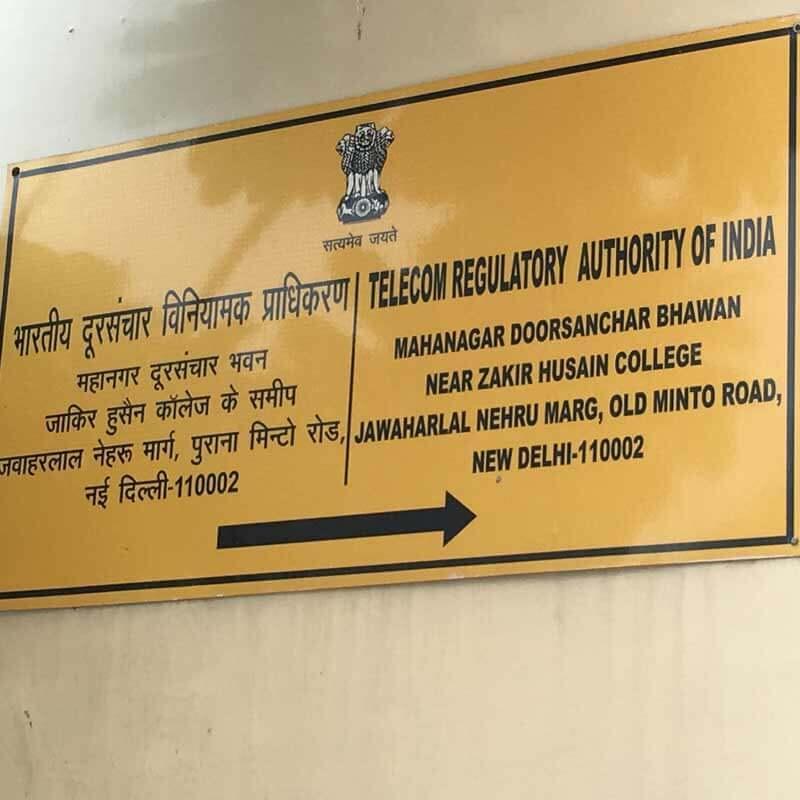
    The approximately Rs 1,400 billion Indian broadcasting and cable sectors, reeling under the impact of a slow economy and hemmed in by erratic policy-making, would be breathing a bit easy after TRAI’s recommendations on issues related to uplink and downlink of TV channels and teleports.

    And, why not?  When the consultation paper on uplinking and downlinking guidelines was released by TRAI in December last year, the concept paper had sent alarm bells ringing in the media industry. Reason? The consultation paper had references about auctioning of satellite spectrum and TV channel permissions, introduction of AGR (adjusted gross revenue) sharing based licence fee (the concept of licensing itself was a debatable issue) and introduction of other changes.

    Most media houses sensed that an auction and AGR-based licensing and spectrum regime could have an irreparable impact on the industry, a la telecom sector, where winding down of businesses and pink slips are becoming common. Even more worrying for the sector was the assertion by TRAI — probably egged on by the Ministry of Information and Broadcasting (MIB)’s reference letter on the issue — that the administrative permissions received by TV channels under the existing norms were licences under Section 4 of the Telegraph Act, 1885, which in itself is an antiquated piece of legislation harking back to the 19th century.

    Though TRAI may not have been directly responsible for suggesting in the consultation paper, issues that rankled the industry, it did experience a rare united and collective views of the industry. Though consensus among stakeholders is rare, on this matter there was no such hesitation. And, an open house forum organised by TRAI on the issue to get further feedback could be cited as an example of this rare unity of views.

    Most attendees to the open forum conveyed loud and clear that concepts like auctioning of TV channels’ permission and AGR-based annual revenue sharing (with the government) would do more harm to the industry than any good. What’s more, some of the industry representatives reminded TRAI of its recommendations for National Telecom Policy 2018 where it had suggested “review” of all levy and fees imposed on telecom service providers.

    In the final recommendations issued earlier this week, TRAI has categorically struck down the possibility of either auctioning of permissions and/or spectrum and steered clear of AGR altogether. Rather, it has taken a highly progressive stance, which if accepted by MIB and other government organisations can inject the much-needed fuel in the industry for it to propel forward faster over the next decade.

    By not increasing any substantial financial burden on media companies in this sector, TRAI has enabled the capex to go into creating newer ventures, innovative products and business models, and other expansionary activities, rather than simply paying fees and levies. Though the suggested framework has been left mostly untouched from the perspective of administrative fees, there are a few notable changes.

    The annual licence fee for uplinking of a TV channel has been enhanced from Rs 200,000 to Rs 300,000. Similarly, the annual fee for downlinking of a TV channel has been increased to Rs 750,000 from Rs 500,000. Also, the fee for downlinking of channels uplinked from abroad has been increased to Rs 22,50,000 per annum.

    TRAI, while exhorting the likes of MIB, Department of Space and DoT to streamline processes, has interestingly suggested transfer of permissions between two companies be permitted only in the case of mergers and acquisitions as recognised under applicable laws. However, free transfer has been recommended for permission of a TV channel to its subsidiary company or holding company or a subsidiary company of the holding company. The caveat being such a company should have a valid uplinking and downlinking permission.

    A time period of only one year has been given for operationalisation of a TV channel and a lock-in period of one year from the date of operationalisation of a channel for the transfer of permission of such a channel too has been introduced.

    As for teleports, no change in the amount of one- time non-refundable processing fee levied for seeking permission for establishing a teleport has been suggested. Similarly, it has been suggested that no entry fee is levied for granting permission for establishing a teleport. However, for each antenna, a fixed annual license fee of Rs 300,000 has been recommended.

    What will also come as a relief to the teleport industry is that TRAI has refrained from restricting the number of teleports in India.

    And, once again TRAI has nudged Department of Space and Department of Telecoms to take time-bound and liberalised policy decisions relating to satellite capacity. Though not said upfront and in so many words, the regulator has pitched in for foreign satellites too. “The issue of open sky policy for Ku band frequencies may be taken up by MIB in INSAT Coordination Committee (ICC) meeting and the open sky policy should be adopted.”

    Any regulator would vouch that it’s hard to please the core constituency and stakeholders don’t always agree with its stand, but on the uplink/downlink matter the industry would agree with most of the suggestions of TRAI — and also breathe a little easy.

    Hang on, don’t pop the champagne yet. TRAI can only make suggestions — it admitted so in an open forum — and it’s up to MIB, DoT and Department of Space to accept the suggestions and implement them. And, therein lies the catch because quite a few other sets of TRAI recommendations have been gathering dust in various corridors of power.

    Also Read :

    Uplink, downlink issue: TRAI pushes for a liberal regime keeping most existing norms unchanged

    TRAI extends dates for comments on uplinking/downlinking consultation paper
  • Uplink, downlink issue: TRAI pushes for a liberal regime keeping most existing norms unchanged

    Uplink, downlink issue: TRAI pushes for a liberal regime keeping most existing norms unchanged

    NEW DELHI: The Telecom Regulatory Authority of India today stuck with most of the existing guidelines and norms for uplink and downlink permissions for TV channel and teleports, refusing to recommend auction of TV channels — flagged as a contentious issue by stakeholders. However, it suggested enhancing of annual permission fees from the present levels, amongst some other changes.

    The TRAI recommendations on uplink and downlink of TV channels and teleports had been awaited eagerly by the industry, already reeling under pressures from various sides, including economic.

    The regulator also said that mandating encryption of broadcast of FTA TV channels was not a good idea, while suggesting that various processes for various government clearances should be streamlines done within stipulated time-frame.

    Some of the major recommendations of the TRAI are as follows:

    Issues related to uplinking and downlinking of satellite TV channels

    i) No change in the existing definitions of ‘News and Current Affairs TV channels’, and ‘Non-News and CurrentAffairs TV channels’ mentioned in   the   existing uplinking and downlinking guidelines dated 05.12.2011.

    ii) No change in the amount of minimum net-worth of an applicant company seeking permissions for uplinking anddownlinking of TV channels.

    iii) Auction not feasible for grant of permissions for uplinking and downlinking of TV channels.

    iv) Existing administrative system for grant of permissions for uplinking and downlinking of TV channelsshould be continued and should be streamlined.

    v) TRAI reiterated its recommendations on “Ease of Doing Business in Broadcasting Sector” dated 26th February 2018 sent to the Government wherein several measures have been recommended for streamlining the existingprocess of granting permissions for uplinking and downlinking of TV channels.

    vi) No change in the permission fee and entry fee for uplinking and downlinking permissions.

    vii) Annual license fee for uplinking anddownlinking permissions should be enhanced as follows:

    public://list_14.jpg

    viii) Encryption of broadcast of FTA channels should not be mandated and it should be left to the broadcasters providingFTA channels.

    ix) Transfer of permissions should not be permitted between two different companies. In case of mergerand acquisition as recognized under the Companies Act, 20 13 or any other applicable law(s), transfer of permissionsshould be permitted after following the   due process. Transfer of permission of TV channels to its subsidiarycompany or holding company or subsidiary company of the holding company should be allowed freely, provided such company has a valid uplinking and downlinking permission.

    x)A lock-in period of one year from the date of operationalization of a channel for the transfer of permission of such channel.

    B. Issues related to Teleports

    i) No change in the amount of onetime non-refundable processing fee levied for seeking permission for establishing a teleport.

    ii) No Entry fee for granting permission for establishing teleport.

    iii) For each antenna a fixed annual license fee of Rs 3 lakh should be charged.

    iv) No need to restrict the number of teleports in India.

    v) Location of teleports should be left to the teleport operators subject to site clearance from WPC wing of DoT.

    Also Read:

    TRAI extends dates for comments on uplinking/downlinking consultation paper

    TV channels’ uplinking / downlinking procedure simplified

    MIB reminds TV channels, teleport ops about timely online payments

    MIB bumps up TV channel processing fee

  • TRAI, European regulator BERC sign net neutrality MoU

    TRAI, European regulator BERC sign net neutrality MoU

    MUMBAI : Telecom Regulatory Authority of India (TRAI) and The Body of European Regulators for Electronic Communications (BEREC) on Thursday signed a “Memorandum of Understanding” (MoU) on net nuetrality. The MoU, signed by TRAI chairman Ram Sewak Sharma and BEREC chair Johannes Gungl, also adopted a “Joint Statement for an Open Internet”, pledging to work together to ensure that the internet remains an open and non-discriminatory platform.

    “Net neutrality is a vital principle and an open internet crucial for people around the globe. We are very happy to have TRAI as a partner to ensure a univocal protection of net neutrality principles for internet access services,” said Gungl.

    Last year, TRAI, post a consultation process,  issued recommendations to protect net neutrality. However, those recommendations haven’t yet been enacted by the telecom department.

    The joint statement not only highlighted the regulators’ common understanding of net neutrality rules but also their intention to protect them. TRAI and BEREC have also decided to work together in implementing these rules.

    The  MoU has been designed to faciliatate effective electronic communications regulation. Its aim is to build a mutual relationship between the two parties to identify and tackle current and future regulatory issues. This effort is also aimed at nurturing a sound working partnership between the experts from both regulators.

    “We consider that the intemet will continue to be an enabler of growth and innovation for countries like India who can use technology to leapfrog to the next stage of development. Therefore, it is important that the intemet is kept as an open and non-discriminatory platform. Our MoU with BEREC gives us an opportunity to not only work closely together in areas like net neutrality, but also to collaborate in other areas where the EU has adopted a very effective regulatory framework like consumer protection, broadband development and promotion of Next Generation Access roll-out ” said Sharma.

    Also Read:

    Third Madras high court judge gives TRAI tariff order thumbs up

    Madras HC gives split verdict in Star India versus TRAI case

  • TRAI stands up to DoT on use of foreign satellites for comms services on aircrafts

    TRAI stands up to DoT on use of foreign satellites for comms services on aircrafts

    NEW DELHI: India’s telecoms and broadcast regulator Telecom Regulatory Authority of India today stood up again for the lawful right of satellite industry stakeholders. It reiterated that the nation’s policies and guidelines for on- board aircraft communications services like broadband should also allow use of foreign satellites despite Department of Telecoms raising objections on the matter.

    “If we do not allow the foreign aircrafts to provide the MCA (mobile on-board aircraft) services using their satellite and gateways over the Indian airspace, other countries will also not allow the Indian aircrafts to provide

    MCA services while over-flying their jurisdictions,” TRAI justified its stance to DoT as part of clarifications sought by the latter on the regulator’s recommendations on in-flight connectivity services.

    TRAI pointed that though a government panel may have suggested use of Department of Space-approved satellites only with Indian gateways, the in-flight connectivity or IFC services are technically complex withservice providers handling the logistics do so in partnership with foreign mobile service providers having created on-ground facilities for provisioning of MCA.

    “Even if it is assumed that such a facility is created on Indian soil, aircrafts will need to be fitted with pico cell/equipment, which are compatible with one of the Indian TSP (telecom service provider)’s core network. There are several countries where IFC services are already operational and, accordingly, their aircrafts are equipped with pico cell which is connected to the core network of partnering foreign mobile service provider. These airlines certainly won’t be willing to carry out any modification due to the downtime and costs involved. Therefore, for such aircrafts, MCA over the Indian airspace seems feasible only with the existing arrangements in which partnering mobile service provider would be a foreign entity. It may require the use of foreign satellites and gateway, and traffic from aircraft may not be routed through gateway in Indian soil,” TRAI explained, adding that its recommendations have enough in-built safeguards to take care of concerns on India’s security.

    If that was not enough, TRAI, at present helmed by chairman RS Sharma who’s due to superannuate in a few months’ time, categorically said in its response to DoT clarifications that the government panel’s decision to use only satellites approved by DoS with Indian gateways for MCA service was “not implementable”.

    “If the use of foreign satellites and gateways are not permitted for MCA services, it would make the recommendation infructuous”, the regulator emphasized, though admitting that it’s role is recommendatory and the final decision would have to be taken by the government. “With this perspective, the Authority recommended that `use of foreign satellites and gateway would be permitted for the establishment of satellite backhaul links only for the provisioning of MCA services’,” TRAI added.

    On several other objections raised by DoT on suggestions on providing communications services on aircrafts within India airspace, TRAI has stood its ground, reiterating that such bans on foreign satellites and non-Indian gateways could be against international laws and may make the service unviable.

    The full text of TRAI reply to DoT can be found at http://www.trai.gov.in/sites/default/files/RecommendationIFC05062018_0.pdf.

    Also Read:

    TRAI clears path for broadband, voice services aboard planes

  • Third Madras high court judge gives TRAI tariff order thumbs up

    Third Madras high court judge gives TRAI tariff order thumbs up

    MUMBAI: The long-awaited judgment of the Madras High Court on the TRAI tariff order has been pronounced.

    Sources indicate that almost all the proposals mentioned in the order have being given the go- ahead –  the only exception being the capping of discounts to 15 per cent.

    The decision was announced by the third judge in the Madras High Court earlier today – an order is supposed to come later this evening.

    Reacting to the judgement, AIDCF hailed it as “significant for the cable TV broadcasting and distribution sector’. AIDCF president Rajan Gupta said, “We are elated to note that Honorable Mr. Justice M.M. Sundresh has concurred that TRAI is within its jurisdiction in notifying the tariff order and interconnection regulations of 2017. This new regulatory framework will benefit the entire sector and especially the consumers by improving transparency, enhancing subscriber choice and removing discrimination in provision of content.”

    He further added: “We hope that this present judgment, combined with the earlier view of Honorable Ms. Chief Justice Indira Banerjee, is taken in the right spirit by the stakeholders and any further unnecessary litigation is avoided so that the TRAI can move forward and continue working towards its vision of creating a transparent and non-discriminatory regulatory framework governing the sector.”

    Earlier in March 2018,  a two member bench of the Madras High Court had delivered a split verdict in Star Vijay’s litigation against its passage as content pricing should be left to the discretion of the broadcasting.

    While chief justice Indira Banerjee, heading the first bench, had ruled in favour of TRAI, the second judge — justice M Sundar – had ruled otherwise. The matter was then referred to a third judge who had been given a month to give his directive. The third judge’s decision came earlier today.

    Sources indicate that the third judge has also suspended the decision for the next two weeks, giving Star India a  chance to appeal against it in the Supreme Court.

    The TRAI order had the following highlights…

    The role of the broadcaster

    Under this, broadcasters will have to first declare their channels as a pay channel or a free to air channel, on an a  la carte basis, and in one of the following seven genres: devotional, general entertainment, infotainment, kids, movies, news and current affairs and sports. The TRAI has defined a ceiling on the maximum retail price (MRP) for each of the genres: devotional (Rs 3), general entertainment (Rs 12), infotainment (Rs 9), kids (Rs 7), movies (Rs 10), news and current affairs (Rs 5) and sports (Rs 19).

    Each pay channel has to have a MRP  that can vary depending on the region, but which cannot be changed before the expiry of six months of it being declared. These rates will be platform agnostic – that is, uniform across the platforms (cable TV, DTH, HITS and IPTV) across a relevant geographical market, and will have to be declared on each broadcaster’s website and be transparently available to the TRAI, TV distributors and consumers.

    The pay channels of a network or its subsidiary or holding company or subsidiary of the holding company can be packaged into a bouquet. This can be done while taking the precaution that the bouquet’s MRP is not less than 85 per cent of the sum of the MRPs of the a la carte pay channels forming a part of the bouquet. Similar conditions of holding prices for six months and in geographical areas also apply to bouquets.

    The TRAI has introduced a category called a premium channel. Broadcasters are free to notify any channel as premium channel in their reference interconnect order (RIO). There shall be no price cap on maximum retail price notified by broadcasters for customers. For HD channels, the regulatory authority has, however, stated the price cannot be more than three times the MRP of the corresponding channel transmitted in SD. For those HD channels that do not have a corresponding SD channel, the benchmark will be the ceiling on the MRP of the genre it is in. These independent HD channels will have a price ceiling of three times the ceiling of the MRP of the genre.

    The television distributor’s role

    On the television distributor side, the TRAI has made them responsible to provide all channels on a la carte basis and it has also  proposed to formalize  a minimum subscription fee of Rs 130 per month per set top box from a subscriber for 100 SD channels.  Now if an HD channel is included in this, it will be equal to 2 SD channels.

    The TRAI has stated that TV distributors cannot change the bouquets formed by broadcasters or its price, but they can form bouquets themselves of pay channels of different broadcasters provided that their price is not less than 85 per cent of the sum of the MRPs of the pay channels forming part of the bouquet. Free to air, HD and SD variants of the same channel and premium channels are not permitted to be included in these bouquets.

    The authority says that the composition of the 100 channel basic tier should be left to the subscriber’s volition. It can consist of FTA, pay, premium channels, broadcast bouquets or even television distributor package bouquets. But it has to have the government mandated channels and at least five channels of each of the seven genres. If the subscriber opts for pay TV or premium or HD channels or broadcast or TV distributor bouquets, he will have to pay the retail price for these separately.

    Subscribers wanting channels beyond the basic tier can opt for other channels by paying the TV distributor Rs 20 – excluding taxes-  for each slab of 25 channels and the broadcaster the MRP of each channel.

    The TV distributors also have another responsibility. The electronic programming guide on the network must display the details of all channels and their MRP genre wise for easy navigation. Broadcasters who are relying on TV distributors to collect and remit the pay channel revenues will provide a 20 per cent distribution fee to them, which the latter can share with the LCOs who are actually doing the collection. Additionally, TV channels can also offer a maximum 15 per cent MRP discount to TV distributors to encourage them. Parameters for discounts will be disclosed by broadcasters in the RIOs that will be transparent and uniform for all distributors of television channels.

    More to follow…Keep reading Indiantelevision.com

    Also Read:

    Madras HC gives split verdict in Star India versus TRAI case

    TRAI-Star case back to Madras HC with SC rider

    SC could take up TRAI-Star case on tariff regulations

  • Spectrum auction: TRAI consulting international agencies

    Spectrum auction: TRAI consulting international agencies

    MUMBAI: The Telecom Regulatory Authority of India (TRAI) is in the midst of consulting various international agencies and experts and hopes to finalise its recommendation on spectrum auction “soon”, chairman R S Sharma has said.

    Sharma said that a review meeting on the telecom auction was held in the TRAI last week. “There is a lot of work being done. We are consulting international agencies, consultants as well as experts and we will come out with our recommendations soon,” Sharma told PTI.

    But he declined to give a specific timeframe for the finalisation of recommendations on the issue. The government is planning to hold the largest-ever spectrum auction of 3,000 MHz radiowaves in the upcoming sale. It has sought recommendations from Trai on the applicable reserve price and related issues for auction of spectrum in the frequency bands 700 MHz, 800 MHz, 900 MHz, 1,800 MHz and 2,100 MHz, 2,300 MHz, 2,500 MHz, 3,300-3,400 MHz and 3,400-3,600 MHz.

    Trai is also expected to give its opinion on timing of the proposed spectrum auction.

    In the previous auction held in 2016, the government had put a total of 2,354.55 MHz of mobile airwaves for sale in the bands of 700 MHz, 800 MHz, 900 MHz, 1,800 MHz, 2,100 MHz and 2,300 MHz, cumulatively valued at Rs 5.63 trillion at base price.

    However, nearly 60 per cent of the radiowaves, including premium 4G bands, remained unsold in that auction. In the five-day auction in 2016, seven telecom companies made commitment of Rs 65,789 crore for buying 964.80 MHz of spectrum across multiple frequency bands.

    The apex industry association COAI is of the view that operators are not ready for the next round of spectrum auction at this point given the deep financial stress and ongoing consolidation in the sector.


  • TRAI extends submission date for consultation on landing page norms

    TRAI extends submission date for consultation on landing page norms

    MUMBAI: The Telecom Regulatory Authority of India (TRAI) has extended the date of submission for comments on its consultation paper regarding landing page norms. The new dates for comments and counter comments are 4 May and 11 May respectively.

    The regulator had issued the consultation paper on 4 April seeking comments and counter comments by 20 April and 27 April respectively. It also mentioned that no further request for extension would be entertained.

    In November 2017, TRAI had issued orders to television distributors to refrain from placing registered satellite TV channels that had subscribed to a TV ratings agency, on the boot-up screen or landing channel. Two days ago, it assured the Telecom Disputes Settlement Appellate Tribunal (TDSAT) that it would withdraw the order and discuss the matter with stakeholders before proceeding on the issue.

    The TRAI diktat, incidentally, had come after a clutch of news broadcasters had made allegations against a fellow TV channel of making use of the boot-up page to manipulate audience ratings and sampling of the product by viewers.

    The landing or the bootup page is what a viewer sees first when a TV set and the connected set-top box are switched on. This page on the screen remains for a certain period of time after which the EPG or the electronic programming guide of the distribution service provider comes up. The landing page, considered hot real estate, usually carries paid advertisements of a TV channel programme or messages (like audience measurement data relating to a particular TV channel or even initial sampling of a new channel). The commercial use of the landing page results in sizable revenue for distribution platforms.

    Also Read :

    TRAI initiates consultation on landing page issue

    TRAI assures TDSAT on withdrawal of landing page order

    TRAI tightens landing-page norms

  • TRAI assures TDSAT on withdrawal of landing page order

    TRAI assures TDSAT on withdrawal of landing page order

    NEW DELHI: Broadcast carriage regulator Telecom Regulatory Authority of India (TRAI) assured the sector disputes tribunal yesterday during a hearing that a November 2017 order pertaining to landing or boot-up page of TV sets will be withdrawn within two weeks and the issue discussed with the stakeholders before any further move on the matter.

    An order of the TRAI in November 2017 banning the use of the landing page for any other activity other than promotion of a distribution platform had been challenged by a few MSOs and broadcasters on the ground that proper process wasn’t followed by the regulator before issuing the directive.

    The TRAI diktat, incidentally, had come after a clutch of news broadcasters had made allegations against a fellow TV channel of making use of the boot-up page to manipulate audience ratings and sampling of the product by viewers.

    The TRAI also informed the Telecom Disputes Settlement and Appellate Tribunal (TDSAT) that it had issued a consultation paper on 3 April 2018 to debate and discuss the landing-page issue threadbare with various stakeholders.

    The landing or the bootup page is what a viewer sees first when a TV set and the connected set-top box are switched on. This page on the screen remains for a certain period of time after which the EPG or the electronic programming guide of the distribution service provider comes up. The landing page, considered hot real estate, usually carries paid advertisements of a TV channel programme or messages (like audience measurement data relating to a particular TV channel or even initial sampling of a new channel). The commercial use of the landing page results in sizable revenue for distribution platforms.

    After the TRAI’s submission on the issue on Wednesday, the TDSAT noted that once the regulator withdrew its order, all the petitions would be treated as infructuous. Till then, the tribunal interim order staying the TRAI directive remains in force. The next date of hearing is 7 May 2018.

    While passing the directive in November, the TRAI had said it had received a number of representations from stakeholders stating the practice of placing a registered TV channel—whose audience data was recently released—on the landing page had the potential to influence the TV audience measurements.

    The Ministry of Information and Broadcasting, in a separate order, in the first week of April 2018 had directed audience measurement organisation BARC India to desist from using landing page data of any channel for its overall audience data.

    Also Read :

    TRAI initiates consultation on landing page issue

    MIB directs BARC to stop landing page impressions for measurements

    TDSAT ‘reserves’ order on landing-page case

  • TRAI begins discussion on uplinking, downlinking guidelines

    TRAI begins discussion on uplinking, downlinking guidelines

    MUMBAI: The Telecom Regulatory Authority of India (TRAI) has set the ball rolling for consultation on uplinking and downlinking guidelines with stakeholders. The regulator convened an open-house discussion (OHD) on its consultation paper on ‘issues relating to uplinking and downlinking of television channels’ in India on 11th April 2018. A number of stakeholders, including associations, broadcasters, service providers and individuals, attended the OHD.

    The TRAI has initiated this consultation process to seek the views of the stakeholders on the issues involved. The objective of this consultation process is to review the provisions of the existing uplinking guidelines and downlinking guidelines so as to ensure orderly growth of the broadcasting sector and in turn provide impetus to socio-cultural and economic development, a release issued the telecom regulator stated.
    A total number of 38 stakeholders have submitted their comments on the issues raised in the consultation paper.

    The TRAI had floated a consultation paper on issues relating to uplink and downlink of TV channels in India mid-December 2017 on receiving a reference from the Ministry of Information anf Broadcasting (MIB) to study the particular aspect and come out with suggestions. This consultation was initiated even as the regulator had been discussing various other issues with stakeholders of the broadcast and cable sectors on ease of doing business and inputs for the National Telecom Policy (NTP) 2018. Subsequently it submitted its recommendations to the government on the ease of doing business and NTP.

    Also Read:

    MIB nod to TV channels on hold till TRAI uplink, downlink suggestions

    MIB proposes installation of chip in DTH boxes: Report


  • TRAI bats for issuing DTH licences for 20 years

    TRAI bats for issuing DTH licences for 20 years

    MUMBAI: The Telecom Regulatory Authority of India (TRAI) has reiterated its recommendation to the Ministry of Information and Broadcasting (MIB) that direct-to-home licences be issued for a period of 20 years and then renewed for 10 years, and a one-time entry fee of Rs 10 crore be charged in the new DTH licensing regime.

    In July 2014, the TRAI had made a number of recommendations regarding the issues related to the new DTH licensing regime.

    However, the MIB had proposed, after considering comments from other ministries and departments, to grant DTH license for an initial period of 10 years and thereafter, renewal of license after 10 years.

    The ministry had sought TRAI’s views on the proposal.

    In its response yesterday, the telecom regulator said, “It is felt that a longer licence period would provide certainty in the market.

    Keeping a short license period may adversely affect the potential investment in the sector and would also negate the efforts of the government, inter alia, including the liberalisation of the FDI regime”.

    Stating that a longer duration of license helps in better futuristic business planning, the TRAI noted that in the telecom sector, the license period under the Unified License (UL) regime is 20 years and renewal is 10 years at a time.

    “In view of the growing convergence between the broadcasting and telecom sectors, it is logical to align the license period for DTH sector with that in the telecom sector under the UL.

    In view of above, TRAI reiterates its earlier recommendations,” it said.

    Under the UL, operators are free to provide all telecom services with one licence.

    Currently, the license is valid for 10 years.

    The TRAI also reiterated its recommendation of one-time entry fee of Rs 10 crore to be charged in the new DTH licensing regime.

    The MIB, however, proposed to increase the one-time entry fee to Rs 25 crore for the license period of 10 years.

    In its response, the TRAI said, “In order to encourage more entrants in the DTH industry, and to compete with the cable industry, wherein there is no entry fee, the TRAI recommends to retain the entry fee to Rs 10 crore”.

    Currently, the DTH operators also need to pay an initial entry fee of Rs 10 crore.