Category: TRAI

  • Being pro-consumer does not mean one is anti-industry: TRAI chairman RS Sharma

    Being pro-consumer does not mean one is anti-industry: TRAI chairman RS Sharma

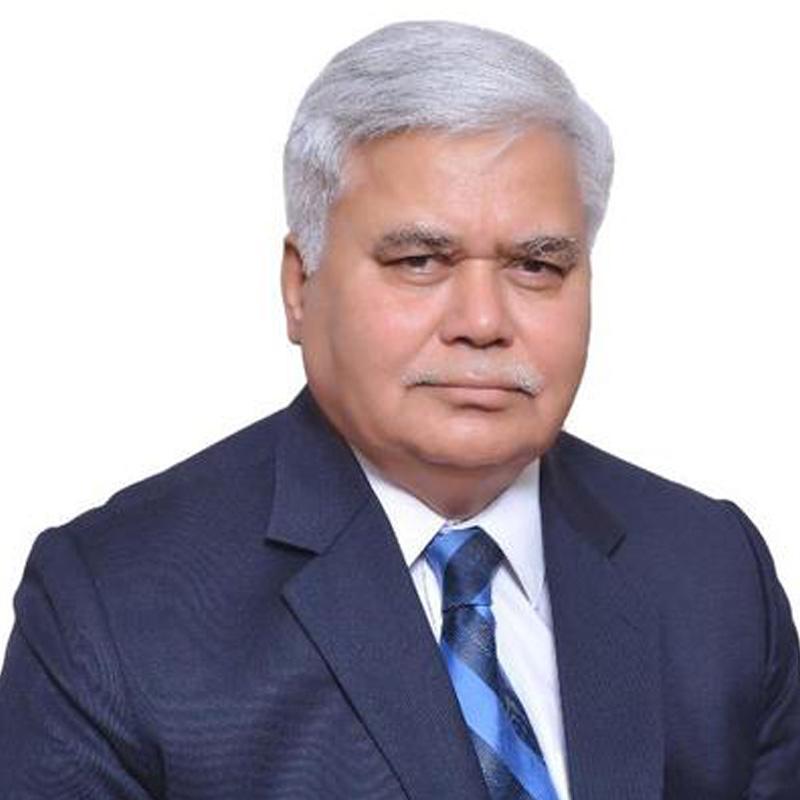
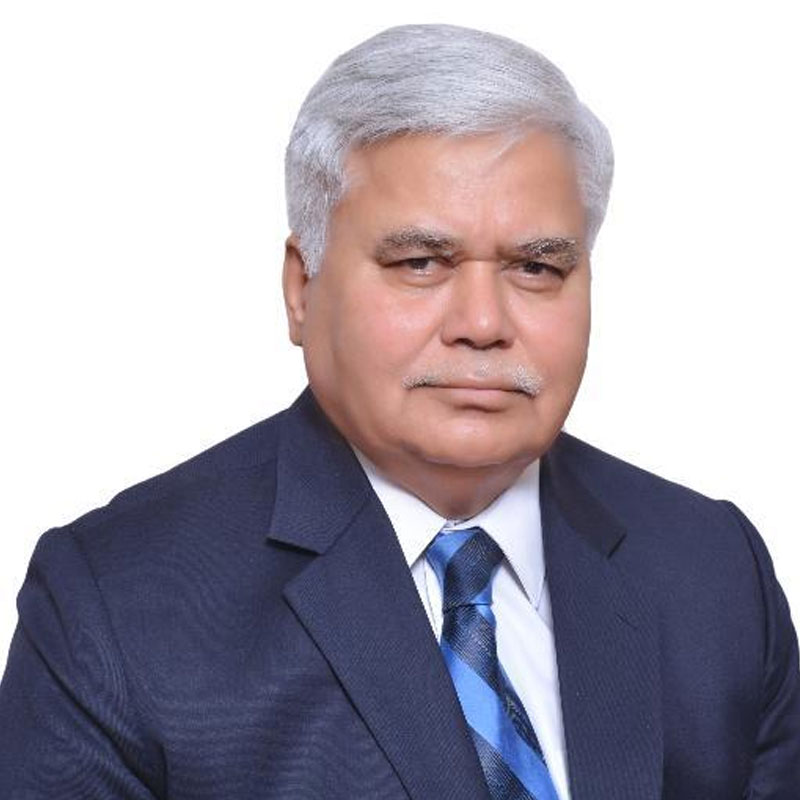
    MUMBAI: Outgoing TRAI chairman RS Sharma, whose tenure saw major, at times controversial, decisions on issues like termination charge and predatory pricing, on Wednesday said he is of the firm belief that being pro-consumer does not mean one is anti-industry.

    The TRAI Act itself calls for ensuring consumer protection and growth of the sector in equal measure, Sharma said.

    “Some people take the line that if you are pro-consumer, you are anti-industry… that is far from the truth. Pro-consumer does not mean anti-industry. It is not a zero-sum game, one should be conscious of that,” Sharma told PTI.

    The TRAI Act mandates that the regulator has to ensure fair competition, consumer protection and growth of the industry, said Sharma who is set to complete his term as TRAI chief on Thursday.

    In the past, decisions by Telecom Regulatory Authority of India (TRAI), ranging from slashing of call-connect charges to its stance on the provision of points of interconnect (sought by Reliance Jio at the start of its services), and predatory pricing rules have come under the industry’s attack. 

    Earlier this year, TRAI’s predatory pricing norms sparked-off a furore as old telecom operators and industry association criticised the new rules.

    More recently, industry body Cellular Operators Association of India (COAI) raised a red flag over TRAI’s new regulations on curbing pesky calls and messages, saying tailoring of systems, and use of blockchain technology will involve Rs 200-400 crore investment and 18 months for the rollout, at a time when the sector is financially-stressed.

    Sharma on Wednesday said that “reasonable time” has been given to the telecom operators on norms to curtail pesky telemarketing calls and messages. The rules, he said, came about only after a prolonged discussion with the industry.

    “I think reasonable time has been given…My position has been that the regulation has come after a lengthy year-long discussion process. It is not the knee-jerk reaction of TRAI, that it has issued these regulations,” Sharma said.

    Recounting his early days in TRAI, Sharma admitted that he had initially been somewhat apprehensive on whether the regulatory role would imbibe a developmental aspect.

    “… initially, I was a bit apprehensive as I had, through my life, been engaged in developmental work … I was wondering whether the regulatory role had any developmental facet. But I had the advantage of being in technology space for quite some time, and telecom is more about technology today…I have thoroughly enjoyed this role,” he said.

    Sharma noted that the telecom sector has undergone a “fundamental change” marked by operator consolidation, the explosion of data and fierce market competition.

    “There are concerns about the quality of service and those concerns, unfortunately, remain till date. TRAI has tried to do the best, within the framework of the Act.

    There is a new regulation on service quality that is granular and will be helpful…operators have also become sensitive to the fact that they cannot leave one area or tower unattended for long,” Sharma said.
  • TRAI releases recommendation on auction of spectrum

    TRAI releases recommendation on auction of spectrum

    MUMBAI: The Telecom Regulatory Authority of India (TRAI) on 1 August released the recommendations for  “Auction of Spectrum in 700 MHz, 800 MHz, 900 MHz, 1800 MHz, 2100 MHz,  2300 MHz, 2500 MHz, 3300-3400 MHz and 3400-3600 MHz Bands”.

    The Department of Telecommunications (DoT) through its letter dated 19 April 2017 requested TRAI to provide applicable reserve price, quantum of spectrum to be auctioned and associated conditions for auction of spectrum in all the bands mentioned above, for all the LSAs under the terms of clause 11 (1) (a) of TRAI Act, 1997 (as amended).

    TRAI sought additional information/ clarifications on some of the issues from DoT. However, to speed up the process, based on the available information, TRAI issued the consultation paper (CP) on 28 August 2017 after which an open house discussion (OHD) was conducted. 

    The salient features of the recommendations are given below:

    • Entire available spectrum should be put to auction in the forthcoming auction.

    • Barring the specific locations or districts where ISRO is using the 25 MHz (3400 MHz-3425 MHz) of spectrum, the entire spectrum from 3300 MHz to 3600 MHz should be made available for access services and should be included in the forthcoming auction.

    • 3300-3600 MHz should be auctioned as a single band and TDD based frequency arrangement should be adopted for this band.

    • Spectrum in 3300-3600 MHz band should be put to auction in the block size of 20 MHz. To avoid monopolisation of this band, there should be limit of 100 MHz per bidder. Since the TSPs are allowed to trade their partial or complete spectrum holding to another TSP, the limit of 100

    MHz spectrum in 3300-3600 MHz band, shall also apply for spectrum trading.  In case a TSP acquires more than one block, the entire spectrum should be assigned to it in contiguous form.

    • No roll out obligations should be mandated for spectrum in 3300-3600 MHz band. However, to avoid any misuse of not mandating any roll-out obligations, the lock-in period for spectrum in this band for becoming eligible for spectrum trading should be five years instead of two years.

    • The revised provisions of spectrum cap (i.e.  35 per cent overall cap and a cap of 50 per cent on the combined spectrum holding in the sub-1 GHz bands) should be extended to 3300-3600 MHz band also. Additionally, in 3300-3600 MHz band, there should be a spectrum holding cap of 100 MHz per licensee

    • There is an urgent need of audit for all allocated spectrum both commercial as well as spectrum allocated to various PSUs/ Government organisations. This should be done by an independent agency on a regular basis.

    • Recommended reserve price for various spectrum bands is as per table given below:

    public://list_19.jpg

  • UIDAI to monitor social media, media coverage of Aadhaar

    UIDAI to monitor social media, media coverage of Aadhaar

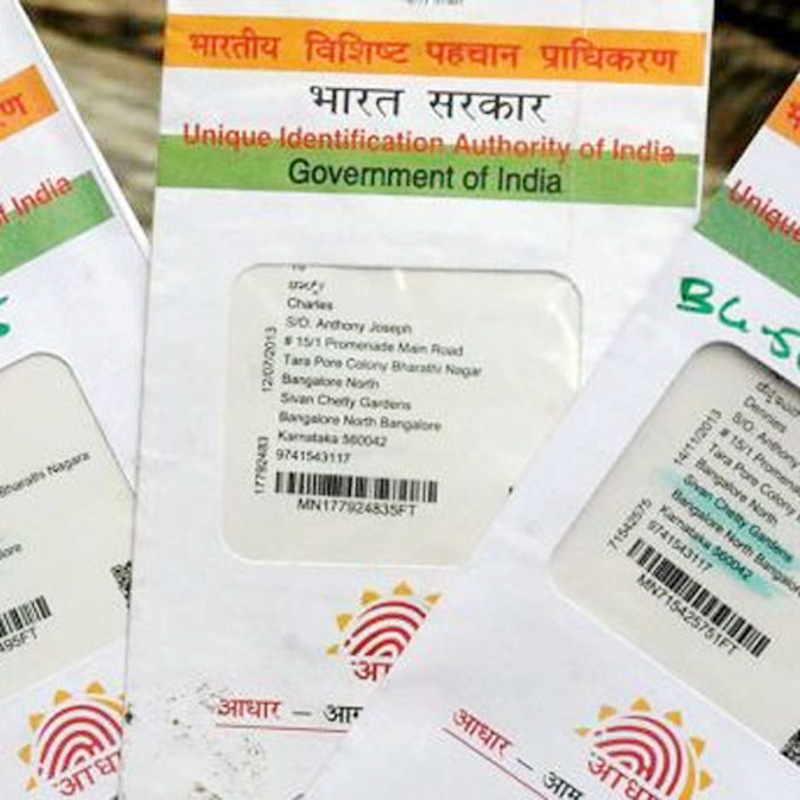
    MUMBAI: There have been endless controversies on social media, speculations on news media around Aadhaar’s relevance and constitutional validity. Now, the Unique Identification Authority of India (UIDAI) wants to monitor media coverage of Aadhaar as well as social media conversations, according to media reports. Based on the information, it will run campaigns to “neutralise” the “negative sentiments” on social media.

    UIDAI posted a bid on 18 July seeking to hire a social media agency that will employ “online reputation management” and “social listening” tools. Then another bid posted on 19 July was to hire a media monitoring agency to monitor Aadhaar-related post across print, electronic and digital media.

    The media monitoring agency shall conduct a comprehensive media search on daily basis and present an update report within prescribed time limits on appropriate news reports and content with regards to UIDAI, Aadhaar and other related issues as per the requirements of UIDAI, as per the proposal.

    On the other hand the social media agency has to segregate Aadhaar-related conversations into “problematic and non-problematic” categories and highlight the “incidences” that may have a “negative impact on the Aadhaar brand”.

    The agency will also provide weekly “online reputation management reports” to UIDAI, which will have details of “top detractors, top influencers and the net sentiment related to Aadhaar”.

    “This monitoring activity shall extend to social media platforms, websites (news and others), blogs/ forums, etc. so that issues related to Aadhaar can be understood,” the tender document states.

    “The tools shall be capable of doing a sentiment analysis of all such conversations and flag any discrepancy in sentiments’ trend. Additionally, the service provider will draft a plan to work out and neutralise negative sentiments,” it adds.

    However, the Supreme Court’s final verdict on the constitutional validity of Aadhaar is yet to come.

  • TRAI chief defends broadcast tariff order, data protection suggestions

    TRAI chief defends broadcast tariff order, data protection suggestions

    MUMBAI: The much touted and highly anticipated live session of TRAI Chairman RS Sharma on Twitter yesterday didn’t throw up surprises. The moderator relayed more queries on the telecom sector and very few on the broadcast segment and in the few that were answered, the chief regulator defended his organisation’s stand ably.

    One such query relating to the broadcast sector revolved around whether India was a highly regulated market and then sought a status report on TRAI’s latest directives, including those relating to broadcast and cable sector tariff, inter-connect agreement amongst stakeholders and quality of service.

    Denying that India was a highly regulated market — “no case of over-regulation…,” he said — Sharma pointed out that though the present set of regulations, implemented after almost 18 months, had “seen a lot of litigation”, they were “wonderful” and aimed at ensuring “transparency” in the whole eco-system.

    “The customers [of TV services] would benefit,” Sharma emphasised.

    For the uninitiated, TRAI’s tariff guidelines, originally issued in 2016, remained mired in legal tangles till earlier this year when Madras High Court upheld the regulator’s contentions. Subsequently, on 3 July 2018 TRAI issued a statement saying as all judicial compliances were completed, its tariff order came into existence with immediate effect. However, the Supreme Court is set to hear a case filed by original petitioners Star India and Vijay TV against the high court order late August. Some confusion still prevails regarding a cap of 15 per cent on prices of TV channels offered by broadcasters as the Chennai court had frowned down on this stipulation.

    Coming back to the TRAI on Twitter session, asked about indifferent quality of service relating to mobile broadband, Sharma batted for use of satellites to also deliver broadband services. In fact, in its several recommendations, the regulatory body has pushed for an open sky policy signifying usage of Indian and foreign satellites to deliver a host of services, including television and broadband.

    According to the chief regulator, all options of delivering broadband services should be explored, including satellites, cable TV and DTH platforms. Such an approach could also result in bringing down costs, Sharma said in reply to a question on indifferent broadband services in hilly and logistics-challenged areas like the north-eastern part of India.

    Queried on the logic behind issuing recommendations on data vis-à-vis its ownership and privacy ahead of a government-mandated panel appointed to look into these issues, Sharma explained it as a necessity as the ecosystem was changing. Currently, India is consuming more data than the US and China put together, he pointed out, adding, therefore, the issue of data security, privacy and ownership had become extremely important.

    “If data is flowing, new players have emerged [and] they also have to accept the responsibility and… take care of consumer data. Hence, after the consultation process running for about a year, we came up with this recommendation saying similar kind of rules must apply to the telecom, browser, devices…” Sharma clarified. However, the Justice BN Srikrishna committee, asked by the government to look into issues relating to data, has expressed its displeasure on TRAI recommendations ahead of its own conclusions.

    “Justice Srikrishna committee is drafting an…overall data protection law and we have said while there may be general questions relating to data protection, it is important that till that time, apply more or less the same rules of data protection as applicable for telecom service providers,” Sharma defended his organisation’s stand.

    Asked about the Apple controversy that proposed strict actions against the US giant as it was not complying with TRAI request on consumer data, Sharma clarified that it had nothing to do with any particular company and termed the situation as “misconstrued” — “It is totally related to the issue of unsolicited communication,” he added.

    Interestingly, through its various apps, aimed at consumer assistance (like checking the broadband speed being provided by the telecom service provider on mobile handsets of consumers), TRAI itself collects huge amount of data, which critics have said could be exploited if leaked.

    Asked about the data that the regulator mines and ways its protection is ensured, Sharma said that the organisation has “adopted privacy” as a default mechanism, which ensures data protection of consumers.

    The 1978 batch Indian Administrative Service officer Sharma was appointed as TRAI chairman three years ago. His tenure is scheduled to end in August 2018 and the government, according to sources, has received as many as 45 applications for the post that was advertised on the website of Department of Telecoms.

  • CCI reduces penalty on broadcast companies for rigging bids

    CCI reduces penalty on broadcast companies for rigging bids

    NEW DELHI: The Competition Commission of India (CCI) on Wednesday waived the penalty imposed on Globecast and reduced by 30 per cent the penalty imposed on Essel Shyam Communication Ltd (ESCl), rechristened Planetcast, for bid-rigging in tenders for procurement of end-to-end broadcasting services for various sporting events, including the IPL-2012.

    The CCI earlier found the two broadcasting companies guilty of operating a cartel amongst them in various sporting events held during the years 2011-12, including Indian Premier League-2012, an IANS news report said.

    It had imposed a penalty of Rs 31.94 crore and Rs 1.33 crore on ESCl and Globecast, respectively, noting that while submitting bids for the tender floated by various broadcasters during the period July 2011 to May 2012, they exchanged information and quoted bid prices as per the arrangements arrived at amongst them.

    However, the commission took up the case under “lesser penalty provisions” against Globecast following which, ESCl — now Planetcast Media Services Ltd — also approached the CCI as lesser penalty applicant during investigation.

    “Keeping in view the stage at which the lesser penalty application was filed, cooperation extended in conjunction with the value addition provided by the evidences furnished by the lesser penalty applicants in establishing the existence of cartel, CCI granted Globecast and its individuals 100 per cent reduction in the penalty and 30 per cent reduction in penalty to ESCl and its individuals,” IANS quoted an official statement as saying.

    “Pursuant to reduction, penalty imposed on ESCl was Rs 22.36 crore. No penalty was imposed on Globecast,” it added.

  • TRAI: Make STBs, content & telecom services disabled- friendly

    TRAI: Make STBs, content & telecom services disabled- friendly

    MUMBAI: With an aim to make communications and TV services more accessible to people with disabilities (PWDs), the Telecom Regulatory Authority of India has come out with a series of recommendations, including a confusing one suggesting that 50 per cent TV channels to be developed in PWD-friendly and accessible format over the next five years.

    In its recommendations, the TRAI suggests that manufacturers maintain accessibility standards for set top boxes (STBs), mobile phones and landlines. Box makers have till 2020 to make or import at least one model in different variants in an accessible format.

    Telecom service providers (TSPs), MSOs and DTH operators have been exhorted to have special desks in their call centres/customer support to assist PWDs using assistive technologies. The call centre executives must also undergo sensitivity training to deal with their issues.

    Broadcasters, too, could well have to invest in content modification. According to TRAI, “The Authority is of the view that there should be phase-wise, time bound plans to develop percentage[s] of channels with the aim to have 50 per cent channels in accessible format in five years’ time frame. To start with, there can be five per cent [of TV] channels in accessible format in one year, 10 per cent in two years and 50 per cent in five years.”

    When Indiantelevision.com got in touch with some TV channels on the issue, most of them said this particular TRAI suggestion on percentages of the TV channels in accessible format was not clear.

    “Does TRAI mean that half of all the government-permitted TV channels would have to have closed captioning of content for PWDs, for example? Or, does it mean that a percentage of the content in a TV channel would have to be in a prescribed format? Or, does it mean that newer accessible channels or separate feeds would have to be started? As it’s difficult to have closed captioned content for news channels, for example, no matter how much a TV channel may like to be PWD-friendly, this suggestion would need further clarifications as it would mean increasing costs on making content,” a TV channel executive opined, adding, though TRAI’s intentions were laudable, an industry reeling under a slow economy would need financial incentives from the government to implement such a suggestion.

    Meanwhile, continuing with TRAI recommendations, the regulator has suggested that Department of Telecom (DoT) and Ministry of Information and Broadcasting (MIB) instruct TSPs DTH operators and MSOs to conduct awareness campaigns regarding accessibility issues, design, affordability, availability of assistive tools and products, and about various government policies and schemes pertaining to accessible ICT (information, communications and telecoms) services that can be availed by PWDs.

    The government has been exhorted to take several major steps. The most important one is that all government websites need to be PWD-accessibility compliant. ICT products (computer hardware, mobile phones, STBs, etc.) procured by government agencies should be accessible to PWDs and should have associated support documentation and services inaccessible format.

    The government has been suggested to mandate the device manufacturers/importers not to curtail the accessibility features available in popular operating systems in any manner from their devices whether manufactured locally or imported.

    Suggestions by the International Telecommunication Union (ITU) such as products and tariff plan specific to PWDs, appropriate customer care service, adding closed captioning, audio description, etc. should be taken up in India as well, TRAI has observed.

    As mobile phones have become an integrated part of modern lifestyle, accessible handset for PWD citizens is also a necessity. According to TRAI, mobile handset manufacturers, who produce five or more than five different models, should produce at least one mobile handset satisfying accessibility criteria for PWDs at least by the end of 2020.

    The regulatory body has recommended a steering committee, comprising various government agencies and ministries, for a timely review of accessibility of ICT services to PWDs. The committee will look into other areas, including fund requirements and collaboration with state governments, the regulator has suggested.

    However, there’s a catch to this set of recommendations. As the issue was taken up suo-moto by TRAI, it needs to be seen whether MIB and DoT, for example, accept these recommendations of the regulator in any format at all as the two government organisations themselves are part of another panel looking into issues relating to PWDs vis-à-vis ICT services.

  • Tata Sky mulls fresh petition against TRAI tariff rollout

    Tata Sky mulls fresh petition against TRAI tariff rollout

    MUMBAI: Indian DTH operator Tata Sky is exploring options of filing a fresh petition in Delhi High Court against a Telecom Regulatory Authority of India directive to implement a new tariff regime from 3 July.

    Industry sources indicated that though Tata Sky withdrew its petition filed in the morning, it could again move the court protesting on various grounds the rollout of the TRAI tariff regime.

    The Delhi court, which is still to pronounce a verdict in a case relating to tariff and inter-connect orders of the regulator after being moved by Tata Sky and Airtel Digital TV over a year back, however, today refused to entertain the DTH operator’s fresh contempt plea against TRAI and said if the petitioner wished it could file a fresh petition.

    Tata Sky had pleaded that TRAI media statement, issued 3 July 2018 directing broadcast and cable industry stakeholders to start rolling out the new tariff and inter-connect regimes with immediate effect, amounted to contempt of the Delhi High Court.

    TRAI yesterday had said in a statement that its long-pending tariff and inter-connect orders, first issued in 2016, was to be implemented from 3 July 2018 with stakeholders to follow deadlines mentioned in the directive. The regulator had justified its stand by saying all necessary judicial compliances too were followed.

    “Having complied with  the  judicial  mandates  in  the  matter,  the Telecommunication (Broadcasting and Cable) Services (Eighth) (Addressable Systems)  Tariff   Order, 2017 and  the Telecommunication (Broadcasting and Cable) Interconnection (Addressable Systems) Regulations, 2017 as upheld by the Hon’ble Madras High  Court and the Telecommunication (Broadcasting and Cable) Services Standards  of   Quality  of  Service and  Consumer  Protection (Addressable Systems) Regulations, 2017 come into effect from 3rd July 2018,” the TRAI statement had said.

    The statement had further stated that “in compliance to the direction” of the Delhi High Court, the regulator had “duly filed an affidavit” on 3 July 2018 in the court on implementation of   its tariff and other related orders as they were cleared by another high court.

    Meanwhile Star India, also expected to open up another legal front at the Supreme Court on the tariff issue, hasn’t yet made a move.

    Still, industry people do admit that though TRAI may have directed implementation of its new tariff regime, but there is lack of clarity on the issue of 15 per cent cap on discounts offered by broadcasters on the prices of TV channels.

    While upholding TRAI’s right to give directives on tariff-related matters, Madras High Court had given a thumb down to the capping of discounts offered. While stating that its tariff order was to come into effect from 3 July 2018, the regulator had not clarified whether the discount cap stayed or was done away with.

    Keep tuned in for more developments on the tariff issue as it refuses to go away or get settled once and for all.

    Also Read:

    TRAI says b’cast & cable tariff, inter-connect orders come into effect 3 July

    Star files caveat in Supreme Court on TRAI tariff order

    Third Madras high court judge gives TRAI tariff order thumbs up

  • VCPL to contest SEBI order on NDTV share acquisition

    VCPL to contest SEBI order on NDTV share acquisition

    MUMBAI: Following the Securities and Exchange Board of India (SEBI)’s directive to make an open offer for acquiring NDTV shares, Vishvapradhan Commercial Pvt Ltd (VCPL) has decided to appeal against the order with the Securities Appellate Tribunal.

    Markets regulator SEBI had directed few days back VCPL to make an open offer within 45 days to acquire 52 per cent stake in the financially beleaguered NDTV Ltd, considered a nursery for many of today’s news television stalwarts.

    A report in Business Standard yesterday quoted unnamed sources confirming the move to appeal against the SEBI order in the appellate tribunal.

    VCPL had indirectly acquired controlling stake of up to 52 per cent stake of the media company without making an open offer, according to SEBI, which ordered VCPL to pay an interest of 10 per cent along with the offer price for allegedly violating the takeover norms of the SEBI Act.

    “The elaborate mechanism adopted by the noticee (VCPL) and its associates appear to be solely to deflect attention from this acquisition and thus covetously overcome the obligations imposed by the takeover regulations,” SEBI had earlier observed while passing strictures against VCPL.

    NDTV, one of the earliest private sector broadcasting company, was founded by Prannoy Roy and family along with close associates. However, in the last few years, fortunes of NDTV, which owns and runs a couple of news channels, has dipped with the arrival of more aggressive news channels. A contentious and lengthy fight with government agencies over disputed tax claims too has eroded the media company’s brand and financial value.

    A market listed company, NDTV’s share prices have appreciated over the last few days after SEBI’s initial order relating to VCPL.

    Also Read :

    Regulator Sebi orders open offer for NDTV within 45 days

    Retail, e-com biz eat into NDTV’s TV media profits for Q3


  • TRAI says b’cast & cable tariff, inter-connect orders come into effect 3 July

    TRAI says b’cast & cable tariff, inter-connect orders come into effect 3 July

    NEW DELHI: The Telecom Regulatory Authority of India (TRAI) today issued a statement stating that its tariff order for the broadcasting and cable sector will come into effect from 3 July 2018 as judicial compliances have been complied with.

    “Having complied with  the  judicial  mandates  in  the  matter,  the Telecommunication (Broadcasting and Cable) Services (Eighth) (Addressable Systems)  Tariff   Order, 2017 and  the Telecommunication (Broadcasting and Cable) Interconnection (Addressable Systems) Regulations, 2017 as upheld by the Hon’ble Madras High  Court and the Telecommunication (Broadcasting and Cable) Services Standards  of   Quality  of  Service and  Consumer  Protection (Addressable Systems) Regulations, 2017 come into effect from 3rd July 2018,” the regulator said in a statement pointing out that all timelines mentioned in the original order should be adhered to immediately.

    Star Tv and Vijay Tv had moved Madras High Court against the TRAI tariff order late 2016 and after protracted hearing the court finally gave its final judgement earlier this year. Subsequently Star and the regulator had both filed caveats at Supreme Court. Meanwhile, Tata Sky, Airtel Digital Tv had filed petitions in Delhi High Court on matters relating to the tariff order and the case is still pending a judgement or direction.

    According to TRAI, implementation of the new regulatory framework will “bring in transparency”, enable provisioningof affordable broadcasting and cable TV services for the   consumer and, at the   same time, “would lead to an orderly growthof the sector”.

    Some of the important activities and timelines are as under:

    #The  Telecommunication (Broadcasting and Cable)  Services (Eighth) (Addressable Systems) Tariff Order, 2017: Declaration ofMRP and nature of channels by broadcasters within 60  days; declaration of network capacity fee and  distribution  retail price  by distributors (DPO)  within  180   days; reporting by broadcasters within 120  days.

    # The Telecommunication (Broadcasting and Cable) Interconnection (Addressable    Systems) Regulations, 2017:    Publication     of     Reference Interconnect Offer (RIO) by   broadcasters   within 60   days; publication of referenceinterconnect offers by distributors within 60 days; Signing of the interconnection agreements within 150 days;

    # The Telecommunication (Broadcasting and Cable) Services Standards of   Quality of   Service ·and Consumer  Protection (Addressable Systems) Regulations, 2017:  Migration of the subscribers to the new framework within 180  days; Establishment of customer care center, website, consumer care channel and publication of manual of practice within 120 days.

    It would be interesting to see how the original petitioners react to the latest TRAI salvo. The regulator and petitioners were not available for immediate comments.

    ALSO READ:

    Third Madras high court judge gives TRAI tariff order thumbs up

    Star files caveat in Supreme Court on TRAI tariff order

    TRAI tariff order’s impact on the industry

    Decks cleared for TRAI tariff order implementation as HC declines stay

  • TRAI fines Jio, Airtel, others for not meeting service quality norms

    TRAI fines Jio, Airtel, others for not meeting service quality norms

    MUMBAI: Telecom Regulatory Authority of India (TRAI) rapped leading operators, including Reliance Jio, Bharti Airtel, Vodafone and Idea Cellular on the knuckles for failing to meet the Quality of Service standards in the December quarter, reported news agency PTI.

    Data disruptor Reliance Jio was handed a fine of Rs 31 lakh based on the TRAI-defined service quality parameters such as Point of Interconnect congestion, accessibility of call centres and customer care. TRAI’s fine pertains to multiple circles or service areas in which Jio offers it service.

    Idea Cellular was fined Rs 28-29 lakh for the December quarter for its inability to match benchmarks on call drops, metering and billing, both pre-paid and post-paid, accessibility of call centre or customer care and its timelines for multiple circles.

    Bharti Airtel, the biggest player in the market, was slapped with a Rs 23 lakh for the same period for non-compliance on parameters entailing metering and billing (postpaid and prepaid) and accessibility of call centres, and stipulated response time on operators answering calls in certain circles.

    Vodafone was fined Rs 9 lakh for non-compliance of select criteria like time-bound refund of deposits after closure, response time for calls answered by operators, as well as call drops.

    Aircel and Bharat Sanchar Nigam Ltd (BSNL) too were handed fines by the regulator.

    The fines were in line with TRAI’s renewed focus on quality benchmarks in the telecom sector.

    Last year, the regulator had ordered telcos to adhere to the quality of service benchmarks from October 1, 2017.

    Also Read:

    Third Madras high court judge gives TRAI tariff order thumbs up

    Comment: TRAI uplinks progressive recommendations; now MIB, others need to downlink them