Category: TRAI

  • DoT & TRAI officials feel satcom policy needs ‘fundamental rethink’

    DoT & TRAI officials feel satcom policy needs ‘fundamental rethink’

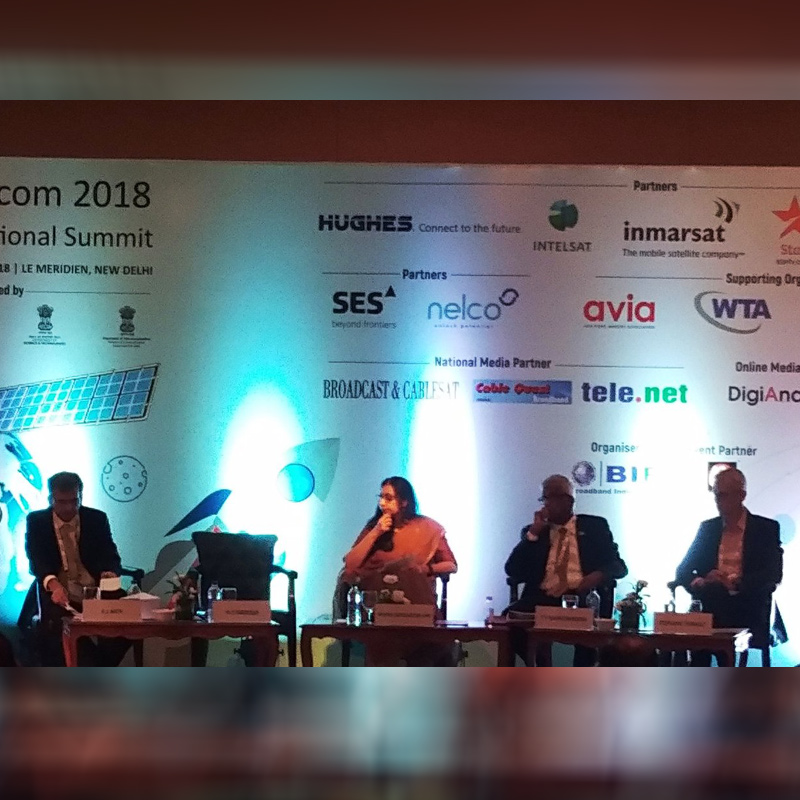
    NEW DELHI: Two top Indian government officials from Telecom Ministry and TRAI feel the country must have a "fundamental rethink" on satellite communication policy to meet rising connectivity needs that are being fuelled by mobile data growth, digital aspirations, demand from the country’s broadcasting sector and advent of new-age technologies.

    Telecom secretary Aruna Sundararajan on Wednesday outlined the massive growth in mobile data consumption, driven by first-time users, and India's increasing digital clout, and said there is "no looking back" for the country when it comes to strengthening its communications infrastructure.

    She said that in an era of 5G and Internet of Things (IoT), the demand for communication infrastructure "far from slowing down, will increase exponentially".

    "We must have digital communications infrastructure that facilitates all this…We really must have a fundamental rethink on India's satcom policy in light of what are the emerging requirements and India's aspirations," Sundararajan said addressing the annual satcom summit 'India SatCom-2018' organised by Broadband India Forum (BIF), a PTI report stated.

    She further said that the demand for communication network is also being propelled by financial service industry, digital payment companies, smartphone usage and social media.

    Sundararajan noted that the draft national digital communications policy aims to provide universal broadband connectivity at 50Mbps to every citizen by 2022, create four million additional jobs, and also talks of enhancing the contribution of digital communications sector to eight per cent of India’s GDP from approximately 6 per cent now.

    "If we are to achieve robust modern digital communications infrastructure that the country needs…it has estimated the need for investment at USD 100 billion. Often, we in government are asked if that is a high figure, but I don't think so…I think this is realistic investment number in sync with our infrastructure requirements," PTI quoted her as saying.

    Stating that the country must embark on comprehensive review of its satellite communications policy, she stressed on the need to strike a balance between autonomy, security and the country's communications demand. "…it is possible to find a sweet spot between these three aspects. Other countries have done so, and I don't think it is impossible for India to strike a calibrated position keeping these three imperatives in mind…Keeping our strategic capabilities and requirements in mind, we need to look at how we can bridge the deficit in term of communication requirements," she pointed out.

    The summit also delved on various aspects of communications, including broadband connectivity to the remote parts of the country, satellite mobility, inflight connectivity, new technologies and innovations.

    Echoing sentiments similar to Sudararajan, telecom and broadcast regulator TRAI secretary SK Gupta, while addressing the valedictory session of the event, opined that “mainstreaming of satcom” issues was heartening.

    Pointing out that satellite transponder allocation process in India “needs a review” and the mechanism an “overhaul”, Gupta said that no regulatory hurdle should be created against use of any technology as satellite communication is very important for various applications and services.

    The one and half day satcom conference saw the convergence of not only ideas and trends, but also of representatives from the industry and government, including those from India’s space agency ISRO, Ministry of Information and Broadcasting and BECIL.
  • TRAI to meet telecom players next month to fix 2019 agenda

    TRAI to meet telecom players next month to fix 2019 agenda

    MUMBAI: To fix the agenda to be taken up in next calendar year, Telecom Regulatory Authority of India (TRAI) is expected to meet telecom industry players next month. The discussion, which is now an annual feature, is likely to involve a wider set of players in the telecom sector this time including operators, infrastructure providers and others.

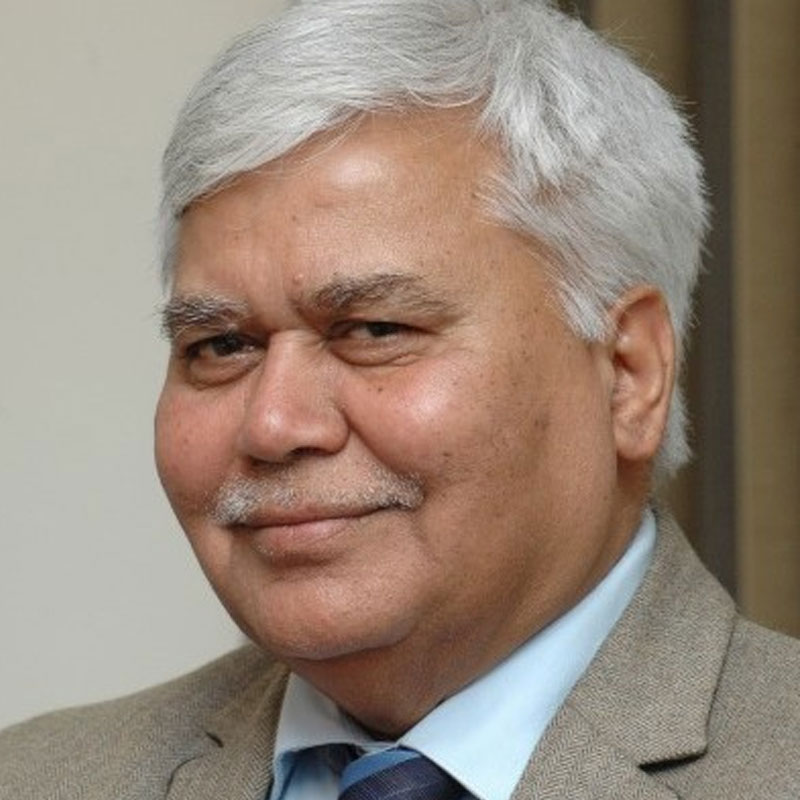
    “The meeting will take place next month. We will talk to them and ask them about the items they think should be taken up in the next calendar year,” TRAI chairman RS Sharma said on Monday on the sidelines of an interactive session on ‘New Regulatory Framework for Broadcasting and Cable Services’, according to a PTI report.

    As Sharma noted, this time it would not be limited to telecom service providers alone but a broader consultation to figure out the new areas to be deliberated next year.

    While the regulatory body launched a consultation to explore the regulatory framework for OTT apps like WhatsApp, Facebook and Google Duo that provide calling and messaging services similar to that by telcos, he also added that TRAI will be able to finalise its views on the issue of a regulatory framework for OTT players in the coming 5-6 months.

    Supreme Court recently dismissed a petition challenging TRAI’s March 2017 regulations and tariff order paving the way for implementation of the order for the broadcast sector. Sharma while addressing the interactive session said the new comprehensive framework for the sector entailing tariffs, service quality and interconnect aspects, is aimed at “growth”.

    “It is not aimed at hurting players but ensuring growth of the sector in an orderly manner and keeps the interest of stakeholders in mind,” Sharma said.

    Local cable operators and multi system operators raised concerns on issues ranging from operationalising the new norms to ‘a la carte rates’. He urged players to give the new framework a fighting chance along with cautioning that technological changes, which improve service quality and enhance capacity, can also be disruptive.

  • TRAI releases paper on OTT expanding its definition

    TRAI releases paper on OTT expanding its definition

    MUMBAI: India’s telecom and broadcast regulator TRAI today released another consultation paper on OTT services seeking to expand the definition of the sector and also the regulator’s jurisdiction over a sector hitherto “unregulated”.

    “Would inter-operability among OTT services and also inter-operatability of their services with TSPs services promote competition and benefit the users? What measures may be taken, if any, to promote such competition? Please justify your answer with reasons.” Questions like these in the paper hint that the government and the regulator are looking at regulations for the OTT services that would include both audio and video services.

    Earlier,    the    Authority  issued   a   consultation   paper  on    Regulatory Framework for  Over-the-top (OTT) services on  the   27th of  March, 2015, which also included questions  on  the   principles of  net neutrality, reasonableness of traffic management practices, non-price based discrimination  of  services and  transparency  requirements.  Due to the large  number   of   issues  and  their  complexity, it   became   difficult  to deliberate upon and  conclude all  of  them  together. Therefore, Authority decided to  deal with related issues in  separate parts, keeping focus on  a core  set  of issues  each time. Accordingly, the  following actions have been taken:

    a. The  Authority issued regulations on  Prohibition of Discriminatory Tariffs for  Data Services Regulations,  2016.

    b. Recommendations on provisioning of free data given to Government on  19th December  2016,

    c. Recommendations on  Net  Neutrality to  Government on   Nov  28,

    2017.

    d. Recommendations on privacy, security, and data ownership issues in the telecom sector submitted to Government on  July 16,  2018.

    3.     Questions relating to the potential market failures in each segment, the appropriate tools to address those failures and the costs and benefits of any possible regulatory interventions have also been investigated.

    4.  Keeping in  v1ew the fast evolving nature of the  sector,  it is also considered useful to   examine  OTI related aspects, after taking into account the changes that have taken place since March, 2015.

    5.  The objective of  this Consultation Paper is to  analyse and discuss the  implications of  the  growth of  OTis;  the  relationship between OTI players and TSPs; the similarity, if any, between services provided by  the TSPs and  OTI  players;  changes  that  may be   required in the current regulatory framework to  govern these entities; and the manner in  which such changes should be  effected . While preparing this consultation paper, information collected by    the   Authority in response to previous consultations has also been used. It  may also be   noted that current consultation is not intended  to  revisit regulations  or   recommendations given  by the  Authority earlier on  OTI, which had broader implications and were  therefore concluded first following due consultation and diligence.

    6.  Comments on the issues raised in the consultation paper are invited from the stakeholders by  10.12.2018 and counter comments, if any,  by 24.12.2018. 

  • TRAI, telco chiefs to meet in December over OTT regulation

    TRAI, telco chiefs to meet in December over OTT regulation

    MUMBAI: The Telecom Regulatory Authority of India (TRAI) is scheduled to meet top executives of telcos in the month of December. The meeting is being lined up in order to discuss plans for 2019. The regulator may also issue a consultation paper next week on whether over-the-top (OTT) apps such as Skype, WhatsApp and Google Duo should be regulated.

    Speaking to Economic Times, TRAI chairman Ram Sewak Sharma said, “We are going to call chief executives of telecom service providers in the month of December to actually finalise the agenda and roadmap for the next year.”

    The regulator will also separately meet the Indian broadcasting industry stakeholders and multiple system operators, informed Sharma.

    As these apps are already being regulated under the Information Technology Act, telcos have demanded that OTT communication apps should be brought under a regulatory regime similar to theirs since they provide comparable services without the liabilities associated with being a licence holder.

    TRAI chairman confirmed that they were coming out with a consultation paper next week as the final document was almost ready.

  • AIDCF welcomes Supreme Court judgement which upholds TRAI jurisdiction

    AIDCF welcomes Supreme Court judgement which upholds TRAI jurisdiction

    MUMBAI: In the matter of the new Tariff Order and Interconnection Regulations as notified by TRAI in March 2017, the Supreme Court has today upheld the jurisdiction of TRAI to frame the above mentioned regulations. It may be recalled that the issue of TRAI jurisdiction was subsequently challenged by Star India and Vijay Television in the Supreme Court after their appeal to Madras High Court was turned down by 3rd judge, Hon’ble Mr. Justice M.M. Sundresh.

    This marks a new era for the Broadcasting sector and also the end of a long wait for the new framework to finally get effectuated. Most service providers have already started working towards meeting the timelines as specified by TRAI in their circular dated 3rd July 2018.

    Mr. Rajan Gupta, President of AIDCF, while welcoming the judgement of the Hon’ble Supreme Court said that – “This is the watershed moment we have all been waiting for.

    We feel that the new framework will bring in much needed transparency, parity, promote exercising of choice for the consumer and ensure orderly growth of the sector. The onus is now on all service providers to put their best foot forward and keep consumer interest in mind by complying with the required initial timelines and activities at the earliest.”

    ABOUT All India Digital Cable Federation (AIDCF) is India’s apex body for Digital Multi System Operators (MSOs). The federation works towards the overall growth of the sector and creates an environment for not only complete digitisation of cable TV under regulatory guidelines but also delivers the benefits of digital services including broadband and other value added services to the people of India thus fulfilling the dream of ‘True Digital India.’

    AIDCF is the official voice for the Indian digital cable TV industry and interacts with ministries, policy makers, regulators, financial institutions and technical bodies. It also provides a platform for discussion and exchange of ideas between these bodies and the service providers, who share a common interest in the development of digital cable TV in the country. It also collaborates with other industry associations such as IBF, CII, FICCI, ASSOCHAM association etc., with the objective of presenting an industry consensus view to the government on crucial issues relating to the growth and development of the industry.

    Members of AIDCF have a market share of more than 75% in the Cable TV Industry.

  • TRAI wins tariff order case in Supreme Court

    TRAI wins tariff order case in Supreme Court

    MUMBAI: The Telecom Regulatory Authority of India has come out victorious in the long running battle on whether pricing of content comes under its purview. The Supreme Court has finally given the long-awaiting verdict on Star India versus Telecom Regulatory Authority of India case on tariff order while arguments related to the case ended on October 11. A source close to the development informed Indiantelevision.com that the ruling is in favour of TRAI.

    Speaking on the verdict Zee and Essel Group chairman Subhash Chandra said, "I am extremely glad to note the Supreme Court’s order and I think it is THE best thing that could have happened to the industry, the players in the value chain and the consumers at large. We at ZEE & Essel Group have always focused on keeping our consumers as our first priority and I am very glad that the Supreme Court’s order has empowered the consumers across the nation. While the overall media & entertainment landscape has been evolving at a rapid pace, it is for the first time in 26 years that such a strong & positive step has been taken to eradicate the lack of transparency in the entire value chain of the broadcast & cable industry. It will certainly help the LCOs, MSOs and the broadcasters.”

    Zee Entertainment Enterprises Ltd (ZEEL) was first out of the blocks in publishing the RIO, declaring the MRP and nature of channels in connection with its tariff order , which had a 31 August deadline. The Punit Goenka-led company was followed by TV18 Broadcast Ltd ( TV18) and Sony Pictures Networks India Private Ltd (SPNI), who adhered to the regulator’s directive on 4 September. Later, Disney India, Turner India International, Sun TV Networks have also published their RIOs in compliance with the order.

    Speaking on the news, AIDCF president Rajan Gupta said, “This is the watershed moment we have all been waiting for. We feel that the new framework will bring in much needed transparency, parity, promote exercising of choice for the consumer and ensure orderly growth of the sector. The onus is now on all service providers to put their best foot forward and keep consumer interest in mind by complying with the required initial timelines and activities at the earliest.”

    The TRAI tariff orders, first contested in Madras High Court by the petitioners, were cleared by the Chennai court with certain riders after hearings that continued almost over 16 months in front of a two-member bench

    After the Madras HC had given a thumb up to TRAI tariff order, and both the petitioners and the defendant (TRAI) had filed caveats in the Supreme Court, the regulator had bowled a googly saying that its tariff order would come into effect from 3 July 2018 as all judicial compliances had been completed.

    According to TRAI, implementation of the new regulatory framework will “bring in transparency”, enable provisioning of affordable broadcasting and cable TV services for the consumer and, at the same time, “would lead to an orderly growth of the sector”.

  • DoT to inquire TRAI about 28 GHz band for 5G service

    DoT to inquire TRAI about 28 GHz band for 5G service

    MUMBAI: The Department of Telecommunications (DoT) is planning to initiate talks for new bands to support 5G services in the country. The DoT will soon start discussing with the telecom regulator TRAI for 28GHz band for 5G commercial deployments. As per Economic Times, the DoT will also analyse pricing estimates of such airwaves.

    The practicability of this spectrum band in the country for 5G is being checked out by the government of India. The government is exploring the chances of allocating the spectrum band in India as very soon after South Korea auctions these airwaves and the US Federal Communications Commission makes a decision to do so from 14 November.

    According to a senior DoT official, “It is mandatory to refer the matter of assessing suitability of a specific bandwidth and its pricing to TRAI (Telecom Regulatory Authority of India), and the government shall do so before taking a call on allocating millimetre spectrum in 28 GHz band for early 5G deployments in India.”

    A panel will be soon formed to study the chances of installing 5G systems in the 28 GHz band and coinciding with the working satellite services in the same band.

    As per the DoT official, the government had been interested in this 5G airwave prospect after a recent meeting of Asia-Pacific Telecommunity wireless group in Bangkok. Globally, 28 GHz is perceived as “a frontier 5G band” and considered very crucial for early 5G deployments.

    TRAI’s proposed base price of Rs 492 crore per unit of 3500 MHz 5G spectrum is higher than the Rs 65 crore a unit of the recent 5G auction in South Korea. Hence, specialists say that Vodafone Idea and Bharti Airtel may skip the 5G spectrum auctions.

  • TRAI to be renamed to DCRAI

    TRAI to be renamed to DCRAI

    MUMBAI: The Telecom Regulatory Authority of India’s name has been rechristened. From now, it will be called as the Digital Communications Regulatory Authority of India (DCRAI). The announcement was made at the annual general meeting of the telecom infrastructure body (TAIPA) by the Telecom minister Manoj Sinha.
    The post of TRAI chairman has been changed to Digital Communications regulator, said Sinha speaking to RS Sharma. The time frame hasn’t been finalised but he expects it to be formalised soon.
    The Telecom Commission has also been renamed to Digital Communications Commission at the Department of Telecom.
    Sinha explained how telecom infrastructure has played a crucial and important role in the development of the telecom market in the country these past years by enabling rapid rollout of towers from a mere 1 lakh in 2006 to 4.71 lakh currently.
    TRAI chairman RS Sharma said, “NDCP talks about creating tower authority. The policy very clearly lays down to prepare India for digital tomorrow.” The new policy will be transformational as it lays down quantifiable objectives – $100 billion investment, 50 Mbps download speeds.
    Since 93 per cent of data transportation is happening on wireless networks, Sharma said telecom infrastructure is crucial. “Therefore it is appropriate that we put together all our efforts, if you want to be ready for 5G, you need to put massive infrastructure,” he said. Sharma also mentioned that TAIPA chairman Akhil Gupta had said that 5G infrastructure will require hundreds and thousands of more towers. Many of them will be small cells. He has requested the minister to summon a high-level conference of ministers and IT secretaries of state.

  • SC adjourns Star India’s petition on TRAI tariff order to 12 September

    SC adjourns Star India’s petition on TRAI tariff order to 12 September

    MUMBAI: The Supreme Court has deferred the hearing of Star India’s petition against TRAI tariff and inter-connect order to 12 September 2018 due to unavailability of time.  Last week also, the hearing was deferred to 11 September for the same reason.

    Zee Entertainment Enterprises Ltd (ZEEL) was first out of the blocks in publishing the RIO, declaring the MRP and nature of channels in connection with its tariff order, which had a 31 August deadline. The Punit Goenka-led company was followed by TV18 Broadcast Limited ( TV18), Sony Pictures Networks India Private Limited (SPNI), who adhered to the regulator’s directive on September 4. Later, Disney India, Turner International India, Sun TV Networks have also published their RIOs in compliance with the order. 

    All the broadcaster have stuck to a maximum 15 per cent MRP discount to distributors. Earlier, Madras High Court chief justice did not uphold TRAI’s proposal of allowing highest 15 per cent cap on discounts despite giving the go-ahead to all other proposals. As any clarification did not come from TRAI, all the broadcasters are adhering to the order to avoid any further confusion. 

    The TRAI tariff orders, first contested in Madras High Court by the petitioners, were cleared by the Chennai court with certain riders after hearings that continued almost over 16 months in front of two benches of the court.

    Though the petitioners were unable for comments, a legal eagle explained that the very fact the Supreme Court has allotted a day for hearing the petition of Star India and Vijay TV, which basically revolves around copyright and why the regulator doesn’t have jurisdiction over such issues, highlights the fact that the judge doesn’t want to take a decision in a hurry.

    After the Madras HC had given a thumb up to TRAI tariff order, and both the petitioners and the defendant (TRAI) had filed caveats in the Supreme Court, the regulator had bowled a googly saying that its tariff order would come into effect from 3 July 2018 as all judicial compliances had been completed.

    “Having complied with  the  judicial  mandates  in  the  matter,  the Telecommunication (Broadcasting and Cable) Services (Eighth) (Addressable Systems)  Tariff   Order, 2017 and  the Telecommunication (Broadcasting and Cable) Interconnection (Addressable Systems) Regulations, 2017 as upheld by the Hon’ble Madras High  Court and the Telecommunication (Broadcasting and Cable) Services Standards  of   Quality  of  Service and  Consumer  Protection (Addressable Systems) Regulations, 2017 come into effect from 3rd July 2018,” the regulator had said in a statement pointing out that all timelines mentioned in the original order should be adhered to immediately.

    According to TRAI, implementation of the new regulatory framework will “bring in transparency”, enable provisioning of affordable broadcasting and cable TV services for the  consumer and, at the  same time, “would lead to an orderly growth of the sector”.

  • RS Sharma re-appointed TRAI chairman till Sept 2020

    RS Sharma re-appointed TRAI chairman till Sept 2020

    MUMBAI: The Indian government on Thursday re-appointed RS Sharma as the chairman of Telecom Regulatory of India (TRAI) till 30 September 2020 when he attains the age of 65 or till further notice. Sharma completed his first tenure as the chairman on 9 August 2018.

    This decision was taken today by the appointment committee of the cabinet and necessary communication in this regards has been sent to the Department of Telecommunications.

    Talking to PTI on Wednesday, Sharma said,”Some people take the line that if you are pro-consumer, you are anti-industry… that is far from the truth. Pro-consumer does not mean anti-industry. It is not a zero-sum game, one should be conscious of that.”

    Sharma noted that the telecom sector has undergone a “fundamental change” marked by operator consolidation, the explosion of data and fierce market competition.

    “There are concerns about the quality of service and those concerns, unfortunately, remain till date. TRAI has tried to do the best, within the framework of the Act.

    There is a new regulation on service quality that is granular and will be helpful…operators have also become sensitive to the fact that they cannot leave one area or tower unattended for long,” Sharma said.

    More recently, industry body Cellular Operators Association of India (COAI) raised a red flag over TRAI’s new regulations on curbing pesky calls and messages, saying tailoring of systems, and use of blockchain technology will involve Rs 200-400 crore investment and 18 months for the rollout, at a time when the sector is financially-stressed.

    Sharma on Wednesday said that “reasonable time” has been given to the telecom operators on norms to curtail pesky telemarketing calls and messages. The rules, he said, came about only after a prolonged discussion with the industry.”I think reasonable time has been given…My position has been that the regulation has come after a lengthy year-long discussion process. It is not the knee-jerk reaction of TRAI, that it has issued these regulations,” Sharma said.