Category: TRAI

  • TRAI extends deadline to 31 Jan for migration to new tariff regime

    TRAI extends deadline to 31 Jan for migration to new tariff regime

    MUMBAI: Stakeholders of India’s broadcast sector can now breathe a sigh of relief as the Telecom Regulatory Authority of India (TRAI) has extended the date of customer migration to the new tariff regime by a month to 31 January 2019.

    With 28 December, the initial deadline for the tariff order implementation neared, the DPOs in particular were highly concerned how the transition would pan out.

    Thanks to the decision, now DPOs can seek options from consumers till 31 January. Customers will be migrated as per their choice from 1 February.

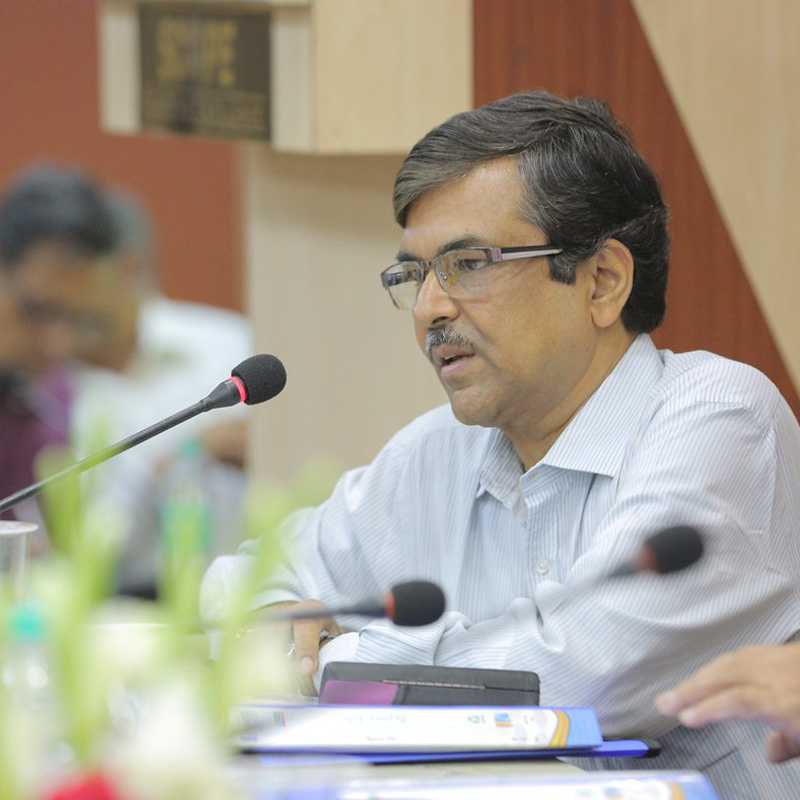
    "We had a meeting of broadcasters, DTH operators, and MSOs today [Thursday]. Everyone confirmed their readiness to implement new regulations. However, they requested that some more time may be given to seek options from subscribers for smooth and interruption free migrations," TRAI secretary Sunil K Gupta was quoted as saying by a PTI report.

    The regulatory body may consider holding weekly review meetings with industry representatives to monitor the progress of the transition of TV viewers, a Hindu Business Line report stated. The report also added that the DPOs are likely to be asked to submit weekly reports on the number of subscribers who have migrated to the new subscription plans in accordance with the new tariff order.

    “It is definitely a step forward from the original plan. Once the bouquet prices are declared by DPOs, only then consumers can migrate to the new plan. These are all interlinked – broadcaster prices have come based on which the DPOs have to declare their prices, they need time for that. Once they (DPOs) declare, consumers need time for selecting a plan. So there needs to be a logical gap between the declaration of prices by broadcasters and then a gap for the DPOs to declare their prices and then time for consumers to choose also,” KCCL CEO Shaji Mathews told Indiantelevision.com

    Earlier this week, TRAI also squashed all rumours about a channel blackout on 29 December. TRAI asserted that it advised all broadcasters, DPOs and LCOs to ensure there is no disruption of TV services. TRAI also added then that it was working on a detailed migration plan for all subscribers.

    “It will help consumers and DPOs as well as broadcasters. This is not only required for DPOs, if there’s no time consumers will not choose new packages or channels which means there will be a blackout of channels and then broadcasters will suffer as DPOs will not be able to collect money. This is a step towards avoiding a blackout,” he added.

    The new tariff order will give the power of choice to the hand of consumers. While until now consumers only watch the channels offered by DPOs, the new order allows them to select their desired TV channels and pay accordingly. Currently, all the broadcasters have updated their channel and package pricing.
  • TRAI says no blackout of TV channels on 29 December

    TRAI says no blackout of TV channels on 29 December

    MUMBAI: Speculations have been rife about a complete blackout of TV channels on December 29 following the Supreme Court orders of implementing a new tariff regime, as the system allegedly is not ready for such a big move. Squashing all such rumours, regulator TRAI has asserted that it has advised all the broadcasters, DPOs, and LCOs to ensure there is no disruption of TV services.

    It says in the release, “The authority is seized of the matter and hereby advises that all broadcasters/DPOs/LCOs will ensure that any channel that a consumer is watching today is not discontinued on 29.12.2018. Hence, there will be no disruption of TV services due to implementation of the new regulatory framework.”

    The release further reads, “Keeping in view the interest of the subscribers and to enable a smooth transition, the authority is preparing a detailed migration plan for all the existing subscribers. The migration plan will provide ample opportunity to each and every subscriber for making informed choice. This will also enable service providers in carrying out the various activities as stipulated in the new regulatory framework in a time-bound manner.”

    As per TRAI, the new tariff order will give consumers the power to choose and will also lower the prices for TV channels. This new framework allows them to select and pick channels that they like to watch and pay accordingly. It also requires the TV broadcasters to disclose maximum retail price (MRP) of their respective channels and also of the channel bouquets. As per the Supreme Court verdict of 30 October 2018, the service providers were advised to complete the preparation for migration to the new framework by 28 December 2018.

    Earlier, as well, TRAI had asked the broadcasters to work closely with all the service providers to ensure a hassle-free transformation, in the interest of the consumers.

  • Indian govt downgrades additional secy post at MIB

    Indian govt downgrades additional secy post at MIB

    NEW DELHI: In a debatable move, the government has “downgraded” the post of additional secretary at Ministry of Information and Broadcasting and shunted out the present official to another post, while bringing in another person who would hold a junior rank.

    In an official communication issued 20 December 2018, the government has stated that Atul K Tiwari was being appointed as joint secretary at MIB and would shift from an equivalent post he held at Ministry of Textiles.

    While, the government communication also listed reshuffle of several other civil servants, including upgradation of two officials, in the case of MIB it was specifically stated that the post of additional secretary at MIB was being downgraded and the present incumbent Jayashree Mukherjee would be posted elsewhere in the government.

    In effect, this means that joint secretary Tiwari would function as an additional secretary at MIB discharging duties similar to that being done by Mukherjee. An additional secretary’s post in a ministry is the second top bureaucratic post in that organisation.

    Tiwari joins MIB at a crucial time ahead of general elections sometimes in the first quarter of 2019. The ministry oversees the work of public broadcasters Doordarshan and All India Radio and government’s PR arm Press Information Bureau, apart from a host of other entities involved in the dissemination of public service messages and information about government programmes. MIB is also responsible for permissions given to TV channels, newspapers, magazines and similar media ventures and implementing regulations meant for the media sector.

  • Respite for Tata Sky, Airtel Digital TV, Discovery as TRAI assures no action till 10 Jan

    Respite for Tata Sky, Airtel Digital TV, Discovery as TRAI assures no action till 10 Jan

    MUMBAI: Direct to home (DTH) operators  Tata Sky, Bharti Telemedia-owned Airtel Digital TV and Discovery Communication India were handed a breather on Wednesday after the Telecom Regulatory Authority of India (TRAI) assured the Delhi High Court that it will not take any action against the trio until January 10, which is when the matter is scheduled to be heard next.

    Tata Sky is unlikely to upload its RIO for now unlike Discovery, which has already published the same on its website.

    Irrespective of the respite, the regulator’s counsel argued that the DTH operators must implement the TRAI order and regulations.

    A source familiar with the matter added that Discovery has complied with TRAI’s tariff order and regulations under protest.

    In 2017, Bharti Telemedia, Tata Sky and Discovery Communication India had filed petitions against TRAI, challenging its tariff order and the interconnect regulations.

    Unlike the position adopted by Star India wherein it questioned the regulatory powers of TRAI, the matter in the Delhi HC questions on the regulator’s power to wipe out deals that operators enter into to fix commissions and rates for customers.

    While the fate of the two DTH operators hangs in the balance in this matter, all other distribution platform operators (DPOs) continue to be bound by the tariff order.

    TRAI on Tuesday cautioned stakeholders against spreading  “concocted and fabricated facts” against its new tariff directive while releasing a list of TV channels along with their respective maximum retail prices as per information received from broadcasters.

    The TRAI statement insisted that the new tariff regime will bring about more transparency in the eco-system by “separating the network capacity fee and pay channel price” and added any “malpractice” from service providers will compel the regulator to intervene.

    Pointing out that a section of the broadcasting and cable industry was creating confusion by insinuating the new tariff regime will increase the monthly cost of consumers for watching television by making inaccurate comparisons, TRAI said comparisons were “skewed” and far from the “market discovered” prices of TV channels.

    Though the Pune Cable Operators Association a few days back said it’d move the Bombay High Court against TRAI’s new tariff regime as it could hurt LCOs’ earnings as also consumers, the regulator allayed such fears saying comparisons were not based on “reasoned analysis” and the standard interconnect agreements protected the revenue model of LCOs.

    The regulator also released the maximum retail price of 332 pay channels offered by broadcasters to subscribers.

    As per the  MRP list released by TRAI, NHK World Premium’s HD version is the costliest TV channel in the group at a stated price of Rs 1,800.

    Though most TV channels are running against time to meet the year-end deadline to disclose MRPs and also conclude signing of agreements with distributing platforms, the issue of tariff is unlikely to settle down soon as TRAI itself has filed a petition in the Supreme Court to get clarifications on the issue of 15 per cent cap on discounts on channel pricing. 

  • TRAI issues warning against spreading ‘fabricated’ facts on tariff

    TRAI issues warning against spreading ‘fabricated’ facts on tariff

    MUMBAI: The Telecom Regulatory Authority of India (TRAI) on Tuesday cautioned stakeholders against spreading “concocted and fabricated facts” against its new tariff directive, while releasing a list of TV channels along with their respective maximum retail prices as per information received from broadcasters.

    The TRAI statement insisted that the new tariff regime will bring about more transparency in the eco-system by “separating the network capacity fee and pay channel price” and added any “malpractice” from service providers will compel the regulator to intervene.

    Pointing out that a section of the broadcasting and cable industry was creating confusion by insinuating the new tariff regime will increase the monthly cost of consumers for watching television by making inaccurate comparisons, TRAI said comparisons were “skewed” and far from the “market discovered” prices of TV channels.

    Though the Pune Cable Operators Association some days back said it’d move the Bombay High Court against TRAI’s new tariff regime as it could hurt LCOs’ earnings as also consumers, the regulator allayed such fears saying comparisons were not based on “reasoned analysis” and the standard interconnect agreements protected the revenue model of LCOs.

    Meanwhile, TRAI yesterday also released the maximum retail price of 332 pay channels offered by broadcasters to subscribers.

    As per the MRP list released by TRAI, NHK World Premium’s HD version is the costliest TV channel in the group at a stated price of Rs 1,800.

    Though most TV channels are running against time to meet the year-end deadline to disclose MRPs and also conclude signing of agreements with distributing platforms, the issue of tariff is unlikely to settle down soon as TRAI itself has filed a petition in the Supreme Court to get clarifications on the issue of 15 per cent cap on discounts on channel pricing.

    Star India on Monday was the latest one to announce the new a-la-carte prices for its TV channels and company MD Sanjay Gupta made it clear the organisation would adapt to any new pricing structure if necessitated by a future court ruling.

  • TRAI secretary Sunil K Gupta explains need for tariff order

    TRAI secretary Sunil K Gupta explains need for tariff order

    GOA: After several twists and turns, Telecom Regulatory Authority of India’s (TRAI) new tariff order crossed its last legal hurdle in the Supreme Court on 30 October. Now, with less than one month left for the implementation of the regulations, several questions still concern the industry stakeholders. On the second day of the Video and Broadband Summit 2018, TRAI secretary Sunil K Gupta spoke on the new regime via Skype and answered questions raised by stakeholders. He also threw light on the initiatives taken by the regulatory body to make consumers aware of the radical changes.

    Indiantelevision.com needs to clarify here that since the VBS session was held in Goa last month, a development has taken place in the form of TRAI, last week, filing a fresh petition in the Supreme Court for review of the Madras High Court observations on a cap of 15 per cent discount on bouquet prices of TV channels.

    Gupta started the session explaining the need to have a comprehensive regulatory framework for dealing with the problems of the broadcasting sector. Talking about the problems faced by different stakeholders, he cited the example of the issues faced by MSOs and LCOs, broadcasters as well as consumers.

    In the case of MSOs and LCOs, the biggest problem was discriminatory treatment by broadcasters. As a result, it was almost impossible for smaller MSOs to get the content at the appropriate price from the broadcasters because the agreements were not transparent. Moreover, the problem was concerning customers as well due to the different rate of channels at different platforms. They didn’t have the power to choose and were forced to take channels provided by the DPOs.

    Broadcasters also faced various difficulties due to the lack of transparency in the entire ecosystem. While they were giving free-to-air channels, they felt that, in many cases, those channels were being actually charged. This menace reduced the probability of use of those channels resulting in fewer viewers. As the revenue of FTA channels is highly based on viewership, the business was getting affected.

    “Similarly, there were problems with broadcasters also as many time broadcasters were complaining that the content which is given to the consumers is not of high quality. Secondly, there are certain channels which were demanded by few stakeholders and because of the cap such channels could not be launched as there were serious issues particularly if you look at channels that are a requirement of a select class of stakeholders,” he said.

    “So considering all these issues and also the issues of non-transparency, we have come up with a very comprehensive framework. The comprehensive framework gives rights to the broadcasters to price their channels properly and transparently communicate to consumers,” he added.

    Gupta also explained that TRAI has made arrangements so that price of a particular channel can clearly be displayed on the electronic programme guide. He later added that due to the new regime, subscribers would have choice of channels as well as all the information. Moreover, Gupta said subscribers can get all the related information on the website of the MSOs in the tab which is called ‘customer corner’.

    “As far as MSOs are concerned, there were issues that they did not have funds to upgrade their network for good quality experience to consumers. Now, there will be dedicated money for MSOs and LCOs so the network can be upgraded and good quality service can be given to consumers. Broadcasters also have the freedom to choose what price they can get from subscribers and also appropriately optimise the prices so that they can get maximum revenue of advertisement as well as subscriptions from the consumers,” he added.

    Responding to a question from the audience, Gupta said there is no change in the license of the LCOs and they are supposed to take registration form from the post office only. But he also mentioned that they are working with MIB so that the process can be made online.

    Many MSOs and LCOs raised the concern that it looks like they are being reduced to merely a commissioned agent. Gupta said the functions of LCOs and MSOs have properly been described under the Model Interconnect Agreement (MIA) and the Standard Interconnect Agreement (SIA) divisions.

    “Here the framework is that a channel price which is being prescribed is the broadcaster’s understanding of the price of the particular channel. Now 20-35 per cent discount which is being given is to do certain work for that particular channel. Here, Rs 130 is being given differently and separately to MSOs and LCOs as they are providing the connectivity to consumers and consumers are getting the service from them. In addition to that, the portion of the discount on the content which is either 20 per cent or anything in between 20-35 per cent will also be accounted for sharing between the MSOs and LCOs,” he explained rejecting the claim that MSOs are only about to get commissions.

    TRAI is also taking measures to inform consumers properly about the upcoming change. There will be big campaigns as well as meetings in cities like Delhi, Jaipur, Hyderabad, Kolkata, Mumbai and Bhopal. In addition to that, TRAI is also going to start a programme to inform the consumers. Even jingles will be played on radio and other media to grab consumer attention.

  • TRAI extends deadline for comments on OTT consultation paper

    TRAI extends deadline for comments on OTT consultation paper

    MUMBAI: India’s telecom and broadcast regulator TRAI released a new consultation paper last month on OTT services seeking to expand the definition of the sector and also the regulator’s jurisdiction over a sector till now “unregulated”. The deadline for receiving comments on the consultation paper has been extended up to 7 January 2019 and counter comments by 21 January.

    Earlier dates for the comments and counter comments on the issues raised by the paper were 10 December and 24 December respectively. As TRAI said in a release, the deadline has been extended on request from the stakeholders.

    “Would inter-operability among OTT services and also inter-operatability of their services with TSPs services promote competition and benefit the users? What measures may be taken, if any, to promote such competition? Please justify your answer with reasons.” Questions like these in the paper hint that the government and the regulator are looking at regulations for the OTT services that would include both audio and video services.

    Earlier, the authority issued a consultation paper on  Regulatory Framework for Over-the-top (OTT) services on the 27 March 2015, which also included questions on the principles of net neutrality, the reasonableness of traffic management practices, non-price based discrimination of services and transparency requirements. Due to a large number of issues and their complexity, it became difficult to deliberate upon and conclude all of them together. Therefore, the authority decided to deal with related issues in separate parts, keeping a focus on a core set of issues each time.

  • TRAI tariff issue back in Supreme Court

    TRAI tariff issue back in Supreme Court

    NEW DELHI: The twists and turns in the case of a new tariff regime being sought to be implemented by broadcast and telecoms regulator TRAI continues. It has filed a petition in the Supreme Court on the issue of 15 per cent cap on discount on a bouquet price of TV channels to consumers that had been set aside by Madras High Court while upholding TRAI’s right to regulate the broadcast sector.

    On a matter that’s complicated, TRAI’s petition, in layman’s language, exhorts the Supreme Court to set aside that portion of the high court judgement that frowns on the 15 per cent cap on discounts on bouquet prices of TV channels.   

    The Madras High Court, while upholding most of the TRAI tariff order — issued middle of 2016 and challenged by Star India and Vijay TV later that year on grounds of overstepping of jurisdiction — had struck down as arbitrary almost 18 months later the 15 per cent cap on bouquet prices.

    With the case finally disposed of by the Supreme Court earlier this year, upholding the high court’s views, TRAI had issued a notification stating that India’s broadcast and cable industry stakeholders implement its tariff regime in phases and report on compliance.

    As the final compliance deadline nears the end of the year, the new twist in the tariff tale — nudged by an appeal of Chandigarh-headquartered MSO Fastway in disputes tribunal TDSAT — may add to the ambiguity and result in further delays in signing of contracts between TV channels and distribution platforms.

    A hearing of the fresh TRAI petition is likely early next week. Keep tuned in for soap-opera type twists in the script.

  • TRAI directs DPOs to remove TV channels from landing page

    TRAI directs DPOs to remove TV channels from landing page

    NEW DELHI: The Telecom Regulatory Authority of India (TRAI) on Monday directed all distributors of TV channels and broadcasters to restrain with immediate effect from placing registered television channel, whose TV rating is released by ratings agency, on the landing page or the boot-up screen.

    The reason behind this order, according to TRAI, was to protect the interest of service providers and consumers while ensuring “orderly growth of the sector”.

    Though the TRAI diktat comes into effect immediately, the regulator has given some breather to stakeholders to become fully compliant by 31 March 2019 by making necessary changes in agreements that may have been already signed. However, distributors and TV channels have been asked to revert to the regulator with updates within seven days.

    Landing channel or landing page or landing logical channel number (LCN) refers to the default LCN that is displayed whenever a STB is switched on. TV channel placed on this page is available to all STBs connected to the network of a distributor and is regarded as a prized real estate by DPOs.

    During a consultation process on the issue, many broadcasters had admitted that placing a TV channel on the landing page could influence the audience data or TV rating points (TRPs), while MSOs and other distributors had stated there were no such influence on ratings or if any, they were minimal.

    TRPs, according to TRAI, indicate the popularity of a programme or a TV channel by providing information about the television watching habit (for example, time spent by a viewer on a particular TV channel) of viewers from different socio-economic backgrounds. In an environment that prevails in India, despite digitisation of TV services, advertisers and corporate media planners still depend on TRPs while budgeting media spend on television.

    The issue of landing page had cropped on when some stakeholders cried foul over a year back and the regulator had been forced to issue interim orders, which were challenged at the disputes tribunal TDSAT. Ministry of Information and Broadcasting too had directed BARC India , collators of audience data, to desist from including data from landing page channels for its overall weekly figures.

  • TRAI seeks stakeholders’ inputs on audience measurement overhaul

    TRAI seeks stakeholders’ inputs on audience measurement overhaul

    MUMBAI: Television audience measurement in India continues to remain one of the key subjects that evoke reactions from stakeholders. Given that advertising expenditures are typically guided by such data and, in the wake of the matter being raised at various fora, TRAI has come out with a public consultation on various facets of TV audience measurement and how the existing system could be made more robust.

    Telecom Authority of India (TRAI)’s move gains importance as stakeholders during meetings with the regulator, leading up to the present consultation, had conveyed that the present measurement system, spearheaded by a joint industry body Broadcast Audience Research Council India (BARC India), has done a credible job till now, but additional improvements could be made, including making data collection more robust and finding ways to curb panel infiltrations leading to possible manipulations. More so as the industry has already invested in the present system over the past three years and it would be improper to try find alternate mechanisms at this juncture.

    Keeping such views in mind, TRAI has raised issues relating to RPD(return path data) and whether set-top-boxes deployed in the country were technically adept at catching such figures — initiatives that would add to data robustness. The specific questions asked is: What percentage of STB supports transferring viewership data through establishing a reverse path/connection from STB? What will be the additional cost if existing STBs without return path are upgraded?

    Asking whether regulatory tweaks were needed to reduce the impact of manipulation of measurement panels — an issue red-flagged by BARC India itself in an earlier consultation — TRAI has sought comments on the country-wide panel size and also the size of the individual panels in rural and urban areas.

    The consultation paper highlights several such issues, including if BARC India, the organisation presently doing audience measurement, has been able to accomplish its purpose.

    Industry observers said though the regulator may have raised pertinent issues, some of them could be answered by the stakeholders only if they decide to take a firm view on them. For example, TRAI asks whether the present sample size of bar-o-meters employed to collect data is adequate. The answer is, maybe no. But to increase the sample size, the stakeholders need to commit more financial investments and give BARC India the go-ahead — though annually some boxes are added to live up to promises made at the time Ministry of Information and Broadcasting green-lighted the BARC project.

    The TRAI paper also seeks inputs from the stakeholders regarding shareholding/ownership pattern of BARC India and whether its credibility and neutrality can be enhanced further, while highlighting various methods of collating such data in other countries, including the US, the UK and France.

    Some of the other issues highlighted in the TRAI paper are the following:

    # Is there a need to promote competition in television rating services to ensure transparency, neutrality and fairness to give TAM rating?

    # What regulatory initiatives/measures can be taken to make TV rating services more accurate and widely acceptable?

    # Is the current audience measurement technique used by BARC apposite?

    # Does broadcasting programmes that are out of their category or in different languages for some time during the telecast affect the TAM (TV audience measurement) rating? If so, what measures should be adopted to curb it?

    # Can TV rating, based on limited panel homes, be termed as truly representative?

    # What should be done to reduce the impact of manipulation of panel home data on overall TV ratings?

    # What should be the panel size both in urban and rural India to give true representation of audience?

    # What method/technology would help to rapidly increase the panel size for television audience measurement in India? What will be the commercial challenge in implementing such solutions?

    # Should DPOs be mandated to facilitate collection of viewership data electronically, subject to consent of subscribers to increase data collection points for better TRPs?

    # What percentage of STB supports transferring viewership data through establishing a reverse path/connection from STB? What will be the additional cost if existing STBs without return path are upgraded?

    # What method should be adopted for privacy of individual information and to keep the individual information anonymous?

    # What should be the level/granularity of information retrieved by the television audience measurement agency from the panel homes so that it does not violate principles of privacy?

    # What measures need to be taken to address the issue of panel tampering/infiltration?

    # Should BARC be permitted to provide raw level data to broadcasters? If yes, how secrecy of households, where the people meters are placed, can be maintained?

    BARC India, set up in 2015, is a joint venture amongst broadcast and advertising industry bodies IBF, AAAI, ISA with Indian Broadcasting Foundation or IBF being a majority shareholder. India’s public broadcaster Prasar Bharati also sits on the BARC India board. Apart from TV audience data, BARC India is also exploring rolling out similar figures for digital platforms.