Category: TRAI

  • New TRAI’s tariff regime unlikely to reduce TV bills for most subscribers: Report

    New TRAI’s tariff regime unlikely to reduce TV bills for most subscribers: Report

    MUMBAI: The network capacity fee (NCF) and channel prices announced by broadcasters and distributors as per the Telecom Regulatory Authority of India’s (TRAI) new guidelines could increase the monthly bill of most subscribers of television channels as per the CRISIL report.

    TRAI’s new regulatory framework for broadcasting and cable services industry is intended to usher in transparency and uniformity, and will afford far greater freedom of choice to viewers.

    More than 90 per cent of TV viewers flip 50 or fewer channels, and the new rules will let them subscribe to what they want and not be saddled with channels they are not interested in.

    The regime, which came into effect on 1 February 2019, will benefit popular channels and hasten adoption of over-the-top (OTT); or content providers who stream media over the internet, such as Netflix and Hotstar) platforms, and will be a mixed bag for viewers and distributors.

    Ratings senior director Sachin Gupta said, “Our analysis of the impact of the regulations indicates a varied impact on monthly TV bills. Based on current pricing, the monthly TV bill can go up by 25 per cent from Rs 230-240 to ~Rs 300 per month for viewers who opt for the top 10 channels, but will come down for those who opt upto top 5 channels.”

    The new regime could drive consolidation in the broadcasting industry because content will clearly be the king and key differentiator. Subscription revenues of broadcasters would rise ~40 per cent to Rs 94 per subscriber per month compared with Rs 60-70 now. With viewers likely to opt for popular channels, large broadcasters will have greater pricing power. Conversely, broadcasters with less-popular channels will find it tough to piggyback on packages, and the least popular ones will hardly have a business case and could go off air.

    For distributors (DTH and cable operators), the new regulations are a mixed bag. While content cost will become a pass-through, protecting them from fluctuations, they may lose out on the benefits of value-added services such as bundling content across broadcasters, customisation, and placement revenue.

    Currently, most distributors are charging NCF at the cap rate of Rs 130 per month. Similarly, broadcasters have priced subscription for the most popular pay channels at the cap rate of Rs 19 per month.

    But these are early days and the situation may evolve with prices charged by broadcasters and distributors declining depending on market forces, viewership and competitive intensity.

    Ratings director Nitesh Jain “In all this, OTT platforms could emerge as the big beneficiary because many viewers could shift because of rising subscription bills. And low data tariffs also encourages viewership on OTT platforms.”
  • TRAI claims stakeholders ready as new tariff regime kicks in

    TRAI claims stakeholders ready as new tariff regime kicks in

    MUMBAI: The Telecom Regulatory Authority of India (TRAI) states that it has held meetings with MSOs, DTH operators and HITS operators over the course of the last few weeks, the last being on 31 January, and all of them have confirmed that they are ready to migrate to the new tariff regime from 1 February 2019.

    Lauding its own efforts, TRAI said that a large number of subscribers have exercised their options and their choices have been recorded by service providers which must be processed on priority basis. For those who have not yet chosen, a smooth migration plan needs to be made and their choices must be taken from a variety of means such as mobile apps, SMS, website or direct communication through LCOs.

    Answering a question on additional TV connections by a customer, the TRAI directed them to follow the rules of Rs 130 as network fee for 100 SD channels and slabs of 25 channels with a cap of Rs 20. Any other discounts can be made within these caps but need to be uniform in the market.

    TRAI reiterated that consumers are free to choose both FTA and pay channels on a-la-carte or combination and any forceful measures on the end of the provider must be brought to the authority’s notice.

    The release also states: “Subscribers may note that the new regime empowers them to change their choices whenever they desire with maximum lock-in period of one month. The subscribers can always request their DPOs to modify their selection even after choosing any package at present.”

  • TRAI to DTH operators: Honour commitment on long-duration packs

    TRAI to DTH operators: Honour commitment on long-duration packs

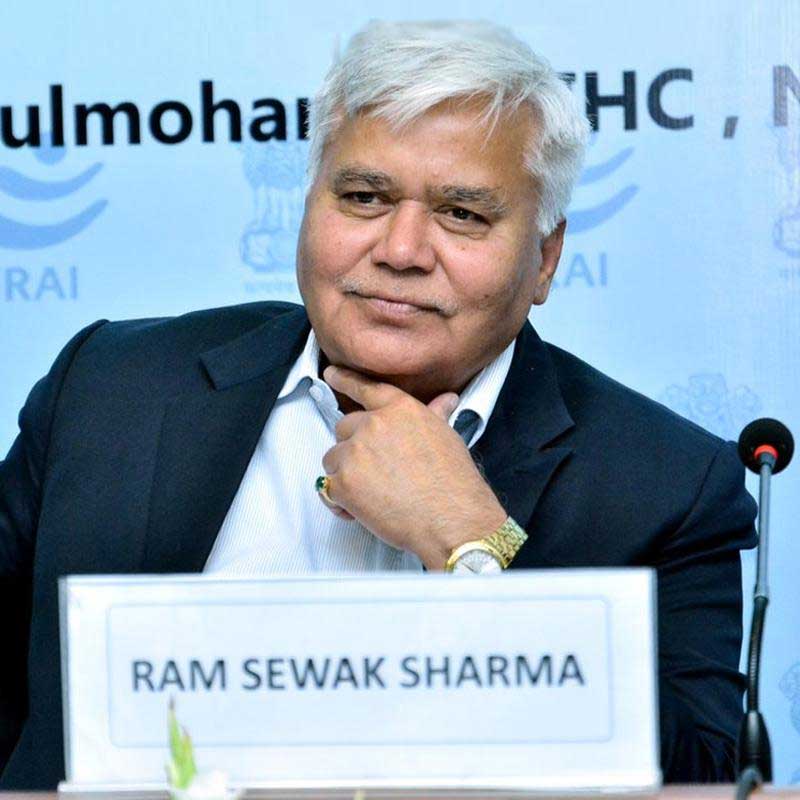
    MUMBAI: Telecom Regulatory Authority of India (TRAI) on Wednesday asked DTH operators to honour pre-paid commitment on ongoing long-duration packs of consumers (if they want). TRAI chairman RS Sharma also reiterated that there would be no change in the February 1 deadline for consumer migration to its new tariff regime.

    According to a report by news agency PTI, Sharma statted that if a DTH subscriber with a long duration pack wants to choose new channels mid-way, then the balance amount should be adjusted by operator. He also expressed his confidence with regards to a smooth switchover without any inconvenience to viewers on the concerned day.

    The new regulatory framework by TRAI for broadcasting sector is set to overhaul the entire ecosystem. For the first time ever, consumers will be able to choose channels or packages for pay TV on their own. While the new regime puts power in the hands of consumers, many stakeholders remain sceptics about its impact.

    Moreover, the TRAI continues to face legal hurdles. While the verdict of a petition made by Tata Sky challenging the order is still pending in the Delhi High Court, Calcutta High Court on Tuesday stayed the implementation of the tariff order till 18 February.

  • Tata Sky vs TRAI: No interim order as Delhi High Court adjourns case to 4 February

    Tata Sky vs TRAI: No interim order as Delhi High Court adjourns case to 4 February

    MUMBAI: The next chapter of direct-to-home operator Tata Sky’s ongoing legal tussle with the TRAI and its new tariff regime, in which Bharti Telemedia-owned Airtel Digital TV and Sun Direct are a part, will unfold on 4 February after the Delhi High Court adjourned the matter without passing an interim order.

    With arguments being inconclusive on Wednesday, the Tata Sky counsel will continue to argue when the next hearing commences.

    On Tuesday, Calcutta High Court stayed the cable switchover till 18 February. The court’s directive was a result of 80 cable operators from the city filing a petition against the TRAI mandate.

    The petitioners’ lawyer Debabrata Saha Roy argued that the revenue-sharing model under the new regime will significantly reduce the cable operators’ share to just nine per cent. With 80% will go into the broadcasters’ kitty, MSOs stand to get just 11 per cent, thus making it an unsustainable business proposition for operators.

    Earlier the regulator had offered an extension till 31 January to the distribution platform operators (DPOs) for implementation. 

    On Thursday, the Harit Nagpal-led company finally unveiled the new pricing of channels and packs after it was served a show-cause notice by the TRAI.

    TRAI's show-cause notice said, "Tata Sky has failed to provide options to its 17.7 million subscribers in compliance with the new framework to exercise their choices for TV channels. Tata Sky has put its subscribers in a situation of great difficulty despite no fault of theirs by not complying with the provisions of the new regulations and the tariff order.”

    Despite the delay in announcing channel prices, Tata Sky MD and CEO Nagpal is confident that his team can complete the tricky task of implementing the new norms within a relatively short span of time.

    “Tata Sky has always been compliant to regulatory requirements. We have gone live with our modes of communication across the Tata Sky website, Tata Sky mobile app and also equipped the dealers that subscribers can reach out to. We were confident that we would be able to complete the task in 1 week’s time. hence we used this time to create a seamless and smooth transition for all our subscribers. We have ensured that choosing channels and packs is as easy as 1, 2, 3 for any subscriber,” the veteran executive said.

    In a press release issued by the TRAI on Thursday, it had singled out one DTH operator for not providing options to its subscribers to exercise their choices. The press note also mentioned that the said DTH operator had assured in writing that it would comply with the new regulatory framework.

    In 2017, Bharti Telemedia, Tata Sky and Discovery Communication India had filed petitions against TRAI, challenging its tariff order and the interconnect regulations.

    Unlike the position adopted by Star India wherein it questioned the regulatory powers of TRAI, the matter in the Delhi HC questions the regulator’s power to wipe out deals that operators enter into to fix commissions and rates for customers.

  • TRAI recommendations on OTT communication regulation likely by February end

    TRAI recommendations on OTT communication regulation likely by February end

    MUMBAI: Towards the end of 2018, Telecom Regulatory Authority of India(TRAI) published a recommendation paper on OTT communication services, requesting feedback from all stakeholders. On Monday, the regulator confirmed that its recommendations on the issue would be made public by the end of next month.

    "We will be organising open house discussions soon. And hopefully, by the end of the next month, we should be able to come up with recommendations," TRAI Chairman R S Sharma was quoted as saying by news agency PTI.

    In November last year, the TRAI released a consultation paper focusing on apps such as Whatsapp, Facebook, Google Duo among others, offering calling and messaging services similar to telecom service providers along with their basic functions. TRAI also sought public opinion on whether OTT applications should fall under the same regulatory ambit as telecom operators.

    The Cellular Operators’ Association of India (COAI) is of the opinion that OTT players should be licensed by introducing ‘OTT Communication Authorization’ under the unified licence. 

    According to COAI, players in the telecom industry invest in licence fee, spectrum, telecom equipment and security apparatus. Hence, similar voice, video and data services without regulatory cost make for a non-level playing field.

    However, the Internet and Mobile Association of India (IAMAI) and the Broadband India Forum (BIF) have stood against the position by telecom operators. According to IAMAI, telecommunication regulations should not be automatically extended to online applications because of the fundamental “technical and business differences” between traditional services and apps.

    “OTT providers offer an array of different services that are accessed by users through the data services provided by TSPs (telecom service providers). Thus, the services provided by TSPs, while they enable access to OTT services, are fundamentally different,” BIF said in its written response to TRAI

  • TRAI optimistic about onboarding 90% consumers by tariff order deadline

    TRAI optimistic about onboarding 90% consumers by tariff order deadline

    MUMBAI: Before the 1 February deadline of consumer migration to new plans in line with the Telecom Regulatory Authority of India’s (TRAI) tariff order, chairman RS Sharma seems confident of onboarding 90 per cent consumers to the new regime.

    According to news agency PTI report, Sharma has noted a trend in the past few days of a sudden surge in the recording of customer preferences by service providers. Seeing the positive response from consumers, TRAI chairman thinks the desired figure of 100 per cent onboarding will be reached soon.

    “Looking at the trend, we feel, we will be able to reach the figure of over 90 per cent by January 31 there may be 10 per cent cases where people may be travelling or not present at home,” he said.

    For smooth implementation, as well as consumer awareness, the regulatory body has come out with advertisements and created YouTube videos. It is also holding regular meetings with broadcasters, direct to home (DTH) operators and multi system operators (MSO) to review the customer choice collection progress.

    “We are reviewing it on a day-to-day basis. We are also looking into apps of various DTH operators to see how customer-friendly they are for recording of viewer choices,” Sharma stated.

    The new regulatory framework puts power in hands of consumers to choose the channels they want to watch through a-la-carte and broadcaster or DPO packages as well. 

    Many industry experts have speculated that it will raise the monthly cable bill. Sharma feels that the monthly bills of those customers who only select the channels they watch will certainly go down. He also advised that viewers should not unnecessarily hoard channels as they can addchannels to cart whenever they wish.

    “Many a times, people buy goods they don't need today but think they will need tomorrow. Tomorrow, if they want to watch a channel they can buy it… why should they hoard the channel because it is a costly hoarding as they have to pay for it too,” he said.

    The regulator on 24 January said that 40 per cent of consumers have exercised their options of selecting TV channels under the new tariff order. 

    On the same day, TRAI published a cautionary note writing to all broadcasters and DPOs, asking them to comply by the new regulatory framework within the stipulated time.

  • Tata Sky vs TRAI: Case, argued partly by DTH operator, adjourned to 30 January

    Tata Sky vs TRAI: Case, argued partly by DTH operator, adjourned to 30 January

    MUMBAI: The next instalment of direct-to-home operator Tata Sky’s ongoing legal tussle with the TRAI and its new tariff regime, in which Bharti Telemedia-owned Airtel Digital TV and Sun Direct are a part, will play out in two days time after the Delhi High Court adjourned the matter to 30 January with arguments being inconclusive.

    The matter was argued partly by Rajiv Nayar on behalf of the DTH operator on Monday.

    On Thursday, the Harit Nagpal-led company finally unveiled the new pricing of channels and packs after it was served a show-cause notice by the TRAI.

    TRAI's show-cause notice said, "Tata Sky has failed to provide options to its 17.7 million subscribers in compliance with the new framework to exercise their choices for TV channels. Tata Sky has put its subscribers in a situation of great difficulty despite no fault of theirs by not complying with the provisions of the new regulations and the tariff order.”

    Despite the delay in announcing channel prices, Tata Sky MD and CEO Nagpal is confident that his team can complete the tricky task of implementing the new norms within a relatively short span of time.

    “Tata Sky has always been compliant to regulatory requirements. We have gone live with our modes of communication across the Tata Sky website, Tata Sky mobile app and also equipped the dealers that subscribers can reach out to. We were confident that we would be able to complete the task in 1 week’s time. hence we used this time to create a seamless and smooth transition for all our subscribers. We have ensured that choosing channels and packs is as easy as 1, 2, 3 for any subscriber,” the veteran executive said.

    In a press release issued by the TRAI on Thursday, it had singled out one DTH operator for not providing options to its subscribers to exercise their choices. The press note also mentioned that the said DTH operator had assured in writing that it would comply with the new regulatory framework.

    In 2017, Bharti Telemedia, Tata Sky and Discovery Communication India had filed petitions against TRAI, challenging its tariff order and the interconnect regulations.

    Unlike the position adopted by Star India wherein it questioned the regulatory powers of TRAI, the matter in the Delhi HC questions the regulator’s power to wipe out deals that operators enter into to fix commissions and rates for customers.

  • TRAI says 40% consumers have exercised their options under new tariff order

    TRAI says 40% consumers have exercised their options under new tariff order

    MUMBAI: With just a week for the new tariff order to kick in, the Telecom Regulatory Authority of India (TRAI) on Thursday revealed that nearly 40 per cent of the consumers have already exercised their options under the new regulatory framework.

    The regulator also expressed its satisfaction over the progress made by all stakeholders in order to adapt to the new norms.

    In the last month, TRAI has conducted frequent meetings with DPOs and broadcasters to oversee all implementation plans. The regulator has noted that all service providers have offered a consumer care channel on TV Channel Number 999, consumer corner on their website, started a Call Centre, released mobile apps and updated EPG displaying the MRP of each channel.

    The stakeholders have also made arrangements to receive options of subscribers using various methods.

    TRAI on its part has carried out an extensive consumer awareness program. The regulator has been proactively educating consumers through various means like social media and SMS. 

    It has also launched a web portal to help consumers to select the channels of their choice and estimate their monthly bill.  A facility has also been provided to take a print out of the  TV Channels selected or download the file so that the same can be sent to the TV service provider to facilitate exercising of the subscriber option.

    However, the regulator in its latest press note singled out one DTH for non-cooperation.

    “Authority has been receiving hundreds of complaints intimating that one of the  DTH (Direct to  home)   service provider is  not  providing options to its   subscribers  to    exercise   their   choices   and   providing   misleading information in  regard to  implementation of  new  framework. The Authority has taken up the matter. The said DTH operator has assured in writing that they will be complying with the new regulatory framework and will make the options available for obtaining the consumers choice. The  Authority assures all  the  subscribers that all  efforts are  being made to ensure that there is no inconvenience or  any  disruption of TV services due to  the   migration to  the new  regulatory regime,” it said.

     TRAI’s note also went on to add that Multi Systems Operators (MSOs) in far-flung areas and smaller towns are yet to implement the new regulatory framework in letter and spirit.

    Despite the strides made by all parties involved, the regulator has yet again directed all broadcasters and DPOs to comply with the new regulatory framework.

  • Tata Sky vs TRAI: Delhi High Court adjourns matter to 28 January

    Tata Sky vs TRAI: Delhi High Court adjourns matter to 28 January

    MUMBAI: The next instalment of DTH major Tata Sky’s ongoing legal tussle with the TRAI and its new tariff regime, in which Bharti Telemedia-owned Airtel Digital TV and Sun Direct are a part, will play out on 28 January. The Delhi High Court, on Wednesday, adjourned the matter as the judge was on leave.

    On 15 January, the matter was argued partly by senior lawyer Kapil Sibal on behalf of the direct-to-home operator on Tuesday who focussed on two points of 15 per cent discount cover (or the lack of it) and micromanagement attempt by TRAI of how business should be conducted.

    The hearing in the case started at around 2:45 pm and continued till almost 90 minutes during which Sibal argued that with the Madras HC setting aside the 15 per cent discount cap, the main aim of the tariff order had been frustrated and that attempt to micromanage a business, especially moves relating to pricing, etc., some of the provisions of the regulation were not in the interest of the DTH operator, which follows a different cost model compared to MSOs.

    The TRAI counsel’s interjection, according to industry sources, was minimal except seeking some technical clarifications relating to issues being argued by the Tata Sky lawyer and the actual content of the writ petition.

    Though this essentially means the regulator is unlikely to take any coercive action against the DTH operator and Discovery (that has already published new rates in compliance with the TRAI tariff order) until the next hearing, during the 10 January 2019 hearing of the case the court had verbally observed that Tata Sky could remain non-compliant at its own peril.

    At the earlier hearing, Sibal had impressed upon the judges to ask TRAI to produce all documents on how it arrived at the decision to implement the new tariff regime. He had also stated that implementing the present order will have an adverse impact on business.

    The TRAI lawyer had countered saying while Tata Sky felt aggrieved, a big DTH operator like Dish TV and all other MSOs seemed satisfied and had complied with the new tariff framework.

    The court had then asked the regulator to file the documents and the data that was the basis for arriving at the new tariff regime.

    Tata Sky is unlikely to upload its RIO for now, unlike Discovery, which has already published the same on its website, under protest.

    In 2017, Bharti Telemedia, Tata Sky and Discovery Communication India had filed petitions against TRAI, challenging its tariff order and the interconnect regulations.

    Unlike the position adopted by Star India wherein it questioned the regulatory powers of TRAI, the matter in the Delhi HC questions the regulator’s power to wipe out deals that operators enter into to fix commissions and rates for customers.

    While the Delhi HC case outcome could have implications on Tata Sky, Sun Direct, other distribution platform operators (DPOs) continue to be bound by the tariff order and most of them have complied to.

  • TRAI asks Tata Sky to submit status report on tariff order implementation

    TRAI asks Tata Sky to submit status report on tariff order implementation

    MUMBAI: Telecom Regulatory Authority of India (TRAI) has asked direct-to-home operator Tata Sky to file a comprehensive status report on the implementation of its new tariff regime. The regulator's direction came after it received complaints from several Tata Sky consumers.

    The new regulatory framework puts the power in hands of consumers to pay for channels they want to watch.

    According to a PTI report, TRAI also said Tata Sky is misleading its subscribers by suggesting that the regulator has extended the date of implementation of the new regulatory framework.

    The regulatory body in its letter to Tata Sky has described this act of the DTH operator as “patently false and misleading ".

    TRAI has further stated that it has given consumers time until 31 January to choose television channels, thereby enabling a smooth migration to the new regulatory framework.

    According to TRAI, it has received complaints from its subscribers suggesting that Tata Sky has "not made any provision in their system to obtain the choice of subscribers as per the new regulatory framework."

    It is important to mention here that a petition filed by Tata Sky against the new tariff order is pending before the Delhi High Court.

    Tata Sky’s ongoing court battle with the TRAI and its new tariff regime, in which Bharti Telemedia-owned Airtel Digital TV and Sun Direct are a part, was adjourned by the Delhi High Court on Thursday to January 23 with arguments being inconclusive.

    The matter was argued partly by senior lawyer Kapil Sibal on behalf of the direct-to-home operator on Tuesday who focussed on two points of 15 per cent discount cover (or the lack of it) and micromanagement attempt by TRAI of how business should be conducted.

    The hearing in the case started at around 2:45 pm and continued till almost 90 minutes during which Sibal argued that with the Madras HC setting aside the 15 per cent discount cap, the main aim of the tariff order had been frustrated and that attempt to micromanage a business, especially moves relating to pricing, etc., some of the provisions of the regulation were not in the interest of the DTH operator, which follows a different cost model compared to MSOs.

    The TRAI counsel’s interjection, according to industry sources, was minimal except seeking some technical clarifications relating to issues being argued by the Tata Sky lawyer and the actual content of the writ petition.