Category: TRAI

  • Broadcasters, DPOs misused new tariff order to throttle market discovery of channel prices: TRAI

    Broadcasters, DPOs misused new tariff order to throttle market discovery of channel prices: TRAI

    MUMBAI: Telecom Regulatory Authority of India (TRAI) on Friday issued a consultation paper on tariff related issues for Broadcasting and Cable services.

    The paper primarily discusses issues related to discounts given in the formation of the bouquets, ceiling price of channels for inclusion in bouquet, need for formation of bouquet by broadcasters and DPOs, variable NCF and discounts on long term plan.

    TRAI believes that the new regulatory framework has brought the transparency in TV channel pricing, harmonised business processes in the sector and reduced disputes among stakeholders. However, adequate choice to select TV channels has not been given to the consumers.

    “In all fairness, a lot was expected from broadcasters and DPOs to use flexibility given under new regulatory framework to address the concerns and aspirations of the consumers. However, given flexibility was misused to throttle market discovery of TV channel prices by giving huge discounts on the bouquets. It has been observed from the tariff declared by broadcasters under new regulatory framework that they are offering bouquets at a discount of up to 70 per cent of the sum of a-la-carte rates of pay channels constituting those bouquets,” reads TRAI’s latest notification.

    “It indicates that in absence of any restriction on the discount on the offering of bouquets, broadcasters are making prices of a-la-carte channels illusory thereby impacting the a-la-carte choice of channels by consumers. Further, no restriction on number of channels has created another problem wherein broadcasters and DPOs are offering too many bouquets,” the note further states.

    TRAI has observed that too many bouquets are formed by the broadcasters/DPOs and many of them contain very similar set of channels, with very few changes. This, according to the sector regulator, is not only creating confusion among consumers but also becoming a hurdle in choosing the channels.

    With too many bouquets of broadcasters and DPOs, consumers get confused and as a result are forced to adopt some suggested packs of TV channels, killing the freedom given to consumers to choose desired TV channels, feels the sector regulator .

    TRAI had extensive interactions with  stakeholders including consumers and consumer organizations, at various forums, wherein stakeholders have also raised certain issues such as variable NCF for different regions, NCF for Multi TV home, discount on long term plan, DD channels as part of one hundred channels etc.

     In order to deliberate upon above issues that have come post implementation of the new regime, the latest consultation paper has been floated seeking stakeholders' views.

  • TRAI intensifies efforts to overhaul TV audience measurement & ratings system

    TRAI intensifies efforts to overhaul TV audience measurement & ratings system

    MUMBAI: Stepping up efforts to improve India's television audience measurement and ratings system, Telecom Regulatory Authority of India (TRAI) last week invited sealed limited tenders for organising a Hackathon. Hackerearth, Internet and Mobile Association of India (IAMAI), Persistent Systems Ltd and Mettl were the four companies listed in the sector regulator's limited tender.

    TRAI said it intends to engage a reputed agency for the purpose of conducting a hackathon “to find out the possible solutions” for TV audience measurement and ratings in India, the mandate for which currently rests with BARC India.

    The eligible bidders shall conduct the hackathon on behalf of TRAI, covering all the technical, management, logistics and marketing aspects of it. The event will be conducted in two phases: online and offline.

    The online phase will be open for participants across India for submitting idea/synopsis based on the TRAI's objective. The shortlisted candidates will be invited to participate in phase-II, which will be offline. In this phase participants will build on their ideas in a 36-hour Hackathon in Bengaluru and present their final solutions.

    While the tender was floated on 9 August, the last date for receipt of the order is 16 August. As per the regulator’s instructions, the successful bidder shall complete the Hackathon within a period of 45 days from the date of award of work.

    The role of hire /selected agency in the Hackathon would be as follows:

    · Organise and execute the hackathon

    · Assisting TRAI in defining problem statement

    · Provide platform for hackathon

    · Develop hackathon webpage for registration and submission of ideas

    · Arrangements for publicity of hackathon through different mediums including social media

    · Identification, coordination and inviting participants/teams for hackathon

    · Evaluate the ideas submitted in phase-I

    · Invite and co-ordinate all participants/teams shortlisted in phase-I for

    · Participating in phase-Il

    · Organise the on-ground logistics for Phase-Il

    · Identify jury members from the industry

    · Assist TRAI in evaluating and judging the final solutions to the problem statement in phase-Il.

    In December 2018, TRAI issued a consultation paper on "Review of Television Audience Measurement and Ratings in India" seeking comments from the stakeholders.

    In addition to that, Open House Discussions (OHDs) on the consultation paper were conducted in New Delhi and Mumbai.

    Stakeholders in their written comments and during OHDs highlighted issues related to the development of technological solutions for TV audience measurement without manual intervention.

  • TRAI issues draft regulation to facilitate consumer choice of TV channels using API

    TRAI issues draft regulation to facilitate consumer choice of TV channels using API

    MUMBAI: The Telecom Regulatory Authority of India (TRAI) on Friday issued the draft (Second Amendment) to the Telecommunication (Broadcasting and Cable) Services Standards of Quality of Service and Consumer Protection (Addressable Systems) Regulations 2017. Through this draft regulation (second amendment), TRAI is seeking the comments of stakeholders on the issue of developing of app by third parties and consequent sharing of information using Application Program Interface (API) between DPOs and consumers.

    The new tariff order rolled out in the beginning of this year put power in consumers’ hand to select television channels they want to watch. To ensure proper implementation of the new framework, the authority has made a number of efforts such as series of meetings with DPOs, publicity in electronic and news media, interactions with customer groups etc. Despite all the efforts, it has been brought to notice of the authority that consumers are not able to make real choice of TV channels.

    “It was noticed that quite a few DPO platforms were not providing adequate freedom and choice to consumers. Customers also complained that the call centre of DPOs are also not helping to facilitate consumer choice of the channels,” TRAI said in a release.

    To resolve the issues, the authority felt need to have channel selection system developed by third party to facilitate easy channel selection by consumers. As per TRAI, since the third party app will be accessible by every customer of Broadcasting & Cables Services sector,  it will facilitate easy choice to consumers.

    To facilitate functioning of third-party apps, TRAI created channel selection system API specifications document which prescribed common APIs with all distribution platform operators (DPO). TRAI intends to mandate all the DPOs to compulsorily share information with the apps after authenticating the subscriber so that such apps can help in easy selection of the required TV channels.

    The newly issued draft regulation (second amendment) issued shall be open for comments of the stakeholders up to 22 August. 

  • TRAI files appeal against TDSAT’s landing page judgment in Supreme Court

    TRAI files appeal against TDSAT’s landing page judgment in Supreme Court

    MUMBAI: In a move that can have far-reaching implications for India's broadcasting sector, Telecom Regulatory Authority of India (TRAI) on Thursday filed an appeal in the Supreme Court against Telecom Disputes Settlement and Appellate Tribunal (TDSAT) order on landing pages. A bench headed by HMJ Arun Mishra will hear the matter, listed as item 21, today.

    The sector regulator’s action comes in the wake of TDSAT, by virtue of its 29 May order, setting aside TRAI’s 3 December directive to broadcasters and distribution platform operators (DPOs) to refrain from placing registered television channel, TV rating is released by BARC India, on the landing page or boot up screen.

    According to TRAI, its order was aimed at protecting the interest of service providers and consumers while ensuring orderly growth of the sector. This, however, was successfully challenged by Bennett Coleman & Co. and other in TDSAT.

    “In our considered view, the impugned directions are beyond the provisions of the act, which empowers TRAI to issue directions. Therefore, the impugned directions must be set aside on this point alone. We order accordingly,” TDSAT Chairperson Justice S K Singh and Member AK Bhargava said.

    A series of controversies have been triggered post the landmark TDSAT order that resulted in disruption in viewership measurement of channels with a relatively smaller audience like English news.

    Data for week 22, first since the landing page ruling, saw CNN News 18 upset the English news apple cart to top the chart, followed by Republic TV, Times Now, DD India and India Today Television.

    BARC switched back to its previous methodology from week 23 onward claiming it had received multiple representations from stakeholders and the mandate of its board.

    BARC’s flip-flip with its outlier policy implementation further fueled the landing page row, raising concerns among stakeholders.

    Reacting to stakeholders’ issues, the BARC board gave its nod to form a two-member committee to carry out an independent review of BARC’s data validation and outlier policy.

    With opinion divided within the industry, some broadcasters have also written letters, highlighting the negative impact of landing pages, to TRAI and BARC’s technical committee.

    With the matter now landing up in the top court, industry will be hoping to get more clarity on this very controversial issue.

  • TRAI recommends no minimum entry net worth for MSO registration

    TRAI recommends no minimum entry net worth for MSO registration

    MUMBAI: The Telecom Regulatory Authority of India (TRAI) has recommended that there is no need to fix a minimum entry-level net worth for MSO registration. Moreover, it also added that there is no basis for introducing minimum net worth classification based on the area of operation for MSOs.

    TRAI on Monday released its recommendations on "Entry level net-worth requirement of multi system operators (MSOs) in cable TV services". Based on the written submissions of stakeholders and discussions in the open house discussions, recommendations have been framed by the regulatory body.

    Other recommendations include:

    ·         As the area-wise minimum net worth classification for registration of MSO is not required, there is no need to prescribe minimum net worth for remote areas of Jammu & Kashmir or North-East region.

    ·         The authority recommends that there is no merit in introducing minimum net worth for registration of MSOs based on network cost criteria.

    ·         The authority recommends that MIB may prescribe a standard proforma for self-declaration of net worth by applicants seeking registration as MSOs.

    ·         The authority recommends that MIB may consider skill development requirement of the sector and take appropriate action so that trained manpower is available to perform specialised tasks.

    The regulatory body issued a detailed consultation paper on "Entry Level Net Worth for MSOs in Cable TV Services" on 9 April. Post this, an open house discussion was held in New Delhi in June. The recommendations were finalised after looking at the comments received for the consultation paper and its own analysis.

    TRAI also mentioned that with the new regulatory framework in place, small and medium-size MSOs have it better.

    Earlier, TRAI also received a reference from Ministry of Information and Broadcasting (MIB) in 2018 seeking recommendations of the former on the appropriate levels for fixation of entry-level net-worth of the multi system operators (MSOs) for operationalising cable TV digitisation across the country.

  • TRAI floats consultation paper on KYC of DTH set top boxes

    TRAI floats consultation paper on KYC of DTH set top boxes

    MUMBAI: The Telecom Regulatory Authority of India (TRAI) issued a consultation paper on 'KYC of DTH Set Top Boxes’ in order to finalise a suitable mechanism for the same. The comments of various organisations, industry bodies, DTH operators, standardisation bodies, STB manufacturers, software providers, stakeholders, experts and individuals have been invited by 19 August 2019.

    The authority received a reference from the Ministry of Information and Broadcasting (MIB) in 2018 wherein TRAI had been requested to give its considered recommendations on desirability or otherwise of KYC for set top boxes in DTH services and, if desirable, a process for the same.

    Later, MIB provided information in another letter to TRAI regarding the safeguards that can be applied for restricting smuggling of DTH equipment illegally to other countries.

    “Filling of KYC form and verification of AadhaarcCard may be mandatory for any customer purchasing DTH equipment. In order to check the location in accordance with customer ID /Card ID, location-based services need to be made active in DTH set-top-boxes,” the letter read.

    One of the suggestions also included that MIB and TRAI may prepare KYC verification process to ensure that STB used by Indian DTH operators are only working in India.

    DTH broadcasting service was opened in the country in 2001 and the government issued the 'Guidelines for obtaining license for providing direct-to-home (DTH) broadcasting service in the same year. These guidelines prescribe the eligibility criteria, the procedure for obtaining the licence to set up and operate DTH services in the country.

  • No complaints of DTH companies defying new tariff order received by TRAI: MIB

    No complaints of DTH companies defying new tariff order received by TRAI: MIB

    MUMBAI: Telecom Regulatory Authority of India (TRAI) has not received any complaints against direct-to-home (DTH) companies not sticking to its new tariff order, the Information and Broadcasting Ministry told the Lok Sabha last week.

    “No incidence indicating that the DTH operators are not adhering to the TRAI’s norms with regards to pricing of channels has come to the notice of TRAI.

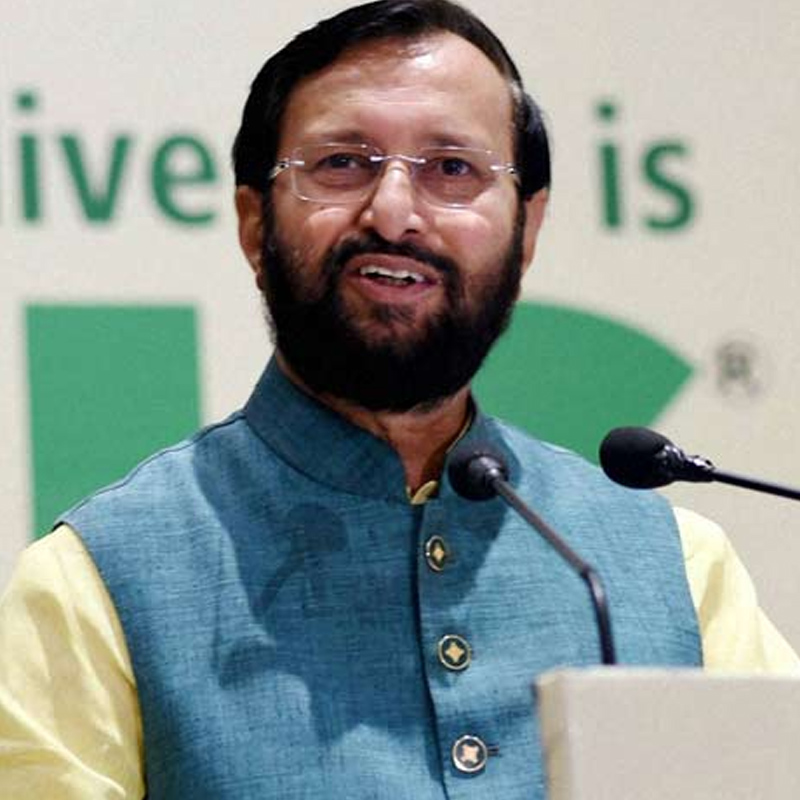
    “As per the new regulatory framework, every broadcaster is required to offer all its channels on a-la-carte basis and declare maximum retail price per month payable by a subscriber,” said Union I&B Minister Prakash Javadekar in response to a written question.

    The new tariff order had original come into force on 29 December 2018. TRAI then gave multiple extensions to stakeholders to fully implement the new rules for the broadcast and cable services sector.

    “However, keeping in view the consumer convenience and to provide sufficient time to consumers to exercise the options for the new tariff packs, TRAI provided time until March 31, 2019, to consumers for conveying their informed choices to service providers,” he further added.

  • Delhi HC sends notice to TRAI over money collection through tariff amendment orders

    Delhi HC sends notice to TRAI over money collection through tariff amendment orders

    MUMBAI: The Delhi High Court has issued a notice to the Telecom Regulatory Authority of India (TRAI) asking it to explain how broadcasters collected crores of rupees from consumers on the basis of the 11th and 13th TRAI tariff amendment orders, as per a report by news agency ANI.

    The court was responding to a plea by an NGO which said that the Telecom Disputes Settlement and Appellate Tribunal (TDSAT) had set aside the case and remanded it to TRAI. TRAI has to file its reply by 11 September, the next date of the hearing.

    According to the petitioners, the collection of money by broadcasters was illegal after a Supreme Court order of 2015 was applied. They also had to maintain a separate account for this money collected from customers.

    Post the implementation of the framework, the money was to be returned to customers but the TRAI transferred the matter to the I&B Ministry.

  • TRAI’s SK Gupta on Independent TV troubles, BARC overhaul, landing page controversy & tariff order

    TRAI’s SK Gupta on Independent TV troubles, BARC overhaul, landing page controversy & tariff order

    MUMBAI: Top Telecom Regulatory Authority of India (TRAI) functionaries were in Mumbai on Wednesday for the second leg of the open house discussion (OHD) to review the television audience measurement and ratings system in India. In the audience were industry stakeholders spanning across broadcasters, advertisers, distribution platform operators (DPOs) and BARC representatives among others.

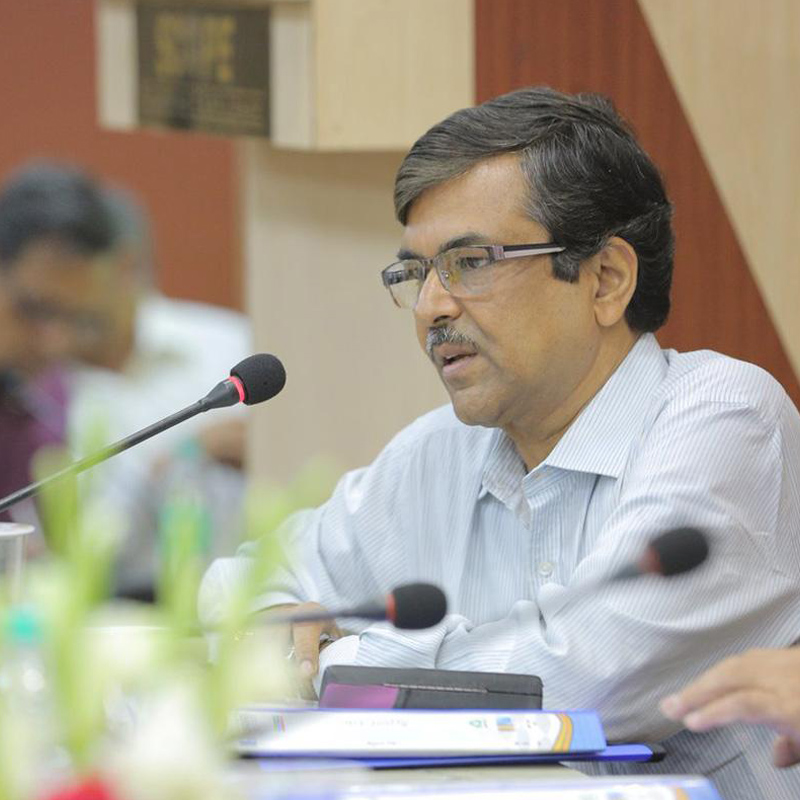
    “Ratings have to be unbiased, correct representation of the feelings of the people and should not be impacted by various methodologies being used to influence them,” said TRAI secretary Sunil K Gupta as he set the agenda.

    TRAI had received multiple comments and counter-comments from industry to its consultation paper, which featured a list of questions. In order to further deepen the engagement, Gupta recommended three additional topics be taken up for discussion.

    “What are the concerns and problems when it comes to return path data with set top boxes? Let us analyse and understand how we can increase the sample size of meters so that influencing data becomes difficult. Secondly, many broadcasters said in the Delhi OHD that data collected through such meters is filtered or manipulated to delete the outliers. They feel that the level of transparency in doing so is not there and in some cases they feel it is one of the tools to manipulate the TRP of a channel. Thirdly, is there any other alternative that can be adopted to make ratings more effective or more representative of viewership?” the secretary asked.

    However, despite the officials’ best efforts to initiate a conversation to highlight problems and suggest solutions, those present were rather conservative in their approach, side-stepping critical issues that continue to plague the broadcasting sector from a TV audience measurement standpoint. While regional broadcasters did argue in favour of a more representative sample to take into account multiple socio-cultural regions, major broadcasters failed to approach the discussion with their usual vigour.

    From BARC’s perspective, COO Romil Ramgarhia and chairman of its technical committee Shashi Sinha were rather frank and forthright, articulating their respective positions on all issues at hand quite candidly.

    In order to gain a better understanding of the regulator's viewpoint, Indiantelevision.com’s Dattaraj Thaly engaged the TRAI secretary in a quick chat on the sidelines of the OHD. 

    Edited excerpts follow.

    What compelled you to float a consultation paper on review of television audience measurement and ratings in India?

    We recommended the formation of an entity to rate the audience measurement for the TV sector and as per that recommendation, MIB came up with guidelines and then BARC was registered. Having said that, (BARC) working for the last three years, we just wanted to see how good the work is being done and there are different concerns of different stakeholders to improve the transparency of BARC rating. So, what are the concerns of stakeholders and how can we improve its functions was our objective.

    What are the specific functions you want improved? Is it credibility of the ratings, transparency of the system? What are the benchmarks for improvement?

    In fact it includes all the things. It is credibility, accuracy of the system and also to make it broad-based so that any attempt to tamper any information etc., should have minimum impact on rating given by the BARC.

    We know what the broadcasters’ concerns with BARC are. Can you tell us what the regulator’s view on the TV audience measurement body is?

    TRAI does not have any view of its own. We raise various issues to the stakeholders. We take oral as well as written comments of the stakeholders. We also analyse the international experiences, the issues raised by different people on what needs to be addressed and ultimately firmly take a view what should be done. So, one thing is very clear TRAI does not have its own view.

    You’ve now held two open house discussions (Delhi and Mumbai) to review our current TV audience measurement system. Have any key themes emerged from these consultations?

    One is that everybody wants BARC to give the ratings that are credible, transparent, not influenced by any of the stakeholders. They also want a broad-based rating pattern, so that chances of getting it influenced by few meters is reduced. Thirdly, they want to improve the transparency of the system.

    BARC’s data validation and outlier policy post the TDSAT order on landing pages has created quite a stir in the industry. What’s your view on this issue?

    You would have heard BARC clearly stating today that they do not have a method to identify landing page and therefore effectively address the issue.

    So, what is the way forward?

    You have yourself very clearly pointed out that there is a decision by TDSAT and we will look into it further and see what can be done. Also today you have heard that this is a call to be taken by the industry also.

    Are you satisfied with what you’ve accomplished in terms of the new tariff order roll-out?

    If you look at the preamble of the regulations and the tariff order issues, the objective raised over there were met to a great extent. So, we are satisfied.

    Two fundamental issues – consumer choice and transparency – were emphasised on by TRAI during the implementation of the new tariff order. Has the new regime addressed these two tenets?

    We have introduced giving the price of each channel in EPG, which has been appreciated by all of the stakeholders. As far as giving choice is concerned, we have checked different platforms and most of the platforms are complying and giving choice. What we have found is that there is a need to educate the consumers. Because consumers from the beginning have been given bouquets. Now awareness has been generated that options have been enabled to choose channels on a-la-carte basis. On this front, I think some more work is required.

    Has the broadcasting and cable services landscape settled down post the new tariff order implementation?

    The choice of customer is a dynamic situation and it will change from time to time and that is what we precisely feel like. The market will work once the consumer has got the options to exercise and it will depend on many things such as the type of programmes you are showing in your TV channel, the language, the awareness, etc. So, this is working very well on the ground and naturally it will take some time to settle. Saying that it has already settled may not be accurate, but yes it is going in the right direction.

    What’s your take on the Independent TV situation?

    Independent TV has been very recently given their license for DTH. The matter has been taken up with MIB and with the other enforcement arms of MIB, which is spread in the state and districts. We are looking into that.

    Is TRAI committed to light-touch regulation across the broadcasting and distribution sector?

    New tariff order is the right example of light-touch regulation (https://www.indiantelevision.com/regulators/trai/broadcasters-split-over-trai-s-directive-to-barc-on-tv-viewership-data-190226). We have given complete freedom to broadcasters to price their channels. We have given freedom to DPOs to carry out their business and get a certain committed revenue so that quality of the network can be upgraded and quality of the services can be given to the consumers. We are only prescribing the broad architecture and not micro-managing.
  • TRAI extends deadline for feedback on review of interconnection framework

    TRAI extends deadline for feedback on review of interconnection framework

    MUMBAI: Telecom Regulatory Authority of India (TRAI) on Tuesday extended the last date for receipt of written feedback on its consultation paper titled "Review of the Regulatory framework for Interconnection".

    According to a notification from the regulator, the last date for receipt of written comments has been modified to 4 July and counter-comments, if any to 18 July.

    The regulator’s decision came after a request from some of the stakeholders. However, it has been decided that no request for any further extension of time will be entertained.

    TRAI had floated the consultation paper in May to asses means of removing entry barriers for new companies and reduce the operational cost of existing operators by handing them greater flexibility.