Category: TRAI

  • TRAI sends directive to 5 major MSOs for non-compliance of NTO provisions

    TRAI sends directive to 5 major MSOs for non-compliance of NTO provisions

    MUMBAI: The Telecom Regulatory Authority of India (TRAI) has directed five major multi system operators to comply with all provisions of its the new tariff order (NTO). After receiving scrutiny of the reply of earlier notice from the MSOs, TRAI found violation of rules of NTO.

    Following issues were found by the regulator for Induslnd Media and Communications Ltd   :

    ·         LCOs are not  providing  the itemised invoices to  the  consumers.  Some LCOs  are providing their  own  Cash memo bills.

    ·         Consumer portal provided by IMCL is not  working

    ·         IVRS facility of IMCL does not  have  any  provision for complaint registration.

    ·         LCOs without GST Registration are collecting tax  amount from  the  subscribers but not  depositing it.

    Following issues were found by the regulator for Hathway Digital:

    • Facility of Bill generation is available in LCO portal, but the customers are  not able  to get itemised billing in most cases even  after the request of the  subscriber,

    •LCOs without GST Registration are collecting tax  amount from  the  subscribers but  not  depositing it.

    Following issues were found by the regulator for GTPL Hathway:

    •IVRS facility of M/s GTPL Hathway Ltd.  does not  have provision for  complaint registration

    •The consumer portal of GTPL KCBPL has very  limited facilities. The facility ofupgradation and modifications in  subscription is  not  available on  consumer portal.

    •LCOs without GST Registration are  collecting tax  amount from  the  subscribers but not  depositing it.

    Following issues were found by the regulator for SITI Networks:

    •LCOs can  provide itemized invoices to consumers but most of the  LCOs are  not providing the  same. Some LCOs are  providing their own  cash memo bills;

    •IVRS facility of Siti  Networks Ltd.  does  not   have any  provision for  complaint registration.

    Following issues were found by the regulator for DEN networks:

    • LCO are  providing their own  cash memo bills  using card system for  payment receipts, while  the  subscribers are  not  able to get itemized bills

    • Facility of  upgradation  and  modification in  subscription is not   available on consumer portal.

    •LCOs without GST registration are  collecting tax  amount from  the  subscribers but  not  depositing it.

    All the MSOs have been directed to report compliance as per the new regulatory framework within seven days from the date of issue of this direction.

  • TRAI releases consultation paper on platform services by DTH operators

    TRAI releases consultation paper on platform services by DTH operators

    MUMBAI: The Telecom Regulatory Authority of India (TRAI) has issued a consultation paper on platform services (PS) offered by DTH operators. The authority has invited comments from stakeholders by 27 September 2019.

    The consultation paper has been released with an aim to address the issues related to platform services (PS) and to come up with a regulatory framework for it.

    TRAI has received a reference from the Ministry of Information & Broadcasting (MIB) dated 2 July 2019 wherein the authority has been requested to give its considered recommendations related to platform services with reference to DTH guidelines. Some of its discussion points are listed here. DTH operators offering platform service channels have to ensure that the same content is not shared with any other DPO. The one-time registration fee to be enhanced to Rs 1 lakh per PS channel as against Rs 1000 per PS channel recommended earlier by the authority. The maximum number of PS channels that a DTH operator can offer and platform service could be sequenced separately from the regular channels.

    “India has a large base of pay TV subscribers. Predominantly, the pay TV services are being delivered through cable TV and direct to home (DTH) systems. Other modes of TV broadcasting such as internet protocol TV (IPTV), head-end in the sky (HITS) have minuscule subscriber base as compared to the cable TV and DTH systems. All TV channel distribution platform operators (DPOs), i.e. MSOs, DTH and HITS operators, operate certain kind of programming services which are specific to each platform and are not obtained from broadcasters. All these platform-specific services being offered by DPOs but not obtained from broadcasters have been referred to as platform services,” explained TRAI in its release.

    It further said, “DPOs use PS to offer innovative services and product differentiation. It also acts as a unique selling proposition (USP) for DPOs and also helps them in meeting the specific needs of their subscribers.”

    “Unlike private satellite TV channels, which are permitted and regulated under the uplinking/ downlinking guidelines of MIB, Platform services (PS) is not subject to any specific regulations or guidelines as of now,” said TRAI in its consultation paper.

    Earlier, the authority in its recommendations on a regulatory framework for platform services dated 19 November 2014 had, inter alia recommended that the definition of PS shall be “Platform services (PS) are programs transmitted by Distribution Platform Operators (DPOs) exclusively to their own subscribers and does not include Doordarshan channels and registered TV channels. PS shall not include foreign TV channels that are not registered in India.”

  • TV homes continue to grow post new tariff order implementation

    TV homes continue to grow post new tariff order implementation

    MUMBAI: The recent IRS study revealed that TV homes have continued to witness growth in the post-implementation period of TRAI’s new tariff order (NTO). According to the IRS study that was conducted, post NTO period shows that in Q2 2019 TV homes grew to 194 million from 192 million TV homes in Q1 2019.

    As per IRS study in 2017, there were 183 million TV homes. According to BARC India in 2016 there were 183 million TV homes and in 2018 there were 197 million TV homes.  

    The NTO was implemented on 1 February 2019 with an aim to allow customers to select and pay only for the channels they want. Many companies also witnessed a bad quarter during the transaction period of NTO.

    After the few months of implementation of NTO, TRAI released a consultation paper to review the issues of pricing of the channels. The paper primarily discusses issues related to discounts in the formation of bouquets, ceiling price of channels for inclusion in bouquet, need for formation of bouquet by broadcasters and DPOs, variable NCF and discounts on long term plan, etc.

  • TRAI seeks comments on amendment to telecommunication services interconnection regulations

    TRAI seeks comments on amendment to telecommunication services interconnection regulations

    MUMBAI: Telecom Regulatory Authority of India (TRAI) has released the draft Telecommunication (Broadcasting and Cable) Services Interconnection (Addressable Systems) (Amendment) Regulations, 2019. The authority is seeking comments of all the stakeholders by 9 September 2019.

    TRAI has amended the Schedule –III of Telecommunication (Broadcasting and Cable) Services Interconnection (Addressable Systems) Regulations, 2017. “During the consultation undertaken to prepare the audit manual certain comments and observations reflected some issues in the Schedule III of the Interconnection Regulations 2017,” said TRAI in its release.

    It further said, “Accordingly, a draft regulation related to amendment to schedule-III of the Telecommunication (Broadcasting and Cable) Services Interconnection (Addressable Systems) Regulations, 2017, has been issued on the issues related to Digital Rights Management Systems; Transactional capacity of CAS and SMS system; fingerprinting – support for overt and covert fingerprinting in STBs and watermarking network logo for all pay channels.”

    A consultation paper on “Interconnection framework for Broadcasting TV Services distributed through Addressable Systems” was issued by TRAI on 4 May 2016. This consultation process resulted in notification of the Telecommunication (Broadcasting and Cable) Services Interconnection (Addressable Systems) Regulations, 2017 (1 of 2017) dated 3 March 2017.

    During the consultation undertaken to prepare the audit manual, TRAI noticed certain comments and observations that reflect some issues in the Schedule III of the Interconnection Regulations 2017.

  • TRAI does not intend to revise NTO, aims to fine-tune it

    TRAI does not intend to revise NTO, aims to fine-tune it

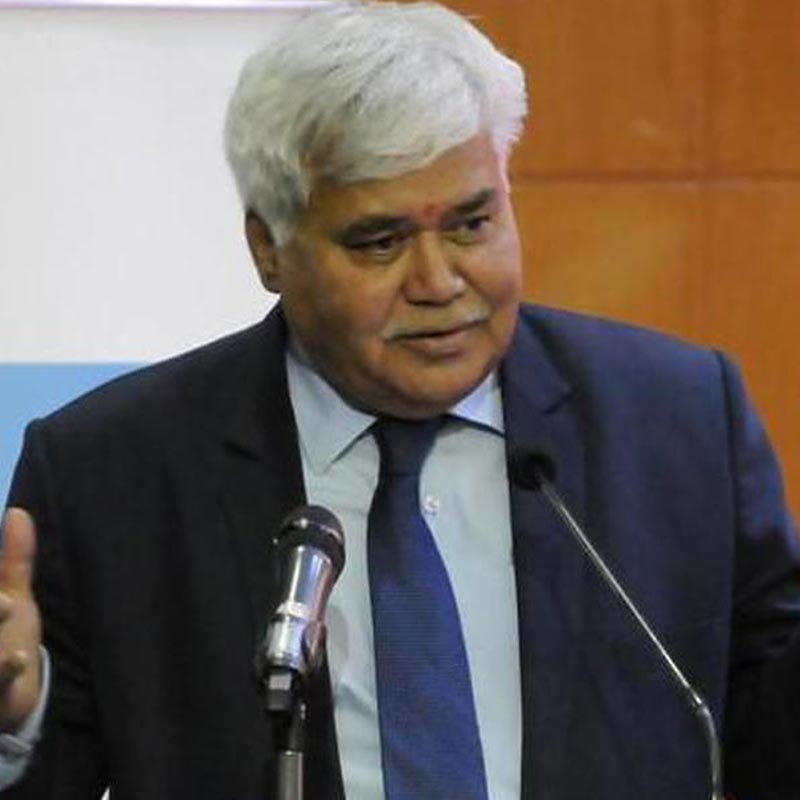
    MUMBAI: Amid several ongoing speculations on changes in the new tariff order (NTO), Telecom Regulatory Authority of India (TRAI) chairman RS Sharma clarified that the regulatory body does not have any plan to revise the pricing framework. He also added that it is only trying to fine-tune it due to certain issues consumers are facing.

    “The framework is already fixed. There is no proposal to change any component of that framework, and if somebody is making a point that we (TRAI) are changing the framework, it is absolutely false. Since this framework has started operating, we have observed that certain issues largely related to consumers have cropped up. We are only trying to fine-tune it,” Sharma said in an interview with the Economic Times.

    He also added that the consultation paper which stirred the recent controversies is not about changing the framework but it is bringing perfection in the phenomenon observed in the last few months. After finding certain issues, it brought the consultation paper on the table. But it may tweak a few parameters if it finds that all parameters are not working fine.

    “We are ensuring that consumers have a choice and are empowered to exercise their choice. Our objective is not to increase or decrease ARPU. Our aim is to enable the consumers to choose channels and safeguard them against any obstacle in their path,” he said.

  • TRAI’s tariff related consultation paper draws concern from IBF

    TRAI’s tariff related consultation paper draws concern from IBF

    MUMBAI: The IBF notes with some concern the issues raised for consultation by TRAI in the Consultation Paper issued on 16th August 2019 (CP).  These issues strike at the very heart of the new MRP based tariff regime which TRAI made effective from 1st February 2019 (NTO).  It is fair to say the implementation of the NTO has resulted in massive changes in the distribution landscape. Nevertheless, with the support of all stakeholders including broadcasters, DPOs and the end consumer, the transition to the new regime is being managed relatively smoothly. Broadcasters, on their part, along with other stakeholders, have done their best to ensure a smooth transition without a disruption of services. TRAI itself has stated at several fora that over 90% of consumers have migrated to the new tariff regime by choosing channels and/or bouquets of their choice.

    In  compliance  with  the  NTO,  pay  broadcasters  have  published  their  Reference Interconnect Offers (RIOs) pricing their channels in a la carte and bouquet formations in accordance with the regulations.  DPOs in turn have offered these channels both on a la carte basis and bouquets customized to meet the choice of their subscribers.  In fact, it was TRAI that mandated DPOs to offer their subscribers a “best fit” plan of a la carte and bouquets to encourage a seamless transition to the new tariff regime.

    Surprisingly barely a few months after the commencement of the NTO and even before the industry at large and more importantly the end consumer has fully adapted to the new regulatory regime, TRAI proposes a fresh CP seeking to make fundamental changes in channel pricing and bouquet formation.  This goes against all norms of a stable regulatory regime so necessary for the economic advancement of any industry. TRAI’s CP proceeds on the assumption that consumers are being denied their choice of channels by excessive discounts on bouquets. IBF wishes to point out that the cap on bouquet discounts under the NTO was struck down by the Madras High Court as “arbitrary”. Further, the global practice in the television and cable industry is the offering of content in bouquets customized to meet the diverse needs of consumers. A report published by the prestigious thinktank,  the  Indian  Council  for  Research  on  International  Economic  Relations (ICRIER), in March 2019 indicates that given a choice consumers, even internationally display a preference for bouquets. A 2004 FCC report concluded that mandating a la carte for cable consumers in the USA would very likely harm new and niche channels and reduce choice to consumers. An evaluation of a similar proposal in Canada in 2014 concluded that “unbundling” could have adverse effects for the broadcasting sector and could result in 26% of the current channels becoming unviable. As per CASBAA, in a study of broadcast regulations in 10 countries, apart from India, no country mandated a la carte and bouquets were the choice of consumers. The NTO itself allows broadcasters and DPOs to offer channels both a la carte and in bouquets giving the consumer the freedom of choice. In fact, the basic tier mandated by the NTO of 100 FTA channels for Rs. 130 is itself a bouquet offering. Thus, the impression being created that broadcasters are gaming the system to push bouquets is incorrect.

    The essence of a free market economy is that consumers make their own choices about the products they buy or the services they wish to receive. Broadcasters have not only published  their  channel  prices  a  la  carte  and  for  bouquets  but  also  publicized  their offerings through advertisements and promotions enabling the consumer to make an informed choice. As TRAI itself points out in the CP while a large number of consumers have opted for bouquets, many have also opted for a la carte channels. It is therefore incorrect and would be an affront to the consumer’s intelligence to suggest that they choose channels only on price and not on the quality of their content.

    The Honorable Prime Minister’s call to make India a USD 5trillion economy by 2025 requires all industries to grow exponentially and contribute to overall GDP. Frequent tinkering with regulations and attempting to micro-manage free markets can lead to adverse consequences. Promoting a la carte at the cost of bouquets will deny consumers the choice they need in a country like India with such a large and variegated diversity of cultures and languages. Smaller as well as niche content channels will lose out and their viability will come under question. Broadcasters will be unwilling to launch new channels and producers will be unwilling to experiment with new content. All this will lead to fewer shows being produced which will have a knockdown effect on downstream production and on employment in the sector.

    The broadcasting industry has gone through several major regulatory changes in the last few years moving from analogue to CAS to digital and addressable systems and now to an MRP pricing regime. Stability in policy formulation and “soft touch” in regulatory oversight is an absolute necessity for healthy industry growth. The Government’s focus on “ease of doing business” warrants minimal regulatory intervention. Hence regulatory intervention at this early stage in the implementation of the NTO is not only premature but will have disastrous consequences for the broadcasting industry. In these circumstances, IBF would urge TRAI to defer any further regulatory interventions and allow the industry and its stakeholders and especially the consumer more time to adapt to the new regulatory regime.
     

  • TRAI data shows wireless data revenue, subscribers, ARPU shot up in 2018

    TRAI data shows wireless data revenue, subscribers, ARPU shot up in 2018

    MUMBAI: Wireless data usage in the country is spiking up. According to a report by the Telecom Regulatory Authority of India (TRAI), the total revenue that telecom operators collected through data usage last year was Rs 54,671.44 crore. In 2017, the revenue was Rs 38,882 crore.

    The amount of data consumption from every wireless data subscriber every month was up from 4.13GB in 2017 to 7.69GB in 2018. Simultaneously, the cost to subscriber has also reduced from Rs 19.35 per GB in 2017 to Rs 11.78 in 2018. This can be attributed to the presence of Reliance Jio as a dominant player in bringing down data rates. Additionally, the share of 4G data usage in total volume of wireless data usage has been 86.85 per cent during the year 2018.

    Average revenue per wireless data subscribers (data ARPU) per month increased from Rs 79.98 in the year 2017 to Rs 90.61 in the year 2018. It was recorded Rs 71.25 per wireless data subscriber per month in the year 2014.

    Total wireless data usage more than doubled from 20,092 GB in 2017 to 46,404 GB in 2018. The number of wireless subscribers went from 424.02 million in 2017 to 578.2 million in 2018. This shows an annual growth of 36.36 per cent.

    TRAI’s report states that though 4G adoption is on the rise in India, the world is witnessing even higher levels of data usage through the commercial deployment of 5G technology. Both the government of India and the telecom industry have announced that they have initiated preparatory steps for smooth and efficient rollout of 5G for the benefit of the consumers and the overall economic development of the country.

  • TRAI tariff order impacted uptake of niche channels: KPMG

    TRAI tariff order impacted uptake of niche channels: KPMG

    MUMBAI: Even as TRAI is mulling over changes to its existing tariff order, a report by KPMG, India’s Digital Future, highlighted that niche channels were affected especially due to lesser focus on such channels in broadcaster packs.

    “The uptake of niche channels has suffered in the new regulatory environment as broadcasters focused on creating packs that ensured pick-up of their GEC and movie channels with DPOs building on top of them with FTAs at their disposal. While niche channels belonging to larger broadcasters are likely to do better than others in the long run owing to the network effects enjoyed by their parent company, they will still need to be innovative in order to survive and remain relevant in the long run,” the report read.

    According to the report, niche genres on TV in this new era are expected to be under pressure from rival offerings on digital platforms. It also added the English channels are also likely to encounter challenges in terms of viewership and subscription in the new regime. But the uptake of pay regional channels, especially top GECs and movie channels, has remained firm in the regional markets in the new regime, particularly in the Southern markets.

    Despite the tariff order giving consumers options to choose channels, the report noted that initial trends indicate that the monthly bills of viewers wishing to watch the same number of channels as earlier has gone up significantly. However, the ARPUs have increased across all the markets with phase III and phase IV markets witnessing massive growth of 30-35 per cent in average realisations.

    “This choice of channels has come at a dearer price for individuals at the lower end of the ARPUs who are either paying more for watching the same number of channels or are content with lesser number of channels at their disposal. As per industry discussions, some choice is taking place at the higher end of the subscription pyramid, leading to lower TV bills, however, the same is definitely accompanied by a lower number of viewable channels at the disposal of the consumers,” the report added.

    It went on to say that viewership and reach for the TV universe is likely to change as the effects of NTO start to play out. But it also added that the broadcasters will need to renew focus on content quality to ensure survival and pick-up of their channels.

  • TRAI tweaking new tariff order could trigger turmoil in broadcasting sector

    TRAI tweaking new tariff order could trigger turmoil in broadcasting sector

    MUMBAI: The latest consultation paper (CP) from the Telecom Regulatory Authority of India (TRAI) has created quite a stir in India’s broadcasting sector. Titled ‘Tariff-related issues for broadcasting and cable services’, the CP is essentially an admission from the regulator that its new tariff order (NTO) failed to deliver the desired results.

    Mulling amendments to the existing regulatory framework, TRAI has sought stakeholders’ views on 27 questions, with a focus on discount cap for bouquets, ceiling price of channels in bouquets and the concept of a channel bouquet itself.

    Interestingly, TRAI had on numerous occasions, post NTO implementation, stated that consumers’ cable bills had in fact reduced and transparency been injected into the sector. Reality on ground, however, has been quite different with cable bills shooting up for most households and several complaints landing up at the chairman’s desk.

    “Now post NTO, subscribers realise that they are forced to pay more for fewer channels. This is only because TRAI, as regulator, forgot its original role of working for the sector in a balanced manner. It wanted to either side with consumers or DPOs thereby harming the sector in the process,” said an industry watcher on the condition of anonymity.

    Industry estimates suggest 80 per cent of TV consumers have made their channel selection under the new tariff order. It is also evident from analyst calls post Q1 results for FY20 that broadcasters believe the industry has settled down post the NTO implementation.

    In such an environment, experts feel, changes to the existing tariff order could cause more disruption than the previous occasion creating an ‘existential crisis’ for a large section of the industry.

    With 10 million subscribers having dropped off from cable and DTH services post NTO implementation, further changes to the order will only multiply that number.

    The CP, lacking an evidence-based approach, relies on assumptions, say critics. On numerous occasions it takes a position without referring to or alluding to any interactions with consumer groups or making public complaints received by TRAI against DPOs.

    ·       TRAI’s CP highlights misuse of flexibility in pricing but overlooks the fact that India is a price sensitive market and that broadcasters have priced their channels keeping content costs in mind.

    ·       There is an illusionary concept of popular and non-popular channels, which TRAI seems to have used to justify that consumers are not making informed choices.

    ·       TRAI does not acknowledge the fact that under the NTO, DPOs have gained the most by charging maximum NCF (i.e. Rs 130) to consumers which is evident from the increase in their profits and the power they enjoy in terms of billing consumers.

    ·       For instance, DPOs charge Rs 130 NCF for 100 SD channels and Rs 20 for the slab of next 25 SD channels. If a subscriber even opts for a single channel above mandatory 100 channels, the bill then increases by Rs 20. This also highlights the fact that a DPO doesn’t incur any additional cost whether he carries a single channel or 25 channels.

    ·       The comparison of the wholesale price of channels in previous regime and retail price of the new regime in Annexure I, clearly demonstrates that overall a-la-carte prices of approximately 82.8 per cent channels have decreased. TRAI has not factored in the rate (i.e. DRP) of a-la-carte channels that DPOs offered to consumers in the earlier regime.

    ·       TRAI has talked about skewed a-la-carte and bouquet pricing whereas it is evident from the CP that discounts on bouquets in the previous regime ranged between 80-90 per cent, while they have been reduced to as low as 33 per cent in the current framework as can be seen in Table 3.1.

    ·       TRAI seems to have made the assumption that a-la-carte is the preferred choice and thus talks about their poor uptake. There is no substantial evidence to suggest that consumers prefer a-la-carte over bouquets.

    ·       TRAI views TV channel viewership numbers in terms of consumers wanting to subscribe to watch a channel or not.

    ·       TRAI assumes that the right of consumers to select and pay for what they want to view is elusive and the reason behind it is huge discounts in bouquets.

    ·        TRAI asserts that the sheer number of bouquets offered has created confusion in the minds of subscribers. However, a large chunk of these bouquets from each broadcasters cater to different geographical regions.

    ·       TRAI assumes that subscription data obtained from DPOs indicates that almost all the channels have been made available to subscribers as part of bouquets using skewed mechanism, undermining the fact that consumers have made informed choices and selected bouquets containing the channels they want at a discounted rate. Also, those who wanted channels on a-la-carte have also made their choices.

    ·       TRAI gave flexibility to broadcasters to form bouquets so that they can make small bouquets of same genre or some popular channels to make selection of channels easier for consumers, which is again contradictory.

    ·       TRAI’s CP uses terms such as “unwanted channels”, “niche/premium channel”, “popular channels”, “non-driver channels”, “driver channels”, “piggyback” which do not hold any legal basis.

    There is also a section within the industry that believes TRAI should conduct a household survey to understand the implementation of NTO and its impact before altering the current tariff order. There are those that predict TRAI’s move will boost telecom companies putting them in a position to provide triple play resulting in both call shifting and cord cutting.

    Over the years, one of the fundamental problems plaguing India’s broadcast sector has been regulatory overreach. In a sense, TRAI has always approached this sector with the mind-set of a telecom regulator. TRAI has gone from freezing price of channels for 10 years to overhauling the framework in the last two years. The new regime, which finally kicked in on 1 February 2019, resulted in disrupting the entire ecosystem causing value erosion. Another radical move to the existing system will only trigger more chaos.
  • Broadcasters raise concern over TRAI consultation paper to review channel pricing

    Broadcasters raise concern over TRAI consultation paper to review channel pricing

    MUMBAI: The recent decision by the Telecom Regulatory Authority of India (TRAI) to review the issues of pricing of channels has brought about concern among broadcasters, according to a report by IANS. Broadcasters fear that the new approach, barely eight months into the new tariff regime, will only discourage and disincentivise fresh investment into the sector, which can have dire consequences.

    TRAI had recently released a consultation paper, which noted that broadcasters have been offering discounts of up to 70 per cent for bouquets compared to a la carte rates causing discrepancies for consumers. The consultation paper looks into the issue of pricing of channels by broadcasters, cable operators and distribution platforms.

    The paper primarily discusses issues related to discounts in the formation of the bouquets, ceiling price of channels for inclusion in bouquet, need for formation of bouquet by broadcasters and DPOs, variable NCF and discounts on long term plan.

    However, analysts told IANS that the consultation paper ‘Tariff-related issues for broadcasting and cable services' relating to the new tariff order (NTO), which came into force from February 1, did not take into account that consumers across the world opt for bouquets rather than individual channels as the former are cheaper.

    Analysts and broadcasters have also stressed that broadcasting cannot be counted as an essential service and those who cannot afford premium TV have the affordable options of viewing Doordarshan and FreeDish. Smaller channels and networks may even face an "existential crisis" in case TRAI implements a fresh pricing model.