Category: TRAI

  • TRAI report: Broadband sector saw growth of 36.52% in 2019

    TRAI report: Broadband sector saw growth of 36.52% in 2019

    MUMBAI: TRAI in its annual report has stated that in the last ten years a substantial number of HD pay television channels have been launched by broadcasters. As on 31 March 2019, there are a total of 99 operational HD channels.

    Let’s have look at detailed description below:

    Internet and Broadband subscribers

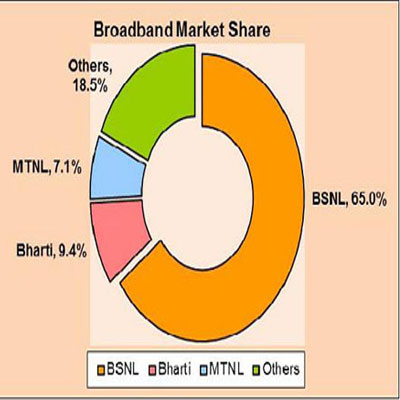
    The Internet subscriber base in the country as on 31 March 2019 was 636.73 million in comparison to 493.96 million in March 2018. The total broadband subscriber base of the country as on 31 March 2019 stood at 563.31 million whereas it was 412.60 million as of 31 March 2018.

    The broadcasting and cable TV services sector and FM Radio services continue to exhibit growth over the two decades. Equivalent to the growth in the subscriber base, the number of platforms & service providers has also increased. The broadcasting sector comprises of cable TV services, DTH services, terrestrial TV services, HITS services, IPTV services, and broadcast radio services.

    Satellite TV channels

    Currently, there are 902 private satellite TV channels permitted by Ministry of Information and Broadcasting by the end of the financial year 2018-19, out of which, 229 are SD pay-TV channels and 99 are HD Pay TV channels. The number of Standard Definition (SD) pay-TV channels have grown from 147 in the year 2010 to 229 in 2019.

    DTH Services

    Ever since its introduction in the year 2003, Indian DTH service has displayed a phenomenal growth. DTH has attained a net active subscriber base of around 72.44 million. At the end of March 2019, there are 5 pay DTH service providers catering to this subscriber base. The database rose to 72.44 in 2019 as compared to 67.53 in 2018.

    Apart from an increase in the availability of conventional TV channels, the pay DTH operators have continued to add several innovative offerings and value-added services (VAS) such as movie-on-demand, gaming, shopping, education etc.

    Cable TV

    The Cable TV segment is the largest of the TV service sector with an estimated subscriber base of around 103 million subscribers

     As per the statistics, the pay TV universe consists of around 103 million Cable TV subscribers, 72.44 million active DTH subscribers and 1.5 million HITS subscribers. Where the terrestrial TV network of Doordarshan alone covers about 92 per cent of India’s population connected via a vast network of terrestrial transmitters. The TV broadcasting sector includes 350 broadcasters, out of which, 39 are pay broadcasters.

     Talking about the television distribution side there are 1469 Multi-System Operators (MSOs) coming under the wings with Ministry of Information and Broadcasting (MIB), an estimated number of 60,000 cable operators, 5 pay DTH operators, 2 HITS operators, and a few IPTV operators. Apart from this public service broadcaster-Doordarshan, also provides a free-to-air DTH service in India.

  • Bombay HC grants no interim relief in IBF’s NTO case; matter posted for 22 Jan

    Bombay HC grants no interim relief in IBF’s NTO case; matter posted for 22 Jan

    MUMBAI: After the broadcasters moved to Bombay High Court on Monday, the high court has issued notice to the Telecom Regulatory Authority of India (TRAI) for filing response. The matter has been listed for next hearing on 22 January. No interim relief till the next hearing.

    The Indian Broadcasting Foundation (IBF), along with other broadcasters, had filed a writ petition in the court against TRAI, it read, “The petition under article 226 and 227 of the constitution of India has been filed praying, for a writ, order or direction quashing the amendments carried out vide the telecommunication (broadcasting and cable) services interconnections (addressable systems) (second amendment) regulations, 2020 along with the telecommunication (broadcasting and cable) services standards of quality and consumer protection (addressable systems) (third amendment) regulations, 2020 along with the telecommunication (broadcasting and cable) services (eighth) (addressable systems) tariff (second amendment) order, 2020 issued by the respondent (TRAI) on 1 January,”

    In the beginning of this month, the industry regulator modified certain provisions (described as impugned provisions) of the new price regime which was implemented last year. TRAI prescribed twin conditions on pricing –

    The sum of the a-la-carte rates of the pay channels (MRP)forming part of a bouquet shall in no case exceed one and half times the rate of the bouquet of which such pay channels are part

    The a-la-carte rates of each pay channel (MRP), forming part of a bouquet, shall in no case exceed three times the average rate of a pay channel of the bouquet of which such pay channel is a part.

    The authority also decided that only channels with MRP of Rs 12 or less will be permitted to be part of the bouquet offered by the broadcasters.

    How the amendments can harm the broadcasters’ business as well as consumer interest:

    The petitioners have mentioned that the amendments which have been notified in “consumer interest” will have exactly the opposite effect, leading to the crippling of the business of broadcasters and ultimate suffering to the consumer.

    It has also been mentioned that such crippling of the business would ultimately result either in closing down of the broadcasters’ channels or in diminishing the quality and the quantity of content available on TV channels to the consumer. In addition to that, the petitioners would lead in compelling the broadcasters to offer their channels only in a-la-carte format.

    Additionally, unlike under the 2017 Regulatory Regime, the new provisions prohibit broadcasters from giving any discount on the MRP of any bouquet to the DPO. Hence the broadcasters are of the view that they are completely dis-incentivised from creative bouquet offerings. They think that the new prohibition placed upon the broadcaster from offering a discount on bouquets will result in a huge reduction in DPOs’ demand for broadcaster-created bouquets, resulting, over a period of time, in discontinuation of bouquet offerings by broadcasters.

    The writ has been filed broadly to address the following issues:

    A Broadcaster’s freedom of pricing its own content has been taken away/ interfered with by the Respondent, as it continues to place fetters and unrealistic caps on the manner of offering the channels and pricing thereof.

    Despite admission by Respondent that offering of channels through bouquets is the preferred and prevalent practice, even from a subscriber’s viewpoint, the Impugned Provisions have the effect of dismantling and making unworkable any bouquet offering made by the broadcasters, by the placement of fetters that have no co-relation to the method or manner of offering content to the subscriber.

    A broadcaster’s effective freedom to price its channel with a view to recover/recoup its every increasing investment into content creation, is being taken away. The earlier imposed cap that prohibited any channel priced at more than Rs 19, as per the 2017 Interconnection Regulations and 2017 Tariff Order, has now been unilaterally and arbitrarily reduced to Rs.12 by the Impugned Provisions.

    A broadcaster’s freedom to offer its channels as part of one or more bouquets, has effectively been taken away, by prohibiting the broadcaster from offering any discount on the Maximum Retail Price of its bouquets; and further, by placing archaic and unworkable conditions to be followed by a broadcaster while creating a bouquet.

    At the same time, the Delivery Platform Operator (“DPO”) has been given further freedom to offer channels as part of bouquet and to give discounts on the bouquet prices, by unilaterally reducing the price of the channel received by the DPO from the broadcaster, has been kept intact and in fact, strengthened.

    A Broadcaster has effectively been prohibited from offering, as part of any bouquet, Niche channels, including sports channels, whose content consists of expensive and exclusively licensed rights to broadcast sporting events.

    To address the issues, IBF on Friday also held a press conference in Mumbai. The broadcasters of India came in support of each other under the shelter of IBF to voice their concerns against the new TRAI amendments of the new tariff order. All the top bosses of the major networks have agreed to the fact that this revision is going to leave severe adverse effect on all the players. The industry may explore legal options to fight the disruption.

  • TRAI backs NTO 2.0, says amendment to create level playing field

    TRAI backs NTO 2.0, says amendment to create level playing field

    MUMBAI: The Telecom Regulatory and Authority of India (TRAI) has backed the amendments made in the New Tariff Order (NTO) claiming it to be consumer-friendly. Issuing a statement, TRAI said that it will create a level playing field for all stakeholders in the broadcasting industry.

    The regulator believes that transparent mechanism needs to be adopted to encourage the market discovery of channel price, but any attempt to scuttle consumer choice through non-transparent pricing practices means need to be discouraged.

    Hence, the authority quoted that the intended benefit for consumers to enable the freedom of choice could not be achieved completely due to misuse of available flexibility by a group of service providers.

    Meanwhile, it also clarified that the concern of all the broadcasters regarding placement fee and misuse by few  distribution platform operators (DPO) manipulating Electronic Program Guide (EPG) has also been addressed.

    The release added that post the implementation of NTO, some broadcasters had enhanced their channel prices drastically. This price increase is anti-consumer and forces regulatory interventions. Adding further it said, “The broadcasters, however, continue to have full flexibility to price their channel as Maximum Retail Price (MRP) of any channel remains in forbearance.”

    It further said, “The amendments through NTO 2.0 have left the basic structure of the regulatory framework unchanged with very minor modifications. And it’s targeted to address teething problems relating to smooth implementation.”

    The new amendments provide complete freedom to broadcasters/ DPOs to price their services while ensuring that consumers get the freedom to choose the TV channels, the regulator explained.

    As the amendments provide appropriate time to stakeholders for implementation, consumers will be able to benefit as per the amended provisions with effect from 1 March 2020.

    TRAI also said that the new amendments will usher in better offerings, reduced NCF, more flexible tariff schemes and more choices for consumers.

    On 1 January 2020, the regulator had amended the NTO which created a panic-like situation within the broadcaster and service provider community to opt for the legal option against the new TRAI order.

    TRAI had come up with a slew of measures in the recent amended that it claims are customer-focused. It has asked the broadcasters to come up with the new price list of channels by 15 January 2020.

  • Comment: Divide and rule – TRAI’s way of regulating the broadcasting sector

    Comment: Divide and rule – TRAI’s way of regulating the broadcasting sector

    MUMBAI: Indian broadcasting has been going through a challenging period not just because of competition from new digital platforms and falling ad revenue but by a hyper-regulator, the Telecom Regulatory Authority of India (TRAI). 

    Unlike the telecom sector, which also TRAI regulates, where stakeholders are not so fragmented as is the case of the broadcasting sector, TRAI believes that in broadcasting, its relevance can only be seen and justified by micro-managing it. In other words, TRAI likes “controlling” rather than “regulating” the sector and so far succeeded in pitching one stakeholder against another like our British colonial masters. Quite simply the absence of a unified and well-balanced voice in the sector, gives the regulator an upper hand and thus hurting the interest of the whole broadcast eco-system.

    As the industry consists of myriad numbers of stakeholders from content producers, broadcasters and distribution platforms like Multi-System Operators (MSOs), Last Mile Cable Operators (LCOs), Direct-to-Home Operators (DTH), Headend-in-the-Sky Operators (HITS) and Internet Protocol Television operators (IPTV) often they don’t see eye to eye even on simplest of matters. Like school kids they complaint against each other and knock on the doors of the regulator. In turn, TRAI tries to do a balancing act on an ad-hoc basis without conducting any scientific impact analysis of its decisions but going through the set of motions in the name of consultation with a predetermined mindset to fix problems which it believes is the role of a regulator.

    The fundamental question for which no one has any clear answer is why it treats broadcasting sector, which is a non-essential service, differently compared to the telecom sector, which is an essential service. 

    Since 2003, TRAI follows forbearance in the telecom sector where there are only limited number of players compared to the broadcasting sector with a presence of more than 900 television channels (328 pay channels and 573 FTA channels), more than 1200 MSOs, 60,000 LCOs, 5 DTH operators, 2 HITS operators, 2 IPTV operators and, in addition, a vertically integrated public broadcaster, Prasar Bharati. As can be seen there is no dearth of choice for consumers and competition amongst stakeholders and in the broadcast value chain one section will not be able to survive without presence and support of the other section. The Indian broadcasting market is dynamic and competitive and this ensured the consumers are spoilt with choice and the pay TV ARPU in India is one of the lowest in the world.

    More often than not, regulations and orders issued by TRAI were challenged in various

    judicial fora and were either set aside being inappropriate, arbitrary, lacking in transparency

    or referred back to it for reconsideration. The sector has always been in a litigious mode and the resources of stakeholders put under heavy pressure because of the micromanagement of every aspect of service provision by the regulator and thus leaves little scope for free play of market forces.

    Whilst at the upstream end, a broadcaster has to acquire content or rights by paying market prices to stay ahead of the curve in a hyper competitive broadcast market, at the distribution end, he is not only forced to stay at the right side of the stifling TRAI regulations but face the brunt of the distribution platforms as there is poor implementation of quality of service norms or declaring revenue accrued at that level by the sectoral regulator. Many of its directions and orders remain only on paper.

    Privately TRAI officers admit that till the time cable operators, who are small and medium entrepreneurs with inadequate knowledge and exposure, are sensitised of TRAI regulations and their obligations, the problem in the broadcasting sector cannot be fixed. However, TRAI still pushes the broadcasters to a corner threatening their investment which they already committed.

    The ready example of the wrong approach of TRAI can be seen by the way the news television channels have evolved in this country. Although more than 500 news channels are on air in India, there is not a single news brand which can seek a huge national audience leave aside global audience. Their business models are skewed mainly due to the absence of a viable distribution revenue as they have to pay heavy distribution cost leaving them no penny to invest in producing quality content. They are derided for their failure to perform as the responsible fourth estate of a robust democracy. 

    As a result all of them have become free to air (FTA) channels and they depend mainly on advertising revenue for their survival. This is the reason all Indian news channels look and feel similar – their staple of offering is the studio-based shows with so-called experts shouting and screaming against each other and with no money to invest in quality content production and actual ground reporting.

    Unfortunately, with the implementation of the New Tariff Order and the subsequent amendments, TRAI wants to drag the entertainment and niche channels down to the same level of Indian news channels.  Given the fact that the broadcasting sector is the largest segment of the Indian M&E sector and accounts for 44 percent of the sector’s revenue, the style of functioning of TRAI is going to be the death-knell for one of the “Champion” sectors of India.

    The irony is that the Modi government from the day it took office in 2014 has been serious on improving India’s Ease of Doing Business index and providing its citizens Ease of Living but on both these counts TRAI’s performance has been disappointing.

    In 2004, TRAI while freezing the tariff of the broadcasting sector as existed in the year 2003, it also made an assurance that this was a temporary measure, once the regulatory process is streamlined and there is evidence of effective competition price regulations would be withdrawn in line with the international practices. However, TRAI has been on a hyper mode for the last 15 years issuing series of regulations and tariff orders which were most of the time challenged in various judicial forums and were set aside lacking transparency.  As a result, the broadcasting sector is the highest litigious industry compared to telecom sector which is also regulated by TRAI. TRAI’s conduct is against the very principle of “Ease of Doing Business” as the micromanagement leaves no scope for attracting fresh investment and bringing in innovation.

    The New Tariff Order was introduced in February 2019 without proper planning at the distribution end resulting in chaos and cord cutting by millions of TV households. TRAI in its own wisdom believes that alacarte offering of channels only is beneficial to customers rather than bundling or bouquet offerings. This is in contrast with TRAI’s approach of regulating the telecom sector where the telecom operators are offering their OTT products alongside a whole lot of conventional services. 

    In a country like India, it would be an uphill task for the customers to choose from a list of 900 TV channels as they do not have time and adequate knowledge to go through the motion of picking up their choice of channels given majority of them are single TV households comprised of different age groups and their preferences. Such a differential approach by TRAI has put millions of TV subscribers in difficulty as the service providers are neither equipped nor understood customer’s needs coupled with the fact that the Regulator is unable to ensure quality of service by the DPOs.

    Within a year of introducing making a tectonic shift TRAI without concerned about where the problem lies, TRAI has amended the tariff order yet another time making both consumers and broadcasters to go through whole rigour one more time.  This clearly shows that TRAI has scant disregard for the Prime Minister’s vision of making “Ease of Living” to the lives of millions of Indians.  

    Rather than fighting battles in courts the leading voice of the broadcasting sector should sit around the table and resolve issues rather than allow the regulator to have free ride at the cost of the broadcast eco-system, which is the backbone of the Indian M&E sector.

    (The author requested to stay anonymous. The views expressed are his own and Indiantelevision.com may not subscribe to them.)

  • Broadcasting and cable TV services grew marginally in Q2: TRAI

    Broadcasting and cable TV services grew marginally in Q2: TRAI

    MUMBAI: The Telecom Regulatory and Authority of India in its 2019 September-end quarter report has shown a marginal growth in the broadcasting and cable TV services with respect to the number of private satellite TV channels permitted by the government and pay TV channels as reported by broadcasters.

    TRAI in its performance indicator report has mentioned that there has been continuous growth in the number of private satellite TV channels subject to the government’s approval in the last five quarters.

    It reported that a total number of 910 private satellite TV channels have been permitted by the Ministry of Information and Broadcasting (MIB) for uplinking only/downlinking only/uplinking and downlinking both compared to 851 channels in the same quarter of 2018.

    With respect to quarterly growth in the number of satellite Pay TV channels, TRAI reported at least 330 pay channels, of which 232 SD and 98 HD Pay TV channels compared to 313 pay channels, of which 216 SD and 97 HD Pay TV channels in the same quarter of 2018.

    As the country achieved 100 per cent digitisation of Cable TV network, TRAI said, “This is a stupendous achievement making India as the only large country where 100 per cent digitisation of cable network has been achieved through mandatory regulations.”

    Out of top four Cable TV networks, Siti Networks has topped the chart with over 91 lakh subscribers , whereas DEN Networks stood at the fourth position with 43 lakh subscribers, TRAI report said.

    Meanwhile, GTPL Hathway and Hathway Digital had a tough fight for the second and third spot with difference of few thousands of subscribers, both had 53 lakh subscribers in September ended quarter.

    The report said that there are total 1,606 Multi System Operators (MSOs) registered with the Ministry of Information and Broadcasting (MIB), of these 1,143 MSOs are operational. It further added, there are 12 MSOs & 1 HITS (Head in the Sky) operators who have subscribers base over a million.  

    TRAI while mentioning about Direct-To-Home (DTH) services’ growth said that the DTH service has displayed a phenomenal growth and in all there four pay DTH providers in India.

    According to the report, Pay DTH has attained total active subscriber base of around 69.30 million at the end of September quarter compared to 69.45 million in the same quarter of 2018.

    Tata Sky and Dish TV locking the horns for first and second position in market share, the latter has 31.61 per cent subscribers base and former 31.23 per cent. Whereas, Airtel being at the third position has subscribers base of 23.39 per cent and Sun Direct has 13.8 per cent.

  • NTO 2.0 will affect viability of pay TV industry: IBF

    NTO 2.0 will affect viability of pay TV industry: IBF

    MUMBAI: The broadcast sector has expressed its shock and dismay with the latest notification from TRAI issued on 1 January 2020, amending the new tariff order (NTO) and interconnection regulations. Indian Broadcasting Foundation (IBF) believes that both the amendments will severely impair broadcasters' ability to compete with other unregulated platforms and adversely affect the viability of the pay TV industry.

    "IBF is disappointed at the lack of understanding shown by the regulator. It will strategise its future course of action, including evaluating legal options, based on feedback from its member channels and networks," said the body.  

    The association in its response to TRAI's consultation paper had pleaded with the regulator to adopt a "soft touch" and allow the industry to come to terms with the NTO before making further changes. "In fact, TRAI itself had acknowledged this need by proposing a two year moratorium on further regulation. It appears all IBF's pleas have been ignored. Unfortunately, in this exercise, content creators and owners have been disempowered and the entire authority has shifted to the middlemen," expressed IBF.

    IBF has conveyed that these changes will have very significant and industry growth-hampering ramifications for the broadcast sector. At a time when the economic environment is tough, this tariff order will force a lot of channels to shut down and will lead to unemployment in the sector. While the government is looking at ramping up growth, these changes will have the opposite effect for the broadcast sector just recovering from the twin shocks of NTO in the first half of 2019 and the ad slowdown business.

    IBF said that it has always believed that consumers pay for the value of the content. Post NTO, the ecosystem had just settled down with about 200 million consumers choosing their favourite channels. "We have to allow the changes to fully settle down and the market forces to prevail while resisting the temptation to continuously tinker with the regulation. The Regulator’s intent was to address infirmities in the NTO, however, it has been done solely at the cost of the broadcasting fraternity," said IBF.   

    In the last 15 years of regulating the broadcast sector TRAI has issued more than 36 tariff orders and ancillary regulations in an attempt to micromanage what is arguably the cheapest form of news and entertainment in the world. This goes contrary to the government's stated position of ensuring the "ease of doing business". While TRAI claims the amendments are in the consumers’ interest, it appears to have conveniently forsworn the interest of broadcasters. This change will only benefit the DPOs as they have been allowed to charge as much as Rs 160 for the channels that are supposed to be ‘FREE’.

    "As per the new amendments, TRAI has reduced the cap on the MRP of individual channels, which can form part of any bouquet, to Rs 12 per month, from the earlier cap of Rs 19. Less than a year ago, TRAI itself determined that the price per channel can be Rs 19, which has now been reduced to Rs 12 without giving any logical reason. Thus making the change totally arbitrary," said IBF.  

    It also said, "Over-regulation, inconsistency and frequent changes in the regulations by the regulator has already cost the broadcast sector 10-12 million TV subscribers as per various industry estimates in 2019. These amendments will compound the problem further."

  • India Ratings: NTO 2.0 negative for broadcasters, neutral for MSOs

    India Ratings: NTO 2.0 negative for broadcasters, neutral for MSOs

    MUMBAI: Credit rating agency India Ratings (Ind-Ra) & Research believes that Telecom Regulatory Authority of India’s (TRAI) amendments to the tariff and interconnection regulation are largely negative for broadcasters and neutral for multiple system operators (MSOs).

    The rating agency, a subsidiary of the Fitch Group, said that the amendments (NTO 2.0) have focused on a reduction in the final customer price, resulting in broadcasters bearing the largest burden in the entire value chain.

    Ind-Ra in its report said that the revised regulations stipulate a reduction in a-la-carte pricing for channels and a cap on bouquet prices in line with a-la-carte prices would impact broadcasters’ profitability meaningfully.

    The regulatory had put a cap on network capacity fees (NCF) & carriage fees and a higher number of pay channels in base NCF, which sound optically negative for MSOs, but would have a marginal impact as they are broadly in line with the current on-the-ground ecosystem, said the report.

    Meanwhile, the reintroduction of discount on bouquet prices compared to a-la-carte channel prices is surprising, given that the Madras High Court had earlier ruled against it.

    The amendment directs broadcasters and distributors to submit the revised channel prices by 15 January 2020 and 30 January 2020 respectively, with full implementation from 1 March 2020.

    Ind-Ra also believes that the regulation has essentially de-risked the business model of distributors (MSOs, local cable operators (LCOs)), as their revenue stream will contain fixed NCF from subscribers and content commission from broadcasters, thereby effectively passing through content costs.

    The increase in the total number of channels under the base NCF to 200 from 100 earlier is unlikely to have any major impact, as MSOs anyways offer above 200 channels under the current price regime for NCF of INR130.

    The rating agency also added that the exclusion of mandatory channels as per the government from the bouquet of 200 channels may free-up space for additional pay channels, which may further reduce NCF for MSOs.

    MSOs earn content fees and distribution fees from broadcasters as a proportion of the content cost. MSOs’ realisations may slightly be impacted as the overall content costs and resultant content & distribution fees have also reduced.

    As the continued investment in content remains critical for broadcasters, the revised regulation capping prices of both a-la-carte channel and channel bouquet may curtail broadcasters’ ability to invest in quality content, said the Ind-Ra report.

    According to the rating agency, the risk is even higher for the sports genre, where content creation/acquisition costs can be more than in the news genre. Also, the regulation on channel prices discourages bundling weaker channels with strong anchor channels in the same bouquet.

  • TRAI releases consultation paper on net neutrality issues

    TRAI releases consultation paper on net neutrality issues

    MUMBAI: The Telecom Regulatory Authority of India (TRAI) has released a new consultation paper that deliberates on traffic management practices (TMPs) and multi-stakeholder body for net neutrality.

    Earlier, TRAI issued recommendations on 'Net Neutrality' on 28 November 2017, covering the principle of non-discriminatory treatment, application, exclusions and exceptions, loT and Specialised services, Transparency and disclosures, monitoring and enforcement etc.

    DoT conveyed that TRAI recommendations on "Net Neutrality" were considered by the government. DoT issued its principle directives on net neutrality. Further, DoT sought additional recommendations from TRAI on TMPs and composition, functions, role and responsibilities of the multi-stakeholder body for monitoring and enforcement.

    The objective of this Consultation Paper is to deliberate the issues related to traffic management practices and the multi-stakeholder body net neutrality. The paper discusses various challenges in measurement of internet traffic and compilation of reasonable traffic management practices. It discusses establishment of a framework to formulate TMPs. The paper also discusses the issues related to composition, function, governance structure of various multi-stakeholder body.

    Comments on the issues raised in the consultation paper are invited from the stakeholders by 30 January 2020 and counter comments, if any, by 13 February 2020.

    Trai

  • TRAI amends new tariff order rules for a-la-carte channel pricing and NCF

    TRAI amends new tariff order rules for a-la-carte channel pricing and NCF

    MUMBAI: The Telecom Regulatory Authority of India (TRAI) has ushered in the new year with some welcoming changes to the new tariff order framework that came into effect on 29 December 2018. Some of the major concerns found it was regarding the cap on maximum discount permissible to broadcasters while forming a bouquet, number of channels permitted in network capacity fee (NCF), applicable NCF for multi TV homes, flexibility to distribution platform operators (DPOs) in offering long term subscription plans and carriage fee payable by broadcasters to DPOs.

    In order to “protect the interests of consumers," TRAI has modified certain provision of the new regulatory framework.

    A-la-carte prices

    TRAI has  addressed the issue of huge discounts in the formation of bouquets by broadcasters vis-a-vis sum of a-la-carte channels – in the new dispensation it  has prescribed following twin conditions to ensure that the price of a-la-carte channels does not become "illusionary":

    i) the sum of the a-la-carte rates of the pay channels (MRP) forming part of a bouquet shall in no case exceed one and half times the rate of the bouquet of which such pay channels are a part

    ii) the a-la-carte rates of each pay channel (MRP), forming part of a bouquet, shall in no case exceed three times the average rate of a pay channel of the bouquet of which such pay channel is a part.

    Additionally, the authority decided that only those channels with an MRP of Rs 12 or less will be permitted to be part of the bouquet offered by broadcasters.

    New NCF rules

    NCF related issues were another area of concern for consumers, says the TRAI.  It has examined various provisions in detail and accordingly mandated the provision of 200 channels in maximum NCF of Rs 130 excluding taxes per month. In addition, it has also been decided that channels declared mandatory by the Ministry of Information and Broadcasting will not be counted in the number of channels in the NCF. DPOs have also been mandated that they will not charge more than Rs 160 per month for giving all channels available on their platform.

    Consumers have also highlighted huge charges taken by DPOs in the form of NCF for a multi-TV home. TRAI has decided that in case of multi-TV home where more than one TV connection is working in a home in the name of one person, will charge maximum 40 per cent of declared NCF for second and additional TV connections. The authority has also permitted DPOs to offer discounts on long term subscriptions which is for six months or more.

    Carriage Fee

    TRAI also considered the concern of broadcasters regarding huge carriage fees being charged by DPOs. The authority has mandated that MSOs, HITS operators, IP TV service providers will not havea  target market bigger than state or union territory as the case may be. In addition, a cap of Rs 4 lakh per month has been prescribed on carriage fee payable by a broadcaster to a DPO in a month for carrying a channel in the country.

    Flexibility to DPOs

    The authority has also considered giving more flexibility to DPOs to place the TV channels in electronic programme guides (EPG) and mandated that channel of a language in a genre will be kept together while placing channels on the guide.  Such EPG layout is to be mandatorily reported to TRAI and no change in this can be done without prior approval of the authority. This will address the concerns of the broadcasters to a great extent to protect them as it will not allow DPOs to frequently change the LCN of the television channel in case they do not agree to their mandates.

    Regulator speak

    “The amendments carried out through the consultation process has left the basic contours of the new regime untouched and the broadcasters/DPOs will continue to enjoy the flexibility in carrying out their businesses. The review exercise has been limited to certain consumer-friendly measures and to balance the interest of stakeholders. The revisions strive to ensure that the objectives of the existing framework get fulfilled to great extent,” TRAI said in a release.

    TRAI went on to say that the NTO framework is quite successful in establishing harmonised business processes in the sector, level-playing-field, bringing-in transparency in TV channel pricing, reducing litigations among stakeholders and providing equal opportunities to smaller MSOs. “As a result, there is a pronounced reduction in disputes among stakeholders as well as entry barriers. The transparency has ushered better tax compliance thereby improving government revenue. However, the intended choice to consumers to select what they want has got scuttled due to various issues during the implementation,” it said.

    The amendments provide appropriate time to stakeholders for implementation. Broadcasters are required to publish revised MRP of a-la-carte channels and bouquets on their website by 15 January 2020 and DPOs are required to publish revised DRP of a-la-carte channels and bouquets on their website by 30 January 2020. Consumers will be able to benefit as per the amended provisions with effect from 1 March 2020. The authority is of the view that the amendments will usher in better consumer offerings, more flexible tariff schemes and more choices for consumers. Overall, the amendments are expected to result in healthier & structured growth of the Broadcasting and Cable Services sector.

    Two consultation papers were issued on 16 August 2019 and 25 September 2019 in order to address concerns regarding pricing of channels in the new tariff order era. 

  • TRAI extends deadline for comments on ‘transparency in publishing of tariff offers’

    TRAI extends deadline for comments on ‘transparency in publishing of tariff offers’

    MUMBAI: The Telecom Regulatory Authority of India (TRAI) has extended the deadline for stakeholders to submit their comments on the consultation paper on ‘Transparency in Publishing of Tariff Offers’ by next year 23 January.

    TRAI had issued a consultation paper on ‘Transparency in Publishing of Tariff Offers’ on 27 November 2019. And, the original date for receiving written stakeholders’ comments was fixed on 26 December 2019 and counter comments by 9 January 2020.

    TRAI decided to extend the deadline because the stakeholders have sought extension of time for sending their comments on the consultation paper on transparency in publishing of tariff offers.

    Accepting industry’s request, TRAI has decided to extend the last date for submission of written comments up to 2 January 2020 and counter comments by 6 February 2020.

    The regulatory also made a point that no further request for extension would be entertained.

    Earlier last month, TRAI had sought public views on enhancing transparency in disclosure of phone services rates and mooted an idea of introducing tariff calculator to help customers find the best plans to suit their usage.

    The move came after TRAI received a significant number of complaints from individual consumers on a lack of transparency in disclosure of tariff information.