Category: TRAI

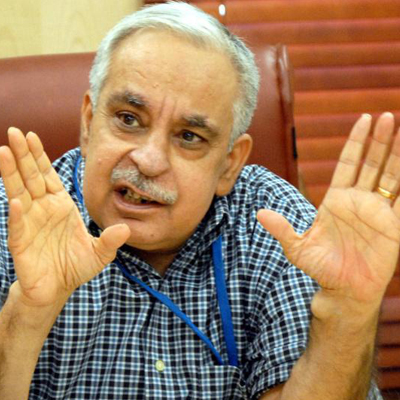
  • PD Vagehla to replace RS Sharma as TRAI chairperson

    PD Vagehla to replace RS Sharma as TRAI chairperson

    MUMBAI: The speculation about who is going to head the Telecom Regulatory Authority of India has finally ended.

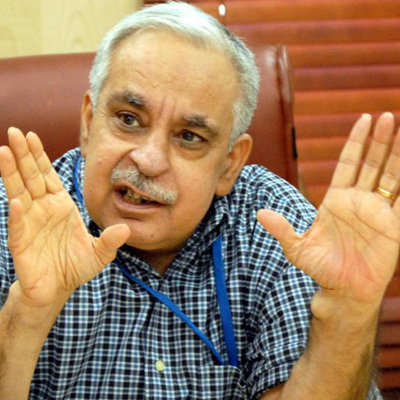
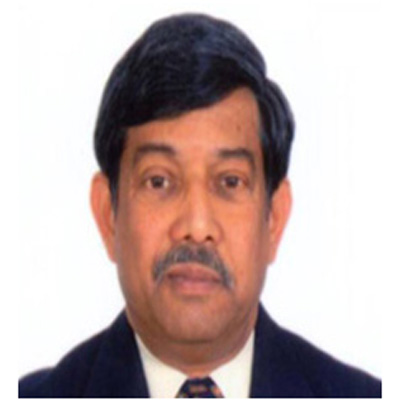
    When chairman Ram Sewak Sharma’s term ends on the night of 30 September, into his shoes will step PD Vaghela a 1986-batch Gujarat cadre IAS officer.

    His appointment today was approved by the appointments committee of the cabinet. Vaghela is currently the secretary of the department of pharmaceuticals. And his appointment to the TRAI is for three years or until he attains the age of 65. Prior to the pharmaceutical posting, Vaghela was the commissioner of commercial taxes and he is believed to have played an important role in the rolling out of the goods and entertainment tax in 2017. 

    Vaghela’s  predecessor RS Sharma held his position for five years. The normal term is three years, and Sharma’s tenure ended in August 2018, but he was given a two-year extension which is a rarity. During his stint, Sharma saw intense compeition in the telecom sector, with Jio playing price warrior, and emerging as the largest mobile operator in the country, leaving Airtel and Vodafone-Idea far behind.  

    Vaghela’s immediate challenge as far as the broadcast sector is concerned is dealing with NTO 2.0 which the industry has been opposing rather vehemently saying it is impacting them  extremely negatively.

  • TRAI issues recommendations on cloud services

    TRAI issues recommendations on cloud services

    KOLKATA: Following a multistage consultation process, the Telecom Regulatory Authority of India (TRAI) has released recommendations on cloud services.

    The regulatory body issued a consultation paper on 23 October 2019 inviting inputs on the number of industry bodies, requirements for any CSP to become a member of an industry body, membership fee, governance structure and initial seeding of the industry body, etc. for comments and counter comments from stakeholders. Subsequently, an Open House Discussion (OHD) was held on 28 February 2020 at Delhi, where stakeholders participated and deliberated on the issues.

    Read more coverage on TRAI

    The salient features of the recommendations are:

    . Initiating a light-touch regulatory framework by setting up an industry body through a three-step process: enrollment of CSPs operating in India; formation of an ad hoc body to frame broad rules, organizational structure, election procedure, etc.; and the election of office-bearers to take over it’s functioning as a regular industry-led body.

    . Industry body to be registered under the Societies Registration Act, 1860, and to be formed using the approach followed for the formation of the M2M body by DoT.

    .  Scope of Cloud Service Providers, initially, to be limited to cloud service providers of Infrastructure as a Service (laaS) and Platform as a Service (PaaS) who are providing services in India.

    . Telecom Service Providers not to be allowed to share infrastructure and platforms related to Telegraph with a Cloud Service Provider (CSP] who is not a member of CSPs’ industry body registered with DoT.

    . The industry body so created to review its experience and further deliberate upon the need to form multiple bodies for different purposes, such as to address requirements of different market segments. DoT may require this review after two years of commencement of the functioning. of the first industry body, or such time as it considers appropriate.

  • TRAI says nyet to regulating communication  OTTs

    TRAI says nyet to regulating communication OTTs

    MUMBAI: The Indian communication OTT ecosystem can breathe easier now. After slapping oodles of regulation on the TV sector, as voiced regularly by the television broadcasting community, the Telecom Regulatory Authority of India (TRAI)  has recommended that no controls need to be imposed on  OTT services such as voice over internet telephony, SMS, video calling, and instant messaging services.

    On three counts, the TRAI has agreed to wait for it to evolve and consensus on regulations at the ITU level to emerge before imposing any further controls on OTTs:

    . Market forces may be allowed to respond to the situation without prescribing any regulatory intervention. However, developments shall be monitored and intervention as felt necessary shall be done at appropriate time.

    The TRAI further said in a report released today that the increase in usage of OTT, traffic of telecom service providers has also grown. “Various studies on appropriate business models are already under consideration in various jurisdictions and it is emerging. Therefore, any regulatory prescription in haste may leave adverse impact on industry as a whole.”

    Read our coverage on TRAI

    No regulatory interventions are required in respect of issues related with privacy and security of OTT services at the moment.

    The TRAI noted that:  ”After studying the issues, it has been observed that architecture of OTT communication services is evolving to protect the end users and encryption technology deployed in a manner which prevents intermediaries from getting the communication in a clear text or in an intelligible form. Imposition of any requirements to cater to get the details of communication in an intelligible form or clear text would either lead to change in the entire architecture of such OTT services which might not provide same level of protection as offered today or would require to introduce provisions which may make the agents involved in the communication vulnerable to unlawful actors.”

    It is not an opportune moment to recommend a comprehensive regulatory framework for various aspects of services referred to as OTT services, beyond the extant laws and regulations prescribed presently. The matter may be looked into afresh when more clarity emerges in international jurisdictions particularly the study undertaken by ITU.

    Regulation of OTT services is a widely debated topic in many jurisdictions as well as in ITU. While few jurisdictions have started exploring possibilities to regulate some aspects of a few OTT services through legal and technical measures but these efforts are yet in nascent stage and the overwhelming majority of jurisdictions and the ITU are still studying various aspects of OTTs. Since, ITU deliberations are also at study level, therefore conclusions may not be drawn regarding the regulatory framework of OTT services. However, in future, a framework may emerge regarding cooperation between OTT providers and telecom operators. The Department of Telecommunications (DoT) and Telecom Regulatory Authority of India (TRAI) are also actively participating in the ongoing deliberations in ITU on this issue. Based on the outcome of ITU deliberations DoT and TRAI may take appropriate consultations in future.

    Market forces may be allowed to respond to the situation without prescribing any regulatory intervention. However, developments shall be monitored and intervention as felt necessary shall be done at appropriate time.

    Industry has anywhere for some time been stating that the Code of Criminal Procedure, 1973 and the Information Technology Act, 2000 are robust enough to regulate the OTT sector. 

  • TRAI always believes intervention should be limited to market failures: R S Sharma

    TRAI always believes intervention should be limited to market failures: R S Sharma

    KOLKATA: The cable and broadcasting industry has been despondent of late due to several new regulations. Many of the stakeholders have complained about “over-regulation” stunning the growth of the business and causing unnecessary burdens. The outgoing chairman of the Telecom Regulatory Authority of India (TRAI), R S Sharma, has refuted the claims reemphasizing that the authority has always looked at light-touch regulation. Sharma stated that TRAI has always believed intervention should be limited to market failures, adding that it has never interfered if the market is trouble-free. He addressed several controversial issues.

    During a conversation with Governance Now MD Kailashnath Adhikari, Sharma has spoken in favour of the most controversial regulation of this year, the amended New Tariff Order (NTO 2.0). He said that the tariff order was brought to strike a perfect balance between consumer choice and industry benefits.

    Sharma mentioned that while it has given new power to consumers to watch channels of his own choice, it has also given broadcasters the liberty to decide the pricing of their channels, distributors to have an independent source of revenue through network capacity fees. “In such a situation, it will be unfair to call it over-regulation,” he commented.

    He reiterated that TRAI’s data shows that 90 per cent of the people watch only about 50 channels out of the 800-900 channels in the country. He also added that OTT platforms allow much more freedom to watch content compared to linear TV, and this is one of the primary reasons for the audience shifting to OTT platforms. After the implementation of NTO in last year, many long-tail channels shut their shops. “IBF’s statement is rubbish, and it brings fear in the minds of people,” Sharma stated, mentioning that the case is sub judice in court. 

    Earlier this year, when the pandemic started hitting the ad revenue dependent broadcasting industry, TRAI issued a set of recommendations for a major overhaul of the country’s TV viewership measurement agency, BARC India, a joint industry body of the broadcasters, advertisers, and advertising agencies. Recommendations included an increasing number of people meters from 44,000 to 66,000 by the end of 2020 and 1,00,000 by the end of 2022. Many stakeholders commented that it seemed to throttle the entire system rather than reforming. 

    “Audience measurement is a significant source for broadcasting to get advertising and program sponsorship. In fact, that is the only currency. An industry dependent on advertising for survival and growth, audience measurement is a critical activity. Broadcasting is one such sector that is largely dependent on advertising revenue. Broadcasters earned revenue Rs 45000 crore in 2019, 32000 crore was collected from advertising. This underlies the dependence on the flow of advertising, which largely hinges on the profile of their audience and popularity of the content, which is assessed by television audience measurement rating. It is imperative that the process of that measurement should be objective, fair, neutral, transparent,” Sharma commented.

    “Some important recommendations are the need for structural reformation of governing of BARC to mitigate the potential risk of conflicts, bring transparency, and the confidence of all stakeholders on the TV audience measurement system. To create a credible and accurate collection of data, multiple data agencies need to be in competition, which would bring new technologies, research methodologies, and new ways to ensure better data quality,” Sharma further adds. 

    According to him, technology is ever-evolving, and the TV rating system needs to be in tandem. While Sharma mentioned that TRAI only gave the recommendation of the constitution of BARC, he also stated that periodical reformations are needed. Many stakeholders raised the issue of huge investment in restructuring. He said that many reformations could be carried out in a frugal way on the back of new technologies.

  • TRAI directs broadcasters to comply with the provision of NTO 2.0 by 26 August

    TRAI directs broadcasters to comply with the provision of NTO 2.0 by 26 August

    NEW DELHI: Telecom Regulatory Authority of India (TRAI) in a recent notification has directed all broadcasters to comply with the provision of the New Tariff Amendment Order (NTO 2.0) by 26 August. The broadcasters were previously asked to comply by NTO 2.0 by 10 August but due to the ongoing battle between broadcasters and the regulatory body, the date has been substituted by 26 August.

    The Bombay High Court’s Verdict on the NTO 2.0 case between broadcasters and the TRAI is expected on 24 August.

    The Indian Broadcasting Foundation (IBF) and other broadcasters had approached the Bombay High Court over the Telecom Regulatory Authority of India’s (TRAI) July 24 directive, wherein it has asked all broadcasters to comply with NTO 2.0 by August 10, despite the fact that the matter is sub judice and the final judgment has been reserved by the court.

    In one of the hearing, the case was listed before the original bench comprising Justice AA Sayed and justice Anuja Prabhudesai. While the legal battle is ongoing since long, TRAI citing a regulatory vacuum released a fresh directive on 24 July irking the broadcasters who have already been battling with the impact of the ongoing pandemic.

    It asked broadcasters to publish details including maximum retail price per month of channels and maximum retail price per month of bouquets of channels, the composition of bouquets and also amended reference interconnected offer (RIO) and other details on their website. 

  • NTO 2.0 hearing postponed, TRAI assures no action till next hearing

    NTO 2.0 hearing postponed, TRAI assures no action till next hearing

    KOLKATA: The uncertainty regarding the implementation of NTO 2.0 prevails, as the broadcasters’ petition against The Telecom Regulatory Authority of India's (TRAI) move to make them comply with the order by 10 August, went unheard for the second day on Friday due to paucity of time. The case has been listed before the original bench for Monday or Tuesday.

    Earlier, the Bombay high court, suspended all the hearings due to heavy rains on Thursday when the matter was listed for hearing.

    According to the sources close to the development, the bench has not passed any order at Friday’s hearing but has listed it before the original bench comprising of Justice AA Sayed and Justice Anuja Prabhudesai. However, TRAI has reassured no action will be taken till the matter comes up before the original bench. 

    While the legal battle is ongoing for a long-time, TRAI citing a regulatory vacuum released a fresh directive on 24 July irking the broadcasters who have already been battling with the impact of the pandemic. It asked broadcasters must publish details including maximum retail price per month of channels and maximum retail price per month of bouquets of channels, the composition of bouquets and also amended reference interconnected offer (RIO) and other on their website.

  • Tata Sky had the largest pay DTH subscriber base in CY 2019

    Tata Sky had the largest pay DTH subscriber base in CY 2019

    BENGALURU: Telecom Regulatory Authority of India’s (TRAI) The Indian Telecom Services Performance Indicator Report October – December, 2019 says that there were 6.998 crore (69.98 million, 699.8 lakh) direct to home (DTH) subscribers in India as on 31 December 2019 that paid for their subscription. This is in addition to the subscribers of the DD Free Dish (free DTH services of Doordarshan). It is important to note that till March 2019, the subscription figure of the total active subscribers included inactive and temporarily suspended subscribers for not more than the last 120 days. However, as per new regulatory framework of Broadcasting and Cable TV Services, the total active subscribers are now counted to includeonly those subscribers who are inactive/temporarily suspended for not more than the last 90 days.

    This 6.998 crore pay DTH subscriber base was split amongst four players. The TRAI report gave the breakup of pay DTH subscribers as Tata Sky with 31.80 percent, Dish TV with 30.55 percent, Airtel Digital TV Services with 23.31 percent and Sun Direct with 14.35 percent. The numerical break up assuming that the number of subscribers was rounded off to seven crore (70 million, 700 lakh) is Tata Sky 2.23 crore (22.3 million, 223 lakh), Dish TV 2.14 crore (21.4 million, 214 lakh), Airtel Digital TV 1.63 crore (16.3 million, 163 lakh) and Sun Direct one crore (10 million 100 lakh).

    Please refer to the figure below:

    According to the TRAI report, Pay DTH subscriber base in India grew by 0.068 crore (0.6 million or 6 lakh) as on 31 December 2019 to 6.998 crore (69.88 million, 699.8 lakh) when compared to 6.930 crore (69.30 million, 693 lakh) on 30 September 2019. Please refer to the figure below for the quarter-on-quarter change in pay DTH subscriber base.

    Cable TV operators

    The TRAI report says that the country has achieved 100 percent digitisation of Cable TV network. This is a stupendous achievement making India as the only large country where 100 percent digital cable has been achieved through mandatory regulations.

    As on 31st December 2019, there were 1613 MSOs registered with the ministry of information & broadcasting (MIB). Further, as per the data reported by MSOs / HITS operators, there were13 MSOs and one HITS operator who had a subscriber base of more than one million. Details of the total active subscribers of these 13 MSOs and one HITS operator are given in the following table.

    Satellite TV Channels

    A total of 918 private satellite TV channels have been permitted by the MIB for uplinking only/ downlinking only/both uplinking and downlinking, as on 31 January, 2019. The quarter-wise figures of the total number of TV channels is depicted in the chart given below.


    Follow Tellychakkar for the consumer facing news & entertainment

  • TRAI directs broadcasters to implement NTO 2.0 by 10 August

    TRAI directs broadcasters to implement NTO 2.0 by 10 August

    NEW DELHI: The Telecom Regulatory Authority of India (TRAI) has directed all broadcasters to comply with the provisions of the New Tariff Amendment Order (NTO 2.0) by 10 August. Broadcasters must publish details including maximum retail price per month of channels and maximum retail price per month of bouquets of channels, composition of bouquets and also amended reference interconnected offer (RIO) and other on their website.

    The regulatory body said, “In order to promote orderly growth of the sector and to balance the interests of service providers and to safeguard the interest of the consumers, it is necessary to give effect to Tariff Amendment Order 2020 and interconnection amendment regulations 2020 without any further delay.”

    The regulatory body on 1 January, had notified the NTO 2.0 and the interconnection amendment regulations 2020. “TRAI has issued direction to all broadcasters to ensure compliance of various provision of the Telecommunication (broadcasting and cable) services dated 1 January 2020 and telecommunications (broadcasting and cable) services interconnection regulations, dated 1 January 2020.”

    TRAI has also expressed discontent over one broadcaster allegedly discontinuing its low priced bouquets from 1 August and pushing higher-priced bouquets, in violation of NTO 1.0. It has also stated that the broadcaster has not informed TRAI about such change.

    The authority has also claimed that distribution platform operators (DPOs) have complained that some of the broadcasters are not willing to sign RIOs according to NTO 2.0. Hence, many DPOs are not willing to enter into such agreements creating an overall regulatory vacuum in the industry. Moreover, it has been also stated that some broadcasters are extending old agreements with few DPOs. 

    The industry watchdog has stated that non-implementation of the NTO 2.0 is leading to chaos in the sector and jeopardising the business processes which has been harmonised after NTO 1.0 came into effect. According to it, delay and uncertainty in the implementation of NTO 2.0 will again bring back non-transparency and discriminatory practices in the sector.

    Notably, major broadcasters moved to court after NTO 2.0 was notified. While the cases are subjudice, the ongoing pandemic has delayed the judgements. Hence, an ambiguity is prevailing in the industry. And the latest notification might irk broadcasters more.

  • Difficult to balance consumer interest with stakeholder objectives: TRAI’s RS Sharma

    Difficult to balance consumer interest with stakeholder objectives: TRAI’s RS Sharma

    NEW DELHI: Telecom Regulatory Authority of India chief RS Sharma, on Thursday, demystified myths and impressions about the regulation of the sector in a panel discussion at FICCI FRAMES 2020.

    He said that it is immensely difficult for regulators to strike a balance between consumer interest and objectives of other stakeholders. Sharma commented when Media Partner Asia executive director and co-founder Vivek Couto asked about heavy-handed TV regulations.

    "The objective of TRAI is to ensure the interest of consumers, stakeholders, distributors and creators and ensure there is a growth of the sector. Since 2004 to 2017, there were price caps. If you put these price caps, it disincentivises the producers. Why should I keep any control on pricing? The industry thinks the regulator is heavy-handed and the regulator thinks they are light touch. The basic approach TRAI has had in regulating this sector is that we have adopted a light-touch approach and allowed market forces to operate in this space. We believe that the market is the best determinant and accelerator for the adoption of new technologies and satisfying consumers, so long as there is fair play, transparency, non-discrimination. Then, we don’t need to intervene.”

    Sharma emphasised that for regulators consumers’ choice will always have major importance.

    Speaking about the evolution of the sector and change in consumption patterns of viewers, he pointed out that proliferation of cheap data that will drive OTT services.

    According to the new tariff order (NTO), consumers could choose the TV channels they want to watch and pay only for them at maximum retail prices (MRPs) set by broadcasters, instead of the pre-set bouquets offered earlier. It was said that the NTO will make channels cheaper but it seems prices of like-to-like option went up. Sharma argued that the amendments to NTO and the TRAI channel selector app were introduced to make things transparent for consumers.

    “As technology moves forward, with 5G, there will be more disruption and change in watching habits. Emerging trends will necessitate a new framework. Regulation should ensure that technological developments are not throttled or scuttled. They should be allowed to grow and take place," he said.

    Meanwhile, the ministry of information & broadcasting additional secretary Atul Kumar Tiwari spoke on the contentious subject of regulatory structure for OTT platforms. He said, "We invited them to come back to us with some kind of self-regulatory mechanism. We would like to have a light-touch regulation but there has to be some kind of regulation on the streaming content."

  • Tamil Nadu MSO writes to TRAI alleging broadcasters’ non-compliance to NTO 2.0

    Tamil Nadu MSO writes to TRAI alleging broadcasters’ non-compliance to NTO 2.0

    KOLKATA: Tamil Nadu-based multi-system operator (MSO) Apple Network Private Ltd. has written a complaint to the Telecom Regulatory Authority of India (TRAI) against major pay-TV broadcasters for allegedly not complying to new tariff order 2.0 (NTO 2.0). It also claimed that broadcasters are not coming forward to execute the new RIO agreements/ amendments in accordance with NTO 2.0.

    The complaint is “against the Pay Channel broadcasters but not limited to Star India, Sony Pictures Network India, Zee Entertainment Enterprises Ltd, IndiaCast Media Distribution Pvt Ltd, Discovery Communications India, Bennet Colman and Company Ltd etc. as the said broadcasters are acting arbitrary and are showing high handedness by not complying with law of land,” the MSO wrote to TRAI.

    The MSO also demanded that the invoices sent by broadcasters since March until date (6 July) have to be corrected as NTO 2.0 came into effect from March. It has also mentioned that despite several petitions, the broadcasters have failed to get any interim stay on the order. It has alleged that despite repealed requests broadcasters are not uploading the amended RIO on their respective websites. 

    It has added that due to the current situation LCOs have not been able to collect payment causing immense suffering to its business. But broadcasters are not offering any relief and are demanding the entire Invoice amount which is generated on the basis of MSR report.

    “Therefore, in view of the above, the undersigned herein requests you to take severe coercive actions against the pay channel broadcasters for non-implementation of NTO 2.0 as on account of Covid2019, it is totally uncertain as to when the writs pending in different high courts will be taken up and until then, the broadcasters can not be permitted to illegally enrich themselves. Further, you may direct all pay channel broadcasters to enter valid RIO agreement in compliance with NTO 2.0 and accordingly revise the billing wef 1 March 2020,” it added.