Category: TDSAT

  • DAS: TRAI to hold open house with MSOs, LCOs on draft interconnect agreement

    DAS: TRAI to hold open house with MSOs, LCOs on draft interconnect agreement

    NEW DELHI: Having received inputs from stakeholders and also directives from Courts to expedite the matter, the Telecom Regulatory Authority of India (TRAI), on 28 January, will hold an Open House meeting on the draft model and standard interconnection agreements between multi-system operators (MSOs) and local cable operators (LCOs) for digital addressable system (DAS).


    The regulator had issued a consultation paper on 9 December on the issue and asked for comments and counter-comments on 31 December and 7 January respectively.


    The meeting will be held at the PHD Chamber building in south Delhi.


    The paper was aimed at reducing disputes and ensures that the regulations for pacts between MSOs and LCOs can only be entered into on the basis of interconnect agreements.


    The interconnection regulation further provides that the interconnection agreement between the MSO and its linked LCO shall have the details of various activities rendered by LCO and MSOs, and the revenue settlement between the parties for these services. The regulatory framework applicable for DAS also provides that the revenue share between LCO and MSO shall be determined by mutual agreement. In case the MSO and the LCO fail to arrive at mutual agreement, TRAI has mandated the subscription revenue share between the MSO and the LCO as a fall back arrangement.


    The model is the outcome of interactions with MSOs and LCOs in various parts of the country between January and October last year, with the objective of enhancing awareness about the regulatory framework among stakeholders and to assess the compliance of the regulatory framework.
  • DAS: TRAI to hold open house with MSOs, LCOs on draft interconnect agreement

    DAS: TRAI to hold open house with MSOs, LCOs on draft interconnect agreement

    NEW DELHI: Having received inputs from stakeholders and also directives from Courts to expedite the matter, the Telecom Regulatory Authority of India (TRAI), on 28 January, will hold an Open House meeting on the draft model and standard interconnection agreements between multi-system operators (MSOs) and local cable operators (LCOs) for digital addressable system (DAS).


    The regulator had issued a consultation paper on 9 December on the issue and asked for comments and counter-comments on 31 December and 7 January respectively.


    The meeting will be held at the PHD Chamber building in south Delhi.


    The paper was aimed at reducing disputes and ensures that the regulations for pacts between MSOs and LCOs can only be entered into on the basis of interconnect agreements.


    The interconnection regulation further provides that the interconnection agreement between the MSO and its linked LCO shall have the details of various activities rendered by LCO and MSOs, and the revenue settlement between the parties for these services. The regulatory framework applicable for DAS also provides that the revenue share between LCO and MSO shall be determined by mutual agreement. In case the MSO and the LCO fail to arrive at mutual agreement, TRAI has mandated the subscription revenue share between the MSO and the LCO as a fall back arrangement.


    The model is the outcome of interactions with MSOs and LCOs in various parts of the country between January and October last year, with the objective of enhancing awareness about the regulatory framework among stakeholders and to assess the compliance of the regulatory framework.
  • TDSAT asks Star India to audit Rudrapur Cable systems to enable ICA

    TDSAT asks Star India to audit Rudrapur Cable systems to enable ICA

    NEW DELHI: Star India has been directed by the Telecom Disputes Settlement and Appellate Tribunal (TDSAT) to audit the systems of Rudrapur Cable TV Network to enable an interconnect agreement (ICA).


    TDSAT chairman Justice Aftab Alam and members Kuldip Singh and B B Srivastava listed the matter for further hearing on 29 January by which time they said the audit must be over.


    Earlier, Rudrapur Counsel Vineet Bhagat, on the basis of instructions received by him, said his client wanted to execute an interconnect agreement with Star India on its RIO terms.


    However, Star India told the Tribunal that it wanted the system audited before entering into an agreement on that basis.


  • TDSAT asks Star India to audit Rudrapur Cable systems to enable ICA

    TDSAT asks Star India to audit Rudrapur Cable systems to enable ICA

    NEW DELHI: Star India has been directed by the Telecom Disputes Settlement and Appellate Tribunal (TDSAT) to audit the systems of Rudrapur Cable TV Network to enable an interconnect agreement (ICA).


    TDSAT chairman Justice Aftab Alam and members Kuldip Singh and B B Srivastava listed the matter for further hearing on 29 January by which time they said the audit must be over.


    Earlier, Rudrapur Counsel Vineet Bhagat, on the basis of instructions received by him, said his client wanted to execute an interconnect agreement with Star India on its RIO terms.


    However, Star India told the Tribunal that it wanted the system audited before entering into an agreement on that basis.


  • Delhi High Court declines to interfere on TDSAT’s HITS order; Star may move SC

    Delhi High Court declines to interfere on TDSAT’s HITS order; Star may move SC

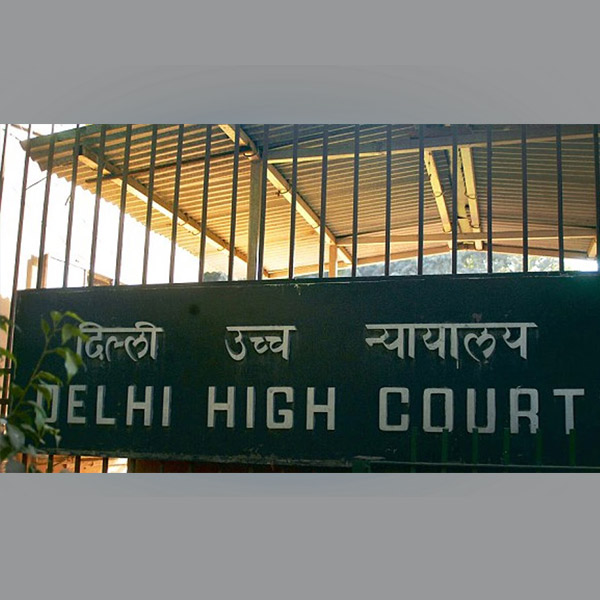
    NEW DELHI: The Delhi High Court today said that it did not feel the need to examine whether the Telecom Disputes Settlement and Appellate Tribunal (TDSAT) had the jurisdiction to direct broadcasters to treat the headend-in-the-sky (HITS) operator Noida Software Technology Park Ltd (NSTPL) at the same level as pan-India multi-system operators (MSOs).


    Justice Rajiv Sahai Endlaw said that there was a statutory provision for parties aggrieved by orders of TDSAT to go to the Supreme Court.


    The judge had on 7 January reserved its orders on the petition by Star India arising out of the Tribunal’s judgment of 7 December.


    The Court also agreed that all questions were open for being taken up by the Supreme Court if it is approached by the broadcaster.


    Star India had filed the petition on the ground that TDSAT exceeded its jurisdiction as it did not have the authority to ‘re-write the regulation.’


    A Star India spokesperson told Indiantelevision.com late in the evening that the broadcaster was examining future course of action. It is understood that this includes the opening of an appeal before the apex court.


    The High Court on 7 January had also said that a directive by TDSAT of 18 December asking Star India and other broadcasters to produce the kind of agreements it had with Hathway, Den and Siti Cable and listing the matter for 12 January, would stand suspended until the outcome of the High Court case.


    The Court heard arguments presented by Star India and NSTPL, whose petition had been accepted on 7 December by the Tribunal, which had asked Star India and Taj TV to execute fresh agreements with NSTPL. However, TDSAT had kept the operation of the judgment pending till 31 March this year.


    It had said that on past occasions as well similar suggestions were made with the hope of nudging the TRAI to take proactive steps to reduce the scope of disputes arising out of the regulations. “At the same time, the fact that regulatory intervention may be the ideal way forward cannot and should not be an excuse for this Tribunal to shirk the interpretative issues that have come before us. This is particularly so when there appears to be regulatory inertia,” TDSAT had said.


    The Tribunal had, on 18 December, impleaded Zee Turner and others in another petition by Star India against NSTPL and asked the broadcasters to produce the agreements between the broadcasters and major MSOs. It opined that some agreements have to be suspended by Star and Taj TV.

  • Delhi High Court declines to interfere on TDSAT’s HITS order; Star may move SC

    Delhi High Court declines to interfere on TDSAT’s HITS order; Star may move SC

    NEW DELHI: The Delhi High Court today said that it did not feel the need to examine whether the Telecom Disputes Settlement and Appellate Tribunal (TDSAT) had the jurisdiction to direct broadcasters to treat the headend-in-the-sky (HITS) operator Noida Software Technology Park Ltd (NSTPL) at the same level as pan-India multi-system operators (MSOs).


    Justice Rajiv Sahai Endlaw said that there was a statutory provision for parties aggrieved by orders of TDSAT to go to the Supreme Court.


    The judge had on 7 January reserved its orders on the petition by Star India arising out of the Tribunal’s judgment of 7 December.


    The Court also agreed that all questions were open for being taken up by the Supreme Court if it is approached by the broadcaster.


    Star India had filed the petition on the ground that TDSAT exceeded its jurisdiction as it did not have the authority to ‘re-write the regulation.’


    A Star India spokesperson told Indiantelevision.com late in the evening that the broadcaster was examining future course of action. It is understood that this includes the opening of an appeal before the apex court.


    The High Court on 7 January had also said that a directive by TDSAT of 18 December asking Star India and other broadcasters to produce the kind of agreements it had with Hathway, Den and Siti Cable and listing the matter for 12 January, would stand suspended until the outcome of the High Court case.


    The Court heard arguments presented by Star India and NSTPL, whose petition had been accepted on 7 December by the Tribunal, which had asked Star India and Taj TV to execute fresh agreements with NSTPL. However, TDSAT had kept the operation of the judgment pending till 31 March this year.


    It had said that on past occasions as well similar suggestions were made with the hope of nudging the TRAI to take proactive steps to reduce the scope of disputes arising out of the regulations. “At the same time, the fact that regulatory intervention may be the ideal way forward cannot and should not be an excuse for this Tribunal to shirk the interpretative issues that have come before us. This is particularly so when there appears to be regulatory inertia,” TDSAT had said.


    The Tribunal had, on 18 December, impleaded Zee Turner and others in another petition by Star India against NSTPL and asked the broadcasters to produce the agreements between the broadcasters and major MSOs. It opined that some agreements have to be suspended by Star and Taj TV.

  • TDSAT directs BECIL to re-audit Digicable’s headend

    TDSAT directs BECIL to re-audit Digicable’s headend

    NEW DELHI: The Telecom Disputes Settlement and Appellate Tribunal (TDSAT) has asked the Broadcast Engineering Consultants (India) Ltd (BECIL) to make a further audit of Digicable Network India’s system on whether there is a foolproof and tamper proof mechanism to truly and faithfully record the number of subscribers receiving the signals at Ahmedabad in case the feed of signals is taken from the Delhi headend to that city.


    The Tribunal, which had earlier asked BECIL to conduct an audit of Digicable Network and received its report, gave this direction on a petition by Digicable seeking transmission of digital addressable system signals of IndiaCast Distribution to Ahmedabad.


    Listing the matter for 29 January, TDSAT chairman Aftab Alam and members Kuldip Singh and B B Srivastava asked BECIL to submit the report within 10 days from the date of receipt of a copy of the order.


    The Tribunal was not satisfied with the contentions of Digicable counsel Diggaj Pathak, who had relied upon the paragraph in the earlier BECIL petition making note of the unique package ID, which he said would sufficiently record the number of subscribers in Ahmedabad even though the feed may be taken from the Delhi headend.


    BECIL may also indicate the position in regard to the Gospel CAS, which finds mention in its earlier report, the Tribunal said.


    Pathak submitted that in case IndiaCast was not willing to execute an agreement on negotiated terms, it must still provide the signals of its channels to Digicable on its RIO terms in as much as the latter had expressed its willingness to execute the agreement based on the respondent’s RIO.


    IndiaCast objected to giving its signals to Digicable for retransmission in Gujarat on a number of grounds, one of which relate to the alleged lacuna in Digicable’s technical system.


    The Tribunal decided to presently leave aside other objections raised by IndiaCast (including non-payment of its dues) and only deal with the issue of the technical lacuna in the petitioner’s system. 


    The Tribunal noted that the earlier audit by BECIL was on a petition by Digicable last year against a notice of disconnection issued by IndiaCast, and the Tribunal had asked BECIL to examine Digicable headend. The report was given on 21 August. Even as the BECIL’s report was received before the Tribunal, it had been represented that the parties had resolved their disputes bilaterally and the petition filed by the Digicable was withdrawn.


    Digicable executed an interconnect agreement with IndiaCast on its behalf and on behalf of a number of its JV companies for retransmission of IndiaCast signals in different DAS areas in the country. The licence fee under this agreement is payable on CPS basis and does not cover Gujarat. 


    Pathak submitted that Digicable will take the feed of the signals from its headend located in Delhi to Ahmedabad for retransmission there. 


    IndiaCast counsel Kunal Tandon said the earlier report had shown that there is no proper bifurcation of subscribers or set-top-boxes (STBs) on the basis of locations of the petitioner’s CAS in Delhi. 

  • TDSAT directs BECIL to re-audit Digicable’s headend

    TDSAT directs BECIL to re-audit Digicable’s headend

    NEW DELHI: The Telecom Disputes Settlement and Appellate Tribunal (TDSAT) has asked the Broadcast Engineering Consultants (India) Ltd (BECIL) to make a further audit of Digicable Network India’s system on whether there is a foolproof and tamper proof mechanism to truly and faithfully record the number of subscribers receiving the signals at Ahmedabad in case the feed of signals is taken from the Delhi headend to that city.


    The Tribunal, which had earlier asked BECIL to conduct an audit of Digicable Network and received its report, gave this direction on a petition by Digicable seeking transmission of digital addressable system signals of IndiaCast Distribution to Ahmedabad.


    Listing the matter for 29 January, TDSAT chairman Aftab Alam and members Kuldip Singh and B B Srivastava asked BECIL to submit the report within 10 days from the date of receipt of a copy of the order.


    The Tribunal was not satisfied with the contentions of Digicable counsel Diggaj Pathak, who had relied upon the paragraph in the earlier BECIL petition making note of the unique package ID, which he said would sufficiently record the number of subscribers in Ahmedabad even though the feed may be taken from the Delhi headend.


    BECIL may also indicate the position in regard to the Gospel CAS, which finds mention in its earlier report, the Tribunal said.


    Pathak submitted that in case IndiaCast was not willing to execute an agreement on negotiated terms, it must still provide the signals of its channels to Digicable on its RIO terms in as much as the latter had expressed its willingness to execute the agreement based on the respondent’s RIO.


    IndiaCast objected to giving its signals to Digicable for retransmission in Gujarat on a number of grounds, one of which relate to the alleged lacuna in Digicable’s technical system.


    The Tribunal decided to presently leave aside other objections raised by IndiaCast (including non-payment of its dues) and only deal with the issue of the technical lacuna in the petitioner’s system. 


    The Tribunal noted that the earlier audit by BECIL was on a petition by Digicable last year against a notice of disconnection issued by IndiaCast, and the Tribunal had asked BECIL to examine Digicable headend. The report was given on 21 August. Even as the BECIL’s report was received before the Tribunal, it had been represented that the parties had resolved their disputes bilaterally and the petition filed by the Digicable was withdrawn.


    Digicable executed an interconnect agreement with IndiaCast on its behalf and on behalf of a number of its JV companies for retransmission of IndiaCast signals in different DAS areas in the country. The licence fee under this agreement is payable on CPS basis and does not cover Gujarat. 


    Pathak submitted that Digicable will take the feed of the signals from its headend located in Delhi to Ahmedabad for retransmission there. 


    IndiaCast counsel Kunal Tandon said the earlier report had shown that there is no proper bifurcation of subscribers or set-top-boxes (STBs) on the basis of locations of the petitioner’s CAS in Delhi. 

  • TDSAT to hear Sun’s petition alleging Asianet’s changing placement of important channels

    TDSAT to hear Sun’s petition alleging Asianet’s changing placement of important channels

    NEW DELHI: The Telecom Disputes Settlement and Appellate Tribunal (TDSAT) will hear a petition by Sun Distribution Services Pvt Ltd on27 January alleging that the placement of important channels has been changed by Asianet Satellite Communication.


    The petition was initially filed alleging that Asianet had discontinued the distribution of Sun’s signals on its network without any notice and in violation of the regulations.

    However when the matter came up for hearing before TDSAT chairman Aftab Alam and members Kuldip Singh and B B Srivastava, Sun counsel Gopal Jain accepted that the channels had been resumed after filing of the petition.

    However, he said the channels’ placement had been changed to the great disadvantage of the petitioner and cited some examples. Asianet Counsel Shirin Khajuria said there was no subsisting placement agreement between the two sides. She also stated that the displacements, if any, of the channels are made in accordance with the regulations.


    The Tribunal also asked Asianet counsel to take proper instructions and, if so advised, to file a brief reply on the issue of displacements of channels.

  • TDSAT to hear Sun’s petition alleging Asianet’s changing placement of important channels

    TDSAT to hear Sun’s petition alleging Asianet’s changing placement of important channels

    NEW DELHI: The Telecom Disputes Settlement and Appellate Tribunal (TDSAT) will hear a petition by Sun Distribution Services Pvt Ltd on27 January alleging that the placement of important channels has been changed by Asianet Satellite Communication.


    The petition was initially filed alleging that Asianet had discontinued the distribution of Sun’s signals on its network without any notice and in violation of the regulations.

    However when the matter came up for hearing before TDSAT chairman Aftab Alam and members Kuldip Singh and B B Srivastava, Sun counsel Gopal Jain accepted that the channels had been resumed after filing of the petition.

    However, he said the channels’ placement had been changed to the great disadvantage of the petitioner and cited some examples. Asianet Counsel Shirin Khajuria said there was no subsisting placement agreement between the two sides. She also stated that the displacements, if any, of the channels are made in accordance with the regulations.


    The Tribunal also asked Asianet counsel to take proper instructions and, if so advised, to file a brief reply on the issue of displacements of channels.