Category: Supreme Court

  • Apex Court sets up panel to study issuance of ads glorifying politicians

    Apex Court sets up panel to study issuance of ads glorifying politicians

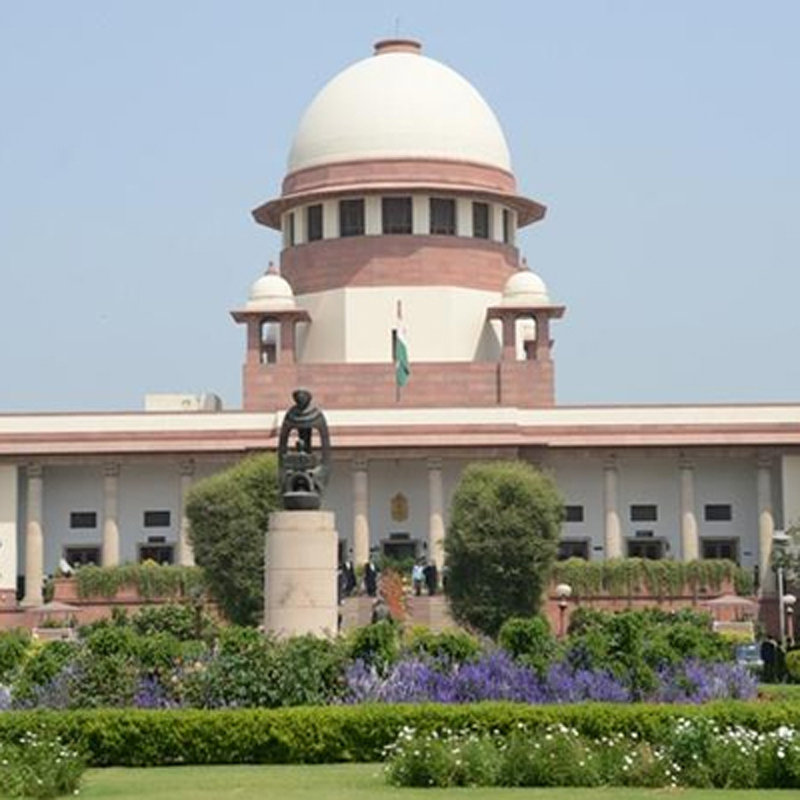
    NEW DELHI: The Supreme Court has formed a three-member panel to frame guidelines to regulate government advertisements glorifying politicians in media.


    The apex court bench headed by chief justice P Sathasivam said that the existing guidelines of the Directorate of Advertising and Visual Publicity (DAVP) do not cover such advertisements.


    The panel will be headed by Prof NR Madhav Menon, founder director of Bangalore’s National Law University. TK Vishwanathan, former Lok Sabha secretary general and senior advocate Ranjit Kumar are the other two members of the panel. The report has to be submitted to the court in three months.


    The court has asked Information and Broadcasting Ministry secretary Bimal Julka to coordinate the meetings of the committee.


    The court passed the order on a public interest litigation (PIL) filed by the NGOs Common Cause and the Centre for Public Interest Litigation (CPIL) pleading it to frame guidelines. The petition sought issuance of guidelines for curbing ruling parties from taking political mileage by projecting their leaders in official advertisements.


    Counsel for Common Cause, Meera Bhatia, had earlier said that the glorification of politicians linked to the ruling establishment, in order to attain political mileage at the cost of public exchequer, was violative of Article 14 of the constitution.


    But counsel representing CPIL, Prashant Bhushan, had told the court that there was nothing wrong in issuing advertisements and informing the public about the programmes of the government. However, he had said such advertisement campaigns become arbitrary and malafide when aimed at gaining political mileage.

  • SC to hear Mouthshut.com’s plea challenging IT Rules 2011

    SC to hear Mouthshut.com’s plea challenging IT Rules 2011

    NEW DELHI: Come 13 January and the writ petition filed by Mouthshut.com, challenging the Information Technology Rules 2011 will be up for hearing in the Supreme Court.  


    The plea seeks to declare the IT Rules as violation of Articles 14, 19, and 21 of the Constitution of India which guarantee freedom of expression. Mouthshut.com will be represented by senior counsel Harish Salve.


    Mouthshut.com, which is an online community for consumer reviews has asked the Court to rescind India’s Information Technology Rules 2011 that jeopardises the freedom of expression. The appeal declares the IT Rules to be offensive under Articles 14, 19 and 21 of the Constitution of India. “We are pleading with the highest court in the land to protect the rights of Indian citizens and consumers that are granted by the Constitution of India,” said MouthShut.com founder and CEO Faisal Farooqui.


    The portal has stuck to its own policy of taking down content only under legal coercion. But the IT rules state that ‘any affected person’ can simply send an email to request the removal of any content within 36 hours or they can lose their ‘safe harbour’ protection as an ‘intermediary, pay damages, legal fee and court time’. Web-based organisations need to have a difference between free expression and making feasible services.


    Farooqui further added, “We have been threatened with hundreds of legal notices, cybercrime complaints and defamation cases. At other times, officers from various police stations call our office, demanding deletion of various reviews or face dire consequences under the IT rules.”


    Farooqui said, “It is a privilege to be a citizen of a democracy like India, where an ordinary citizen can appeal to a powerful court. Laws are meant to ensure the well-being of the nation – its people and institutions. Despite good intentions, IT Rules fall short of doing that. This law has the potential to weaken or, worse, entirely corrode the robust protection that the constitution of India offers to the freedom of speech.”

  • Centre gets notice regarding broadcast media regulation

    Centre gets notice regarding broadcast media regulation

    MUMBAI: The debate regarding the need of an external body to govern broadcast media has been raging since long. It has now reached the Supreme Court via a public interest litigation (PIL) filed by NGO Mediawatch.

    The SC has taken cognisance of the PIL seeking the establishment of an independent regulatory body to overlook broadcast media and issued a notice to the centre regarding it. The News Broadcasters Association (NBA), Association of Radio Operators for India (AROI) and the Advertising Standards Council of India (ASCI) have also been asked to submit their responses.

    The order was passed by a bench headed by chief justice P Sathasivam stating that the body is needed as the centre had failed to regulate content for the medium.

    The petition said: “For the last one and a half decades, the Ministry of I&B is perpetuating virtual anarchy in the realm of broadcast media regulation. Especially on the content regulation front, its broadcaster-appeasing and wait-and-watch policies marked by sheer ad-hocism and indifference to viewers’ interests are adversely affecting the rights of millions of broadcast media consumers. The Ministry as content regulator had failed completely in protecting the interests and basic rights of the audience. It has not constituted sufficient infrastructure and resources to ensure quick decision-making against offending channels and also not imposing deterrent penalties as provided by law.”

    The bench agreed to hear the PIL and clubbed it with a similar pending petition. The SC had on 29 November asked the Ministry of Information and Broadcasting, Ministry of Law and Justice, Ministry of Communications and IT as well as the Press Council of India to respond to the PIL asking for guidelines to regulate TV content.

  • The SC court judgement & TDSAT’s powers

    The SC court judgement & TDSAT’s powers

    MUMBAI: The broadcasting industry that has been fiercely fighting the ad cap regulation by the Telecom Regulatory Authority of India (TRAI) got a jolt last Friday when the news emerged  that the Supreme Court, in a separate case, had declared that the Telecom Disputes Settlement Appellate Tribunal (TDSAT) does not have power to deal with appeals over regulations framed by the authority.

    The judgment in BSNL vs TRAI and others case came out on the Supreme Court web site today. It had some crucial points regarding what can be termed as ‘regulations’ and whether TDSAT has the authority to hear appeals against them. 

    According to the judgment, the powers under Section 36 of the TRAI act are legislative and not administrative and by virtue of Section 37 of the Act, they are at par with rules framed by the Central Government thereby mandating them to be laid before both houses of Parliament. Thereafter, Parliament has the power to annul or modify the same. But there is ambiguity on what happens if it is not laid in parliament. Does it stand void? Or can it still be taken as a regulation?

    The bench stated that ‘the Tribunals are competent to hear matters where the vires (read: powers) of statutory provisions are questioned. However, in discharging this duty, they cannot act as substitutes for the High Courts and the Supreme Court’ meaning that they cannot hear cases which go into legislative laws.  Although the Tribunal will have the power to test the vire of subordinate legislation the exception would be questions regarding the vires of its parent statute. ‘A Tribunal which is a creature of an Act cannot declare that very Act to be unconstitutional’ reads the judgment.

    This makes the Tribunal incapable of deciding the fate of the ad cap case as it is a challenge to the validity of one of its parent statute.  

    The TRAI Act, amended in the year 2000 brought judicial functions under the TDSAT and kept the legislative and administrative powers under the regulator.

    The BSNL vs TRAI and others case verdict states: ‘In exercise of the power vested in it under Section 14(b) of the Act, TDSAT does not have the jurisdiction to entertain the challenge to the regulations framed by the Authority under Section 36 of the Act.”

    Now, if anyone wants to challenge the validity of the regulation framed under section 36, such as the ad cap regulation, the party has to file a petition before the High Court and not TDSAT. However, cases regarding the application of a regulation can still be taken to the TDSAT.


    The ad cap regulation that has been challenged by the News Broadcasters Association (NBA) and others has now come under a cloud. The contention of the broadcasters is that regulation is not valid and TRAI does not have the authority to regulate content, let alone prosecute it. However, the TRAI claims that advertisements form a part of content and by the contract between licensor and licensee; it had come out with the Standards of Quality of service (Duration of advertisements in TV channels) (amendment) regulation 2013 under section 36 and section 11 of the TRAI act.

    The judgement in the case has been reserved and according to lawyers from both sides, TDSAT will have to take into consideration this SC verdict and then give its final verdict on the case. Legally speaking, TRAI says it came out with an ad cap ‘regulation’ but the NBA says that TRAI has not fulfilled the laying requirement.

    If the TDSAT’s verdict says that the case is dismissed then the next step for the NBA would be to challenge TRAI in the High Court, which seems to be most likely one. 

    But it could also lead to some furrowed brows amongst the TV channel executives as  the stay order on TRAI not to take any coercive actions against channels that are not following the ad cap would be annulled and from then till the time the HC does not give a stay, TRAI could go back to taking its aggressive stance against broadcasters

    Click here for the Supreme Court Verdict
  • Ad cap dispute to move to High Court?

    Ad cap dispute to move to High Court?

    MUMBAI: Its wings have been clipped. If one goes by the decision of the Supreme Court announced yesterday, all appeals against regulations set by the Telecom Regulatory Authority of India (TRAI) will now be dealt with in the various High Courts, not by the Telecom Disputes and Appellate Tribunal (TDSAT).

    TRAI has since 2010 been contending that TDSAT cannot hear appeals against its regulations, only those against its directions, decisions or orders. And yesterday a bench of the Supreme Court ruled in its favour.

    The authority normally sets regulations on issues such as rates, inter-connection and quality of service. TDSAT, TRAI states, was set up to adjudicate any dispute between a licensor and a licensee, between two or more service providers, between a service provider and a group of consumers, and to hear and dispose appeals against a direction, decision or order of TRAI.

    This is clearly set to have an impact on the course of the ad cap regulation set by the TRAI, which the TDSAT is set to adjudicate upon, following hearings involving broadcasters’ and the regulator’s lawyers. Broadcasters have been stating that the TRAI-mandated ad cap is going to have a detrimental impact on their business and the argument has been on whether it is in the form of a direction or a regulation. The stance of the TRAI has been that what it has issued is a regulation and not a direction under the quality of service, keeping in mind the interests of consumers.

    Observers expect the ad cap hearing to now move to the High Court. Other cases that will be impacted included the VAS regulation which has crippled the VAS industry but was issued by the TRAI keeping in mind consumer interest.

    The background of the Supreme Court ruling is that over the years several appeals have been filed with it by telcos such as Bharat Sanchar Nigam , Cellular Operators Association of India, Tata Teleservices and Reliance Infocomm against TDSAT orders involving regulations set by TRAI. And the TRAI had itself filed a petition in the Supreme Court in 2010 against a TDSAT order which had asked the authority to take a fresh look at the telecommunication interconnection (port charges) Amendment regulation 2007 after Bharat Sanchar Nigam had filed an appeal against it.


    TRAI had under that regulation reduced port charges by about 23 to 29 per cent on various slabs.

    TRAI had petitioned in the Supreme Court that TDSAT can only decide against any direction, decision or order passed by the TRAI, and not its regulations. And yesterday’s ruling by the Supreme Court clearly indicates where the law of the land lies.

  • American SC upholds ban of political ads on public radio and television

    American SC upholds ban of political ads on public radio and television

    NEW DELHI : While lawyers dismantle many restrictions on political money, the rules affecting Morning Edition and Downton Abbey still stand tall. A federal court in San Francisco says public radio and TV stations cannot carry paid political ads.

    The 8-3 decision Monday by the 9th Circuit Court of Appeals reversed a ruling last April by a smaller panel of the court. NPR and PBS both joined the case as friends of the court.

    The court upheld the decades-old bar against political ads on public broadcasting stations, even as other restrictions have vanished over the years. One long-gone rule held that funders could only be listed by name.


  • Central Government takes measures to promote entertainment industry

    Central Government takes measures to promote entertainment industry

    MUMBAI: With the intent of promoting the entertainment industry of India the Central Government has taken up various measures making it easier for the industry to explore avenues.

    The measures taken up by the government are:

    – Institutional and bank financing are now accessible to the entertainment industry.

    – 100 per cent foreign direct investment through automatic route has been permitted in the film sector.

    – Government has led participation in global markets, like Cannes Film Market, American Film Market, Berlin Film Market, Film Bazaar, etc., with a view to enhance the visibility of our film industry.

    – Film weeks and festivals will be held in with various countries.

    – An audio-visual co-production agreement has been signed with Republic of Italy and United Kingdom and similar proposals from other countries are being explored to expand avenues of finances and markets for the Indian Film Industry.

    – The Committee for Development of Entertainment sector, a sub-committee of the State Information Ministers’ Conference (SIMCON) set up to suggest policy framework for the film industry, recommended for reduction of entertainment tax, steps to counter piracy in the film sector, to facilitate foreign film shooting in India, etc. Through our vigorous effort the prevailing level of Entertainment tax has been reduced and the procedure has been simplified. The period required for granting permission to shoot foreign feature films in India has also been reduced.

    – The National Film Development Corporation, a public sector undertaking under this ministry will provide limited funding for films and oversee the integrated growth of the film industry in tune with the objectives of national economic policy.

    – Five core groups have been constituted to look into the various aspects of the film industry and suggest measures to promote the film industry.

    Local/regional Kendras of Doordarshan are promoting local artistes in the field of drama and music by providing them opportunities to participate in various in-house productions meant for the entertainment of viewers.

    Such entertainment programmes have also been produced/procured under different schemes like commissioned programmes, self-finance commissions, acquisition of programmes, Royalty etc.

    In the area of local programming, All India Radio (AIR) through 82 local radio stations caters to the needs of the local people radio stations and people even in remote areas taking into consideration the oral, folk and traditional forms of entertainment. AIR maintains archives of folk music.

    This Information was given by Minister of Information and Broadcasting and Parliamentary Affairs P R Dasmunsi in written reply to a question in Lok Sabha.

  • SC rejects Radio One plea to retain 92.5 FM in Mumbai

    SC rejects Radio One plea to retain 92.5 FM in Mumbai

    MUMBAI: Radio One 92.5 FM will soon be beaming as Radio One 94.3 FM in Mumbai. This follows the Supreme Court’s upholding of the sector tribunal’s decision to allocate it a new common frequency.

    Radio One, managed by Radio Mid Day and BBC Worldwide, had approached the apex court last week challenging the order of the Telecom Disputes Settlement and Appellate Tribunal (TDSAT) to move it away from its 92.5 MHz frequency to a new common 92.5 MHz one.

    “We found no infirmity in the tribunal order and hence the petition (by Radio One) is dismissed,” a bench headed by Justice BN Aggarwal and Justice PP Naolekar has ruled, according to a Press Trust of India (PTI) newswire report.

    In the case, heard yesterday, the bench also rejected the company’s plea for additional time to switch over to the new frequency of 94.3 FM in Mumbai.

    The radio company had earlier moved TDSAT arguing that allocation of a new frequency would hamper the business as the frequency 92.5 FM has grown to be synonyms to its brand in Mumbai.

    Radio One had also questioned the government’s stand on granting of 92.7 frequency to the Reliance-promoted Big FM (Adlabs Radio) in Mumbai despite the norms of having a difference of at least 0.8 frequency between two stations.

    The tribunal had observed, “The importance of brand name of the broadcaster cannot be underestimated, particularly, in view of the provision in the ‘channel identity’ clause which talks of brand name of the broadcaster. Frequency is not part of the brand name of the petitioner. The petitioner got its brand name changed, which was not objected to by the government. Petitioner’s (Radio Mid Day) popularity is through its brand name. It cannot insist on having a particular frequency number.”

    A point of note is also that though Radio One challenged its being moved to the 94.3 FM frequency, it is already broadcasting on this freqeuncy in Bangalore and Delhi.

    TDSAT had responded by asserting that nobody (as in a rival station) stood to gain anything from Radio Mid Day being shifted to another frequency. Rather it is in the interest of Radio Mid Day that it will have same frequency i.e. 94.3 FM for all the cities for which it has a broadcasting licence (except Ahmedabad for which the petitioner makes no grievance), the tribunal pointed out.

  • SC dismisses anti-CAS petition

    SC dismisses anti-CAS petition

    NEW DELHI: The Supreme Court today dismissed on technical grounds a petition filed against implementation of CAS in the three metros of Kolkata, Delhi and Mumbai.

    The special leave petition (SLP) had been filed by United Cable Operators’ Welfare Association of India.

    After studying the petition, the Apex court today decided that the SLP did not merit a hearing on a number of grounds, according to information available with Indiantelevision.com.

    The petitioner, amongst several other reasons, had said that rollout of CAS would not be beneficial for consumers and should be deferred as DTH technology had already come in to the country.

    Interestingly, while it had argued in the court against the rollout of CAS, the petitioner has been party to almost all CAS-related meetings organised by the government since 2002.
    According to a Delhi High Court mandated arrangement, agreed upon by the government and the industry, CAS is slated to be rolled out in the south zones of Kolkata, Delhi and Mumbai from 1 January 2007.

    The sector regulator has already paved the way for the implementation of CAS by deciding on the prices of pay and free to air channels in a CAS regime.

  • SC ruling gives FM lifeline to Millenium Broadcasting

    SC ruling gives FM lifeline to Millenium Broadcasting

    MUMBAI: There’s hope yet for Millenium Broadcasting, one of the early entrants into the FM scene in Mumbai with its Win 94.6 station, but which has been off air since May 2004.

    The Supreme Court has thrown a lifeline to the Gautam Radia promoted private radio venture in its long drawn battle with the government, initially fought through the Telecom Disputes Settlement Appellate Tribunal (TDSAT).

    The apex court, which heard the case last week, has ruled in Millenium Broadcasting’s favour, concurring with TDSAT’s judgment in the matter. TDSAT had earlier ruled that the government shall not auction the frequency 94.6 MHz and that the company was entitled to broadcast FM radio within the territory of Mumbai.

    In its ruling, TDSAT had also ordered that Millenium Broadcasting was entitled to the benefit of migration from fixed licence fee regime to revenue sharing regime under the second phase of the FM radio policy, which grants this benefit to the existing license holders.

    For the record, the licence of Millenium Broadcast Pvt Ltd was revoked in May 2003 for non-payment of licence fee. Subsequently, in September 2005, the government had invited pre-qualification bids for 338 FM channels in 91 cities across the country, including five FM stations in Mumbai.

    After hearing Millenium Broadcast’s plea in the matter, TDSAT issued an order in October 2005 stating that the frequency shall be excluded from the ambit of the five FM channels in Mumbai that were up for bidding.