Category: Supreme Court

  • SC stays TRAI directive on wholesale tariff revision to broadcaster till August

    SC stays TRAI directive on wholesale tariff revision to broadcaster till August

    NEW DELHI: The Telecom Regulatory Authority of India (TRAI), which is currently headless, faced an embarrassing situation when the Supreme Court asked it not to give effect to its direction asking broadcasters to roll back the 27.5 per cent tariff hike for non-addressable areas until the next hearing.


    The matter has been fixed for next hearing on 4 August.


    The regulator had just yesterday asked broadcasters to revise their wholesale tariffs, even though it had noted that the Supreme Court had declined to stay the order of the Telecom Disputes Settlement and Appellate Tribunal (TDSAT) setting aside the amendments in two tariff orders, which had sought to put an inflation-linked hike of 27.5 per cent on addressable and non-addressable systems.


    Effectively, this comes as a major relief to broadcasters who will not have to revise the wholesale tariff to those that existed before the implementation of the two tariff orders, which had been struck down by TDSAT.


    The directive was given when appellants Indian Broadcasting Foundation (IBF), Star India, Vijay Television, Viacom18 and Sun TV sought early hearing of their challenge to the TDSAT order of 28 April.


    The appellants have sought stay on the ground of wholesale price index. They also sought to argue that there was consultation prior to issuance of the Telecommunication (Broadcasting & Cable) Services (Second) Tariff (Eleventh Amendment) Order, 2014’ and ‘The Telecommunication (Broadcasting & Cable) Services (Second) Tariff (Thirteenth Amendment) Order, 2014’ and these were not strictly Tariff orders.


    Holding the Tariff orders as ‘untenable’, TDSAT had said TRAI “will be well advised to have a fresh look at the various tariff orders in a holistic manner and come out with a comprehensive tariff order in supersession of all the earlier tariff orders.”


    “While doing so, it may consider all the agreements and relevant data available with it. It may consider differentiating between content which is of a monopolistic nature as against that the like of which is shown by other channels also.”

  • Sun Group’s entry order in FM Phase III auctions expected on 22 July in Delhi & Chennai HC

    Sun Group’s entry order in FM Phase III auctions expected on 22 July in Delhi & Chennai HC

    NEW DELHI: The Delhi High Court today (21 July) asked counsel for the Union of India to get instructions on whether the auctions for FM Phase III will be postponed or whether the Sun Group will be permitted to take part.


    The Court adjourned the hearing of the main case and the application for stay to tomorrow to allow government counsel to get instructions. Senior Counsel Kapil Sibal presented the case for Sun Group.


    The Group has sought a stay on the order of the Information and Broadcasting (I&B) Ministry in this regard. The Ministry had last week issued a list of 21 bidders, which did not include the Group’s Red FM, and then sent a formal communication to the Group on 15 July that it had been denied permission.


    In Chennai, the Madras High Court reserved its orders on the interim application for stay and is expected to pronounce its verdict tomorrow (22 July). 


    The Court has been asked to direct the Centre to permit Sun Group to migrate to the Phase-III regime by allowing it to resubmit the application dated 20 March, 2015 to participate in the auction.


    The petitions also said the company was not involved in any dispute with the nation’s security, nor had it broadcast anything that affected the security of the nation.


    The petition alleges that the order denying permission had been issued “carelessly, with total non-application of mind and in a cavalier fashion, totally unmindful of its consequences and repercussions not only on Sun TV but also on the entire broadcasting and media industry.”


    Apart from the denial to participate in Phase III FM auctions, the order also implied that the sister companies of the Sun Group would be compelled to close down FM radio stations, totalling 45 across the nation, the petitioners said.


    “Non-inclusion of the company’s name on the list is nothing but closing the entire FM stations run by it for extraneous, illegal and mala fide reasons,” the petitions said.


    It has pointed out that the Indian Telegraph Act does not make any mention of security clearance, and licence can be terminated or denied only if there is violation of the terms of the agreement including any defaults in payment.


    Clause 2.2(b) of the Information Memorandum and Clause 3.2(b) of the Notice Inviting Application says only a company controlled by a person convicted for an offence involving moral turpitude or money laundering or drug trafficking or terrorist activities or is declared as insolvent will not be eligible to apply. The petitioners said there was nothing in the rules to deny permission to the Sun Group, which is controlled by the Maran brothers.

  • Sahara asset attracts Rs 150 crore bids; SC turns into auction room

    Sahara asset attracts Rs 150 crore bids; SC turns into auction room

    MUMBAI: Sahara Group’s press and television business have taken a hit. Not just this, the group’s 45 acre property in Gorakhpur, Uttar Pradesh, has been entangled in a courtroom bidding war, with the Supreme Court turning into an auction room.


    Samriddhi Developers and Gorakhpur Real Estate Developers are the two companies that are vying for the property.


    While Samriddhi Developers had initially put an offer of Rs 64 crore, the amount rose to Rs 150 crore by the end of the bidding.


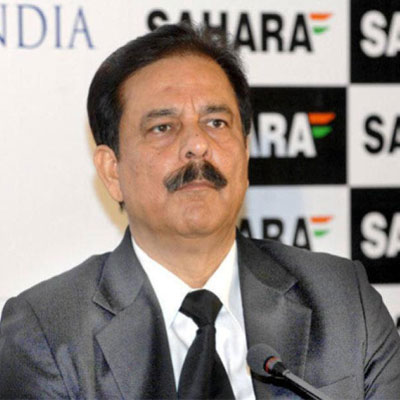
    According to an Economic Times report, the group needs to raise Rs 1,800 crore by way of cash as part of a Rs 5,000-crore payment it needs to make to free chairman Subrata Roy on bail. Aside from this, the Supreme Court has also asked for a Rs 5,000-crore bank guarantee in a case involving refunds to investors. 


    What is notable is that while Samriddhi and Sahara had signed an initial memorandum of understanding (MOU) for the sale of the plot at Rs 64 crore, the scenario changed after Gorakhpur Real Estate Developers made an offer of Rs 110 crore for the plot.


    Samriddhi Developers, senior advocate Paras Kuhad took instructions from one of the partners present in the court, and jacked the bid to Rs 125 crore. Later, the rival took it up to Rs 140 crore, adding another Rs 5 crore, before finally settling at Rs 150 crore.


    The bench has now asked both parties to show their bonafides by depositing 25 per cent of the amount by 31 July in the Sebi-Sahara account. The rest needs to be arranged in three equal installments by 31 October. If either of them fail to meet the deadline, the amount deposited will be forfeited.  


    The money generated from the sale of the Gorakhpur property will be added to the amount already deposited by the Sahara Group in the Sebi-Sahara account and go towards securing Roy’s release. 


    Complying with the July order, Gorakhpur Real Estate Developers has already deposited Rs 11 crore with the Supreme Court Registry to establish its bonafides. Samriddhi too has placed a letter and a cheque from its bankers to show its bonafides.


    The bench has now posted the matter for hearing on 3 August. 

  • MIB seeks Home Ministry reply on Sun TV case; SC to hear 2G case against Marans on 25 July

    MIB seeks Home Ministry reply on Sun TV case; SC to hear 2G case against Marans on 25 July

    NEW DELHI: The Ministry of Information and Broadcasting (MIB) has sought a detailed report from the Ministry of Home Affairs (MHA) on the reasons for denial of security clearance to Sun TV Network channels.


    Noting that the reasons given by the MHA in an earlier communication were vague, an MIB official said that it would need to know full details in the event of Sun TV moving the courts on the issue.


    The MIB had earlier written to the Home Ministry seeking the reasons for denial of security clearance to the Sun TV network promoted by Kalanithi Maran and his brother Dayanidhi Maran against whom other cases are also pending. However, the official said that the reply was vague and hence more details had been sought in view of a possible challenge in court.


    The MHA had rejected the opinion of Attorney General Mukul Rohatgi that security clearance can be granted as agencies are probing cases related to corruption and not security. Hence, he said, corruption cases cannot be the ground to deny security clearance. The Prime Minister’s Office (PMO) is also learnt to have told the two ministries to sort this out among themselves.


    Meanwhile, on 25 July the Supreme Court will hear the petition of Sun TV whose assets are threatened to be attached in the 2G-related scam. 


    Chief Justice H L Dattu, while hearing the petition, asked the specially appointed prosecutor in the scam not to proceed against the firm till then. 


    Kapil Sibal, who appeared for the beleaguered firm of the Marans, sought injunction against attachment, stating that Rs 14,000 crore worth of assets are involved. 


    The Chief Justice accepted his argument that only the Supreme Court Bench monitoring the 2G affairs was competent to hear the case. 

  • Supreme Court issues notice on UP journalist’s killing

    Supreme Court issues notice on UP journalist’s killing

    NEW DELHI: The Supreme Court today issued a notice to the Centre, the Uttar Pradesh government, and the Press Council of India on a Public Interest Litigation (PIL) seeking a Central Bureau of Investigation (CBI) probe into the killing of Uttar Pradesh journalist Jagendra Singh allegedly at the behest of UP minister Ram Murti Verma.


    The Court ordered notice, returnable in two weeks, on the PIL filed by Sadbhawna Sandesh editor Satish Jain.


    The PIL urged the court to formulating guidelines in cases of threat, attack or unnatural death of journalists across India.


    The petitioner also wanted the Court to formulate the guidelines to ensure that the investigation will be monitored by the local Sessions Judge in case of unnatural death of a journalist.


    Singh was doused with kerosene oil and set on fire. Before he died, he is reported to have asked why didn’t they beat him up instead of burning him if they had a grievance against any report filed by him.

  • Tamil Nadu calls for review of Supreme Court judgment on government ads

    Tamil Nadu calls for review of Supreme Court judgment on government ads

    NEW DELHI: The Tamil Nadu government has sought a review of the Supreme Court judgment restraining both Central and State government from publishing photographs of political leaders and ministers, except the President, Prime Minister and the Chief Justice of India.


    The apex Court had pronounced the judgment on 13 May on the basis of the recommendations of an expert panel set up by it last year following public interest litigations by two NGOs.


    As was reported earlier by Indiantelevision.com, DMK chief and former Tamil Nadu chief minister M Karunanidhi had lashed out at the Supreme Court’s ban on the photos of politicians in government ads.


    In its review petition, the State government said the judgment contradicts the federal structure based on grounds of “parity” between the Centre and States.


    It contends that Chief Ministers and State Governors are also constitutional authorities and by allowing publication of photographs of only the President, Prime Minister and Chief Justice of India, the apex Court has disregarded the equal share of powers enjoyed between the Centre and the States.


    The petition requests the apex court to set aside the judgment on the ground that it gives an impression that the judiciary is intruding into policy decisions of the executive.


    It said the party in power has the right to publish the Chief Minister’s photograph in a government advertisement regarding the achievements of the State government.


    The petition, filed by advocate Yogesh Kanna for the State, further contends that the Supreme Court overlooks the recommendations made by its own committee, which said that the photos of Chief Ministers and State Governors should be allowed along with the other constitutional authorities.


    The judgment had said that such photos tend to portray a government project as the achievement of a particular individual and thus pave the way for making of a “personality cult.” Such personal glorification and image-making on public expenses is a “direct antithesis of democratic functioning,” it held.


    However the court had said that the Prime Minister, the President and the Chief Justice of India have to decide themselves on whether their photographs should appear in a government advertisement or not. By this, the judgment, in a way, had made them personally accountable for the publication of their photographs.


    Drawing a distinction between “government messaging” and “politically motivated ads” in this context, the Supreme Court had said that such a curb is unnecessary on election eve provided the advertisement serves public interest and enables dissemination of information. 

  • Supreme Court declines to stay TDSAT order cancelling inflation-linked hike

    Supreme Court declines to stay TDSAT order cancelling inflation-linked hike

    NEW DELHI: The Supreme Court has declined to stay the order of the Telecom Disputes Settlement and Appellate Tribunal (TDSAT) setting aside the amendments in two tariff orders, which had sought to put an inflation-linked hike of 27.5 per cent on addressable and non-addressable systems.


    While listing the appeal for hearing on 1 July, Justice V. Gopala Gowda and Justice C. Nagappan said it would only consider the matter if matters of law were involved.


    Earlier, counsel for the Indian Broadcasting Foundation (IBF) and some broadcasters sought stay on the ground of wholesale price index. They also sought to argue that there was consultation prior to issuance of the Telecommunication (Broadcasting & Cable) Services (Second) Tariff (Eleventh Amendment) Order, 2014’ and ‘The Telecommunication (Broadcasting & Cable) Services (Second) Tariff (Thirteenth Amendment) Order, 2014’ and these were not strictly tariff orders.


    However, counsel Vivek Sarin and Aman Lekhi for Home Cable Network, the Centre for Transforming India, Lucknow 9 Cable Network, Good Media News India Pvt Ltd, Sikkim Digital Network and Cable Combine Communication Siliguri said that the wholesale price index could not be applied in this case as WPI was applicable to labourers wages or products that were linked to agriculture since the WPI was fixed on the basis of prices of agricultural products


    TDSAT chairman Aftab Alam and member Kuldip Singh said in their order dated 28 April that the ‘The Telecommunication (Broadcasting & Cable) Services (Second) Tariff (Eleventh Amendment) Order, 2014’ and ‘The Telecommunication (Broadcasting & Cable) Services (Second) Tariff (Thirteenth Amendment) Order, 2014’] were ‘untenable.’


    The Tribunal also said it thought the Telecom Regulatory Authority of India (TRAI) “will be well advised to have a fresh look at the various tariff orders in a holistic manner and come out with a comprehensive tariff order in supersession of all the earlier tariff orders.”


    “While doing so, it may consider all the agreements and relevant data available with it. It may consider differentiating between content which is of a monopolistic nature as against that the like of which is shown by other channels also.”


    “It may also consider classifying the content into premium and basic tiers. It may identify the major cost components so that increase or decrease in such costs may be suitably factored while working out the inflationary hikes. Increase in costs of such components as may be available in indexes such as WPI, GDP deflator etc. can then be applied. While working out the tariffs, the effort should be to encourage a correct declaration of SLR. While carrying out the exercise, it may take the inputs from various stakeholders and give a reasoned order for accepting or rejecting the same. We want to be amply clear that the above are only some suggestions and TRAI being an expert body may arrive at suitable tariffs independently; it is up to it to consider the above and/or any other factors,” the Tribunal said.


    Later, IBF supported the order as intervener while other interveners including Direct to Home (DTH) operators, Multi System Operators ( MSOs), and Association of Cable Operators opposed the order on the same grounds as the Appellants.


    TRAI had allowed a 15 per cent hike from 1 April, 2014. The second installment of 12.5 per cent tariff hike came into effect from 1 January, 2015.


    TRAI said the inflationary increases given by it are based on increase in the Wholesale Price Index (WPI). In the Explanatory Memorandum with the Second Amendment to the Principal Tariff Order, it was explained that for making adjustments for inflation Wholesale Price Index (WIP) had been used. It was explained that Consumer Price Index (CPI) was not used as latest information for this was not available and further this related to certain specific consumption baskets. As per the Explanatory Memorandum to the impugned Tariff Order, the WPI has increased by 43.69 per cent and giving a pass through of 63 per cent, an inflation linked increase of 27.5 per cent is allowed.

  • Karunanidhi opposes SC rule against ban of politicians’ pictures in govt ads

    Karunanidhi opposes SC rule against ban of politicians’ pictures in govt ads

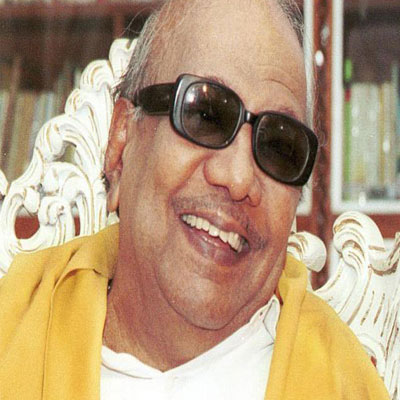
    NEW DELHI: DMK chief and former Tamil Nadu chief minister M Karunanidhi has lashed out at the Supreme Court’s ban on the photos of politicians in government ads.


    The veteran politician has said that this takes away the rights of the states.


    He was quoted in media reports as saying, “The PM and CMs are of same status in a federal set-up. In states, people give more importance to the CMs than the PM. A picture of a CM is inevitable in state govt advertisements. There are few educated people. The pictures help people understand ads better.”


    Holding that taxpayers’ money cannot be spent to build “personality cults” of political leaders, the Supreme Court restrained ruling parties from publishing photographs of political leaders or prominent persons in government-funded advertisements.


    The Court said such photos divert attention from the policies of the government, unnecessarily associate an individual with a government project, and pave the way for cultivating a “personality cult.”


    A bench of Justices Ranjan Gogoi and N.V. Ramana said the photos of only three constitutional authorities – the Prime Minister, the President and the Chief Justice of India – can be used in such ads. However, the personal approval of these three authorities will be necessary before publication.


    The observations of the Court were based on examination of the findings of a Committee led by Bangalore’s National Law University Director N.S. Madhava Menon set up in May last year, which had submitted its report in October. The Committee was set up by the Information and Broadcasting Ministry pursuant to an order of 23 April last year. Other members were former Lok Sabha secretary general T K Vishwanathan, and senior advocate Ranjit Kumar. Bimal Julka, secretary in the I&B Ministry, was the member secretary of the Committee.


    The court passed the order on a public interest litigation (PIL) filed by the NGOs Common Cause represented by counsel Meera Bhatia and the Centre for Public Interest Litigation (CPIL) represented by advocate Prashant Bhushan pleading it to frame guidelines.


    The petitions sought issuance of guidelines for curbing ruling parties from taking political mileage by projecting their leaders in official advertisements.


    The Menon panel had recommended a complete ban on publishing of photos in the ads. It had further said that no ads should be allowed on election eve.


    However, Justice Gogoi made changes in four cases. Instead of a complete ban on publishing of photos of all individuals, it said pictures of PM, President and CJI can be used provided they personally clear it – thus, in a way, making them also accountable for the publication.


    Secondly, the court improvised on the Menon committee recommendations to direct the government to appoint a three-member Ombudsman body of persons with “unimpeachable integrity.”


    The bench disagreed with the panel’s suggestion for a performance audit on such government ads.


    Holding that there had been “misuse and abuse” of public money on such advertisements, the three-member committee headed by eminent academician Professor Menon had framed guidelines to regulate expenditure and contents of such ads.


    The report had said only pictures and names of the President, the Prime Minister, Governor and Chief Ministers be published.


    The apex court bench had then said that the existing guidelines of the Directorate of Advertising and Visual Publicity (DAVP) do not cover such ads. There was therefore a need for substantive guidelines to be issued by the Court until the legislature enacts a law in this regard.


    The three members of the committee recommended that the governments must prepare a list of personalities whose birth or death anniversaries will be marked with ads in advance.


    The government must then specify which Ministry should release the ad to avoid different departments and state-run companies from paying tribute to the same leader with a multitude of ads. “There should be a single advertisement only,” the Committee said.


    The committee said that its recommendations are to prevent “the arbitrary use of public funds for advertising… to project particular personalities, parties or governments without any attendant public interest.”


    As was reported earlier by Indiantelevision.com, the move is likely to impact the revenues of some media groups as television channels will no longer be able to run TVCs by state governments featuring Chief Ministers and other local political leaders.

  • Supreme Court stays Delhi government’s defamation circular against media

    Supreme Court stays Delhi government’s defamation circular against media

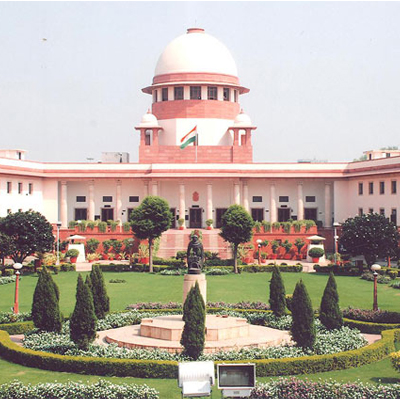
    NEW DELHI: The Supreme Court has stayed operation of a circular dated 6 May by the Delhi government, which would have initiated defamation proceedings against media for publishing or broadcasting news that damage the reputation of the chief minister, the council of ministers and the government.


    The bench comprising Justices Dipak Misra and Prafulla C Pant issued a notice Delhi chief minister Arvind Kejriwal. “As an interim measure we direct stay of the circular dated May 6, 2015 till further order of this court,” the notice said.


    Asking Kejriwal to explain why the directorate of information has issued “such circular,” the court sought a reply within six weeks and listed the matter for further hearing on 8 July.


    The court’s order came on an application filed by senior advocate Amit Sibal seeking vacation of the stay granted by the apex court on the proceedings before a trial court in a defamation case.


    Sibal, who had filed a criminal defamation complaint against Kejriwal and others in the Patiala House court, said that while the chief minister on one hand seeks setting aside of penal laws on defamation, on the other hand he has issued such a circular.


    “It is noteworthy that the petitioner (Kejriwal) in his affidavit declares that he is working as chief minister of Delhi. However, the aforesaid circular directly contradicts and mitigates against the stand taken by him in the present petition,” the plea said, adding that the stay on the trial court proceedings against Kejriwal be vacated.


    The circular, issued by state information and publicity department, said that if any officer associated with the Delhi government feels that a published or aired item has caused damage to his or the government’s reputation, he should file a complaint with the principal secretary.

  • Freedom of speech and expression cannot be “absolute”: Supreme Court

    Freedom of speech and expression cannot be “absolute”: Supreme Court

    NEW DELHI: While holding that freedom of speech and expression cannot be “absolute,” the Supreme Court refused to quash criminal charges against Marathi poet Vasant Dattatraya Gurjar for penning an alleged vulgar and obscene poem on Mahatma Gandhi in 1994. 


    Putting vulgar and obscene words in the mouth of “historically respected personalities” like Gandhi cannot pass the “contemporary community standards test” meant to adjudge the obscenity of an alleged literary work, Justices Dipak Misra and P C Pant said. 


    At the same time, the court upheld the Bombay High Court’s decision of not quashing charge under section 292 (sale, publication of obscene books) under the IPC framed against bank employee Devidas Ramchandra Tuljapurkar for publishing the “vulgar and obscene” poem on Gandhi in 1994 in an in-house magazine of which he was an editor. The bank employee had challenged framing of charges against him.


    However, the Court quashed the criminal proceedings against the printers and publishers of the magazine in which the poem penned by Gurjar was published, saying they have already tendered an unconditional apology.


    The bench asked Tuljapurkar, the then editor of in-house magazine of Bank of Maharashtra Employees Union, to express his point of view before the lower court during the trial. The bench noted that the publisher published the poem “Gandhi Mala Bhetala” in 1994 and “immediately” after coming to know its impact; he tendered an unconditional apology in the next issue of the magazine. 


    “Once he has tendered the unconditional apology even before the inception of the proceedings and almost more than two decades have passed, we are inclined to quash the charge framed against him as well as the printer. We are disposed to quash the charge against the printer, as it is submitted that he had printed as desired by the publisher. Hence, they stand discharged,” the bench said. 


    “Freedom of speech and expression has to be given a broad canvas, but it has to have inherent limitations, which are permissible within the constitutional parameters. We have already opined that freedom of speech and expression as enshrined under Article 19(1)(a) of the Constitution is not absolute in view of Article 19(2) of the Constitution.We reiterate the said right is a right of great value and transcends and with the passage of time and growth of culture, it has to pave the path of ascendancy, but it cannot be put in the compartment of absoluteness. There is constitutional limitation attached to it,” the bench said.