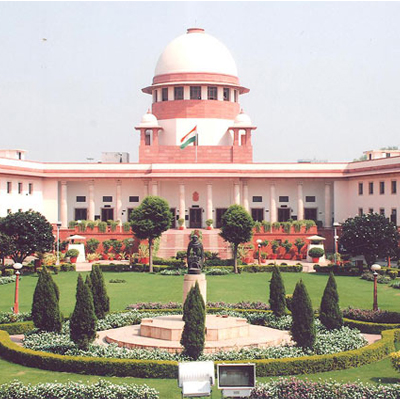
Category: Supreme Court

  • Supreme Court allows transfer of DTH licence fee petition from Kerala HC

    Supreme Court allows transfer of DTH licence fee petition from Kerala HC

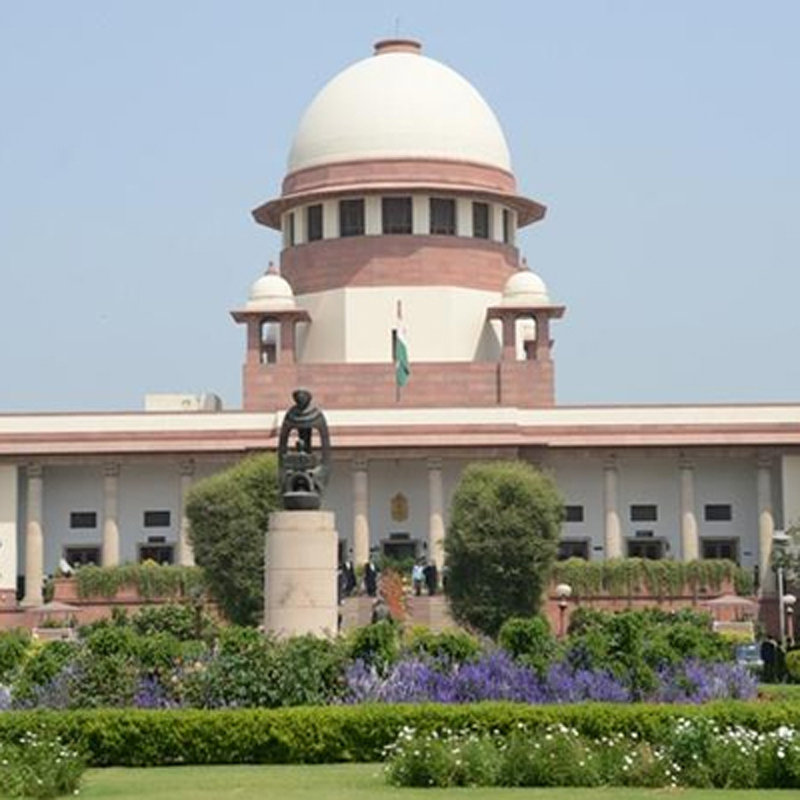
    MUMBAI: Moving one step closer to the long-fought battle on licence fees between direct-to-home (DTH) operators and the government of India, the Supreme Court has allowed the transfer of a related case to the apex court from the Kerala High Court.

    “Having heard the learned counsel for the parties and gone through these transfer petitions filed under Article 139A of the Constitution of India and considering the facts and circumstances of the case, we deem it fit and proper to transfer the matters mentioned in Prayer (a) of the Transfer Petitions from the High Court of Kerala at Ernakulam to this Court,” Supreme Court said in an order dated on 23 September.

    The transfer of the petition will help DTH players to pave the way for the long-pending new DTH licenses.

    Last year, the Telecom Regulatory Authority of India (TRAI) had reiterated most of its recommendations in response to back reference received from the ministry of information and broadcasting (MIB) on the authority’s recommendations related to the new direct to home (DTH) licence. The authority had issued recommendations on ‘Issues related to New DTH Licenses’ on 23 July 2014.

  • SC denies stay on TRAI’s appeal against TDSAT’s landing page order

    SC denies stay on TRAI’s appeal against TDSAT’s landing page order

    MUMBAI: While Telecom Regulatory Authority of India (TRAI) on Thursday filed an appeal in the Supreme Court against Telecom Disputes Settlement and Appellate Tribunal (TDSAT) order on landing pages, the apex court has denied any stay on the order on Friday. The matter has been listed for next hearing on 12 September.

    Justice Arun Mishra and Justice MR Shah issued notices to all the parties while hearing the case between TRAI, and Bennett Coleman and Co and others.

    The sector regulator’s action comes in the wake of TDSAT, by virtue of its 29 May order, setting aside TRAI’s 3 December directive to broadcasters and distribution platform operators (DPOs) to refrain from placing registered television channel, TV rating is released by BARC India, on the landing page or boot up screen.

    According to TRAI, its order was aimed at protecting the interest of service providers and consumers while ensuring orderly growth of the sector. This, however, was successfully challenged by Bennett Coleman & Co and others in TDSAT.

    “In our considered view, the impugned directions are beyond the provisions of the act, which empowers TRAI to issue directions. Therefore, the impugned directions must be set aside on this point alone. We order accordingly,” TDSAT chairperson Justice S K Singh and member AK Bhargava said.

    A series of controversies have been triggered post the landmark TDSAT order that resulted in disruption in viewership measurement of channels with a relatively smaller audience like English news.

  • SC upholds licence cancellation of Digi Cable Network, SCOD 18 Networking

    SC upholds licence cancellation of Digi Cable Network, SCOD 18 Networking

    MUMBAI: Cancellation of licences granted to two MSOs Digi Cable Network and SCOD 18 Networking has been upheld by the Supreme Court on security ground. Before moving to apex court the petitioners had approached the Bombay High Court where their pleas challenging the cancellation order by Ministry of Information & Broadcasting (MIB) were dismissed.

    Earlier, the licences issued to these cable TV service providers were cancelled by the MIB on the ground that the Ministry of Home Affairs denied issuance of "security clearance" to them.  The apex court bench comprising Justice Abhay Manohar Sapre and Justice Indu Malhotra security agreed that security clearance is a mandatory requirement as per Cable Television Network (Amendment) Rules.

    The Union of India filed the copy of the reasons in a sealed cover which was made basis to deny security clearance to the appellant. Referring to the document, the bench observed that the order of cancellation was passed in conformity with the requirements of Rule 11C.

    “It is clear from mere reading of the Rule 11C (1) that grant of permission is subject to issue of security clearance from the central government to the applicant… Since the grant of permission was subject to obtaining of the security clearance from the concerned ministry, the competent authority was justified in cancelling the conditional permission for want of security clearance," the court said.

    The appellant also argued that they were not afforded any opportunity of hearing before cancelling the permission. They added that the order was passed without following the principle of natural justice and fair play.

    “In a situation of national security, a party cannot insist for the strict observance of the principles of natural justice. In such cases, it is the duty of the court to read into and provide for statutory exclusion, if not expressly provided in the rules governing the field. Depending on the facts of the particular case, it will, however, be open to the court to satisfy itself whether there were justifiable facts, and in that regard, the court is entitled to call for the files and see whether it is a case where the interest of national security is involved. Once the State is of the stand that the issue involves national security, the court shall not disclose the reasons to the affected party,” the judgement read.

    The bench also observed that the principles of natural justice were not violated in this case. The appeal has been dismissed finally as it was found to be devoid of any merit. 

  • SC upholds TRAI Act over Copyright Act in tariff order case

    SC upholds TRAI Act over Copyright Act in tariff order case

    MUMBAI: The two-judge bench of the apex court with Justices Rohinton Fali Nariman and Navin Sinha dismissed the Star India’s appeal against Telecom Regulatory Authority of India’s (TRAI) recent tariff order. The principal area of the argument by the broadcaster was that the pricing of the content cannot be regulated by TRAI as it comes under the Copyright act. The verdict has clearly pronounced that the as TRAI Act is in public interest, it should prevail over the Copyright Act.

    “The best way in which both statutes can be harmonised is to state that the TRAI Act, being a statute conceived in public interest, which is to serve the interest of both broadcasters and consumers, must prevail, to the extent of any inconsistency, over the Copyright Act which is an act which protects the property rights of broadcasters. We are, therefore, of the view that, to the extent royalties/compensation payable to the broadcasters under the Copyright Act are regulated in public interest by TRAI under the TRAI Act, the former shall give way to the latter,” the Supreme Court order said.

    The 123-page judgment read that a copyright is meant to protect an owner’s work (original or re-broadcasted) and isn’t concerned with the interest of the end user or consumer and hence does not fall under the purview of the Copyright Act. It is the TRAI Act that needs to focus on the consumers’ interest.

    The Supreme Court added that the Copyright Act will operate within its own sphere giving broadcasters full flexibility to change royalty or compensation. On the other hand, TRAI does not, in substance, impinge upon these acts. It even observed that broadcasters have freedom to provide their own choice of content and arrange their own pricing as long as they aren’t discriminatory or force subscribers to choose either bouquets or a-la-carte.

    In the Supreme Court order, it was also noted that one of the functions of the authority, is to “facilitate competition and promote efficiency in the operation of telecommunication services (which includes broadcasting services) so as to facilitate growth in such services.”

    The tariff order has been the subject matter of extensive discussions between TRAI, all stakeholders and consumers. The order read further that the focus of TRAI has always been to provide a level playing field to both broadcaster and subscriber.

    Though the impending ruling led to lack of clarity, all the major broadcasters published their Reference Interconnect Offers along with the line of the order. As Star India was the petitioner, it did not publish its RIO.

    “The SC order has empowered consumers across the nation. While the overall media and entertainment landscape has been evolving rapidly, it is for the first time in 26 years that such a strong and positive step has been taken to eradicate the lack of transparency in the cable and broadcast value chain,” ZEE and Essel Group chairman Subhash Chandra commented.

    “This is the watershed moment we have all been waiting for. We feel that the new framework will bring in much needed transparency, parity, promote exercising of choice for the consumer and ensure orderly growth of the sector. The onus is now on all service providers to put their best foot forward and keep consumer interest in mind by complying with the required initial timelines and activities at the earliest,” AIDCF president Rajan Gupta said.

    While along the same line TRAI chairman RS Sharma said it is a big win for consumers as per a PTI report, the verdict undoubtedly has far-reaching impact in broadcast industry.

    Earlier in the Madras High Court, division bench consisting of Justice M Sundar J and Chief Justice Indira Banerjee gave a spilt verdict. While M Sundar’s ruling was in favour of Star India, a third judge upheld the tariff order except certain riders.

  • Star India vs TRAI: Arguments conclude, SC likely to deliver verdict after Dussehra

    Star India vs TRAI: Arguments conclude, SC likely to deliver verdict after Dussehra

    MUMBAI: Arguments in the case relating to TRAI and Star India ended today in the Supreme Court. According to a source close to the development, the top court is likely to pronounce the verdict in the matter after the Dussehra holidays.

    Despite the impending ruling, most broadcasters have already published their RIOs.

    Zee Entertainment Enterprises Ltd (ZEEL) was first out of the blocks in publishing the RIO, declaring the MRP and nature of channels in connection with its tariff order , which had a 31 August deadline. The Punit Goenka-led company was followed by TV18 Broadcast Limited ( TV18), Sony Pictures Networks India Private Limited (SPNI), who adhered to the regulator’s directive on September 4. Later, Disney India, Turner India International, Sun TV Networks have also published their RIOs in compliance with the order.

    All the broadcaster have stuck to a maximum 15 per cent MRP discount to distributors. Earlier, Madras High Court chief justice did not uphold TRAI’s proposal of allowing highest 15 per cent cap on discounts despite giving the go-ahead to all other proposals. As any clarification did not come from TRAI, all the broadcasters are adhering to the order to avoid any further confusion.

    The TRAI tariff orders, first contested in Madras High Court by the petitioners, were cleared by the Chennai court with certain riders after hearings that continued almost over 16 months in front of two benches of the court.

    Though the petitioners were unable for comments, a legal eagle explained that the very fact the Supreme Court has allotted a day for hearing the petition of Star India and VijayTV, which basically revolves around copyright and why the regulator doesn’t have jurisdiction over such issues, highlights the fact that the judge doesn’t want to take a decision in a hurry.

    After the Madras HC had given a thumb up to TRAI tariff order, and both the petitioners and the defendant (TRAI) had filed caveats in the Supreme Court, the regulator had bowled a googly saying that its tariff order would come into effect from 3 July 2018 () as all judicial compliances had been completed.

    “Having complied with  the  judicial  mandates  in  the  matter,  the Telecommunication (Broadcasting and Cable) Services (Eighth) (Addressable Systems)  Tariff   Order, 2017 and  the Telecommunication (Broadcasting and Cable) Interconnection (Addressable Systems) Regulations, 2017 as upheld by the Hon'ble Madras High  Court and the Telecommunication (Broadcasting and Cable) Services Standards  of   Quality  of  Service and  Consumer  Protection (Addressable Systems) Regulations, 2017 come into effect from 3rd July 2018,” the regulator had said in a statement pointing out that all timelines mentioned in the original order should be adhered to immediately.

    According to TRAI, implementation of the new regulatory framework will “bring in transparency”, enable provisioning of affordable broadcasting and cable TV services for the consumer and, at the same time, “would lead to an orderly growth of the sector”.

  • TRAI vs. Star India case: next SC hearing on September 25

    TRAI vs. Star India case: next SC hearing on September 25

    MUMBAI: The Supreme Court has deferred the hearing of Star India’s petition against TRAI tariff and inter-connect order to 25 September 2018. This is the fifth time in this month that the hearing has been deferred. Despite the impending ruling, several broadcasters have already published their RIOs.

    Zee Entertainment Enterprises Ltd (ZEEL) was first out of the blocks in publishing the RIO, declaring the MRP and nature of channels in connection with its tariff order , which had a 31 August deadline. The Punit Goenka-led company was followed by TV18 Broadcast Limited ( TV18), Sony Pictures Networks India Private Limited (SPNI), who adhered to the regulator’s directive on September 4. Later, Disney India, Turner India International, Sun TV Networks have also published their RIOs in compliance with the order.

    All the broadcaster have stuck to a maximum 15 per cent MRP discount to distributors. Earlier, Madras High Court chief justice did not uphold TRAI’s proposal of allowing highest 15 per cent cap on discounts despite giving the go-ahead to all other proposals. As any clarification did not come from TRAI, all the broadcasters are adhering to the order to avoid any further confusion.

    The TRAI tariff orders, first contested in Madras High Court by the petitioners, were cleared by the Chennai court with certain riders after hearings that continued almost over 16 months in front of two benches of the court.

    Though the petitioners were unable for comments, a legal eagle explained that the very fact the Supreme Court has allotted a day for hearing the petition of Star India and Vijay TV, which basically revolves around copyright and why the regulator doesn’t have jurisdiction over such issues, highlights the fact that the judge doesn’t want to take a decision in a hurry.

    After the Madras HC had given a thumb up to TRAI tariff order, and both the petitioners and the defendant (TRAI) had filed caveats in the Supreme Court, the regulator had bowled a googly saying that its tariff order would come into effect from 3 July 2018 () as all judicial compliances had been completed.

    “Having complied with  the  judicial  mandates  in  the  matter,  the Telecommunication (Broadcasting and Cable) Services (Eighth) (Addressable Systems)  Tariff   Order, 2017 and  the Telecommunication (Broadcasting and Cable) Interconnection (Addressable Systems) Regulations, 2017 as upheld by the Hon’ble Madras High  Court and the Telecommunication (Broadcasting and Cable) Services Standards  of   Quality  of  Service and  Consumer  Protection (Addressable Systems) Regulations, 2017 come into effect from 3rd July 2018,” the regulator had said in a statement pointing out that all timelines mentioned in the original order should be adhered to immediately.

    According to TRAI, implementation of the new regulatory framework will “bring in transparency”, enable provisioning of affordable broadcasting and cable TV services for the consumer and, at the same time, “would lead to an orderly growth of the sector”.

  • Trai vs. Star case: next SC hearing on Sept. 18

    Trai vs. Star case: next SC hearing on Sept. 18

    MUMBAI: The Supreme Court has deferred the hearing of Star India’s petition against TRAI tariff and inter-connect order to 18 September 2018 due to insufficient time. This is the fourth time in this month that the hearing has been deferred. Despite the impending ruling, several broadcasters have already published their RIOs.

    Zee Entertainment Enterprises Ltd (ZEEL) was first out of the blocks in publishing the RIO, declaring the MRP and nature of channels in connection with its tariff order , which had a 31 August deadline. The Punit Goenka-led company was followed by TV18 Broadcast Limited ( TV18), Sony Pictures Networks India Private Limited (SPNI), who adhered to the regulator’s directive on September 4. Later, Disney India, Turner India International, Sun TV Networks have also published their RIOs in compliance with the order.

    All the broadcaster have stuck to a maximum 15 per cent MRP discount to distributors. Earlier, Madras High Court chief justice did not uphold TRAI’s proposal of allowing highest 15 per cent cap on discounts despite giving the go-ahead to all other proposals. As any clarification did not come from TRAI, all the broadcasters are adhering to the order to avoid any further confusion.

    The TRAI tariff orders, first contested in Madras High Court by the petitioners, were cleared by the Chennai court with certain riders after hearings that continued almost over 16 months in front of two benches of the court.

    Though the petitioners were unable for comments, a legal eagle explained that the very fact the Supreme Court has allotted a day for hearing the petition of Star India and Vijay TV, which basically revolves around copyright and why the regulator doesn’t have jurisdiction over such issues, highlights the fact that the judge doesn’t want to take a decision in a hurry.

    After the Madras HC had given a thumb up to TRAI tariff order, and both the petitioners and the defendant (TRAI) had filed caveats in the Supreme Court, the regulator had bowled a googly saying that its tariff order would come into effect from 3 July 2018 () as all judicial compliances had been completed.

    “Having complied with  the  judicial  mandates  in  the  matter,  the Telecommunication (Broadcasting and Cable) Services (Eighth) (Addressable Systems)  Tariff   Order, 2017 and  the Telecommunication (Broadcasting and Cable) Interconnection (Addressable Systems) Regulations, 2017 as upheld by the Hon’ble Madras High  Court and the Telecommunication (Broadcasting and Cable) Services Standards  of   Quality  of  Service and  Consumer  Protection (Addressable Systems) Regulations, 2017 come into effect from 3rd July 2018,” the regulator had said in a statement pointing out that all timelines mentioned in the original order should be adhered to immediately.

    According to TRAI, implementation of the new regulatory framework will “bring in transparency”, enable provisioning of affordable broadcasting and cable TV services for the consumer and, at the same time, “would lead to an orderly growth of the sector”.

  • SC adjourns Star India’s petition on TRAI tariff order to 13 September

    SC adjourns Star India’s petition on TRAI tariff order to 13 September

    MUMBAI:  The Supreme Court has deferred the hearing of Star India’s petition against TRAI tariff and inter-connect order to 13 September 2018 due to insufficient time. This is the third time in this month that the hearing has been deferred. Despite the impeding ruling, several broadcasters have already published their RIOs.

    Zee Entertainment Enterprises Ltd (ZEEL) was first out of the blocks in publishing the RIO, declaring the MRP and nature of channels in connection with its tariff order, which had a 31 August deadline. The Punit Goenka-led company was followed by TV18 Broadcast Limited ( TV18), Sony Pictures Networks India Private Limited (SPNI), who adhered to the regulator’s directive on September 4. Later, Disney India, Turner India International, Sun TV Networks have also published their RIOs in compliance with the order. 

    All the broadcaster have stuck to a maximum 15 per cent MRP discount to distributors. Earlier, Madras High Court chief justice did not uphold TRAI’s proposal of allowing highest 15 per cent cap on discounts despite giving the go-ahead to all other proposals. As any clarification did not come from TRAI, all the broadcasters are adhering to the order to avoid any further confusion. 

    The TRAI tariff orders, first contested in Madras High Court by the petitioners, were cleared by the Chennai court with certain riders after hearings that continued almost over 16 months in front of two benches of the court.
    Though the petitioners were unable for comments, a legal eagle explained that the very fact the Supreme Court has allotted a day for hearing the petition of Star India and Vijay TV, which basically revolves around copyright and why the regulator doesn’t have jurisdiction over such issues, highlights the fact that the judge doesn’t want to take a decision in a hurry.

    After the Madras HC had given a thumb up to TRAI tariff order, and both the petitioners and the defendant (TRAI) had filed caveats in the Supreme Court, the regulator had bowled a googly saying that its tariff order would come into effect from 3 July 2018 as all judicial compliances had been completed.

    “Having complied with  the  judicial  mandates  in  the  matter,  the Telecommunication (Broadcasting and Cable) Services (Eighth) (Addressable Systems)  Tariff   Order, 2017 and  the Telecommunication (Broadcasting and Cable) Interconnection (Addressable Systems) Regulations, 2017 as upheld by the Hon’ble Madras High  Court and the Telecommunication (Broadcasting and Cable) Services Standards  of   Quality  of  Service and  Consumer  Protection (Addressable Systems) Regulations, 2017 come into effect from 3rd July 2018,” the regulator had said in a statement pointing out that all timelines mentioned in the original order should be adhered to immediately.

    According to TRAI, implementation of the new regulatory framework will “bring in transparency”, enable provisioning of affordable broadcasting and cable TV services for the  consumer and, at the  same time, “would lead to an orderly growth of the sector”

  • SC adjourns Star India’s petition on TRAI tariff order to 11 September

    SC adjourns Star India’s petition on TRAI tariff order to 11 September

    MUMBAI: The Supreme Court has deferred the hearing of Star India’s petition against TRAI tariff and inter-connect order to 11 September 2018.

    Zee Entertainment Enterprises Ltd (ZEEL) was first out of the blocks in publishing the RIO, declaring the MRP and nature of channels in connection with its tariff order, which had a 31 August deadline. The Punit Goenka-led company was followed by TV18 Broadcast Limited ( TV18), Sony Pictures Networks India Private Limited (SPNI), who adhered to the regulator’s directive on September 4.

    The TRAI tariff orders, first contested in Madras High Court by the petitioners, were cleared by the Chennai court with certain riders after hearings that continued almost over 16 months in front of two benches of the court.

    After the Madras HC had given a thumb up to TRAI tariff order, and both the petitioners and the defendant (TRAI) had filed caveats in the Supreme Court, the regulator had bowled a googly saying that its tariff order would come into effect from 3 July 2018 as all judicial compliances had been completed.

    “Having complied with  the  judicial  mandates  in  the  matter,  the Telecommunication (Broadcasting and Cable) Services (Eighth) (Addressable Systems)  Tariff   Order, 2017 and  the Telecommunication (Broadcasting and Cable) Interconnection (Addressable Systems) Regulations, 2017 as upheld by the Hon’ble Madras High  Court and the Telecommunication (Broadcasting and Cable) Services Standards  of   Quality  of  Service and  Consumer  Protection (Addressable Systems) Regulations, 2017 come into effect from 3rd July 2018,” the regulator had said in a statement pointing out that all timelines mentioned in the original order should be adhered to immediately.

    According to TRAI, implementation of the new regulatory framework will “bring in transparency”, enable provisioning of affordable broadcasting and cable TV services for the   consumer and, at the  same time, “would lead to an orderly growth of the sector”.

  • SC defers hearing of Star India petition on TRAI tariff order to 5 September

    SC defers hearing of Star India petition on TRAI tariff order to 5 September

    NEW DELHI: The Supreme Court has deferred the hearing of Star India’s petition filed against TRAI tariff and inter-connect order to 5 September, 2018.  The order had been given a go-ahead by the Madras High Court.

    The TRAI tariff orders, first contested in Madras High Court by the petitioners, were cleared by the Chennai court with certain riders after hearings that continued almost over 16 months in front of two benches of the court.

    Though the petitioners were unable for comments, a legal eagle explained that the very fact the Supreme Court has allotted a day for hearing the petition of Star India and Vijay TV, which basically revolves around copyright and why the regulator doesn’t have jurisdiction over such issues, highlights the fact that the judge doesn’t want to take a decision in a hurry.

    However, ahead of 31 August 2018 deadline for publishing TV channel prices in a new format Zee Entertainment Enterprises Ltd  (ZEEL) has made public its channel prices in line with the tariff order, setting an example for owners of other TV channels.

    All ZEEL channels will be available on a-la-carte basis, as required by regulations, and the consumers will also have the option to choose from specifically created bouquets for Hindi speaking markets (HSM) and different regional language markets like Marathi, Bangla, Odia, Bhojpuri, Tamil, Telugu, Kannada and Malayalam.

    After the Madras HC had given a thumb up to TRAI tariff order, and both the petitioners and the defendant (TRAI) had filed caveats in the Supreme Court, the regulator had bowled a googly saying that its tariff order would come into effect from 3 July 2018 as all judicial compliances had been completed.

    “Having complied with  the  judicial  mandates  in  the  matter,  the Telecommunication (Broadcasting and Cable) Services (Eighth) (Addressable Systems)  Tariff   Order, 2017 and  the Telecommunication (Broadcasting and Cable) Interconnection (Addressable Systems) Regulations, 2017 as upheld by the Hon’ble Madras High  Court and the Telecommunication (Broadcasting and Cable) Services Standards  of   Quality  of  Service and  Consumer  Protection (Addressable Systems) Regulations, 2017 come into effect from 3rd July 2018,” the regulator had said in a statement pointing out that all timelines mentioned in the original order should be adhered to immediately.

    According to TRAI, implementation of the new regulatory framework will “bring in transparency”, enable provisioning of affordable broadcasting and cable TV services for the   consumer and, at the   same time, “would lead to an orderly growth of the sector”.