Category: People

  • IAS officer Vijai Sharma appointed chief information commissioner

    IAS officer Vijai Sharma appointed chief information commissioner

    NEW DELHI: Senior Indian Administrative Service (IAS) officer Vijai Sharma has been appointed as the chief information commissioner. 


    A 1974 batch IAS officer, he was until now information commissioner in the Central Information Commission, New Delhi.


    Sharma has been serving in the commission as information commissioner since 2012 and is the senior-most information commissioner. 


    Retired IAS officer Sudhir Bhargava of the 1979 batch, who had retired as secretary in the Social Justice and Empowerment Ministry has been appointed an information commissioner in the Commission. 


    These appointments have been made for a term of five years from the dates on which they assume charge of their new offices or till they attain the age of sixty five years, whichever is earlier. 

  • Content theft negatively impacts profitability, thus resulting in less investment capital: Uday Singh

    Content theft negatively impacts profitability, thus resulting in less investment capital: Uday Singh

    For every one individual, Indian theaters lose 100 because of cheaply available pirated DVDs and illegal streaming. While creative minds are traveling that extra mile to exhibit quality, illegal infiltration of camcorders and hall prints are creating holes in creators’ pocket. Descending footfalls, and shutting down of theatres are not good signs for the film industry and experts don’t see the phenomenon changing unless and until piracy is strictly addressed, the abysmally low growth rate poses enormous challenges in front Indian Film Industry.


    Motion Pictures Distribution Association (MPDA) India under the leadership of managing director Uday Singh is associating with various organization of national and international magnitude to come up with a solution and create a scenario that helps creator getting his due recognition.


    From educative measures to penalizations in a conversation with Indiantelevision.com’s Anirban Roy Choudhury, Singh discusses the strategies and plans MPDA is roping in to counter serious issues like piracy and content theft.


    Excerpts:


    Do you feel it is important to change the behavior of consumer and make them understand the value of content, which may result in them saying no to piracy? If yes, then how can it be executed?


    Our goal is to help and support industry growth through the creation of a sustainable ecosystem for creative industries and educating consumers on the need to protect creative industries is therefore very important through industry initiatives.


    One such initiative was our launch of a website: www.findanymovie.in, in association with the Film and Television Producers Guild of India (FTPGI), which serves as a resource for online audiences to access movies and television shows legally. The launch of Comicorner at the 2014 Comic Con held in Hyderabad was amongst the others. Comicorner presented us with an opportunity promote copyright and content protection through interactive activities.


    The FICCI report indicates very low rate of growth in the cinema industry. Do think piracy is one of the major reasons behind that?


    Content theft negatively impacts profitability, thereby resulting in less investment capital. Less capital pegs down the number of films that can be financed, thereby creating fewer jobs, and reducing the range of film and television productions made for audiences to enjoy.


    In 2014, the MPDA partnered with FTPGI, the Film Federation of India (FFI) and the Federation of Indian Chambers of Commerce and Industry (FICCI) to launch a report entitled ‘Economic Contribution of the Indian Motion Picture and Television Industry’ by leading financial services firm Deloitte Touche Tohmatsu India. The report estimated that the Indian Motion Picture and Television industry contributes $8.1 billion (Rs50,000 crores) to India’s economy and supports 1.8 million jobs. Through this report, it is evident that the industry has the potential to contribute on a much larger scale if content was better protected and the complex taxation of the industry is reviewed.


    What is the main source of piracy in India?


    Piracy in the film industry originates from ‘camcording’ in cinema halls. Over 90 per cent of new release titles originate from cinemas. These infringing copies appear online within few hours of a film’s release. This affects the performance of the film, the distribution cycle and jobs.


    The rising threat of Internet piracy via Illegal or “rogue websites” contribute to, facilitate, and induce the illegal distribution of copyrighted works, such as movies and television programming. In 2014 alone, 30 camcords from India were synced to 54 additional audio resources in 15 different languages.


    What in your opinion should be the strategy to counter piracy?


    We need to recognize that in the next two years, India will have the fastest Internet traffic growth (348 million Internet users) and is already the second largest mobile user base in the world, after China, which has over a billion users. The growth in mobile penetration and more users having access to faster Internet speeds, signal the growing need for adequate legal protection and enforcement measures to combat piracy through cyberlocker, BitTorrent, web based file hosting, wireless access control (WAP), blogs and online radio sites services, which stunt India’s creative industries.


    Illegal camcording of feature films in theatres remains a major threat to the sustainability of the movie industry. Once an illegal camcord copy of a film is uploaded to the Internet, it can significantly impact on the amount of revenue the producers can recoup from the theatrical release. We therefore encourage the Government to implement specific anti-camcording provisions in the upcoming Draft Cinematograph Bill, 2013 and make adequate provisions for ‘Technology Protection Measures’ in India’s IT Act, in light of the roll out of the Digital India initiative and the upcoming National IPR Policy, which will help in protecting IP across creative industries including films as a category.


    Do you think proper credentials of intellectual property can help the industry to grow further?


    Promoting and protecting Intellectual Property in creative industries will enable India’s creative industries to enforce their IP rights and achieve their full potential in a rapidly changing marketplace. We applaud the Government of India (Department of Industrial Policy and Promotion, Ministry of Commerce and Industry) for pushing forward the much-needed National IPR Policy that envisages IP as an integral part of India’s overall development policy.


    What are the initiatives that MPDA is taking for IPR in India?


    MPDA India works closely with the local industry, Government, law enforcement authorities and educational institutions to promote and protect the film and television industry in India. The MPDA over the years has formed strategic alliances with the local film industry in India to launch campaigns to promote legitimate access to content, prevent content theft, share global best practices and promote industry growth.


    Initiatives include, our strategic alliance in 2012 with the Andhra Pradesh Film Chamber of Commerce (APFCC) to pool resources and jointly tackle issues such as camcording, cable theft and to promote public awareness and education campaigns on the importance of content protection.


    Since2012, the MPDA and the APFCC have carried out four successful enforcement operations that resulted in the arrest of members of criminal camcording syndicates and taking down of infringing websites. We’ve launched a mobile application – Indian Movie Cop – that serves as an online and mobile copyright information and awareness tool in eight Indian languages to reach out to wider audiences and industry stakeholders across India. The app was also designed as an interactive tool to help educate law enforcement officers about relevant laws that are applicable during ‘an arrest’.


    Through our partnership with FICCI and the U.S. Patent and Trademark Office (USPTO), we have conducted several training programs for multiplex operators across the country, especially in regions where content theft/ piracy is rampant. Further, we have supported several sensitization programs for law enforcement officers and the Judiciary across major cities in India. Through co-operation from our member studios producing local language films, we launched outreach initiatives targeting online audiences through ‘content protection’ messaging from over 30 Indian celebrities. The cumulative reach of these videos has been over 50,000 over the past two years.


    MPDA’s multi-pronged approach to increase public education on the value of the local screencommunity provides an insight into the industry and benefits that come from accessing only legal content has been well received by local screen communities in India.


    What technological protective measures need to be taken in order to create safe ecosystems for content to be distributed freely?


    With the arrival of the digital age, it is possible for consumers to make numerous copies ofcopyrighted materials, without a discernable loss of quality, unlike analog. This leads to the possibility that copyright protection could be overridden by uncontrolled copying, especially since such illegal actions are often difficult to trace.


    Technological Protection Measures, or TPMs, are defined as being any technology, component or device designed to prevent or restrict acts with respect to works or other subject matter that are not authorized by the rights holder of any copyright-related right.


    Today, technology enables copyright owners to control access to and the duplication of copyrighted works through encryption software and copy-controlling mechanisms, which are relevant to copyright holders in the digital age. TPMs maybe software or hardware based and can be implemented for broadcast content, packaged media content and interoperability.


    What are the policing mechanisms that we can see going forward to prevent piracy or breach of intellectual property act?


    Enforcement of copyright continues to remain a challenge as ‘IP Issues’ remain low priority amongst law enforcement officials. Further,law enforcement officialsacross various levels need a deeper understanding of the Internet, advances in technologyand how online content theft and the widespread distribution of infringing content is facilitated.


    Currently, while enforcement of IP is considered as low priority, there is also no systematic and active coordination and collaboration between enforcement agencies to tackle organized copyright or content theft.


    We therefore recommend the setup of a National IP Enforcement Task Force, which will work in a coordinated, systematic and efficient manner not restricted by jurisdictional issues, have a clear view of inter-state operations of organized crime units engaged in piracy and will ensure protection of intellectual property rights – both at source and online.


    There is also a need to establish clear guidelines/standard operating procedures for enforcement of IP related issues at a national level and adequately train enforcement agencies to carry out their responsibilities through systematic processes and sharing of international best practices and developments through timely sensitization programs. Training programs should address offences relating to IP laws including online and off-line piracy through statutes such as the Copyright Act, 1957/ IT Act, 2000 for IP violations.


    What are the penalties and penalizations shortlisted, which will be imposed in case of a breach?


    Penalties for copyright infringement include:


    ·Section 63 of the Copyright Act, 1957 which mandates copyright infringement as a criminal offence implicating prison terms, on conviction, of up to three years with a minimum terms of six months and or a fine of Rs50,000 up to Rs2,00,000.


    ·Penalty for second conviction- According to Section 63A of the Copyright Act, 1957, a second conviction for copyright infringement implicates prison terms of not less than one year and up to three years and fine not less than Rs 1,00,000 and up to Rs2,00,000.


    ·Penalty for possession of plates for purpose of making infringing copies:Section 65 of the Copyright Act, 1957 mandates the possession of plates for the purpose of making infringing copies as an offence and also implicates prison term of up to two years and a fine. Thus even the possession of duplicating equipment for the purposes of making infringing copies of works is an offence under the Copyright Act, 1957.


    ·Penalty for circumvention of DRMs:Section 65A of the Copyright Act mandates prison terms of up to two years in case of the circumvention of technological protection measures, that isDRMs, with the intention of infringing copyrights.
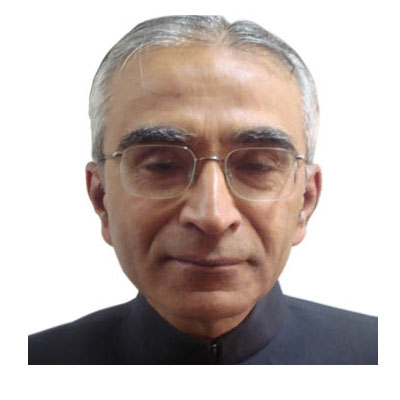
  • Prakash Magdum takes over as director of NFAI, Pune

    Prakash Magdum takes over as director of NFAI, Pune

    NEW DELHI: Indian Information Service officer Prakash B Magdum has been made the new director of the National Film Archives of India (NFAI). He belongs to the 1997 batch.


    IIS officer D Murali Mohan, who is currently director (News) in the regional news unit in Guwahati has been asked to hold additional charge of the post of director in the Directorate of Field Publicity in Guwahati vacated by Magdum. However, he will not get any extra remuneration for this.


    Alpana Pant Sharma, who is director of media and communications in Press Information Bureau in Pune stands relieved of the additional charge of NFAI, which she was holding for the past few months.


  • IIS rules amended for a principal DG position in six media units of I&B Ministry

    IIS rules amended for a principal DG position in six media units of I&B Ministry

    NEW DELHI: Seven posts in six media units of the Information and Broadcasting Ministry will be headed by officials of the rank of principal director general, though only one will be in the higher grade and the others will be in the selection grade.


    Although it has still not made any official announcement about changes made in the top posts of some its media units including the Press Information Bureau (PIB), the Ministry has now placed on its website a copy of the Indian Information Service (Group A) amendment rules 2014 as notified in the official gazette late last month.


    According to the amendments, one post in each of the six media units – news services division of All India Radio (AIR), director general of Doordarshan, the Registrar of Newspapers in India, the Directorate of Advertising and Visual Publicity, Directorate of Field Publicity, and two posts in the Press Information Bureau (PIB) will be held by principal director generals.


    The designation of the incumbent holding the higher grade will be principal director general and it will remain unchanged irrespective of the media unit, except in the Registrar of Newspapers of India where the post will be designated as press registrar.


    The insertion of the amended rules comes within two days of the announcement of Neelam Kapur, who had been holding the post of principal director general of media and communication of the PIB, being shifted to the directorate of field publicity and being replaced by Frank Noronha who had been posted in DFP. In another significant change, Archana Dutta who is director general of news in AIR was given additional charge of DD News, whose head SM Khan was placed on compulsory wait.


    The amendment also detailed the necessary changes that were being made in the rules of 2013.


    Highly placed sources had told indiantelevision.com that while Kapur has not been demoted as she retains her position as principal DG which is of secretary level; the DFP is seen as an office lower in stature to that of PIB, as the head of that office serves as the official spokesperson of the government.

  • Neelam Kapur moved from top post in PIB, DD News ADG SM Khan put on compulsory wait

    Neelam Kapur moved from top post in PIB, DD News ADG SM Khan put on compulsory wait

    NEW DELHI: Neelam Kapur, who has been holding the post of principal director general of media and communication of the Press Information Bureau (PIB), has been shifted to the directorate of field publicity (DFP).


    Highly placed sources said Frank Noronha, posted in the DFP as director general, has been brought in her place.


    These sources said that while Kapur has not been demoted as she retains her position of principal DG which is of secretary level, the DFP is seen as an office lower in stature to that of PIB, where she was the official spokesperson of the government.


    Kapur had taken over in December 2008 after Deepak Sandhu’s retirement. Kapur’s removal could be seen as a move made because she was appointed at the time of the united progressive alliance government.


    Frank Noronha, a 1982-batch officer of the Indian Information Service, was earlier in PIB.


    There has been no formal announcement so far of these changes.


    He has worked as information officer in various ministries and has served as deputy press secretary in the Rashtrapati Bhavan during his long tenure, apart from heading the directorate of advertising and visual publicity immediately prior to his posting in DFP.


    Doordarshan News additional director general SM Khan who was heading DD News has been put on compulsory wait, and Archana Dutta who is director general (News) in All India Radio, has been given additional charge of Doordarshan News.


    During the run-up to the elections, Khan was reported to have delayed the transmission of Narendra Modi’s interview to Doordarshan. Answering a query about editing out certain portions, he had said this was done only because of references made about people who had not been given an opportunity to have their say.

  • Prakash Javadekar takes oath as Rajya Sabha member from Madhya Pradesh

    Prakash Javadekar takes oath as Rajya Sabha member from Madhya Pradesh

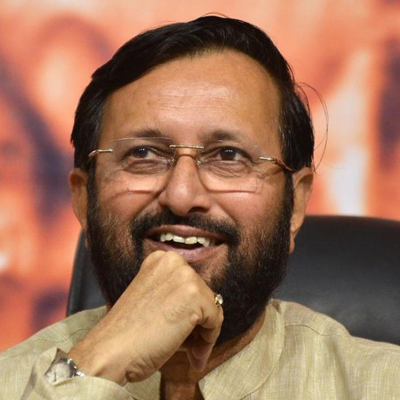
    NEW DELHI: Prakash Javadekar, who has been made Minister of State with independent charge of the Information and Broadcasting Ministry, today took oath as a member of the Rajya Sabha from Madhya Pradesh. 


    Javadekar, who had filed only a single nomination form, was elected unopposed.


    The Minister’s term as a Rajya Sabha member came to an end on 2 April this year. He had been a member of the Upper House since 3 April 2008.


    The by-poll was necessitated as the sitting BJP member and former Union Minister Faggan Singh Kulaste got elected to the Lok Sabha from Mandla (ST) seat following which he resigned from his membership of the upper house. 


    Like his immediate predecessor Manish Tewari, he has also been the spokesperson of the party he represents. (He has also been given charge of Environment and Parliamentary Affairs.)


    Javedekar has also been one of the nominated members from Parliament to the Press Council of India and hence has dealt with media issues such as paid news.  


    A member of the Rajya Sabha from Maharashtra, Javadekar was born in Pune on 30 January 1951 and became associated with the Akhil Bharatiya Vidyarthi Parishad in his young days.


    He commenced his professional life as an employee in the Bank of Maharashtra for 10 years from 1971 to 1981 and also worked in the Rural Development Department. Sick Unit Cell, Employment Promotion Programme of the Bank.


    His father Keshav Krishna Javadekar was a senior leader of Hindu Maha Sabha who worked as joint editor of Marathi Daily started by Lokmanya Tilak – Kesari before having stints with some other newspapers like Tarun Bharat and Kaal as journalist. He still occasionally writes his thoughts in some newspapers.


    Javadekar has been president of GLOBE India (Global Legislators Organisation for Balanced Environment; In-Charge, BJP Economic Forum and Cells related to Economy; President, NOINO (National Organisation of Insurance Officers); and president, KCKU (Khadi Commission Karmachari Union).


    As a member of the Parliament, he has served as member of the Press Council of India; the Public Accounts Committee; Standing Committee on Human Resources and Development; Consultative Committee for Ministry of Power; Committee on Subordinate Legislation and Committee on Wakf.


    He has earlier served as executive president of the State Planning Board in Maharashtra (1995–1999); been a  Member of the Maharashtra Legislative Council from Pune Division Graduate Constituency for 12 years from 1990; chairman of the Task Force on IT in Maharashtra (1977–1999) and chairman of the Working Group on “IT for Masses” of the Central Government.


    He has also led a delegation to Boston to Negotiate Media Lab Asia Project in 2000.


  • Supriya Sahu gets three-month extension as JS in I&B

    Supriya Sahu gets three-month extension as JS in I&B

    NEW DELHI: Senior Indian Administrative Officer, Supriya Sahu, has been given a three-month extension as joint secretary in the Information and Broadcasting Ministry.


    Her term ends later this month. The extension has been approved by the Appointments Committee of the Cabinet.


    Ministry sources told indiantelevision.com that the necessary proposal for extension beyond 22 July had been moved prior to the election of the new government.  The normal term of an IAS officer is five years, said the sources.


    A 1991 Tamil Nadu cadre IAS officer, Sahu is presently joint secretary (Broadcasting) in the Ministry.


    Prior to this, she was broadcasting director at MIB and was directly involved with the drawing up of the Broadcasting Services Regulation Bill and the Content Code for TV channels.


    As JS, she has been involved with digitisation of cable television as well as the dynamic growth of both FM and community radio.

  • Applications invited for posts of member finance and personnel in Prasar Bharati

    Applications invited for posts of member finance and personnel in Prasar Bharati

    NEW DELHI: In keeping with the Ministry’s promise of the expediting pending matters, applications were invited for the posts of Member (Finance) and Member (Personnel) for Prasar Bharati several months after these posts became vacant.


    Both posts became vacant several months earlier.


    In advertisements placed on the Ministry’s website and in Employment News, the Ministry said if the applicants are from PSUs, autonomous bodies, statutory corporations and Government servants, the application should be forwarded through proper channel and should be accompanied by Vigilance clearance, Cadre clearance, Integrity Certificate and ACRs for last five years.


    The post carries scale of pay equivalent to the Additional Secretary to the Govt. of India.


    The separate notices said the Member (Finance) should have special knowledge or practical experience in respect of financial matters while the Member (Personnel) should have special knowledge or practical experience in respect of personnel management and administration.


    The members will be appointed on recommendation of a committee headed by the Vice President of India.


    “The person so appointed being the whole time member of the Prasar Bharati Board shall be an employee of the Prasar Bharati and shall hold office for a term of six years from the date on which he/she enters upon his/her office, or until he/she attains the age of 62 years, whichever is earlier,” the notice said.


    The Members will be whole time Members of the Prasar Bharati Board and in pursuance of the Prasar Bharati Act 1990 will be responsible for all the financial matters, and personnel and administrative matters, respectively concerning Prasar Bharati.


    The Prasar Bharati Board is vested with powers for overall superintendence, direction and control of the affairs of the Corporation.


    The service conditions of the Members will be governed by the provisions of the Act and the rules notified by the Central Government in 2000 and the amendments issued therein from time to time.


    For applicants from private sector/autonomous bodies/statutory corporations, the applicants should be graduates from recognised university/institutions with good academic record. Persons possessing MBA qualification in Finance Management and Personnel Management respectively would be preferable. They should possess adequate post-qualification experience at a senior level of management in a large organisation of repute.


    For applicants from public sector enterprises, they should be senior executive /Board level executive working in reputed public sector enterprises, willing to get absorbed in the Prasar Bharati.


    For applicants from the Government, additional secretary/senior joint secretary level officers who are willing to get absorbed in Prasar Bharati on selection.

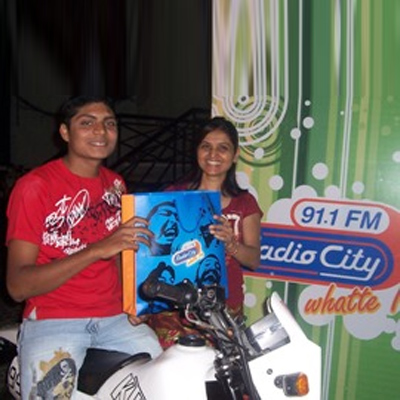
  • Naved Abbasi wins Lucknow Radio City 91.1FM’s ‘City Ki Chaka Chak Bike

    Naved Abbasi wins Lucknow Radio City 91.1FM’s ‘City Ki Chaka Chak Bike

    MUMBAI: In a unique ‘Whatte Fun’ endeavour of sorts, Lucknow’s Radio City 91.1FM organized a 2 week City Ki Chaka Chak Bike contest that invited Lucknow’s bike enthusiasts to showcase their most innovatively modified bikes. With over 40 entries pouring in from all across Lucknow, 21 year old Naved Abbasi from Razman Bazaar, Cantt, Dilkusha, Lucknow bagged the City Ki Chaka Chak Bike winning exciting goodies courtesy Radio City. Helping the Radio City team identify the winner was Mr. Deep Saxena from Hindustan Times an automobiles enthusiast and an expert in information technology.


    Resonating Whatte Fun through the City of the Nawabs, Radio City 91.1FM ran the City Ki Chaka Chak Bike contest on-air for 10 days that witnessed 40 plus bike lovers come forth to flaunt their passion for the two-wheeler. The winning criterion was to shortlist the maximum modifications done keeping present trends in mind. The winning bike belongs to Naved, a computer engineer by profession who has been passionate about bikes since he was 17. He modified his 150 CC all terrain bike into a motocross bike ready for a mountain ride. Replacing the twin shockers on the bike’s mono suspension, he changed the fuel tank along with the body fibre as well. With changed mudguard and a short handle the bike is a real delight to eyes.


    Commenting on the response said Mr. Rana Barua, National Head Marketing & Programming, Radio City 91.1FM, “We, at Radio City, strive on enhancing our connect with our listener time and again. City ki Chaka Chak Bike was an initiative well received and supported by Lucknow’s Radio Cityzens. We are thankful to them for their overwhelming support and appreciation and shall continue to bring such exciting initiatives in the future!”


    Elated at winning the City Ki Chaka Chak Bike contest Naved Abbasi said, “This has been one of the most exciting initiatives by any company – not just because I won but due to the fact that City Ki Chaka Chak Bike was a different experience for the people of Lucknow! A biker’s passion is always his bike and giving a platform to showcase the prized possession is recognizing a talent of sorts. Three cheers to Radio City for making this a ‘Whatte Fun day’ for me!”


    Lucknow Radio City 91.1FM’s City Ki Chaka Chak Bike witnessed avid Radio Cityzens participating from all age brackets remodelling their two wheelers to acquire the title of the most alluring bike from their favourite radio station. It was quite a task to declare the winner with an array of bikes with spectacular modifications ranging from changes in the whole body fibre, modified fuel tanks, shockers and wheels. Other innovative modifications were the conversion of the CBZ into a Hayabusa, fixing revolving lights in the bike and installing a radio set tuned to Radio City 91.1FM in one of the bikes.


    A sustained focus on understanding listeners and leveraging the synergies of music expertise and innovative programming, allows Radio City to deliver a unique listening experience and be an integral part of the lives of listeners across markets. Aggressively looking at spreading the Radio City experience to new markets across the country, Radio City 91.1FM is committed to growing the market and creating superlative content for premium audiences.

  • Surat’s Radio City celebrates Children’s Day

    Surat’s Radio City celebrates Children’s Day

    MUMBAI: Surat’s Radio City 91.1FM today celebrated Children’s Day with great pomp and fervour! More than 100 lesser privileged children from Surat’s Shri Mahajan Anaath Baalashram were in for a treat as the Radio City along with RJ JJ and Leena (Radio City Breakfast Show) and RJ Rayhaan (Radio City Joyride) visited them with 7 Magic Boxes full of ‘Whatte Fun’ gifts from Surat city! After presenting the goodies to the children, the RJ spent quality time playing and interacting with them.


    Taking the lead to ensure a memorable Diwali and Children’s Day for the lesser privileged children of Surat, Radio City 91.1FM had organised a unique campaign ‘Diwali se Baaldivas Tak’ from 6-14 November. Extending the festive sparkle to one and all, Radio City encouraged the people of Surat to spare a thought for these deserving children and allocate a small portion of their Diwali budget towards buying something for them. Responding to this call, Surat contributed wholeheartedly with over hundreds of listeners coming into the studios to drop in brand new toys, clothes and gifts for the children at Shri Mahajan Anaath Baalashram.


    Speaking on the occasion, Mr. Rana Barua, National Head – Marketing, Radio City 91.1FM said, “It’s the simpler things in life which allow us to make a difference! We at Radio City have always made an effort to involve our listeners to actively contribute to society and give back in equal measure. Thanks to our listeners, our ‘Diwali to Baaldivas’ celebration this year has been a resounding success.”


    Deeply moved by the gesture, Dr. Harikrishna Joshi, Vice President, Shri Mahajan Anaath Baalashram said, “On behalf of our Trust and the children here, I would like to thank Radio City for their efforts in bringing Surat together for this unique Celebration. Thanks to the generosity of Surat’s Radio Cityzens, the Festival of Lights this year has been very memorable for all of us here. This has been a one-of-its kind initiative which has never happened in our city before.”


    A sustained focus on understanding listeners and leveraging the synergies of music expertise and innovative programming, allows Radio City to deliver a unique listening experience and be an integral part of the lives of listeners across markets. Aggressively looking at spreading the Radio City experience to new markets across the country, Radio City 91.1FM is committed to growing the market and creating superlative content for premium audiences.