Category: People

  • Suresh Panda may be Prasar Bharati interim CEO; liberal DD auction criteria recommended

    Suresh Panda may be Prasar Bharati interim CEO; liberal DD auction criteria recommended

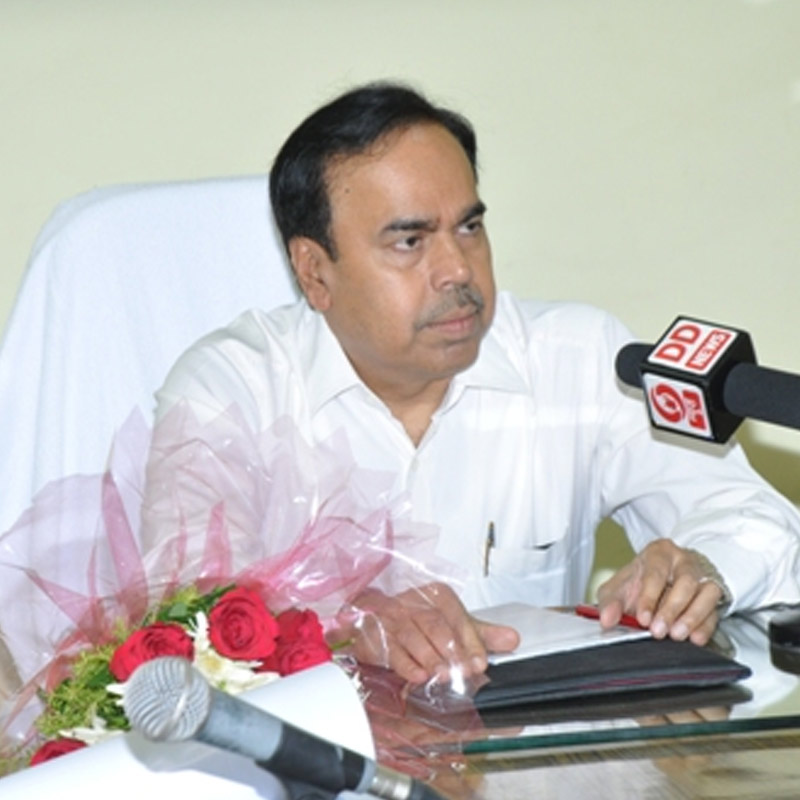
    NEW DELHI: Suresh Panda, member (personnel) in Prasar Bharati is expected to take over as the acting chief executive officer of the pubcaster after the incumbent CEO Jawhar Sircar demits office on 4 November.

    The Prasar Bharati Board has recommended relaxation in the criteria for auction of prime time slots on DD National. This decision was taken at a meeting of the Board held today under the chairmanship of Dr Surya Prakash.

    However, Prasar Bharati sources told indiantelevision.com that Panda’s ad hoc charge will be subject to approval by the Information and Broadcasting Ministry.

    After 4 November, a high-level committee headed by India’s vice-president Hamid Ansari will meet as stipulated in the Prasar Bharati Act 1990 to select a new CEO.

    Meanwhile, the Board also took some decisions with regard to the proposed auction of prime time slots on Doordarshan National.

    It was decided, among other changes, to fix the minimum reserve price for the auction of half-hour slots at Rs 1,50,000. Full details were not available but there may also be a reduction in the total number of hours a prospective producer should have clocked either as a filmmaker or as television producer.

    The slot auction was first announced in June but failed as there were no bidders, while those who bid the second time late last month failed to meet the minimum requirements.

    The regulations had been relaxed and the second auction had been fixed for 5 September.

    Under the rules until now, only producers/production houses that have produced at least 200 hours of general entertainment programming including feature film production in any Indian language in the last three years will be eligible to apply for bidding for slots on the national channel of Doordarshan.

    Following a revision of terms after June, the Prasar Bharati Board had said that production houses with a turnover of minimum Rs 3 crore per annum in the field of TV and Film production in the last three financial years are eligible to apply.

    Applicants for weekend slots in the genres of Reality, Game, Quiz, should have produced 100 hrs of such content in the last 3 years.

    Earlier, only those with production in television and a minimum of 300 hours had been allowed. But this has been amplified ti include film production houses and 200 hours of entertainment programming.

    Successful bidder(s) will produce fresh programmes in various genres of general entertainment programme for Doordarshan adhering to the programming/broadcasting codes of Prasar Bharati.
  • Minister hints Consumer Protection Bill passage next Parliament session

    Minister hints Consumer Protection Bill passage next Parliament session

    NEW DELHI. The Consumer Protection Bill 2015, seeking to amend the archaic Consumer Protection Act and make provisions for penalising misleading advertisements and celeb endorsers, could be enacted into a law in the next session of Parliament, which is likely to reconvene later this month.

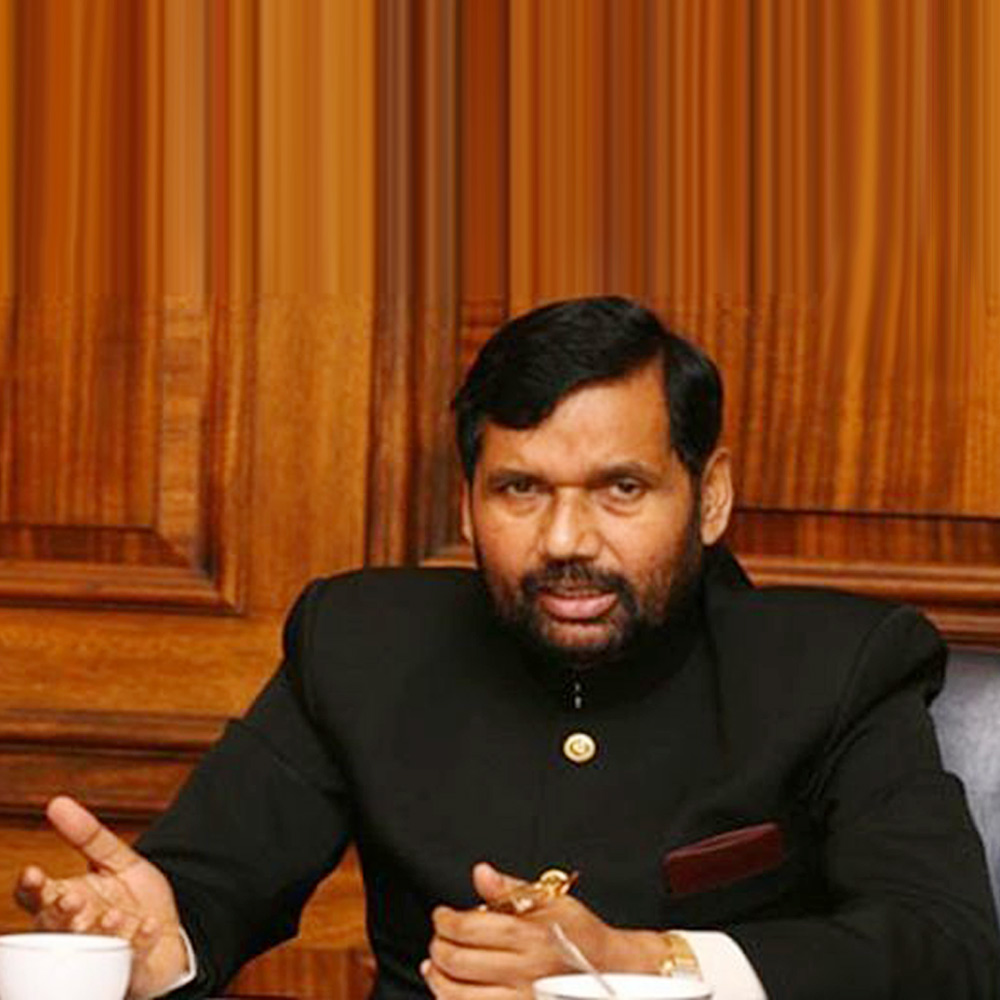
    Consumer Affairs Minister Ram Vilas Paswan indicated this while inaugurating the sixth edition of Massmerize 2016, FICCI’s annual flagship Retail, FMCG & E-Commerce Convention.

    Paswan said it was important for the industry to win the trust of the consumers and weed out companies indulging in misleading advertisements that often played with the health of the consumers. The onus, he said, was on industry to deliberate on this issue with seriousness and identify factors that are inimical to industry’s growth.

    Consumer Affairs Ministry sources, in the meanwhile, told  indiantelevision.com that the recommendations of the Parliamentary Standing Committee concerned were still under consideration and the Bill may be further amended if these recommendations are accepted.

    The three decades old Consumer Protection Act was seen as an inefficient piece of legislation, out of step with new market dynamics, multi-layered delivery chains, innovative and, often, misleading advertising and marketing machinery as earlier reported by indiantelevision.com.

    FICCI FMCG Committee Chairman and COO, ITC, Sanjiv Puri, gave the FMCG industry perspective, indicating that the FMCG sector which today stands at close to Rs 230,000 crore is expected to climb to Rs 600,000 crore by the end of the decade.

    Puri said that the food processing sector was today taxed at over 25% across the whole value chain and called for a much more moderate rate of tax in the GST regime. The losses in terms of revenue to the government will be compensated for by a widened tax base.  

    Tata Sons GEC member Harish Bhat said the march of digitalization was changing the consumer profile in the country as by 2020 close to 220 million consumers will be online shoppers, a six-fold increase from now. He added that the key consumer trends indicated that health and wellness were a major requirement of the consumers and digital connectivity was driving this demand. He suggested that industry and government come together to find innovative solutions to satisfy consumer demand.

    ALSO READ

    Misleading ads: Govt moots proposal to penalise celeb endorsers


  • Minister hints Consumer Protection Bill passage next Parliament session

    Minister hints Consumer Protection Bill passage next Parliament session

    NEW DELHI. The Consumer Protection Bill 2015, seeking to amend the archaic Consumer Protection Act and make provisions for penalising misleading advertisements and celeb endorsers, could be enacted into a law in the next session of Parliament, which is likely to reconvene later this month.

    Consumer Affairs Minister Ram Vilas Paswan indicated this while inaugurating the sixth edition of Massmerize 2016, FICCI’s annual flagship Retail, FMCG & E-Commerce Convention.

    Paswan said it was important for the industry to win the trust of the consumers and weed out companies indulging in misleading advertisements that often played with the health of the consumers. The onus, he said, was on industry to deliberate on this issue with seriousness and identify factors that are inimical to industry’s growth.

    Consumer Affairs Ministry sources, in the meanwhile, told  indiantelevision.com that the recommendations of the Parliamentary Standing Committee concerned were still under consideration and the Bill may be further amended if these recommendations are accepted.

    The three decades old Consumer Protection Act was seen as an inefficient piece of legislation, out of step with new market dynamics, multi-layered delivery chains, innovative and, often, misleading advertising and marketing machinery as earlier reported by indiantelevision.com.

    FICCI FMCG Committee Chairman and COO, ITC, Sanjiv Puri, gave the FMCG industry perspective, indicating that the FMCG sector which today stands at close to Rs 230,000 crore is expected to climb to Rs 600,000 crore by the end of the decade.

    Puri said that the food processing sector was today taxed at over 25% across the whole value chain and called for a much more moderate rate of tax in the GST regime. The losses in terms of revenue to the government will be compensated for by a widened tax base.  

    Tata Sons GEC member Harish Bhat said the march of digitalization was changing the consumer profile in the country as by 2020 close to 220 million consumers will be online shoppers, a six-fold increase from now. He added that the key consumer trends indicated that health and wellness were a major requirement of the consumers and digital connectivity was driving this demand. He suggested that industry and government come together to find innovative solutions to satisfy consumer demand.

    ALSO READ

    Misleading ads: Govt moots proposal to penalise celeb endorsers


  • GST Constitutional Amendment Bill gets Lok Sabha nod after amendments

    GST Constitutional Amendment Bill gets Lok Sabha nod after amendments

    NEW DELHI: The long-awaited Goods and Services Tax Bill (GST), which has been riddled by several controversies which began in the time of the UPA government, has finally been passed with amendments worked out to pacify a vociferous opposition which held the majority in the Rajya Sabha.

    Although the Bill had been passed earlier in the Lok Sabha, an adamant Congress insisted on some changes which were worked out after talking to all states and the opposition parties.

    Thereafter, the amended bill had been introduced in the Rajya Sabha and passed last week. However, in view of the amendments, the amended Bill had to go through the entire rigmarole of a discussion in the Lok Sabha before it was passed unanimously.

    As the GST Bill is in the form of a Constitution Amendment, the rules required that it had to be passed by two-thirds of the members present and voting.

    The Amendment Bill will now go for Presidential assent to Pranab Mukherjee, but can become law only after it is ratified by at least fifteen state governments. The government hopes to get the approval within 30 days as it has set a deadline of 1 April 2017 for implementation of GST. Several states will have to call for special sessions to clear GST in the next 30 days.

    The Bill, which Finance Minister Arun Jaitley describes as a “one nation one tax” bill, was described by Prime Minister Narendra Modi as a major step “that will deliver us from tax terrorism.” He said “GST means a Great Step Taken by India, a Great Step of Transformation, Great Step towards Transparency.”

    Jaitley said India’s biggest tax reform will see the centre and states “pooling their sovereignty to reap the many benefits that will ultimately lead to India’s progress”. He claimed that “Tax evasion will lessen, there will be no tax on tax or a cascade of taxes and ease of doing business will improve.”

    The Rajya Sabha, where the government is in a minority, had passed the bill unanimously last week, with 203 members supporting and none against.

    Interestingly, the Congress reminded the government today that it had got the Bill passed in the Lok Sabha last year by the sheer dint of its numerical strength and not consensus.

    A GST council will be formed after that with states and the centre as members. This council will recommend rates and other modalities for GST, which will replace a raft of different state and local taxes with a single unified value added tax system turning India into world’s biggest single market.

    Parliament will need to clear two more GST-related bills and each state will have to pass its own law. The government will push to get this done in the winter session of Parliament to meet the deadline.

    FICCI President Harvardhan Neotia said: “The approval of the Constitutional Amendment Bill marks crossing of another milestone in the journey towards introduction of a Goods and Services Tax (GST) regime in the country. The industry eagerly looks forward to the implementation of this uniform and simplified tax regime. It is expected that GST will lead to easy tax compliance and improve India’s competitiveness in the global arena. Implementation of GST will be a big incentive for bringing new investments into India and eventually will foster the growth of the Indian economy. FICCI would be privileged to work with and support the Central and State Governments in enabling a timely and hassle-free roll out of GST in India”

  • GST Constitutional Amendment Bill gets Lok Sabha nod after amendments

    GST Constitutional Amendment Bill gets Lok Sabha nod after amendments

    NEW DELHI: The long-awaited Goods and Services Tax Bill (GST), which has been riddled by several controversies which began in the time of the UPA government, has finally been passed with amendments worked out to pacify a vociferous opposition which held the majority in the Rajya Sabha.

    Although the Bill had been passed earlier in the Lok Sabha, an adamant Congress insisted on some changes which were worked out after talking to all states and the opposition parties.

    Thereafter, the amended bill had been introduced in the Rajya Sabha and passed last week. However, in view of the amendments, the amended Bill had to go through the entire rigmarole of a discussion in the Lok Sabha before it was passed unanimously.

    As the GST Bill is in the form of a Constitution Amendment, the rules required that it had to be passed by two-thirds of the members present and voting.

    The Amendment Bill will now go for Presidential assent to Pranab Mukherjee, but can become law only after it is ratified by at least fifteen state governments. The government hopes to get the approval within 30 days as it has set a deadline of 1 April 2017 for implementation of GST. Several states will have to call for special sessions to clear GST in the next 30 days.

    The Bill, which Finance Minister Arun Jaitley describes as a “one nation one tax” bill, was described by Prime Minister Narendra Modi as a major step “that will deliver us from tax terrorism.” He said “GST means a Great Step Taken by India, a Great Step of Transformation, Great Step towards Transparency.”

    Jaitley said India’s biggest tax reform will see the centre and states “pooling their sovereignty to reap the many benefits that will ultimately lead to India’s progress”. He claimed that “Tax evasion will lessen, there will be no tax on tax or a cascade of taxes and ease of doing business will improve.”

    The Rajya Sabha, where the government is in a minority, had passed the bill unanimously last week, with 203 members supporting and none against.

    Interestingly, the Congress reminded the government today that it had got the Bill passed in the Lok Sabha last year by the sheer dint of its numerical strength and not consensus.

    A GST council will be formed after that with states and the centre as members. This council will recommend rates and other modalities for GST, which will replace a raft of different state and local taxes with a single unified value added tax system turning India into world’s biggest single market.

    Parliament will need to clear two more GST-related bills and each state will have to pass its own law. The government will push to get this done in the winter session of Parliament to meet the deadline.

    FICCI President Harvardhan Neotia said: “The approval of the Constitutional Amendment Bill marks crossing of another milestone in the journey towards introduction of a Goods and Services Tax (GST) regime in the country. The industry eagerly looks forward to the implementation of this uniform and simplified tax regime. It is expected that GST will lead to easy tax compliance and improve India’s competitiveness in the global arena. Implementation of GST will be a big incentive for bringing new investments into India and eventually will foster the growth of the Indian economy. FICCI would be privileged to work with and support the Central and State Governments in enabling a timely and hassle-free roll out of GST in India”

  • Ajay Mittal will be I&B ministry secretary on  Sunil Arora’s retirement

    Ajay Mittal will be I&B ministry secretary on Sunil Arora’s retirement

    NEW DELHI: Senior Indian Administrative Service officer Ajay Mittal is to take over as secretary in the Information & Broadcasting ministry. He will succeed Sunil Arora, who is retires on 30 April. At present, Mittal is based in his home cadre in Himachal Pradesh and belongs to the 1982 batch. His predecessor Arora is an IAS officer from Rajasthan from the 1980 batch.
    Arora joined the ministry on 31 August last year just as the ministry was making preparations for the Digital Addressable System Phase III and was in the midst of the Phase III auctions of FM radio. His successor will have the onerous task of overseeing the implementation of the last phase in DAS which will cover all remaining urban and all rural areas of the country.

    Born on 24 February 1958, Mittal is a law graduate and also has an masters degree in rural development. His first posting was as principal secretary to the then chief minister of Himachal Pradesh and in the Information and Public Relations wing in the state. Mittal was empanelled as secretary in December last year when he was additional chief secretary, Transport, Social Justice & Empowerment department, Shimla.

  • Ajay Mittal will be I&B ministry secretary on  Sunil Arora’s retirement

    Ajay Mittal will be I&B ministry secretary on Sunil Arora’s retirement

    NEW DELHI: Senior Indian Administrative Service officer Ajay Mittal is to take over as secretary in the Information & Broadcasting ministry. He will succeed Sunil Arora, who is retires on 30 April. At present, Mittal is based in his home cadre in Himachal Pradesh and belongs to the 1982 batch. His predecessor Arora is an IAS officer from Rajasthan from the 1980 batch.
    Arora joined the ministry on 31 August last year just as the ministry was making preparations for the Digital Addressable System Phase III and was in the midst of the Phase III auctions of FM radio. His successor will have the onerous task of overseeing the implementation of the last phase in DAS which will cover all remaining urban and all rural areas of the country.

    Born on 24 February 1958, Mittal is a law graduate and also has an masters degree in rural development. His first posting was as principal secretary to the then chief minister of Himachal Pradesh and in the Information and Public Relations wing in the state. Mittal was empanelled as secretary in December last year when he was additional chief secretary, Transport, Social Justice & Empowerment department, Shimla.

  • JS Mathur promoted as special secretary in I&B Ministry

    JS Mathur promoted as special secretary in I&B Ministry

    NEW DELHI: Senior Indian Administrative Service (IAS) officer Jitendra Shankar Mathur has been promoted as Special Secretary in the Information and Broadcasting Ministry.


    Mathur was until now serving as additional secretary in the same Ministry and was also heading the Task Force for the Digital Addressable System (DAS) for the final two phases. He was also overseeing the auction of the first stage of FM Phase III.


    An officer from Madhya Pradesh cadre in the 1982 batch, Mathur now joins the Selection Grade.


    His tenure on deputation to the Centre ends on 30 October this year.


    The post of special secretary is often referred to as officer-in-waiting for appointment as secretary in the Union Government.

  • Sunil Arora appointed new I&B Ministry secretary

    Sunil Arora appointed new I&B Ministry secretary

    MUMBAI: The Information and Broadcasting (I&B) Ministry has found a new secretary in senior IAS officer Sunil Arora. He will be succeeding Bimal Julka whose tenure will end on Monday, 31 August, 2015.


    Arora’s appointment comes at a time when the I&B Ministry is in the midst of several important activities including the Phase III FM radio e-auctions and digitisation of phase III and IV. Arora is a 1980 batch IAS officer of Rajasthan cadre and currently secretary Ministry of Skill Development and  Entrepreneurship.


    Arora, earlier has also functioned as Air India CMD.

  • Former Indian President and renowned space scientist APJ Abdul Kalam passes away

    Former Indian President and renowned space scientist APJ Abdul Kalam passes away

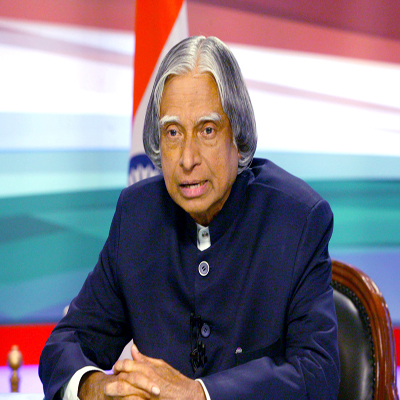
    NEW DELHI: Former Indian President APJ Abdul Kalam, one of the country’s foremost aerospace scientists, passed away in Shillong this evening. He was 83 years old.
     
    Kalam was rushed to the hospital earlier in the day when he collapsed while giving a public lecture at Indian Institute of Management (IIM) Shillong. His condition was said to be critical and was kept under observation in the ICU.
     
    It is reported that he suffered a cardiac arrest during the lecture and was admitted at the Bethany Hospital.
     
    Kalam was born on 15 October, 1931 and served as the 11th President of India from 2002 to 2007. He received several prestigious awards, including the Bharat Ratna. After serving a term of five years as President, he returned to civilian life of education, writing, and public service.
     
    Born and raised in Rameswaram, Tamil Nadu, he studied physics and aerospace engineering in 1960.
     
    Kalam spent the next four decades as a scientist and science administrator, mainly at the Defence Research and Development Organisation (DRDO) and Indian Space Research Organisation (ISRO) and was intimately involved in the India’s civilian space programme and military missile development efforts. He thus came to be known as the Missile Man of India for his work on the development of ballistic missile and launch vehicle technology. He also played a pivotal organizational, technical and political role in India’s Pokhran-II nuclear tests in 1998, the first since the original nuclear test by India in 1974.
     
    Kalam started his career by designing a small helicopter for the Indian Army, but remained  unconvinced with the choice of his job at DRDO. Kalam was also part of the INCOSPAR committee working under Vikram Sarabhai, the renowned space scientist. In 1969, Kalam was transferred to ISRO where he was the project director of India’s first indigenous Satellite Launch Vehicle (SLV-III), which successfully deployed the Rohini satellite in near earth’s orbit in July 1980. 
     
    Kalam first started work on an expandable rocket project independently at DRDO in 1965. In 1969, he received the government’s approval and expanded the programme to include more engineers.
     
    During the period between the 1970s and 1990s, Kalam made an effort to develop the Polar Satellite Launching Vehicle (PSLV) and SLV-III projects, both of which proved to be success.
     
    In the 1970s, a landmark was achieved by ISRO when the locally built Rohini-1 was launched into space, using the SLV rocket. In the 1970s, Kalam also directed two projects, namely, Project Devil and Project Valiant, which sought to develop ballistic missiles from the technology of the successful SLV programme.
     
    Kalam’s research and educational leadership brought him great laurels and prestige in the 1980s, which prompted the government to initiate an advanced missile programme under his directorship. Kalam and Dr V S Arunachalam, metallurgist and scientific adviser to the Defence Minister, worked on the suggestion by the then Defence Minister, R Venkataraman on a proposal for simultaneous development of a quiver of missiles instead of taking planned missiles one after another. Venkataraman was instrumental in getting the cabinet approval for allocating Rs 388 crores for the mission, named Integrated Guided Missile Development Programme (IGMDP) and appointed Kalam as the chief executive. 
     
    Kalam played a major part in developing many missiles under the mission including Agni, an intermediate range ballistic missile and Prithvi, the tactical surface-to-surface missile, although the projects have been criticised for mismanagement and cost and time overruns.
     
    Kalam was the chief scientific adviser to the Prime Minister, and the Secretary of DRDO from July 1992 to December 1999. 
     
    In 1998, along with cardiologist Soma Raju, Kalam developed a low cost coronary stent, named the “Kalam-Raju Stent”. In 2012, the duo, designed a rugged tablet computer for health care in rural areas, which was named the “Kalam-Raju Tablet”.