Category: People

  • MIB’s new secy Amit Khare joins office

    MIB’s new secy Amit Khare joins office

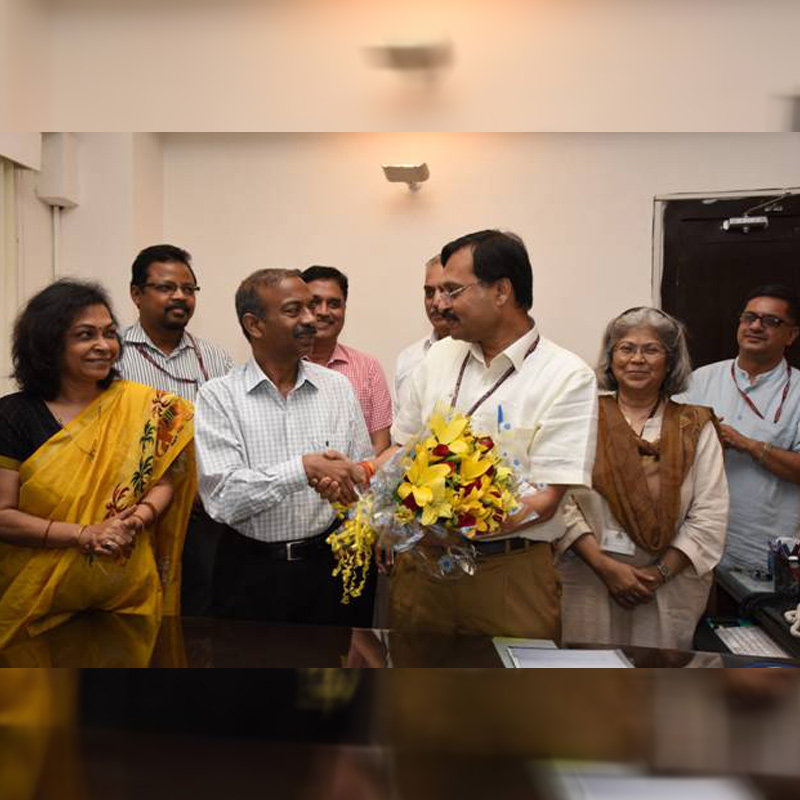
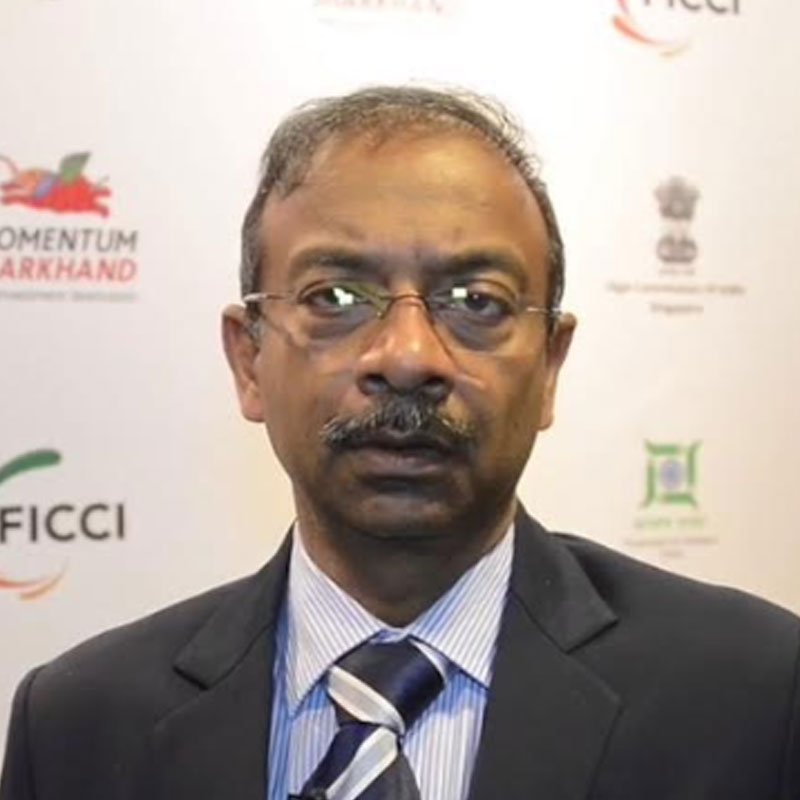
    NEW DELHI: In what could be termed as challenging times, Amit Khare (third from left in the pix) yesterday assumed charge as secretary in the Ministry of Information & Broadcasting on superannuation of Narendra Kumar Sinha.

    Khare is a 1985 batch Indian Administrative Service officer and was posted at a senior level in the state of Jharkhand before he was nominated to take over from Sinha at MIB. Considered an upright civil servant, he is credited for unearthing the multi-million-dollar fodder scam two decades ago in Bihar for which some powerful politicians, including former Bihar chief minister Lallu Yadav, and senior officials have been handed jail sentences of varied time period.

    Some of the issues that would need Khare’s immediate attention, as also his boss MIB minister Rajyavardhan Rathore, include putting in motion the process of quick decision-making at this important ministry, which is responsible for policy-making and their implementation for multi-billion dollar sectors of television, radio, films and advertising.

    With the media and entertainment industry undergoing changes with the arrival of newer technologies, like online distribution of content of all types, MIB needs to keep pace without upsetting the ecosystem that has been reeling under the impact of a sluggish economy and after effects of several other financial policies taken over the last 24 months by the government.

    To give some momentum, Khare would need to hit the road running working along with sector regulator TRAI that has made several recommendations relating to policies, which are yet to be acted upon by MIB, apart from working with the regulator on guidelines that could be in the offing, including uplink and downlink guidelines, DTH licencing norms, online content regulation, removal of bottlenecks in the film sector on opening up more screens and cajoling sister government organisations like Department of Space to have a more liberal approach. Not to mention soothe ruffled feathers at pubcaster Prasar Bharati.

    Media reports have indicated that in the last nine months, inaction had come to such a head at MIB that inter-departmental power games stalled a decision on over 100 applications for new TV channels. It was only about 10 days back that some channel permissions were processed and conveyed to stakeholders.

    During a career span of more than 33 years, Khare has held various field postings and worked at both the state and federal levels.
  • Amit Khare appointed as new MIB secretary

    Amit Khare appointed as new MIB secretary

    MUMBAI: Jharkhand state development commissioner and a whistle-blower civil servant Amit Khare has been named as the new secretary of the Ministry of Information and Broadcasting (MIB). He will take over from NK Sinha who is due to superannuate on 31 May 2018 after a comparatively quiet stint of approximately nine months at a high profile ministry that has constantly remained in the news after finance minister Arun Jaitley gave up the MIB portfolio in 2016 to concentrate on India’s economy.

    The announcement regarding MIB and Khare came on Friday as part of a big bureaucratic reshuffle initiated by the government that is now gearing up for general elections either late this year or first half next year as its five-year term in New Delhi officially comes to an end in May 2019.

    Khare is a 1985 batch Indian Administrative Service officer and is presently serving in Jharkhand. Considered an upright civil servant, he is credited for unearthing the multi-million dollar fodder scam two decades ago in Bihar for which some powerful politicians, including former Bihar chief minister Lalu Yadav, and senior officials have been handed jail sentences of varied time periods.

    Meanwhile, media industry observers hoped that with Khare’s arrival next month and junior minister Rajyavardhan Rathore entrusted with independent charge of MIB last week, some freshness and action would also arrive at the ministry, which has been under fire in recent months for not only taking controversial policy decisions (one of them relating to regulation of fake news being rolled back after PM’s Office intervened), but also angering its own foot soldiers or the Indian Information Service officials by arbitrary transfer postings and allegedly bungling on a film award event where the president of the country was to be present.

    A senior TV executive on condition of anonymity said both Rathore and Khare would hopefully end power games within MIB and actually work to live up to PM Modi’s claims of easing norms for doing business in India; especially as the media industry has been straining to get some helping hand from the government in difficult economic times when the sector is still in the process of recovering from after-effects of demonetisation of high value currency notes in 2016 and a new tax regime of goods and services tax of 2017.   

    Rathore’s senior Smriti Irani, a former TV actress who was handed the dual charge of MIB along with textiles ministry almost a year back, has somehow been in the news for wrong reasons and was divested of the portfolio last week when the Prime Minister initiated a reshuffle of his cabinet colleagues.

    Broadcast industry has been complaining of arbitrary policy decisions being taken by MIB under Irani, including attempts at creating artificial entry-level barriers by insisting on TV channels shift to Indian satellites from foreign ones and hiking administrative processing fees many folds. Industry organisation Indian Broadcasting Foundation recently petitioned the PM’s Office drawing attention to the likely ill-effects on the industry if certain norms regarding uplinking and downlinking, being debated at MIB and regulatory body TRAI, came into force.

    Media reports have also indicated that in the last nine months inaction had come to such a head at MIB that inter-departmental power games had stalled a decision on over 100 applications for new TV channels, apart from other sundry issues. So, media industry stakeholders expect a breath of fresh air to blow in the corridors of New Delhi’s Shastri Bhawan, which houses the MIB along with some other ministries, with Rathore-Khare duo taking charge.

    Earlier this week, Vikram Sahay was appointed as a joint secretary in the MIB.

    ALSO READ:

    Smriti Irani moved out of MIB as Rajyavardhan Singh Rathore gets independent charge

    MIB moves to regulate online media: various organisations join issue   

    PMO directs MIB to withdraw guidelines on fake news

    Time to have rules ensuring no one player dominates media: Smriti Irani

    Smriti Irani exhorts DD to leverage reach better

  • IT minister says won’t allow India to be centre of data pilferage

    IT minister says won’t allow India to be centre of data pilferage

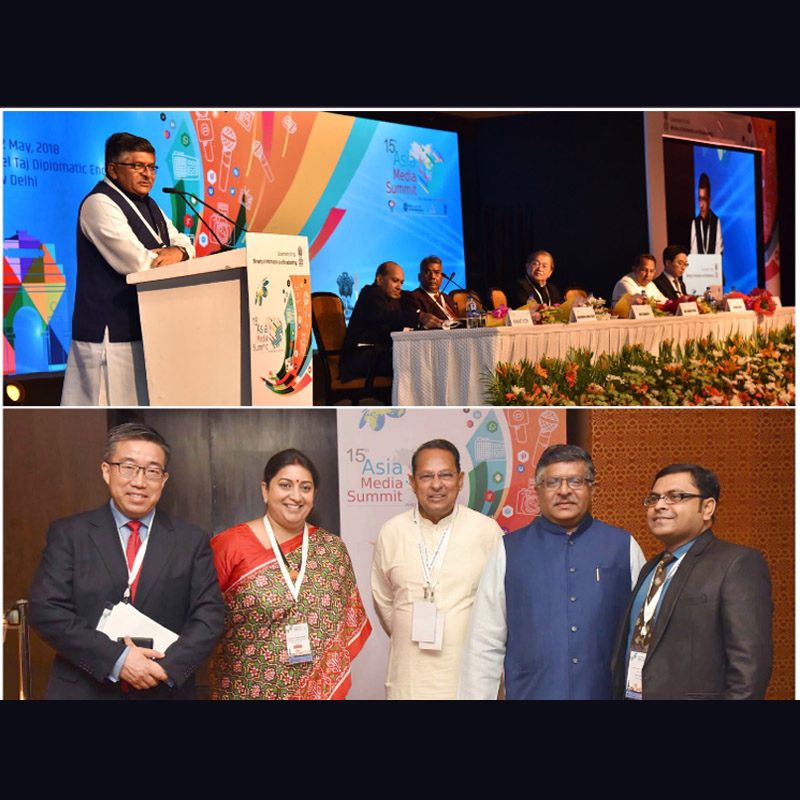
    MUMBAI: The country’s Electronics & IT and Law & Justice minster Ravi Shankar Prasad has come down sharply on data misuse. Speaking at the 15th Asia Media Summit, he said that the government would not allow the country to become a centre of data pilferage and data commerce that, through collusive methods, would be used to influence its electoral process.

    He added that all online companies, which were in the business of data commerce, must understand the nuances of accountability. When the recent controversy surrounding data privacy cropped up, with the Facebook-Cambridge Analytica scandal, the government took a firm stand. Since it is expected that India will be a big centre of data analytics, there is a need to have a proper coordination on data availability, data utility, data innovation, data anonymity and data privacy. Prasad also mentioned that a committee headed by a retired Supreme Court judge was looking into the issues and would soon come out with a data protection law.

    Though social media poses several challenges, Prasad said that the government was committed to the freedom of press but there was a need to segregate the real from the dangerous. The media, he said, had all the rights to inform, circulate, criticise, advice and counsel but the constitution allows for reasonable restrictions to be placed.

    He stated that he was in favour of self-regulation by media along with adherence to the IT Act, which says that content should not be dangerous, libellous or impinge upon the security and integrity of a country or encroach upon copyrights.

    Also Read :

    Efficient digital transition; MyGov.in pockets citizen engagement award

    FB reveals CA harvested data of up to 87 mn people

  • ISRO, DoT turf wars delaying connectivity reach: govt official

    ISRO, DoT turf wars delaying connectivity reach: govt official

    MUMBAI: India builds low-cost satellites but has the most expensive bandwidth, a senior Indian government official said on Tuesday, blaming turf wars between ISRO and Department of Telecoms (DoT) for delays in taking connectivity to far-flung areas.

    DoT special secretary N Sivasailam also flagged issues of costs and said that the Indian Space and Research Organisation (ISRO) should do more in order to take the charges at par with global experience.

    “Here is the paradox. We produce the cheapest satellite but the costliest bandwidth,” Sivasailam was quoted by PTI as saying in a report, adding that India required more transponders on satellites. He was speaking at the ongoing FICCI-Frames 2018 here at a session on ‘Digital India: Sparking the Access Revolution.’ The session also had a talk by ISRO director for the satcom and navigation programme office, K Sethuraman, who dwelled on the agency’s vision for satellite programme of India.

    Sivasailam said there is a “problem of domains” between the DoT and the ISRO that has impacted, for the last 20 years, the roll-out of connectivity in the far flung areas of the country. 

    “The problem is of domains. We [DoT] don’t want to leave our domain [of spectrum allocation]. ISRO doesn’t want to leave its domain. It is a domain related problem…I do not see people coming together and negotiating this aspect out,” he said. Admitting that there is “politics”, which “makes things difficult”, PTI reported, adding that Sivasailam pitched for both the agencies getting over the problems for an overall benefit. 

    “It is time it stopped because it is hurting business development and ultimately people are not getting [benefited],” he said. On the critical issue of pricing, he asserted it will cost around Rs 150 to serve one user with the current cost structure in the country, whereas in the US, it costs $1 or Rs 65. “If the US is getting it for $1 for the same bandwidth for the life of the satellite, I should be getting it at the same rate. There is no reason why it should not happen in India. That is my refrain,” he said.

    Conceding that ISRO helps take satellite connectivity to 5240 far-flung locations in the country, including 4300 in North-East India, Sivasailam elaborated that the cost of satellite, bandwidth and spectrum makes “operations unviable”. 

    “If you have the volume of business, we should be able to provide at the rates internationally available and that is a matter of some concern for us. We have been working on it, but not necessarily successful on this,” he said, stressing that the industry will have to find solutions on this and DoT and ISRO also need to work together on this issue.

    Speaking of self-regulation in over the top (OTT) services, he said it cannot substitute regulation. “When you talk of regulator’s way of looking at regulations, it lies on consumer side and that’s where self-regulation in itself will fail,” he said, pointing out that while it is particularly important in the telecom sector with issues of call drop and number portability, it may not be applicable too much in the broadcasting sector.

    Sivasailam also spoke of the Telecom Regulatory Authority of India (TRAI) recommendation on in-flight connectivity, which will be taken to the Telecom Commission “sooner than later” and it “could be a reality soon”. On 20 January 2018, the TRAI came out with recommendations suggesting that airlines should be allowed to offer in-flight connectivity over Indian airspace, including broadband services. The Civil Aviation Ministry, Department of Space and DoT now have to act on the suggestions to make it a reality. 

    The Telecoms Ministry official said there are discussions within the department on whether to allow both voice and data on flights or restrict it to voice connectivity alone. The new telecom policy will also be out “very soon,” he said.

    Also Read :

    M&E stakeholders need to collaborate for growth: Sudhanshu Vats

    Broadcasters see positive future for TV in India

  • Terry Burns appointed Ofcom chairman

    Terry Burns appointed Ofcom chairman

    MUMBAI: Lord Terry Burns has been appointed as the next chairman of Ofcom. This follows the digital, culture, media and sport committee pre-appointment hearing with Lord Burns. Karen Bradley, the Secretary of State for Digital, Culture, Media and Sport, has now confirmed the appointment.

    Lord Burns was until January 2016 the chairman of Channel 4 having served for six years at the public service broadcaster.

    He has also served as chairman of a number of private and public-sector organisations, including Marks & Spencer, Santander UK, Welsh Water, the National Lottery Commission, and The Royal Academy of Music.

    From 2004 to 2006, Lord Burns was independent adviser to the Secretary of State on the BBC Charter Review. He sits as a cross-bench peer in the House of Lords.

    Dame Patricia Hodgson is stepping down as chairman of Ofcom at the end of the year. Lord Burns will take up the role from 1 January 2018.

    “I am very pleased to have the opportunity to take on this role at an important time for Ofcom. The UK communications sector provides essential services to everyone in the UK and is critical to the future success of the economy,” Lord Burns said.

    Sharon White, Ofcom Chief Executive, said: “Lord Burns brings with him a wealth of experience and I am looking forward to working together as we deliver on Ofcom’s priorities.

    “I am incredibly grateful to Dame Patricia Hodgson, who has provided expert stewardship to Ofcom as chairman and deputy chairman over the past six years. Colleagues across Ofcom thank her for the contribution she’s made.”

  • FCC outvotes 2015 net neutrality rules

    FCC outvotes 2015 net neutrality rules

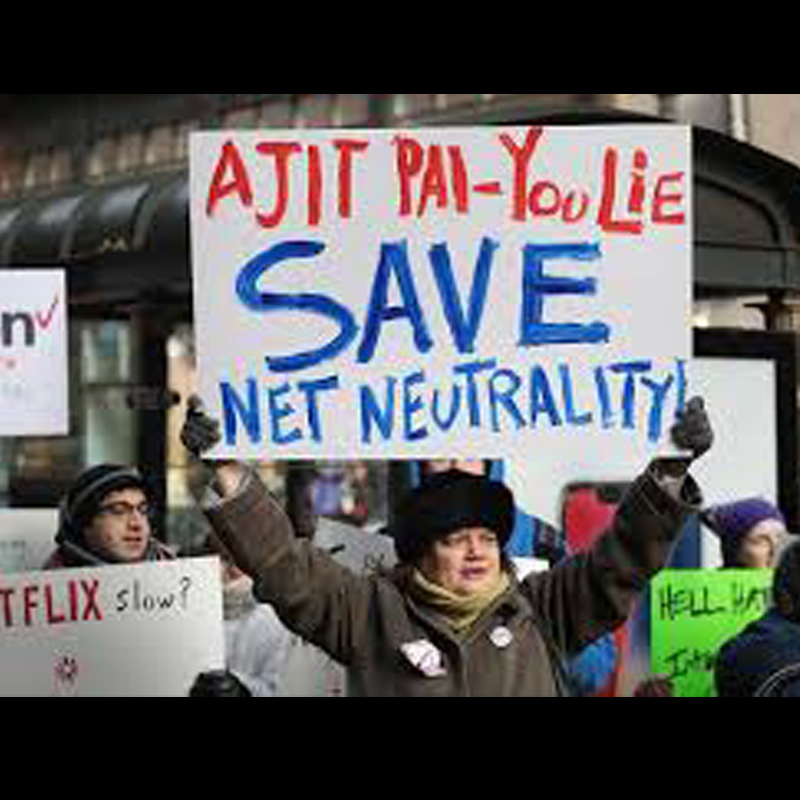
    NEW DELHI: American telecoms and broadcast regulator FCC on Thursday voted out the 2015 Obama government’s regulations relating to net neutrality, which, some critics said, put too much power in the hands of broadband companies to influence consumers’ online experiences.

    According to the FCC, it voted to restore the “longstanding, bipartisan light-touch regulatory framework” that had fostered rapid internet growth, openness, and “freedom for nearly 20 years”.

    Following detailed legal and economic analysis, as well as extensive examination of comments from consumers and stakeholders, the commission reversed the FCC’s 2015 “heavy-handed utility-style regulation” of broadband internet access service, which imposed substantial costs on the entire internet ecosystem.

    “In place of that heavy-handed framework, the FCC is returning to the traditional light-touch framework that was in place until 2015.  Moreover, the FCC today also adopted robust transparency requirements that will empower consumers as well as facilitate effective government oversight of broadband providers’ conduct,” the commission said in a statement, adding, “In particular, the FCC’s action today has restored the jurisdiction of the federal trade commission to act when broadband providers engage in anticompetitive, unfair, or deceptive acts or practices.

    “The framework adopted by the commission today will protect consumers at far less cost to investment than the prior rigid and wide-ranging utility rules. And restoring a favourable climate for network investment is key to closing the digital divide, spurring competition and innovation that benefits consumers.”

    New York Times, which has often criticised FCC chief Ajit Pai’s stand on some issues, including net neutrality, reported Mignon Clyburn, one of the Democratic commissioners who voted against the action, accused the three Republican commissioners of defying the wishes of millions of Americans. She was quoted by the newspaper as saying, “I dissent because I am among the millions outraged. Outraged because the FCC pulls its own teeth, abdicating responsibility to protect the nation’s broadband consumers.”

    Brendan Carr, a Republican commissioner, was quoted as having said it was a “great day” and dismissed “apocalyptic” warnings.

    Before the voting on net neutrality took place, Pai said, “We are helping consumers and promoting competition. Broadband providers will have more incentive to build networks, especially to underserved areas.”

    What do the FCC’s new rules mean, as and when they come into effect? In simple terms: it would allow walled garden of content and also help broadband companies and telcos to prioritise services and have different price structures for services.

    Tech magazine Wired observed that broadband providers say the public has nothing to worry about and that AT&T, Comcast and Verizon, among others, have promised not to block or throttle content. But those promises leave internet providers with quite a bit of room to prioritise their own content, or from their partners, the magazine commented.

    “AT&T, for example, already allows its DirecTV Now video-streaming service to bypass mobile subscribers’ data limits. Verizon does much the same with its Go90 video service. Sling TV and Netflix, on the other hand, still count towards customers’ data caps. The end of the FCC’s current rules will allow companies to expand the ways they prioritise certain services over others,” Wired said.

    However, some observers in the US, including the NYT, also were categorical that in the new year the FCC regulation most likely will be challenged in courts.

    The full text of the FCC statement could be accessed at https://www.fcc.gov/document/fcc-takes-action-restore-internet-freedom.

    ALSO READ:

    TRAI releases recommendations on Net Neutrality

    TRAI & FCC sign agreement on accelerating broadband deployment

    Restoring Net freedom: FCC seeks public participation

  • MIB gets a new additional secretary – Ali Raza Rizvi

    MIB gets a new additional secretary – Ali Raza Rizvi

    NEW DELHI: Senior Indian Administrative Officer Ali Raza Rizvi, a 1988 batch officer from the Himachal Pradesh cadre, has been transferred as the additional secretary and financial advisor to the information and broadcasting ministry.

    Rizvi had, in the third week of July this year, been asked to join as the chairman and managing director of the National Mineral Development Corporation at the rank of additional secretary, which stands cancelled, now. He had been the joint secretary in the commerce ministry till that order came in, and was at present was the additional secretary in the same ministry.

    Prior to joining the commerce ministry, he had been the joint secretary in the health ministry.

  • Dhillon among three women on Film Tribunal

    Dhillon among three women on Film Tribunal

    NEW DELHI: The Film Certification Appellate Tribunal, which is the official body for appeals against decisions of the Central Board of Film Certification, has once again got more women members as compared to their male counterparts.

    Actress Poonam Dhillon, journalist-turned-politician Shazia Ilmi, lawyer Bina Gupta represent the women on the Tribunal, which has four members apart from the chairman. According to a list posted on the information and broadcasting ministry’s website, journalist Shekhar Iyer is the lone male member of the Tribunal.

    The FCAT is headed by former Delhi Lokayukta Justice Manmohan Sarin, who was appointed chairman in November 2016. The post was earlier held by the retired Delhi High Court judge S K Mahajan, who passed away in September 2016.

    Justice Sarin, who was also the chief justice of Jammu and Kashmir High Court, has a three-year tenure as head of the Tribunal.

  • Dhillon among three women on Film Tribunal

    Dhillon among three women on Film Tribunal

    NEW DELHI: The Film Certification Appellate Tribunal, which is the official body for appeals against decisions of the Central Board of Film Certification, has once again got more women members as compared to their male counterparts.

    Actress Poonam Dhillon, journalist-turned-politician Shazia Ilmi, lawyer Bina Gupta represent the women on the Tribunal, which has four members apart from the chairman. According to a list posted on the information and broadcasting ministry’s website, journalist Shekhar Iyer is the lone male member of the Tribunal.

    The FCAT is headed by former Delhi Lokayukta Justice Manmohan Sarin, who was appointed chairman in November 2016. The post was earlier held by the retired Delhi High Court judge S K Mahajan, who passed away in September 2016.

    Justice Sarin, who was also the chief justice of Jammu and Kashmir High Court, has a three-year tenure as head of the Tribunal.

  • Suresh Panda may be Prasar Bharati interim CEO; liberal DD auction criteria recommended

    Suresh Panda may be Prasar Bharati interim CEO; liberal DD auction criteria recommended

    NEW DELHI: Suresh Panda, member (personnel) in Prasar Bharati is expected to take over as the acting chief executive officer of the pubcaster after the incumbent CEO Jawhar Sircar demits office on 4 November.

    The Prasar Bharati Board has recommended relaxation in the criteria for auction of prime time slots on DD National. This decision was taken at a meeting of the Board held today under the chairmanship of Dr Surya Prakash.

    However, Prasar Bharati sources told indiantelevision.com that Panda’s ad hoc charge will be subject to approval by the Information and Broadcasting Ministry.

    After 4 November, a high-level committee headed by India’s vice-president Hamid Ansari will meet as stipulated in the Prasar Bharati Act 1990 to select a new CEO.

    Meanwhile, the Board also took some decisions with regard to the proposed auction of prime time slots on Doordarshan National.

    It was decided, among other changes, to fix the minimum reserve price for the auction of half-hour slots at Rs 1,50,000. Full details were not available but there may also be a reduction in the total number of hours a prospective producer should have clocked either as a filmmaker or as television producer.

    The slot auction was first announced in June but failed as there were no bidders, while those who bid the second time late last month failed to meet the minimum requirements.

    The regulations had been relaxed and the second auction had been fixed for 5 September.

    Under the rules until now, only producers/production houses that have produced at least 200 hours of general entertainment programming including feature film production in any Indian language in the last three years will be eligible to apply for bidding for slots on the national channel of Doordarshan.

    Following a revision of terms after June, the Prasar Bharati Board had said that production houses with a turnover of minimum Rs 3 crore per annum in the field of TV and Film production in the last three financial years are eligible to apply.

    Applicants for weekend slots in the genres of Reality, Game, Quiz, should have produced 100 hrs of such content in the last 3 years.

    Earlier, only those with production in television and a minimum of 300 hours had been allowed. But this has been amplified ti include film production houses and 200 hours of entertainment programming.

    Successful bidder(s) will produce fresh programmes in various genres of general entertainment programme for Doordarshan adhering to the programming/broadcasting codes of Prasar Bharati.