Category: People

  • Wavemaker India ropes in George Kovoor as chief creative officer

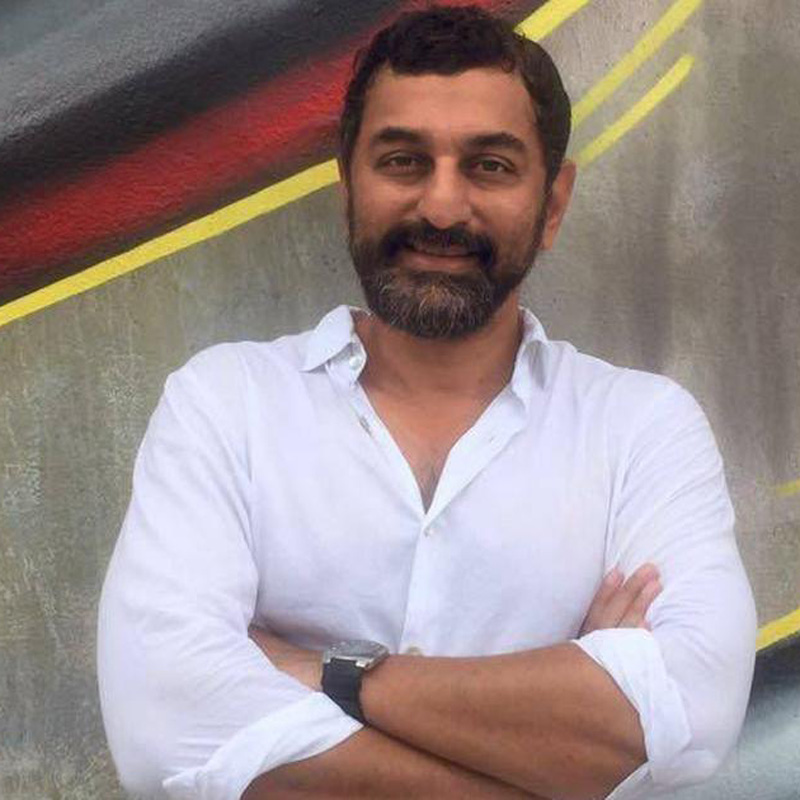
    Mumbai: The most-awarded agency from GroupM, Wavemaker India, has appointed George Kovoor as chief creative officer. In his new role, Kovoor will report to Wavemaker CEO – South Asia Ajay Gupte and will be based out of Bangalore. He joins Wavemaker after an eight-year-long stint with Ogilvy where he was digital lead – Mumbai and South operations.

    Kovoor is an accomplished creative leader with three decades of experience in digital, social, tech, and mainline advertising.  Over the years he has led creative teams across advertising agencies like Lintas, FCB, Digitas LBi and Ogilvy among others. His work has been recognised in numerous international and domestic award shows, and he has served on several award juries.

    Kovoor has spent the last eight years at Ogilvy, during this time he has helped shape the digital teams in Mumbai, Gurgaon and Bangalore. In addition to his professional accomplishments, Kovoor is a faculty member at the Miami Ad School in Bangalore, where he shares his knowledge and expertise with the next generation of advertising professionals. He also has a passion for movies, sports, and gaming.

    Speaking about the appointment, Gupte said, “We are witnessing an exciting phase of transformation in the media industry where traditional methods are challenged at every step. Data, content and technology have always been the three key pillars at Wavemaker and we have all experienced the magic when these three ingredients are used in the right proportion. In his previous roles, Kovoor has played an instrumental role in integrating mainline and digital creative teams. He enjoys an incredible reputation in the creative industry for his impressive work which has been recognised at local and global platforms. With Kovoor coming in as the chief creative officer, I am quite confident about taking our creative offerings a notch higher.”

    Talking about his new role, Kovoor said, “I am actually struggling to put into words exactly how excited I am with my new role. It gives me the opportunity to join a team of digital experts who have been shaping customer experiences while creating ideas that are driven by both data and technology. In the last few years, Wavemaker has created content that is both disruptive and award-winning. I am very excited by Wavemaker’s vision of the future and hope to contribute significantly in turning the vision into reality.”

  • Shemaroo Entertainment announces series of key appointments to strengthen its leadership team

    Mumbai : Shemaroo Entertainment, India’s leading media and entertainment powerhouse in India, has made key leadership appointments in Human Resource, Domestic and International Syndication Business and their Digital Video Business. These appointments are part of Shemaroo’s ongoing efforts to strengthen its workforce by onboarding proven professionals to drive growth and innovation for the organisation.

    *Shiza Ansari Khan* has been appointed as the Head of Human Resources who will lead Organisational Transformation and Business Excellence along with Strategic Cultural Development. In her career spanning close to 20 years, Shiza has held various leadership and managerial roles across leading national and multinational companies such as BIC Cello India Pvt. Ltd., Larsen & Toubro Ltd., Volkswagen India Pvt. Ltd., Reliance Infrastructure Ltd. and others.

    *Nishith Varshneya* will be the Head of International Business & India Digital Syndication. A highly skilled professional with a proven track record, Nishith will play a key role in driving the company’s International Business and Digital Syndication Strategy. Nishith comes with over 17 years of experience in building Product & driving Revenue for various media businesses in Television, Digital, Radio, OOH, Live & Experiential Large Format IPRs. In his previous stints Nishith has worked with Disney Star, Times OOH and Radio Mirchi amongst others.

    Both Shiza and Nishith will report into Arghya Chakravarty, COO – Shemaroo Entertainment.

    *Abhinav Anand* has joined as Vice President, Digital Video Business. With his expertise and diverse industry experiences, he will direct, develop, and implement the company’s digital platform strategy and ensure seamless delivery of content across Shemaroo’s loyal viewer base. Abhinav has over 12 years of experience working with consumer brands like Ola, Phone Pe, Amazon Sellers Service Private Ltd., Bajaj Finance and others.

    Abhinav will report into Zubin Dubash, COO – Digital Businesses.

    *Commenting on the new developments in the leadership team, Arghya Chakravarty, COO – Shemaroo Entertainment said,* “We at Shemaroo Entertainment believe in cultivating an environment of innovation, growth and diversity. Onboarding dynamic professional leaders aligned with our company’s vision will bring in new perspectives that will be critical in propelling our company forward. These appointments signify our commitment to staying at the forefront of this rapidly evolving industry and capitalizing on the vast opportunities it presents. I am delighted to welcome Shiza, Nishith and Abhinav to Shemaroo and wish them all the very best in their respective roles.”

    Shemaroo Entertainment is committed to fostering a culture of innovation and excellence, and these new leaders are a testament to that commitment. The company is excited to work with these talented individuals and watch them thrive in their new roles.

  • Famous Innovations appoints Sharon Varghese as business head of Bangalore operations

    Mumbai: Famous Innovations, an independent agency, has onboarded Sharon Varghese as its head of business for the Bangalore office.

    Varghese joins the company holding 18 years of rich experience in the fields of advertising and public relations. Prior to this, she worked at McCann Worldgroup for five years as Group Business Director, looking over eminent clients like Britannia, Flipkart, Qualcomm, and several others.

    Over the years, Varghese has pulled off both planning and account management roles, leading key business relationships across extensive categories for clients in the FMCG, e-commerce, fashion, technology, travel, hospitality, and healthcare spaces. She holds an engineering and management degree from Vellore Institute of Technology and the Indian School of Business, Hyderabad, respectively.

    Elated with this appointment, Varghese said, “Famous Innovations is no ordinary creative agency. It is one of the fastest-growing independent agencies blossoming out of India. It has a unique, young, progressive, brave and energized culture that I have found to be truly refreshing. This dynamism is reflected in their work and the fact that they work with some of the most formidable brands not only out of India but globally as well. Truly excited to do some great work together.”

    Famous Innovations CEO Mithila Saraf said, “Varghese’s diverse and unique background means that she brings a very unique perspective and balance of business, brand and creative thinking. While her fundamentals of marketing are strong, she’s also ahead of our constantly changing industry and is keenly interested in driving that change, for our agency and our brands. We’re excited about this next chapter for Famous Bangalore.”

  • D2C in 2023: Hyper-personalisation, omnichannel and AI approach is going to be the way

    D2C in 2023: Hyper-personalisation, omnichannel and AI approach is going to be the way

    Mumbai: Amongst the many industries that have been witnessing growth, one such industry is direct-to-commerce (D2C).

    The world opened up in 2022 after two years of the pandemic-led slowdown. The last couple of years saw a significant shift in demand for various product categories, accelerating a decade’s worth of adoption into just 100 days, giving a strong push to the emergence of the D2C channel. The D2C industry is one of the fastest growing in India as more and more consumers are turning towards channels that enable convenient and faster purchase experiences.

    The D2C industry in India has benefited from the widespread adoption of e-commerce led primarily by the increased penetration of the internet and access to mobile devices in the country. In recent years, there has been a significant rise in the number of D2C brands in India, as well as a rise in the number of consumers purchasing directly from these brands. Optimism is running high for Indian D2C brands.

    It is estimated that D2C brands in India are growing at a compound annual growth rate (CAGR) of 40 per cent. The combined revenue of D2C brands is expected to hit $60 billion by FY27 from $12 billion in FY22 according to the CII Shiprocket India D2C Report 2022.

    Indiantelevision.com spoke to some of the leading D2C brands in the Indian market to find out about their success story, their vision and their way forward for 2023, and about the trends and innovations that would be significant for the D2C market this year.

    An uptick in purchases of D2C brands

    Noise chief operating officer Utsav Malhotra emphasises that D2C has changed the way consumers interact with the brand or define their purchase journey. “We started with a digital-first approach and soon understood the importance of expanding our footprint beyond the digital medium to reach consumers across pan India. Offline has further become an important channel for D2C brands as they obtain an omnichannel presence.”

    He adds, “At Noise, we have been at the forefront of the growth of the smartwatch category in India by focusing on creating awareness, availability, and affordability. Our marketing strategies are based on the objective to amplify the differentiation we create through our offerings, laced with our philosophy of following our instincts. We have a very efficiency-driven approach when it comes to deciding marketing strategies, with clear objectives defined for each type.  We recently onboarded Virat Kohli as our brand ambassador as he resonates well with our ethos of co-creation. We are always innovating when it comes to our campaigns, further deepening customer trust and allegiance, leading to trendier and more meaningful offerings across our smartwatch segment.”

    As a result of this, Noise emerged as one of the fastest-growing wearable brands in India, the largest smartwatch brand for nine quarters now, with a current market share of close to 30 per cent (29.5 per cent), and the second-largest in the TWS category since last year, with a growth of 100 per cent YoY. “One out of every four smartwatches that sell in India today, is a Noise smartwatch.  We also recorded a remarkable growth of over 200 per cent during last year’s festive season, selling over two million smartwatches during the period.

    WOW Skin Science co-founder Karan Chowdhary discusses, “Our growth rate has continued to remain impressive through 2022, as more and more consumers purchased our products. We have grown as a company and as a brand, so there is the need to build a stronger brand connect with our consumers, which is where our ad spend comes in. We have invested in getting new brand ambassadors like Rashmika Mandanna and Kartik Aryan to promote our bestselling hair care products.”

    Re’equil India head – marketing & online sales Anshul Sharma brings out that the hallmark of a strong marketing exercise is less about how much you are spending and more about how effectively you are doing it. From customer acquisition to retention to building brand loyalty, every spend needs to aligned with the larger business goal and have to ensure adequate return on investment. “Re’equil is a brand that is built on consumer feedback and consistent engagement. Over 87.2 per cent of our customers have rated our product four stars and above which has also led to positive word of mouth (WoM) for the brand and purchase.”

    Television and digital – the main mediums

    While Chowdhary could not talk actual numbers, he reveals that WOW Skin Science does invest a considerable part in advertising and marketing to develop meaningful brand connection with its consumers. “We have always been a digital-first organisation, so our main focus has always been to leverage the marketing opportunity that the digital medium provides. We have used social media, online video channels and our own website to tell the brand story and connect in a more meaningful way with our consumers. We have only recently started using the television as an advertising medium, so the percentage of ad spend there remains lower.”

    Sharma of Re’equil states that as a D2C skincare brand it primarily relies on modern marketing tools that are dynamic and have an increased propensity to influence brand consideration. “While traditional platforms like television work for larger consumer brands, digital marketing and communication has been the game changer for us while reaching out to a target audience that is highly mobile, technology savvy and discerning. Owing to the growing influence of digital mediums we have been able to build a skincare brand that is consultative and effective by leveraging the power of online community and word-of-mouth. Digital mediums have helped us connect better and faster with our consumers and exchange information that has helped us develop specific solutions for their concerns. Our goal is to continue exploring more new-age platforms that will enable us to connect more meaningfully with our consumers.”

    2022 strategy vs 2023 strategy

    “Our strategy for the next year is to double down our growth, whether it is in terms of revenue or offline expansion to increase our consumer touchpoints. We recorded a remarkable 100 per cent YoY growth and closed 2022 at Rs 850 crore which was doubling down from last year. To continue the momentum we are aiming to close FY23 at Rs 2,000 crore. Our aim would be to continue developing products based on four key pillars – consumer centricity, design, and innovation,” tells Malhotra.

    Chowdhary clarifies that their strategy for 2023 will continue to be on product innovation and customer experience. It is not much different from what the brand did in 2022, since that has been a winning strategy for it from the beginning. In fact, WOW Skin Science has now a dedicated new product innovation team to work on new actives and product formats.

    Given the dynamic environment, Sharma reveals that Re’equil is constantly looking to adapt itself to build and strengthen consumer connect. “While 2022 was the year we finally overcame the restrictions imposed by the pandemic, it has led to the creation of a customer who is increasingly tech savvy and way more informed and discerning when it comes to self-care. As a self-care brand we will continue to mobilise modern marketing tools as it has proven to be increasingly effective in networking with consumers, inspiring brand consideration as well as building loyalty. We are a brand that has been built on the back of customer loyalty and word-of-mouth. It is important for us to always put the customer first by creating channels for effective communication to deliver effective results.”

    Focus areas in 2022 vs Focus areas in 2023

    Malhotra elucidates, “The year 2022 has been a landmark year for a homegrown brand like us who has been leading the smart wearable industry from the front to consolidate top position not just in India but globally as well. India has emerged as the largest market for smartwatches, as per a recent report by Counterpoint where Noise became the only homegrown brand to make it to the top three smartwatch brand list globally.

    We are proudly driving profitability as the largest bootstrapped brand in a deeply funded ecosystem. Not just that, Noise is a proud Make in India brand that has led the localisation of production of smart wearables. We started local production trials last year and have already reached the mark of over 45 per cent products being manufactured in India. As per Counterpoint, three out of four smartwatches that were made in India last quarter were Noise smartwatches.”

    He further specifies, “In 2023, we further aim to ladder up from our achievement in 2022 and continue to put India on the global map. We launched Noise Labs, an in-house tech incubator with a focus on creating futuristic and first-of-its-kind products, early this year. Looking at the overwhelming response to our initial products – Noise i1 and Noise IntelliBuds, we would continue to strengthen our portfolio under Noise Labs in 2023.  We would also continue to expand our consumer touchpoints and expand our reach across offline channels in the coming year.”

    For WOW Skin Science, Chowdhary tells that in 2022 their focus was more on sustaining the business and meeting consumer expectations as the latter stepped out again and had different needs from the time they were in lockdown. “The focus was on promoting our products as a solution to their healthy beauty needs. This year we will try out new types of products like fragrances, target skin and hair solutions, lip care and eye care products. We are also working with newer ingredients and hero actives.”

    Sharma points out, “Re’equil is a bootstrapped brand; now into our fifth year of operation. We are focused on staying true to our brand promise of delivering effective solutions through scientifically tested formulations and building a stronger connect with our customers. 2023 will also be a year where we are focused on spreading our geographical reach to more tier I and tier II markets across India. We have placed great emphasis on research and have gotten strong insights which will be used to launch innovative products that are in keeping with consumer needs.”

    Challenges, learnings and lessons for the year

    Malhotra accepts that they don’t foresee any challenges as such; they look at every challenge as a new opportunity. 2022 was a successful year for Noise and they are confident that they will double down this growth in 2023 as well. “We would continue to strengthen our portfolio under Noise Labs, an in-house tech incubator with a focus on creating futuristic and first-of-its-kind products.  

    We would continue to expand our consumer touchpoints and expand our reach across offline channels.”

    “The innovation drive, deep understanding of consumer needs, and diverse portfolio is something that we learnt to offer in 2022 to our consumers. We have been successful in ensuring industry-leading features at a competitive price point which led to substantial milestones in the space. We are keen on implementing these learnings in the coming year,” he adds.

    Chowdhary believes, “Every day we are seeing new D2C beauty brands entering the market, and traditional beauty and personal care brands are experimenting with some D2C-like strategies, so the competition will be big. The consumer is spoilt for choice, so the challenge for us will be to retain their loyalty and interest them in repeat buying. So not only will we have to develop unique and innovative products, but also have to keep the conversation going with our target audience in an engaging and meaningful manner.”

    “Focus on delivering amazing consumer experience. Our aim was, is and always will be to provide our consumers with a WOW! product experience. We want to build a relationship with them, where they know that we are delivering honest products that are good for them and provide visible results. We want to make sure that we are there with our consumers in their wellness and beauty journey,” he further adds.

    “Agility and adaptability are the founding blocks of a growing D2C business.  At Re’equil, we believe that there is an opportunity in every challenge. We, therefore, drive ourselves to constantly innovate and apply our knowledge to develop products that are in line with our goal of being an effective cosmeceutical brand. Constant re-invention is the need of the hour to adapt to an ever-changing consumer and market dynamics and we are deeply committed to this,” tells Sharma.

    Evolving trends for the year

    Malhotra explains that wearable lifestyle technology is ever-evolving in order to cater to the dynamic needs of consumers. Currently, the industry is being driven by a multitude of factors and the demand for more insights that will eventually provide more value to consumers is one of the key ones. “As the chips in our smartwatches get more powerful, they’re expected to start performing more functions and offering effective insights into the users’ life. Smartwatches are now designed to suit various moods and personalities with a host of watch faces, unique colours and dial shapes, and the ability to make calls and touch control amongst others. The integration of artificial intelligence and voice assistants into smartwatches is also something that is gaining traction. They ensure ease of use for making calls, playing music, checking the weather etc. and let your smartwatch do as you command.”

    The global wearable AI market size according to a report by Gran View Research Inc. is expected to reach $166.47 billion by 2030. The on-device AI operations segment currently dominates the market and is expected to witness the fastest growth owing to the increasing requirement for fast computing substantiating this key trend.

    “At Noise, we are continuously working towards meeting the dynamic demands of consumers in this space. Our devices resonate with the belief and our latest innovation from Noise Labs, Noise IntelliBuds, exemplifies the integration of AI to make user experience seamless and unique. We have focused heavily on innovation to build brand love and product preference among consumers for all our products. A testament to this is that Noise smartwatches are being appreciated for tech and design, and our upcoming efforts are also a step further in this direction,” he adds.

    There are two or three major trends that will drive the market in 2023 for personal care and beauty brands. “In terms of consumer buying behaviour, the demand for eco-conscious, clean beauty products will continue to grow. Single-active, multi-use products will also see greater demand. These trends started becoming popular in 2022 and will continue to pick up steam in 2023. In terms of product and marketing trends, we expect hyper-focused products and services to become popular. Along with hyper-personalisation of branding messages and product, recommendations will also take precedence. Obviously, the customer-first strategy will be in the middle of this all,” reveals Chowdhary.

    Sharma understands well that the modern consumer is knowledgeable with easy access to technology, highly networked and eager to provide feedback or share reviews. They no longer rely on hype and want formulations that deliver effectiveness and are highly personalised.

    She says, “We have also seen a significant shift in consumer profile where more men are taking self-care including skin and hair care more seriously and investing in the same. The industry has also seen an emergence of gender-neutral brands. Being a self-care brand, our current product portfolio which includes skin and hair is gender-neutral.

    There is also a premium placed on brands to be more authentic and transparent, especially with labelling as well as formulations.”

    “We are excited to be operating in this environment where consumers are pushing the envelope and demanding more accountability from brands. Brands on their end have also become more flexible, open to criticism and quick to adapt to remain relevant,” Sharma brings out.

    Disruptive innovations that are expected

    Chowdhary of WOW Skin Science strongly opines that innovations around improving customer experience will continue to remain the main focus for beauty brands. For a brand to be successful in the market in this hyper-competitive scenario, omnichannel presence and experience will also be important. “We as a brand have used predictive models and intensive data analysis to offer the best possible options to our consumers. I think that will be important. What will disrupt the market is when brands start taking a 360-degree view in terms of product development, customer experience, brand engagement, product delivery and customer service, and work on this as a complete approach instead of working on each aspect as a silo.”

    Malhotra obviously fathoms that the D2C space has witnessed tremendous growth in the last few years, there is a pool of opportunities running high for D2C brands as 2023 has set in. In 2023 the D2C space is expected to evolve even further and one of the key trends we can expect is the emergence of new and promising segments. “We have seen a proliferation of purpose driven brands entering the D2C space in categories we didn’t foresee could exist.  Consumers are intrigued by what problem a brand is solving and chooses to interact with or invest in a brand, they do so with brands they connect and resonate with. We can expect more brands disrupting new categories to adopt a D2C mindset.

    Brands in the D2C space are also moving towards an omnichannel approach wherein they’re looking at expanding their footprint beyond digital medium to offline channels, in order to make their offerings available to consumers residing in Bharat, i.e. Tier II and Tier III cities. Not just that, many consumers still prefer experiencing the product in person before making the final purchase decision and this is why it will be important for D2C players to be present across touchpoints. While digital channels have aided D2C brands to reach consumers irrespective of geographies, an offline presence will further deepen the penetration.”

    He, too, bets on hyper-personalisation and feels that brand experience is expected to further move into the next phase of consumer experience through hyper-personalisation. This is a key trend which would help  D2C brands to build a deeper connect with audiences and higher recall for the brand in a space where players are constantly battling to create distinct differentiation for their offerings. “Noise’s AI-driven campaign in partnership with Rishabh Pant was focused on sending out personalized messages to the potential buyers of our flagship smartwatch, the ColorFit Pro 4 series, offering an increased recall and conversion.  As the D2C space grows, we are growing with it and forging our way into the future with a heightened sense of co-creation and innovation in products,” Malhotra specifies.

    According to Sharma as well, technology first and AI led intuitive customer interactions will continue to be the game changer for D2C brands. Brands have been able to leverage AI to deliver consultative solutions for the customers taking into consideration their skin type and requirement. With development in technology there will be more immersive experiences available for the customer to make informed decisions without having to physically go to a retail store.

    She is another taker for hyper-personalisation, and gathers that the future of D2C is also hinged on hyper-personalisation. While personalisation is not a new concept, pre-pandemic it was largely limited to luxury brands. With the advancement in technology more brands are investing in understanding consumer behaviour, tracking and collecting consumer data from various sources to create tailor made solutions to address specific concerns.
  • Sarfaraz Ansari joins DDB Mudramax as senior vice president – integrated media

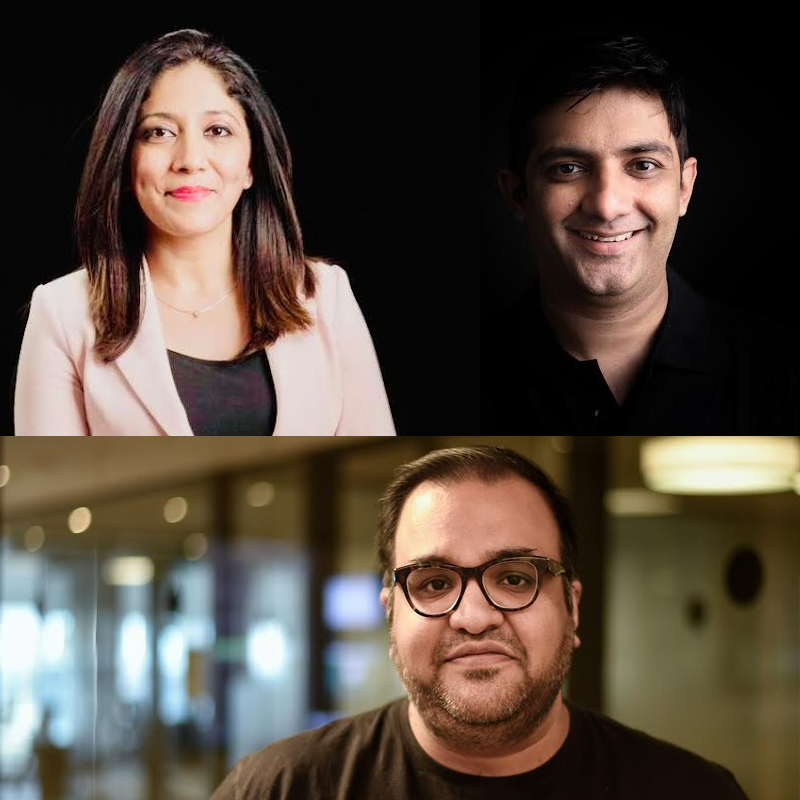
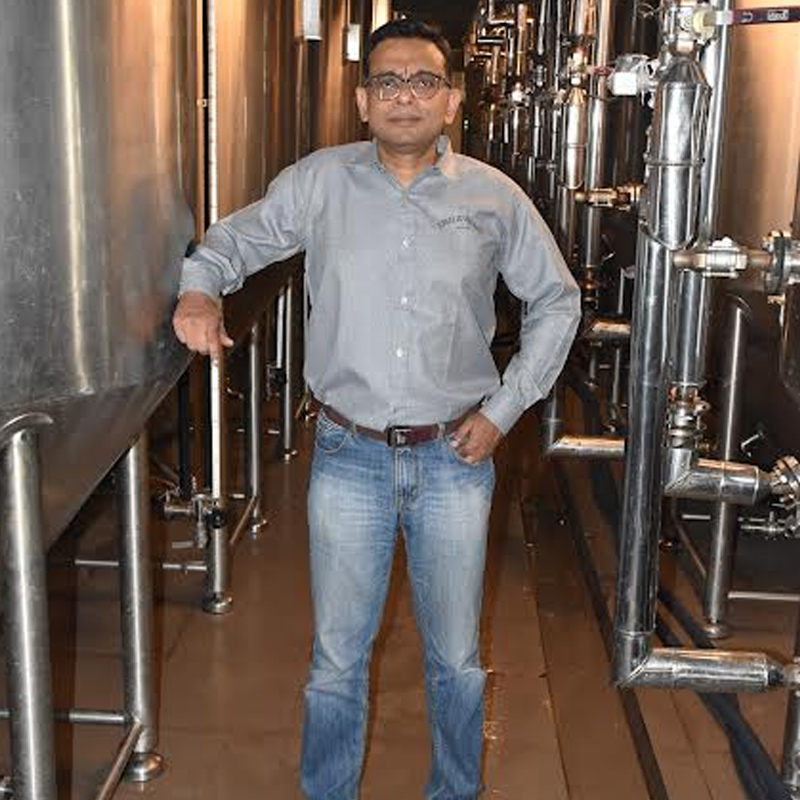
    Mumbai: DDB Mudramax boosts its media expertise with the appointment of Sarfaraz Ansari as senior vice president – integrated media. He will be responsible for leading strategy and ideation for integrated solutions across media platforms.

    With over 17 years of experience, Ansari has worked across industries like FMCG, financial services, telecom, and worked with brands such as Johnson & Johnson, Spotify, Mahindra, Hershey’s, Finolex Pipes, Marico among others. His previous stint was as the buying lead at Lodestar Media.

    Speaking on the new appointment, DDB Mudra Group country head and managing partner – integrated media Rammohan Sundaram said, “Sarfaraz’s calm and composed demeanour backed with solid conviction and science makes him one of the best in the business. Especially with some of our large clients, where we needed someone who can fit into our culture and at the same time solidify our leadership in strategic buying across all media. To that effect, he is perfect and has already impacted positively to our setup at Mudramax.”

    Commenting on his new role, Ansari said, “The DDB Mudra Group has made some remarkable strides over the past few years with inspiring and diversified campaigns across categories. I look forward to contributing to the Group’s growth trajectory, taking on exciting challenges and opportunities.”

  • NXTDIGITAL Ltd. shareholders approve name change

    Mumbai: NXTDIGITAL Ltd. (NDL) has announced that the company’s shareholders have approved the change in the company’s name to NDL Ventures Ltd., subject to regulatory approval. The e-voting process began on 29 December 2022 and concluded on 28 January 2023.

    With the on-going merger with Hinduja Leyland Finance Ltd. (HLFL), a systemically important non-banking finance company  (NBFC), into the company  (subject to shareholder and regulatory approval), the company  has inducted HLFL managing director & CEO  Sachin Pillai as an additional director on the board of the company. This will pave the way for the company  to enter the financial services sector.

    Welcoming Sachin Pillai on to the board, chairman Sudhanshu Tripathi stated that “We are very pleased to have Sachin Pillai on our board. With his experience of over two decades of leadership experience he is very well positioned to support our financial services blueprint.”

    The company  has always strived to maximise the interests of its shareholders. To that end, the recently completed issue and allotment of equity shares of Hinduja Global Solutions Ltd. pursuant to the scheme of arrangement, as well as the subsequent dividend on these shares, have benefited the shareholders significantly.

    The company ‘s shareholders will also benefit from the opportunity to participate in Hinduja Global Solutions Ltd.’s buyback offer and the ongoing merger of HLFL and NDL.

    These actions have resulted in significant value for minority shareholders.

    Concerning the proposed merger of HLFL and the company, the board of directors of the company  approved the draft scheme of arrangement of the company  with HLFL on 25 November 2022. The scheme of arrangement has been submitted to regulatory authorities for approval; once approved, the necessary applications will be submitted to the national company  law tribunal.

    For the quarter ended 31 December 2022, the company reported a profit after tax of Rs 38.30 lakhs. These results are after the transfer of the digital media & communications business undertaking to Hinduja Global Solutions Ltd., and thus appear on the company’s reduced balance sheet as it is currently in transition.

  • Anish Raghunandan becomes the new CEO of Tata ClassEdge

    Mumbai: Tata ClassEdge Ltd. (TCE), a venture of Tata Industries Ltd., has appointed Anish Raghunandan as its new chief executive officer. Raghunandan has been with the Tata Group for nearly two decades and is part of the Tata Administrative Services (TAS) 2007 batch of managers handpicked for leadership by the group.

    Outgoing CEO, Milind Shahane, superannuated from the group after a stellar career of over 35 years.

    Commenting on the new appointment, Tata Industries Ltd. executive director KRS Jamwal said, “I am pleased to welcome Anish Raghunandan as the CEO of Tata ClassEdge. Raghunandan has worked with me in his previous role of vice president – projects at Tata Industries and has a passion and track record of building scalable businesses and turning around companies. Tata ClassEdge is at a point where we can scale our core offerings profitably and Anish has been leading this change as CEO-Designate.”

    Tata ClassEdge provides a full stack of in-classroom and after-school digital learning solutions that are complementary to educators and focuses on improving learning fundamentals in students.

    Raghunandan commented, “I would like to thank the Tata Industries Board and Mr. Jamwal for the warm welcome. We are focusing on delivering value to our partners by providing a range of solutions that help impart learning. Our core proposition is to partner with educators and teachers to enable them to improve outcomes for a wider range of learners. I am excited to join my colleagues at Tata ClassEdge, as we kick off a process that sets us in a direction of profitability and growth, while continuing to build on the positive aspects of our culture and customer centricity.”

  • Mullen Lintas wins the creative duties for Hindware Sanitaryware and Tiles

    Mumbai: Mullen Lintas Delhi, to handle the creative duties for Hindware, one of the most trusted Indian household names when it comes to sanitaryware and bath fittings. The business was won after a keenly contested multi-agency pitch process. The account would be handled out of the agency’s Gurgaon office.

    Mullen Lintas has a strong legacy of building brands delivering ‘unfair’ shares of attention that have become key differentiators for them in cluttered categories.

    Hindware Ltd.,  the home of iconic brand “Hindware” has a versatile range of best-in-class bathware & kitchen products and also houses ‘TRUFLO by Hindware’, plastic pipes and fittings business. It is highly driven by innovation and supreme customer service. The brand believes in providing its customers with products backed by research and are known for our quality and designs.

    The Indian tiles, sanitary ware and bathroom fittings market reached a value of $7,516 million in 2021 and it is expected to reach $12,006 million by 2027 exhibiting a CAGR of 8.39 per cent during 2022-2027. The housing sector has been growing, due to the rise in the purchasing power of individuals, rapid urbanisation, and government intervention to provide easy loans, among others. These factors, in turn, have been contributing towards the growth of the market.

    Speaking of the win by the agency, Mullen Lintas CEO Hari Krishnan said, “Purchase decisions when it comes to Sanitaryware used to be led by functionality and value. However, that’s not the case any longer and it’s not seen as an extension of personal space and expression. This is where Hindware has made a difference with its innovations & design and our focus would be to consolidate the brand equity for Hindware based on these values & benefits. We are excited about this partnership and look forward to creating a new narrative in this category.”

    Commenting on the association, Hindware Ltd. Charu Malhotra vice-president, marketing said, “Hindware is known for design excellence, innovation and quality. Our products are backed by extensive consumer research and Insights. We have been evaluating different partners to further build the Hindware brand equity through sharp and relevant consumer insights and creative expressions. For us what stood out about Mullen Lintas was how the strategy & storytelling came together in perfect sync and of course the passion and enthusiasm the team brought to the table. We look forward to some stellar work being developed for the brand.”

  • Industry opines on ASCI’s guidelines on disclaimers

    Industry opines on ASCI’s guidelines on disclaimers

    Mumbai: In an advertisement, be it a television commercial or a digital ad, the most ignored and unread portion is undoubtedly the disclaimer. In a recent survey carried out by ASCI with 130 consumers, it was observed that 80 per cent of respondents did not notice the disclaimer, 33 per cent could not understand the disclaimers clearly even after adequate exposure time had been provided, and 62 per cent of respondents felt that the disclaimer was excessively long. Keeping this in mind, The Advertising Standards Council of India (ASCI), has updated its guidelines for disclaimers made in supporting, limiting or explaining claims made in advertisements.

    During their meetings, the Consumer Complaints Council (CCC) has also observed that sometimes, the frame of the advertisement that contains the disclaimer was very crowded, and distracted the viewer’s focus.

    To address these issues, the Guidelines for Disclaimers made in supporting, limiting or explaining claims made in advertisements have been amended by ASCI after consultation with stakeholders. The key additions to the existing disclaimer guidelines are as follows:

    • The use of disclaimers should be kept to a minimum. Long or otherwise complex disclaimers with large blocks of text and difficult words are a deterrent to viewers attempting to read the contents of the disclaimer. In such cases advertisers should modify the headline claim to reduce the need for further qualification through disclaimers.
    • Hold duration and readability of disclaimer – In television commercials or any other video advertisement on digital media, all disclaimers should be clearly readable to consumers. In a single frame in an advertisement:
      • There should not be more than one disclaimer
      • The disclaimer should be restricted to two full-length lines and remain on  screen for more than 4 seconds for every line
    • For regulatory requirements where the disclaimer exceeds two lines additional hold duration should be accounted for. For the purposes of calculating the duration of hold of disclaimers, all forms of text appearing on screen at any one point in time should be counted. This includes both disclaimer text and any text content in the main ad creative regardless of where on screen it appears and whether or not it is repeated in audio.

    Other key facets of the disclaimer guidelines which remain unchanged are:

    • A Disclaimer can expand or clarify a claim, make qualifications, or resolve ambiguities, to explain the claim in further detail, but should not contradict/modify the material claim made nor contradict the main message conveyed by the advertiser or change the dictionary meaning of the words used in the claim as received or perceived by a consumer.
    • A disclaimer should not attempt to suppress material information with respect to the claim, the omission/absence of which is likely to make the advertisement deceptive or conceal its commercial intent.
    • A disclaimer should not attempt to correct a misleading claim made in an advertisement.
    • A disclaimer shall be in the same language as that of the claim/s of the Advertisement. In the case of bilingual advertisements, the disclaimer should be in the dominant language of the advertisement.   

    Indiantelevision.com spoke to a few ad industry veterans to know their views on what they think about these guidelines for disclaimers.

    Views about the ASCI guidelines for disclaimers

    According to Schbang executive creative director Manish Kinger, “For as long as I remember, disclaimers in ads were designed to serve a singular purpose: to somehow manage to barely hit the bar of being accepted as a disclaimer. 80 per cent of the people do not notice the disclaimer does not mean that only 20 per cent disclaimers are doing their job, it means that 80 per cent of the disclaimers are doing the job, as intended by the brand and the advertising agency. Nobody in the agency shows up to work and spends the whole day thinking, ‘how can I make this disclaimer more viewer-friendly?’ The amount of importance it gets on the screen is reflective of the amount of respect it gets in the brief.”

    He goes on further, “What do I think about the new set of guidelines? I think, about time. The latest guidelines are more direct, prescriptive and a lot less open to interpretation. Maybe even unforgiving and inflexible but for sure, loaded with the intent of making the consumer take notice. Whether increasing the duration of the disclaimer on screen or reducing the jargon-ness of it or really shortening the length or increasing the font size will eventually drastically improve the reception of a disclaimer, only time will tell. However, I do believe as ad makers, we need to have room for a disclaimer discussion in briefing sessions and sensitize ourselves on the subtle/casual/invisible claims being made in our creative products, and wherever possible, figure out a way to not claimvertise.”

    Famous Innovations national planning head Mitali Srivastava Hough points out, “As a part of the advertising industry, I have a positive view of the guidelines set by ASCI with regard to disclaimers in advertisements. These guidelines provide a framework for ethical and truthful advertising practices and help to ensure that advertisements are transparent and not misleading to consumers. The advertising industry plays a critical role in promoting products and services, and it is important that advertisements are held to a high standard. The guidelines set by ASCI help to maintain the credibility and integrity of the industry.”

    Thought Blurb Communications founder and chief creative officer Vinod Kunj has an interesting take on this. He says, “An ad’s job is to interest the customer with a promise and hope. The disclaimer’s job is to tell customers not to get their hopes up. Putting the two in the same communication space is immediately creating confusion in the customer’s mind that the ASCI hopes to clear. The only quantifiable new guideline is to put the disclaimer up for four seconds. The rest are still in the area of hopes and dreams. Surprisingly, one of the main concerns seems to be that there are too many disclaimers in the ads and that is the reason for the confusion. At any rate, crafting the claims in an intelligible manner is always good advice.”

    Says iCubesWire founder & CEO Sahil Chopra, “Disclaimers are a crucial part of advertisements, clarifying the claims made in the ad and reducing the risks of misleading customers. Recently, India’s self-regulatory Advertising Standards Council of India (ASCI) conducted a survey to identify the effectiveness of disclaimers in ads. However, the survey’s outcome indicated that 80% of the consumers do not notice the disclaimers. If consumers cannot read disclaimers, they may be deceived by the claims made in commercials. For example, viewers may believe that a product offers certain benefits without a disclaimer indicating the benefits may vary. In addition, it might affect a brand’s credibility, leading to mistrust and a bad reputation for the advertiser and the brand.”

    He adds, “To ensure ethical advertising practices, ASCI has tightened the guidelines for disclaimers. Advertisers will now need to make sure disclaimers are concise. In addition, there shouldn’t be more than one disclaimer in a single frame of an ad, and each disclaimer should only be two complete lines, staying on the screen for four seconds. With this increased duration and legibility of the disclaimers, customers will be more aware of a product’s offerings and may not be deceived.”

    To what extent unethical practices could be prevented with this particular set of guidelines?

    Hough brings out, “The placement of guidelines by ASCI can serve as a deterrent to unethical practices in advertising, but it is not a one-time solution. The advertising industry as a whole must be committed to ethical and responsible practices, and it is up to each individual to ensure that these guidelines are followed. While the guidelines set by ASCI provide a baseline for ethical advertising practices, it is up to each individual to continuously strive for responsible advertising practices.”

    “At Famous Innovations, we have a strict code of conduct and ethical standards, and we work closely with our clients to ensure that all advertisements we create adhere to these standards. We believe that it is our responsibility to promote ethical advertising practices and are committed to working with ASCI and other industry stakeholders to help ensure that the advertising industry operates in an ethical and responsible manner,” she states.

    However, Kinger of Schbang feels that there is no easy answer to this. “Will the new guidelines make life difficult for those who like to be unethically claim-ish? Absolutely. Will these guidelines ensure an absolute discontinuance of such practices? I am not sure. If disclaimers could change the world, we would have only a handful of smokers today. When the novelty of disclaimer 2.0 wears off, its effect will wear off too. I think information presented like information will be ignored like information, in due course of time.”

    Kunj of Thought Blurb Communications elucidates, “When it comes to financial services, addictive games and other products that are in sensitive zones, advertising is trying to reach the gambling gene in the consumer. Like investment tools, the level of risk the consumer wants to take is entirely up to them. There is little that the advertiser can do to modify it. Preventing the customer from taking excessive risk is not up to the advertising message. We are not psychiatrists. The most we can do is to let people know that market movements are not within the purview of the brand or the advertising. Conversely, there is little or no way to determine that a customer’s predilection to higher risk or addictive behavior was brought on by the advertising message.”

    “Yes, I believe there should be disclaimers simply stating the obvious, but I don’t see them changing consumer behavior one way or the other. In sum, an ad makes a claim to a consumer, a disclaimer tells the consumer to doubt the claim. Go figure!” he concludes.

  • Sreenivasan Jain quits NDTV

    Sreenivasan Jain quits NDTV

    Mumbai: Senior journalist Sreenivasan Jain announced his resignation from NDTV on Saturday. Jain had worked for the television network since 1995.

    “An amazing, nearly three-decade-long run at NDTV comes to an end today,” he wrote on Twitter.

    He added, “The decision to resign wasn’t easy, but…it is what it is. More later.”

    Jain, who has won several awards for his investigative reporting, was the host of the channel’s Reality Check and Truth vs Hype programs.

    His resignation followed the resignations of journalist Ravish Kumar and senior NDTV executives, including Group President Suparna Singh, in the months following the Adani Group’s takeover of the channel. The founders of NDTV  Prannoy Roy and Radhika Roy, left the company’s board of directors in December.