Category: Regulators

  • Parliamentary IT report cites high charge by Antrix as hurdle to satellite connectivity

    Parliamentary IT report cites high charge by Antrix as hurdle to satellite connectivity

    MUMBAI: Despite the Department of Telecommunications (DoT) citing high cost of satellite-delivered bandwidth to reach remote areas for providing broadband services, parliament’s committee on IT has observed that prohibitive cost should not come in the way of availing of the services as adequate funds are available, including those from Universal Service Obligation Fund (USOF).

    Earlier also DoT special secretary N Sivasailam blamed the turf war between the ministry and Indian Space and Research Organisation (ISRO) for delays in taking connectivity to far-flung areas.

    While in phase I of BharatNet project, satellite connectivity was taken up only in one gram panchayat (GP), but in phase II, more than 6407 GPs are planned to be connected. 4938 GPs are in North Eastern Region, 885 GPs in Jammu & Kashmir and 584 GPs are in the rest of the country. 1407 GPs were supposed to be provided with broadband connectivity through satellite by June 2018 by BSNL and the rest were to be completed by December 2018 through a bidding process. BSNL was expected to have completed connectivity to 1407 GPs by now.

    Shortage of satellite bandwidth and huge operational cost charged by “Antrix” are cited as the impediments associated with connectivity through satellite. The high operational cost is due to ISRO’s monopoly and the DoT has informed the committee that with the availability of more bandwidth in two to three years, sufficient capacity shall be available.

    “The capital cost of satellite is very little. But the recurring cost is prohibitive. We provide satellite connectivity on a very small bandwidth to Andaman and Nicobar and it costs us something like Rs 300 crore for that small population to be able to pay for bandwidth. It is typically because of the monopoly of ISRO. In India, satellite communication is 300 times more expensive than in the US. So, satellite is prohibitive. We are going for it only in areas where it is not technically feasible to do any other thing,” DoT secretary stated.

    Areas like Jammu and Kashmir, Uttarakhand, Himachal Pradesh and the North Eastern states have had basic challenges halting the project’s timely implementation. “The committee recommends that sincere efforts be made to achieve the target of providing connectivity through satellite to all the identified 6407 GPs covering above states,” the recommendation adds.

    When the committee questioned the DoT on the issue of availability of sufficient bandwidth, the representative of the department stated, “We want higher bandwidth for which the USOF and the Bharatnet can make the payment. But the bandwidth is not available. They are going to put two satellites in the orbit this year. With that more bandwidth would be available. But right now, there is a crunch of bandwidth with ISRO in these difficult areas, particularly in Jammu and Kashmir and North-East. So, the issue with the ISRO is availability of bandwidth and the cost is very high. It is higher if we compare it with the international rates.”

    Since heavy investment is involved, the committee even questioned if providing connectivity through satellite will be sustainable in the long run. To this the department stated that with the availability of more bandwidth in two to three years of time especially through High Throughput satellites in Ka-Ku band and Ka-ka band from DOS/ISRO sufficient capacity shall be available. ISRO is planning to launch series of satellites in near future to make available the enhanced satellite bandwidth.

    BharatNet project can enhance the lives of thousands giving them access to information available online and enhanced communication with the privileged part of the country. The ISRO and DoT issue needs to be resolved on priority basis to put an end to the delayed implementation.

  • SC stays J&K HC order to not prohibit outside food in theatre

    SC stays J&K HC order to not prohibit outside food in theatre

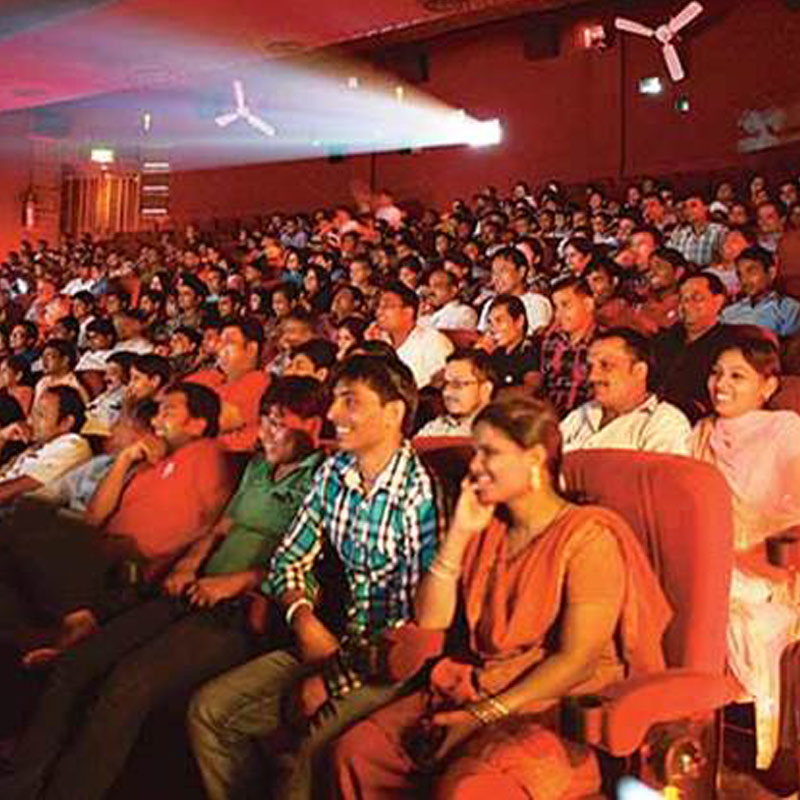
    MUMBAI: The Supreme Court has stayed a direction issued by the Jammu and Kashmir High Court to the multiplexes/cinema hall owners of the state not to prohibit cinema goers/viewers from carrying their own food articles and water inside the theatre, as per a report by the Indian Express.

    The High Court of Jammu and Kashmir passed the order on 18 July 2018 after which the Multiplex Association of India (MAI) filed a special leave petition before the Supreme Court of India against the same.

    The matter was listed for hearing on 10 August 2018, before a bench comprising of justice R F Nariman and justice Indu Malhotra with senior counsel Mukul Rohatgi representing the MAI.

    MAI president Deepak Asher said “We are satisfied by the interim direction of the Supreme Court of India, staying the above order of the High Court of Jammu and Kashmir. We have always maintained that allowing patrons to bring in their own food and beverages inside cinema theatres, besides infringing upon the fundamental rights of multiplex and cinema operators to carry on business, and being violative of the contractual agreement between the patron and the cinema operator, has serious implications for safety and security, as well as health and hygiene. The stay granted by the Supreme Court reinforces the established business practice followed by cinemas across the world and also similar practices followed by other establishments and businesses like amusement parks, entertainment centres, sports stadia, restaurants, hotels, etc.”

    In addition, two other special leave petitions were filed before the Supreme Court of India by G S Malls Private Ltd and KC Theatre against the same order passed by the High Court, which were also heard along with the petition filed on behalf of MAI. Senior counsel Abhishek Singhvi represented G S Malls. A similar order has been passed in these two petitions as well.

  • MIB gives permission to four new channels

    MIB gives permission to four new channels

    MUMBAI: For nearly a year, the Ministry of Information and Broadcasting (MIB) has been stingy in handing out licences to channels. But in July, four new channels got permissions and none were cancelled.

    Sony Marathi, the non-news channel, got the permission on 16 July for downlinking. Times Network’s news channels, Times Now and ET Now, got permission for both uplink and downlink on 18 July under English/Hindi and all remaining Indian scheduled languages.

    Vision Corporations has got permission for launching a new channel Indian Fashion TV on 12 July, which will have content on fashion films, reality shows related to fashion and lifestyle and TV serials. Sources told Indiantelevision.com that the channel will launch in a month’s time.

    The 14 licenses which were cancelled earlier by MIB due to security denial by Ministry of Home Affairs are still now under stay order from the court.

    After cancelling permission to 239 channels, the number of private satellite TV channels having valid permission in India stands at 868 as on 31 July 2018. While 484 channels are non-news channels, the rest i.e., 384 are news channels.

    Of the 868 permitted private satellite channels, TV channels permitted for uplink from India and also to downlink into India remains the same at 766 among which 364 are news channels and 402 are non-news channels. 11 non-news channels and five news channels are permitted for uplink from India but not downlink into the country. 86 TV channels are uplinked from abroad which only have downlinking permission in India. This category includes 15 news and 71 non-news channels.

  • Does govt propose to regulate kids’ channels? MIB says ‘no’

    Does govt propose to regulate kids’ channels? MIB says ‘no’

    NEW DELHI: Do watching cartoons have lasting effects on the children? Has the government made any assessment regarding the impact of cartoon channels on kids? Does the government propose to regulate/limit the telecast of cartoon programmes by private channels and Doordarshan in accordance with the examination schedule of children?

    Well, these were some of queries raised by an Indian parliamentarian in the Lok Sabha or Lower House yesterday. The government, while admitting kids’ programming could affect children, however, clarified there were no proposal at present to regulate such shows or limiting their broadcast schedules.

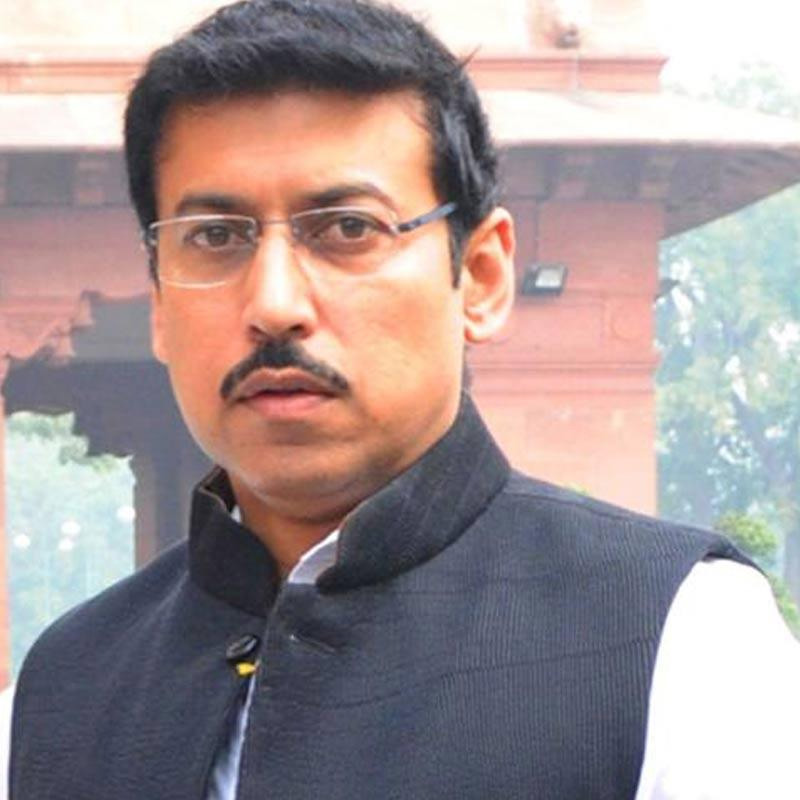
    Pointing out research does indicate that watching cartoon has both “negative and positive effects” on children, Minister of Information and Broadcasting Rajyavardhan Rathore said the government is not aware of any study or research that conclusively proves watching cartoons or any such other programme has “lasting effect on children”.

    Rathore further said, “Presently there is no such policy [to regulate or limit the telecast of cartoon programmes by private channels and Doordarshan].”

    According to Rathore, the government grants permission to TV channels under two categories of news & current affairs and non-news & current affairs and there was no separate categorisation (like cartoon channels) for granting of permission by the government to start a TV channel.

    “Non-news and current affairs channels are permitted to air programmes of any nature, including cartoon[s], provided the content of the programme adheres to [the] programme code stipulated under the Cable Television Networks (Regulation) Act, 1995,” the Minister added.

    Replying to another question on whether the Government proposes to introduce a legislation to regulate web media and news portals for their mandatory registration, Rathore said presently there was “no such proposal” in this regard.

    “The government is committed to freedom of speech and expression and privacy of its citizens as enshrined in the Constitution of India. Government does not regulate content appearing on web media. Law enforcement agencies take action on posting of malicious content on specific case to case basis,” the Minister told his fellow parliamentarian.

    The MIB, meanwhile, recently told the Supreme Court that it was withdrawing a proposal to set up a social media hub, which was criticized by the civil society and online activists on the ground that the government was trying to prepare a surveillance center to track live the digital footprints of its citizens.

  • RS Sharma re-appointed TRAI chairman till Sept 2020

    RS Sharma re-appointed TRAI chairman till Sept 2020

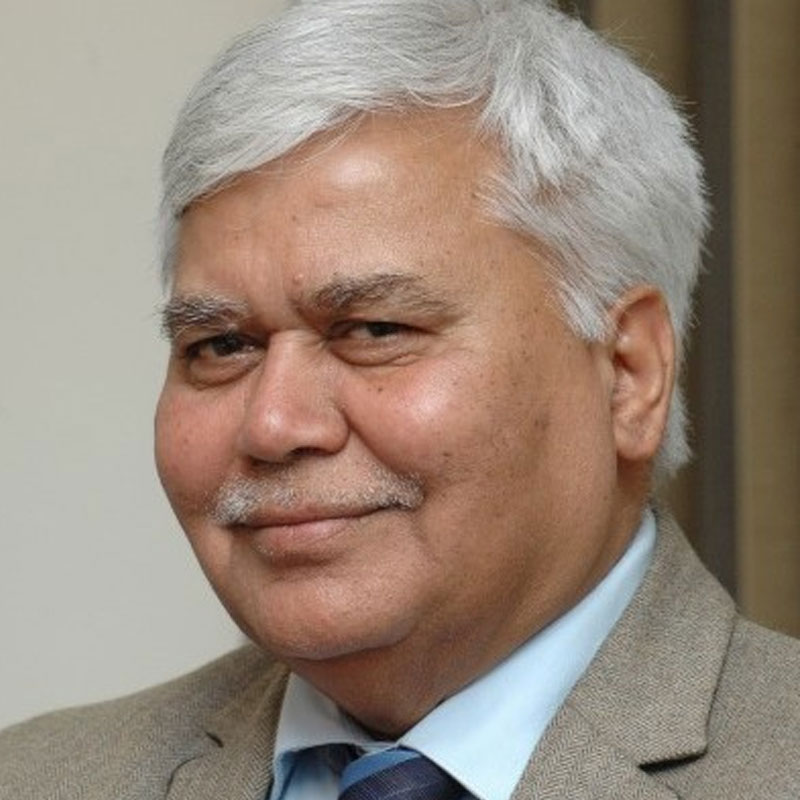
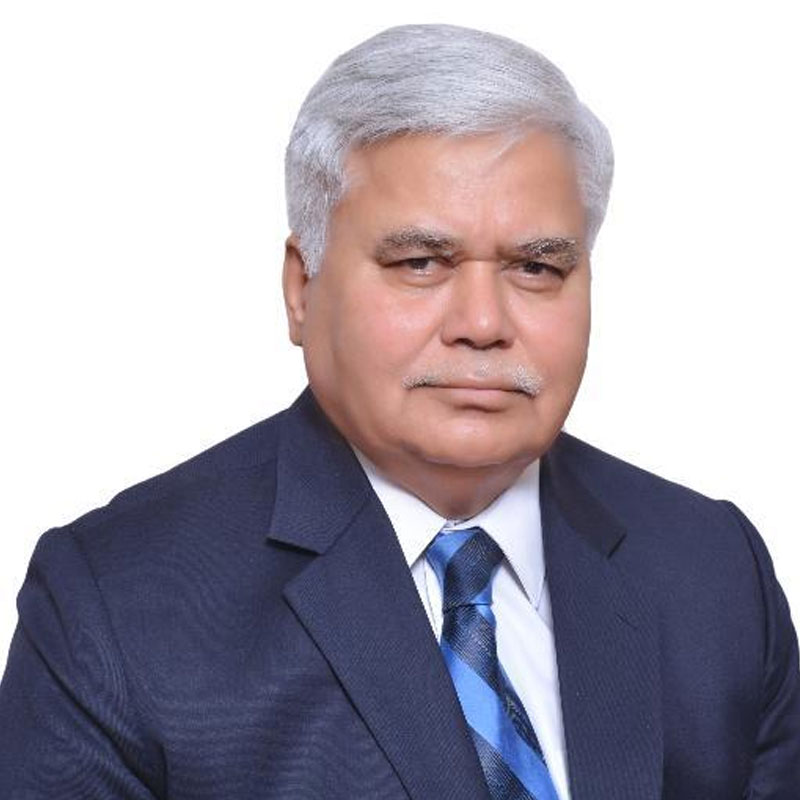
    MUMBAI: The Indian government on Thursday re-appointed RS Sharma as the chairman of Telecom Regulatory of India (TRAI) till 30 September 2020 when he attains the age of 65 or till further notice. Sharma completed his first tenure as the chairman on 9 August 2018.

    This decision was taken today by the appointment committee of the cabinet and necessary communication in this regards has been sent to the Department of Telecommunications.

    Talking to PTI on Wednesday, Sharma said,”Some people take the line that if you are pro-consumer, you are anti-industry… that is far from the truth. Pro-consumer does not mean anti-industry. It is not a zero-sum game, one should be conscious of that.”

    Sharma noted that the telecom sector has undergone a “fundamental change” marked by operator consolidation, the explosion of data and fierce market competition.

    “There are concerns about the quality of service and those concerns, unfortunately, remain till date. TRAI has tried to do the best, within the framework of the Act.

    There is a new regulation on service quality that is granular and will be helpful…operators have also become sensitive to the fact that they cannot leave one area or tower unattended for long,” Sharma said.

    More recently, industry body Cellular Operators Association of India (COAI) raised a red flag over TRAI’s new regulations on curbing pesky calls and messages, saying tailoring of systems, and use of blockchain technology will involve Rs 200-400 crore investment and 18 months for the rollout, at a time when the sector is financially-stressed.

    Sharma on Wednesday said that “reasonable time” has been given to the telecom operators on norms to curtail pesky telemarketing calls and messages. The rules, he said, came about only after a prolonged discussion with the industry.”I think reasonable time has been given…My position has been that the regulation has come after a lengthy year-long discussion process. It is not the knee-jerk reaction of TRAI, that it has issued these regulations,” Sharma said.

  • Being pro-consumer does not mean one is anti-industry: TRAI chairman RS Sharma

    Being pro-consumer does not mean one is anti-industry: TRAI chairman RS Sharma

    MUMBAI: Outgoing TRAI chairman RS Sharma, whose tenure saw major, at times controversial, decisions on issues like termination charge and predatory pricing, on Wednesday said he is of the firm belief that being pro-consumer does not mean one is anti-industry.

    The TRAI Act itself calls for ensuring consumer protection and growth of the sector in equal measure, Sharma said.

    “Some people take the line that if you are pro-consumer, you are anti-industry… that is far from the truth. Pro-consumer does not mean anti-industry. It is not a zero-sum game, one should be conscious of that,” Sharma told PTI.

    The TRAI Act mandates that the regulator has to ensure fair competition, consumer protection and growth of the industry, said Sharma who is set to complete his term as TRAI chief on Thursday.

    In the past, decisions by Telecom Regulatory Authority of India (TRAI), ranging from slashing of call-connect charges to its stance on the provision of points of interconnect (sought by Reliance Jio at the start of its services), and predatory pricing rules have come under the industry’s attack. 

    Earlier this year, TRAI’s predatory pricing norms sparked-off a furore as old telecom operators and industry association criticised the new rules.

    More recently, industry body Cellular Operators Association of India (COAI) raised a red flag over TRAI’s new regulations on curbing pesky calls and messages, saying tailoring of systems, and use of blockchain technology will involve Rs 200-400 crore investment and 18 months for the rollout, at a time when the sector is financially-stressed.

    Sharma on Wednesday said that “reasonable time” has been given to the telecom operators on norms to curtail pesky telemarketing calls and messages. The rules, he said, came about only after a prolonged discussion with the industry.

    “I think reasonable time has been given…My position has been that the regulation has come after a lengthy year-long discussion process. It is not the knee-jerk reaction of TRAI, that it has issued these regulations,” Sharma said.

    Recounting his early days in TRAI, Sharma admitted that he had initially been somewhat apprehensive on whether the regulatory role would imbibe a developmental aspect.

    “… initially, I was a bit apprehensive as I had, through my life, been engaged in developmental work … I was wondering whether the regulatory role had any developmental facet. But I had the advantage of being in technology space for quite some time, and telecom is more about technology today…I have thoroughly enjoyed this role,” he said.

    Sharma noted that the telecom sector has undergone a “fundamental change” marked by operator consolidation, the explosion of data and fierce market competition.

    “There are concerns about the quality of service and those concerns, unfortunately, remain till date. TRAI has tried to do the best, within the framework of the Act.

    There is a new regulation on service quality that is granular and will be helpful…operators have also become sensitive to the fact that they cannot leave one area or tower unattended for long,” Sharma said.

  • Meity says no proposal presently to tap WhatsApp messages

    Meity says no proposal presently to tap WhatsApp messages

    NEW DELHI: Though the Indian government continues to explore avenues to track digital footprints of the citizens and regulations for online media, it said on Wednesday it did not plan at present to tap people’s WhatsApp messages.

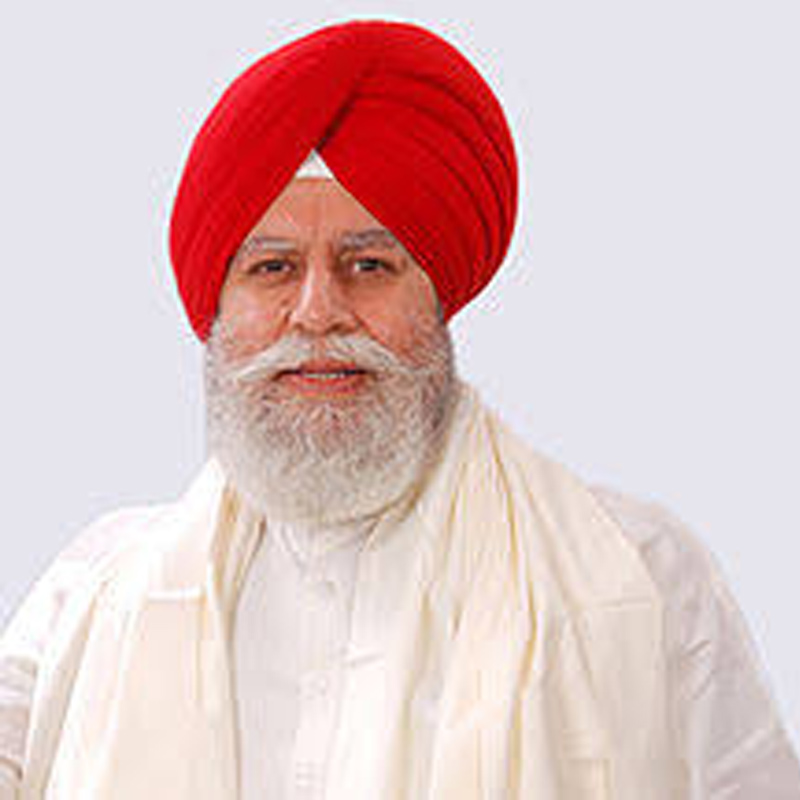
    “No sir,” was the reply given by junior Minister SS Ahluwalia at the Ministry of Electronics and Information and Technology (Meity) when asked specifically whether the government planned to snoop into WhatsApp messages of individuals.

    However, Ahluwalia clarified that though the government respects an individual’s human rights, as enshrined in declarations of the United Nations, it has the powers to intercept or monitor digital information under various circumstances, including security reasons.

    “Section 69 of the Information Technology Act, 2000 empowers government to  issue direction for interception or monitoring or decryption of information generated, transmitted, received, stored or hosted in any computer resource in the interest of (i) sovereignty and integrity of India (ii) defence of India (iii) security of the State (iv) friendly relations with foreign States (v) public order (vi) for preventing incitement to the commission of any cognizable offence relating to above, or (vii) for investigation of any offence,” the Minister stated in Parliament to a query on whether any proposed move to tap WhatsApp messages would violate global conventions set by organisations such as the UN.

    To another query from a fellow parliamentarian, Ahluwalia said the Ministry doesn’t have any proposal at present to create a platform

    where a citizen can identify fake news or hoaxes, which are rampant these days in the country.

    The Minister, though, listed various government initiatives to make citizens aware of fake news on digital and social media. He said government agencies have been highlighting the importance of “following ethics” while using the internet and issuing general advisories against sharing rumours and fake news.

    “Government has also asked WhatsApp to convey various steps taken by them to deal with fake news and also to share learning material to

    educate the same,” the Minister stated.

    Still, his senior at Meity who also happens to be the Law Minister, Ravi Shankar Prasad is on record favouring evolving a policy to control the spread of fake news in India.

    Last month, Department of Telecoms, on a request from Meity, had written to all telecom and internet service providers , along with other industry organisations, requesting suggestions on ways that can help the government block under special circumstances social media content on platforms like the Facebook, WhatsApp and Instagram. The proposal has been criticised by many, including a chamber of commerce, Assocham.

  • MIB seeks details to simply forex payments for broadcasters, teleport ops

    MIB seeks details to simply forex payments for broadcasters, teleport ops

    MUMBAI: In what it says is aimed at further easing norms for doing broadcast business, the government has asked for particulars from TV channels and teleport operators using services of foreign satellites for uplinking and temporary uplinking so payment of foreign exchange processes could be simplified.

    Broadcasters need to provide the name of the company, name of the service provider, name of the country of the service provider, purpose for bandwidth utilization, service order number and validity of agreement, Ministry of Information and Broadcasting said in a recent advisory.

    In 2014, the Ministry of Information and Broadcasting (MIB) advised all broadcast companies and teleport operators to strictly follow the guidelines under the provisions of the FEMA Act 1999 and a notice by the RBI requiring prior approval of the MIB for making remittance of foreign exchange towards availing transponder services on foreign satellite for up-linking of TV channels/teleport services/DSNG operations/temporary events.

    The TRAI has also urged (http://www.indiantelevision.com/regulators/trai/trai-releases-recommendations-on-easing-broadcast-business-180226) the government to simplify the norms regarding licensing and clearance processes for broadcast companies. It even suggested that satellite spectrum allocation must be done through the year for the convenience of broadcasters.

    It asked for streamlining of process for granting permission, giving security clearances within 60 days and setting up an integrated portal for everyone’s convenience.

    Late last year, the ministry had asked TRAI (http://www.indiantelevision.com/regulators/trai/trai-paper-seeks-to-streamline-uplinking-downlinking-norms-171219 )to come up with a new set of rules for uplinking and downlinking norms since the previous one was six years old and technological advances have changed the broadcast sector. One of the key questions was whether there was a need to redefine the meaning of news and current affairs and non-news channels.

  • DoT seeks views on blocking mobile apps like FB, WhatsApp

    DoT seeks views on blocking mobile apps like FB, WhatsApp

    NEW DELHI: India’s telecom department has sought views of the stakeholders on technical measures that can be adopted for blocking mobile apps like Instagram, Facebook, WhatsApp and Telegram. The proposal has been questioned and criticised by a large section of the industry and civil society, including chamber of commerce Assocham.

    The Department of Telecom (DoT) on 18 July, 2018 had written to all telecom operators, the Internet Service Providers Association of India (ISPAI), industry body Cellular Operators Association of India (COAI) and others and asked for their inputs to block applications under Section 69A of the Information technology Act. Stated aim: to uphold national security and public order.

    “DoT in the letter had said that the Ministry of Electronics and IT and law enforcement agencies have raised issue around blocking of certain mobile apps like Instagram, Facebook, WhatsApp, Telecom, etc. to meet requirement under Section 69A of IT Act,” PTI quoted an unnamed government source aware of the development.

    However, a source at DoT, on condition of anonymity, told the wire news service there was no such move to block any app and the telecom department had only started a consultation process based on a reference from the Ministry of Electronics and Information technology (Meity).

    Though PTI filed a news report on the development yesterday in the second half, the story was actually broken by online news portal medianama.com, which said it had reviewed the letter.

    The Section 69A of IT Act talks about power to issue directions for blocking for public access to any information through any computer resource. The law authorises the federal government or any officer authorised by it to issue direction to block the information on Internet in the interest of sovereignty and integrity of India, defence of India, security of the state, friendly relations with foreign states or public order or for preventing incitement to the commission of any cognisable offence relating to them.

    “Meity (Ministry of Electronics and IT) has informed DoT that blocking such apps during emergency situations are difficult as they work through multiple IP addresses and on different protocols, and, hence, there is a need for a reasonable good solution to protect national security. Being the licensing authority, DoT has initiated the discussion based on a letter received from the Group Coordinator, Cyber Law Division (Meity) during the second week of July,” a DoT official told PTI.

    In response to DoT consultation, industry body Assocham said that a proposed measure to evolve mechanisms to block applications as a whole at the telecom operator level is excessive, unnecessary, and would greatly harm India’s reputation as growing hub of innovation in technology as the country needed a “clear and predictable legal framework grounded on fairness, proportionality and the rule of law”.

    Assocham said that with the development in technology, there have emerged tools such as virtual private network, which enables users to access content that may have been blocked at telecom service provider (TSP) or internet service provider (ISP) level.

    “In this scenario, blocking of applications at the TSP/ISP level may not be an efficacious solution as users can get around the same with increasing ease. Therefore, the focus on developing mechanism to block content may be unwarranted,” Assocham said in a letter to the top-most government official at DoT, which was also sent to other senior civil servants.

    Assocham has buttressed its arguments against blocking of mobile apps by stating that online apps contribute substantially to India’s digital economy. Overall the Internet eco-system is expected to contribute up to $ 537.4 billion to overall India’s GDP of which a minimum of $ 270.9 billion could be attributed to apps, Assocham has pointed out quoting market research

    Recently, there have been widespread incidents of mob lynching in the country based on rumours spread through social media apps. The popular messaging app WhatsApp has been in the eye of storm over abuse of its platform for circulation of fake news that resulted in incitement of mob fury.

    An IT ministry official, who did not wish to be named, said WhatsApp has not committed itself on “traceability” and attribution of messages, which had been one of the key demands of the government. Hence, the ministry’s concerns have not been addressed and the potential for misuse still remains, the source was quoted by PTI.
    Last month, the government had expressed dissatisfaction over measures previously listed by WhatsApp for checking fake news that have, in several cases, triggered mob violence. WhatsApp told the government it was building a local team, including India head, as part of steps to check fake news circulation.

    Over the last one year, the Indian government has been exploring various avenues to regulate online media content, some of them botched at the initial stage, while some like the setting up of a social media hub to monitor Indians’ digital footprints was scrapped by Ministry of Information and Broadcasting after Supreme Court questioned the proposal stating whether it could lead to a surveillance state. However, a government body still exists that has the mandate to look into online media norms.

  • Ridhima Lulla joins The Indian Chamber of Commerce as M&E Head of the Western India Expert Committee

    Ridhima Lulla joins The Indian Chamber of Commerce as M&E Head of the Western India Expert Committee

    MUMBAI: India’s leading body of business and industry, The Indian Chamber of Commerce (ICC), has appointed Eros Group’s Chief Content Officer Ridhima Lulla as the Head of the Western India Expert Committee in Media & Entertainment. Formed by a group of pioneering industrialists, ICC members include several corporate groups in the country, with business operations panning across India and abroad.

    Ridhima’s appointment is a testament of her talent and dedication towards the media and entertainment ecosystem. With her core focus on the creative expression, she plays a key role in the leadership team at Eros International, driving the company’s content strategy. She has been actively involved in Eros’s movie business with projects at all stages. Ridhima has also been strengthening the original content strategy for Eros Now, the premiere Video OTT platform by Eros, thus re-establishing its leadership position as a digital entertainment company.

    Commenting on the appointment, Ridhima Lulla said, “I am humbled and happy to join The Indian Chamber of Commerce board. The media & entertainment landscape in India is currently in a very exciting phase and I believe that the coming years are going to be crucial in how the world looks at the Indian M&E industry. At ICC, my aim will be to elevate the ecosystem with creative and collaborative thinking along with other worthy members on the board.”