Category: Regulators

  • Sahara’s Tamil news channel Bharat Today awaits MIB nod

    Sahara’s Tamil news channel Bharat Today awaits MIB nod

    MUMBAI: The Ministry of Information and Broadcasting (MIB)published the status of application for new channels in regional languages on 5 February 2019. In the last two quarters of 2018, six companies applied for 10 regional channels in total.

    Out of the 10 channels, four are from Eenadu Television, two are from LCGC Broadcasting and one each from Asianet News Network, Sidharth Broadcast, Sahara Television and Mavis Satcom.

    All the four channels of Eenadu Broadcasting i.e. ETV Life HD, ETV Cinema HD, ETV Abhiruchi HD, ETV Plus HD, were granted permission from the MIB.

    Out of the remaining six channels, five are news channels and a single non-news channel. All these six channels are under-consideration.

    Sahara Television, which is undergoing financial turbulence, has also applied for a Telugu news channel, Bharat Today, on 26 December 2018.

    Mavis Satcom has also put in an application for a Tamil news channel named Jaya TV on 2 January 2019, which is still under consideration.

    Jesus Entertainment which opted for a regional channel named Yahova TV on 8 August 2016 in Tamil language is also under consideration.

    In a recent update on 4 February, the MIB issued a notice informing all broadcasters that the online module for submitting applications for new TV channels is now operational on web portal www.broadcastseva.gov.in.

    It also stated that henceforth, all such applications for new TV channels should be made through online mode only and no application should be sent through offline mode. BroadcastSeva is the effort of MIB to provide efficient and transparent regime for the growth and management of the Broadcast Sector. After submitting the online application the broadcasters are required to submit some documents through offline mode. 
  • MIB makes online mode mandatory for new channel applications

    MIB makes online mode mandatory for new channel applications

    MUMBAI: The Ministry of Information and Broadcasting (MIB) has issued a notice informing all broadcasters that the online module for submitting applications for new TV channels is now operational on web portal www.broadcastseva.gov.in dated 4 February 2019.

    It also stated that henceforth, all such applications for new TV channels should be made through online mode only and no application should be sent through offline mode.

    BroadcastSeva is the effort of MIB to provide efficient and transparent regime for the growth and management of the Broadcast Sector. It provides a single point facility to the various stakeholders and applicants to make their applications for various permission, registrations, licences etc.

    After submitting the online application the broadcasters are required to submit some documents through offline mode. The documents are different for a company already holding channel/teleport permission and a new company.
  • New TRAI’s tariff regime unlikely to reduce TV bills for most subscribers: Report

    New TRAI’s tariff regime unlikely to reduce TV bills for most subscribers: Report

    MUMBAI: The network capacity fee (NCF) and channel prices announced by broadcasters and distributors as per the Telecom Regulatory Authority of India’s (TRAI) new guidelines could increase the monthly bill of most subscribers of television channels as per the CRISIL report.

    TRAI’s new regulatory framework for broadcasting and cable services industry is intended to usher in transparency and uniformity, and will afford far greater freedom of choice to viewers.

    More than 90 per cent of TV viewers flip 50 or fewer channels, and the new rules will let them subscribe to what they want and not be saddled with channels they are not interested in.

    The regime, which came into effect on 1 February 2019, will benefit popular channels and hasten adoption of over-the-top (OTT); or content providers who stream media over the internet, such as Netflix and Hotstar) platforms, and will be a mixed bag for viewers and distributors.

    Ratings senior director Sachin Gupta said, “Our analysis of the impact of the regulations indicates a varied impact on monthly TV bills. Based on current pricing, the monthly TV bill can go up by 25 per cent from Rs 230-240 to ~Rs 300 per month for viewers who opt for the top 10 channels, but will come down for those who opt upto top 5 channels.”

    The new regime could drive consolidation in the broadcasting industry because content will clearly be the king and key differentiator. Subscription revenues of broadcasters would rise ~40 per cent to Rs 94 per subscriber per month compared with Rs 60-70 now. With viewers likely to opt for popular channels, large broadcasters will have greater pricing power. Conversely, broadcasters with less-popular channels will find it tough to piggyback on packages, and the least popular ones will hardly have a business case and could go off air.

    For distributors (DTH and cable operators), the new regulations are a mixed bag. While content cost will become a pass-through, protecting them from fluctuations, they may lose out on the benefits of value-added services such as bundling content across broadcasters, customisation, and placement revenue.

    Currently, most distributors are charging NCF at the cap rate of Rs 130 per month. Similarly, broadcasters have priced subscription for the most popular pay channels at the cap rate of Rs 19 per month.

    But these are early days and the situation may evolve with prices charged by broadcasters and distributors declining depending on market forces, viewership and competitive intensity.

    Ratings director Nitesh Jain “In all this, OTT platforms could emerge as the big beneficiary because many viewers could shift because of rising subscription bills. And low data tariffs also encourages viewership on OTT platforms.”

  • Tata Sky vs TRAI: DTH operator concludes arguments; Delhi High Court lists case for 8 February

    Tata Sky vs TRAI: DTH operator concludes arguments; Delhi High Court lists case for 8 February

    MUMBAI: The next hearing of the direct-to-home operator Tata Sky’s ongoing legal battle, in which Discovery,  Bharti Telemedia-owned Airtel Digital TV and Sun Direct are a part, with the Telecom Regulatory Authority of India(TRAI) and its new tariff regime, has been scheduled for 8 February.

    On Monday, after senior lawyer Kapil Sibal, representing Tata Sky, concluded his arguments including legal submissions, Discovery India Communication’s counsel Gopal Jain laid the foundation for his arguments, which are expected to be concluded during the next hearing.

    The regulator informed the court that the new tariff order has already been implemented from 1 February.

    Earlier the TRAI had offered an extension till 31 January to the distribution platform operators (DPOs) for implementation.

    On 24 January, the Harit Nagpal-led company finally unveiled the new pricing of channels and packs after it was served a show-cause notice by the TRAI.

    TRAI's show-cause notice said, "Tata Sky has failed to provide options to its 17.7 million subscribers in compliance with the new framework to exercise their choices for TV channels. Tata Sky has put its subscribers in a situation of great difficulty despite no fault of theirs by not complying with the provisions of the new regulations and the tariff order.”

    Despite the delay in announcing channel prices, Tata Sky MD and CEO Nagpal is confident that his team can complete the tricky task of implementing the new norms within a relatively short span of time.

    “Tata Sky has always been compliant to regulatory requirements. We have gone live with our modes of communication across the Tata Sky website, Tata Sky mobile app and also equipped the dealers that subscribers can reach out to. We were confident that we would be able to complete the task in 1 week’s time. Hence we used this time to a seamless and smooth transition for all our subscribers. We have ensured that choosing channels and packs is as easy as 1, 2, 3 for any subscriber,” the veteran executive said.

    On 29 January, Calcutta High Court stayed the cable switchover till 18 February. The court’s directive was a result of 80 cable operators from the city filing a petition against the TRAI mandate. However, the high court later vacated the stay.

    The petitioners’ lawyer Debabrata Saha Roy argued that the revenue-sharing model under the new regime will significantly reduce the cable operators’ share to just nine per cent. With 80% will go into the broadcasters’ kitty, MSOs stand to get just 11 per cent, thus making it an unsustainable business proposition for operators.

    In 2017, Bharti Telemedia, Tata Sky and Discovery Communication India had filed petitions against TRAI, challenging its tariff order and the interconnect regulations.

    Unlike the position adopted by Star India wherein it questioned the regulatory powers of TRAI, the matter in the Delhi HC questions the regulator’s power to wipe out deals that operators enter into to fix commissions and rates for customers.

  • Bombay, Telangana HCs yet to decide on TRAI tariff cases

    Bombay, Telangana HCs yet to decide on TRAI tariff cases

    MUMBAI: Cases have been filed in various courts across the country and while the Calcutta High Court has vacated the stay on the case and the Gujarat High Court has asked for a response from TRAI, the Bombay and Telangana courts are yet to decide on similar petitions.

    The Telangana HC reserved judgment on a case filed by local cable operators who said that the regulations are arbitrary. The Pune Cable Operators Association went ahead and challenged TRAI as well, asking for a stay on the lines of the Calcutta High Court order. The bench, however, asked them to submit a copy of the order and refused to provide relief.

    The Madras High Court dismissed the PIL against the TRAI tariff order last week by quoting the Supreme Court judgment that went in favour of the regulator late last year.

    On 14 January, a similar case before the Kerala High Court was also dismissed which related to the revenue sharing aspect as well.

    LCOs all over the country are up in arms against some suggestions that have been made in the new tariff regime by TRAI that came into effect from 1 February. After TRAI won the case against Star India in October, the regulator gave the industry time till December end to put things into action. This was later extended to 31 January which was confirmed to the last date and no more extensions would be granted beyond that.

    Two days ago, TRAI claimed that all the stakeholders were ready with the new regime’s requirements. It also praised itself for ensuring that a large number of customers had exercised their options.

  • Gujarat HC issues notice to TRAI over MSO-LCO profit sharing

    Gujarat HC issues notice to TRAI over MSO-LCO profit sharing

    MUMBAI: The Gujarat High Court issued a notice to the Telecom Regulatory Authority of India (TRAI) and the centre on 1 February 2019, over a petition filed by local cable operators (LCOs) challenging the decision to fix the ratio of profit sharing between LCOs and multi-system operators (MSOs).

    In 2017, TRAI issued a notification fixing the ratio of sharing of service charges collected towards cable connections at 55:45 between MSOs and LCOs. This was done by inserting clause 12(7) in the Telecommunications (broadcasting & cable) Services Interconnection (Addressable Systems) Regulations.

    A bench headed by acting chief justice A S Dave has sought reply from the authorities and posted the matter for further hearing after two weeks.

    The Cable Operators Association Of Gujarat filed the petition through advocate Pratik Jasani challenging the insertion of the clause, fixing the revenue sharing between MSOs and LCOs. The cable operators have urged the HC to quash the arrangement before implementation of the 2017 notification, though the government consulted other stakeholders.

  • TDSAT gives govt 10 days to respond to Harvest TV name change petition

    TDSAT gives govt 10 days to respond to Harvest TV name change petition

    MUMBAI: Telecom Disputes Settlement Appellate Tribunal (TDSAT), on 30 January, granted 10 days’ time to the government to reply to a broadcasting petition filed by Veecon Media and Broadcasting Pvt Ltd, stating that the government has been ignoring its request to change the name and logo of Congress leader Kapil Sibal-backed Harvest TV, which it had made in September 2017.

    The government had requested time to share details of ‘some show cause notices’ that have been ‘issued to Veecon Media and Broadcasting Pvt Ltd in respect of its shareholding as well as the use of the name “Harvest TV” for its channel’ and other ‘relevant facts’.

    The tribunal has directed that till further orders, Veecon can run its news and current affairs channel under the same name, without any hindrance. The next hearing of the case has been scheduled for 5 March 2019.

    The decision comes just a day after Sibal accused the government of creating a hindrance for Harvest TV stating that the centre is trying to stifle the voice of dissent.

    Presenting its case in front of TDSAT, Veecon had also shared that a show cause notice that was served to it on 29 January supports the apprehension that there may be strong efforts to prevent it from using the name “Harvest TV” and on account it may be prevented from running its TV channel under that name. It mentioned, “The respondent (Union of India) has not taken note of petitioner’s (Veecon’s) application filed for a change of name and logo of its channel to Tiranga TV”.

    Kerala-based Christian devotional channel Harvest TV, owned by Bibi George Chacko, had earlier accused Veecon of ‘riding on the goodwill and reputation of Harvest TV’ by using its name and logo, the permission for which was granted for only two years that, which expired on 31 January 2018. Responding to the claim Veecon asserted that Chacko can get the issue decided only through an appropriate court or authority.

  • TRAI claims stakeholders ready as new tariff regime kicks in

    TRAI claims stakeholders ready as new tariff regime kicks in

    MUMBAI: The Telecom Regulatory Authority of India (TRAI) states that it has held meetings with MSOs, DTH operators and HITS operators over the course of the last few weeks, the last being on 31 January, and all of them have confirmed that they are ready to migrate to the new tariff regime from 1 February 2019.

    Lauding its own efforts, TRAI said that a large number of subscribers have exercised their options and their choices have been recorded by service providers which must be processed on priority basis. For those who have not yet chosen, a smooth migration plan needs to be made and their choices must be taken from a variety of means such as mobile apps, SMS, website or direct communication through LCOs.

    Answering a question on additional TV connections by a customer, the TRAI directed them to follow the rules of Rs 130 as network fee for 100 SD channels and slabs of 25 channels with a cap of Rs 20. Any other discounts can be made within these caps but need to be uniform in the market.

    TRAI reiterated that consumers are free to choose both FTA and pay channels on a-la-carte or combination and any forceful measures on the end of the provider must be brought to the authority’s notice.

    The release also states: “Subscribers may note that the new regime empowers them to change their choices whenever they desire with maximum lock-in period of one month. The subscribers can always request their DPOs to modify their selection even after choosing any package at present.”

  • 9X Media, B4U & MASTiii challenge FreeDish e-auction in Delhi HC

    9X Media, B4U & MASTiii challenge FreeDish e-auction in Delhi HC

    MUMBAI: Within a few days of DD FreeDish e-auction recommencement notice, 9X Media, B4U and MASTiii have filed a writ petition before the Delhi High Court asking for a stay on the upcoming e-auction process as they feel the base prices are very high for small broadcasters.

    It wants the court to quash the guidelines issued by Prasar Bharati on 15 January 2019 as well as its directive to disconnect channels from 1 March 2019.

    9x Media has mentioned that it is a loss-making entity with losses of Rs 7.81 crore and negative earnings per share and such a decision could adversely impact its business. Its petition contends that FreeDish has shut the doors on small non-profit making companies from being available to the public at large and instead prefers deep-pocketed ones.

    After a long hiatus, Prasar Bharati board gave a green signal to e-auctioning of slots for DD FreeDish along with a revised policy with a change in pricing. The new policy guideline has kept five buckets for e-auction of MPEG2 slots. Bucket A+ has been kept for Hindi GECs and teleshopping channels with a reserve price of Rs 15 crore, and Bucket A has been dedicated to Hindi movie channels with a reserve price of Rs 12 crore.

    Hindi music, sports and Bhojpuri GEC and movie come under Bucket B which has a reserve price of Rs 10 crore. All news & current affairs (Hindi), All news & current affairs (English) and news & current affairs (Punjabi) channels fall under the category of Bucket C which with a reserve price of Rs 7 crore. The Bucket D with the lowest reserve price of Rs 6 crore will comprise all other remaining genres/language channels.

    9X Media contends that these categories of ‘high commercial potentiality’ and prices have not been justified by FreeDish. The petition also states that companies running news channels such as TV Today Network and Zee Media are profit-making companies and so keeping their base price lower than music channels is unjustified.

    “The channels can differ in content, viewership, class of customer, commercial potentiality, advertisement available, peak time of the channel, regions and other factors…Different music channels can have different uptake, viewership, potentiality, etc,” the document reads.

    The petitioners state that the entire process has been conducted arbitrarily without maintaining transparency. It even adds that Prasar Bharati is “misusing its status of the largest DTH operator, having largest number of subscriber base, as it claims to hold about 30 million subscribers.” Without consulting stakeholders, such decisions lead to creating monopoly in the hands of a few.

    Additionally, Prasar Bharati is seeking carriage fees which are way higher than private players even as the validity of FreeDish having 30 million subscribers is contended.

    The e-auctioning of slots onDD Free Dish were arbitrarily called off in 2017 while the last e-auction of DD FreeDish took place in July 2017. Earlier, DD FreeDish used to hold e-auction once every couple of months to award vacant channel slots to private broadcasters.

  • Calcutta HC vacates stay on TRAI tariff order, hands LCOs time till 8 February

    Calcutta HC vacates stay on TRAI tariff order, hands LCOs time till 8 February

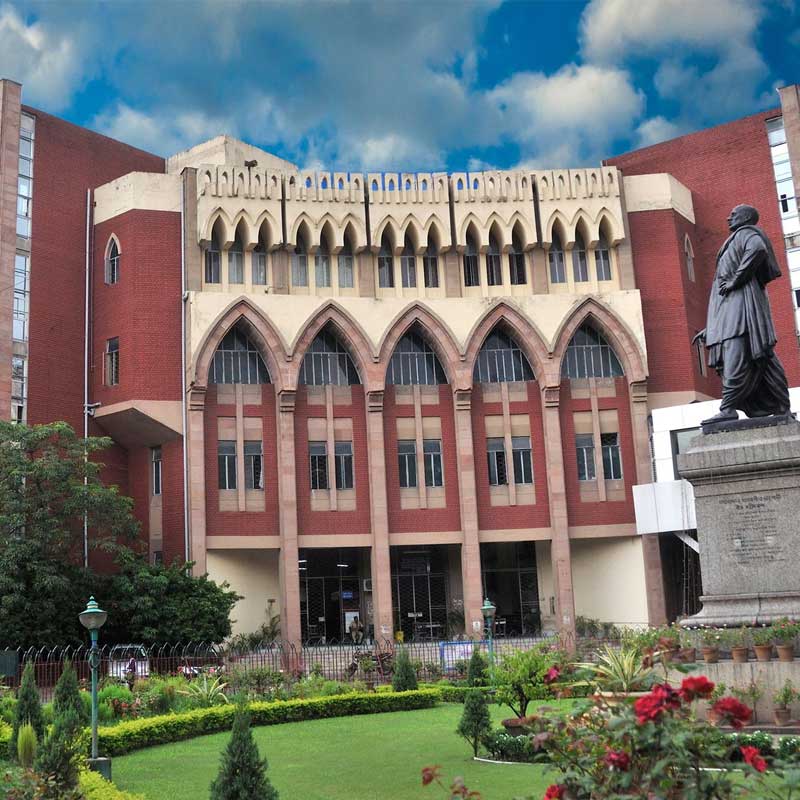
    MUMBAI: In a major development, the Calcutta High Court, which has jurisdiction over West Bengal and the Union Territory of the Andaman and Nicobar Islands, on Thursday vacated the stay imposed by it on the implementation of the tariff order till February 18.

    Local cable operators (LCOs) have now been given time till 8 February to negotiate contracts with multi-system operators (MSOs). Thereon, revenue share within the distribution value chain will be split in line with the TRAI’s tariff order.

    On Wednesday, the court had asked the TRAI to submit a report on the matter on 13 February, which is when the next hearing was due to take place. The court’s directive was a result of 80 cable operators filing a petition against the TRAI mandate.

    However, realizing the urgency of the situation, the regulator's lawyers, on Wednesday itself, filed an application to vacate the stay. 

    In its application, TRAI had argued that the court had been misled by the petitioners, and placed the Supreme Court judgment in the court. 

    The petitioners’ lawyer Debabrata Saha Roy argued that the revenue-sharing model under the new regime will significantly reduce the cable operators’ share to just nine per cent. 

    With 80% will go into the broadcasters’ kitty, MSOs stand to get just 11 per cent, thus making it an unsustainable business proposition for operators.

    Earlier the regulator had offered an extension till 31 January to the distribution platform operators (DPOs) for implementation.