Category: Regulators

  • TRAI extends deadline for selection of TV channels to March 31

    TRAI extends deadline for selection of TV channels to March 31

    MUMBAI: The telecom regulatory authority of India (TRAI) on Tuesday extended the deadline for consumers to pick their television channels under the new tariff regime till March 31. The sector regulator stated that old plans of consumers would continue until they exercise their options before the new deadline.

    The subscribers that don’t opt for new channels would be moved to ‘Best Fit Plans’, which would be developed as per usage pattern, language and channel popularity.

    While making 'Best  Fit  Plan’ for a subscriber, DPOs should ensure that payout per month of the  'best  fit plan' generally does not exceed the payout per month of existing tariff plan of the subscriber, TRAI said.

    Subscribers will be free to change their 'best fit plan' at any date and time on or before 31st March and DPOs will have to convert their  'best fit plan' into the desired pack (channel/ Bouquet) within 72 hours.

    The TRAI also clarified that there will be no 'lock-in period' for the subscribers till 31st  March who has been migrated to  'best fit plan' by DPOs.

    Subscribers who have taken long term packs will continue to avail the services for the contracted period. However, they have the freedom to choose the channels of their choice under the new regulatory framework and in case if they exercise this option, money for the remaining period shall be adjusted for their future use.

    TRAI stated that some subscribers are facing difficulties in selecting the channels/ bouquet of their choice. In some cases, LCOs have not been able to reach out to the subscriber to create awareness among them and collect the options.

    According to the TRAI, close to 65% cable subscribers and 35% DTH subscribers have already exercised their channel options under the new tariff regime. 

  • MIB directive on PwD-friendly programming leaves broadcasters sceptical

    MIB directive on PwD-friendly programming leaves broadcasters sceptical

    MUMBAI: Though laudable, a new government directive on making all TV shows on all channels specially-abled people friendly has left the broadcasting industry sceptical as it would be difficult to implement the directive across all genres of programming 24×7.

    A senior executive of a major TV company on condition of anonymity told Indiantelevision.com, “It’s impossible to execute this for the entire 24-hour programming cycle. This issue should be discussed with industry bodies like the News Broadcasters Association (NBA) and others before the TV channels figure out what to do. Anyway, most channel screens are already so cluttered and doing what the government wants us to do will also increase the programming cost.”

    The Ministry of Information and Broadcasting (MIB) issued a letter dated 7 February 2019 regarding the concerns raised by the Department of Empowerment of Persons with Disabilities (DoEPwD) in the past. The concerns were raised for the formulation of Accessible India Campaign (Sugamya Bharat Abhiyan) for achieving universal accessibility for persons with disabilities (PwDs) which had stressed that access to TV programmes for many persons with disabilities is denied due to lack of assistive technology.

    The ministry requested all TV channels, News Broadcasters Association (NBA), Indian Broadcasting Foundation (IBF) and Association of Regional Television Broadcasters of India (ARTBI) to carry the same language captions and audio description along with the programmes and news reports by TV channels for accessing by differently abled people, vide advisory dated 13 June 2016.

    Concurring with the above sentiment, another TV executive, while dubbing the directive "unimaginative", said with the TV channels presently grappling with a new tariff regime and squeezed bottomlines, implementing the diktat of the government will put additional financial pressure on industry players.

    Another media executive of a regional news channel said, “Language captions are not that easy to place on a screen. You need expertise to reconstruct or translate it properly. For a news channel it is always live and to describe anything in a sign language you have to be very punctual. Manpower will also increase and lead to an increase in programming cost. The intention is very good; I’m in complete support of MIB. The implementation part is a bit difficult. The language caption will damage the look and feel of the channel.”

    The advisory stated that the media has always been in the forefront of taking up important issues/causes including those for the welfare of the disadvantaged sections of the society and in the recent past, Republic Day Parade with commentary/Independence Day Ceremony was carried with sign language interpretation for the benefit of differently abled people.

    MIB requested all the private satellite TV channels to carry TV programs with sign language interpretation for accessing by differently able people.

    NBA and Indian Broadcasting Foundation could not be contacted for comments.

    With an aim to make communications and TV services more accessible to people with disabilities (PWDs), the Telecom Regulatory Authority of India had come out with a series of recommendations last year, including a confusing one suggesting that 50 per cent TV channels to be developed in PWD-friendly and accessible format over the next five years. TRAI suggested that manufacturers maintain accessibility standards for set top boxes (STBs), mobile phones and landlines. Box makers were given till 2020 to make or import at least one model in different variants in an accessible format.

  • Delhi HC dismisses 9X Media, B4U Broadband, TV Vision petition challenging DD Free Dish e-auction

    Delhi HC dismisses 9X Media, B4U Broadband, TV Vision petition challenging DD Free Dish e-auction

    MUMBAI: The Delhi High Court has dismissed the petition filed by 9X Media, B4U and MASTiii against the DD Free Dish e-auction. Within a few days of the e-auction recommencement notice, the broadcasters approached the court as they felt the base prices are very high for small players.

    Senior lawyer Amit Sibal appearing for the petitioner 9XM argued that the music channels were free to air channels and they were not collecting any subscription amount. Hence, those channels could not be classified in the same bucket as general entertainment channels (GECs), and other channels.

    The revised guidelines of DD Free Dish auction says that differential pricing for genre (language) will be based on principle of higher reserve price for genre (language) with greater commercial potential. Sibal argued that the guiding norm has not been followed as the music channels have been placed in the same bucket as sports and GECs. He contended that the commercial potential of sports channels is greater than music channels.

    Sibal also argued that the commercial potential of music channels was much lower than news channels and yet the reserve price for news channels has been fixed at Rs 7 crore and music channels have been fixed at Rs 10 crore. He also referred to the financial statement of the petitioners to contend that they were loss making while the news channels were making profits.

    Earlier 9X Media mentioned in the petition that it is a loss-making entity with losses of Rs 7.81 crore and negative earnings per share and such a decision could adversely impact its business. Rajeev Sharma on behalf of Prasar Bharati pointed out the total revenue of 9XM for the financial year 2018 was around Rs 146.12 crore including Rs 138.71 crore as revenue from operations. He submitted that the reserve price of a slot was a very small fraction of the revenue. Sharma also added that the petitioners were already paying Rs 8 crore and the reserve price was only 25 per cent more than the existing price.

    Talking note of the argument, Justice Vibhu Bakhru said that the court does not agree to the argument that the reserve price fixed there under would amount to disabling an entrepreneur from carrying on the business of broadcasting a music channel. He also added that DD Free Dish is not the only platform to air the channels.

    Justice Bakhru also asserted that it will not be appropriate to enter into a controversy as to the assessment of the commercial potential of various genres or channels. The court also added that the question of fixing a reserve price is a matter of commercial discretion of the public broadcaster Prasar Bharati.

    “Prasar Bharti’s commercial decision to fix the prices is not amenable to judicial review under Article 226 of the Constitution of India, unless it is established that the same is so arbitrary or so unreasonable that no reasonable person could possibly take such a decision,” the judgement also said.

    Justice Bakhru also found Sibal’s contention that that petitioners are not challenging the policy but the implementation is unpersuasive as the petitioners are seeking to challenge the fixation of reserve price which itself is a matter of policy.

    The new policy guidelines has kept five buckets for e-auction of MPEG2 slots. Bucket A+ has been kept for Hindi GECs and teleshopping channels with a reserve price of Rs 15 crore, and Bucket A has been dedicated to Hindi movie channels with a reserve price of Rs 12 crore.

    Hindi music, sports, and Bhojpuri GEC and movie come under Bucket B which has a reserve price of Rs 10 crore. All news & current affairs (Hindi), news & current affairs (English) and news & current affairs (Punjabi) channels fall under the category of Bucket C which with a reserve price of Rs 7 crore. The Bucket D with lowest reserve price of Rs 6 crore will comprise of all other remaining genres/language channels.

  • TRAI says 6.5 cr cable, 2.5 cr DTH homes under new tariff regime

    TRAI says 6.5 cr cable, 2.5 cr DTH homes under new tariff regime

    MUMBAI: Telecom Regulatory Authority Of India (TRAI) has stated that nine crore of the 17 crore television homes in India have migrated to the new tariff regime. TRAI chief RS Sharma, who has been monitoring the transition closely, said the nine crore figure included 6.5 crore cable TV homes and 2.5 crore DTH homes.

    "The speed [of onboarding] has increased as per our data and we expect the rest of the people to also register their choice of channels soon," he told news agency Press Trust of India.

    With DTH operating on a prepaid model, Sharma pointed out that consumers with long and short duration packs will soon opt for their new channel preferences.

    "We are guiding and helping the operators wherever required and are calling regular meetings to clarify matters," Sharma noted.

    The regulator intends to ramp up its consumer outreach and awareness programmes to further increase the speed of the transition.

    "TRAI will take up a massive campaign on consumer awareness, through social media, print, advertisements, jingles and other programs," he said.

    Last week, TRAI had asked distribution platform operators (DPOs) to respond on special schemes for TV households with multiple connections.

    Reiterating its stand, the sector regulator had said that DPOs should permit individual set top boxes (STBs), even within the same home, to have separate choice of channels, should the consumer wish so.

    As per the new norms, DPOs can provide discounts, and even forgo the network capacity fee (NCF) of Rs 130 for subsequent connections in the same household, provided these discounts are offered in a uniform manner in a region and clearly stated on the website.

    According to Sharma, three operators have already reverted on the special schemes and plans for TV households with multiple connections. TRAI, however, is unlikely intervene into the matter for now.

    The new framework that came into effect from 1 February has been widely debated over in the cable and broadcast circles.

    Last week, the executive council of the Indian Society of Advertisers (ISA) advised its members against using BARC India viewership date for media planning, buying and evaluation perspective during the transition period, which it believes could last up to six weeks.

    While TRAI has left no stone unturned to ensure a smooth and seamless migration, it continues to battle several legal cases in various courts across India.

  • Delhi HC dismisses PIL on OTT content regulation

    Delhi HC dismisses PIL on OTT content regulation

    MUMBAI: The Delhi High Court has dismissed a plea that sought for framing of guidelines for the working of OTT platforms like Netflix, Amazon Prime Video and Hotstar, according to a Press Trust of India report.

    The Ministry of Information and Broadcasting told the bench that online platforms do not need a licence to operate after which the petition was rejected.

    According to a PTI report, the petitioner NGO Justice for Rights Foundation claimed that the platforms show "uncertified, sexually explicit and vulgar" content that aren't for for public viewing. It mentioned shoes like Sacred Games, Game of Thrones and Spartacus as having vulgar, profane, sexually explicit, pornographic, morally unethical and virulent content which often objectify women.

    The petitioner also wanted the court to get the ministries to frame guidelines for the platforms and their content and even make them remove such restricted content.

  • TRAI clarifies network capacity fee for additional TV connections not mandatory

    TRAI clarifies network capacity fee for additional TV connections not mandatory

    MUMBAI: Telecom Regulatory Authority of India (TRAI) has asserted that Network Capacity Fee (NCF) for second or additional TV connections is not mandatory after many subscribers raised the issue. The regulatory body has also made it clear that the new regime does not prohibit the service providers to offer discount or lower NCF for second or additional connections in the same location or home.

    After the new tariff regime for cable and broadcasting sector came into effect from 1 February, TRAI earlier on Wednesday interacted with the media in New Delhi to discuss a wide array of concerns facing consumers when TRAI also discussed the same issue.

    With many households in India boasting of more than one TV connection, subscribers prefer a cheaper scheme for the second TV. To keep it same under new regime, TRAI sought details of special schemes for provision of second or subsequent connection after a number of subscribers raised the issue. The regulatory body said on Wednesday that it expects DPOs to declare special schemes for multiple connections within a TV home in a day or so. TRAI said it is keeping an eye on the development and will intervene if required.

    The new regulation provides a capping of Rs 130 as NCF for 100 SD channels and Rs 20 for the slab of next 25 SD channels. TRAI added the preliminary data analysis reflects actual savings by subscribers under new regulatory framework to the tune 10 to 15 per cent in metro towns and between 5 to 10 per cent in non-metro (DAS 3 and DAS 4) areas.

  • Tata Sky vs TRAI: Delhi High Court adjourns case to 13 February

    Tata Sky vs TRAI: Delhi High Court adjourns case to 13 February

    MUMBAI: The Delhi High Court on Friday adjourned Tata Sky’s ongoing legal battle, in which Discovery,  Bharti Telemedia-owned Airtel Digital TV and Sun Direct are a part, with the Telecom Regulatory Authority of India(TRAI) and its new tariff regime to 13 February.

    Earlier this week, the regulator had served Airtel a show-cause notice after several of its subscribers complained about a DTH blackout. Airtel Digital TV was handed a three-day period to respond to the notice.

    TRAI chairman RS Sharma also addressed a press conference in the national capital, rubbishing a Crisil report that claimed cable and DTH bills were bound to increase after the implementation of the tariff order.

    On Thursday, Indian Society of Advertisers' (ISA) executive council advised its members to not use the BARC data for media buying, planning and evaluation perspective during the transition periond, which it feels will stretch up to six weeks.

    On 4 February, after senior lawyer Kapil Sibal, representing Tata Sky, concluded his arguments including legal submissions, Discovery India Communication’s counsel Gopal Jain laid the foundation for his arguments.

    The broadcaster is likely to conclude its arguments during the next hearing of the case.

    The regulator informed the court that the new tariff order has already been implemented from 1 February.

    Earlier the TRAI had offered an extension till 31 January to the distribution platform operators (DPOs) for implementation.

    On 24 January, the Harit Nagpal-led company finally unveiled the new pricing of channels and packs after it was served a show-cause notice by the TRAI.

    TRAI's show-cause notice said, "Tata Sky has failed to provide options to its 17.7 million subscribers in compliance with the new framework to exercise their choices for TV channels. Tata Sky has put its subscribers in a situation of great difficulty despite no fault of theirs by not complying with the provisions of the new regulations and the tariff order.”

    Despite the delay in announcing channel prices, Tata Sky MD and CEO Nagpal is confident that his team can complete the tricky task of implementing the new norms within a relatively short span of time.

    “Tata Sky has always been compliant to regulatory requirements. We have gone live with our modes of communication across the Tata Sky website, Tata Sky mobile app and also equipped the dealers that subscribers can reach out to. We were confident that we would be able to complete the task in 1 week’s time. Hence we used this time to a seamless and smooth transition for all our subscribers. We have ensured that choosing channels and packs is as easy as 1, 2, 3 for any subscriber,” the veteran executive said.

    On 29 January, Calcutta High Court stayed the cable switchover till 18 February. The court’s directive was a result of 80 cable operators from the city filing a petition against the TRAI mandate. However, the high court later vacated the stay.

    The petitioners’ lawyer Debabrata Saha Roy argued that the revenue-sharing model under the new regime will significantly reduce the cable operators’ share to just nine per cent. With 80% will go into the broadcasters’ kitty, MSOs stand to get just 11 per cent, thus making it an unsustainable business proposition for operators.

    In 2017, Bharti Telemedia, Tata Sky and Discovery Communication India had filed petitions against TRAI, challenging its tariff order and the interconnect regulations.

    Unlike the position adopted by Star India wherein it questioned the regulatory powers of TRAI, the matter in the Delhi HC questions the regulator’s power to wipe out deals that operators enter into to fix commissions and rates for customers.

  • TRAI extends deadline for comments on TV audience measurement consultation paper

    TRAI extends deadline for comments on TV audience measurement consultation paper

    MUMBAI: Telecom Regulatory Authority of India(TRAI) came out with a public consultation on various facets of TV audience measurement and how the existing system could be made more robust in December 2018. The regulatory body has now extended the deadline for the second time on the request of stakeholders.

    The last date for receipt of written comments and counter-comments from the stakeholders has been extended up to 15 February and 28 February respectively. At the time of the release of the consultation paper, the last dates were 2 January and 16 January which were later extended up to 2 February and 16 February respectively.

    Television audience measurement in India continues to remain one of the key subjects that evoke reactions from stakeholders. Given that advertising expenditures are typically guided by such data and in the wake of the matter being raised at various fora, TRAI came out with the consultation paper.

    Telecom Authority of India (TRAI)’s move gains importance as stakeholders during meetings with the regulator, leading up to the present consultation, had conveyed that the present measurement system, spearheaded by a joint industry body Broadcast Audience Research Council India (BARC India), has done a credible job till now, but additional improvements could be made, including making data collection more robust and finding ways to curb panel infiltrations leading to possible manipulations. More so, as the industry has already invested in the present system over the past three years and it would be improper to try find alternate mechanisms at this juncture.

    Keeping such views in mind, TRAI has raised issues relating to RPD(return path data) and whether set-top-boxes deployed in the country were technically adept at catching such figures — initiatives that would add to data robustness. The specific questions asked are: What percentage of STB supports transferring viewership data through establishing a reverse path/connection from STB? What will be the additional cost if existing STBs without return path are upgraded?

    Asking whether regulatory tweaks were needed to reduce the impact of manipulation of measurement panels — an issue red-flagged by BARC India itself in an earlier consultation — TRAI has sought comments on the country-wide panel size and also the size of the individual panels in rural and urban areas.

    The consultation paper highlights several such issues, including if BARC India, the organisation presently doing audience measurement, has been able to accomplish its purpose.

    Industry observers said though the regulator may have raised pertinent issues, some of them could be answered by the stakeholders only if they decide to take a firm view on them. For example, TRAI asks whether the present sample size of bar-o-meters employed to collect data is adequate. The answer is, maybe no. But to increase the sample size, the stakeholders need to commit more financial investments and give BARC India the go-ahead — though annually some boxes are added to live up to promises made at the time Ministry of Information and Broadcasting green-lighted the BARC project.

    The TRAI paper also seeks inputs from the stakeholders regarding shareholding/ownership pattern of BARC India and whether its credibility and neutrality can be enhanced further, while highlighting various methods of collating such data in other countries, including the US, the UK and France.

    Some of the other issues highlighted in the TRAI paper are the following:

    # Is there a need to promote competition in television rating services to ensure transparency, neutrality and fairness to give TAM rating?

    # What regulatory initiatives/measures can be taken to make TV rating services more accurate and widely acceptable?

    # Is the current audience measurement technique used by BARC apposite?

    # Does broadcasting programmes that are out of their category or in different languages for some time during the telecast affect the TAM (TV audience measurement) rating? If so, what measures should be adopted to curb it?

    # Can TV rating, based on limited panel homes, be termed as truly representative?

    # What should be done to reduce the impact of manipulation of panel home data on overall TV ratings?

    # What should be the panel size both in urban and rural India to give true representation of audience?

    # What method/technology would help to rapidly increase the panel size for television audience measurement in India? What will be the commercial challenge in implementing such solutions?

    # Should DPOs be mandated to facilitate collection of viewership data electronically, subject to consent of subscribers to increase data collection points for better TRPs?

    # What percentage of STB supports transferring viewership data through establishing a reverse path/connection from STB? What will be the additional cost if existing STBs without return path are upgraded?

    # What method should be adopted for privacy of individual information and to keep the individual information anonymous?

    # What should be the level/granularity of information retrieved by the television audience measurement agency from the panel homes so that it does not violate principles of privacy?

    # What measures need to be taken to address the issue of panel tampering/infiltration?

    # Should BARC be permitted to provide raw level data to broadcasters? If yes, how secrecy of households, where the people meters are placed, can be maintained?

    BARC India, set up in 2015, is a joint venture amongst broadcast and advertising industry bodies IBF, AAAI, ISA with Indian Broadcasting Foundation or IBF being a majority shareholder. India’s public broadcaster Prasar Bharati also sits on the BARC India board. Apart from TV audience data, BARC India is also exploring rolling out similar figures for digital platforms.
  • CCEA approves “Broadcasting Infrastructure and Network Development” scheme of Prasar Bharti

    CCEA approves “Broadcasting Infrastructure and Network Development” scheme of Prasar Bharti

    MUMBAI: The Cabinet Committee on Economic Affairs (CCEA) chaired by the Hon’ble Prime Minister Shri Narendra Modi today gave its approval to the proposal of the Ministry of Information and Broadcasting (MIB) regarding PrasarBharati's"Broadcasting Infrastructure and Network Development" scheme at a cost of Rs.1054.52 crore for 3 years from 2017-18 to 2019-20.

    Out of Rs. 1054.52 Crore, an amount of Rs. 435.04 Crore is approved for the continuing schemes of All India Radio and an amount of Rs 619.48 Crore is approved for the schemes of Doordarshan. The continuing schemes of AIR and Doordarshan are at different stages of implementation and are scheduled to be completed in phases.

    The cabinet also approved the launch of DD Arun Prabha Channel from Itanagar, Arunachal Pradesh to fulfil the aspirations of people of North East Region. In addition to this, 1,50,000 DTH sets have been approved for distribution in different states in the country which will help people in the border, remote, tribal and LWE areas to watch Doordarshan's DTH programmes.

    Provisions have been kept for modernisation of existing equipment/facilities in studios which are essential to sustain the ongoing activities and also for High Definition Television (HDTV) transmitters at Delhi, Mumbai, Chennai and Kolkata. Setting up of Digital Terrestrial Transmitters (DTTs) at 19 locations and Digitization of Studios at 39 locations, DSNG (Digital Satellite News Gathering) Vans at 15 locations and Upgradation of Earth Stations at 12 locations have also been approved.

    For All India Radio, the Scheme provides for FM expansion at 206 places, digitalisation of studios at 127 places are envisaged. FM expansion programme will benefit 13 per cent additional population of the country to listen the AIR programmes. Besides 10 KW FM transmitters would be set up along Indo-Nepal Border while 10KW FM transmitters would be set up in J&K Border. These will significantly improve the Radio and TV coverage along the border areas.

  • TRAI expects DPOs to declare special schemes for multiple TV connection households

    TRAI expects DPOs to declare special schemes for multiple TV connection households

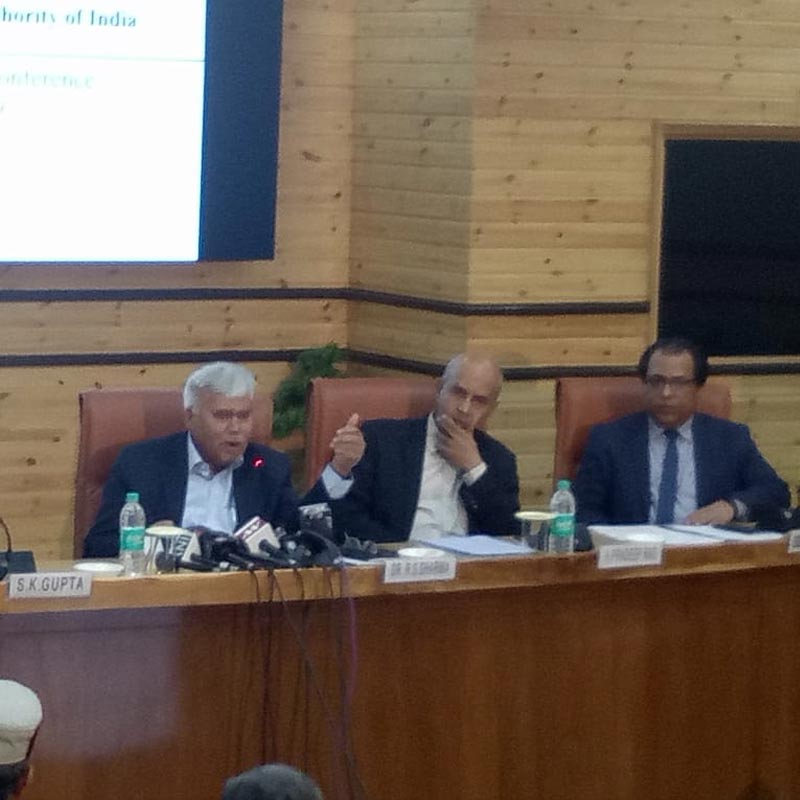
    MUMBAI: After Telecom Regulatory Authority of India’s new tariff regime empowering citizens to choose channels, came into effect from 1 February, consumers as well as distribution platform operators (DPOs) are facing several issues. To address such concerns, the authority held a press conference at TRAI headquarters in New Delhi.

    One topic discussed was the presence of multiple TV households. These subscribers prefer a cheaper scheme for the second TV. To keep it same under new regime, TRAI has sought details of special schemes for provision of second or subsequent connection. The regulatory body expects that DPOs will declare special schemes for multiple connections within a TV home in a day or so. TRAI said it is keeping an eye on the development and will intervene if required.

    While TRAI has always promoted the view that the new order will put power in the hands of consumers, there have been speculations that it will actually increase the monthly pay TV bill. Recently, ratings agency Crisil also published a report on price hike along the same line. TRAI refuted the report saying it is not based on focused analysis and research.

    “The report is based on choosing top rated channels on all India basis and considers only one weekly report dated 25th January 2019, from TV Rating Agency, BARC. The selection of channels by subscribers is primarily driven by language, genre, region and culture. The report fails to appreciate that even among top three channels, that is Sun TV, Zee Anmol and Star Maa, the language is Tamil, Hindi and Telugu respectively,” TRAI commented.

    TRAI has claimed so based on the logic that it is unlikely to expect one family to choose Tamil, Hindi and Telugu channel simultaneously. The regulatory body added that this is more glaring in the scenario where TV channels of Hindi, Tamil, Telugu, Bangla, Malayalam and English have been considered together.

    Apart from lashing out at the report for “misleading subscribers”, TRAI added the preliminary data analysis reflects actual savings by subscribers to the tune 10 to 15  per cent  in metro towns and between 5 to 10 per cent in non-metro (DAS 3 and DAS 4) areas.

    TRAI has again assured that subscribers availing pre-paid services will face no disruption, if there is a credit balance available in the subscriber’s wallet/ account.

    “The authority received information that while migrating consumers, one large service provider has caused blackout on the TV screen of a few-thousand subscribers. Taking a serious view, the authority has issued show cause notice to that service provider,” it added. DPOs were strictly told to cause no disruption in services.