Category: Regulators

  • Siti withdraws petition against SPN from TDSAT

    Siti withdraws petition against SPN from TDSAT

    MUMBAI: Siti Network Ltd has withdrawn its two-year-old petition against Sony Pictures Networks Distribution India Pvt Ltd and ORS from the Telecom Disputes Settlement & Appellate Tribunal (TDSAT), stating that the parties have settled their differences.

    Siti and Sony had some differences between them on the issue of accounting. While filing the petition in TDSAT, Siti had requested for an interim protection on the ground that it requires some more time to reconcile the accounts.  As per Sony, the total payable including payable for the month of December, 2017 was Rs 68.38 crore but according to the petitioner Siti the amount was much less.

    Following two-years of hearings and adjournments, the parties decided to settle their differences amicably. A bank guarantee of huge amount was involved in the petition amount of which is needed for payment of salaries etc. of employees. After its encashment the petition was formally withdrawn. 

  • Dish TV vs Prasar Bharati: DD Free Dish cannot use word ‘Dish’, says Delhi High Court

    Dish TV vs Prasar Bharati: DD Free Dish cannot use word ‘Dish’, says Delhi High Court

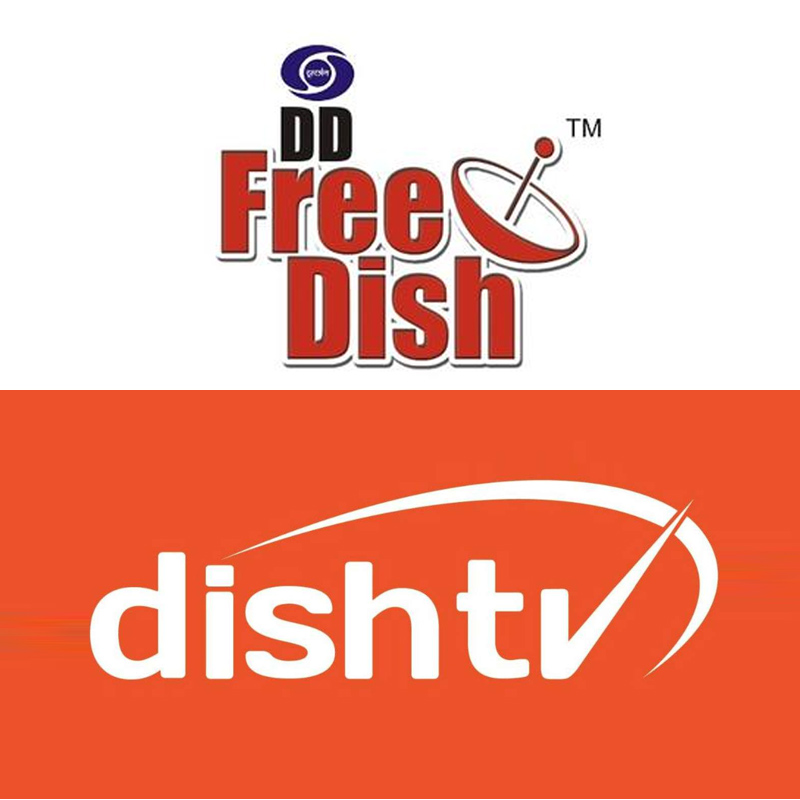
    MUMBAI: The Delhi High Court on Tuesday granted an injunction to direct-to-home (DTH) operator Dish TV (plaintiff) against Prasar Bharati (defendant), preventing the public broadcaster from using the word 'Dish' for its free-to-air DTH platform DD Free Dish. The defendant was handed three months’ time to inform its subscribers of the new name, so as to not cause any confusion.

    Terming it as prima facie case of infringement, the single bench of Justice Sahay Endlaw refused to accept the pubcaster’s claim of publici juris.

    The plaintiff had instituted this suit for permanent injunction restraining the defendant from infringing the trade mark “Dish TV‟ of the plaintiff and from passing off the defendant’s services as that of the plaintiff by adoption of the name/mark “Free Dish‟ and for ancillary reliefs.

    The plaintiff had argued that the world ‘Dish’ was first appropriated by them and is a key component of its trademark. The defended opted for a logo similar in nature, even containing the dish that was a central to the Dish TV logo.

    The defendant refuted the charge of similarities in the logo and argued that the exclusive right to the Dish logo cannot be claimed by anyone.

    The court was not in agreement with the defendant’s argument of the word “Dish‟ being generic to DTH service or publici juris and/or common to the trade of DTH service for it to be said that adoption thereof by plaintiff for its DTH services cannot prevent others providing same service from using the same for the reason of its being essential for them for describing their service.

    “As far as the contention of the counsel for the defendant regarding public interest is concerned, it cannot be lost sight of that the defendant, after ten years changed the name of its service from DD Direct+ to DD Free Dish. It is not the case of the defendant that in doing so, any such consequence followed. The defendant has also not disclosed the need for such change. There is no reason for the defendant to now, upon being asked to make the change instead of affecting the same voluntarily, suspect any such harm to the public. Moreover, the said aspect can be taken care of by providing sufficient time to the defendant to make its customers / subscribers aware of the change including on its own telecast,” the order read.

    “Rather, I am dismayed that the defendant, a public sector enterprise, indulged in using another’s trade mark and in spite of the plaintiff objecting thereto, refused to act reasonably. The same is not expected of a public sector enterprise which according to the proclaimed litigation policy of the government is not to be indulged in. It is at least now expected that the officials responsible for conduct of the business of the defendant will bestow attention thereto and take a call, whether it is worthwhile to contest this litigation, obviously at the cost of the exchequer,” Justice Sahay Endlaw further stated.

  • TDSAT gives Kamyab TV 2 weeks to submit payment schedule to govt

    TDSAT gives Kamyab TV 2 weeks to submit payment schedule to govt

    MUMBAI: The Telecom Disputes Settlement and Appellate Tribunal (TDSAT) has granted further two weeks’ time to Kamyab Television Pvt Ltd for submitting a time schedule for payment of the admitted dues to Union of India and Antrix TV.

    Kamyab TV had asked for an extension of time to clear the dues in the last hearing as well, which was duly granted by the tribunal. However, TDSAT in its latest order has cleared that any further time in the matter will be allotted on appropriate costs.

    The next hearing of the case is now scheduled on 9 August.

    Kamyab TV had moved TDSAT earlier this year against Union of India, as the space allotted to it on INSAT-4A was de-activated in February 2017 i.e. about two years back for dues of approximately Rs 5 crore as alleged by the Union of India. The former quoted the due amount to be Rs 3.89 crore and expressed its desire to pay the dues in installments.

    Following that, Kamyab TV also filed another application in TDSAT asking Antrix to issue a NOC so that it may be able to avail the Space Segment Service Agreement from the authorised service provider, which was denied by the latter on the grounds of non-payment of entire admitted dues.

    Kamyab Television had submitted that only Rs 1 crore could be arranged and paid immediately to Antrix for urgent issue of NOC and on when it will resume the business, the rest dues will be cleared off from its earnings.

    TDSAT had noted that Kamyab Television Pvt Ltd’s offer of an upfront payment of Rs. 1  crore for NOC is not good enough unless it provides a specific time schedule for the payment of the entire admitted dues of Rs. 3.98 crores approximately only.  

    Kamyab TV had asked for a short adjournment for instructions and, if possible, to submit a reasonable time schedule for payment of the admitted dues, which was granted. In the last hearing, Kamyab TV asked for additional time to set the schedule, which was also granted.

  • No complaints of DTH companies defying new tariff order received by TRAI: MIB

    No complaints of DTH companies defying new tariff order received by TRAI: MIB

    MUMBAI: Telecom Regulatory Authority of India (TRAI) has not received any complaints against direct-to-home (DTH) companies not sticking to its new tariff order, the Information and Broadcasting Ministry told the Lok Sabha last week.

    “No incidence indicating that the DTH operators are not adhering to the TRAI’s norms with regards to pricing of channels has come to the notice of TRAI.

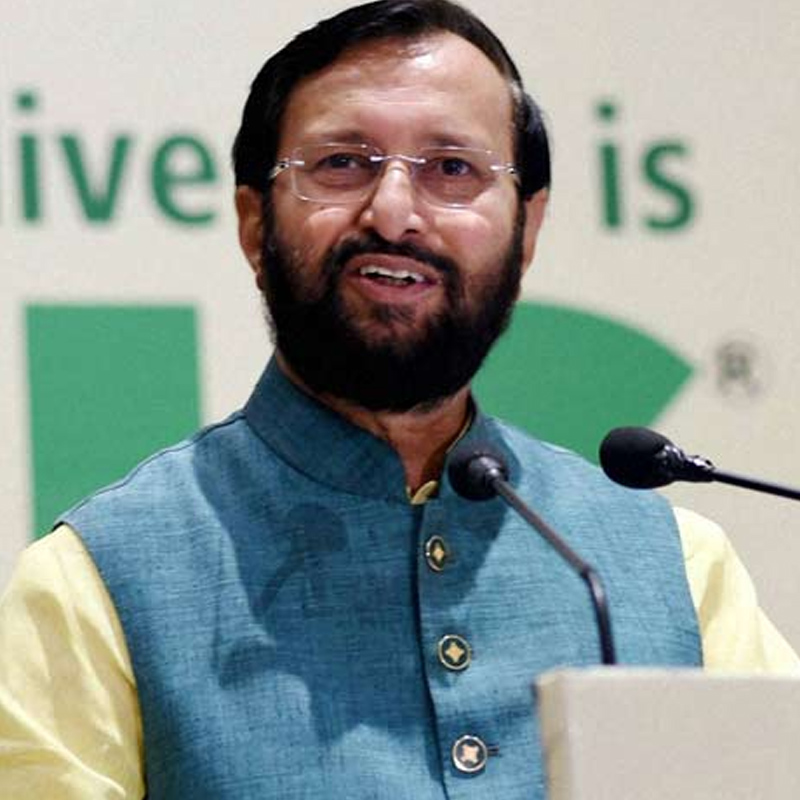
    “As per the new regulatory framework, every broadcaster is required to offer all its channels on a-la-carte basis and declare maximum retail price per month payable by a subscriber,” said Union I&B Minister Prakash Javadekar in response to a written question.

    The new tariff order had original come into force on 29 December 2018. TRAI then gave multiple extensions to stakeholders to fully implement the new rules for the broadcast and cable services sector.

    “However, keeping in view the consumer convenience and to provide sufficient time to consumers to exercise the options for the new tariff packs, TRAI provided time until March 31, 2019, to consumers for conveying their informed choices to service providers,” he further added.

  • Dish TV withdraws petition against SPN from TDSAT

    Dish TV withdraws petition against SPN from TDSAT

    MUMBAI: The ongoing tussle between Dish TV India Ltd and Sony Pictures Network India, in the Telecom Disputes Settlement and Appellate Tribunal (TDSAT), has settled with the former withdrawing its petition filed last year against certain clauses in terms and conditions of pre-NTO RIO as published by the broadcaster, on the basis of non – discrimination.

    Dish TV had moved TDSAT in Februrary 2018 challenging the subsisting RIO agreement which was entered into on 1 December 2017 without prejudice to its rights to challenge the clauses of RIO terms as communicated to SPN India vide letter dated 8 November 2017.

    Accepting Dish TV’s appeal to withdraw the petition, TDSAT noted in its order, “It is not in dispute that the parties have entered into a fresh agreement under the new regime on account of Regulations of 2017. In view of such developments, learned counsel for the petitioner (dish TV) submits that challenge by the petitioner to the terms of earlier RIO of the respondents has become academic and, therefore, the petition may be permitted to be withdrawn with liberty to the petitioner that if an occasion arises, it will be free to challenge the terms of new RIO of the respondents.”

    The tribunal clarified that Dish TV will be at liberty to raise its claim or seek relief through an appropriate proceeding in accordance with law if it has any any grievance in future.

  • Tata Sky’s final arguments in TRAI tariff order matter listed for 19 July by Delhi HC

    Tata Sky’s final arguments in TRAI tariff order matter listed for 19 July by Delhi HC

    MUMBAI: The Delhi High Court on Thursday adjourned the hearing of the petition of top DTH operators Tata Sky, Airtel Digital TV and Sun Direct, and broadcaster Discovery India Communication challenging Telecom Regulatory Authority of India (TRAI) and its new tariff regime to 19 July. according to sources close to the development, he DTH player Tata sky will conclude its argument on the same day. 

    During the hearing on 2 May, the regulatory body argued partly in the court. Before that, the last two hearings held on 11 April and 25 April were adjourned without any significant development.

    In the beginning of April, Discovery India concluded its arguments. The matter is being heard by Chief Justice Rajendra Menon and Justice V Kameswar Rao.

    Notably, the extended deadline for consumer migration under the new regime expired on 31 March. While TRAI has repeatedly said most consumers have moved to the new regulatory framework with a reduction in cable bills, several reports have claimed otherwise. In the last two weeks, TRAI also sent directives to several distribution platform operators across the country for not complying with tariff order rules properly.

    Earlier in February, the regulatory body extended the deadline to pick channels under the new regime till 31 March as well as gave a directive of Best Fit Plans. The subscribers that don’t opt for new channels would be moved to ‘Best Fit Plans’, which would be developed as per usage pattern, language and channel popularity, the sector regulator said in its statement.

    Chief Justice of Delhi High Court Rajendra Menon on 13 February questioned TRAI for altering the implementation process of its new tariff regime without informing the court. The chairperson of the sector regulator had also been directed to file an affidavit within a week explaining these changes.

    While the regulatory body has continuously declined that cable bills would go up under the new regime, several reports, as well as surveys, have indicated the hike in the monthly bill. Due to the change in pricing, many experts predicted that consumers would shift to OTT platforms eventually. To decrease the churn rate, some of the DTH players have removed network capacity fee for long duration packs.

    In 2017, Bharti Telemedia, Tata Sky and Discovery Communications India had filed petitions against TRAI, challenging its tariff order and the interconnect regulations. Unlike the position adopted by Star India wherein it questioned the regulatory powers of TRAI, the matter in the Delhi HC questions the regulator’s power to wipe out deals that operators enter into to fix commissions and rates for customers.

  • Delhi HC sends notice to TRAI over money collection through tariff amendment orders

    Delhi HC sends notice to TRAI over money collection through tariff amendment orders

    MUMBAI: The Delhi High Court has issued a notice to the Telecom Regulatory Authority of India (TRAI) asking it to explain how broadcasters collected crores of rupees from consumers on the basis of the 11th and 13th TRAI tariff amendment orders, as per a report by news agency ANI.

    The court was responding to a plea by an NGO which said that the Telecom Disputes Settlement and Appellate Tribunal (TDSAT) had set aside the case and remanded it to TRAI. TRAI has to file its reply by 11 September, the next date of the hearing.

    According to the petitioners, the collection of money by broadcasters was illegal after a Supreme Court order of 2015 was applied. They also had to maintain a separate account for this money collected from customers.

    Post the implementation of the framework, the money was to be returned to customers but the TRAI transferred the matter to the I&B Ministry.

  • MIB permits name change of 21 satellite channels

    MIB permits name change of 21 satellite channels

    MUMBAI: The Ministry of Information and Broadcasting (MIB) has approved a total of 21 applications from satellite channels for name change.

    Among the newly renamed channels, ABP News HD, Sony Marathi HD, Colors Rishtey, Colors Cineplex, Times Now World, Colors Cineplex HD are some of the significant ones.

    ABN News HD is the new name for ABP Kannada, Sony Marathi HD for Ten Golf HD, Colors Rishtey for Rishtey, Colors Cineplex for Rishtey Cineplex, Times Now World for the earlier Times now HD and Colors Cineplex HD for Cineplex HD respectively. The ministry also recently granted permission to Star India to rename Movies Ok as Star Gold 2.

  • TDSAT directs Independent TV to provide Rs 12 cr as bank guarantee to restore signals from Antrix

    TDSAT directs Independent TV to provide Rs 12 cr as bank guarantee to restore signals from Antrix

    MUMBAI: In a further development to the Independent TV v/s Antrix Corporation Ltd case, the former has been asked by the Telecom Disputes Settlement and Appellate Tribunal (TDSAT) to either pay Rs 5.83 crore along with a bank guarantee of Rs 6 crore or furnish a bank guarantee of Rs 12 crore to the latter to get its connection restored. The case has been set for further hearing on 7 August.

    Antrix had disconnected the signals of the DTH service-provider on 12 June due to its inability to meet financial conditions and had encashed the Rs 15 crore bank guarantee given by Independent TV post the last hearing in the case.

    Independent TV had filed an MA requesting the tribunal to direct Antrix to reconnect the signals as well as to enter into a long-term lease agreement with the petitioner since it has now received the required licence by the Ministry of Information and Broadcasting on certain conditions and the licence is valid till 31 December 2019.

    TDSAT noted that negotiations for a long-term lease agreement will take some time and some financial conditions must be established so as to secure the payment of the latest invoice raised by Antrix towards arrears which are Rs 5.83 crore.

    As contested by Antrix, the dues for a month of consumption would create a further liability of around Rs 5 crore and therefore, Independent TV should either pay the arrears forthwith or furnish bank guarantees for not less than the amounts indicated above i.e. around Rs 11 crore.  According to the submissions, the best case would be to direct the petitioner to furnish bank guarantee so as to cover the three months of space segment charges.

    “Considering that the petitioner (Independent TV) has been facing financial difficulties which led to disconnection as already noted, we are of the view that resumption of facilities in favour of the petitioner should be made available only on petitioner either paying the amount of Rs 5.83 crore along with a bank guarantee of Rs 6 crore or on furnishing a bank guarantee of Rs 12 crore valid for at least two months.  As soon as the petitioner complies with this part and furnishes the bank guarantee or makes the payment, respondent no. 1 (Antrix) shall reconnect the signals,” said TDSAT in its order.

    It further added, “Since the main prayer of the petitioner is a direction to Antrix to enter into a long term lease agreement, we direct both the parties to enter into negotiations so that a final decision in this regard may be taken at an early date, preferably within four weeks from the date of resumption of supply of signals. It goes without saying that if a long-term lease agreement is executed, the respondents will be protected by the financial conditions for the same.  In case a long-term lease agreement is not executed within the said period, the respondent no. 1 should disclose the reasons through an affidavit to be filed by the next date.  Necessary interim orders for payments etc. may be reconsidered on the next date.”

  • TRAI’s SK Gupta on Independent TV troubles, BARC overhaul, landing page controversy & tariff order

    TRAI’s SK Gupta on Independent TV troubles, BARC overhaul, landing page controversy & tariff order

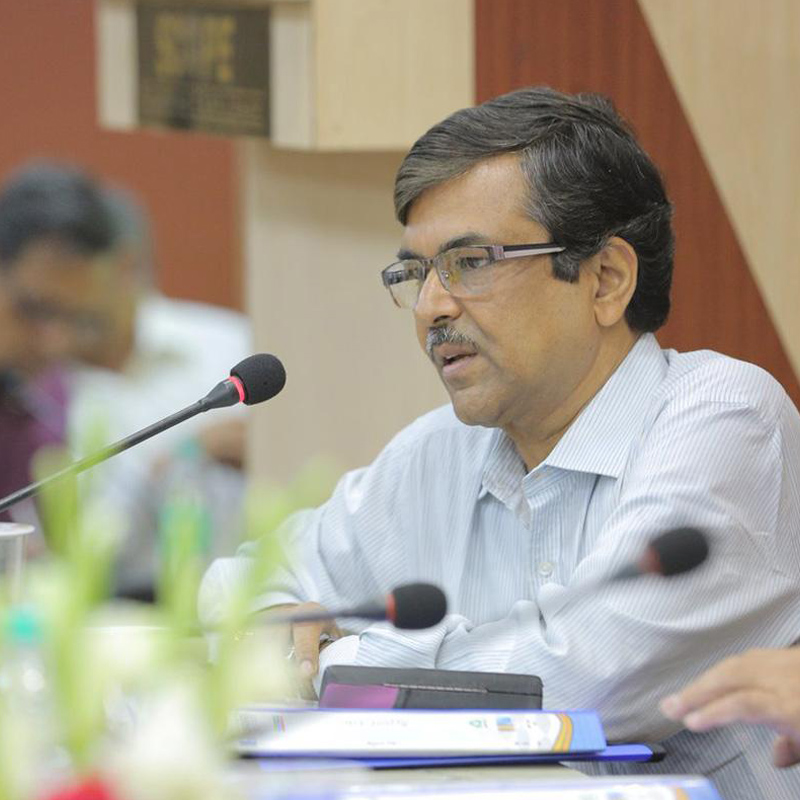
    MUMBAI: Top Telecom Regulatory Authority of India (TRAI) functionaries were in Mumbai on Wednesday for the second leg of the open house discussion (OHD) to review the television audience measurement and ratings system in India. In the audience were industry stakeholders spanning across broadcasters, advertisers, distribution platform operators (DPOs) and BARC representatives among others.

    “Ratings have to be unbiased, correct representation of the feelings of the people and should not be impacted by various methodologies being used to influence them,” said TRAI secretary Sunil K Gupta as he set the agenda.

    TRAI had received multiple comments and counter-comments from industry to its consultation paper, which featured a list of questions. In order to further deepen the engagement, Gupta recommended three additional topics be taken up for discussion.

    “What are the concerns and problems when it comes to return path data with set top boxes? Let us analyse and understand how we can increase the sample size of meters so that influencing data becomes difficult. Secondly, many broadcasters said in the Delhi OHD that data collected through such meters is filtered or manipulated to delete the outliers. They feel that the level of transparency in doing so is not there and in some cases they feel it is one of the tools to manipulate the TRP of a channel. Thirdly, is there any other alternative that can be adopted to make ratings more effective or more representative of viewership?” the secretary asked.

    However, despite the officials’ best efforts to initiate a conversation to highlight problems and suggest solutions, those present were rather conservative in their approach, side-stepping critical issues that continue to plague the broadcasting sector from a TV audience measurement standpoint. While regional broadcasters did argue in favour of a more representative sample to take into account multiple socio-cultural regions, major broadcasters failed to approach the discussion with their usual vigour.

    From BARC’s perspective, COO Romil Ramgarhia and chairman of its technical committee Shashi Sinha were rather frank and forthright, articulating their respective positions on all issues at hand quite candidly.

    In order to gain a better understanding of the regulator's viewpoint, Indiantelevision.com’s Dattaraj Thaly engaged the TRAI secretary in a quick chat on the sidelines of the OHD. 

    Edited excerpts follow.

    What compelled you to float a consultation paper on review of television audience measurement and ratings in India?

    We recommended the formation of an entity to rate the audience measurement for the TV sector and as per that recommendation, MIB came up with guidelines and then BARC was registered. Having said that, (BARC) working for the last three years, we just wanted to see how good the work is being done and there are different concerns of different stakeholders to improve the transparency of BARC rating. So, what are the concerns of stakeholders and how can we improve its functions was our objective.

    What are the specific functions you want improved? Is it credibility of the ratings, transparency of the system? What are the benchmarks for improvement?

    In fact it includes all the things. It is credibility, accuracy of the system and also to make it broad-based so that any attempt to tamper any information etc., should have minimum impact on rating given by the BARC.

    We know what the broadcasters’ concerns with BARC are. Can you tell us what the regulator’s view on the TV audience measurement body is?

    TRAI does not have any view of its own. We raise various issues to the stakeholders. We take oral as well as written comments of the stakeholders. We also analyse the international experiences, the issues raised by different people on what needs to be addressed and ultimately firmly take a view what should be done. So, one thing is very clear TRAI does not have its own view.

    You’ve now held two open house discussions (Delhi and Mumbai) to review our current TV audience measurement system. Have any key themes emerged from these consultations?

    One is that everybody wants BARC to give the ratings that are credible, transparent, not influenced by any of the stakeholders. They also want a broad-based rating pattern, so that chances of getting it influenced by few meters is reduced. Thirdly, they want to improve the transparency of the system.

    BARC’s data validation and outlier policy post the TDSAT order on landing pages has created quite a stir in the industry. What’s your view on this issue?

    You would have heard BARC clearly stating today that they do not have a method to identify landing page and therefore effectively address the issue.

    So, what is the way forward?

    You have yourself very clearly pointed out that there is a decision by TDSAT and we will look into it further and see what can be done. Also today you have heard that this is a call to be taken by the industry also.

    Are you satisfied with what you’ve accomplished in terms of the new tariff order roll-out?

    If you look at the preamble of the regulations and the tariff order issues, the objective raised over there were met to a great extent. So, we are satisfied.

    Two fundamental issues – consumer choice and transparency – were emphasised on by TRAI during the implementation of the new tariff order. Has the new regime addressed these two tenets?

    We have introduced giving the price of each channel in EPG, which has been appreciated by all of the stakeholders. As far as giving choice is concerned, we have checked different platforms and most of the platforms are complying and giving choice. What we have found is that there is a need to educate the consumers. Because consumers from the beginning have been given bouquets. Now awareness has been generated that options have been enabled to choose channels on a-la-carte basis. On this front, I think some more work is required.

    Has the broadcasting and cable services landscape settled down post the new tariff order implementation?

    The choice of customer is a dynamic situation and it will change from time to time and that is what we precisely feel like. The market will work once the consumer has got the options to exercise and it will depend on many things such as the type of programmes you are showing in your TV channel, the language, the awareness, etc. So, this is working very well on the ground and naturally it will take some time to settle. Saying that it has already settled may not be accurate, but yes it is going in the right direction.

    What’s your take on the Independent TV situation?

    Independent TV has been very recently given their license for DTH. The matter has been taken up with MIB and with the other enforcement arms of MIB, which is spread in the state and districts. We are looking into that.

    Is TRAI committed to light-touch regulation across the broadcasting and distribution sector?

    New tariff order is the right example of light-touch regulation (https://www.indiantelevision.com/regulators/trai/broadcasters-split-over-trai-s-directive-to-barc-on-tv-viewership-data-190226). We have given complete freedom to broadcasters to price their channels. We have given freedom to DPOs to carry out their business and get a certain committed revenue so that quality of the network can be upgraded and quality of the services can be given to the consumers. We are only prescribing the broad architecture and not micro-managing.