Category: Regulators

  • India cracks down on gaming addiction, inspired by Australia’s ban move

    India cracks down on gaming addiction, inspired by Australia’s ban move

    Mumbai: In a bold move to tackle the rising concerns of online gaming addiction among children, the Indian government has drawn inspiration from Australia’s under-16 social media ban to craft its own set of protective measures. Picture a brighter, safer digital playground—where kids explore responsibly, shielded from the traps of addiction and harmful content. With fresh policies and advisories, India is taking a joyful leap towards making the internet a safer, more accountable space for its youngest users.

    The Ministry of Electronics and Information Technology (MeitY) has enacted the Information Technology (Intermediary Guidelines and Digital Media Ethics Code) Rules, 2021 (IT Rules, 2021) to ensure that intermediaries, including social media platforms, adhere to strict due diligence obligations. These rules mandate that intermediaries refrain from hosting or publishing content that violates existing laws or promotes gambling, money laundering, or content harmful to children. Platforms are held accountable for the swift removal of unlawful information and addressing user grievances under these provisions.

    Additionally, the Ministry of Education has issued advisories for parents and teachers on overcoming the downsides of online gaming. The advisories, issued in 2021, emphasise that unrestricted online gaming can lead to severe addiction, classified as a gaming disorder, and warn of the associated mental and physical stress on children. The government has recommended the widespread circulation of these advisories to raise awareness and encourage effective action among parents and educators.

    The Ministry of Information and Broadcasting (MIB) has also taken proactive steps to regulate gaming advertisements. In its advisory to private satellite television channels, MIB stipulated guidelines that prohibit gaming advertisements from depicting individuals under 18 years of age. It further mandates disclaimers warning of financial risks and the addictive nature of gaming. Advertisements must avoid portraying gaming as an alternative employment option or as a marker of success.

    In 2024, the MIB issued an additional advisory to media and social media platforms, urging them to refrain from broadcasting advertisements for online betting platforms. It also advised online intermediaries not to target such advertisements at Indian audiences.

    The Ministry of Home Affairs (MHA) has taken significant steps by establishing the Indian Cyber Crime Coordination Centre (I4C) to provide a coordinated framework for law enforcement agencies addressing cybercrimes. The MHA also launched the National Cyber Crime Reporting Portal (https://cybercrime.gov.in) to allow the public to report cybercrimes, including those targeting children. A toll-free helpline, 1930, has been set up to assist citizens in lodging cybercrime complaints efficiently.

    These initiatives represent the government’s multi-faceted approach to safeguarding children from the harmful effects of online gaming while ensuring a secure and accountable digital environment.

  • Vijay Chandok takes over NSDL chairman & managing director

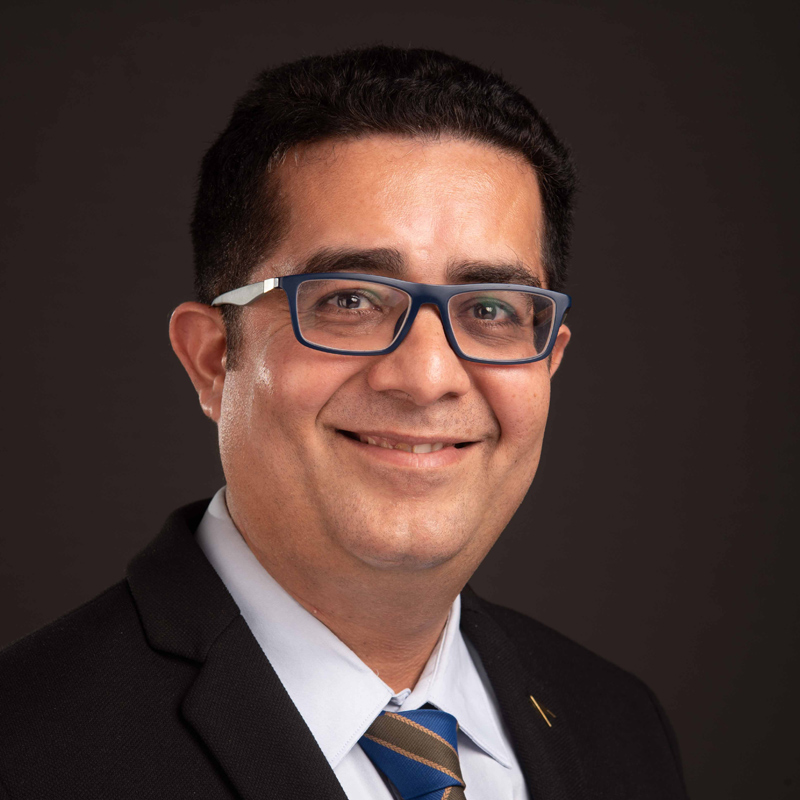
    Vijay Chandok takes over NSDL chairman & managing director

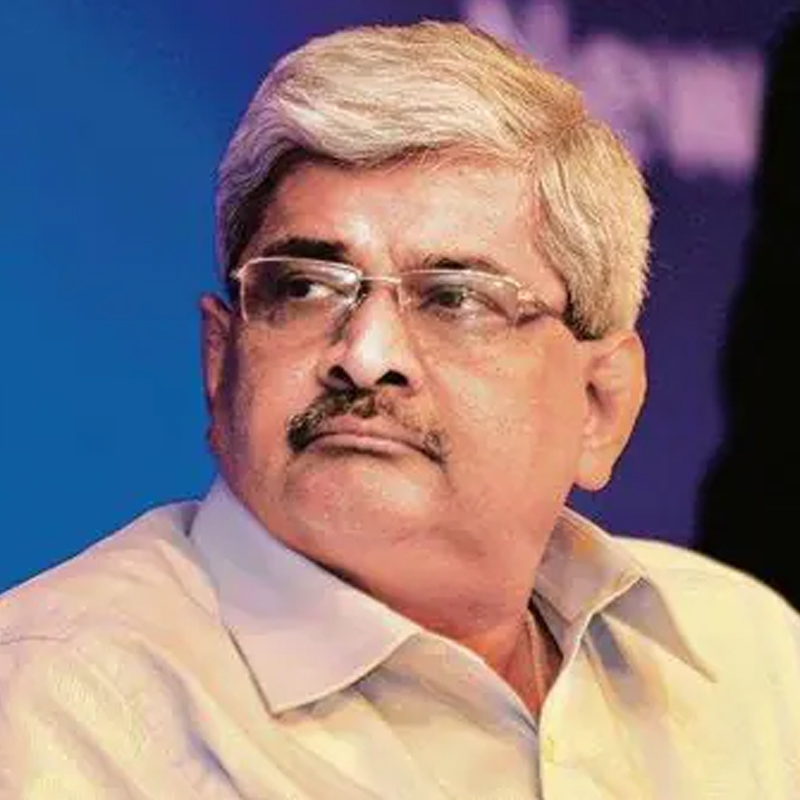
    MUMBAI: His appointment was cleared by the Securities Exchange Board of India  (Sebi) in end August  when he was MD & CEO of ICICI Securities.  The National Securities Depository Ltd (NSDL), however,  announced on 29 November  that financial market veteran Vijay Chandok has joined the organisation as MD & CEO.

    Chandok’s  appointment is set for five years or until he turns 65, earlier reports had suggested. These  had also suggested that Chandok would join at a time when NSDL was looking at unlocking value through an initial public offering. But today, the depositories body said that he “set to lead the organisation through a transformative phase, focusing on enhancing market operations and ensuring secure, efficient, and innovative solutions for stakeholders.”

    Chandok has  a master’s in management studies from NMIMs and an engineering degree from ITT Bubaneshwar.


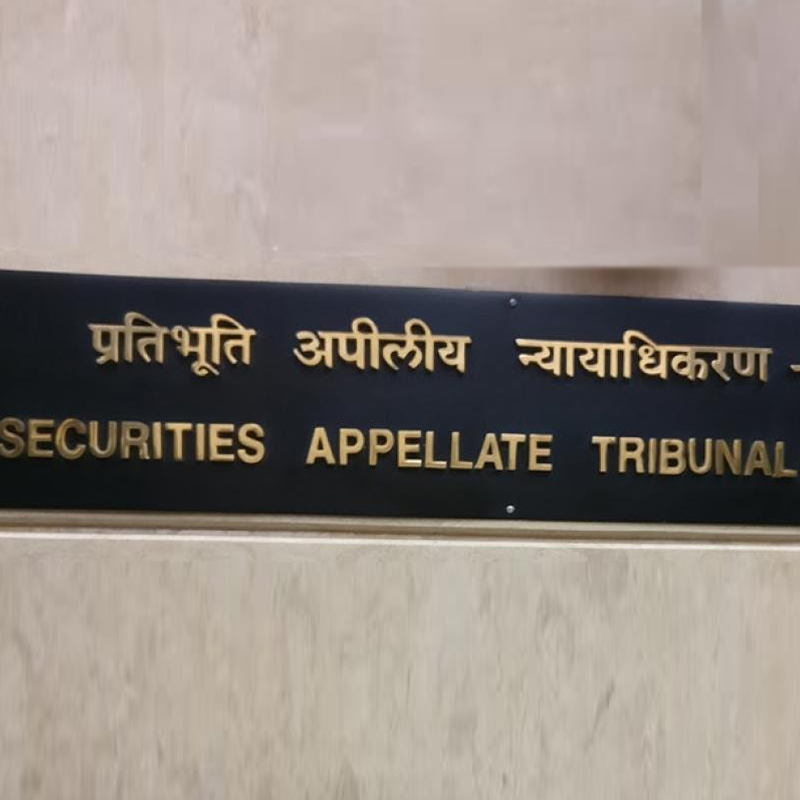
  • Zee vs Railtel arbitration: tribunal dismisses claims by both

    Zee vs Railtel arbitration: tribunal dismisses claims by both

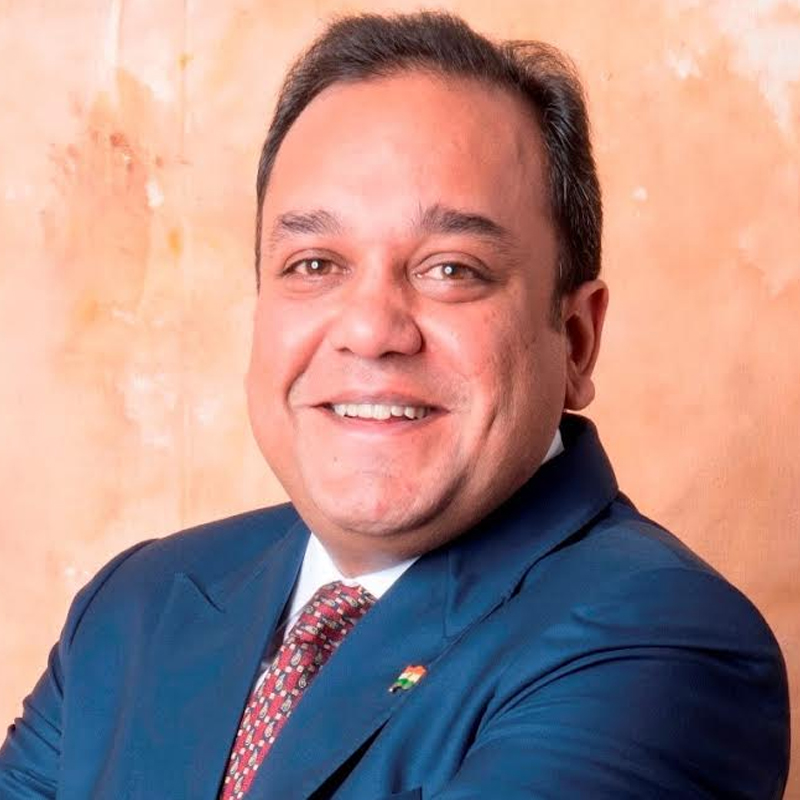
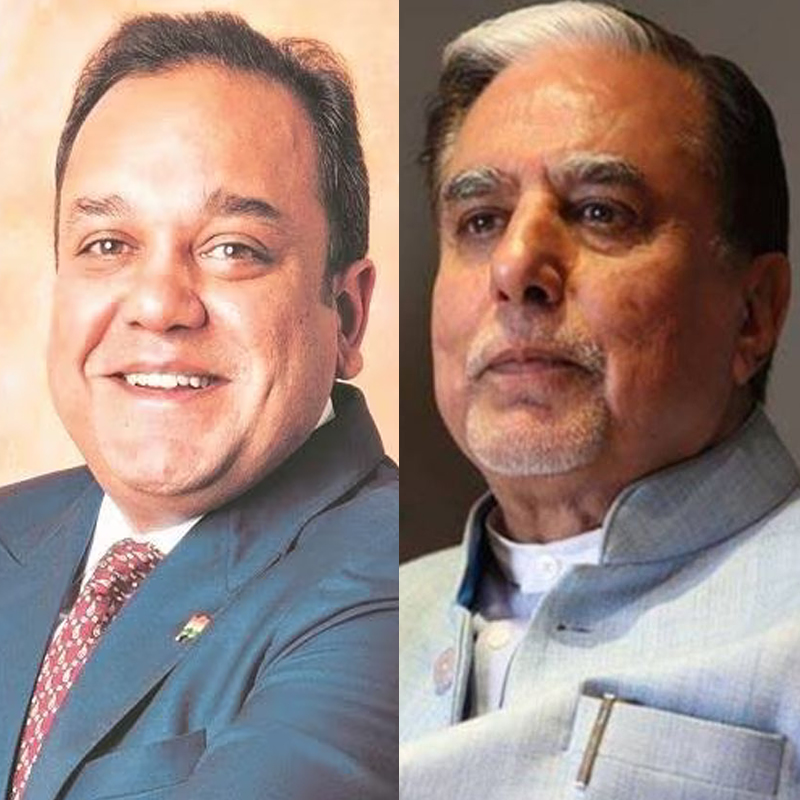
    MUMBAI: Railtel Corp and Zee Entertainment have been at loggerheads for the past three years.

    The bone of contention has been the cancellation of a 10 year contract that Zee’s subsidiary Margo Networks had signed with the former in March 2021 to provide content on demand (movies, news, music videos, and general entertainment) free of buffering onboard 8,731 trains including 5,723 suburban trains and more than 5,952 wi-fi-enabled railway stations. As part of this, media servers were to be installed in railway coaches.

    The Railway Board had assigned Railtel with the task of implementing this dream project which had then subcontracted it to Margo. Revenue expectations were high with the Railways hoping to pocket at least Rs 60 crore as part of the 50:50 arrangement it had made with Railtel.

    The project had moved to pilot implementation stage in a Rajdhani train and in an AC rake of the western railways.

    And then it was called off suddenly in November 2021. Railtel said, it was due to the alleged non-performance of Margo Networks. Zee Entertainment had disagreed and announced that it would haul Railtel to the courts.

    In August 2023, it started arbitration proceedings against Railtel for cancelling the contract and claimed amounts wrongfully forfeited by the latter along with costs/damages. The matter had been with the arbitral tribunal since then.

    Zee Entertainment, on 26 November 2025, informed  the BSE in a regulatory filing, that the arbitral tribunal had made its arbitral award. As part of that, it had rejected its and Margo’s claims against Railtel. It added that the tribunal had  also rejected the counter claims made by Railtel.

    Zee added that it is “evaluating the option of filing an application/appeal before the appropriate court for setting aside of the arbitral award.”

    Clearly, we have not seen the last of this courtroom saga. 

  • TRAI implements new measures to eliminate spam calls and SMS

    TRAI implements new measures to eliminate spam calls and SMS

    New Delhi – In a mission towards curbing the menace of spam calls and SMS, the Telecom Regulatory Authority of India (TRAI) has implemented a series of robust measures. These initiatives are aimed at safeguarding consumer interests and also ensuring accountability among service providers and telemarketers.

    TRAI’s directive issued on 13 August 2024, stated its no-tolerance policy toward entities engaging in promotional calls and messages that violate regulations. The mandate includes disconnection of telecom resources, blacklisting of violators for up to two years, and a prohibition on new resource allocation during the blacklisting period.

    These decisive actions have already shown promising results. Access providers, acting on TRAI’s directive, have significantly reduced the number of complaints against spam calls. In August 2024, 1.89 lakh complaints were registered. This figure dropped by 13 per cent to 1.63 lakh in September and further declined by 20 per cent to 1.51 lakh in October.

    To ensure transparency and traceability in messaging, TRAI issued a directive on 20 August 2024, requiring a clear trail of all messages from senders to recipients. This measure, set to take effect on 1 November 2024, ensures that accountability is embedded into the messaging ecosystem.

    Recognising the need for a smooth transition, TRAI extended the implementation deadline to 30 November 2024. This extension provides additional time for Principal Entities (PEs) and Telemarketers (TMs) to align with technical and operational requirements. Access providers have swiftly implemented the necessary technical solutions, laying the groundwork for a seamless transition.

    TRAI has actively engaged stakeholders through webinars aimed at raising awareness about these measures. On 12 November 2024, the first webinar, conducted in collaboration with Reliance Jio Infocomm Ltd., witnessed participation from over 1,000 representatives, including those from entities regulated by the Reserve Bank of India (RBI), Securities and Exchange Board of India (SEBI), Pension Fund Regulatory and Development Authority (PFRDA), and Insurance Regulatory and Development Authority of India (IRDAI).

    The second webinar, held on 19 November 2024, in association with Vodafone Idea Ltd., saw participation from over 800 representatives, including officials from central and state government departments. Building on this momentum, a third webinar is scheduled for 25 November 2024, in partnership with Tata Teleservices Ltd. This event is expected to engage stakeholders from diverse sectors, including consumer affairs, fintech, and technology organisations such as Nasscom and the Fintech Association for Consumer Empowerment (FACE).

    The collaborative efforts of TRAI and access providers have already driven remarkable progress. Over 13,000 Principal Entities have registered their communication chains with access providers, with many more registrations underway. Access providers are also issuing warning notices to entities that have yet to comply, emphasising the urgency of completing these declarations.

    As the 30 November deadline approaches, all principal entities and telemarketers are urged to prioritise compliance. Failure to adhere to the defined telemarketer chain will result in message rejections, reinforcing TRAI’s resolve to uphold consumer rights and regulatory standards.

  • TRAI releases telecom subscription data for 30 September 2024

    TRAI releases telecom subscription data for 30 September 2024

    New Delhi: The Telecom Regulatory Authority of India (TRAI) unveiled its report on telecom subscription data as of 30 September 2024. The findings highlight trends across wireless and wireline segments, broadband subscriptions, and mobile number portability (MNP) requests, reflecting a dynamic yet challenging period for the sector.

    Decline in total subscribers

    India’s total telecom subscriber base saw a decline of 9.41 million in September, with numbers dropping from 1,200.07 million in August to 1,190.66 million. This translates to a monthly contraction of 0.78 per cent. Urban areas reported a slight dip in tele-density from 132.94 per cent to 131.86 per cent, while rural tele-density dropped from 59.05 per cent to 58.48 per cent. The declining figures underline challenges such as market saturation and migration of users to alternative communication platforms.

    Broadband subscriptions decreased by 0.51 per cent, from 949.21 million in August to 944.40 million in September. Mobile devices accounted for most of this decline, witnessing a contraction of 0.63 per cent. However, wired broadband and fixed wireless users showed growth, with increases of 1.83 per cent and 9.01 per cent, respectively. Reliance Jio retained its dominance with 477.94 million subscribers, followed by Bharti Airtel (285.17 million) and Vodafone Idea (126.36 million). These top players collectively command 98.42 per cent of the broadband market, underscoring limited competition in this segment.

    Wireline subscribers on the rise

    The wireline segment emerged as a bright spot, growing by 1.93 per cent to reach 36.93 million subscribers. Urban areas accounted for 92.14 per cent of these connections, highlighting an urban-centric growth trajectory. BSNL and MTNL, despite being public-sector entities, maintained a combined market share of 23.95 per cent, showcasing resilience amidst stiff competition.

    The wireless segment faced a challenging month with a decline of 10.11 million subscribers, a 0.87 per cent drop. Urban and rural wireless subscriptions declined by 0.80 per cent and 0.95 per cent, respectively, as affordability and service reliability remained key issues. Bharti Airtel led the active wireless subscriber base with a remarkable 99.27 per cent activity rate on its Visitor Location Register (VLR).

    The MNP service recorded 13.32 million requests in September, raising the cumulative total to 1,039.11 million. Zone-I, encompassing Northern and Western India, saw Uttar Pradesh-East leading the pack with 100.56 million porting requests. In Zone-II, Madhya Pradesh topped the charts with 81.06 million requests, reflecting high user dissatisfaction or a quest for better services.

    Regional tele-density variations

    Tele-density across circles revealed stark disparities. Delhi boasted the highest tele-density at 278.55 per cent, while Bihar recorded the lowest at 56.40 per cent. This gap highlights persistent inequalities in telecom penetration across states.

    While the report signals challenges, particularly in the wireless and rural segments, it also hints at potential opportunities in wireline growth and broadband expansion. As operators strive to innovate and enhance service quality, the sector remains poised for a possible turnaround. 

  • NDTV responds to BSE query on Adani group news reports

    NDTV responds to BSE query on Adani group news reports

    MUMBAI: With the spotlight being beamed on the Adani group courtesy the criminal indictment and civil complaint by the US department of justice and the Securities and Exchange Commision in a US court against Gautam Adani and two other board members of Adani Green, the Bombay stock exchange reached out to group company NDTV India querying it about the development.

    NDTV responded by clarifying that no allegations have been made against it  (NDTV), It also cited the media release issued by the Adani group quoting a spokesperson that  “the allegations made by the US Department of Justice and the US Securities and Exchange Commission against directors of Adani Green are baseless and denied. As stated by the US Department of Justice itself, the charges in the indictment are allegations and the defendants are presumed innocent unless and until proven guilty. All possible legal recourse will be sought.”

    “Adani Group has always upheld and is steadfastly committed to maintaining the highest standards of governance, transparency and regulatory compliance across all jurisdictions of its operations. We assure our stakeholders, partners and employees that we are a law-abiding organisation, fully compliant with all laws.”

    The NDTV stock appeared to be unaffected by all the allegations as it fell just 0.65 per cent to Rs 168.25 at trading day’s end. 

  • Delhi high court provides relief to Inox India in copyright registration appeal

    Delhi high court provides relief to Inox India in copyright registration appeal

    Mumbai: The Delhi high court provided relief to Inox India (INOX) by allowing an appeal challenging specific remarks included in the copyright registration certificate issued by the registrar of copyrights. Khaitan & Co represented Inox in this matter. The team included Smriti Yadav (partner), Nirupam Lodha (partner), Dhiren Karania (principal associate), Gautam Wadhwa (Senior Associate) and Vanshika Thapliyal (associate). Senior advocate Chander M. Lall appeared for Inox in this matter.

    The appeal addressed Inox’s contention that the registrar of copyrights had incorrectly imposed remarks on the certificate, including a statement that copyright in the work would cease if applied to an article more than 50 times. Inox argued that this restriction was inapplicable, as the artistic work in question, consisting of technical drawings, does not qualify for registration as a “design” under the Designs Act, 2000. Inox asserted that these remarks were unfounded and had been added without proper reasoning or rationale.

    During the proceedings before honorable justice Mini Pushkarna, the registrar of copyrights agreed to amend the registration certificate, committing to issue a corrected certificate without the contested remarks within four weeks. Additionally, the registrar’s counsel informed the court of ongoing updates to the website portal to prevent similar issues in the future.

    The court took note of these submissions and disposed of the appeal accordingly.

  • MIB’s Neerja Sekhar visits SuperGaming, champions India’s gaming sector

    MIB’s Neerja Sekhar visits SuperGaming, champions India’s gaming sector

    Mumbai: SuperGaming, India’s prominent game development studio, recently hosted the ministry of information & broadcasting, IAS, special secretary, Neerja Sekhar, at its Pune office. During her visit, Sekhar explored SuperGaming’s latest Indo-futuristic battle royale game, ‘Indus’, which has captured the Indian gaming community since its release in October. Her discussions with the SuperGaming team delved into the creative and technical processes of game development, offering valuable insight into this fast-growing industry.

    The ministry of information & broadcasting continues to emphasise gaming as a valuable career path within India’s burgeoning animation, visual effects, gaming, and comics (AVGC) sector. The SuperGaming team shared their vision for ‘Indus’ as a cultural export, underscoring the importance of gaming in skill-building and career growth for India’s youth.

    India’s esports scene has seen considerable momentum, especially since esports was recognised as a multi-sport event by the government. In line with this growth, the ministry recently announced the World Audio Visual and Entertainment Summit (WAVES), set for February 2025 in New Delhi. This event will debut the WAVES Esports Championships (WESC) 2025, the nation’s first gender-inclusive esports tournament.

    prime minister Narendra Modi recently called for Indian game developers to step onto the global stage, a vision embodied by ‘Indus Battle Royale’ as it resonates with players worldwide. SuperGaming is committed to fostering this vision through initiatives like the ‘Clutch India Movement,’ a year-long esports program starting with the Indus International Tournament, which features the largest prize pool for a battle royale game in India at Rs 2.5 crore.

    Sekhar’s visit to SuperGaming reflects the government’s dedication to nurturing the AVGC sector, positioning it as a vital component of India’s digital economy and cultural landscape.

  • TRAI issues consultation paper on Broadcasting Service Authorisations under Telecom Act 2023

    TRAI issues consultation paper on Broadcasting Service Authorisations under Telecom Act 2023

    New Delhi – The Telecom Regulatory Authority of India (TRAI) released a consultation paper on Framework for Service Authorisations for provision of Broadcasting Services under the Telecommunications Act, 2023′.

    The Ministry of Information and Broadcasting (MIB) through a letter dated 25 July 2024, sent a reference to TRAI informing that the Telecommunications Act, 2023 has been published in the Official Gazette of India. Section 3(1)(a) of the Telecommunications Act, 2023, which is yet to be notified, provides for obtaining an authorisation by any entity/ person intending to provide telecommunication services, subject to such terms and conditions, incuding fees or charges, as may be prescribed.

    In respect of the broadcasting services, the reference has apprised that many broadcasting platforms (which employ radio waves and spectrum for offering services) viz. DTH, HITS, IPTV, Uplinking/ Downlinking of television channels (including teleports), SNG, DSNG, Community Radio, FM Radio etc. are issued license/ permission/ registration by MIB under Section 4 of the Indian Telegraph Act, 1885, which is replaced by the Telecommunications Act, 2023. 

  • Delhi high court blocks 60 rogue sites for streaming Zee content

    Delhi high court blocks 60 rogue sites for streaming Zee content

    Mumbai: The Delhi high court granted interim relief to Zee Entertainment Enterprises Ltd, ordering the cessation of unauthorised streaming of its TV shows, movies, and other proprietary content on sixty rogue websites. Justice Mini Pushkarna directed domain registrars to suspend these sites and provide Zee with essential information, including contact details, IP addresses, and locations. Additionally, Internet Service Providers (ISPs) were instructed to block access to the infringing websites.

    Represented by advocate Sidharth Chopra, Zee noted extensive unauthorised streaming by defendants 1 through 60—rogue websites hosting popular shows such as Bastar – The Naxal Story, Kakuda, Rautu ka Raaz, and other original series without permission. These sites, operating anonymously, were reportedly profiting from unauthorised access to Zee’s intellectual property by featuring organised and regularly updated content. The suit names defendants 61 to 81 as domain registrars for suspension or blocking of the rogue websites, while defendant 82, Google LLC, is tasked with de-indexing these sites from search results. Defendants 83 to 91, representing Internet Service Providers, were added to restrict access to these websites. The Department of Telecommunications and the Ministry of Electronics and Information Technology, listed as defendants 92 and 93, respectively, were included to provide necessary notifications.

    He emphasised the impact on Zee Entertainment, noting that without intervention, ongoing piracy by defendants 1–60 could lead to irreparable harm given Zee’s investment in content production and distribution.

    The court further empowered Zee to report any additional websites found to be involved in unauthorised streaming during ongoing proceedings. In cases where a non-infringing site may be mistakenly blocked, the court assured that the site could seek rectification, provided it does not intend to breach Zee’s broadcast rights.

    Zee had initially sought a permanent injunction to prevent copyright violations and piracy by these sites, alleging that they profited from illegal streaming. Zee requested that the domain names be blocked or suspended, that registrars and ISPs disclose relevant information and that search engines like Google de-index these sites.

    After reviewing Zee’s arguments, the court found the media company had made a case for an injunction, concluding that Zee could suffer harm without this relief. Justice Pushkarna granted an ex parte interim injunction, and the case is set to continue on 7 March 2025.