Category: Regulators

  • TRAI tweaking new tariff order could trigger turmoil in broadcasting sector

    TRAI tweaking new tariff order could trigger turmoil in broadcasting sector

    MUMBAI: The latest consultation paper (CP) from the Telecom Regulatory Authority of India (TRAI) has created quite a stir in India’s broadcasting sector. Titled ‘Tariff-related issues for broadcasting and cable services’, the CP is essentially an admission from the regulator that its new tariff order (NTO) failed to deliver the desired results.

    Mulling amendments to the existing regulatory framework, TRAI has sought stakeholders’ views on 27 questions, with a focus on discount cap for bouquets, ceiling price of channels in bouquets and the concept of a channel bouquet itself.

    Interestingly, TRAI had on numerous occasions, post NTO implementation, stated that consumers’ cable bills had in fact reduced and transparency been injected into the sector. Reality on ground, however, has been quite different with cable bills shooting up for most households and several complaints landing up at the chairman’s desk.

    “Now post NTO, subscribers realise that they are forced to pay more for fewer channels. This is only because TRAI, as regulator, forgot its original role of working for the sector in a balanced manner. It wanted to either side with consumers or DPOs thereby harming the sector in the process,” said an industry watcher on the condition of anonymity.

    Industry estimates suggest 80 per cent of TV consumers have made their channel selection under the new tariff order. It is also evident from analyst calls post Q1 results for FY20 that broadcasters believe the industry has settled down post the NTO implementation.

    In such an environment, experts feel, changes to the existing tariff order could cause more disruption than the previous occasion creating an ‘existential crisis’ for a large section of the industry.

    With 10 million subscribers having dropped off from cable and DTH services post NTO implementation, further changes to the order will only multiply that number.

    The CP, lacking an evidence-based approach, relies on assumptions, say critics. On numerous occasions it takes a position without referring to or alluding to any interactions with consumer groups or making public complaints received by TRAI against DPOs.

    ·       TRAI’s CP highlights misuse of flexibility in pricing but overlooks the fact that India is a price sensitive market and that broadcasters have priced their channels keeping content costs in mind.

    ·       There is an illusionary concept of popular and non-popular channels, which TRAI seems to have used to justify that consumers are not making informed choices.

    ·       TRAI does not acknowledge the fact that under the NTO, DPOs have gained the most by charging maximum NCF (i.e. Rs 130) to consumers which is evident from the increase in their profits and the power they enjoy in terms of billing consumers.

    ·       For instance, DPOs charge Rs 130 NCF for 100 SD channels and Rs 20 for the slab of next 25 SD channels. If a subscriber even opts for a single channel above mandatory 100 channels, the bill then increases by Rs 20. This also highlights the fact that a DPO doesn’t incur any additional cost whether he carries a single channel or 25 channels.

    ·       The comparison of the wholesale price of channels in previous regime and retail price of the new regime in Annexure I, clearly demonstrates that overall a-la-carte prices of approximately 82.8 per cent channels have decreased. TRAI has not factored in the rate (i.e. DRP) of a-la-carte channels that DPOs offered to consumers in the earlier regime.

    ·       TRAI has talked about skewed a-la-carte and bouquet pricing whereas it is evident from the CP that discounts on bouquets in the previous regime ranged between 80-90 per cent, while they have been reduced to as low as 33 per cent in the current framework as can be seen in Table 3.1.

    ·       TRAI seems to have made the assumption that a-la-carte is the preferred choice and thus talks about their poor uptake. There is no substantial evidence to suggest that consumers prefer a-la-carte over bouquets.

    ·       TRAI views TV channel viewership numbers in terms of consumers wanting to subscribe to watch a channel or not.

    ·       TRAI assumes that the right of consumers to select and pay for what they want to view is elusive and the reason behind it is huge discounts in bouquets.

    ·        TRAI asserts that the sheer number of bouquets offered has created confusion in the minds of subscribers. However, a large chunk of these bouquets from each broadcasters cater to different geographical regions.

    ·       TRAI assumes that subscription data obtained from DPOs indicates that almost all the channels have been made available to subscribers as part of bouquets using skewed mechanism, undermining the fact that consumers have made informed choices and selected bouquets containing the channels they want at a discounted rate. Also, those who wanted channels on a-la-carte have also made their choices.

    ·       TRAI gave flexibility to broadcasters to form bouquets so that they can make small bouquets of same genre or some popular channels to make selection of channels easier for consumers, which is again contradictory.

    ·       TRAI’s CP uses terms such as “unwanted channels”, “niche/premium channel”, “popular channels”, “non-driver channels”, “driver channels”, “piggyback” which do not hold any legal basis.

    There is also a section within the industry that believes TRAI should conduct a household survey to understand the implementation of NTO and its impact before altering the current tariff order. There are those that predict TRAI’s move will boost telecom companies putting them in a position to provide triple play resulting in both call shifting and cord cutting.

    Over the years, one of the fundamental problems plaguing India’s broadcast sector has been regulatory overreach. In a sense, TRAI has always approached this sector with the mind-set of a telecom regulator. TRAI has gone from freezing price of channels for 10 years to overhauling the framework in the last two years. The new regime, which finally kicked in on 1 February 2019, resulted in disrupting the entire ecosystem causing value erosion. Another radical move to the existing system will only trigger more chaos.
  • Broadcasters raise concern over TRAI consultation paper to review channel pricing

    Broadcasters raise concern over TRAI consultation paper to review channel pricing

    MUMBAI: The recent decision by the Telecom Regulatory Authority of India (TRAI) to review the issues of pricing of channels has brought about concern among broadcasters, according to a report by IANS. Broadcasters fear that the new approach, barely eight months into the new tariff regime, will only discourage and disincentivise fresh investment into the sector, which can have dire consequences.

    TRAI had recently released a consultation paper, which noted that broadcasters have been offering discounts of up to 70 per cent for bouquets compared to a la carte rates causing discrepancies for consumers. The consultation paper looks into the issue of pricing of channels by broadcasters, cable operators and distribution platforms.

    The paper primarily discusses issues related to discounts in the formation of the bouquets, ceiling price of channels for inclusion in bouquet, need for formation of bouquet by broadcasters and DPOs, variable NCF and discounts on long term plan.

    However, analysts told IANS that the consultation paper ‘Tariff-related issues for broadcasting and cable services' relating to the new tariff order (NTO), which came into force from February 1, did not take into account that consumers across the world opt for bouquets rather than individual channels as the former are cheaper.

    Analysts and broadcasters have also stressed that broadcasting cannot be counted as an essential service and those who cannot afford premium TV have the affordable options of viewing Doordarshan and FreeDish. Smaller channels and networks may even face an "existential crisis" in case TRAI implements a fresh pricing model.

  • Broadcasters, DPOs misused new tariff order to throttle market discovery of channel prices: TRAI

    Broadcasters, DPOs misused new tariff order to throttle market discovery of channel prices: TRAI

    MUMBAI: Telecom Regulatory Authority of India (TRAI) on Friday issued a consultation paper on tariff related issues for Broadcasting and Cable services.

    The paper primarily discusses issues related to discounts given in the formation of the bouquets, ceiling price of channels for inclusion in bouquet, need for formation of bouquet by broadcasters and DPOs, variable NCF and discounts on long term plan.

    TRAI believes that the new regulatory framework has brought the transparency in TV channel pricing, harmonised business processes in the sector and reduced disputes among stakeholders. However, adequate choice to select TV channels has not been given to the consumers.

    “In all fairness, a lot was expected from broadcasters and DPOs to use flexibility given under new regulatory framework to address the concerns and aspirations of the consumers. However, given flexibility was misused to throttle market discovery of TV channel prices by giving huge discounts on the bouquets. It has been observed from the tariff declared by broadcasters under new regulatory framework that they are offering bouquets at a discount of up to 70 per cent of the sum of a-la-carte rates of pay channels constituting those bouquets,” reads TRAI’s latest notification.

    “It indicates that in absence of any restriction on the discount on the offering of bouquets, broadcasters are making prices of a-la-carte channels illusory thereby impacting the a-la-carte choice of channels by consumers. Further, no restriction on number of channels has created another problem wherein broadcasters and DPOs are offering too many bouquets,” the note further states.

    TRAI has observed that too many bouquets are formed by the broadcasters/DPOs and many of them contain very similar set of channels, with very few changes. This, according to the sector regulator, is not only creating confusion among consumers but also becoming a hurdle in choosing the channels.

    With too many bouquets of broadcasters and DPOs, consumers get confused and as a result are forced to adopt some suggested packs of TV channels, killing the freedom given to consumers to choose desired TV channels, feels the sector regulator .

    TRAI had extensive interactions with  stakeholders including consumers and consumer organizations, at various forums, wherein stakeholders have also raised certain issues such as variable NCF for different regions, NCF for Multi TV home, discount on long term plan, DD channels as part of one hundred channels etc.

     In order to deliberate upon above issues that have come post implementation of the new regime, the latest consultation paper has been floated seeking stakeholders' views.

  • TRAI intensifies efforts to overhaul TV audience measurement & ratings system

    TRAI intensifies efforts to overhaul TV audience measurement & ratings system

    MUMBAI: Stepping up efforts to improve India's television audience measurement and ratings system, Telecom Regulatory Authority of India (TRAI) last week invited sealed limited tenders for organising a Hackathon. Hackerearth, Internet and Mobile Association of India (IAMAI), Persistent Systems Ltd and Mettl were the four companies listed in the sector regulator's limited tender.

    TRAI said it intends to engage a reputed agency for the purpose of conducting a hackathon “to find out the possible solutions” for TV audience measurement and ratings in India, the mandate for which currently rests with BARC India.

    The eligible bidders shall conduct the hackathon on behalf of TRAI, covering all the technical, management, logistics and marketing aspects of it. The event will be conducted in two phases: online and offline.

    The online phase will be open for participants across India for submitting idea/synopsis based on the TRAI's objective. The shortlisted candidates will be invited to participate in phase-II, which will be offline. In this phase participants will build on their ideas in a 36-hour Hackathon in Bengaluru and present their final solutions.

    While the tender was floated on 9 August, the last date for receipt of the order is 16 August. As per the regulator’s instructions, the successful bidder shall complete the Hackathon within a period of 45 days from the date of award of work.

    The role of hire /selected agency in the Hackathon would be as follows:

    · Organise and execute the hackathon

    · Assisting TRAI in defining problem statement

    · Provide platform for hackathon

    · Develop hackathon webpage for registration and submission of ideas

    · Arrangements for publicity of hackathon through different mediums including social media

    · Identification, coordination and inviting participants/teams for hackathon

    · Evaluate the ideas submitted in phase-I

    · Invite and co-ordinate all participants/teams shortlisted in phase-I for

    · Participating in phase-Il

    · Organise the on-ground logistics for Phase-Il

    · Identify jury members from the industry

    · Assist TRAI in evaluating and judging the final solutions to the problem statement in phase-Il.

    In December 2018, TRAI issued a consultation paper on "Review of Television Audience Measurement and Ratings in India" seeking comments from the stakeholders.

    In addition to that, Open House Discussions (OHDs) on the consultation paper were conducted in New Delhi and Mumbai.

    Stakeholders in their written comments and during OHDs highlighted issues related to the development of technological solutions for TV audience measurement without manual intervention.

  • TRAI issues draft regulation to facilitate consumer choice of TV channels using API

    TRAI issues draft regulation to facilitate consumer choice of TV channels using API

    MUMBAI: The Telecom Regulatory Authority of India (TRAI) on Friday issued the draft (Second Amendment) to the Telecommunication (Broadcasting and Cable) Services Standards of Quality of Service and Consumer Protection (Addressable Systems) Regulations 2017. Through this draft regulation (second amendment), TRAI is seeking the comments of stakeholders on the issue of developing of app by third parties and consequent sharing of information using Application Program Interface (API) between DPOs and consumers.

    The new tariff order rolled out in the beginning of this year put power in consumers’ hand to select television channels they want to watch. To ensure proper implementation of the new framework, the authority has made a number of efforts such as series of meetings with DPOs, publicity in electronic and news media, interactions with customer groups etc. Despite all the efforts, it has been brought to notice of the authority that consumers are not able to make real choice of TV channels.

    “It was noticed that quite a few DPO platforms were not providing adequate freedom and choice to consumers. Customers also complained that the call centre of DPOs are also not helping to facilitate consumer choice of the channels,” TRAI said in a release.

    To resolve the issues, the authority felt need to have channel selection system developed by third party to facilitate easy channel selection by consumers. As per TRAI, since the third party app will be accessible by every customer of Broadcasting & Cables Services sector,  it will facilitate easy choice to consumers.

    To facilitate functioning of third-party apps, TRAI created channel selection system API specifications document which prescribed common APIs with all distribution platform operators (DPO). TRAI intends to mandate all the DPOs to compulsorily share information with the apps after authenticating the subscriber so that such apps can help in easy selection of the required TV channels.

    The newly issued draft regulation (second amendment) issued shall be open for comments of the stakeholders up to 22 August. 

  • SC denies stay on TRAI’s appeal against TDSAT’s landing page order

    SC denies stay on TRAI’s appeal against TDSAT’s landing page order

    MUMBAI: While Telecom Regulatory Authority of India (TRAI) on Thursday filed an appeal in the Supreme Court against Telecom Disputes Settlement and Appellate Tribunal (TDSAT) order on landing pages, the apex court has denied any stay on the order on Friday. The matter has been listed for next hearing on 12 September.

    Justice Arun Mishra and Justice MR Shah issued notices to all the parties while hearing the case between TRAI, and Bennett Coleman and Co and others.

    The sector regulator’s action comes in the wake of TDSAT, by virtue of its 29 May order, setting aside TRAI’s 3 December directive to broadcasters and distribution platform operators (DPOs) to refrain from placing registered television channel, TV rating is released by BARC India, on the landing page or boot up screen.

    According to TRAI, its order was aimed at protecting the interest of service providers and consumers while ensuring orderly growth of the sector. This, however, was successfully challenged by Bennett Coleman & Co and others in TDSAT.

    “In our considered view, the impugned directions are beyond the provisions of the act, which empowers TRAI to issue directions. Therefore, the impugned directions must be set aside on this point alone. We order accordingly,” TDSAT chairperson Justice S K Singh and member AK Bhargava said.

    A series of controversies have been triggered post the landmark TDSAT order that resulted in disruption in viewership measurement of channels with a relatively smaller audience like English news.

  • Karnataka High Court rejects plea to regulate online content under Cinematograph Act

    Karnataka High Court rejects plea to regulate online content under Cinematograph Act

    MUMBAI: The films, serials and other multimedia contents transmitted, broadcast or exhibited through internet platforms an donline streaming platforms like Hotstar, Amazon Prime, Netflix and Alt Digital, cannot be regulated under the Cinematograph Act, 1952. The Karnataka High Court on Wednesday held the order while rejecting a plea made in a public interest litigation (PIL), according to a report in The Hindu.  

    The petition was filed by a Bengaluru resident Padmanabh Shankar which was heard by a division bench comprising chief justice Abhay Shreeniwas Oka and justice Mohammad Nawaz.

    The division bench said that he act of exhibition of films, serials and other content perhaps amounts to transfer of files based on requests by users as per  the concept of internet and its operation. Hence, transfer of files or films, serials through the internet can not come under the purview of Cinematograph Act.

    However, the bench said that it hopes that the union government will find a solution in public interest within the four corners of the law if the petitioner submits a representation seeking regulation of content of online streaming platforms.

  • TRAI files appeal against TDSAT’s landing page judgment in Supreme Court

    TRAI files appeal against TDSAT’s landing page judgment in Supreme Court

    MUMBAI: In a move that can have far-reaching implications for India's broadcasting sector, Telecom Regulatory Authority of India (TRAI) on Thursday filed an appeal in the Supreme Court against Telecom Disputes Settlement and Appellate Tribunal (TDSAT) order on landing pages. A bench headed by HMJ Arun Mishra will hear the matter, listed as item 21, today.

    The sector regulator’s action comes in the wake of TDSAT, by virtue of its 29 May order, setting aside TRAI’s 3 December directive to broadcasters and distribution platform operators (DPOs) to refrain from placing registered television channel, TV rating is released by BARC India, on the landing page or boot up screen.

    According to TRAI, its order was aimed at protecting the interest of service providers and consumers while ensuring orderly growth of the sector. This, however, was successfully challenged by Bennett Coleman & Co. and other in TDSAT.

    “In our considered view, the impugned directions are beyond the provisions of the act, which empowers TRAI to issue directions. Therefore, the impugned directions must be set aside on this point alone. We order accordingly,” TDSAT Chairperson Justice S K Singh and Member AK Bhargava said.

    A series of controversies have been triggered post the landmark TDSAT order that resulted in disruption in viewership measurement of channels with a relatively smaller audience like English news.

    Data for week 22, first since the landing page ruling, saw CNN News 18 upset the English news apple cart to top the chart, followed by Republic TV, Times Now, DD India and India Today Television.

    BARC switched back to its previous methodology from week 23 onward claiming it had received multiple representations from stakeholders and the mandate of its board.

    BARC’s flip-flip with its outlier policy implementation further fueled the landing page row, raising concerns among stakeholders.

    Reacting to stakeholders’ issues, the BARC board gave its nod to form a two-member committee to carry out an independent review of BARC’s data validation and outlier policy.

    With opinion divided within the industry, some broadcasters have also written letters, highlighting the negative impact of landing pages, to TRAI and BARC’s technical committee.

    With the matter now landing up in the top court, industry will be hoping to get more clarity on this very controversial issue.

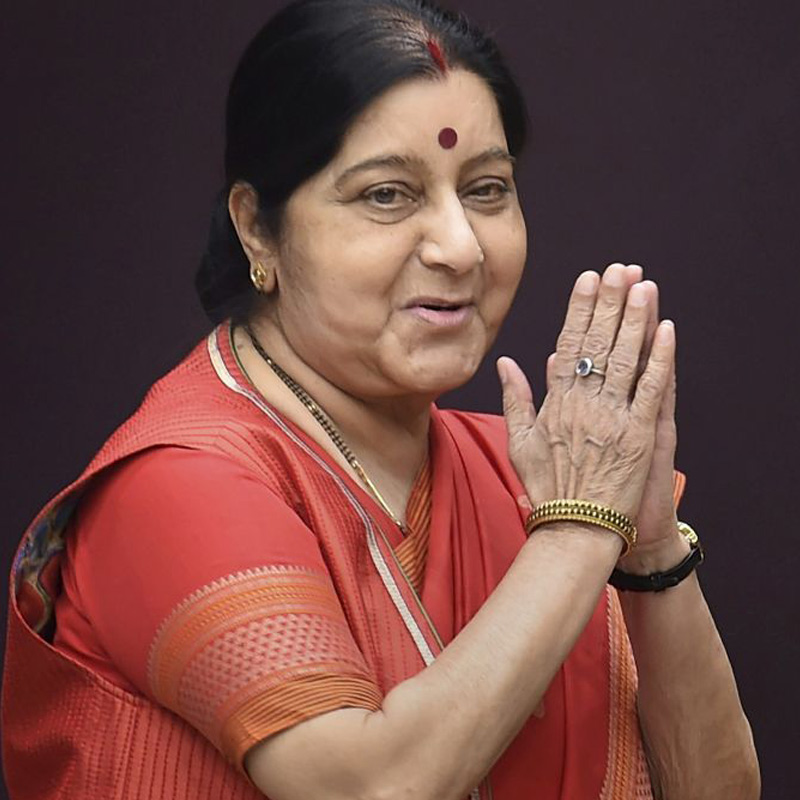
  • Sushma Swaraj will be remembered as one of the most efficient I&B ministers of India

    Sushma Swaraj will be remembered as one of the most efficient I&B ministers of India

    MUMBAI: It was a sad day for Indian politics, yesterday, as one of the most vibrant politicians of her time succumbed to a heart attack. Senior BJP leader Sushma Swaraj will be remembered as one of the greatest orators and one of the most efficient Minister of External Affairs that the Union of India has had. Her presence on Twitter during her tenure as MEA in the previous government had also got her a lot of praise.

    But Swaraj, before becoming the MEA in the 2014-2019 government had a very interesting political career, and her role as Union Minister of Information and Broadcasting (I&B), between 2000 and 2003, will remain one of the key highlights of it.

    One of her biggest achievements as I&B minister was passing of (Conditional Access System) CAS Bill in 2002, which made it mandatory for consumers to install a set-top box allowing them to pay for only those channels that they want to watch. The maximum price for the basic tier of service comprising free-to-air channels would be determined by the government under the bill.

    Also, it was under her tenure as I&B minister that the Indian entertainment sector, including films, was declared as an industry, making it eligible to get loans from financial institutions.

    She also actively batted for the introduction of FDI in Indian publications, which none of her predecessors spoke of after it was banned in 1955. She had said in the year 2002 that with the introduction of the internet, the government is planning to look into the matter.

    Swaraj had also held the post of Minister of Information, Broadcasting, and Telecommunications for a short term between March 1998 and October 1998.

    She breathed her last in national capital Delhi on 6 August following a cardiac arrest.

  • IndiaCast Media Distribution issues notice to Independent TV in TDSAT

    IndiaCast Media Distribution issues notice to Independent TV in TDSAT

    MUMBAI: Content distribution network IndiaCast Media Distribution has issued a notice to DTH operator Independent TV in the Telecom Disputes Settlement and Appellate Tribunal (TDSAT). The tribunal has asked for a reply within two weeks.

    The order from TDSAT said if the notices are served, interim prayer may be considered on the next date. The matter has been listed “for directions” on 23 August.

    Independent TV’s signals were disconnected in June because of financial issues with Antrix. However, it is scheduled to be re-launched as ITV 2.0 for channel partners in the first week of August and the signals will be restored for customers from 15 August.