Category: Regulators

  • Cabinet approves 26 per cent FDI in digital media

    Cabinet approves 26 per cent FDI in digital media

    MUMBAI: As the cabinet government amended the foreign direct investment (FDI) policy, it has also given the nod to 26 per cent overseas investment in digital media with government approval.

    "The extant FDI policy provides for 49 per cent FDI under approval route in up-linking of ''news & current affairs'' TV channels. It has been decided to permit 26 per cent FDI under government route for uploading/streaming of news and current affairs through digital media, on the lines of print media," an official statement said.

    While the FDI policy has not touched digital media for a long time, the cap has been introduced along the lines of print media where 26 per cent FDI is allowed through government approval route.

    “The scope of the impact will be determined by the wording of the provision in the FDI policy. News and current affairs are present on social media platforms, on digital platforms that are subsidiaries of foreign brands etc. How would you differentiate between TV channels which have 49 per cent and their online streams, which will effectively have 26 per cent?” Eros International group chief marketing officer Manav Sethi commented.

    The previous time when FDI norms in media were relaxed was in November 2015 to attract overseas funds. The FDI limit in news channels and private FM radio was raised to 49 per cent,up from 26 per cent, while 100 per cent foreign investment was allowed in entertainment channels.

    “FDI in digital media is a welcome development. Clarity around this fast-growing segment of the media industry will act as an enabler for capital infusion. Significant value will be unlocked going forward,” Deloitte partner Jehil Thakkar commented.
  • Discovery files petition against TRAI’s tariff-related consultation paper in Delhi High Court

    Discovery files petition against TRAI’s tariff-related consultation paper in Delhi High Court

    MUMBAI: Major broadcaster Discovery Communications India has filed a petition against Telecom Regulatory Authority of India’s (TRAI) recent consultation paper floated on 16 August. The broadcaster has prayed for quashing the consultation paper terming it “illegal and arbitrary”.

    TRAI issued a consultation paper on tariff-related issues for broadcasting and cable services, seeking stakeholders’ responses to 27 questions which covered different aspects related to the new tariff order (NTO), which came into force from 1 February 2019.

    The petition by Discovery also asks to prohibit TRAI from proceeding or taking any further steps pursuant to the paper without following the due process of law. According to sources, the petitioner has served a copy to TRAI on Wednesday and hopes to get a listing on Thursday, 29 August 2019, before the Delhi High Court.

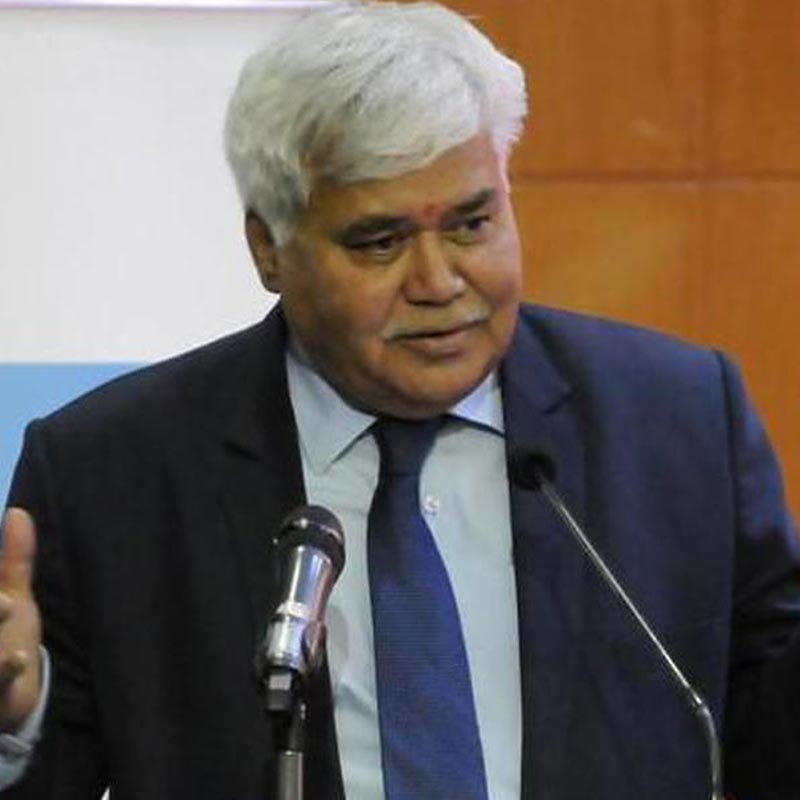
    Amid several ongoing speculations on the change in NTO, TRAI chairman RS Sharma recently clarified that the regulatory body does not have any plan to revise the pricing framework. He also added that it is only trying to fine-tune it due to certain issues consumers are facing.

  • Ferozeshah Kotla to be renamed as Arun Jaitley Stadium

    Ferozeshah Kotla to be renamed as Arun Jaitley Stadium

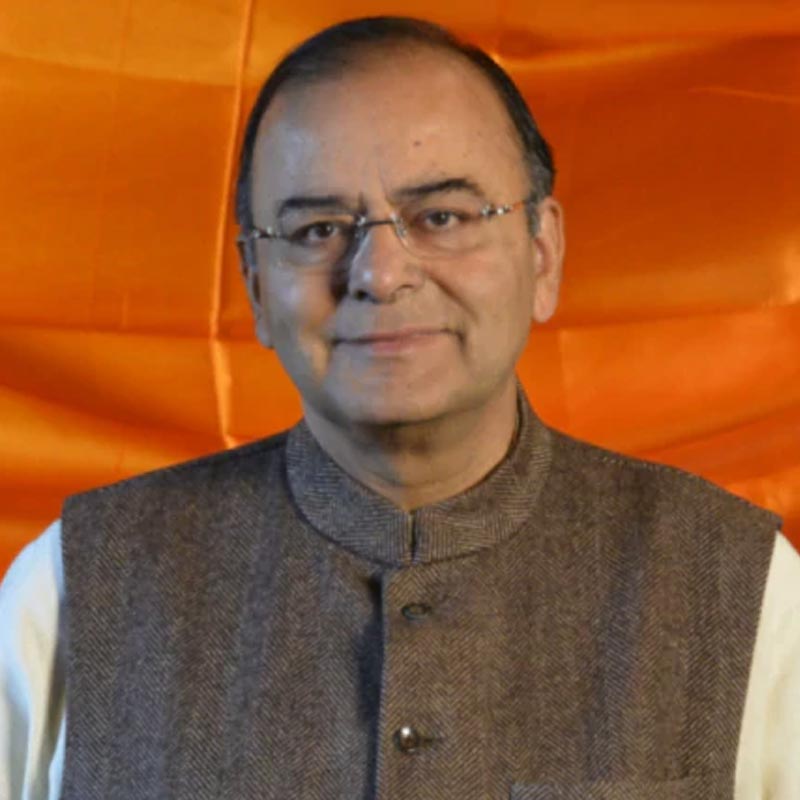
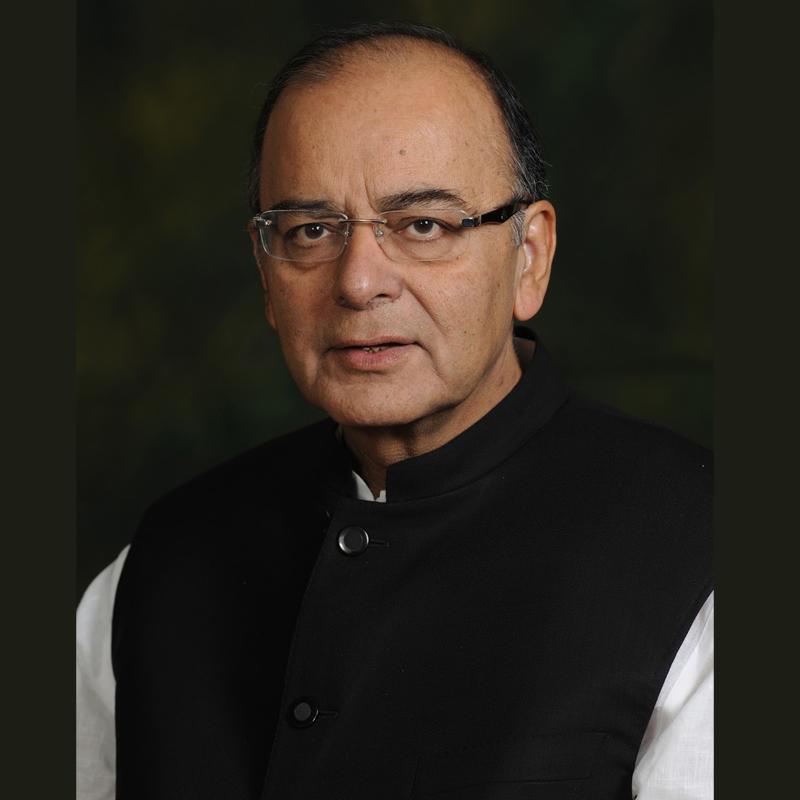
    MUMBAI: In a fitting tribute to its former president Arun Jaitley, the Delhi and District Cricket Association (DDCA) has decided to name the Stadium after him. DDCA President Rajat Sharma said Stadium will be called Arun Jaitely Stadium. Ground will remain as Ferozeshah Kotla Ground. Mr Jaitley, who passed away on August 24, was president of the DDCA from 1999 to 2013.

    The renaming of Delhi’s famous cricket venue as Arun Jaitley Stadium will take place on September 12 at a function where a Stand of the Kotla ground will be named after India captain Virat Kohli as announced earlier.

    Speaking on this initiative, DDCA president Rajat Sharma said: "What can be better to have the stadium named after the man who got it rebuilt under his presidentship. It was Arun Jaitley’s support and encouragement that players like Virat Kohli, Virender Sehwag, Gautam Gambhir, Ashish Nehra, Rishabh Pant and many others could make India proud."

    Mr Jaitley, during his tenure at the Kotla, is credited with renovating this stadium into a modern infrastructure, increasing it capacity to help more fans get an opportunity to watch their favourite cricketers in action besides constructing world class dressing rooms and other cricketing facilities

    The function, to be held at the Weightlifting Auditorium, Jawaharlal Nehru Stadium, will be graced by the presence of Union Home Minister Amit Shah, the chief guest, and Minister of State for Youth Affairs and Sports Kiren Rijiju, the guest of honour.

  • TRAI seeks comments on amendment to telecommunication services interconnection regulations

    TRAI seeks comments on amendment to telecommunication services interconnection regulations

    MUMBAI: Telecom Regulatory Authority of India (TRAI) has released the draft Telecommunication (Broadcasting and Cable) Services Interconnection (Addressable Systems) (Amendment) Regulations, 2019. The authority is seeking comments of all the stakeholders by 9 September 2019.

    TRAI has amended the Schedule –III of Telecommunication (Broadcasting and Cable) Services Interconnection (Addressable Systems) Regulations, 2017. “During the consultation undertaken to prepare the audit manual certain comments and observations reflected some issues in the Schedule III of the Interconnection Regulations 2017,” said TRAI in its release.

    It further said, “Accordingly, a draft regulation related to amendment to schedule-III of the Telecommunication (Broadcasting and Cable) Services Interconnection (Addressable Systems) Regulations, 2017, has been issued on the issues related to Digital Rights Management Systems; Transactional capacity of CAS and SMS system; fingerprinting – support for overt and covert fingerprinting in STBs and watermarking network logo for all pay channels.”

    A consultation paper on “Interconnection framework for Broadcasting TV Services distributed through Addressable Systems” was issued by TRAI on 4 May 2016. This consultation process resulted in notification of the Telecommunication (Broadcasting and Cable) Services Interconnection (Addressable Systems) Regulations, 2017 (1 of 2017) dated 3 March 2017.

    During the consultation undertaken to prepare the audit manual, TRAI noticed certain comments and observations that reflect some issues in the Schedule III of the Interconnection Regulations 2017.

  • TRAI does not intend to revise NTO, aims to fine-tune it

    TRAI does not intend to revise NTO, aims to fine-tune it

    MUMBAI: Amid several ongoing speculations on changes in the new tariff order (NTO), Telecom Regulatory Authority of India (TRAI) chairman RS Sharma clarified that the regulatory body does not have any plan to revise the pricing framework. He also added that it is only trying to fine-tune it due to certain issues consumers are facing.

    “The framework is already fixed. There is no proposal to change any component of that framework, and if somebody is making a point that we (TRAI) are changing the framework, it is absolutely false. Since this framework has started operating, we have observed that certain issues largely related to consumers have cropped up. We are only trying to fine-tune it,” Sharma said in an interview with the Economic Times.

    He also added that the consultation paper which stirred the recent controversies is not about changing the framework but it is bringing perfection in the phenomenon observed in the last few months. After finding certain issues, it brought the consultation paper on the table. But it may tweak a few parameters if it finds that all parameters are not working fine.

    “We are ensuring that consumers have a choice and are empowered to exercise their choice. Our objective is not to increase or decrease ARPU. Our aim is to enable the consumers to choose channels and safeguard them against any obstacle in their path,” he said.

  • IBF saddened by the untimely demise of Arun Jaitley

    IBF saddened by the untimely demise of Arun Jaitley

    New Delhi: IBF (Indian Broadcasting Foundation), India’s apex body of television broadcasters is shocked and saddened by the untimely demise of Shri Arun Jaitley, former Finance Minister and MP. IBF President, NP Singh has expressed profound grief and sorrow on his death and called the loss to the country 'irreparable'. NP Singh adds that, "He will be remembered as a statesman and parliamentarian par excellence and a champion of free speech. We are deeply saddened by his sudden demise".

    IBF salutes the statesmanship of Shri Arun Jaitley and acknowledges his immense contribution to the industry when he held the Ministry of Information and Broadcasting portfolio in the Modi government.

    IBF believes that the vacuum caused by Shri Jaitley's death will be hard to fill and expresses its deepest condolences to the bereaved family
     

  • Arun Jaitley’s portfolio as I&B minister had many gems

    Arun Jaitley’s portfolio as I&B minister had many gems

    MUMBAI: Former union minister and one of the most senior and popular BJP veterans, Arun Jaitley died earlier this morning. He was undergoing treatment at AIIMS Delhi for the past several weeks.

    A lawyer by profession, Jaitley had quite a prolific career as a politician as well. He held several posts in the union ministry under the BJP government, including minister of information and broadcasting, minister of law, justice, and company affairs & shipping, and minister finance.

    The veteran will be remembered as a strong politician and policymaker for his contribution to the ministry of finance as well, which he led in the previous Modi government. The stalwart was lauded by the cable television industry when he exempted custom duty in several parts and components of electronic equipment including set-top boxes (STBs) for television or the internet, thus boosting the digitisation process for the TV industry.

    In his term as the union minister of information and broadcasting between November 2014 and July 2016, Jaitley was responsible for many important government initiatives, including phase III of FM auctions, new business policy for publications divisions 2016, setting up of Film Facilitation Office (FFO), and introducing revised guidelines for advertisements in print and on websites.

    The FFO, which acts as a single-window facilitation and clearance mechanism for filmmakers, was constituted with a view to promote and facilitate film shootings by foreign filmmakers in India. The services rendered by the FFO were later extended to Indian filmmakers as well. The body also gives out ‘Most Film Friendly State’ awards every year with the aim of promoting India as a filmmaking destination.

    Under his leadership, a new business policy for Publications Division with the objective to streamline business practices in line with the contemporary trends prevailing in publications industry was also set up. One of the key highlights of the policy included promoting online readership by pricing the digital version of the publication at 75 per cent the price of printed version.

    Jaitley also worked on promoting transparency and accountability in advertisement policies. The new print media advertisement policy introduced incentives for the newspapers who have better professional standing and get their circulation verified by ABC/ RNI among other important measures taken to streamline the print advertising paradigm.

    He also focussed greatly on the growth of the digital ecosystem within the country during his tenure and revised the web advertising policy as well.

  • TRAI’s tariff related consultation paper draws concern from IBF

    TRAI’s tariff related consultation paper draws concern from IBF

    MUMBAI: The IBF notes with some concern the issues raised for consultation by TRAI in the Consultation Paper issued on 16th August 2019 (CP).  These issues strike at the very heart of the new MRP based tariff regime which TRAI made effective from 1st February 2019 (NTO).  It is fair to say the implementation of the NTO has resulted in massive changes in the distribution landscape. Nevertheless, with the support of all stakeholders including broadcasters, DPOs and the end consumer, the transition to the new regime is being managed relatively smoothly. Broadcasters, on their part, along with other stakeholders, have done their best to ensure a smooth transition without a disruption of services. TRAI itself has stated at several fora that over 90% of consumers have migrated to the new tariff regime by choosing channels and/or bouquets of their choice.

    In  compliance  with  the  NTO,  pay  broadcasters  have  published  their  Reference Interconnect Offers (RIOs) pricing their channels in a la carte and bouquet formations in accordance with the regulations.  DPOs in turn have offered these channels both on a la carte basis and bouquets customized to meet the choice of their subscribers.  In fact, it was TRAI that mandated DPOs to offer their subscribers a “best fit” plan of a la carte and bouquets to encourage a seamless transition to the new tariff regime.

    Surprisingly barely a few months after the commencement of the NTO and even before the industry at large and more importantly the end consumer has fully adapted to the new regulatory regime, TRAI proposes a fresh CP seeking to make fundamental changes in channel pricing and bouquet formation.  This goes against all norms of a stable regulatory regime so necessary for the economic advancement of any industry. TRAI’s CP proceeds on the assumption that consumers are being denied their choice of channels by excessive discounts on bouquets. IBF wishes to point out that the cap on bouquet discounts under the NTO was struck down by the Madras High Court as “arbitrary”. Further, the global practice in the television and cable industry is the offering of content in bouquets customized to meet the diverse needs of consumers. A report published by the prestigious thinktank,  the  Indian  Council  for  Research  on  International  Economic  Relations (ICRIER), in March 2019 indicates that given a choice consumers, even internationally display a preference for bouquets. A 2004 FCC report concluded that mandating a la carte for cable consumers in the USA would very likely harm new and niche channels and reduce choice to consumers. An evaluation of a similar proposal in Canada in 2014 concluded that “unbundling” could have adverse effects for the broadcasting sector and could result in 26% of the current channels becoming unviable. As per CASBAA, in a study of broadcast regulations in 10 countries, apart from India, no country mandated a la carte and bouquets were the choice of consumers. The NTO itself allows broadcasters and DPOs to offer channels both a la carte and in bouquets giving the consumer the freedom of choice. In fact, the basic tier mandated by the NTO of 100 FTA channels for Rs. 130 is itself a bouquet offering. Thus, the impression being created that broadcasters are gaming the system to push bouquets is incorrect.

    The essence of a free market economy is that consumers make their own choices about the products they buy or the services they wish to receive. Broadcasters have not only published  their  channel  prices  a  la  carte  and  for  bouquets  but  also  publicized  their offerings through advertisements and promotions enabling the consumer to make an informed choice. As TRAI itself points out in the CP while a large number of consumers have opted for bouquets, many have also opted for a la carte channels. It is therefore incorrect and would be an affront to the consumer’s intelligence to suggest that they choose channels only on price and not on the quality of their content.

    The Honorable Prime Minister’s call to make India a USD 5trillion economy by 2025 requires all industries to grow exponentially and contribute to overall GDP. Frequent tinkering with regulations and attempting to micro-manage free markets can lead to adverse consequences. Promoting a la carte at the cost of bouquets will deny consumers the choice they need in a country like India with such a large and variegated diversity of cultures and languages. Smaller as well as niche content channels will lose out and their viability will come under question. Broadcasters will be unwilling to launch new channels and producers will be unwilling to experiment with new content. All this will lead to fewer shows being produced which will have a knockdown effect on downstream production and on employment in the sector.

    The broadcasting industry has gone through several major regulatory changes in the last few years moving from analogue to CAS to digital and addressable systems and now to an MRP pricing regime. Stability in policy formulation and “soft touch” in regulatory oversight is an absolute necessity for healthy industry growth. The Government’s focus on “ease of doing business” warrants minimal regulatory intervention. Hence regulatory intervention at this early stage in the implementation of the NTO is not only premature but will have disastrous consequences for the broadcasting industry. In these circumstances, IBF would urge TRAI to defer any further regulatory interventions and allow the industry and its stakeholders and especially the consumer more time to adapt to the new regulatory regime.
     

  • TRAI data shows wireless data revenue, subscribers, ARPU shot up in 2018

    TRAI data shows wireless data revenue, subscribers, ARPU shot up in 2018

    MUMBAI: Wireless data usage in the country is spiking up. According to a report by the Telecom Regulatory Authority of India (TRAI), the total revenue that telecom operators collected through data usage last year was Rs 54,671.44 crore. In 2017, the revenue was Rs 38,882 crore.

    The amount of data consumption from every wireless data subscriber every month was up from 4.13GB in 2017 to 7.69GB in 2018. Simultaneously, the cost to subscriber has also reduced from Rs 19.35 per GB in 2017 to Rs 11.78 in 2018. This can be attributed to the presence of Reliance Jio as a dominant player in bringing down data rates. Additionally, the share of 4G data usage in total volume of wireless data usage has been 86.85 per cent during the year 2018.

    Average revenue per wireless data subscribers (data ARPU) per month increased from Rs 79.98 in the year 2017 to Rs 90.61 in the year 2018. It was recorded Rs 71.25 per wireless data subscriber per month in the year 2014.

    Total wireless data usage more than doubled from 20,092 GB in 2017 to 46,404 GB in 2018. The number of wireless subscribers went from 424.02 million in 2017 to 578.2 million in 2018. This shows an annual growth of 36.36 per cent.

    TRAI’s report states that though 4G adoption is on the rise in India, the world is witnessing even higher levels of data usage through the commercial deployment of 5G technology. Both the government of India and the telecom industry have announced that they have initiated preparatory steps for smooth and efficient rollout of 5G for the benefit of the consumers and the overall economic development of the country.

  • TRAI tariff order impacted uptake of niche channels: KPMG

    TRAI tariff order impacted uptake of niche channels: KPMG

    MUMBAI: Even as TRAI is mulling over changes to its existing tariff order, a report by KPMG, India’s Digital Future, highlighted that niche channels were affected especially due to lesser focus on such channels in broadcaster packs.

    “The uptake of niche channels has suffered in the new regulatory environment as broadcasters focused on creating packs that ensured pick-up of their GEC and movie channels with DPOs building on top of them with FTAs at their disposal. While niche channels belonging to larger broadcasters are likely to do better than others in the long run owing to the network effects enjoyed by their parent company, they will still need to be innovative in order to survive and remain relevant in the long run,” the report read.

    According to the report, niche genres on TV in this new era are expected to be under pressure from rival offerings on digital platforms. It also added the English channels are also likely to encounter challenges in terms of viewership and subscription in the new regime. But the uptake of pay regional channels, especially top GECs and movie channels, has remained firm in the regional markets in the new regime, particularly in the Southern markets.

    Despite the tariff order giving consumers options to choose channels, the report noted that initial trends indicate that the monthly bills of viewers wishing to watch the same number of channels as earlier has gone up significantly. However, the ARPUs have increased across all the markets with phase III and phase IV markets witnessing massive growth of 30-35 per cent in average realisations.

    “This choice of channels has come at a dearer price for individuals at the lower end of the ARPUs who are either paying more for watching the same number of channels or are content with lesser number of channels at their disposal. As per industry discussions, some choice is taking place at the higher end of the subscription pyramid, leading to lower TV bills, however, the same is definitely accompanied by a lower number of viewable channels at the disposal of the consumers,” the report added.

    It went on to say that viewership and reach for the TV universe is likely to change as the effects of NTO start to play out. But it also added that the broadcasters will need to renew focus on content quality to ensure survival and pick-up of their channels.