Category: Regulators

  • TRAI recommends DTH platform services be capped to 3% of carrying capacity

    TRAI recommends DTH platform services be capped to 3% of carrying capacity

    MUMBAI: The Telecom Regulatory Authority of India (TRAI) has come out with its recommendations on platform services (PS) offered by DTH operators. It suggests capping the total number of permitted PS for a DTH operator to 3 per cent of the total channel carrying capacity of the DTH operator platform and subject to a maximum of 15 platform services channels.

    It also has a new definition for platform services as: “Platform services (PS) are programs transmitted by Distribution Platform Operators (DPOs) exclusively to their own subscribers and does not include Doordarshan channels and registered TV channels. PS shall not include foreign TV channels that are not registered in India."

    The programme transmitted by the DTH operator as a platform service shall be exclusive and the same shall not be permitted to be shared directly or indirectly with any other DPO. DTH operators shall ensure and provide an undertaking to the Ministry of Information and Broadcasting (MIB) that the programme transmitted is exclusive to their platform and not shared directly or indirectly with any other DPO.

    In case the same programme is found available on the PS of any other DPO, MIB/TRAI may issue a direction to immediately stop the transmission of such programme. MIB also reserves the right for cancellation of registration of such PS of the DTH operator.

    Programme transmitted by the DTH operator as a platform service shall not directly or indirectly include any registered TV channel or Doordarshan channel or foreign TV channel. Time-shift feed of registered TV channels (such as +1 services) shall not be allowed as a platform service.

    A one-time non-refundable registration fee of Rs 10,000 per PS channel shall be charged from a DTH operator.

    The platform services channels shall be categorised under the genre 'Platform Services' in the Electronic Programmable Guide (EPG. The respective maximum retail price (MRP) of the platform service shall be displayed In the EPG against each platform service.

    A provision for putting a caption as 'Platform Services' may be required to distinguish the platform services from the linear channels. The government may decide the caption in a size which is visually readable by the consumers.

    TRAI sought suggestions from stakeholders in a notice on 2 July 2019. After which it issued a consultation paper on 28 August 2019. 
  • TRAI releases consultation paper on Interoperable Set Top Box

    TRAI releases consultation paper on Interoperable Set Top Box

    MUMBAI: – The Telecom Regulatory Authority of India (TRAI) has released a consultation paper on interoperable Set Top Box (STB) for digital TV broadcasting services. A consultation paper is now issued with a view to elicit response from all the stakeholders for suggesting the best solution to implement the interoperability of STB.

    The consultation paper provides brief overview of various available options and technical solutions for achieving interoperability of STB. The paper seeks response with detailed justifications for suggesting most optimal and cost-effective solution.TRAI has requested stakeholders to provide their written comments on the proposed solution architecture for technical interoperable STB by Monday, December 9, 2019. Counter-comments can be submitted upto Monday, December 23, 2019

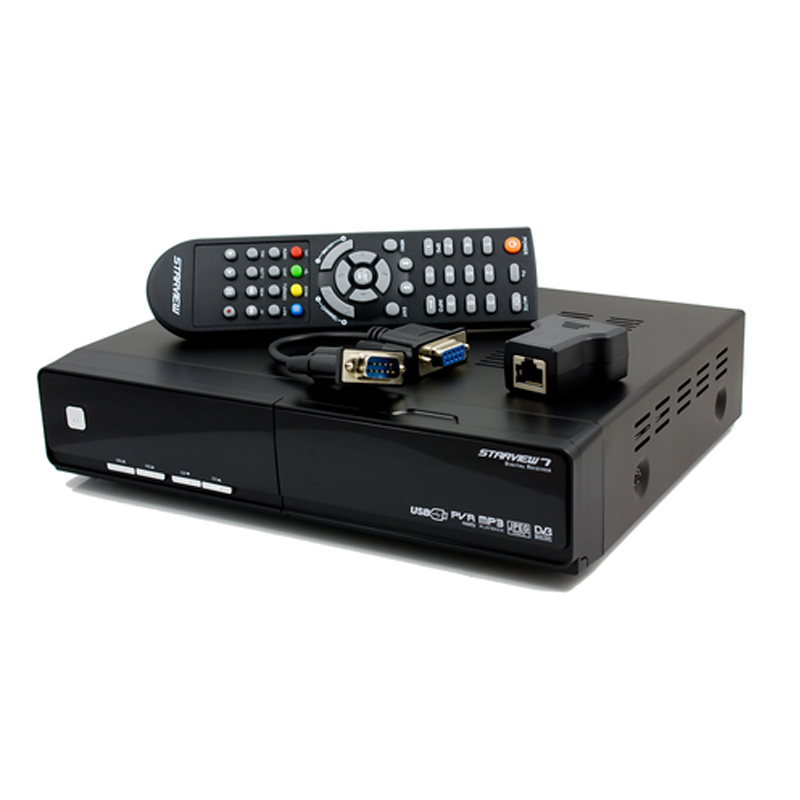
    The digital TV broadcasting services are received by subscriber using a Set Top Box (STB), connected with the TV set. The STB receives TV signals from distribution network and decodes them into viewable form for TV set. STB enables the subscriber to view only those TV channels which he has subscribed.

    Presently the STBs deployed in the network are non-interoperable, i.e. the same STB cannot be used interchangeably across the different service providers. As far as STBs deployed by Direct to Home (DTH) players are concerned, STBs comply with the license conditions to support Common Interface (CI) module based interoperability.

    The lack of interoperability of STBs between different service providers has not only compromised the competition in the Pay-TV market but also a major hindrance to technological innovation, improvement in service quality, and sector growth.

    TRAI had issued a pre-consultation paper on set top box interoperability during April 2016. Thereafter, a consultation note on solution architecture developed by C-DoT for technical interoperable set top box was issued during August 2017. The smart card-based solution has been successfully tested in lab conditions using separate instances of CAS developed by C-DoT. However, the field testing with third party CAS solution is still to be conducted with different industry stakeholders. 5. TRAI has been taking vanous measures to achieve the set top box interoperability including the stakeholders' meetings/ discussions.

    The Authority also engaged with various technology companies in the broadcasting technology space for information exchange. A consultation paper is now issued with a view to elicit response from all the stakeholders for suggesting the best solution to implement the interoperability of STB.

  • TRAI releases telecommunication services DAS audit manual

    TRAI releases telecommunication services DAS audit manual

    MUMBAI: The Telecom Regulatory Authority of India (TRAI) has issued the Telecommunication (Broadcasting and Cable) Services Digital Addressable Systems Audit Manual. The new regulatory framework endeavours to provide a level playing field to all the service providers, effective choice to consumers, and orderly growth of the sector. It envisages a must-carry and must-provide regime where interconnection agreements are based on transparent Reference Interconnect Offer.

    “This manual is the result of the synthesis of all comments, suggestions of BECIL and final analysis by Telecom Regulatory Authority of India. The audit manual will be a guidance document for the audit process as it specifies step-by-step process in simple language. The manual does not supersede any provision of the extant regulations,” said TRAI in its release.

    In order to ensure that the benefits of digitisation are effectively utilised, TRAI, after due consultation process, brought out a common regulatory framework for digital addressable systems. The 'new regulatory framework' comprises Interconnection Regulations, 2017, Quality of Service Regulations, 2017 and Tariff Order, 2017.

    The full benefits of digitisation can accrue to various stakeholders in the value chain only when the business transactions are transparent and based on objective, measurable and computable parameters.

    Effective and factual audit of the systems of DPO will ensure that the equipment and the software (including configuration of systems) comply with the extant regulatory framework.

    “The new framework envisages that the DPO gets its systems audited every year so as to assure the broadcasters that true subscription numbers are being reported. In cases where a broadcaster is not satisfied with the outcomes of audit undertaken by the DPO, a countervailing provision empowers the broadcaster to initiate an audit. Considering the importance of audit to establish the trust-based regime, industry stakeholders suggested to provide an audit manual,” said TRAI.

    Accordingly, the authority constituted a committee comprising of industry stakeholders to prepare and submit draft audit manual to the authority. Consultation Paper on the Telecommunication (Broadcasting and Cable) Services Digital Addressable Systems Audit Manual was issued on 29 March 2019. After receiving the comments, an Open House Discussion (OHD) was held on 20 June 2019 in Delhi to discuss the draft audit manual.

  • I&B Ministry to meet industry leaders to discuss online video content regulation

    I&B Ministry to meet industry leaders to discuss online video content regulation

    Amidst reports of government considering certification/censorship of online video content, the I &B Ministry will hold a second round of consultation next week with industry players, who are determined to oppose any pre-censorship on digital platform.

    The I&B Ministry has invited all  online curated content providers (OCCPs), including Netflix, Amazon and Hotstar, through industry association, the Internet and Mobile Association of India (IAMAI) for consultation on the issue of regulation of online video content, as per a report in ET.

    The meeting, slated for next week in Chennai, comes close on the heels of a similar consultation in Mumbai last month.

    In October, PTI had quoted union minister for information and broadcasting Prakash Javadekar as saying that there should be some kind of regulation of OTT platforms on the lines of print and electronic media and films.

    “I have sought suggestions on how to deal with this because there are regular feature films coming on OTT — good, bad and ugly. So how to deal with this, who should monitor, who should regulate?. There is no certification body for OTT platforms and likewise news portals also,” Javadekar was quoted as saying.

    Earlier in September, Live mint has reported that I&B Ministry was looking to finalize a model for the certification of online video streaming content soon after Diwali.

    However, any government attempt to regulate content on OTT, is bound to face stiff opposition from the industry, who believe that the existant IT Act 2000 and a voluntary self-regulatory code signed by major OTT players in January this year, are sufficient in dealing with any untoward situation.

    Online vidoe streaming players like Netflix, Hotstar, Jio, Voot, Zee5, Arre, SonyLIV, ALT Balaji and Eros Now have signed a self-censorship code in January that prohibited these platforms from showing certain kinds of content and set up a redressal mechanism for customer complaints.

    The self-regulation code, bars video players from showing content that’s banned by Indian courts, disrespects the national emblem and flag, outrages religious sentiments, promotes terrorism or violence against State and shows children in sexual acts. Amazon, however, is not part of the self-regulatory code signed under the aegis of IAMAI.

    “We should publish a list of all the laws that apply to OCCP platforms so that there is no is perception that OCCPs are not regulated,” Gowree Gokhale, head of Telecom, Media and Technology practice at Nishith Desai Associates, which is part of the consultation process, was quoted as saying by ET.

    However, despite the presence of a self-regulatory code, there have been an array of PILs in court demanding regulation of online video content.

    In May, the Supreme Court had issued a notice to the Centre on an appeal to regulate content on online streaming platforms.

  • TRAI releases amended interconnection regulations aimed at fully-compliant audit regime

    TRAI releases amended interconnection regulations aimed at fully-compliant audit regime

    MUMBAI: The Telecom Regulatory Authority of India (TRAI) on Wednesday released the Telecommunication (Broadcasting and Cable) Services Interconnection (Addressable Systems) (Amendment) Regulations, 2019. The authority said during the consultation undertaken to prepare the Audit Manual certain comments and observations reflect some issues in the Schedule III of the Interconnection Regulations 2017.

    Earlier, a Draft Telecommunication (Broadcasting and Cable) Services Interconnection (Addressable Systems) (Amendment) Regulations, 2019 was issued in August. TRAI received comments of the stakeholders and held an Open House Discussion (OHD) which was attended by a large number of stakeholders. The regulations have been revised based on the comments received and analysis of the developments in the market. Regulations the authority has amended Schedule III of the Interconnection

    The authority has amended Schedule III of the Interconnection Regulations 2017, mainly on the following:

    ·  Scheduling and Scope of Audit

    ·  Transactional capacity of Conditional Access System (CAS) and Subscriber Management System (SMS)system

    ·  Support for Overt and Covert fingerprinting in Set-Top-Boxes

    ·  Watermarking network logo for all pay channels

    TRAI said in a release that the scheduling has been so amended that the distributor of Pay TV broadcasting services will keep a minimum gap of six months between the two annual audits and the maximum time gap is eighteen months. Similarly, the minimum transactional capacity required for CAS and SMS systems has been revised to five per cent instead of earlier ten per cent.

    The authority is of the view that amended regulations will help in establishing a fully compliant trust-based audit regime conducted as per extant regulations by the empanelled auditors.

  • TRAI comes out with recommendations for KYC of DTH set top boxes

    TRAI comes out with recommendations for KYC of DTH set top boxes

    MUMBAI: After issuing a consultation paper and holding open-house discussion on KYC of DTH set top boxes, the Telecom regulatory authority of India (TRAI) has finally come out with a set of recommendations on the issue. The authority has recommended the DTH operators to install DTH connections at the address mentioned in the Customer Application Form(CAF) only and verify the address.

    “DTH operator should install the DTH connection at the address mentioned in the Customer Application Form(CAF) only and the address of such installed set top box must be verified by the representative of the DTH operator and record of such installation shall be maintained by the DTH operator,” TRAI said.

    The recommendation also stated that the DTH operator should ensure identity of the subscriber by sending the one-time password (OTP) to his registered mobile number. In cases where registered mobile number is not provided by the subscriber/corporate body, DTH operator should collect Proof of Identity or any other similar document which can establish the identity of the user either in physical or electronic form before provisioning of DTH connection.

    “There is no need to mandate physical verification at regular intervals as it will incur huge cost burden to the DTH operators and inconvenience to the consumers. However, for existing set top boxes, which are not attached to any mobile number of the subscribers, efforts should be made by the DTH operator to associate such set top boxes issued by them to link with a mobile number within a period of two years,” TRAI added.

    However, DTH companies including Dish TV, Tata Sky, Bharti Telemedia were not in favour of changing KYC process for set-top-boxes as they though current process is well-equipped to meet the requirements of the industry, as per their submission on the CP.

  • DPIIT seeks MIB views on issues regarding 26% FDI in digital media sector

    DPIIT seeks MIB views on issues regarding 26% FDI in digital media sector

    MUMBAI: As the cabinet recently amended the foreign direct investment (FDI) policy allowing 26 per cent overseas investment in digital media with government approval, the Department for Promotion of Industry and Internal Trade (DPIIT) has sought the views of the Ministry of Information and Broadcasting on issues raised by certain stakeholders over the new policy.

    "The extant FDI policy provides for 49 per cent FDI under approval route in up-linking of ''News & Current Affairs'' TV channels. It has been decided to permit 26 per cent FDI under government route for uploading/streaming of news and current affairs through digital media, on the lines of print media," an official statement said.

    There was a lack of clarification since the amendment that how the new policy would pan out. According to a PTI report, issues which were raised on the decision have been sent that to the MIB. The ministry is looking into it for suitable clarification, as per an unnamed official quoted by the report.

    The Internet and Mobile Association of India stated in a presentation to the DPIIT that the decision would have an impact on the startup ecosystem as continued FDI is critical to enable Indian digital media startups to achieve global scale. The association also said it would be critically harmful if there is not any clarification.

    “The scope of the impact will be determined by the wording of the provision in the FDI policy. News and current affairs are present on social media platforms, on digital platforms that are subsidiaries of foreign brands etc. How would you differentiate between TV channels which have 49% and their online streams, which will effectively have 26%?” Eros International group chief marketing officer Manav Sethi also said.

  • No current plans to impose regulation on OTT sector: MIB secretary

    No current plans to impose regulation on OTT sector: MIB secretary

    MUMBAI: Ministry of Information and Broadcasting (MIB) secretary Amit Khare said there is a need to rethink regulating over-the-top (OTT) platforms because some sections of the society are voicing concerns on its content. However, Khare also added that the ministry currently does not have any plan to impose any regulation.

    According to a Medianama report, the MIB secretary spoke at a seminar on film certification and regulation of online content, held in Mumbai on 10 October. He noted that while in all commonwealth countries, there are bodies to regulate content in films, newspapers and TV, there is no such provision for regulating content on OTT.

    “They [OTT platforms] do fall under the IT Act, but have no governance or self-regulation. This happens nowhere in the world,” Minister of Information and Broadcast Prakash Javadekar said via a video conference at the seminar. He mentioned that content creators of OTT platforms make all kinds of content including bad and obscene but there is no censor board.

    Notably, according to an India Today report, the Ministry of Technology said there is no monitoring of OTT content right now in response to an RTI.

    "So far as this ministry is concerned, the content on online platforms is not being regulated at present. However your application is being transferred under Section 6 (3) of the Act to CPIO, Ministry of Electronics and IT, New Delhi to provide information pertaining to them," MIB said as per the report.

  • TRAI organises international training programme on ‘Emerging Trends in Broadcasting’ with ITU

    TRAI organises international training programme on ‘Emerging Trends in Broadcasting’ with ITU

    MUMBAI: The   Intemational  Telecommunication Union (ITU) and the Telecom Regulatory Authority of India (TRAI) are jointly organizing an Intemational Training Program during 9th -11th October 2019 in New Delhi on "Emerging Trends in Broadcasting".

    This training program was  inaugurated today by the Chairman TDSAT, Hon'ble Mr.  Justice Shiva Kirti  Singh, in  a well  attended opening session. Delivering the inaugural  address, he emphasised the importance &  benefits of  converged networks  and  emerging technologies in   broadcasting  sector. Dr.   R.S.   Sharma,  Chairman TRAI  while   delivering his  keynote address, presented an   overview of  the  existing broadcasting sector, new   trends & technologies and the challenges arising out of  convergence. The  inaugural function was  graced by Shri Amit  Khare, Secretary, Ministry of Information & Broadcasting   (MIB)   besides   Authority   and   senior   officers  of    TRAI. Shri Amit  Khare, Secretary, MIB gave  his  perspective on  the  main theme of the event. Shri Sunil Kumar Gupta, Secretary, TRAI delivered the welcome address. He  spoke about  the  training programme and  on   joint initiative between ITU & TRAI in organizing such events. Shri Sameer Sharma, Regional Director of Asia Pacific Region,  ITU spoke about the  mandate of ITU in conducting these training programmes and he also thanked TRAI for hosting this in  New Delhi,  India.

    This  training  programme  is   being attended   by   delegates  from  17 countries,  mainly from   Asia-Pacific region. Besides,  there  will  be  a large number of  domestic participants at this programme, representing various stakeholders such as government departments, broadcasters, distributors of DTH & cable industry, variou s OTT players, academia etc

    With advent of new  technologies and imminent convergence of devices & service provisioning, the broadcasting sector in India is  in  a high growth phase.  The  broadband penetration is also on  the  rise in  the  country.  With more private players rolling out their OFC  networks, the availability of Triple Play and Quadruple play services is becoming a reality. Stakeholders such as

    Broadcasters,  TSPs, ISPs, Multi  system Operators, DTH  operators etc. are adopting innovative business models to  enhance their service offerings. The emerging convergence and new  services are   presenting new  regulatory and policy  challenges for  regulators of telecom and broadcasting sectors. In  this context, this ITU-TRAI International Training Program 2019 aims to address the policy  and regulatory issues which are  emerging.

    This  training program will  have several sessions spread over  3 days dealing with   technology related topics such  as 'Business Models for  OTT', 'Broadband over  Cable TV network', 'Broadcast off-load technologies', 'AI, ML and Cyber Security' etc.

    The training programme will address several pertinent issues related to present  status,  trends,  new    technologies  in    broadcasting  sector,  ITU assistance in  the APAC region on  digital broadcasting transition. Also,  how broadcasters   and  telcos  could  embrace  OTT   while  carrying out  their traditional broadcasting over  the air  and IPTV delivery on  their networks respectively  while   deploying  or  offering  CDN  services and  their business model.

    The  program will  also cover   the emerging trends and developments happening in  the  area of media consumption devices, how  it is effecting the delivery and pattem of consumption of media and also how  to introduce the latest developments in  the  field  of  rating and measurements of viewership delivered through different means and platforms.

    This training programme will assist in building institutional capacity by sharing experiences and successful case studies for  potential collaboration in all   these emerging areas. The   Program  will  highlight  the   building blocks required to ensure that regulatory measures remains relevant and appropriate for the new  environment. It will bring together international experiences with a focus on  Indian's experience and the  lessons learnt.

    TRAI has collaborated with  ITU in conducting many such international training programmes in  the past on  various telecom subjects.  However, this is the first of its kind of event on  emerging trends in  broadcasting by ITU and TRAI with  the focus on  the subject of OTT.

  • TRAI mandates DPOs to let subscribers view, modify subscription through TRAI app, portal

    TRAI mandates DPOs to let subscribers view, modify subscription through TRAI app, portal

    MUMBAI: The Telecom Regulatory Authority of India (TRAI) has mandated DPOs to allow consumers to also use the TRAI app or portal for their subscription-related updates. This includes accessing channels/ bouquets available, ease in the selection of channels and bouquets (addition/ deletion) of their choice, viewing subscription and modifying the same through the TRAI app /portal by sharing APIs with TRAI.

    The authority is in the process of finalising the API specifications which will be communicated separately to the DPOs. DPOs are to share/exchange the information through API with the TRAI whenever the authority asks for the same for ensuring integration with the TRAI's APP or portal.

    In a release, TRAI stated that during the consultative process of TRAI’s Draft Regulation (Second Amendment) to The Telecommunication (Broadcasting and Cable) Services Standards of Quality of Service and Consumer Protection (Addressable Systems) Regulations 2017, stakeholders were generally of the view that they have no objection/hesitation in sharing their APIs with TRAI as their data is secure with the regulator and there will not be issues like leakage/misuse of consumer information and privacy of data.

    The authority has issued the Telecommunication (Broadcasting and Cable) Services Standards of Quality of Service and Consumer Protection (Addressable Systems) (Second Amendment) Regulations, 2019 (6 of 2019). TRAI's prevailing regulations/orders for the television and broadcasting sector gave freedom to consumers to select television channels they want to watch.

    To ensure proper implementation of the new framework, TRAI has made a number of efforts such as a series of meetings with Distribution Platform Operators (DPOs), publicity in electronic and news media, interactions with customer groups etc. Despite this, TRAI was in receipt of several complaints from the consumers that they are not able to choose the TV channels conveniently on the web portal/ apps of the DPOs.