
Connect with us
NEW DELHI: With the adjournment of the Indian Parliament sine die today, the fate of conditional access system becomes that much more nebulous. Though, some government...
NEW DELHI: Officials from the information and broadcasting ministry and the Bureau of Indian Standards are slated to meet on 20 August. The agenda: to discuss...
NEW DELHI: If it’s not this then it’s that. Yesterday it was the opposition uproar over the alleged irregularities by the petroleum ministry in the allotment...
NEW DELHI: The fate of conditional access system is becoming increasingly uncertain – something that was looking highly unlikely about a fortnight back when information and...
NEW DELHI: The fate of conditional access system is becoming increasingly uncertain – something that was looking highly unlikely about a fortnight back when information and...
NEW DELHI:The information and broadcasting ministry has asked the business advisory committee of parliament to relist the Cable TV Networks Amendment Bill 2002 next week and...
NEW DELHI: The Cable TV Amendment Bill 2002 has been listed for business on the agenda of the Rajya Sabha (RS – the Upper House) for...
NEW DELHI: The Cable TV Amendment Bill 2002 has been listed for business on the agenda of the Rajya Sabha (RS – the Upper House) for...
NEW DELHI: The information and broadcasting ministry has requested the business advisory panel of the Indian Parliament to re-list the Cable TV Amendment Bill 2002 on...

NEW DELHI: If you really cannot beat them, then join them. And Prasar Bharati, the autonomous body which oversees the functioning of pubcasters Doordarshan and All...

MUMBAI: Not in the car; and not in the local trains. Over 90 per cent of FM radio listeners are currently still at home. Most of...
NEW DELHI: The meeting of the high-powered government committee mandated to look into the issue of surrogate and objectionable advertisements, was postponed today. Reason: In anticipation...
The I&B Ministry, which sent showcause notices to four television channels for carrying surrogate advertisements for two liquor brands, is set to “get serious” on a...

The private FM players may be getting all the publicity at the moment but good old All India Radio is not going to be left behind....
Information and broadcasting minister Sushma Swaraj set the ball rolling again today on the conditional access issue following her trip to Cannes. Swaraj convened a meeting...
The Indian government would ideally like to keep the price of the basic tier of free-to-air (FTA) channels, once the conditional access system (CAS) is implemented,...
Manufacturers of liquor and tobacco products advertising on various TV channels under the garb of surrogate advertising, beware. The information and broadcasting ministry is in the...
Broadcasters and sections of the television industry who were just about heaving a sigh of relief that the Cable TV amendment on conditional access, proposed by...
There has been another fallout of the much-hyped issue of CAS’ failure to get the okay of members of Parliament from the Rajya Sabha (Upper House...
THE MINISTER OF INFORMATION AND BROADCASTING (SHRIMATI SUSHMA SWARAJ): A small amendment in the Cable Act is proposed through this Bill. Though the proposed amendment is...
The Indian government is a in a no-nonsense mood. It has asked Mumbai-based Space Television, a little known company which is the first company to apply...
Well, Madame won out after all. Information and broadcasting minister Sushma Swaraj’s single point agenda of imposing set top boxes and conditional access on the Indian...
CONSULTATION PAPER ON ISSUES RELATING TO REGULATION OF INTERCONNECTION FOR BROADCASTING AND CABLE TELEVISON SERVICES. TRAI today released a Consultation Paper on Issues Relating to Regulation...
NEW DELHI: Officials from the information and broadcasting ministry and the Bureau of Indian Standards are slated to meet on 20 August. The agenda: to discuss...
Requirement of new norms and standards for the cable industry and viewers was the main topic in a discussion on `The Cable Industry and the Viewers:...

Demand for a regulatory authority and implementation of the CAS ranked high on the agenda of the seminar on ‘Cable TV : New Age Dictatorship’ held...
Despite information and broadcasting minister Sushma Swaraj’s assertion on 6 May that efforts will be made to bring in the Convergence Bill during the current session...

Another year and the industry continues to scan the horizon for the chimera of clarity of purpose from the powers that be in the government. The...
NEW DELHI: The information and broadcasting ministry has requested the business advisory panel of the Indian Parliament to re-list the Cable TV Amendment Bill 2002 on...
In what should come as a relief to pubcaster Prasar Bharati, the Solicitor General of India has clarified that Prasar Bharati need not pay service tax....
The ministry of rural development plans to rope in independent TV and radio producers to promote its schemes in the interior of the country. The...
The winds of DTH they are a blowin? Last week indiantelevision.com had reported that news emanating from Delhi indicated that that Star India had applied for...
Fifteen months after big-time film financier and diamond trader Bharat Shah was incarcerated due to his alleged connections to the underworld, the Supreme Court garanted him...
I&B Minister Sushma Swaraj yesterday gave further indication in Parliament that the government was close to mandating on conditional access systems (CAS) as a way to...
The government has permitted 13 companies to set up 14 uplinking hubs and teleports in the country. It has liberalised the uplinking policy to permit private...
The floodgates are finally opening up it would seem. Earlier this week, the Union Cabinet allowed 100 per cent foreign direct investment (FDI) in advertising and...
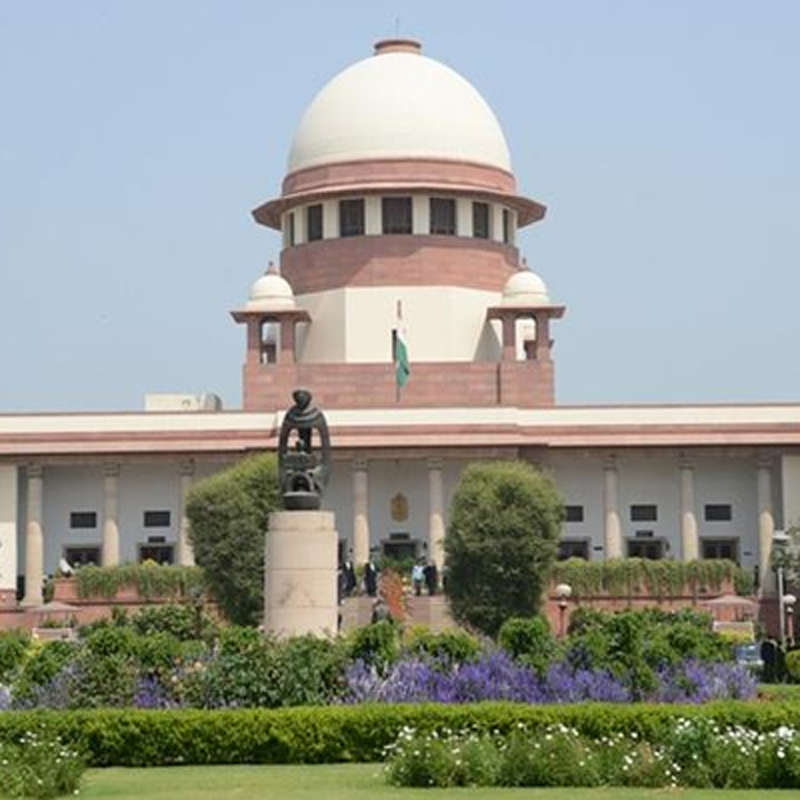
The fate of big-time film financier Bharat Shah, who has been incarcerated since early last year due to his alleged connections to the underworld, is to...
New Delhi 24th March 2006: Subject: “Amendment to Telecommunication (Broadcasting and Cable) Services (Second) Tariff Order, 2004 (6 of 2004) dated 1.10.2004. 1.TRAI, in pursuance to...
For two months, the Indian government has dithered on the issue of a ban on the state-backed PTV. Within two days of the Gujarat riots, however,...
A batch of petitions was filed by a couple of Associations of Hotels and Restaurants against leading broadcasters in Telecom Disputes Settlement and Appellate Tribunal. The...
MUMBAI: It’s a cable industry versus broadcasters battle that promises to be long drawn if the government does not intervene soon. The Cable TV Equipment Traders...

The Working Group on the I&B sector for the 10th Five-Year Plan has recommended 100 per cent digitisation of production facilities and automation of studio operations...
Mumbai and Delhi will lead the country in the growth of CAS. Kolkata will be slow in catching the trend, and Chennai will comprise mostly of...
Mumbai, January 19th, 2006, In the presence of Mr. P. Chidambaram, Honorable Finance Minister, Government of India, Mr. Y. Miyauchi, Chairman & Chief Executive Officer, ORIX...

The newspapers are filled with reports about the ongoing slowdown in the infotech sector. Nonetheless Zee Interactive Learning Systems (ZILS), which is less than two years...

The Communication Convergence Bill, 2001, which was introduced in Parliament on the last day (last Friday) of the monsoon session, has been referred to a standing...

Communications minister Ram Vilas Paswan finally did it. After a lot of hectic activity behind the scenes which saw the printing of copies of The Communication...

Can the industry finally look forward to the Convergence Bill seeing the light of day, at least in Parliament? Well if clued-in sources are to be...

The government yesterday cleared 47 proposals for foreign direct investment (FDI) worth a total of Rs 5,080 million, among which is Sai Television’s Rs 50 million...
Information and broadcasting minister Sushma Swaraj, responding to recent criticism directed at Prasar Bharati, promised yesterday in parliament that the public broadcaster had taken steps to...


Platforms get three years to add features for hearing and visually impaired


Strong word-of-mouth turns Pongal satire into remake pick


Streaming giant bets on a seasoned marketer who helped build Amazon and Netflix into household names


Communications leader exits after three years spanning MD office strategy and media outreach.


Cricket star named face of Delhi Khel Mahakumbh to fuel youth talent hunt.


Kolkata-based beverage maker reports stronger revenues and profits for December quarter.


A crime thriller steps out of the shadows as Telugu storytelling claims centre stage.


From boards to bytes, chess readies for a nation-first showdown in Riyadh.


Leadership change follows layoffs, protests and a bruising battle over trust.


Revenue rises 4.3 per cent to Rs 10,209.33 crore while deferred tax gain lifts bottom line sharply


Akshay Kumar and stars launch awards at NSCI Dome on Feb 28


Merger creates one-stop hub for content, digital, and delivery


NEW DELHI: Hamdard Laboratories gathered a cross-section of India’s achievers in New Delhi on Friday, handing out the Hakeem Abdul...


MUMBAI: For decades, creative storytelling has been the cornerstone of brand communication. The “big idea” amplified through catchy jingles, striking...


MUMBAI: Zepto has elevated Ahmad Muneeb to vice president – HR centre of excellence, placing him at the helm of...
