Category: Regulators

  • TRAI invites proposals for empanelment of auditors to carry DAS audit

    TRAI invites proposals for empanelment of auditors to carry DAS audit

    MUMBAI: The Telecom Regulatory Authority of India (TRAI) has invited proposals from audit firms for empanelment in the panel of Auditors to carry out the audit of digital addressable systems.

    The audit agency shall meet the following eligibility conditions for empanelment in the panel of Auditors: 

    1.  It shall be a company registered under the Companies Act 2013, OR an LLP under the Limited Liability Partnership Act, 2008 or a registered Partnership Firm under the Partnership Act, 1932, OR a proprietorship firm registered with ICAI as an audit firm;

    2.  It shall have a minimum average annual turnover of Rs 50 lakh in the immediate two preceding financial years for national level empanelment or for more than one regional level empanelment or Rs 25 lakh in the immediate two preceding financial years for empanelment in only one regional area;

    3.  It shall have experience, either on its own or through any of its partner/employee of (i) at least one year in the audit of Digital Addressable System (DAS) [Subscriber Management System (SMS)/ Conditional Access System (CAS)] (technical and/or subscription) of distributors; or (ii) at least one year in the audit of billing and metering and/or payment and prepaid charging system involving the use of software tools and/or banking IT system; 

    4.  It shall have at least three full-time professionals from among Chartered Accountant (CA)/ Company Secretary (CS)/Cost Accountant (CoA)/ Graduate Engineer, and at least one of the three professionals should be a Chartered Accountant (CA)/ Company Secretary (CS)/Cost Accountant (CoA). Such professionals should be full time partners or employees working with the Audit Agency since at-least six months prior to the date of application; 

    5.  The company/ LLP/ firm or any of its professional shall not have been disqualified or blacklisted by any department of State Government/Central Government or any Bank or Financial Institution or any statutory body or any professional body. Further, the Company/ LLP/ firm or any of its professional should not have been held guilty of criminal misconduct at any point of time

    6.  The applicant should be well-versed with the broadcasting and distribution industry and shall be proficient in understanding the network head-end setup, customer and system lifecycle knowledge and integration of customer details in SMS and CAS 

    7.  The applicant should be independent of broadcasting service providers and should not have any direct or indirect involvement or interest in the design, construction, operation or maintenance of software such as CAS/SMS/Middleware/Electronic Programme Guide (EPG) or hardware/electronic devices used in digital addressable systems of a service provider. Further, neither any director/ partner/ key managerial personnel of the applicant firm nor its any audit personnel should have held in last one year or should be currently holding the similar position in the company which is involved in the business of broadcasting and distribution activities. 

    The empanelment process shall be continuous and henceforth may be carried out on monthly basis i.e. a proposal may be submitted by last working day of a month for the next round of empanelment. An applicant shall apply only once till TRAI informs it about acceptance/rejection of its proposal. TRAI shall inform all the applicants whether they have been empanelled or their application has been rejected. An applicant once rejected shall not be eligible to re-apply for 12 months from the date of intimation of such rejection.

  • I&B ministry recommends 5% cap on DTH platform services; TRAI stays firm at 3%

    I&B ministry recommends 5% cap on DTH platform services; TRAI stays firm at 3%

    MUMBAI: The Telecom Regulatory Authority of India (TRAI) is firm on its position to cap the number of platform services (PS) by DTH platforms to three per cent subject to a maximum of 15 channels. This comes in the wake of the ministry of information and broadcasting (MIB) recommending a five per cent cap with no channel limits.

    The MIB sent a letter to the regulatory body on 13 May approving TRAI’s recommendations on platform services offered by DTH platforms with modifications. The inter-ministerial committee suggested that the cap be increased to five per cent of its total channel carrying capacity without any limit on the maximum number of PS channels. 

    TRAI was of the view that since DTH operators have a limited channel carrying capacity and with the availability of a huge number of permitted satellite TV channels (900+) in all regional languages and genres, there is no pressing requirement for a large number of PS channels. Further, DTH operators are primarily carriers of the content produced by broadcasters; not content producers. 

    “An upper limit of 15 channels is also important so that even if the channel carrying capacity gets increased in future, it should be given to broadcasters who are waiting for the channel capacity. As broadcasters are not permitted to reach to consumers directly, they are dependent only on the distributors. Allowing more channels as PS will put an artificial restriction on the broadcasters to launch new channels and in turn, they will be discouraged to bring new channels in the sector which will adversely affect the public interest at large,” it added. 

    TRAI mentioned that since DTH operators have pan India presence by the virtue of technology
    and availability of satellite footprint, they don't have to cater to the requirements of any local audience or a particular demography. PS are generally meant for MSOs to carry some local community interest programme.

    With regard to allowing more PS channels to DTH operators, TRAI said that the operators will block a large capacity for their own use which can seriously jeopardise the availability of slots not only for new broadcasters but also for government mandatory channels.

    TRAI had also recommended that the programme transmitted by the DTH operator as a platform service shall be exclusive and should not be shared directly or indirectly with any other distribution platform operator (DPO). In case of violation both TRAI or MIB can send notices, but the ministry wants to restrict this power to itself. However, TRAI had said that the MIB reserves the right for cancellation of registration of such PS of the DTH operator.

    The authority has reiterated its earlier recommendation for this clause as well citing the need for consistency between the TRAI act and DTH licence requirements.

    The industry watchdog also recommended that the DTH operator shall be bound by orders/ directions/regulations issued by it in respect of DTH services including platform services provided by the operator. In response, the committee recommended that the issues pertaining to DTH licences should be regulated by the MIB. However, it may be desirable that DTH operators may also abide by orders/directions/regulations of TRAI issued by TRAI from time to time relating to interconnection agreement/ tariff/quality of service.

    To this, TRAI said, “MIB should not put any artificial restriction in the license condition. It is essential that DTH guidelines should have one overarching clause clearly stating that the DTH operator shall be bound by orders/ directions/regulations issued by TRAI in respect of DTH services…It is very important that the DTH license should have an explicit provision that the DTH operator shall be bound by orders/directions/regulations issued by TRAI in respect of DTH services including platform services provided by the operator," it added. The regulator cited several court cases by which it has been given approvals to ensure regulations for the whole DTH sector.

  • TRAI extends dates for consultation paper on CAS, SMS for cable services

    TRAI extends dates for consultation paper on CAS, SMS for cable services

    MUMBAI: The Telecom Regulatory Authority of  India  (TRAI)  has extended the time for submission of comments on consultation paper on “Framework for technical compliance of conditional access system (CAS) and subscriber management systems (SMS) for broadcasting & cable services” from stakeholders/industry  associations up to 3 June 2020 and for counter-comments up to 17 June.

    No further requests for extension would be considered.

    TRAI had invited comments/counter-comments of stakeholders on 22 April 2020. The last date for receiving written comments and counter-comments were fixed as 20 May 2020 and 3 June 2020, respectively.

    The comments/counter-comments may be sent, preferably in electronic form to advbcs-2@trai.gov.in or jadvisor-bcs@trai.gov.in, said Trai secretary SK Gupta in release.  

  • Supreme Court refuses transfer of FIRs against Arnab Goswami to CBI

    Supreme Court refuses transfer of FIRs against Arnab Goswami to CBI

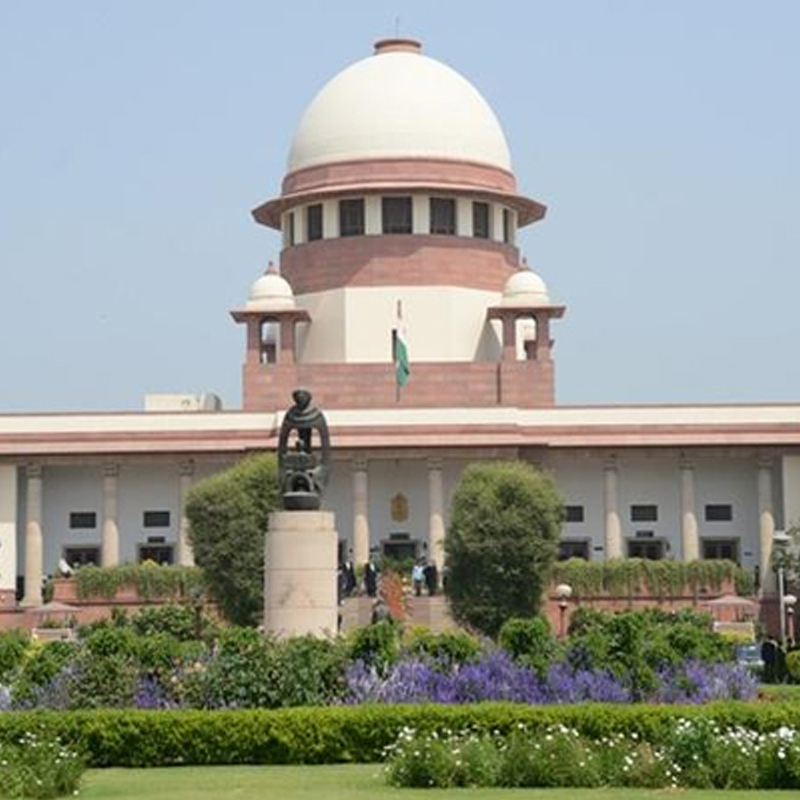
    MUMBAI: The Supreme Court on Tuesday refused to transfer to the Central Bureau of Investigation (CBI) the FIRs filed against Republic TV editor-in-chief Arnab Goswami. They are currently being investigation by the Mumbai Police. The apex court also refused to quash the FIR lodged against him in connection with his statements made recently on the Palghar mob-lynching case.

    The SC bench comprising Justice DY Chandrachud and MR Shah, however, quashed the multiple FIRs lodged against Goswami in several states, which accused him of using hate speech, derogatory language against Congress president Sonia Gandhi.

    On 11 May the top court had reserved its verdict on two of his petitions. They also directed that no coercive action should be taken against Goswami in the fresh FIR lodged by the Mumbai Police.

    Earlier, Goswami had claimed in the court that he was interrogated by Mumbai Police for more than 12 hours concerning an FIR on alleged defamatory statements. He claimed that one of the two investigating officers who were probing the case has tested positive for Covid2019.

    Also, the Maharashtra government had moved the apex court alleging that Goswami has been misusing protection granted by the top court.

    During the hearing, senior advocate Harish Salve, who is representing Goswami, had argued that this case is all about a certain political party targeting a journalist. He mentioned that the complainants are members of one particular party.

    Meanwhile, Goswami's interim protection from arrest has been extended for another three weeks. During this time period Goswami can seek an appropriate remedy.

    Follow Tellychakkar for the consumer facing news & entertainment

  • I&B ministry drafts policy guidelines to improve govt’s social media outreach

    I&B ministry drafts policy guidelines to improve govt’s social media outreach

    MUMBAI: The Ministry of Information and Broadcasting (MIB) has come up with policy guidelines for empanelment of social media platforms with Bureau of Outreach and Communication (BOC). The new policy guideline is aimed at improving the social media outreach along with putting in place a policy framework which enables ministries and BOC to engage with social media platforms on the basis of various criteria, terms and conditions and processes stipulated in the guidelines.

    “A number of ministries and departments of government of India have a substantial presence as well as organic reach across various social media platforms which they utilise to connect to the members of the public. However, the organic reach is limited to only such people who have connected with the social media handle of the concerned ministry/department. At times, the need is felt to reach or connect to people who are not connected/linked with social media handle of the concerned ministry/department,” MIB stated.

    “It is important for the ministry to determine modalities for engaging social media platforms for assured reach. Hence there is a definite need for policy guidelines for engagement of social media platforms so that assured reach may be attained on payment basis to increase visibility of socially relevant messages,” it added.

    The new policy guidelines will remain valid for a period of five years.

    Media planning and execution of campaigns:

    BOC will determine which social media platform(s) is/are relevant in light of planned outreach activity of the client ministry/department based on target audience, theme and content of proposed activity, budget and duration of the campaign.

     In doing so, preference may be given to the social media platforms which are based in India without affecting the desired outcome from the campaign activities.

     BOC will prepare a media plan within the indicated budget wherein the suggested platforms and the expected deliverables would be indicated to the ministries/ departments along with the tentative cost. However, since the models are based on dynamic pricing/auction/bidding, the actual delivery (as against expected deliverables) and the actual buying rates (as against indicated in the plan) would be found out on the final completion of the campaign. 

    The difference between the media plan conveyed to the client and the media plan actually executed will be communicated to the client ministry/department post execution with details. These terms shall be communicated by BOC to the client Ministry/Department before execution and their acceptance would be obtained before executing the media plan. 

     The client ministry/department shall indicate social media page/handle which will be designated for the campaign activity. The ministry/department will also be required to share the credentials (such as password) of the page/handle. Thereafter, the BOC and client ministry/department will nominate personnel to execute and monitor the campaign. 

    BOC will schedule the activity in such a manner that more deliverables may be generated at a lesser cost wherever timelines for undertaking the activity permits such scheduling. 

    The ministries/departments would have to convey approval for outreach activity to BOC at least five days in advance for the campaign to get started. 

    The ministries/departments would place 100 per cent funds in advance with BOC for campaign to be run. This is non-negotiable as default in payment by one ministry/department may adversely impact social media campaigns of other ministries/departments of the government. If the actual expenditure exceeds the planned expenditure, the balance shall be paid by the client ministry/department to the BOC.

    Follow Tellychakkar for the consumer facing news & entertainment

  • MIB asks MSOs to submit affidavit for DD channels carriage

    MIB asks MSOs to submit affidavit for DD channels carriage

    MUMBAI: The ministry of information & broadcasting (MIB) has asked MSOs to submit an affidavit that they will carry the additional channel launched by the pubcaster Doordarshan on their cable TV networks. While MIB notified another TV channel in the list of mandatory channels last year, MSOs need to extend their list including the channel filed through affidavit at the time of registration.

    “M/o information and Broadcasting vide Gazette Notification S.O. 4136 (E) dated 15.11.2019 had notified another TV channel in the list of mandatory TV channels to be carried on his network by MSO/cable operator making it a total of 27 channels (25 DD Channels, Lok Sabha channel and Rajya Sabha Channel). Accordingly, the list of mandatory TV channels to be carried by MSO duly undertaken vide their affidavit deemed to be extended to the extent including the additional TV channel notified on 15/11/2019 in their list filed through affidavit at the time of MSO registration,” MIB said in a notice.

    “As per Section 11 of the Cable TV Act, if any MSO does not carry mandatory channels on its network in violation of section 8 of the Act, then the authorised officer (DC/DM/SP/SDM/CP) is empowered to seize the equipment used for operation of cable TV network of the defaulters,” it added.

    In respect of a fresh application, the applicant MSOs are required to submit an affidavit to the effect that all mandatory channel will be carried on their networks. The affidavit would be on stamp paper of Rs 100 which will be sworn before a public notary appointed by central or state government.

  • MIB drafts new policy guidelines for uplinking, downlinking of TV channels

    MIB drafts new policy guidelines for uplinking, downlinking of TV channels

    MUMBAI: The ministry of Information and broadcasting (MIB) has drafted new policy guidelines for uplinking and downlinking of television channels in view of the fact that the broadcasting technology and market scenario have gone through a major change in this decade.

    The last guidelines for uplinking and downlinking of satellite television channels were issued by the ministry in 2011. 

    MIB has drafted the suggestions after consulting with stakeholders and has also invited comments on the draft from them within the next 15 days. Here are the major guidelines noted by MIB:

    Online application on Broadcast Seva for teleport or TV channels:

    A company or Limited Liability Partnership (LLP) may apply on Broadcast Seva on payment of processing fees for setting up a Teleport or Teleport Hub and uplinking, downlinking of a news TV channel or a non-news TV channel. The online application shall be processed from the standpoint of eligibility conditions and shall be subject to clearance and approval by the department of space, ministry of home affairs, and whenever considered necessary, by the department of revenue, ministry of finance. However, if considered necessary, the ministry may cause inspection of the physical premise or location.

    Regulations for logo and name of a channel

    For uplinking a news channel or a non-news channel, it has to furnish the proposed name and the logo of the channel along with a trademarks registration certificate regarding the ownership of the name and logo during applying. A company/ LLP shall display on the permitted TV channel only that name and logo which has been approved by the ministry. Hence, display of name and logo which has not been permitted or the display of dual logo would be treated as a violation of the guidelines.

    Operational status of a permitted TV channel

    A TV channel is required to remain operational during the currency of the permission.  Where a TV channel is unable to remain operational for a continuous period of more than 60 days, the company/LLP shall inform the ministry of the status along with reasons for the channel remaining non-operational. Provided that failure to inform the ministry regarding non-operational status of a channel beyond a continuous period of 60 days will be deemed to be a violation under the guidelines. Moreover, the channel shall not remain non-operational for a continuous period exceeding 90 days.

    Live telecast of events

    ·  A news channel which is given permission under these guidelines may uplink news and current affairs content by using the Satellite News Gathering (SNG)/Digital Satellite News Gathering (DSNG) equipment permitted to it, or hiring such equipment owned by any other permitted news channel owner or a teleport operator, after registering such hiring by means of an application on Broadcast Seva portal.

    ·  A non-news channel having permission under this guideline may, for the purpose of broadcasting an event live (other than an event which is in the nature of news and current affairs), irrespective of the technology used for uplinking the event, register itself online on Broadcast Seva, at least five days preceding the first date of a live event, furnishing such details and documents as may be specified in the application for registration, including the following date, time, venue and name of the event; the channel’s/ teleport’s willingness to broadcast/ uplink the proposed programme/ event; due authorization of the event owner along with specific dates and timings of the proposed programme/ event, a valid WPC license issued to the teleport operator, where a SNG/DSNG equipment or any such technology is used requiring WPC license, where an equipment or technology other than SNG/ DSNG is used, detailed specifications thereof.

    ·  A foreign news channel/agency may be granted permission up to one year at a time for live uplinking from time to time through a pre-designated teleport, by way of an application made in this regard online on the Broadcast Seva Portal.

    Transfer of permission of a television channel or teleport 

    A TV channel or a teleport can be transferred by a company/LLP, to another entity only with prior approval of the ministry. However, transfer under sub-section shall be permitted under the following situations:

    Merger/demerger/ amalgamation duly approved by the court/ tribunal in accordance with the provisions of the Companies Act, 2013, and the company/ LLP files a copy of the order of the court/tribunal sanctioning the said scheme; transfer of business or undertaking in accordance with the provisions of applicable law, and the company/ LLP files a copy of the agreement/ arrangement executed between itself and the transferee company/LLP; transfer within group company, and the company files an undertaking stating that the transfer is within the group companies.

    Uplinking of television channels for viewing only in foreign countries

    TV channels operating in India and uplinked from India but meant only for foreign viewership are required to ensure compliance of the rules and regulations of the country for which content is being produced and uplinked.

    A channel owned by a foreign company/entity may be allowed to uplink its content to be viewed outside India by using the facility of a permitted teleport operator by way of an online application on Broadcast Seva furnished on its behalf by the concerned teleport operator.

  • TRAI recommends changes in BARC India to improve credibility, transparency of TV ratings

    TRAI recommends changes in BARC India to improve credibility, transparency of TV ratings

    MUMBAI: The Telecom Regulatory Authority of India (TRAI) has come out with its recommendation on television measurement and rating systems review. The regulatory body has advised structural reform in the existing body Broadcast Audience Research Council (BARC) India. It has stated that the changes are required to mitigate potential risk of conflict and increase credibility and transparency. 

    Changes in structural body; active participation of advertisers, advertising agency:

    The industry watchdog has also advised changes in the composition of the board of BARC India. The board should have at least 50 per cent independent members including measurement technology experts. Equal representation of AAAI, IBF, and ISA has also been recommended. 

    TRAI is of the opinion that active participation of representatives of the advertisers and the advertising agency will bring more accuracy, transparency, credibility, and neutrality in the system, due to their inherent need for advertisers to reach viewers accurately.

    Formation of oversight committee

    Moreover, an oversight committee has been recommended to create to guide the measurement body in the areas of research, design, and analysis. The need of multiple data collection agencies has also been mentioned for credible and accurate collection of data. 

    The Oversight Committee shall be broad-based with representation from the National Council of Applied Economic Research, IIM, IIT, media research expert and demography expert, nominee from the ministry of information & broadcasting, and TRAI. The Committee should also be responsible for nomination/appointment of independent members of the Board as well as to give policy direction to BARC India, if it is so required.

    Encouraging multiple data collection agencies

    TRAI says multiple data collection agencies need to be encouraged to create credible and accurate collection of data. Competition and multiple agencies for data collection and processing would bring in new technologies, new research methodologies, new methods in analysis, new and better ways to ensure better data quality.

    “Once multiple agencies come forward for rating, BARC should limit its role to publishing the ratings, and framing methodology and audit mechanism for the rating agencies, so that the number of agencies can develop multiple rating systems leveraging new technologies,” TRAI stated.

    Change in role of DPOs

    Notably, the regulatory body also stated that MIB should amend the DTH license and MSO registration so as to mandate STBs capable of transferring viewership data and adoption of RPD technology. This transfer of data can be done by establishing a return path/connection from STB to the remote servers of the Audience Measurement agency. 

    Anonymized viewership data should be transferred electronically to the Audience Measurement agency for statistical analysis and television rating purposes. No data from any STB should be transferred to the rating agency without explicit consent from the subscribers. 

    DPOs should be allowed to mutually negotiate the terms and conditions for sharing the data with the Measurement Rating agency within the overall framework prescribed by TRAI from time to time. Such a framework shall be prescribed by TRAI, once these recommendations are accepted by MIB. 

    More transparency, less intervention

    BARC has also been advised to stay at an arm’s length from its own subsidiary, Meterology Data Pvt Ltd., which is the sole data collecting agency for BARC, as of now, so that the entire process of measurement is carried out independently to ensure inherent checks in data inconsistency.

    “Efforts may be made to withhold the identity of the channel’s name, and number, while collecting and processing the data from the field to bring more transparency in the complete process. BARC should also separate its functions in two units (a) one unit should be responsible for prescribing methodology of ratings/validation of data, publishing the data and audit mechanism and (b) the other unit for processing the data, watermarking or any other such technical work including management of data collection agencies,” TRAI added.

    It has advised BARC to review/frame its outlier policy based on scientific study and market survey conducted from time to time along with automate data processing in such a manner that no manual intervention is required before the final TRP rating is released. TRAI suggests any type of manual intervention in the meter-level /raw data arising out of the household panel must be avoided. Manual intervention, if any, in abnormal circumstances should be reported and informed to the auditors also.

  • Supreme Court notice on PIL against media companies for sacking employees

    Supreme Court notice on PIL against media companies for sacking employees

    MUMBAI: The Supreme Court on Monday issued a notice on a petition filed against multiple media organisations, which have retrenched, laid off or forced their employees to take a pay cut on the back of the nation-wide lockdown to check on the spread of novel Covid-2019 pandemic.

    A bench comprising justices NV Ramana, Sanjay Kishan Kaul and BR Gavai has sought responses from the central government, the India Newspapers Society and the News Broadcasters Association while expressing concern over the alleged termination of the employees of media organisations.

    “Some serious issues have been raised and it requires a hearing, moreover, the petitioners have not approached any other authority for the same reliefs,” observed the apex court. “Other unions also say the same thing, the question is, if the business does not start, how long will people sustain?”

    The petition filed by National Alliance Of Journalists, Delhi Union Of Journalists, and BrihanMumbai Union Of Journalists has accused media organisations of inhuman and illegal treatment being meted out by employers to their employees and workers in the media sector.

    The petition reads: “The employers (news channels, print media including news websites and digital news platforms) have issued termination notices, imposing steep wage cuts unilaterally, sending workers and employees on indefinite unpaid leave, and so on, taking the excuse of the nation-wide lockdown imposed in light of the spread of Covid-2019.”  

    The petition signed by NAJ president SK Pande, BUJ general-secretary Indra Kumar Jain, and DUJ general secretary Sujata Madhok has sought the suspension of all orders of termination, salary cuts or resignations asked from employees during the period of the lockdown.

    “Despite the appeals made by the prime minister of India and advisories issued by the government of India to not terminate services or reduce employees’ wages, several employers/establishments in the newspaper and media sector have taken unilateral knee-jerk decisions to terminate services, reduce wages and also send employees on forced indefinite unpaid leave,” reads the petition.

    The petitioners have also listed some instances — The Indian Express asking staff to take salary cuts, News Nation terminating services of 16 employees of its English digital team, The Times of India sacking its entire Sunday magazine team, The Quint asking 45 members of its team to go on leave without pay and Bloomberg Quint indicating steep salary cuts for the month of April.

    The central government has imposed a nation-wide lockdown till 3 May to check on the rising cases of the Covid-2019 virus while giving an exception to the essential service category. Media has also been added under the essential service category.

  • Prasar Bharati spreads positive news of COVID warriors

    Prasar Bharati spreads positive news of COVID warriors

    MUMBAI: As India fights COVID-19, many inspiring stories of health workers, policemen, journalists, individuals, organisations, academic institutions have come to the fore. To acknowledge and appreciate their contribution, Prasar Bharati (DD and AIR) has followed these stories from across the country and are now offering to the media houses to share these stories of bravery, sacrifice and compassion with other media so that it reaches wider audience in India and abroad, and inspires and gives hope to Indians and the world in this global fight against the pandemic COVID-19.

    These good news stories and more on COVID-19 from Prasar Bharati can be accessed via three platforms: 

    1– Real-time on mobile phones/smartphones through the telegram channel – https://t.me/pbns_india 
    2– Near real-time from http://covid-goodnews.pbns.in/ 
    3– Broadcast-quality audio-visual media from FTP server.  

    Apart from the good news stories, through platforms mentioned above, Prasar Bharati will also be sharing video messages of celebrities, latest updates on COVID-19 from India and the world, fact-checks and COVID-19 ground reports from across the country.

    All of the above will also be summarised through a periodic news digest with ready reference URLs to important news items and social media updates. The broadcaster has requested all media outlets to take advantage of the above content sharing mechanism and disseminate the stories from across India of perseverance and resilience as India fights back COVID-19.