Category: Regulators

  • The TRP fudging saga continues

    The TRP fudging saga continues

    NEW DELHI: The Mumbai police’s investigation into the alleged TRP manipulation fracas gathered pace over the weekend. If one were to stand outside the central police headquarters in Mumbai, it would have looked like a roll call of media hotshots was being taken.  

    Amongst those to go in were Republic TV CEO Vikas Khanchandani who was interrogated for more than nine hours about the network’s involvement, something the founder Arnab Goswami has vehemently denied, stating that it was TV Today which was indulging in TRP rigging. India Today has denied any such wrongdoing.

    The police had sent summons to Republic Bharat COO Harsh Bhandari;  COO- international revenue & distribution Priya Mukherjee; senior distribution executive Ghanshyam Singh, the CEO of Hansa Research Group Praveen Nijhara and another employee.  Madison founder Sam Balsara, IPG Mediabrands CEO Shashi Sinha also spent a large part of the day being questioned by the Mumbai police.

    Republic TV CFO Shiva Subramaniyam Sundaram, who had also been ordered to appear before the cops, declined, stating that he would available for questioning only after 14-15 October. He also said that he had requested the law enforcers to halt the probe until the company’s writ petition against the police’s actions is heard by the Supreme Court.

    Read more news on TRP Scandal

    Even as this piece is being written, six teams from the Mumbai police crime branch were further investigating if the malpractice of TRP rigging was being resorted in six states. Republic TV issued a press release stating that the Mumbai police repeatedly tried to find out from its executives how the network managed to get their hands on the Hansa Research filed complaint. It said it would not reveal its sources, citing editorial privilege.

    The Mumbai police stepped in to investigate the alleged scam after BARC’s people meter management vendor Hansa Research complained to it that the viewership sample had been compromised. Mumbai police chief Param Bir Singh then held a press conference, alleging that executives of three channels – Box Cinema TV, Fakt Marathi and Republic TV – gave financial inducements to members of BARC’s viewership panel to watch their shows, thus inflating their viewerships.

    Senior professionals, from the first two, were arrested and are cooling their heels behind bars since the allegations were hurled on 9 October.

    Goswami has all along being insisting that Republic TV’s name was not even there in the Hansa complaint, it was TV Today which was mentioned several times, he said. He has  also alleged that the Mumbai police chief is attacking his network at the insistence of the Maharashtra government for continuing to investigate the Sushant Singh Rajput “murder” and several other acts of negligence by it and the city’s law enforcers.

    Over the weekend, the Parliamentary Standing Committee on Information Technology chaired by Congress MP Shashi Tharoor also mentioned that it will be taking up the issue. It has asked representatives of the News Broadcasters Association, Press Council of India and Prasar Bharati to depose on the subject of 'ethical standards in media coverage.’

    Earlier during the week, Mumbai Police had arrested four people including Bompalli Rao Mistry, the alleged mastermind behind the scandal. Mistry will remain in the police custody until 13 October.

  • Parliamentary Standing Committee to look into TRP gaming scandal: PTI

    Parliamentary Standing Committee to look into TRP gaming scandal: PTI

    NEW DELHI: The Parliamentary Standing Committee on Information Technology chaired by Congress MP Shashi Tharoor will be taking up the issue of alleged manipulation of TV Rating Points (TRP) by some channels, PTI reported citing some sources.

    The committee has asked representatives of the News Broadcasters Association, Press Council of India and Prasar Bharati to depose on the subject of 'ethical standards in media coverage'.

    This comes on the back of Congress MP and member of the panel Karti Chidambaram’s request to take-up the matter and call the officials of the ministry of information and broadcasting (MIB) before the committee to seek clarification and remedial measures.

    He had said that the government's advertising expenditure depends on this system, and public spending should not be based on flawed data. “Flawed or manipulated TRP cannot be the basis of ad spend. TV companies also base their valuations on TRP. Those valuations are questionable now,” Karti further said.

    The Congress leader’s demand that the parliamentary panel takes up the issue came a day after the Mumbai Police claimed to have busted a TRP manipulation racket and arrested four people.

    "The recent issues surrounding TRPs of television channels have cast doubts on the legitimacy and reliability of the system. TRPs produce essential data on television audiences in India and have become the primary basis for advertising decisions," Karti said in a letter to panel chairman Tharoor.

    "There is a need for further understanding this situation. In light of this, it is important that the standing committee take up this issue. Therefore, I request you to call before the Committee concerned officials of the responsible ministry, MIB to seek necessary clarification on the current situation and remedial measures," he said.

  • MIB advises private TV channels to abide by programme code

    MIB advises private TV channels to abide by programme code

    KOLKATA: A new trend in reportage of recent incidents has put media into the spotlight for violating basic ethics. Amid the strong criticism that the industry is facing, the ministry of information and broadcasting (MIB) has issued an advisory asking all the channels to abide by the programme and advertising codes.

    Read more news on MIB

    The ministry has emphasised on the provisions that restrict programmes containing anything obscene, defamatory, deliberate, false and suggestive innuendos and half truths; criticizes, maligns or slander any individuals in person or certain groups, segments of social, public and moral life of the country.

    It has also mentioned a recent case in the Delhi High Court which issued a notice following a petition by the actor Rakul Preet Singh. The court also stated that it hoped that media houses and TV channels would show restraint and abide by the program code and other guidelines while making any report in connection with the actor.

    At that time, the high court also directed Prasar Bharati and News Broadcasters Association, apart from the centre, to consider Singh's petition, " as a representation and decide it expeditiously, including any interim direction that ought to be made.”

  • MIB issues SOPs for cinema halls

    MIB issues SOPs for cinema halls

    NEW DELHI: After keeping industry stakeholders on tenterhooks for months, the ministry of information & broadcasting last week announced the opening of theatres across India from 15 October. As part of the government’s Unlock 5.0 plan, cinema halls will operate at 50 per cent seating capacity. Stakeholders welcomed the decision and look forward to reviving the business in the face of persistent challenges.

    Today, the ministry of Information and Broadcasting (MIB) shared SoPs for the exhibition industry to prevent the spread of Covid2019. The ministry has clearly stated that movies will not be showcased at theatres in containment zones; film exhibition activities through cinemas/theatres/multiplexes shall be governed in accordance with pre-existing guidelines issued by the MHA and health ministry. In addition, states and UTs can propose extra measures as per their field assessment. 


    SOPs related to Exhibition of films 

    General Guidelines 

    The generic measures include public health measures that are to be followed to reduce the risk of transmission of Covid2019. These measures need to be observed by everyone (workers and visitors) at all times. 

    These include: 

    ·       Adequate physical distancing of at least 6 feet to be followed outside the auditoriums, common areas and waiting areas at all times. 

    ·       Use of face covers/masks to be made mandatory at all times.

    ·       Availability of hand sanitizers, preferably in the touch-free mode, at entry and exit points as well as common areas within the premises.

    ·       Respiratory etiquettes to be strictly followed. This involves strict practice of covering one’s mouth and nose while coughing/sneezing with a tissue/handkerchief/flexed elbow and disposing off used tissues properly. 

    ·       Self-monitoring of health by all and reporting any illness at the earliest to state and district helpline. 

    ·       Spitting shall be strictly prohibited. 

    ·       Installation and use of Aarogya Setu app shall be advised to all.

    Entry and Exit Points 

    ·       Thermal screening of visitors/staff is to be carried out at entry points. Only asymptomatic individuals shall be allowed to enter the premises.

    ·       Provisions for hand sanitization should be made available at all entry points and in work areas. 

    ·       Designated queue markers shall be made available for entry and exit of the audience from the auditorium and the premises. 

    ·       Exit should be done in a staggered row-wise manner to avoid crowding. 

    ·       Sufficient time interval between successive screenings on a single screen as well as on various screens in a multiplex shall be provided to ensure row-wise staggered entry and exit of the audience. 

    Seating Arrangements 

    ·       The occupancy of the cinemas/theatres/multiplexes shall not be more than 50 per cent of their total seating capacity. 

    ·       Seating arrangement inside the auditorium of the cinemas/theatres/multiplexes to be made in such a way that adequate physical distancing is maintained.

    ·       Seats that are “Not to be occupied” shall be marked as such during booking (for both online booking and at the box office sale of tickets). 

    (Note: The “Not to be occupied” seats inside cinemas/theatres/multiplexes should either be taped or marked with fluorescent markers to prevent people from occupying these seats so as to ensure adequate physical distancing at all times.) 

    Physical Distancing Norms 

    ·       Proper crowd management in the parking lots and outside the premises—duly following physical distancing norms shall be ensured.

    ·       Number of people in the elevators shall be restricted, duly maintaining physical distancing norms. 

    ·       Efforts shall be made to avoid overcrowding in the common areas, lobbies and washrooms during the intermission. Audience may be encouraged to avoid movement during the intermission. Longer intermissions may be used to allow audience seated in different rows of the auditorium to move in a staggered manner.

    Staggered Show Timings at Multiplexes 

    ·       Staggered show timings shall be followed for multiple screens to avoid crowding. 

    ·       The show commencement time, intermission period and finish time of a  show at any screen shall not overlap with the commencement time,  intermission period or finish time of a show at any other screen in a  multiplex. 

    Booking and Payments 

    ·       Digital no-contact transactions should be the most preferred mode for  issue/verification/payments for tickets, food, and beverages, etc. by using online bookings, use of e-wallets, QR code scanners, etc. 

    ·       Contact number shall be taken at the time of booking of tickets to facilitate contact tracing. 

    ·       The purchase of tickets at the box office shall be open throughout the day and advance booking shall be allowed to avoid crowding at the sale counters. 

    ·       Sufficient number of counters at the box office shall be opened with  adequate physical distancing norms, to prevent crowding during physical booking of tickets. 

    ·       Floor markers shall be used for physical distancing during queue management at the box office. 

    Sanitization of the Premises 

    ·       Frequent sanitization of the entire premises, common facilities, and all  points which come into human contact, e.g. handles, railings, etc. shall be ensured.  

    ·       The cinemas/theatres/multiplexes auditorium shall be sanitized after every screening.  

    ·       Regular cleaning and disinfection of the box office, food and beverage  areas, employee and staff lockers, toilets, public areas, and back-office areas shall be ensured. 

    ·       Measures for the safety of sanitization staff such as adequate provisions for rational use of gloves, boots, masks, PPE, etc. shall be undertaken. 

    ·       Disinfection of the premises to be taken up if any person is found positive. 

    Staff Related Measures 

    ·       Wearing of face cover for staff is mandatory at all workplaces and  adequate stock of such face covers should be made available.

    ·       All employees who are at higher risk, i.e., older employees, pregnant employees, employees who have underlying medical conditions, to take extra precautions. They should preferably not be exposed to any front-line work requiring direct contact with the public. 

    ·       With a view to ensure safety at the workplace, employers on best-effort  basis should ensure that Aarogya Setu app is installed and updated by all employees their mobile phones. 

    ·       Communication and training of the staff on precautions related to COVID-19, respiratory hygiene, hand hygiene, etc. shall be carried out. 

    ·       Self-monitoring of health by all employees/staff and reporting any illness at the earliest shall be ensured.  

    Public Awareness 

    ·       Do’s and don’ts shall be communicated at prominent access points: Online sale points, digital tickets, public areas like lobbies, washrooms, etc. 

    ·       Public Service Announcements on wearing mask, observing physical  distancing and maintaining hand hygiene as well as specific announcements on the precautions and measures to be followed within and outside the premises shall be made before the screening, during intermission and at the end of the screening.  

    ·       Provisions must be made for display of Posters/standees/AV media on  preventive measures about COVID-19 prominently outside and inside of the venues. 

    Air-Conditioning/Cooling 

    For air-conditioning/ventilation, the guidelines of CPWD shall be followed which, inter alia, emphasizes the following: 

    ·       Temperature Setting of all air conditioning devices should be in the range of 24-30°C. 

    ·       Relative humidity should be in the range of 40-70 per cent. 

    ·       Re-circulation of air to be avoided to the extent possible. 

    ·       In-take of fresh air should be as much as possible. 

    ·       Cross ventilation should be adequate. 

    Anti-stigma Behaviour  

    COVID-19 related stigmatization or unruly behaviour shall be dealt with strictly by coordination between the auditorium manager(s) and the local authorities.

    Food and Beverage Area 

    ·       Show timings in the cinema halls to be staggered to ensure that intervals of different shows do not occur simultaneously. 

    ·       Customers shall be encouraged to use cinema apps/QR codes, etc. for ordering food as much as possible. 

    ·       Multiple sale counters in food and beverage area be made available wherever possible. 

    ·       One line systems to be followed using floor stickers to maintain physical distancing at every sale counter. 

    ·       Only packaged food and beverages shall be allowed. 

    ·       Delivery of food and beverage inside the hall/auditorium shall be prohibited. 

    ·       Management shall ensure observance of physical distancing and preventing crowds in the food and beverages area. 

    ·       Safe disposal of the food and beverage waste shall be ensured by the management of the premises. 

    The national directives for Covid2019 management and the relevant guidelines issued by the ministry of information & broadcasting, ministry of Health & Family Welfare, state governments, etc. shall be strictly complied with during all activities and operations. 

  • Running in life and the marathon, the Sunil Lulla way

    Running in life and the marathon, the Sunil Lulla way

    MUMBAI: Numbers… It has always been about numbers and statistics for Sunil Lulla. This comes as no surprise for someone who has over 35 years of experience in leadership roles across media (TV, internet, and OTT), advertising and marketing and is now CEO at BARC India. But it’s not the data, statistics and viewership numbers that fascinate Lulla the most. It’s the miles he runs that give him akick.

    “Only those who will risk going too far can possibly find out how far one can go.” These words by T.S. Eliot perfectly sum up Lulla’s feisty yet humble personality.

    Anavid long-distance runner, Lulla also enjoys sailing andwitty conversations. In a free-wheeling chat with indiantelevision.com founder, CEO and editor-in-chief Anil Wanvari, Lulla spoke about running marathons locally and internationally, his love of sports and much more.

    Watch the virtual fireside chat with Sunil Lulla 

    Earlier this year, Lulla encountered an unexpected setback – he tested positive for SARS-CoV-2 infection. But he put up a tough fight, beat the virus and emerged the stronger for it. Then, as a responsible citizen, he donated his blood plasma twice. Looking back on his brush with Covid2019, Lulla advises people to live their life normally, observe necessary precautions and to be respectful but unafraid of the SarsCov2 virus.

    Runner’s high

    As long as a person’s legs function, they should run, says Lulla. He considers running not only a great physical workout but also a mental stimulant.

    “I think running the distance gives you the courage, stamina and inspiration. It helps me to think of new things. It’s because of the adrenaline that runs and pumps through your body,” he said.

    Read more news on Sunil Lulla

    Like many of us who try to keep our middle and weight in check, Lulla started running with the desire to lose a little flab. Eventually he started enjoying it, and also made some friends along the way.

    Lulla advocates running, for it helps a person stay healthy and productive. He believes what you do with your health and body allows you to do what you want with your life.

    “It’s the desire to be on the road, to try and push yourself and to do better that keeps me going. Long-distance runs are not easy. In the end, it’s about your own aspiration. I don’t look at running from a benchmark point of view,” he added.

    For Lulla, it’s about setting goals – and surpassing them. The sheer zeal to overtake life’s challenges and doing what you envision is not everybody’s cup of tea. Lulla seems to have mastered this art.

    He recalls a marathon he ran in New York last year. He completed the 42 km run in just four hours and 13 minutes. Ecstatic about this experience, Lulla shares: “Running in six degree temperature was not easy. We are not used to running in such weather here in India. New York was a tough road. It starts with the runners having to climb uphill on a 2 km long bridge. I think the most amazing part about New York is its crowd. Brooklyn is a deafening, especially the last stretch, it’s like Eden Gardens where the last ball is going to be bowled and the match is heading towards a tie. Then there are dark patches of absolutely death-like silence. But it’s a great crowd and great run. It was my dream and I am glad I could do it.”

    He’s full of admiration for peers like Sudhanshu Vats as well as businessman Anil Ambani who run the marathon distance in super quick time. Says he: “Those guys are pros, all respect for them.”

    Unfortunately, there are no races this year due toCovid2019 pandemic. Lulla nevertheless pounds the pavements, pretending he’s running a race. He’s hopeful that once things return to normal, he’ll be able to take part in the Berlin marathon.

    Winning a race is a cocktail of tears and sweat. Yet one persists, spurred on by their ambitions to excel and emerge triumphant. Lulla is definitely an inspiration for anybody who is apprehensive of the challenges life throws atus.

  • Unlock 5.0: Maharashtra to not go national way

    Unlock 5.0: Maharashtra to not go national way

    MUMBAI: Denizens of Maharashtra will have to wait a while before they start tasting the freedom of unlock 5.0 guidelines from 15 October announced by the ministry of home affairs (MHA) yesterday.  The MHA gave the go-ahead to organisers of B2B exhibitions, cinema halls, entertainment complexes, schools, and swimming pools to open outside containment zones. Additionally, cultural, religious and  other gatherings of 100 plus persons could also be allowed in certain areas.


    Even as the experiential and event sector was celebrating, the Maharashtra government announced its own set of guidelines which put a dampener on everyone’s spirits. According to these, exhibitions, theatres, swimming pools, large gatherings, schools,  are a no-no in the state until 31 October. The lockdown will continue in Maharashtra  until 31 October. However, the Udhav Thackeray led government has allowed tiffin delivery services to travel by local trains, permitted the opening up of hotels, restaurants and bars at 50 per cent of seating capacity.


    Mumbai, which probably contributes a large chunk of the movie box office, has a very active B2B exhibition schedule, will not be able get going in full swing. For that, we will have to wait for another day.


  • Bombay high court questions TRAI on twin conditions, DPO bouquets

    Bombay high court questions TRAI on twin conditions, DPO bouquets

    KOLKATA: Within a very short span of the new tariff order (NTO) implementation, the Telecom Regulatory Authority of India (TRAI) issued a set of amendments at the beginning of 2020. These have been challenged legally by the major broadcasters, and the litigation is still in progress.

    In an interesting twist, at today's hearing yesterday, the bench at Bombay High Court has questioned the relevance of a few important clauses of the regulation.

    The division bench of the Bombay high court comprising Justice AA Sayed and Justice Anuja Prabhu Desai asked whether the twin conditions were placed by TRAI for consultation. The industry regulator had introduced this clause citing “manipulation” of consumer choice by broadcasters.

    Read more news on Trai

    “The sum of the a-la-carte rates of the pay channels (MRP) forming part of a bouquet shall in no case exceed one and half times the rate of the bouquet of which such pay channels are a part. The a-la-carte rates of each pay channel (MRP),forming part of a bouquet, shall in no case exceed three times the average rate of a pay channel of the bouquet of which such pay channel is a part,” TRAI said along with introducing the Rs 12 cap for introducing a channel in a bouquet.

    TRAI has been upholding (amended tariff order) NTO 2.0 for bringing rationality between a-la-carte price and the bouquet price. But several reports have indicated that consumers opted for the distribution platform operator (DPO)-designed bouquets post NTO 1.0.

    Considerably, the bench also mentioned that more than 90 per cent bouquets in the market are DPO bouquets which do not appear to be under the same restrictions as the broadcaster’s bouquets. The bench asked TRAI's counsel to explain how and whether DPO bouquets are bound by restrictions as compared to the broadcasters.

    Giving an example of NTO 1.0 which was implemented without the discount cap on the formation of a bouquet by the broadcasters, the bench asked whether NTO 2.0 could be implemented without some of the provisions.

    Read more news on NTO

    The counsel appearing for TRAI has sought time to respond till the next date of hearing, 8 October.

     It is expected that counsels for the union of India and TRAI will complete their arguments during the next hearing. However, keeping in mind the rejoinder to be made by the broadcasters, the first half of Friday has been kept as reserve time.

    Over the past couple of years, the industry has been overburdened by regulations. According to a FICCI -EY report, NTO 1.0 reduced the number of TV subscribers by 26 million. While broadcasters are reeling from the Covid2019 impact, it is of serious concern how another change will impact the industry. 

  • Guest Column: TRAI needs to focus on sectoral hygiene rather than economic regulation

    Guest Column: TRAI needs to focus on sectoral hygiene rather than economic regulation

    MUMBAI: A silent crisis has been brewing in the residential segment of TV viewing sector. Even as its viewership increased during the Covid-induced lockdown, sectoral revenues took a severe hit. While Covid was termed an act of god, TV’s current state appears to be a man-made disaster. TV is an integral part of media, the fourth pillar of democracy. Therefore, it is crucial to respect and preserve it.

    TV accounts for over 40 per cent of the Indian media and entertainment ecosystem’s revenues, making it the sector’s largest contributor. As per pre-pandemic estimates, the M&E industry was slated to grow at 10 per cent CAGR to touch $34 billion by 2022. Covid’s impact has slowed down that march, particularly because advertisement revenues have shrunk, production of new entertainment programs remained suspended and the addition of new subscribers, by direct marketing, has become difficult. The alternative lies in adopting a subscription-led model.

    Broadcasters source content from content producers and manage its distribution over electronic media for viewer consumption. There are costs involved in this management such as content editing, server storage, opex for uplinking, transponder rentals and taxes. Broadcasters rely on meeting these expenses through advertisements inserted into and cheek by jowl with content.

    Besides these, distribution platform operators (DPOs) charge broadcasters a fee to carry programs and their placement in their electronic program guides (EPGs). TV players  have to pay this fee even for channels which are free for viewers. Advertisement revenue covers approximately 60 per cent of such costs. The DPOs, in turn charge subscribers for connectivity and pay content charges besides taxes.

    Read more news on Trai

    Since the nineties, business models were skewed in favour of ad-driven revenues because the amount of video content to be distributed over the  networks exceeded network capacity. Further, business practices were not transparent as broadcasters were unable to verify how many subscribers were watching their channels.

    2011 onwards, the TV digitisation process was supposed to usher in transparency and help overcome capacity constraints by relaying encoded and encrypted program streams from broadcasters to consumers via approximately 1,500 MSOs and over 60,000 cable operators. Digitisation improves picture and sound quality and allows more content to be transmitted using the same resources, thus enhancing consumer choice. Coupled with encryption, this system is called the digital addressable system (DAS), which means the facility to enable or disable program viewing selectively and remotely. Encrypted broadcasting signals can only be decoded via a set top box (STB) programmed uniquely for each consumer as per their indicated choice. Consequently, consumers can access and watch only those programs that they have chosen and pay accordingly. Empowering consumers to exercise choice was the intended first step to enable a subscription-led industry model.

    While the government claims that the entire digitisation process was over in March 2017, the truth is otherwise. MIB tracked DAS implementation using only the number of STBs reportedly shipped out of headend service providers’ warehouses. It did not consider if these STBs had been programmed to show only those channels that viewers had opted for. The STBs, therefore, functioned only as digital to analog converters that enabled viewers to watch all programs in the network’s stream. The task force to oversee DAS implementation did not seek proof to verify that ‘addressability’ had actually been implemented in the subscriber management system, which was the very essence of DAS implementation. Thus, a lot of TV subscribers do not have STBs which allow them to watch only those programs that they opt for.

    In 2017, TRAI issued a tariff order that supposedly aligns regulations with the new digital regime. However, the explanatory memorandum of the tariff order is full of contradictions, attributable to limited knowledge of ground realities.

    One possible infirmity, in TRAI’s demonstrated inability, could be that their staff consists of bureaucrats and professionals from the IT enabled services sector. Telecom generically facilitates one-to-one communication without any concern for the content it carries. The charges too cover fixed and variable levies based on usage time. With such a background, TRAI has been entrusted with regulation of broadcast, which is based on content that is intended for mass consumption.  Since 2004, they have not been able to acquire information about how broadcasters price their content.

    Read more news on broadcasters

    In the explanatory memorandum to the tariff order from March 2017, TRAI says that content pricing is a dynamic process, best understood by broadcasters. At the same time, it restricts them from deciding the price of pay programs included in bouquets. A commercial approach to determine prices requires an understanding of the expected channel viewership, and the cost of producing or acquiring content. Addressing ground realities is important to gather accurate data on channel viewership.

    One must understand that most subscribers use cable operators’ networks, which are local monopolies. Such operators get STBs issued in bulk without requisite programming and pairing them with subscriber details. These STBs enable access to all programs contained in the stream net casted from the MSO, since they are not individually programmed to cater to consumer choice. The cable operators then started charging subscribers a fixed monthly sum without any bill or receipt.

    To address this situation, multiple suggestions were made to TRAI. An important one was to incorporate broadcast expertise, which differs from telecom, into regulation. This is especially important for content handling to ensure that the deployed distribution networks meet desired addressability and content security norms. This author too has suggested that an eminent person, with broadcast video distribution experience, should conduct a demonstrative audit for all empaneled auditors. However, TRAI remains reluctant to change its telco-oriented mindset, where the concern for content has never factored in. The most glaring example is  the regulator’s latest list of auditors to audit the digitalization process. Almost all of them are charted accountants with no experience in broadcast audit. The regulations prescribe the employment of a graduate engineer in the empaneled auditors’ teams, without even mentioning his/her educational background. Finding suitable talent is also challenging, as broadcast engineering, in general, and wired line broadcasting, in particular, are yet to find a place in Indian academia. To sum up, one can’t get the TV business right without getting the number of consumers right.

    TRAI will therefore do well to pay attention to the safe and secure delivery of content, rather than economic regulation that is confined to subscription fund flow audits. As it is, the regulator’s misadventure since March 2019, has resulted in a loss of estimated 26 million subscribers, besides reported closing down of multiple video broadcast programs. It can’t and shouldn’t create a situation where more programs are forced to go off air.

    (The author of the article is Lt. Col. V C Khare, a cable TV expert. The views are personal and Indiantelevision.com may not subscribe to them)

  • The challenges & opportunities before incoming TRAI chairman PD Vaghela

    The challenges & opportunities before incoming TRAI chairman PD Vaghela

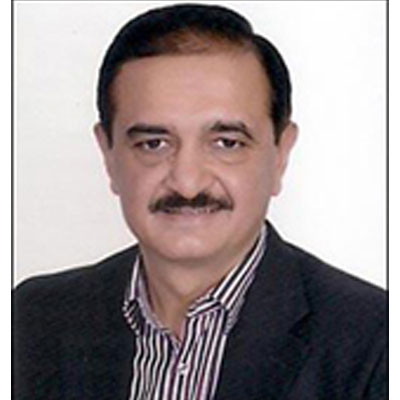
    KOLKATA: As the extended five-year term of Ram Sewak Sharma as chairman of the Telecom Regulatory Authority of India (TRAI) concludes today (30 September), industry will be looking closely at his replacement, PD Vaghela. The Gujarat cadre 1986 batch IAS officer is the outgoing  pharma department secretary who celebrated his sixtieth birthday on 22 September. Prior to that, he was the chief commissioner of commercial tax in Gujarat. He is also believed to have played an important role in the roll out of the goods and service tax in 2017. Also

    Vaghela is taking the chair at what can be termed a very crucial time for both the telecom and broadcasting sectors. While his predecessor has been widely criticised by stakeholders for over-regulating, Vaghela will have to bring more balance if he wants to narrow down the gap and sense of distrust between industry and the regulator.

    A task which could be challenging as he apparently has not had much to do with the broadcasting sector during his 34 years of being a civil servant. A B.Com graduate from Gujarat, he has masters degree from an institute in the The Hague, a post-graduation in business administration and finally a doctorate in sociology.

    Vaghela has held senior positions in the Kandla Port Trust, with Gujarat tourism, with the industries and mines department, the rural development department, as municipal commissioner (Bhavnagar), and in the home ministry.

    Read more news on TRAI

    One school of thought in the industry is that given his background and the circumstances during his appointment, Vaghela will mostly follow Sharma’s path during his tenure.

    At this moment, broadcasters are indulged in legal battles with the industry watchdog on many fronts including the ad cap and the amended new tariff order.

    A senior executive at one of the big four broadcasters says while the court’s verdict will have to be implemented by both broadcasters and the TRAI, Vaghela’s first challenge will be the direction TRAI will take once the litigation between industry and the regulator is adjudicated upon.  According to him, the new chairman has to also look after the viability of small cable operators who are worried about their future.

    The executive also adds that everyone is now perceiving broadband, not broadcasting, as the future of entertainment. Hence, he adds that the new chairperson can play an important role in carefully steering the future of the broadcasting industry.

    While there is a high chance that a number of consumers will shift to IP-based streaming content via OTT services, Vaghela will have to tread carefully, balancing digitisation and safeguarding traditional broadcasters’ interests.

     “The RS Sharma regime has failed broadcasters. He served an important role in UIDAI implementation. Hence, we had huge expectations from him but we have been disappointed at the end,” a senior industry source states. 

     Although the executive is not very optimistic about the new chairman being able to dilute this sentiment, he thinks the industry should at least observe him for the next few months, before pronouncing any judgements.

    However, another industry veteran claims Vaghela is quite likely going to continue to carry on in the same vein as Sharma. Like his peers in the industry, he acknowledges that there have been frequent changes in regulation which have been challenging, but he also credits Sharma for bringing in some semblance of order in to the TV distribution ecosystem.

    Read more news on NTO 2.0

    “There was so much of scrapping between MSOs, LCOs and broadcasters,” he says. “By pushing cable TV digitisation and mandating some sort of price standardisation through regulation, he forced the industry’s hand to try and work together, which they are doing currently. Yes, there is some irritation from time to time, but the value chain is working closer together, keeping rules modernisation, upgradation and customer service in mind.”

    The veteran also adds that Sharma played a large role in pushing ahead the Narendra Modi-led government’s digitisation agenda, by allowing new pricing models as far as mobility is concerned. “The Jio phenomenon of cheap data, free calls, has been a game changer for the spread of the internet where incumbents such as Airtel and Vodafone and Idea were working with legacy business and consumer models.”

    The CEO of a TV network points out that even though the court cases against NTO 2.0 continue in the courts, Vaghela will very much have to “balance value for consumers with the interest of broadcasters along with operators. He will also possibly play a significant role in OTT legislation as the government is gearing up its efforts to regulate this rapidly growing vertical.”

    “Along with working on major rollouts like 5G implementation, enhancing fibre-to-home broadband connectivity across the country on the telecom side, Vaghela can choose to leave his mark as far as cable TV amendments, a national broadcaster policy, DTH licensing are concerned. Additionally, he could things take a step further and start looking at drawing up a national video policy encompassing TV, streaming, and possibly mobile delivery of video,” says the CEO.

    On the telecom side, Vaghela has contentious issues like super high 5G pricing (at Rs 492 crore per MHz in the 3500 Mhz band) which could deter the ailing telecom service providers(TSPs)  from making a bid. The adjusted gross revenue ruling has gone against at least two of them who have been reeling courtesy the price war that Jio has waged for the past few years. The consultation paper on whether a floor price needs to be put in place for telecom services will also take up his attention. Then, he will have to decide on interconnect usage charges that TSPs charge each other for calls made by customers. They are due to be scrapped by early next year.

    Of course, he will have a bunch of old hands who have been at the regulator for a few years. There’s the TRAI secretary Sunil Gupta, and numerous other advisers who provided back end support for almost every decisive direction, recommendation, and regulation the watchdog has given over the years. How he takes their advice and inputs and formulate these into law for broadcasting and telecom will decide whether he will be blessed or vilified by the industry.

    (This piece has been penned following conversations with real executives from the business of television. Most of them requested that their identity be kept secret while using their quotes and views in this piece) 

  • PD Vagehla to replace RS Sharma as TRAI chairperson

    PD Vagehla to replace RS Sharma as TRAI chairperson

    MUMBAI: The speculation about who is going to head the Telecom Regulatory Authority of India has finally ended.

    When chairman Ram Sewak Sharma’s term ends on the night of 30 September, into his shoes will step PD Vaghela a 1986-batch Gujarat cadre IAS officer.

    His appointment today was approved by the appointments committee of the cabinet. Vaghela is currently the secretary of the department of pharmaceuticals. And his appointment to the TRAI is for three years or until he attains the age of 65. Prior to the pharmaceutical posting, Vaghela was the commissioner of commercial taxes and he is believed to have played an important role in the rolling out of the goods and entertainment tax in 2017. 

    Vaghela’s  predecessor RS Sharma held his position for five years. The normal term is three years, and Sharma’s tenure ended in August 2018, but he was given a two-year extension which is a rarity. During his stint, Sharma saw intense compeition in the telecom sector, with Jio playing price warrior, and emerging as the largest mobile operator in the country, leaving Airtel and Vodafone-Idea far behind.  

    Vaghela’s immediate challenge as far as the broadcast sector is concerned is dealing with NTO 2.0 which the industry has been opposing rather vehemently saying it is impacting them  extremely negatively.