Category: Regulators

  • DTH license to be issued for 20 years, 100% FDI allowed in the sector

    DTH license to be issued for 20 years, 100% FDI allowed in the sector

    KOLKATA: The ministry of information and broadcasting (MIB) announced major key decisions for the direct-to-home (DTH) segment on Wednesday. The cabinet has revised guidelines for providing DTH service in India as well as licensing norms.

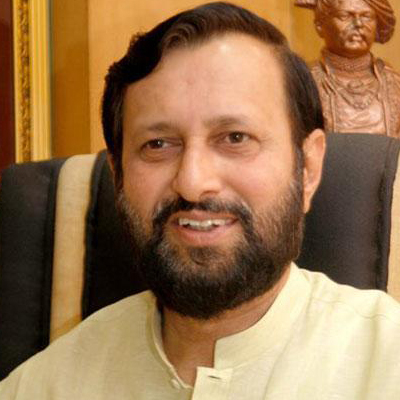
    I&B minister Prakash Javadekar stated in a briefing that 100 per cent foreign direct investment (FDI) will be allowed for the DTH sector. He also added that the decision was taken earlier by the ministry of commerce and industry but the sector could not avail the benefits due to existing MIB guidelines.

    Moreover, DTH licenses will be issued for 20 years and license fee will be collected quarterly. Further, the period of license may be renewed by 10 years at a time. The cabinet has also approved the sharing of infrastructure between DTH operators. Distributors of TV channels will be permitted to share the common hardware for their subscriber management system (SMS) and conditional access system (CAS) applications. Javadekar said that the decision has been taken to create a level playing field.

    The other salient features of the decision are:

    DTH operators shall be permitted to operate to a maximum of five per cent of their total channel carrying capacity as permitted platform channels. A one-time non-refundable registration fee of Rs 10,000 per platform service channel shall be charged from a DTH operator.

    The cap of 49 per cent FDl in the existing DTH guidelines will be aligned with the extant government (DPIIT's) policy on FDl as amended from time to time. The decision will come into effect as per revised DTH guidelines issued by the ministry of information and broadcasting.

    "The proposed reduction is intended to align the license fee regime applicable to telecom sector and will be prospectively applied. The difference may also enable DTH service providers to invest for more coverage leading to increased operations and higher growth and thereby enhanced and regular payment of license fee by them. Registration fee for platform services is likely to bring a revenue of approximately Rs 12 lakh. Sharing of infrastructure by the DTH operators may bring in more efficient use of scarce satellite resources and reduce the costs borne by the consumers. Adoption of the extant FDI policy will bring in more foreign investment into the country," the government said in a press statement. 

    The authority also added that the DTH sector is a highly employment intensive sector that operates pan-India. It directly employs DTH operators as well as those in the call centres, besides indirectly employing a sizeable number of installers at the grass-root level. The amended guidelines, with longer license period and clarity on renewals, relaxed FDI limits, etc will ensure a fair degree of stability and new investments in the DTH sector along with employment opportunities.

  • TRAI publishes consultation paper on platform service of DPOs

    TRAI publishes consultation paper on platform service of DPOs

    KOLKATA: Along with re-transmitting TV channels, the distribution platform operators (DPOs) provide certain programming services which are specific to their platforms. While the Telecom Regulatory Authority of India (TRAI) has been working around the regulatory framework for those platform services for some time now, the authority has again issued a consultation paper after the ministry of information and broadcasting (MIB) sent back references on earlier recommendations.

    MIB has referred back TRAI's recommendations on the framework published on 19 November 2014, and 13 November 2019 in its letter dated 23 November. The first set of recommendations have been accepted, except recommendation no.8 after consideration by inter-ministerial committee (IMC). However, certain addendums have been approved with modification.

    MIB had mentioned that some of the recommendations made by TRAI in 2019 regarding platform services (PS) offered by DTH operators, could be adopted with respect to MSOs/LCOs as well to have uniformity of guidelines in both segments. TRAI had agreed to the view.

    “Any person/ entity desirous of providing PS, or is already providing such services, must be incorporated as a company under the Indian Companies Act, 2013 and the rules framed thereunder,” TRAI had recommended earlier but that has not been accepted by IMC in the case of MSOs/LCOs.

    The committee is of the view that most of the MSOs/LCOs operated in small areas are either proprietorship or partnership firms which are not registered as companies. Making it obligatory for  MSOs/LCOs to convert into companies may not be in line with the promotion of ease of doing business. The IMC decided that anybody registered as a DPO, either with MIB or with post office, shall be eligible to carry PS channels.

    “In case MIB considers that there is no necessity to register as company for MSOs desirous to register their platform service, it should satisfy itself regarding the transparency of ownership and assurance of content of such platform services at the time of registration. MIB may ensure that registration of platform service channel may be made in such a way that the individuals provide full disclosure,” TRAI stated.

    Earlier, the regulatory body had recommended that a maximum number of five PS channels may be offered by the cable operators in non-DAS areas. In DAS areas and for all other platforms, a maximum of 15 PS channels may be offered by the DPOs.

    “With the completion of digitisation process, there is no distinction between DAS and non-DAS area. Further, it is noted while it is necessary to restrict capacity of PS channels carried by DPOs as recommended by TRAI, it is not in the interest of the evolving and dynamic market like cable TV to restrict the number of PS channels. Regulation may only intervene to the point of upholding customer interests, ethical business practices, ease of doing business and safeguard against violation of programming code and advertisement code. Taking note of this, it is recommended that the MSOs may be permitted to operate to a maximum of five per cent and LCOs to a maximum of one per cent, of the total permitted satellite channel being carried by them as permitted PS channels without any upper limit,” MIB said.

    The TRAI is of the view that the liberal regulatory framework of PS should not encourage the bypassing of the traditional broadcast routes. It further stated that it was not desirable to separately specify the limit on the number of PS channels that may be offered by the MSOs and LCOs. This may be left to the mutual arrangement among MSOs and LCOs. An MSO may remain responsible for all the platform service channels being offered on its platform.

  • MIB cautions TV channels on ‘misleading’ online gaming ads

    MIB cautions TV channels on ‘misleading’ online gaming ads

    KOLKATA: Amid concerns over misleading advertisements on online gaming and fantasy sports, the ministry of information and broadcasting (MIB) has issued advisory to TV channels to follow guidelines issued by the Advertising Standards Council of India (ASCI) on 24 November.

    “All broadcasters are advised that the guidelines issued by ASCI are complied with and advertisements broadcast on television adhere to the guidelines of the ASCI. It may also be ensured that advertisements do not promote any activity which is prohibited by statute or law,” MIB stated.

    A large number of commercials on online gaming, fantasy sports etc have been appearing on television, MIB noted in the advisory. But those ads appear to be misleading, do not correctly convey to the consumers the financial and other risks associated thereof.

    Hence, MIB, along with the ministry of consumer affairs and the ministry of electronics and information technology, convened a stakeholders consultative meeting on 11 November with ASCI, News Broadcasters Association, Indian Broadcasting Foundation, All India Gaming Federation, Federation of Indian Fantasy Sports and the Online Rummy Federation.

    After discussions, it was agreed that ASCI would issue appropriate guidelines for the benefit of the advertisers and broadcasters to ensure that the ads are transparent and protect consumers.

    According to the recent ASCI guidelines issued on the same, no gaming advertisement may depict any person under the age of 18 years engaged in playing an online game for real money winnings, or suggest that such persons can play these games.

  • SC asks Centre to create regulatory mechanism for electronic media

    SC asks Centre to create regulatory mechanism for electronic media

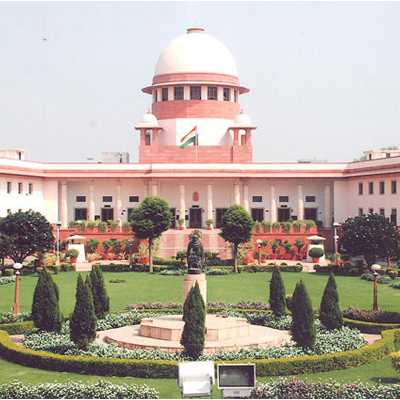
    New Delhi: Supreme Court asked the Centre to file a fresh affidavit dealing with mechanism to regulate electronic media under the Cable TV Network Act while hearing the pleas filed by Jamiat Ulama-I-Hind and others alleging that a section of the media was spreading communal hatred over Tablighi Jamaat congregation during the onset of pandemic. It also expressed displeasure over the Union government’s affidavit in the same case.

    A bench headed by CJI S A Bobde said that the Centre should consider setting up a regulatory mechanism to deal with such content on TV. It sought to know from the Centre about mechanisms available for it under the Cable TV Network Regulation Act.

    The apex court asked the government to create and apprise it of the mechanism. “We want to know as to what is the mechanism to deal with these contents on television. If there is no regulatory mechanism then you create one. Regulation cannot be left to organisation like NBSA.”

    Solicitor general Tushar Mehta on behalf of the Centre replied that it has ample powers to regulate contents of TV channels but takes a very cautious approach, as right to free speech as a fundamental right is available to media.

    The court then asked the solicitor general to create a mechanism for addressing grievances against fake news circulated by TV channels and media, if none such is available currently. “What is shown in TV channels is of great consequences for the country,” it said.

    The ministry of information and broadcasting, in its affidavit filed on 13 November, had informed the Supreme Court that the petition against communal reporting of Tablighi Jamaat incident was based on "vague assertions" and news reports published by certain fact check websites, and the same cannot be relied upon to contend that entire media was spreading communal disharmony.

    The plea before the top court sought directions to the Centre to stop dissemination of fake news and take strict action against the section of the media spreading bigotry and communal hatred in relation to the incident.

  • MIB directs digital media entities with FDI to share details within one month

    MIB directs digital media entities with FDI to share details within one month

    KOLKATA: A month ago, the department for the promotion of industry and internal trade (DPIIT) clarified certain aspects of 26 per cent foreign direct investment (FDI) in digital media. The ministry of information and broadcasting (MIB) has now directed the entities having foreign investment to share details of the company and its shareholding pattern along with the names and addresses of its directors and shareholders within one month.

    They have to share other details like names and address of promoters, significant beneficial owners, a confirmation with regard to compliance with pricing, documentation and reporting requirements under the FDI Policy.

    Entities which, at present, have an equity structure with FDI exceeding 26 per cent will have to inform MIB and take necessary steps for bringing down the foreign investment to 26 per cent by 15 October 2021 and seek approval of the ministry. To bring any fresh investment, the entities have to seek prior approval of the government.

    “Every entity has to comply with the requirements of citizenship of board of directors and of the chief executive officers (by whatever name called). The entities are required to obtain security clearance for all foreign personnel likely to be deployed for more than 60 days in a year by way of appointment, contract or consultancy or any other capacity for the functioning of the entity, prior to their deployment. For this purpose, the entities will apply to MIB at least 60 days in advance and the proposed foreign personnel shall be deployed by the entity only after prior approval of this ministry,” the ministry added in the notification.

    Earlier DPIIT clarified that the rule would apply to:- 

    ·        Entities uploading/ streaming news and current affairs on websites, apps, other platforms;

    ·        News agencies which supply news to digital media entities and/or news aggregators;

    ·        News aggregators which, using software / web applications, aggregate content from various sources in one location.

  • Online content and news finally comes under MIB’s jurisdiction

    Online content and news finally comes under MIB’s jurisdiction

    KOLKATA: The meteoric rise of digital media has put high focus on how online content will be regulated. Until now there were no particular guidelines to regulate the exhibition of online content, even though talks have been going on for a long time. Now, the government has brought online news platforms and content providers under the ambit of the ministry of information & broadcasting (MIB).

    The latest gazette notification issued by the Prakash Javadekar-headed ministry stated that films and audio-visual programmes made available by online content providers, as well as news and current affairs content on online platforms will come under MIB’s purview.

    Earlier this year, MIB secretary Amit Khare said at FICCI e-Frames that the ministry is proposing to take over jurisdiction on online content regulation from the ministry of electronics & information technology.

    “OTT being a digital platform will fall under the purview of the ministry of IT. We are proposing a decision that content should fall under purview of I&B. Convergence of ministries is extremely necessary,” Khare had remarked.

    Amid intense pressure from the government, Internet and Mobile Association of India( IAMAI) also tried to push a self-regulatory model for online content curators. About 15 OTT players operating in the country came together to sign a code, but this was later disapproved by MIB. The ministry asked IAMAI to look at other models.

  • MIB amends HITs  guidelines focusing on infrastructure sharing

    MIB amends HITs guidelines focusing on infrastructure sharing

    KOLKATA: The ministry of Information & broadcasting (MIB) has amended the policy guidelines for Headend in the Sky (HITS) operators. According to the newly added guidelines, sharing of transport stream between HITS operators and MSOs will be permitted but on certain conditions.

    HITS is a digital distribution platform and provides subscribers with a cheaper  alternative to digital cable TV   (operational expenses of managing multiple head‐ends on the ground are very high)  and DTH.

    As per the new guidelines, a HITS operator willing to share its transport stream with an MSO, should ensure that MSO has a valid written interconnection agreement with the concerned broadcasters for distribution of pay TV channels.

    The ministry has added two new paragraphs to the existing guidelines. As per the MIB the directive, wherever technically feasible, the HITS operator should share the platform infrastructure on a voluntary basis for distribution of TV channels provided that the signals of the HITS provider are distributed to subscribers through cable operator only and the encryption of signals, addressability and liabilities are not compromised.

     For sharing of infrastructure by a HITS operator with an MSO, the operator will be allowed sharing only on Indian controlled satellites. In addition to that, written permission from the department of space (DOS) would be required in this regard. Sharing of  satellite resources and uplinking infrastructure will be allowed with the written permission of MIB and WPC and NOCC, DoT.

    The adherence and compliance with all the provisions of the rules and guidelines issued by MIB and NOCC and WPC, DoT for grant of licence to the HITS operator will be the responsibility of both, the existing operator and the new applicant proposing to share the infrastructure.

    The regulator further added that sharing parties may use common hardware for CAS and SMS. But details of such an arrangement should be intimated to MIB and broadcasters 30 days in advance. However, the respective HITS operator, MSO or cable operator will be accountable for the integrity and security of CAS and SMS data pertaining to the respective operator.

    To avoid any conflict in payment, each operator sharing the stream should be individually responsible for setting up the system and processes. This move will ensure that the broadcasters can exercise right for disconnection in case of default of payment or due to any other reason in terms of interconnection agreements between the broadcaster and the operator as well as the relevant regulations in place.

    “Each operator in the sharing environment should undertake to ensure the encryption of signals and addressability to all the subscribers in all circumstances and provide requisite access for audit or for authorized officers of government wherever demanded,” MIB stated.

  • Bombay HC tells Mumbai police not to harass Hansa employees

    Bombay HC tells Mumbai police not to harass Hansa employees

    NEW DELHI: Bombay high court told Mumbai police not to harass Hansa Group’s employees by calling them every day to the crime branch. This was in response to a plea moved by the research agency citing harassment faced by its staff allegedly on account of their reluctance to give false statements against Republic TV in the ongoing TRP scam case.

    Media reports suggest that the bench of justices SS Shinde and MS Karnik have issued notices in the matter and granted the respondents – namely Mumbai police commissioner Parambir Singh and two other officers – liberty to file their reply. The court has also recorded a statement made on behalf of the police that Hansa's employees will only be called in twice a week till the next date of hearing.

    The court will examine the submissions from both sides and added, "…in the interregnum, you cannot call them (Hansa Research) every day. They are complainants, not the accused."

    Hansa Research in its plea alleged that the crime branch officials were pressuring its employees to “retract” a report, based on which Republic TV had claimed it was not among channels named in the TRP scam case. They were repeatedly called to the crime branch and made to wait for hours on end from October 12 onwards. The petition named assistant police inspector (Crime Branch) Sachin Vaze, Mumbai police commissioner Parambir Singh, assistant CP and chief investigating officer Shashank Sandbhor, Maharashtra government and the CBI as respondents.

    Read more news on Hansa Research

    "This is a unique situation where the first informant in the crime is being harassed by the investigating agency and treated like an accused only for a false statement …petitioners are being used by police and media to attack each other," the plea said.

    The petitioners stated that they told crime branch officers repeatedly that they could not confirm or deny the report since they were not aware what the ‘Hansa report’ cited by Republic TV was, as the channel had not sought their permission or informed them about using the report, and only parts of the report were telecast. They said that they will have to see the entire document to ascertain its veracity.

    On 6 October, Hansa Research Group lodged an FIR against its employee Vishal Bhandari after he was found allegedly accepting payments illegally to make certain households watch specific TV channels to fudge TRP. Several arrests have been made in the case.

  • TRP Scam: Hansa Research moves Bombay High Court, claims harassment from Mumbai crime branch officials

    TRP Scam: Hansa Research moves Bombay High Court, claims harassment from Mumbai crime branch officials

    New Delhi: Hansa Research Group has moved the Bombay HC, alleging that Mumbai Police’s crime branch officers probing the case are pressuring its employees to “retract” a report, based on which Republic TV had claimed it was not among channels named in the TRP Scam case. It has urged the court to transfer the probe to CBI or another state agency, accusing the Crime Branch of being “biased”.

    The media report said that the group has filed a petition and the four petitioners – Hansa Research, its director Narsimhan K Swamy, CEO Praveen Nijhara and deputy GM Nitin Deokar – contended that since October 12, several employees of the company have been repeatedly called to the crime branch office and were pressured to make a “false statement” disowning the report telecast on Republic TV on October 10 – referred to as the “Hansa report”.

    They mention that they are caught in the crossfire in a “battle-like situation between Mumbai Police and certain sections from media for the last few months…. It is evident that the petitioners are being used by police and certain section from media as means to attack each other and petitioners are suffering from collateral damage in this.”

    The petition further stated: “Harassment caused to the petitioners by respondent no. 1 (Assistant Inspector Sachin Vaze) is only with a view to extract a statement, albeit false, from them that the…purported Hansa report shown on Republic TV since October 10 is not that of the petitioner no. 1 but a fake one.”

    Read more news on Hansa Research

    The petitioners stated that they told crime branch officers repeatedly that they could not confirm or deny the report since they were not aware what the ‘Hansa Report’ cited by Republic TV was, as the channel had not sought their permission or informed them about using the report, and only parts of the report were telecast. They said that they will have to see the entire document to ascertain its veracity.

    The petition names assistant police inspector (Crime Branch) Sachin Vaze, Mumbai Police commissioner Parambir Singh, assistant CP and chief investigating officer Shashank Sandbhor, Maharashtra government and the CBI as respondents.

    The petition stated that on October 26, four directors of the company and one vice-president (finance) were present at the crime branch office. The petitioners claimed that while the crime branch officers again told the petitioners to deny ‘Hansa report’ as fake, they also disallowed their lawyer to enter the premises. They were then informed that they were being arrested and their phones were seized, the petition further stated.

    The petitioners alleged that since October 12, when Nijhara and Deokar first went to the crime branch office, their employees have been “kept detained there for over 200 man hours for no justifiable reason”. The only objective of the crime branch, the petition alleged, is to “keep them detained and pressurise and frustrate them so that they make a false statement according to the desire of respondent no 1 (Vaze) for reasons best known to him.”

    The petition is likely to be heard by the court later this week.

    Earlier, the group moved the city civil court seeking an order restraining Republic TV from citing the report as ‘Hansa Report’ since they were not informed by the channel. The city civil court, however, refused to grant the injunction.

    On 6 October, Hansa Research Group lodged an FIR against its employee Vishal Bhandari after he was found allegedly accepting payments illegally to make certain households watch specific TV channels, allegedly to fudge TV TRP ratings. Several arrests have been made in the case. 

  • TV witnesses highest ad volumes since 2015

    TV witnesses highest ad volumes since 2015

    MUMBAI: Week 43 of Broadcast Audience Research Council of India (BARC) data has witnessed the highest ever ad volumes on television since week 16 in 2015.

    It also highlighted that 38,705,978 million seconds is the highest ever ad volume since week 16 (2015) on television in week 43.

    According to BARC, the festive season and big ticket properties have led to this growth. It further mentioned that ad volumes are also returning to normal (compared to week 43 2018):

    *Ad Volume in Million secs

    The report states that growth in week 43 is over second highest week: 2.1 per cent. Whereas the growth in week 43 is over third highest week: 5.7 per cent.

    In week 43 of BARC India rating, the top ten advertisers are Hindustan Unilever, Reckitt Benkiser, ITC, Godrej Consumer Products, Wipro, Ponds India, Colgate Palmolive India, Amazon Online India, Cadburys India, and Brooke Bond Lipton India.