Category: Regulators

  • MIB to initiate online registration process for LCOs — Economic Times report

    MIB to initiate online registration process for LCOs — Economic Times report

    MUMBAI: Is cable TV about to get even more organised and given the respect that is due to it? 

    If a report appearing in The Economic Times on on 16 January  is to be believed it looks like it is. The newspaper reported that the ministry of information & broadcasting (MIB) is set to launch a centralised online registration system for local cable operators (LCOs), extending registration validity from one year to five. This initiative aims to enhance the ease of business in the cable TV sector.

    Sources indicated to The Economic Times  that the MIB plans to amend the Cable Television Networks (CTN) Rules, 1994 and the regulations act  making registration through the Broadcast Seva portal mandatory for LCOs. This is something that every broadcaster has to do. 

     Once implemented, the MIB will serve as the primary registering authority for LCOs, replacing the current requirement to register at local head post offices. As of January 2022, there were 81,706 LCOs operating nationwide.

    A government official, speaking on condition of anonymity to The Economic Times  noted, “The ministry is likely to notify the new online registration system this week. It has been a long-standing demand of the industry.”

    The current offline registration process hinders the MIB from maintaining a centralised database, limiting its ability to address violations effectively. LCOs currently pay a one-time processing fee of Rs 500 for registration or renewal.

    Under Rule 5 of the CTN Rules, LCOs are responsible for providing last-mile connectivity by retransmitting signals from multi-system operators (MSOs) to subscribers through their own infrastructure. 

    The All India Digital Cable Federation (AIDCF), which represents national MSOs, informed the parliamentary committee on communications & information technology that around 300,000 employees have lost their jobs over the past four years, with another 300,000 at risk, attributed to a significant decline in the cable TV subscriber base.

    According to a FICCI-EY report, the number of cable TV subscribers has dropped from 72 million in 2020 to 62 million in 2023. Yhe latest report which comes out later in 2025 is likely to reveal that this number has dropped by an additional five million in the least. 

    Traditional linear pay TV has been under tremendous pressure with the arrival of streaming services, cheap data plans being provided by telecom players, ISPs, MSOs and even the LCOs,  and the flooding of cheap connected TV sets in the country. India is also a mobile first country where a  majority  of the youth is consuming content on their handsets. 

    Recognising this, and to acquire customers quickly, global streaming service have been offering their streaming services at very low  subscription rates to Indian customers. There has been an explosion in the amount  of consumption of video on YouTube too which in many cases has become the secondary entertainment medium, after DD FreeDish, the free direct to home service provided by pubcaster Doordarshan. 

    Additionally, many of the second generation family members of the local cable TV operators have simply not followed in their fathers profession and have chosen other fields or they have transitioned to providing broadband internet service that has higher  average revenue per customer and hence is more profitable. Video delivery has become a secondary business which is being continued as it is without any goal to expand individual cable TV networks. 

  • TRAI issues recommendations for ground-based broadcasting

    TRAI issues recommendations for ground-based broadcasting

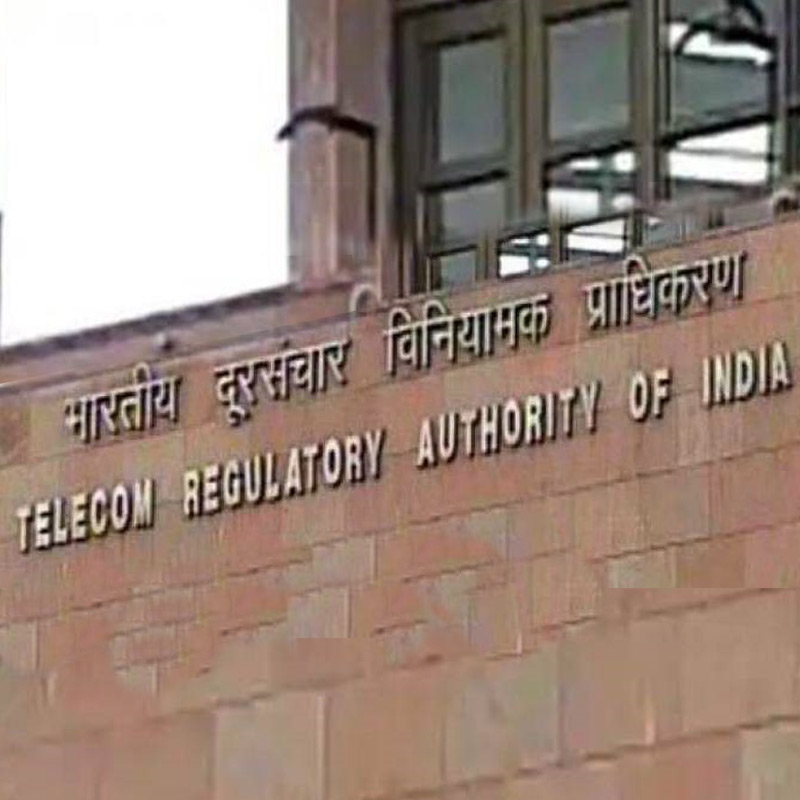
    MUMBAI: India has far been a cable and satellite TV country, apart from the single government-owned pubcaster Doordarshan which is the sole terrestrial network. That could likely change if one goes by the recommendations which the Telecom Regulatory Authority of India (TRAI) has come up with for ground based broadcasting (GBB). The recommendation are aimed at establishing a regulatory framework for GBBs in India. They focus on defining operational parameters and facilitating the use of terrestrial communication mediums by broadcasters.

    The key highlights of the TRAI recommendations are:

    * Definitions: The authority has clarified key terms such as “broadcaster,” “ground-based broadcasting,” and “terrestrial communication medium” to reflect updated practices in the industry, distinguishing between satellite-based and ground-based broadcasting.
    Regulatory Framework: TRAI recommends creating a framework for GBBs that aligns with existing guidelines for satellite broadcasters but excludes satellite-specific regulations. Ground-based broadcasters will not require authorisation from In-Space for frequency assignments but must secure other necessary clearances.
    * Delivery Mechanism: GBBs will provide channels to distribution platform operators (DPOs) using various terrestrial technologies, gaining the flexibility to utilise multiple systems as per their business strategies.
    * . Fee Structure: An annual authorisation fee of Rs seven  lakh per channel for GBBs has been proposed.
    *  Operational Areas: The service area for GBBs will be national, ensuring broad reach across the country.
    * Channel Migration Options: GBBs wishing to switch to or adopt satellite communication for their channels, and satellite broadcasters (SBBs) looking to embrace terrestrial methods, may do so with prior government approval while maintaining existing permission validity.
    * Compliance and Reporting: GBBs must report the primary language and sub-genre of their channels at the time of application, which will be displayed on the Broadcast Seva portal to assist in electronic programming guide (EPG) arrangement.
    * Examination of FAST Channels: TRAI recommends that the MIB assess the compliance of free ad-supported streaming television (FAST) channels with existing guidelines and develop policies as needed.
     

    These recommendations aim to enhance the operational landscape for broadcasters in India, promoting the effective use of emerging technologies while ensuring compliance with regulatory standards.
     

  • FTII gets new auditorium; I&B minister Ashwini Vaishnaw inaugurates it

    FTII gets new auditorium; I&B minister Ashwini Vaishnaw inaugurates it

    MUMBAI:  At last some attention is being paid to the venerable Film & Television Institute of India. A new auditorium  in its complex was ribbon cut by I&B, railways, and electronics and information technology minister Ashwini Vaishnaw on 11 January.

    This marked Vaishnaw’s first visit to the esteemed institution, which operates under the ministry of information and broadcasting. The minister was joined by students as he cut the ribbon and lit the ceremonial lamp, symbolising the beginning of a new chapter for FTII.

    In an open forum with students and faculty following the inauguration, Vaishnaw articulated his vision for FTII’s future, aiming to elevate the institute on the global stage.

    “Our legacy and heritage provide a firm foundation to embark on the journey of further excellence,” he stated, emphasising the importance of advancing the institution’s educational offerings.

    The minister addressed various questions from faculty and students, particularly regarding the proposed deemed university status for FTII. He also shared his vision for cinema education in India, focusing on strengthening career prospects for students and fostering greater industry linkages.

    Citing the success of Gati Shakti Vishvavidyalaya, which has rapidly become a key talent provider for global players, Vaishnaw underlined the importance of such industry partnerships.

    The newly inaugurated auditorium, with a seating capacity of 586, is equipped with state-of-the-art features, including a cinema projector, a PA system for stage performances, and a cutting-edge Dolby Atmos surround sound system.

    One of its most innovative features is a horizontally movable screen, measuring 50 feet in width and 20 feet in height. This screen can be easily adjusted with a remote control, transforming the auditorium into a full-fledged cinema theatre. This pioneering feature, which sets a new standard for flexibility in auditorium design, is believed to be the first of its kind, and FTII has already filed for a patent for the technology.

    During his visit, Vaishnaw also toured various facilities at the institute and interacted with faculty members.

    Reflecting on the creative economy, he remarked, “With the talent and ecosystem of FTII, we can become a bigger player in the global entertainment industry.”

  • SMPTE names Sally-Ann D’Amato as executive director

    SMPTE names Sally-Ann D’Amato as executive director

    MUMBAI: The Society of Motion Picture & Television Engineers (SMPTE), the home of media professionals, technologists, and engineers, today announced that Sally-Ann D’Amato has been named executive director by the SMPTE board of governors. D’Amato formally began this new role on 18 December 2024, after acting as interim executive director since October. 

    “I’m honoured to accept the role of executive director,” says D’Amato. “After more than two decades with the society, I’m humbled to be chosen as its leader. I will continue to work toward a society that is efficient, innovative, and united. My goal as executive director is to encourage more collaboration across sections to create more opportunities for members, strengthen the standards community, and reinforce the organization’s infrastructure. This will be enacted through a mission we’re calling ‘We Are All One SMPTE.’” 

    D’Amato joined the SMPTE family in 2001, working as an administrative assistant. She was promoted to executive assistant in 2003, and again promoted to director of operations in 2005. In 2016, she became director of events and governance liaison. In this role, she was responsible for planning and executing events and was also responsible for working with the board on issues of society governance and board activities. In October 2024, she became the interim executive director. 

    During her time at SMPTE, D’Amato helped enact the current bylaws and operations manuals. She also has been responsible for producing the media technology summit since 2005, and even produced a virtual version of the event during the Covid-19 pandemic. She also produced the SMPTE centennial celebration in 2016 and incorporates her creativity by writing songs for and performing in many of the events she works on.
     
    “Sally-Ann has been a tremendous asset to SMPTE, and will continue to be in this new role,” says SMPTE president Renard T. Jenkins. “She has proven her commitment, qualifications, and talent time and time again, and when asked to lead the society, she didn’t hesitate to step up. Her performance in the role of interim executive director has already had a positive impact on the society. I believe she will lead SMPTE to a brighter future, and I look forward to helping her do just that.”

  • India’s digital shield: New rules to safeguard your online world

    India’s digital shield: New rules to safeguard your online world

    MUMBAI: In the digital universe, where every swipe and click creates a footprint, who’s watching over your safety?

    There’s no “digital police” patrolling the internet highways, and yet, the need for a saviour has never been greater.

    Enter India’s Draft Digital Personal Data Protection Rules, 2025—a bold, pioneering move to protect your online identity.

    With a sharp focus on safeguarding personal data and fostering trust, these rules operationalise the Digital Personal Data Protection Act, 2023 (DPDP Act). Crafted meticulously, the framework aims to balance innovation with privacy, creating a secure environment for individuals and businesses alike in an increasingly digital economy.

    Picture a world where your data is your own, guarded against misuse, while businesses thrive in a regulated, transparent ecosystem. That’s the vision India has laid out, setting a global benchmark for digital safety and governance.

    Stay tuned as we delve into the intricacies of this landmark regulation and explore how it could redefine your experience in the digital realm.

    The draft rules place citizens at the core of the data protection framework. They empower individuals with rights such as informed consent, data erasure, and appointing digital nominees. Mechanisms are also in place to address grievances efficiently. Special provisions protect children’s online safety, granting parents and guardians more control.

    “Citizens can manage their data seamlessly while businesses continue to thrive under a balanced framework,” states the document.

    India’s framework seeks to balance innovation and regulation, creating a flexible model that is less restrictive compared to global counterparts. It minimises compliance burdens on small businesses and startups, ensuring smooth transition periods for organisations of all sizes. Stakeholders have praised this unique approach as a template for global data governance.

    Emphasising a “digital by design” philosophy, the rules incorporate advanced grievance redressal mechanisms and fully digital workflows. The Data Protection Board will function as a digital office, handling complaints and adjudications without requiring physical presence.

    This approach aims to enhance trust, transparency, and efficiency in data protection governance.

    The draft rules cater to startups and MSMEs with graded responsibilities while assigning significant obligations to larger data fiduciaries. The Data Protection Board ensures fairness by balancing penalties with the nature and gravity of defaults.

    The introduction of annual data protection impact assessments and audits for larger fiduciaries underscores the government’s focus on accountability.

    The draft rules draw inspiration from global best practices and extensive stakeholder inputs. The Ministry of Electronics and Information Technology invites public feedback until February 18, 2025, via the MyGov platform.

    To enhance awareness, a comprehensive campaign will educate citizens about their rights and responsibilities, fostering a culture of data responsibility.

    These rules solidify India’s leadership in shaping equitable digital policies, ensuring innovation-driven and inclusive growth.

    Important Links

       Draft Digital Personal Data Protection Rules, 2025

       Feedback Submission Portal

       Digital Personal Data Protection Act, 2023

  • Sebi probe against Zeel, Chandra & Goenka to continue; fresh show cause notice to be issued

    Sebi probe against Zeel, Chandra & Goenka to continue; fresh show cause notice to be issued

    MUMBAI: The regulatory investigation against  the father-son duo of Subhash Chandra and Punit Goenka seems to be never ending.

    Securities watchdog the Securities Exchange Board of India (Sebi) on 2 January said that it will be filing a fresh show cause notice (SCN) against the two and will continue its investigation into listing guidelines violations by Chandra and Zee Entertainment Enterprises Ltd (Zeel). This was spelt out in the  adjudication order issued by adjudicating officer (AO) Amit Kapoor on 2 January 2025.  

    In the order Kapoor stated  “that the contents of the SCN dated 6 July 2022 issued by the AO will also be incorporated in the SCN to be issued in the instant matter.”

    Zeel and its promoters are under Sebi investigation for not following Listing Obligations & Disclosure Requirements (LODR) 2015. The regulator had issued a show cause notice against them on 6 July 2022. 

    Both Zeel and Punit Goenka had filed settlement claims to settle the adjudication proceedings. Sebi normally allows entities against whom investigations have been initiated to apply for settlement by paying a certain fee or complying with the rules that the watchdog lays out. 

    Their application was rejected by a panel of whole time Sebi members who also instructed it to continue with the investigation.

    Kapoor’s  adjudication order  states that once the investigation into the instant matter is complete, the competent authority should proceed against Zeel, Chandra, and Goenka under section 11B of the Sebi Act 1992. (Section 11B gives Sebi the powers to levy penalties. Penalties can vary from Rs 1 lakh to Rs 1 crore or to Rs 25 crore or 10 years in prison or both depending under which section of the Sebi Act or Securities Contracts (Regulation) Act, 1956 they are being levied) 

    Kapoor’s order further states that the allegations contained in the SCN  of 6 July 2022 are to be subsumed with the findings of the further investigation carried out by Sebi in the instant matter. 

    “Accordingly, the contents of the SCN dated July 06, 2022 issued by the AO including the examination report and all the relied upon documents will be treated as integral part of the further investigation report by Sebi in the matter of Zeel. The contents of the SCN dated 6 July 2022 issued by  the AO to Zeel, Chandra and Goenka  will also be incorporated in the SCN to be issued in the instant matter. The instant AO proceedings would be dropped against the three, ” he further states in his order. 

  • I&B special secretary Neerja Sekhar promoted as DG of  National Productivity Council

    I&B special secretary Neerja Sekhar promoted as DG of National Productivity Council

    MUMBAI: Special secretary in the ministry of information and broadcasting (MIB) Neerja Sekhar has finally got the rank of secretary in the  Indian government. Excepting she has been moved to the National Productivity Council (NPC) as director general with the secretary rank, according to whispersinthecorridors.

    The NPC falls under the department for promotion of industry and internal trade which in turn comes under the ministry of commerce.

    Sekhar, from the 1993 IAS batch of the Haryana cadre, had been appointed additional secretary at the MIB in November 2020, replacing Atul Kumar Tiwari.

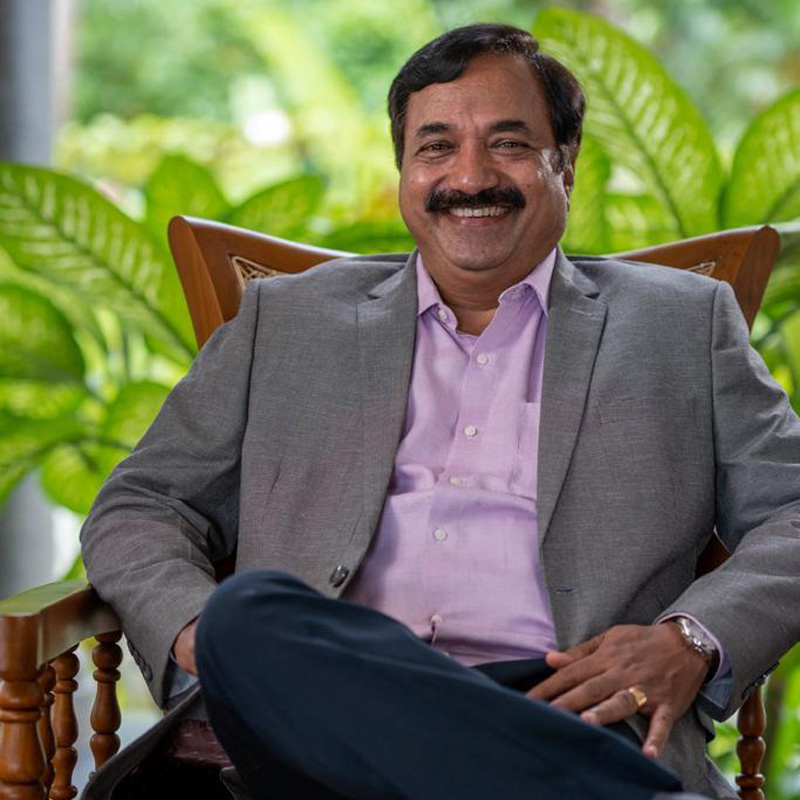
    The current MIB secretary is Sanjay Jaju  (from the 1992 IAS batch) who took over the role on 5 February 2024. 

  • Unisys Infosolutions gets favorable Delhi high court injunction order against pirating websites

    Unisys Infosolutions gets favorable Delhi high court injunction order against pirating websites

    the domains.

    MUMBAI: Pirating websites in India beware. December has brought some bad news for you. Earlier this month, the Delhi High granted a permanent injunction order against 71 web sites which were pirating media tech firm Unisys Infosolutions content online.

    Unisys owns the copyright to a catalogue of 60 plus regional films which it exploits on YouTube under the channel  Saga Hits, on its own OTT  platform Kableone and other third-party platforms. The films have either been produced by it or in collaboration with other producers or acquired and include titles like Zindagi Zindabaad, Cheta Singh, Snowman, Kulche Chole, Television, Posti, Maa, Warning, Ikko Mikke, Happy Go Lucky, Manje Bistr, The Black Prince and Zindagi Kitni Haseen Hay.

    Sites such as desicinemas.tv, desicinemas.pk, tellygossips.tv, movies23.pk,  among many others were illegally show casing Unisys’ catalogue  of films and making money either off advertising online or through subscription fees. Hence, it filed a suit against them, including Google, ISPs, the department of telecommunications (DoT) and  ministry of electronics and information technology (Meity) as defendants.

    The Delhi high court, after listening to Unisys’ lawyers arguments, passed an injunction against the sites from showing the films and because the owners of the sites are not locate-able, it ordered Google to stop indexing them on its search engine. Additionally, it ordered the registrars and internet service providers to block the rogue domain names and make them inaccessible from Indian shores.  Finally, it ordered DoT and Meity to ensure that its orders for blockage are followed to the T by issuing a government notification in this regard.

    The court also issued a Joh Doe order under which any other future infringing or rogue sites would be treated similarly. Additionally, the court ordered Unisys to continue to inform the court about the progress of the blockage of the  current rogue web sites. mentioned in the petition

    The counsel for Google who was present in the court accepted the government’s notice and order and agreed to go ahead  with the government’s directions.

    However, a media  observer stated that while the order is a landmark one, Unisys will have to be on the alert as the rogue websites will easily move the content to another domain or URL.

    “The battle to overcome piracy is not over until those behind the piracy are put behind bars and the servers taken down,” she said. “This requires multinational coordination between legal authorities in neighbouring countries like Pakistan. Some of this is already happening in Europe where coalitions against piracy in various countries  are working together with the police  to book online pirates, apart from taking blockage measures.”

    Is anyone out there listening?

  • Zeel’s audit firm Deloitte Haskins fined Rs 2 crore for gross negligence

    Zeel’s audit firm Deloitte Haskins fined Rs 2 crore for gross negligence

    MUMBAI: Audit firm Deliotte Haskins & Sells  (DHS) has got a rap on its  knuckles from the audit and accounting watchdog , the  National Financial Reporting Authority (NFRA). It said that the former failed to meet relevant requirements of the standards of audit (SAs) and violated the Companies Act in respect of certain significant related party transactions concerning Zee Entertainment Enterprises Ltd  (Zeel) and promoter companies of Essel group chairman Subhash Chandra. 

    DHS, Zeel’s auditor then, did not disclose these doubtful  transactions  in Zeel’s financial statements. Hence NFRA has imposed a fine of Rs 2 crore on DHS and it also penalised two CAs employed by the audit firm Rs 10  lakh and five lakh each. It even banned them from practising as CAs for the next five years.

    The NFRA order says that in September 2018, the Zeel chairman  who is also the promoter of Essel group, issued a letter to Yes Bank, committing a Rs 200 crore fixed deposit of Zeel as a guarantee for the loans given by Yes Bank to a promoter group company Essel Green Mobility Ltd. 

    “The bank appropriated the fixed deposit (FD) in July 2019, towards settlement of loan amounts due from seven promoter group companies. Neither the creation and maintenance of FD nor its re appropriation by the Bank was with the approval of the board  or shareholders of the company. The statutory auditors failed to identify and report this misrepresentation.”

    “Our examination showed that the auditors were grossly negligent, failed to apply professional skepticism and due diligence, did not adequately challenge the management’s assertions, and failed to evaluate reporting of suspected fraud as required under Section 143(12) of the Act, which was evident from unauthorised guarantees/securities, premature closure of the FD by the Bank and unauthorised use of Zeel’s funds for settling the loan of  the promoter group companies, with the knowledge of the chairman of the group and management of Zeel.”
     

  • TRAI website gets a facelift

    TRAI website gets a facelift

    MUMBAI: Industry watchdog the Telecom Regulatory Authority of India (TRAI) has got a new look online. It unveiled an upgraded website to broaden its reach to connect with a wider audience on 23 December 2024. 

    In recognition of the growing importance of social media, new sharing features facilitate the dissemination of regulatory information to all stakeholders. The website offers comprehensive information on telecom and broadcasting regulations, policies, laws, statistics and trends in India. These resources are easily accessible to the public, stakeholders, researchers, and international audiences.

    The new website includes the following additional features:

    • Introduction of a new dashboard for telecom & broadcasting sector.
    • Provision of data download for research.
    * A grid view feature, allowing users to view data in a new and interactive format.
    • In addition to sharing via email, users can now also share documents directly through major social media platforms, links for visualisation on Instagram, Youtube, Linkedin, Whatsapp, Facebook, X etc.
    • Online registration for subscription to latest TRAI  releases and updates.
    • Brief profile of the authority.
    • New website is compatible with iOS, Android & various platforms.
    • A blog with a facility for registered users to comment.
    • Provision to publish information about upcoming events.
    • Online registration for participation in open house discussions.
    • Compliance to accessibility features.
    • Tenders and notices
    • Concise and compiled regulations at a single place with amendments mentioned in foot notes.

    The new website, says a TRAI release,  will be hosted in the National Informatics Centre  (NIC) Cloud. The old website will run concurrently for three months after the going live of the new website. 

    A chatbot Tara (Telecom Authority Responsive Advisor) has been introduced to facilitate interactive search.

    Says an industry executive unwilling to be named: “It’s good that TRAI has renewed the look of its website online.  Hopefully, it will also start looking at industry with new eyes and listen to what the pay TV, OTT streamers, TV channels and distribution platform operators need to have healthy industry in which everyone benefits – including the government and the lay consumer.”