Category: Regulators

  • TRAI seeks suggestions to make satellite broadband services affordable

    TRAI seeks suggestions to make satellite broadband services affordable

    New Delhi: The cost of satellite broadband services continue to remain on the steeper end in the country, posing a major challenge to its wide adoption by the end users. The issue has been taken up by India’s telecom regulator, which is now looking for ways to drive down the rates of satellite broadband.

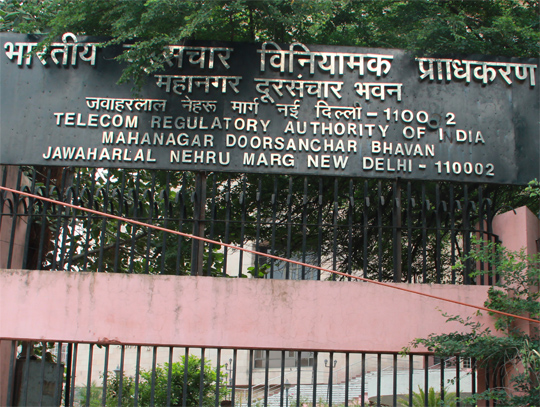
    The Telecom Regulatory Authority of India (TRAI) has floated a discussion paper and sought views to make satellite communications more affordable in the country. The decision comes at a time when global communication companies, including Bharti Group and UK consortium led OneWeb and Elon Musk’s SpaceX Technologies have expressed their interest in entering India’s satellite internet space.

    “Satellite communication can provide coverage to the remotest and inaccessible areas of a geographically widespread country like India. With the evolution of satellite communication technologies, new types of applications based on low-bit-rate applications are emerging. Such applications require low cost, low power and small size terminals that can effectively perform the task of signal transfer with minimum loss,” TRAI stated in its paper.

    The telecom regulator emphasiaed upon creating an enabling environment to attract investment into the satellite communication space. It has also sought feedback on whether licensed national long distance (NLD) operators can be allowed to offer satellite services to connect the new wave of Internet of things (IoT) devices, and if only some frequency bands should be available for such satellite-based IoT connectivity.

    The written comments have been invited from the stakeholders by 9 April and counter comments by 23 April.

    The telecom regulator also noted that there are long delays reported in procurement of satellite bandwidth through the current processes due to the involvement of multiple agencies for seeking various clearances and approvals. “To attract investment and new players in a sector, the most important characteristic is the ‘ease of doing business’,” stated TRAI, adding that there is need for a single window clearance for all kinds of satellite-based processes.

    Among other issues, it has also sought views on whether satellite service licensees should be allowed to obtain bandwidth from foreign satellites for providing IoT connectivity. Also, whether any specific or all bands should be permitted for provisioning satellite-based IoT connectivity. It also invited suggestions on whether a new licensing framework should be proposed for the provision of satellite-based connectivity for low-bit-rate applications or the existing licensing framework may be suitably amended to include the provisioning of such connectivity.

    “In spite of the fact that cost of launching a satellite in India is the lowest globally, yet the licensing formalities, technical criteria, lack of ‘Open Skies Policy’ are significant barriers for the growth of satellite services in the country. The satellite services need to be made affordable for wider acceptability by price sensitive Indian industry and end-users,” noted the telecom regulator.

    Last September, the then chairman of TRAI, R S Sharma, had also called for an urgent need to bring down the price of broadband services provided through satellites, asserting that its current high price could pose a challenge in its adoption in the country. 

    “There’s an urgent need to liberalise the satcom policy to boost satellite-based broadband penetration in rural, remote and hilly regions that remain largely unconnected by mobile and terrestrial communication networks, given the big global advances in satellite technologies,” Sharma had said, highlighting the need to align the satcom policy with emerging requirements of 5G and IoT.

  • New digital media rules to bring level playing field: Parliamentary panel

    New digital media rules to bring level playing field: Parliamentary panel

    KOLKATA: The parliamentary standing committee on IT has said that the new digital media rules under the IT Act will bring a level playing field for all media categories. However, the panel headed by Shashi Tharoor also mentioned that more initiatives are required, according to media reports.

    The parliamentary panel also asked the ministry of information and broadcasting (MIB) to launch an awareness campaign about its new rules for social media intermediaries, OTT and digital news platforms.

    While maintaining a robust oversight mechanism, the panel hoped that the ministry would implement the rules with due regard to the importance of promoting creativity and protecting freedom of expression.

    The government laid down new rules for social media platforms, digital media, OTT platforms on 25 February. In a gazette notification, it spoke of a three-tier oversight mechanism for online content.

    In light of this, a PIL has been moved before the Delhi high court challenging the new rules under the Information Technology Act to regulate internet intermediaries, over-the-top (OTT) platforms and digital news media. The petition has been filed by the Foundation of Independent Journalism which publishes The Wire. A similar plea by another petitioner was filed in the Kerala high court. The courts have issued notices to the Centre in this regard. 

  • Prakash Javadekar meets with Digital News Publishers Association

    Prakash Javadekar meets with Digital News Publishers Association

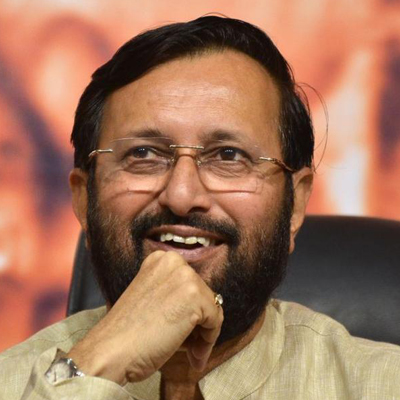
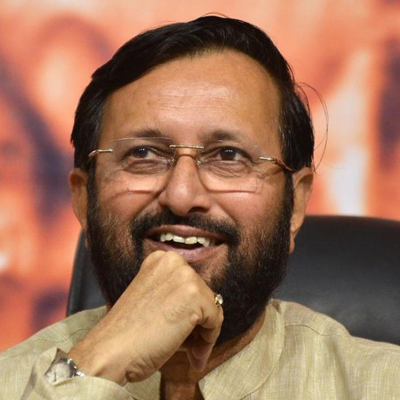
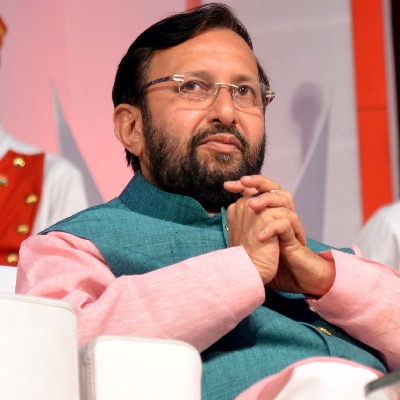
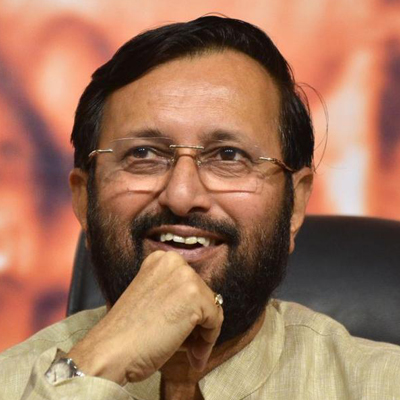
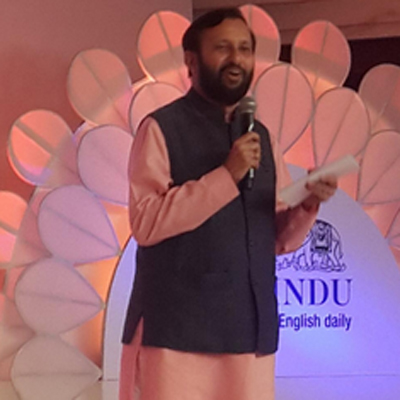
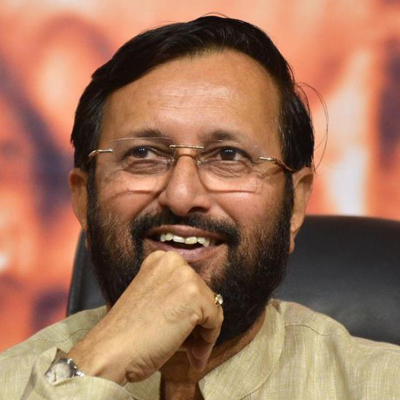
    KOLKATA: Information and broadcasting minister Prakash Javadekar on Thursday held a meeting with the Digital News Publishers Association (DNPA) to discuss new rules for digital media.

    “In a follow up to meeting with OTT platforms, held an interaction with Digital News Publishers Association today. Discussed new rules for digital media. They welcomed the new rules and offered few suggestions which I have noted (sic),” the minister tweeted.

    According to an official statement released post the interaction, Javadekar informed the association that the new rules placed certain responsibilities on digital news publishers. These include adherence to Code of Ethics such as the norms of journalistic conduct framed by the Press Council of India and the Programme Code under the Cable Television Network Act. Further, to redress grievances of citizens the rules have provided for a three-tier grievance redressal mechanism of which the first and second tier would be of the digital news publishers and self-regulatory bodies constituted by them. 

    Digital news publishers would also be required to furnish some basic information to the ministry of information and broadcasting in a simple form which is being finalised and periodically they would be required to place in public domain the grievance redressal undertaken by them, the statement added.

    Javadekar said that print media and TV channels have digital versions whose content is almost the same as that on the traditional platforms. However, there are contents which appear exclusively on the digital platform. Apart from this, there are several entities which are only on the digital platform. Accordingly, the rules seek to cover the news on digital media so as to bring them at par with the traditional media.

    The participants, while welcoming the new rules, stated that TV and news print media have been following the laid down norms of the Cable Television Network Act and the Press Council Act for a very long time. Moreover, for publishing the digital versions of their publications, the publishers do follow the existing norms of the traditional platforms. They felt that they should be treated differently than those news publishers who are only on the digital platform.

    Javadekar thanked the participants for expressing their views and stated that the government will take note of the same and continue with this consultative process for overall growth of the media industry.

  • Delhi HC issues notice to Centre on plea challenging new IT rules

    Delhi HC issues notice to Centre on plea challenging new IT rules

    KOLKATA: The Delhi high court on Tuesday issued notice to the central government in a plea challenging the new rules framed under Information Technology (guidelines for intermediaries and digital media ethics code) Rules 2021.

    A division bench headed by chief justice DN Patel was hearing the petition which has been filed by the Foundation of Independent Journalism (the non-profit company that publishes The Wire). It has sought a response from the ministry of electronics and information technology in the matter and given them time to submit the same.

    The counsel for the petitioners, senior lawyer Nitya Ramakrishnan, stated that the rules have put an additional regulatory burden on news media and current affairs.

    “They cannot place a whole regulatory burden under Section 69A on news and current affairs agencies. 69A only provides for issuing directions to intermediaries,” she argued as quoted in media reports.

    The petition argued that the new IT Rules issued on February 25, 2021, were “palpably illegal” in seeking to control and regulate digital news media when the parent statute nowhere provided for such a remit.

    “The IT Rules, 2021, expand the scope of the Act even further by providing for a Code of Ethics and a three-tier regulatory system to administer a loose-ranging Code of Ethics, that contains wide and vague terms as ‘half-truths’, ‘good taste’, ‘decency’,” the petition said.

    The plea also contended that the oversight mechanism and the inter-departmental committee set up under the new rules would have the power to recommend "draconian measures such as ordering the deletion, modification of content or blocking the same."

    The matter will be heard next on 16 April.

    Several journalists, lawyers and activists have decried the rules as an attempt to muzzle freedom of press by laying the ground for tightening executive control over digital media. The Editors Guild of India last week demanded the repeal of these rules.

    The government laid down new guidelines for social media platforms on 25 February, making a distinction between social media intermediaries and significant social media intermediaries. In a gazette notification, it also specified five million registered users in India as the threshold for significant social media intermediaries.

  • Broadcasters write to Bombay HC requesting timely verdict on NTO 2.0 case

    Broadcasters write to Bombay HC requesting timely verdict on NTO 2.0 case

    KOLKATA: Broadcasters have lodged an application before the Bombay high court requesting speedy pronouncement of verdict in the amended new tariff order (NTO 2.0) case.

    The petitioners have mentioned that detailed arguments on the case were heard in September-October 2020. Subsequently, the judgement was reserved via an order on 20 October. However, the revised tariff regime has not been implemented so far and TV broadcasting ecosystem has continued to operate under the NTO price regime implemented in 2019.

    “It is submitted that the judgement remains reserved and since the issues pending for adjudication before the honourable court are substantial, an early pronouncement of judgement will be in the best interest of all stakeholder,” the petition read.

    In this regard, the Telecom Regulatory Authority of India (TRAI) also wrote to Bombay high court in late February requesting urgent listing of the case, so that a verdict may be passed soon in the matter. An industry source close to the developments in the court said at that time: "With this filing of application before the Bombay high court, the newly appointed chairman of TRAI, PD Vaghela has made it clear that the authority seeks to implement NTO 2.0 as soon as possible. “

    TRAI’s decision to implement NTO 2.0 in the beginning of 2020 came as a shocker for the broadcasting industry. In an unprecedented move, all major broadcasters came together to challenge the new tariff regime in court. Following continuous hearings from the end of February to early March 2020, the judgment was reserved on 4 March, after which the lockdown was imposed. A praecipe dated 15 June was filed by TRAI for the verdict. Post that, the matter was heard throughout September- October. The parties in conflict have wrapped up their arguments and written submissions have also been filed.

    The authority has defended its decision saying the amendments will usher in better consumer offerings. On the other hand, the industry stated the over-interference of TRAI, especially in the area of pricing, is hurting the stability of the sector. TRAI released directives for immediate implementation of NTO 2.0 even during the pandemic, which was restrained by the Bombay high court.

  • Rules focus on self-classification, not censorship: Javadekar tells OTTs

    Rules focus on self-classification, not censorship: Javadekar tells OTTs

    KOLKATA: Minister of information and broadcasting Prakash Javadekar on Thursday held an interaction with representatives of various OTT platforms including from Disney+ Hotstar, Amazon Prime, Netflix, Jio, Zee5, Viacom18, Shemaroo, Mx Player, ALTBalaji.

    The Union minister mentioned that the government had engaged in several rounds of consultation with OTT players in the past and stressed the need for self-regulation.

    Javadekar stated that he had received representations from cinema and TV industries that while there were regulations for them, none existed for the video streaming industry. Thus, it was decided that the government would come out with a progressive institutional mechanism for OTT players and develop a level playing field with the idea of self-regulation. The minister appreciated that many OTT platforms had welcomed the rules.

    Informing the industry representatives about the provisions of the rules, the minister said it merely requires them to disclose information and that there is no requirement of registration of any kind with the ministry. He added that a form for this will be ready soon. Quelling fears over curtailment of creative freedom, he stated that the new digital media rules focus on self-classification of content instead of any form of censorship. Further, OTT platforms are expected to develop an effective grievance redressal mechanism.

    Previously, the Centre had proposed a three-tier mechanism for these platforms for content-related issues. The first tier would be officials appointed by these companies. As a second-tier, there would be a self-regulatory body that would address complaints. The third tier would be a government-appointed panel.

    Dispelling rumours, the minister clarified that in the self-regulatory body, no member will be appointed by the government, and that an inter-departmental committee will be formed to look into complaints that remain unresolved at the self-regulatory level.

    The industry representatives welcomed the rules and thanked the minister for addressing most of their concerns. Finally, the minister added that the ministry is open to any clarification or queries from the industry.

  • Draft National Broadcasting Policy ready for consultation

    Draft National Broadcasting Policy ready for consultation

    NEW DELHI/KOLKATA: A bid to showcase Brand India to the world, more FDI, push for indigenous manufacturing of consumer premises equipment, and self-regulation – these are key propositions of the draft National Broadcasting Policy (NBP), which the government has proposed for the growth of India’s broadcasting sector.

    Stakeholders and policymakers have long felt the need for a comprehensive broadcasting policy to update the existing provisions to meet the newer challenges. Last month, the ministry of information and broadcasting (MIB) had intimated that work on the new policy was in full swing. The draft has now been finalised and shared with Prasar Bharati CEO Shashi Shekhar Vempati and other scientific ministries for further consultations.

    Indiantelevision.com has accessed the draft and here are some of the key takeaways from it:

    Quality content, affordable and accessible to all

    The draft policy aims to incentivise the creation of high quality content which is accessible and affordable to the widest audience possible. This will be done by ramping up local and regional production of broadcast content. DD will be leveraged to promote content that preserves cultural diversity and Indian value system.

    The reach of public broadcaster Prasar Bharati will be maximised across the country. The policy also suggests a review and audit of ‘must provide’ and ‘must carry’ provisions in broadcasting rules and regulations, wherever applicable, to ensure availability of content everywhere. Community radio stations would also get a boost under the new draft policy. They will be able to source news and current affairs content exclusively from AIR to transmit in the local languages. The policy also makes key provisions to ensure that persons with disabilities have access to television programmes. The accessibility standards laid down by MIB will be implemented in this regard.

    It also envisages the setting up of a common independent body for prompt and effective settlement of public grievances for all broadcasting platforms.

    Adoption of state of the art technologies and digital switchover

    In line with the Digital India initiative, the draft policy lays down strategies for wider adoption of digital technologies for terrestrial platforms. This includes phased expansion of digital terrestrial TV (DTT), roll out of a digital radio policy and cutting down costs of digital radio receivers and DTT set top boxes to spur adoption for at least three years. The I&B ministry is also looking to finally open the DTT to the private sector. The policy also aims to achieve complete transition to broadband-ready cable infrastructure by enabling upgradation to fully digital infrastructure and infrastructure sharing among distribution platform operators.

    Pitch for Make in India

    The policy aims to indigenise the production of consumer premises equipment including the set-top boxes, which is heavily import dependent. This will be done by setting up a self-reliant local manufacturing ecosystem. Bureau of Indian Standards (BIS) and other agencies will be roped in to publish the quality benchmark. Measures will also be taken to rationalise the import tariffs and provide preference to domestically manufactured electronic products and mandate increasing deployment of indigenous equipment.

    Infrastructure status to broadcasting

    MIB is prioritising the policies for granting infrastructure status to mass-manufactured equipment and components of broadcasting distribution services. As a part of the initiative, the ministry will prescribe minimum eligibility requirements to bring in parity with other sectors like telecom. Last month, MIB additional secretary Neerja Shekhar had also sought the industry’s support in getting infrastructure status and called on industry bodies like CII to conduct "good periodic surveys and research" on media consumption patterns that would help the ministry in formulating policies.

    Greater FDI in the broadcasting sector

    In its effort to catalyse the growth of the booming broadcasting industry, MIB has been focusing on foreign direct investment (FDI) policies. To attract greater FDI in the sector, it has envisaged creating an investor toolkit explaining the broadcasting supply chain with relevant rules and regulations. It also envisages establishing a liaison cell within the ministry to work on foreign investment-related complexities.

    The ministry is also looking to ease the licensing and permissions regime. It will also review existing governance frameworks for both television and radio segments to ensure time-bound clearances. The policy also suggests review mechanisms for notice, disclosure, reporting of interconnection agreements between broadcasters and distribution platform operators. It will also push liberalisation in extant conditions for mergers and acquisition in the FM radio sector.

    Strengthen self-regulation

    The draft policy also highlighted that self-regulation is emerging as the preferred option for content governance globally and India would make efforts to strengthen it. The ministry is working to amend the old Cable TV Act and revisit content restrictions on live events on radio on the basis of consumer demand and national security considerations.  The policy will also provide statutory recognition to Programme Code and guidelines administered by the Broadcast Content Complaint Council, as well as News Broadcasting Standards Authority.

    Back in December, MIB joint secretary Vikram Sahay had allayed regulatory concerns from digital players by stating that it will not strangulate creative freedom and will be in touch with the industry to iron out a model that is acceptable to all parties. However, the Centre is trying "to ensure that our consumers are protected in all ways" from fake news and other unacceptable content.

    Review the current audience measurement system

    In view of the recent controversy around TV viewership measurement, the policy also plans to review the current system of ratings to improve credibility. It also suggests developing a tool kit on good data practices. It will also look at SoPs for responding to cyber-security incidents for DPOs and audience measurement agencies.

    Expand global footprint of Indian satellites

    Of all the private satellite TV channels, around 70 per cent channels are being uplinked from foreign satellites. MIB is prioritising the matter of migration of Indian broadcasters to Indian satellites in the draft policy. To make this a reality, the ministry will look at rationalising license conditions, incentivising the migration, taking note of the industry’s requirement for Indian satellites’ footprints.

    Taking the public broadcaster beyond Indian territory

    MIB is upbeat about Prasar Bharati’s international expansion with the launch of Doordarshan international channel, strengthening AIR’s external services division. Among other provisions, the ministry is highly focusing on content security and content protection, fostering competition to create the level playing field, catalysing skill upgradation and development to foster better quality content, adapt with new technologies, extending the scope for co-production, student-exchange with foreign countries.

  • NBP draft ready for consultation with Prasar Bharati CEO

    NBP draft ready for consultation with Prasar Bharati CEO

    KOLKATA: A fresh broadcasting policy in India, that’s up to speed on the dynamic industry developments, has been on the cards for a long time now. Last month, the ministry of information and broadcasting (MIB) intimated that work on the National Broadcast Policy (NBP) was in full swing. Now, the draft NBP is ready to be shared with Prasar Bharati CEO Shashi Shekhar Vempati for further consultation.

    The draft is also ready for consultation with scientific ministries like the department of telecommunication, ministry of electronics and information technology, ministry of science and technology on the lines of the utilisation of spectrum, emerging technologies, trends in the broadcasting sector, increasing outreach of TV and radio households, fall-back arrangement for broadcasting during emergencies like disasters and wars.

    According to the draft accessed by Indiantelevision.com, the policy is guided by the vision of a “functional, vibrant, resilient broadcasting sector in the country.”  To keep with the vision, it provides “specific goals, strategies and policy stipulations.” Broader goals as described in the draft include the universal reach of broadcasting, enabling environment for sectoral growth and level playing field, as well as enhanced global outreach.

    Back in December, MIB additional secretary Neerja Sekhar said that the ministry would soon come up with a draft for the much-discussed policy. “Though the consultations on the National Broadcasting Policy were held with the stakeholders and industry some time back, we have been putting together various parts… and (addressing) the emerging issues. I feel that we are getting pretty close to coming up with a draft version,” she had said.

    It was in 2019 that the MIB initiated talks with members of the Indian broadcasting and media industry about formulating a National Broadcast Policy. Although no timeframe was given, the ministry had said that the aim of the policy would be to address issues that are challenging the sector, with the aim of promoting more self-regulation.

    At present, the broadcast industry is regulated by the Cable TV Act, which many stakeholders consider outdated and inadequate to govern the newer challenges in this rapidly growing sector.

  • Old controversy, new chaos: The TRP scam and all that jazz

    Old controversy, new chaos: The TRP scam and all that jazz

    NEW DELHI: The broadcasting industry had already been reeling under the impact of the Covid2019 pandemic when the Mumbai police came down on it, hard. On 8 October 2020, Mumbai police commissioner Param Bir Singh addressed a press conference about its investigation into an alleged scam involving the television audience measurement system.

    The matter had come to light when ratings agency Hansa Services Pvt Ltd, a contractor of Broadcast Audience Research Council (BARC), filed a complaint with the authorities, alleging that some TV channels had been manipulating their television rating points (TRPs). This had led to faulty calculations for advertisers and a major loss of revenue for stakeholders.

    Three channels were named in the complaint, namely Fakt Marathi, Box Cinema and Republic TV. According to police, the channels had allegedly bribed people who had bar-o-meters installed in their households. The owners of Fakt Marathi and Box Cinema were subsequently arrested and the directors, promoters of Republic TV were summoned for further questioning. Some of them were thrown in the cooler later.

    Three months down the line, the case has sent the entire industry into a conundrum of sorts. BARC has suspended the TV ratings for news channels till January. As many as 15 people, including several influential persons in the industry, have faced arrests, the latest being BARC’s former chief executive officer Partho Dasgupta. The media veteran was instrumental in setting up the BARC television ratings in 2015.

    Early stirrings of trouble

    It is not the first time a TRP measuring agency has found itself in a tight spot. The earliest instance of the tussle between broadcasters and data measuring agencies dates back to 2001. It began when then CEO of Zee Telefilms, Sandeep Goyal, openly declared his lack of faith in top rating agencies – ORG Marg's INTAM and AC Nielsen's TAM Research. Goyal wrote a letter to ORG Marg CEO Titoo Ahluwalia Goyal calling for an immediate suspension of TAM/INTAM ratings.

    “Zee has reasons to believe the data by the agency is ‘seriously influenced’,” he alleged. This was when Star India’s shows Kyunki Saas Bhi Kabhi Bahu Thi and Kahaani Ghar Ghar Ki had been topping the TRP charts consistently for weeks.

    CNBC carried out its own investigation and released a complete list of peoplemeters’ information which was supposed to be ‘strictly confidential’. The same year in October, a merger was announced between TAM and INTAM and they decided to provide combined TV rating services. But the controversy did not die.

    Doordarshan director-general SY Quraishi wrote a column for a leading English daily, wherein he recalled how he got a whiff of alleged manipulation of TRPs in 2002-03. “DD National’s prime time news share was 92 per cent. But, a private channel which described itself ‘sab se tez’ and had just four per cent share was declared as number one channel by TAM,” he wrote.

    Quraishi said he also got a peoplemeter installed in his office TV to see how it worked. And later found out “how people were being incentivised with pressure cookers and dining sets to get the meters installed and later bribed to keep certain channels running.”

    Shockwaves hit the Parliament 

    In 2008, the issue rocked the Parliament. The standing committee on information technology demanded legislation for an effective oversight or regulation on the TRP system to make it credible and accountable to the choice of viewers. It also cited the 1995 Supreme Court judgement, wherein the court pointed out “that airwaves are public property which needs to be controlled by a public authority.” The government was asked to “fructify a self-enabling, people-friendly and comprehensive legislation on broadcasting services without wasting further time.”

    Stand-off with NDTV

    In 2012, news channel NDTV sued TAM India’s parent companies Nielsen and Kantar Media for $810 million for fraud and $580 million for negligence in a New York court. It accused the companies of deliberately publishing corrupt and tainted data, favouring certain channels over others for kickbacks. The case was later dismissed on account of jurisdiction.

    Back home, NDTV decided to unsubscribe from TAM’s services, but ended up subscribing again, citing lack of alternate sources which provided such data. Not surprisingly, the incident left a bitter taste. 

    The rise of BARC

    TAM was already facing flak for inaccurate ratings. It also came under the direct scrutiny of the I&B ministry which stated that its sample size of around 7,200 peoplemeters is too small to represent a country with over 122 million TV households. The NDTV legal suit hastened its downfall and eventually TAM had to sell its TV measurement business to BARC, which was accredited by the Indian government to measure TV audiences.

    BARC was founded in 2010 by the Indian Broadcasting Foundation (IBF), the Indian Society of Advertisers (ISA), and the Advertising Agencies Association of India (AAAI). In April 2015, it released its first set of data which was derived under the new consumer classification system (NCCS). It brought together the three key stakeholders in television audience measurement – broadcasters, advertisers, and advertising and media agencies. The new ratings included a sample size of 10,000 bar-o-meters, which has now been scaled up to at least 40,000 households.

    Five years since it started releasing data, there are still murmurs of discontent. The broadcasters are still not completely satisfied with the sample size, the division of audience set under the NCCS and the measurement points.

    The genesis of the 2020 controversy

    The current controversy erupted when the deputy general manager of Hansa Research Group Pvt Ltd, Nitin Deokar, made a police complaint stating that Vishal Bhandari, a relationship manager at the firm, had allegedly been manipulating the ratings. In his complaint, he mentioned how he found a bar-O-meter installed at the house of Bhandari’s parents. According to police, Bhandari has confessed that he paid people to watch certain channels on the directions of one Vinay Tripathi. He also identified five homeowners who were reached out by him, including his own parents, it said.

    What do the TV channels say?

    The incident has dealt a severe blow to the TV channels named in the case. Several top executives have been arrested and bailed out, including Republic TV’s editor-in-chief Arnab Goswami. However, the channel has maintained that the allegations are false and baseless, claiming that Republic TV is being targeted for its reporting against the Mumbai police and Maharashtra government in the suicide case of actor Sushant Singh Rajput.

    It is also not the first time that Goswami has gotten into loggerheads with the Mumbai police. In a virtual discussion with Indiantelevision.com’s founder, CEO and editor-in-chief Anil Wanwari in September, Goswami had questioned the police on several matters, including the attack on him in Mumbai when he was returning home from work late at night with his wife. In another incident, Goswami had alleged in a petition that Mumbai police’s investigation in his role in the Palghar lynching case was mala fide. 

    The controversy has also led to a war of words between rival channels. Republic TV alleged that India Today was initially named in the complaint as well as the BARC audit report, but the Mumbai police gave it a clean chit.

    The News Broadcasters Federation (NBF), too, has looked askance at the involvement of Mumbai police in the case, which according to it was “never a criminal offence.” It asserted that the case should have been looked into by either TRAI or the ministry of information and broadcasting instead of the Mumbai law enforcers.

    What’s ahead?

    BARC has stopped releasing TRPs for the news channels since 15 October to review its current process. The government has formed a committee headed by Prasar Bharati CEO Shashi Shekhar Vempati to assess the existing rating system for TV channels.

    The committee would conduct an appraisal of the current system, study the TRAI recommendations notified from time to time, take stock of the overall industry scenario and address the needs of the stakeholders. It will then make recommendations for a robust, transparent and accountable rating system through changes, if any, in the existing guidelines.

    The Mumbai police, on the other hand, is on the warpath. BARC’s former CEO Partho Dasgupta will remain in judicial custody till mid-January, his bail plea is slated for hearing on 1 January.

    In a recent press conference, following the arrest of Dasgupta, Mumbai police also charged that he was the ‘mastermind’ of the alleged multi-crore scam. He has allegedly conspired to boost the ratings of one news channel by reducing the viewership of rivals and taking lakhs of rupees from accused channels to rig the ratings of competitors.

    In its charge sheet filed in November, Mumbai police named 140 people as witnesses, which includes some BARC officials, forensic experts, forensic auditors, advertisers and bar-o-meter users.

    The investigations will continue. The faceoff between Arnab and the cops will not end until one waves a white flag and backs off from the other.

    For the industry, the key question is whether BARC in its current form will be able to withstand the intense scrutiny and glare of the spotlight? 

    Its current CEO Sunil Lulla is a professional with impeccable, unmatchable ethics and credibility, as well as great human management skills. 

    One of the suggestions given by an industry veteran is that the way BARC  is funded will have to change. Most of the funding for its monitoring operations comes from broadcasters which are its subscribers; the other two ecosystem players, advertisers and advertising and media agencies, contribute a minuscule amount to its annual revenues. And amongst the broadcasters, the top five or six national TV networks probably contribute a majority to BARC’s kitty annually.

    In such a scenario, can one truly and honestly, with a hand over one’s heart, affirm that subtly or otherwise no outside influence will come into play? Will advertisers and agencies also start subscribing in large enough numbers so that BARC has the money to expand its peoplemeter sample to iron out any tomfoolery that anyone might attempt in future, especially in the case of channels with smaller and niche audiences? 

    Sure, Shashi Shekhar Vempati and his committee may come up with some improvements and recommendations. Will they be radically different? Maybe. Maybe not. Because the BARC tech committee had got everyone’s buy-in when it went about setting up its monitoring system around six or seven years ago. And that took some doing as the intention was to set up a fool-proof operation by all the partners. It had to represent what India watches; hence the sample had to be statistically sound with all the diverse viewing individuals adequately represented. Yet in time, it too flopped, having similar systemic failures as its predecessor. Some say it was on account of the way it gets its funds. 

    Many may not like what indiantelevision.com is stating here. It is quite likely that after this clean-up, the industry may settle down with the new improved BARC system when it starts chugging out the ratings.  However, it could only be for a while. Will it be not too long before it unwarily strays into another controversy? Will history not repeat itself?

    (With inputs from Srishti Choudhary)

  • Cabinet approves merger of four film units with NFDC

    Cabinet approves merger of four film units with NFDC

    NEW DELHI: The government has given its nod to the merger of four of its film media units with the national film development corporation (NFDC).

    The decision was taken in the Cabinet meeting chaired by PM Narendra Modi on Wednesday. As part of the plan, the four units namely films division, directorate of film festivals, national film archives of India, and children’s film society, India will now operate under the NFDC, which will then carry out all the activities hitherto performed by them.

    While this will lead to rationalisation of infrastructure and manpower, the government highlighted that interests of employees of all the concerned media units will be fully taken care of and no employees will be retrenched. A transaction advisor and legal advisor will be appointed to advise on the transfer of assets and employees, and to oversee all aspects of operationalisation of the merger.

    “There was a lot of duplication in activities and there was a need to bring synergy. However, all the work which is currently underway at each of the units will remain in progress. Our aim is to ensure good films reach masses,” said Union information and broadcasting minister Prakash Javadekar post the meeting.

    India is one of the largest film producers in the world with an industry led by the private sector. Over 3,000 films are produced every year. After the merger, all promotion, production and preservation of film content will come under one management.

    The films division, a subordinate office of the ministry of information and broadcasting, is among the oldest of the four media units. It was formed in 1948 to produce documentaries and news magazines for publicity of government programmes and cinematic record of Indian history.

    Formed in 1964, the national film archives is mainly responsible for acquiring and preserving Indian cinematic heritage, and the directorate of film festivals, set up in 1973, focuses on promoting Indian films and cultural exchange. The children’s film society, India is however, an autonomous organisation formed under the Societies Act in 1955 to specifically provide children and young people value-based entertainment through the medium of films.

    All the four media units will now operate as one unit under the NFDC – the central public sector undertaking  which was formed in 1975 for planning and promoting an organised, efficient and integrated development of the Indian film industry. “The vision of the new entity will be to ensure balanced and focused development of Indian cinema in all its genres – feature films, including films/content for the OTT platforms, children's content, animation, short films and documentaries,” stated the government.