Category: Regulators

  • IT rules not applicable to search engines: Google

    IT rules not applicable to search engines: Google

    KOLKATA: The new IT rules for digital media are not applicable to search engines, Google argued in the Delhi high court on Wednesday. It also urged the court to set aside a single judge order passed earlier in relation to the removal of ‘offending content’ posted on a website.

    The single judge’s decision, last month, had come while dealing with a case in which a woman’s photographs were uploaded on a pornographic website without her consent by some miscreants. Despite court orders, the content could not be removed in its entirety over the internet, even as the offenders kept reposting it on to other sites.

    The judge had “mischaracterised” its search engine as a ”social media intermediary” or ”significant social media intermediary”, Google has contended.

    “The single judge has misinterpreted and misapplied the New Rules 2021 to the appellant’s search engine. Additionally, the judge has conflated various sections of the IT Act and separate rules prescribed there under, and has passed template orders combining all such offences and provisions, which is bad in law,” Google said in its appeal against the judgement, reported PTI.

    The Delhi high court bench comprising chief justice D.N. Patel and justice Jyoti Singh said no interim order will be passed on Google’s plea. The bench has issued notice to the central government, the Delhi government, the Internet Service Providers Association of India, Facebook, the pornographic site and the woman, on whose plea the single judge’s ruling was delivered, to submit their responses on the issue by 25 July.

  • WhatsApp appoints grievance officer for India

    WhatsApp appoints grievance officer for India

    KOLKATA: Amid talks over implementation of new IT rules, messaging platform WhatsApp has appointed Paresh B Lal as grievance officer in India.

    WhatsApp has updated the new appointment on its website so users can contact Paresh B through a post box in Banjara Hills at Hyderabad in Telangana state. As per a PTI report, other large digital companies like Google have also started updating their websites to reflect the respective appointments of grievance officers in these organisations. Twitter also informed the Delhi high court that it has appointed the grievance redressal officer.

    The government issued new intermediary guidelines for social media platforms on 25 February with a three-month deadline. It directed intermediaries to appoint a grievance officer based in India for a time-bound redressal of user complaints. As per the rules, a social media intermediary is also required to appoint a chief compliance officer, a nodal contact person for 24×7 coordination. They will also have to publish a monthly compliance report mentioning the details of complaints received and action taken.

    After the rules came into effect on 26 May, the ministry of electronics and information technology (MeitY) wrote to “Significant Social Media Intermediaries” (SSMIs) asking for details of compliance.

    Under the new “the Information Technology (Intermediary Guidelines and Digital Ethics Code) Rules, 2021,” SSMIs are defined as social media companies with more than 50 lakh registered users. Hence, Twitter, Facebook, Facebook-owned WhatsApp and Instagram fall under the SSMIs category.

  • Twitter complies with new IT rules

    Twitter complies with new IT rules

    New Delhi: The social media giant Twitter on Monday told the Delhi high court that it has appointed the grievance redressal officer, as required under the new IT (guidelines for intermediaries and digital media ethics code) rules, 2021.

    The court was hearing a plea by one Amit Acharya, alleging that Twitter India has not complied with the IT Rules, according to which it was required to appoint a Resident Grievance Officer, Nodal Officer and Chief Compliance officer to look into any complaints against the platform.

    Appearing on behalf of the US company, senior advocate Sajan Poovayya shared a letter dated 28 May, claiming that the company has already made the requisite appointment. However, the claim was disputed by the petitioner who argued that Twitter’s GRO details could not be found when a complaint was sought to be made against certain objectionable tweets, The Indian Express reported. He also alleged that the microblogging platform has appointed a US resident as the Grievance Officer, contradictory to what the IT rules mandated.

    During the course of hearing, the court has also made it clear that “if the rules have not been stayed then they have to be complied with”.  It issued a notice to Twitter and gave the company three weeks to put the details on record. The case was adjourned for next hearing on July 6.

    The government had released a circular on 26 May enquiring about compliance with the said rules by all SSMIs under the Rules. As per the rules, each significant social media intermediary is required to appoint a resident grievance officer, chief compliance officer, a nodal contact person for 24×7 coordination with law enforcement agencies. He/she would be required to acknowledge the complaint within 24 hours and resolve it within 15 days from its receipt.

    All three should be resident Indians. They will also have to publish a monthly compliance report mentioning the details of complaints received and action taken. The intermediaries are also required to prominently publish on their website, app or both, the name of the grievance officer and his/her contact details as well as the mechanism by which a user or a victim may make a complaint.

  • The drama unfolding over OTT content self-regulation

    The drama unfolding over OTT content self-regulation

    KOLKATA:  There was a time when no one even believed that over-the-top platforms like Netflix, Amazon Prime Video, Hotstar (now Disney+Hotstar) would go beyond the premium urban audience. The digital fillip that most of India  got since Jio’s rollout, and the pandemic and lockdowns has seen streamers not only reach out to nooks and crannies in interior India, but also become a must-have service for hundreds of millions of Indians. The rapid spurt in popularity of the edge-of-the-seat risque content that these platforms have been serving has brought with it some woes as well – the main one being regulatory intervention by the Indian government.

    While praise has been showered on them for unlocking creative freedom in terms of stories, the OTTs have been flagellated more than once by an audience set whose sentiment was hurt either on account of some “objectionable” scenes or dialogue. The aggrieved folks fled to the courts and filed public interest litigation after litigation against several series and films as well.

    When there’s a hue and cry from a certain section of society, politicians obviously have no option but to take a closer look-see and then force the government to step in. Which is exactly what happened when the Modi-led central government started paying close attention to the streamers and eventually introduced new rules to regulate OTT content at the beginning of this year which came into effect on 26 May.

    “That is the first battle we lost. We wanted to resist the government’s interference but the new rules have been introduced,” a senior official with a leading OTT platform commented, on condition of anonymity.

    On 27 May, the ministry of information and broadcasting (MIB)  sent a letter seeking compliance reports to the new rules from OTT platforms as well as digital news publishers in 15 days. The government is within its rights to ask for the information as the law has been notified. At this juncture, the information it is asking appears to be harmless, albeit the spirit of the law is questionable, a legal expert with a leading law firm explained.

    But what is more concerning at the moment is the action that is taking place amongst the various players around the rules.  There is the Internet & Mobile Association of India (IAMAI) – under whose umbrella most of the digital publishers and early-mover  OTT platforms – had banded  over the past few years. The association had been consulted by the authorities for members’ feedback before the new rules were drawn up. And announcements had been made that a structure would be created  under it to meet the regulatory requirements. But there was talk all along that all was not well among its members, some of whom were not agreeable with the direction that the legislation was taking.

    That there are differing points of views became more than apparent last week when the  Indian Broadcasting Foundation  (IBF) – the association for linear television  broadcasters – announced that it would extend its purview to cover digital streaming platforms under a new name the Indian Broadcasting & Digital Foundation (IBDF). It would also form a self-regulatory body, the Digital Media Content Regulatory Council (DMCRC), as required under a three-tier oversight mechanism.

     According to the official quoted earlier, some of the players were not happy with the way the IAMAI was dealing with the situation. With so much back and forth, the body also started losing its relevance before the MIB, he added. Hence, the broadcaster-led OTT platforms like Disney+Hotstar, SonyLIV wanted to look out for other options, especially when the top management of these organisations wanted to ensure their rapidly  expanding digital business does not fall foul of the law..

    On the other hand, the IAMAI has formed the Digital Publishers Content Grievances Council (DPCGC) as part of the self-regulatory and grievance redressal framework for online curated content [OCC] publishers. Ten OTT platforms including Netflix, Amazon Prime Video have confirmed their allegiance to the IAMAI structure. The reason, the official told us, is that they did not want to be a part of a body that is dominated by broadcasters.

    Top MIB officials are today bewildered by the situation that has cropped up. Where earlier, there was a vacuum in terms of industry responding to demands to get its act together on content self-regulation, now it is grappling with problems of plenty. A question that is begging for an answer, according to sources, is should the two bodies be recognized or not? 

    Although no rule under the new guidelines restricts two independent bodies having oversight over the sector,  a part of the ministry is skeptical about the efficacy of such a step. Others however, point out to the news broadcasting vertical – which  also has two independent bodies overseeing , one serving the old guard of early newscasters, and the other, the newbies.

    In this situation, what is more important for both bodies is to reach out to the ministry with all their compliance reports, an industry observer noted.  IBDF has announced that it will file a new content code and self regulatory mechanism that is going to be similar to the Broadcast Content Complaints Council (BCCC) model that the MIB has been asking for.   

    On the other hand, the OTT platforms are in talks with the ministry asking for more time to fall in line, which it has been loath to do. According to multiple industry sources, the platforms are putting in their best efforts to comply with the timelines. Although digital publishers have challenged the regulation in courts, it is unlikely that OTT platforms will take that route. Moreover, observers believe that MIB will not take any cohesive proactive  step against non-compliant platforms in the first instance.

    The days ahead will reveal in which direction the OTT sector and the MIB  will tilt. In the meanwhile, streamers have achieved what they do best: come sharply under the spotlight, once again.

    (Indiantelevision.com reached out to all the players in the streaming sector. No one was willing to speak let alone come on record, keeping in mind how delicately posed the situation is. However, a couple of the platforms finally agreed to share their views with us, but they preferred to stay anonymous.)

  • IAMAI announces formation of Digital Publisher Content Grievances Council

    IAMAI announces formation of Digital Publisher Content Grievances Council

    KOLKATA: The Internet and Mobile Association of India (IAMAI) on Friday announced the formation of the Digital Publishers Content Grievances Council (DPCGC) as part of the self-regulatory and grievance redressal framework for Online Curated Content [OCC] Publishers.

    The Council is being set up in light of the recent Information Technology (Intermediary Guidelines and Digital Media Ethics Code) Rules, 2021 with the intent to empower consumers to make informed viewing choices, it said on Friday.

    It will have an OCCP Council consisting of publishers of OCC as members and an independent Grievance Redressal Board [GRB] — consisting of a chairperson and six members. The GRB will be chaired by a retired Supreme Court/high court judge. The members will comprise eminent persons from the media and entertainment industry, experts from various fields, including child rights, minority rights, and media law.

    The GRB will oversee and ensure the alignment and adherence to the Code of Ethics by the OCCP Council members, provide guidance to entities on the Code of Ethics, address grievances that have not been resolved by the publisher within 15 days and hear grievances/appeals filed by the complainants.

    IAMAI President Subho Ray said: “IAMAI and members of the DPCGC are deeply committed to protecting consumer rights and empowering consumers with the right tools to make informed decisions, as well as have their grievances addressed. The formation of this body is an important step towards consumer choice, as more and more people are viewing content online.”

    IAMAI has also notified the ministry of information and broadcasting (MIB) that they are in the process of forming the DPCGC and has also shared a list of publishers who were confirmed to be members of the Council. So far, it has received confirmation from 10 publishers, including 1.) Alt Balaji 2.) Amazon Prime Video 3.) Arha Media 4.) Firework 5.) Hoichoi 6.) Hungama 7.) Lionsgate Play 8.) MX Player 9.) Netflix and 10) Shemaroo and is awaiting confirmation from several other such digital publishers.

    “The creation of Digital Publishers Content Grievances Council (DPCGC) is a significant step in ensuring that publishers of OCC are compliant with IT rules 2021. The Digital Publishers Content Grievances Council will serve as a transparent and open channel to effectively address consumer grievances. As part of the process to be compliant, this newly formed body is an important step towards consumer empowerment and choice,” IAMAI stated.

  • MIB has eyes on digital media publishers too

    MIB has eyes on digital media publishers too

    KOLKATA: The social media-Indian government tussle regarding compliance of new IT rules has hogged all the limelight lately. Along with these platforms, digital media, OTT platforms were also given a three-month window to comply with a new set of rules.

    The digital media division of the ministry of information and broadcasting (MIB) has sent a notice to digital media publishers seeking information under Rule 18 of the Information Technology (Intermediary Guidelines and Digital Media Ethics Codes) Rules, 2021.

    The ministry has asked publishers to furnish information in the applicable format within 15 days of the notice as different formats were devised for traditional media publishing news and current affairs on digital media, pure-play digital publishers, and OTT platforms.

    A total of around 60 publishers, and their associations, have also informed the ministry that they have already initiated the process of formation of self-regulatory bodies under the new rules. Some publishers have also written to the ministry regarding registration with the ministry under the rules, MIB noted in its missive.

    The notice highlighted that the ministry held interactions with the publishers of online curated content, as well as the publishers of news on digital media duly after notifying the new rules.

    Meanwhile, the News Broadcasters Association (NBA) has written to MIB requesting exclusion of traditional television news media and its extended presence on digital news platforms from the aforementioned rules, as per reports.

    “While NBA appreciates the need for regulations, the traditional news media need not be subjected to and/ or covered under the scope of the IT Rules 2021, since it is already sufficiently regulated by various statutes, laws, guidelines and codes, regulations, and judgments set,” NBA said in a letter.

    The electronic news media is no different from print media and majority of content hosted on their digital platforms is nothing but a replica of content which is already a part of the broadcast, the body argued.

  • TRAI extends deadline for submissions in satellite-based connectivity paper

    TRAI extends deadline for submissions in satellite-based connectivity paper

    New Delhi: The Telecom Regulatory Authority of India (TRAI) has extended the deadline for stakeholders to submit their suggestions on satellite-based connectivity for low-bit rate applications to 23 April.

    The telecom regulator had floated a discussion paper on 12 March seeking views to make satellite communications more affordable in the country. It had also sought feedback on whether licensed national long distance (NLD) operators can be allowed to offer satellite services to connect the new wave of Internet of things (IoT) devices, and if only some frequency bands should be available for such satellite-based IoT connectivity.

    TRAI seeks suggestions to make satellite broadband services affordable

    The low bit-rate applications (below 64 kbits per second) are sensor-based applications used in ATMs, traffic management, vehicle tracking, IoT devices. The written comments were invited from the stakeholders by 9 April and counter comments by 23 April.

    On Friday, TRAI announced that it has extended the deadline for submission of written comments and counter comments up to 23 April and 7 May respectively upon industry request. “No further requests for extension would be considered,” it stated in a press release.

    “With the evolution of satellite communication technologies, new types of applications based on low-bit-rate applications are emerging. Such applications require low cost, low power, and small size terminals that can effectively perform the task of signal transfer with a minimum loss,” TRAI highlighted in its paper, adding that there was also a need for a single-window clearance for all kinds of satellite-based processes.

    Among other issues, it also sought views on whether satellite service licensees should be allowed to obtain bandwidth from foreign satellites for providing IoT connectivity. It also invited suggestions on whether a new licensing framework should be proposed for the provision of satellite-based connectivity for low-bit-rate applications or the existing licensing framework may be suitably amended to include the provisioning of such connectivity.

    “Even though the cost of launching a satellite in India is the lowest globally, yet the licensing formalities, technical criteria, lack of ‘Open Skies Policy’ are significant barriers for the growth of satellite services in the country. The satellite services need to be made affordable for wider acceptability by price-sensitive Indian industry and end-users,” the telecom regulator had noted.

  • Cinematograph (Amendment) Bill, 2021 in the works to curb piracy

    Cinematograph (Amendment) Bill, 2021 in the works to curb piracy

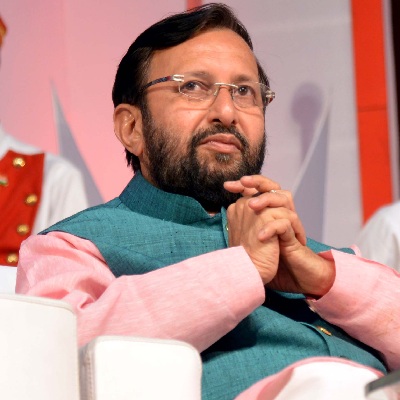
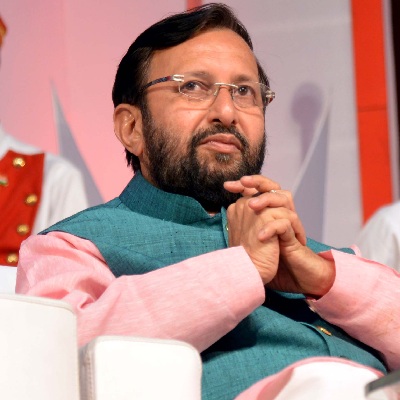
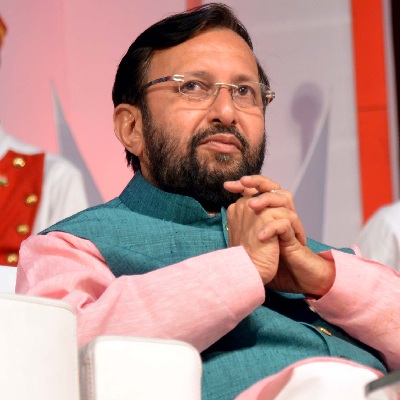
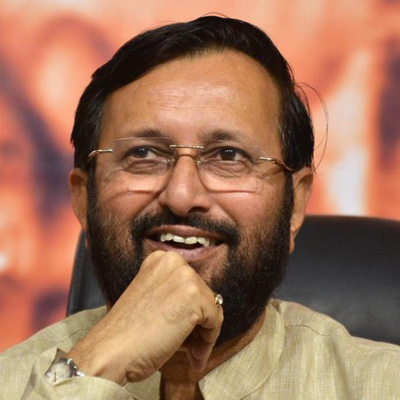
    New Delhi: The media and entertainment industry is losing substantial revenue due to film, video, music and online piracy, Union information and broadcasting minister Prakash Javadekar has informed the Parliament. To curb this threat, the government is planning to introduce Cinematograph (Amendment) Bill, 2021 soon.

    Citing an industry report released by Ireto, which is a global solutions provider in digital platform security and media and entertainment, the minister said the Indian media and entertainment industry loses around Rs 2,100 crore of its annual revenue due to piracy. However, no definite data is available in this regard year-wise, he added.

    The government had introduced the Cinematograph (Amendment) Bill, 2019 in the Rajya Sabha in February, 2019 to impose strict penalties against unauthorised duplication of films in cinema halls. The draft Bill prohibited a person from using a recording device to make a copy of a film, without authorisation and made it punishable crime with an imprisonment of up to three years and a fine of up to Rs 10 lakh, or both.

    Later, the standing committee on information technology (2019-20) presented its report on the Cinematograph (Amendment) Bill, 2019 in the Rajya Sabha and Lok Sabha on 16 March 2020.

    Javadekar told the Parliament that the recommendations and observations contained in the report of the standing committee on IT have been examined for making necessary amendments to clauses in the Cinematograph (Amendment) Bill, 2019 and for the subsequent introduction of the Cinematograph (Amendment), Bill, 2021.

    He was responding to a query regarding the increasing loss in revenue faced by the media industry due to piracy.

  • ‘No proposal with MEITY to appoint a regulator for social media

    ‘No proposal with MEITY to appoint a regulator for social media

    KOLKATA: Amid the babel over increased regulation of social media in the country, the government has revealed there is no proposal with the ministry of electronics and information technology (MEITY) to appoint a regulator for social media.

    “In order to provide enhanced user safety as also accountability of social media platforms, government has released the Information Technology (Intermediary Guidelines and Digital Media Ethics Code) Rules, 2021 under the Act (IT Act) that specifies the due diligence to be followed by all the intermediaries including the social media intermediaries. The social media platforms are enjoined to develop a robust grievance redressal system,” Union minister Ravi Shankar Prasad informed the Parliament today.

    When asked if the Centre has conducted any study regarding the impact of its control over social media, Prasad stated that no such study has been undertaken. However, he reiterated his oft-mentioned remark that the government welcomes criticism, dissent and also the rights of people to ask questions on social media.

    “This needs to be acknowledged that the fundamental right of speech and expression under article 19(1) is also subject to reasonable restrictions under article 19(2) of the Constitution which can be imposed in the interest of security, safety and sovereignty of India, public order, friendly relations with foreign countries etc,” he noted.

    Prasad mentioned that it is equally important that social media should not be abused or misused to defame, promote terrorism, rampant violence and compromise the dignity of women. It is for these challenges that the intermediaries are expected to remove or disable content as and when brought to the knowledge of  intermediaries either through a court order or through a notice by appropriate government or its agency or when directed under section 69A of the IT Act 2000, following due process of law, he detailed.

    On 25 February, the Centre notified new, stricter guidelines for social media intermediaries which enables setting up of grievance redressal mechanisms and makes these platforms more pliable in assisting government agencies in investigation as well as taking down unlawful or fake content. Experts, while lauding the new "well-intended" rules, noted that these guidelines could undermine the principles of open and accessible Internet and violate the right to privacy and free speech of users, particularly in the absence of robust data protection law.

    It's worth recalling that the new rules came close on the heels of a tussle between the government and Twitter over removal of certain content related to the ongoing farmers’ protests.

  • Parliamentary panel questions legality of new digital media rules

    Parliamentary panel questions legality of new digital media rules

    KOLKATA: The parliamentary standing committee on information and technology grilled officials from the ministry of information and broadcasting (MIB) and the ministry of electronics and information technology (MEITY) on the new rules for monitoring over-the-top (OTT) platforms, digital media and social media intermediaries.

    The parliamentary panel headed by Congress MP Shashi Tharoor questioned the legality of the new regulatory framework, according to media reports.

    Several questions on framing the guidelines were raised – whether industry stakeholders were consulted before framing the guidelines, if opinions were taken from intellectual people, civic society, and the judiciary. Another key point flagged was whether the rules are in conformity with the existing framework. 

    In their deposition, ministry officials have assured the panel that due process was followed before the new rules were introduced. They justified the need for such rules in changing times and also explained the rationale behind them.

    Earlier in a meeting, the panel told MIB officials that it hoped the ministry would implement the rules with due regard to the importance of promoting creativity and protecting freedom of expression while maintaining a robust oversight mechanism.

    On 25 February, the Centre notified an expansive framework to govern online content, titled Information Technology (Guidelines for intermediaries and digital media ethics code) Rules 2021. It gave online content providers between 30 to 90 days to comply with the same. Under the new guidelines, a three-tier oversight mechanism for online content has been put in place.