
Connect with us
NEW DELHI: The Telecom Regulatory Authority of India (TRAI) has extended till 7 October the date for written submissions on a pre-consultation paper on ‘delinking of license for...
NEW DELHI: The Government has finally issued the notification postponing the dates of phase III and phase IV of implementation of digital addressable system (DAS) to...
NEW DELHI: The Department of Telecom has moved the Supreme Court challenging tribunal TDSAT’s judgment that allowed Airtel, Idea and Vodafone to offer 3G services under...
MUMBAI: Days after Information and Broadcasting (I&B) Minister Prakash Javadekar announced that digitisation in the country will progress as per the new deadlines; the government has...
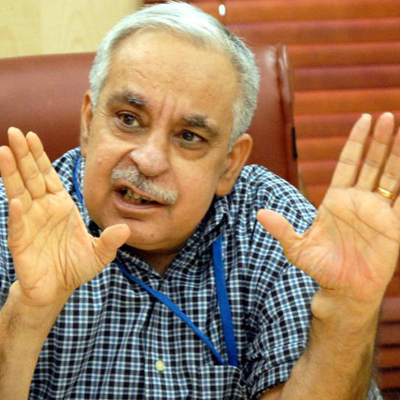
MUMBAI: Recently, a letter written by Telecom Regulatory Authority of India (TRAI) chairman Rahul Khullar pointed out that the government was committing a mistake by extending...
NEW DELHI: The Information and Broadcasting Ministry feels that digitisation is a tool to empower the people and not create difficulties, and therefore does not agree...
MUMBAI: The hearing on the case between Kantar Market Research and the government of India has been put off to 12 February 2015. The case...
NEW DELHI: Broadband subscribers grew by a mere 2.87 per cent in the month of July to 70.81 million in the country. The Telecom Regulatory...
NEW DELHI: Judgment was reserved today by the Telecom Disputes Settlement and Appellate Tribunal (TDSAT) in the ‘deep-rooted’ dispute between Hathway and Taj TV, after the...
NEW DELHI: Information and Broadcasting Minister Prakash Javadekar has asked the publication division to adapt itself through technological tools, e-commerce, business models, online publications etc. ...
MUMBAI: The first deadline for complete digitisation in the country, 31 December 2014 has been pushed to 2015 and 2016, as first reported by indiantelevision.com. ...
NEW DELHI: While 115 multisystem operators (MSOs) have been granted permanent licence as on 3 September, Digicable Network and Kal Cables are among the prominent MSOs...
NEW DELHI: An agreement under reference interconnect offer (RIO) is acceptable if there is parity to all, Hathway counsel Arun Kathpalia and Bhaskar Networks counsel Navin...
NEW DELHI: Admitting that Star India and Zee Turner had created MediaPro, Star counsel Rakesh Dwivedi said that the arrangement had been dismantled and “MediaPro is...
NEW DELHI: The News broadcasters, music channels as well as a few general entertainment channels are still fighting the case against the 12 minute advertising cap...
NEW DELHI: Noting that the Telecommunications (Broadcasting and Cable) Interconnection (Digital Addressable System) Regulations 2012 ‘are skewed’ against the broadcaster in every respect’, Star counsel Rakesh...
MUMBAI: Nearly a week after issuing the notification that the Telecom Regulatory Authority of India (TRAI) is looking at making amendments to the Standards of Quality...
MUMBAI: The Telecom Regulatory Authority of India (TRAI) has given a fresh lease of life to stakeholders to respond to its consultation paper on ‘Definition of...
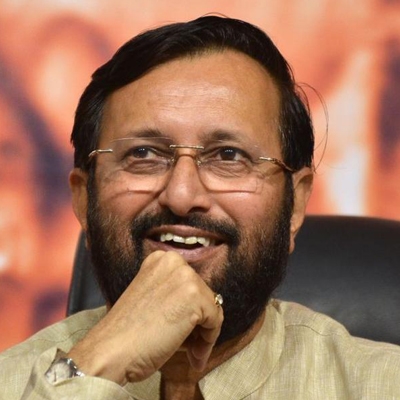
NEW DELHI: In keeping with the new initiatives on social media, Information and Broadcasting Minister Prakash Javadekar has launched a personal website whereby he can interact...

NEW DELHI: While stressing that negotiated settlements had also been provided for in the regulations other than an agreement under the Reference Interconnect Order (RIO), two...

NEW DELHI: Even as it said that an agreement under the Reference Interconnect Order (RIO) should be for both ala carte and bouquets, Hathway today questioned...

MUMBAI: The Government today warned multi-system operators against disconnecting signals of local cable operators without due notice specifying reasons and said any violation of this would...
NEW DELHI: The Telecom Regulatory Authority of India (TRAI) has asked the stakeholders to give their views on their definition of adjusted gross revenue (AGR). ...
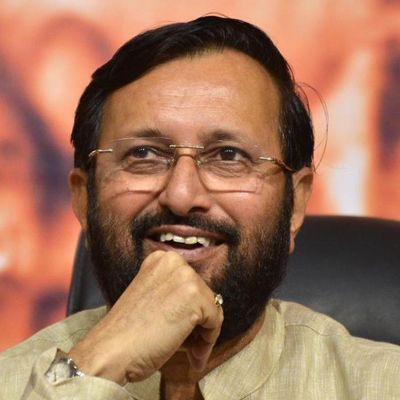
NEW DELHI: The Narendra Modi led NDA government has completed 100 successful days in power. And in these days, the Information & Broadcasting (I&B) Ministry has...
MUMBAI: After scrapping the planning commission, the Modi government is thinking about clipping the wings of the Telecom Regulatory Authority of India (TRAI). According to...
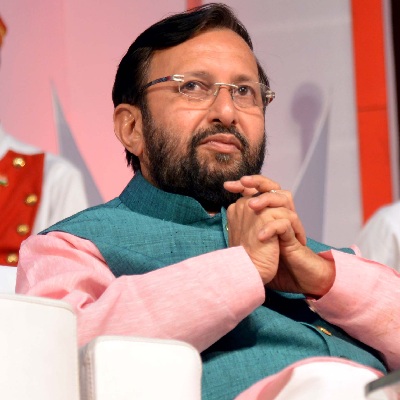
NEW DELHI: Information and Broadcasting (I&B) Minister Prakash Javadekar has said the government has initiated efforts to promote greater production of indigenous set top boxes (STBs)...
NEW DELHI: The government today issued a warning to News Live TV channel for showing ‘extremely disturbing visuals of dead bodies and badly injured people including...
NEW DELHI: The Telecom Regulatory Authority of India (TRAI) has decided to give one last opportunity to stakeholders to respond to its consultation paper on a...
NEW DELHI: The recommendations by the Telecom Regulatory Authority of India (TRAI) to review the reserve price for FM phase III auctions have not found favour...
NEW DELHI: Even as the term of permission for community radio stations (CRS) should continue to be five years, the extension should also be for five...
MUMBAI: The Telecom Regulatory Authority of India (TRAI) has come up with certain amendments to the Standards of Quality of Service (digital addressable cable TV systems)...

NEW DELHI: On the third day of the Hathway Cable & Datacom and Taj Television hearing in the Telecom Disputes Settlement and Appellate Tribunal (TDSAT), Taj...

MUMBAI: As soon as the Ministry of Information and Broadcasting (MIB) came out with an order cancelling the registration of Kal Cables, the company run by...
MUMBAI: Days after the news of new deadlines being set for phase III and IV of digital addressable system (DAS) was known, the Telecom Regulatory Authority...

NEW DELHI: In today’s hearing in the Telecom Disputes Settlement Appellate Tribunal (TDSAT), Taj Television counsel contended today and blamed Hathway Cable & Datacom for the...
NEW DELHI: A total of 112 multi system operators (MSOs) all over the country have been granted permanent registration for 10 years to operate the digital...

NEW DELHI: Taj Television contended before the Telecom Disputes Settlement and Appellate Tribunal today that though initial signals can be given by the broadcaster or distributor...
NEW DELHI: It is official now. The new dates for digitisation of cable television in the entire country have been announced. While indiantelevision.com was the first...
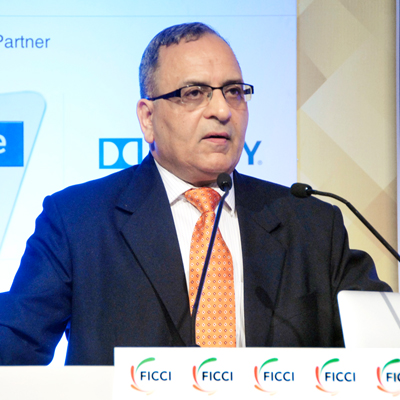
NEW DELHI: Information and Broadcasting secretary Bimal Julka has lauded the role played by cinema in the cultural integration of the country with the north-eastern states...
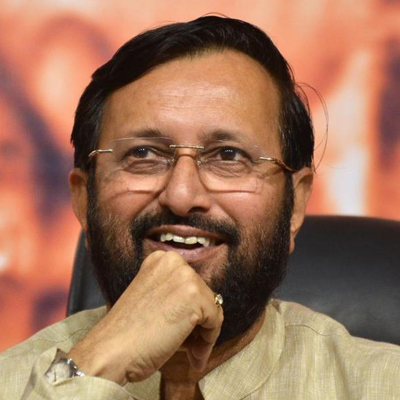
NEW DELHI: Inaugurating the three day North East Film Festival, Information and Broadcasting Minister Prakash Javadekar said that the Government is fully committed to mainstream new...

MUMBAI: Regulation in India, unlike the US, is very static. Not only this, any regulation that comes out, does not address the future, but the past....
NEW DELHI: The first meeting of the expert committee constituted earlier this year for the protection of broadcasting organisation at the World Intellectual Property Organisation (WIPO)...
NEW DELHI: The Government has clarified that free to air television channels are not required to provide one set of professional IRD for each TV channel...
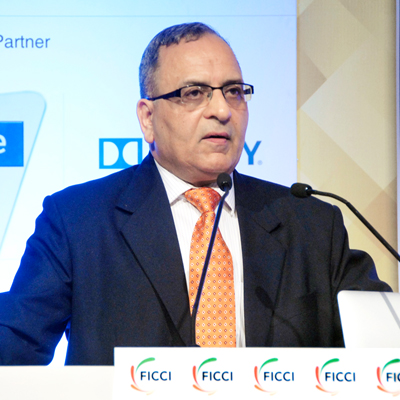
NEW DELHI: The deadline for the digitisation of cable television systems in the entire country has been put off to December 2015. While Phase I...
NEW DELHI: As compared to marginal increases in the previous months, broadband subscribers grew by 5.35 per cent between May and June this year, according to...
MUMBAI: The Ministry of Information and Broadcasting (MIB) has come out sharply against ads that have been found ‘violative’ of the rules by Advertising Standards Council...
MUMBAI: The Telecom Regulatory Authority of India (TRAI) will come out with a comprehensive consultation paper on broadband next month. It will invite views of public...
MUMBAI: It has been a busy week for the courts. While on one hand, the Telecom Disputes Settlement Appellate Tribunal (TDSAT) on 21 August heard a...
NEW DELHI: All television channels have been given a deadline of 25 August to provide one set of professional IRD for each TV channel which can give SD-SDI...

MUMBAI: It’s the battle of the bill – the commercial cable TV bill, that is. The Telecom Regulatory Authority of India (TRAI) on 16 July 2014...

Platforms get three years to add features for hearing and visually impaired


Strong word-of-mouth turns Pongal satire into remake pick


Streaming giant bets on a seasoned marketer who helped build Amazon and Netflix into household names


Communications leader exits after three years spanning MD office strategy and media outreach.


Cricket star named face of Delhi Khel Mahakumbh to fuel youth talent hunt.


Kolkata-based beverage maker reports stronger revenues and profits for December quarter.


A crime thriller steps out of the shadows as Telugu storytelling claims centre stage.


From boards to bytes, chess readies for a nation-first showdown in Riyadh.


Leadership change follows layoffs, protests and a bruising battle over trust.

Revenue rises 4.3 per cent to Rs 10,209.33 crore while deferred tax gain lifts bottom line sharply


Akshay Kumar and stars launch awards at NSCI Dome on Feb 28


Merger creates one-stop hub for content, digital, and delivery


NEW DELHI: Hamdard Laboratories gathered a cross-section of India’s achievers in New Delhi on Friday, handing out the Hakeem Abdul...


MUMBAI: For decades, creative storytelling has been the cornerstone of brand communication. The “big idea” amplified through catchy jingles, striking...


MUMBAI: Zepto has elevated Ahmad Muneeb to vice president – HR centre of excellence, placing him at the helm of...
