Category: Regulators

  • I&B Minister Anurag Thakur meets the NBA Board

    I&B Minister Anurag Thakur meets the NBA Board

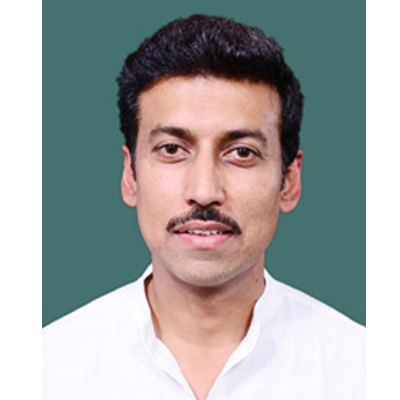
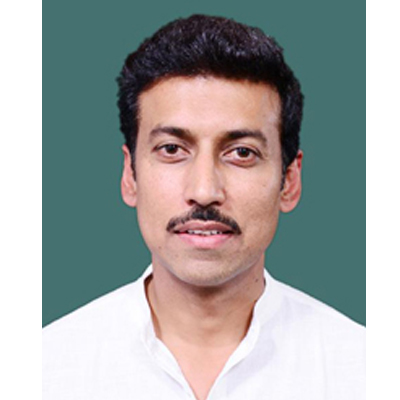
    New Delhi : The newly appointed union minister for Information and Broadcasting  Anurag Thakur met the board members of the News Broadcasters Association (NBA) on Saturday to discuss various pertinent issues concerning news channels and the broadcast industry.

    Led by NBA president and chairman and editor-in-chief of India TV, Rajat Sharma, the delegation included ABP Network CEO  Avinash Pandey, Zee News, editor-in-chief and CEO, Sudhir Chaudhary, News24 chairperson and managing director Anuradha Prasad Shukla, India Today Group vice chairperson Kalli Purie, and NDTV editorial director Sonia Singh.

    The discussions delved into various issues including that of attaining a stable regulatory climate in the industry and other positive changes that can be introduced in the television ecosystem.

    Speaking about the meeting, spokesperson of NBA said, “Effective communication is extremely important for us to uplift the broadcast industry and implement positive changes. The discussion helped us provide direction to various issues within the industry. We are looking forward to working closely with the union minister of Information and Broadcasting Anurag Thakur to take the broadcast industry to greater heights.”

    Further, NBA members discussed the industry landscape in the post-COVID scenario and apprised the minister about their concerns. The meeting also threw light on creating a strong policy roadmap for growth in the post-Covid era for the broadcast industry. 

  • I&B ministry acted against 126 violations of Programme Code in last 3 years

    I&B ministry acted against 126 violations of Programme Code in last 3 years

    Mumbai: During 2018 to 2021, the Government took action against 126 cases of violation of Programme Code laid down in the Cable Television Networks (CTN) Rules, 1994 framed under Cable Television Networks Act, 1995. The action with respect to cases was taken by issuance of advisories, warnings, apology scroll orders, and off-air orders, said the ministry on Friday.

    “Government has an institutional mechanism for taking action in respect of private TV channels which are found to violate the Programme Code. The I&B ministry also issues advisories from time to time to private satellite TV channels for adhering to the Programme Code,” said the minister of information and broadcasting, Anurag Thakur in the ongoing monsoon session of the Parliament.

    The minister was responding to a query put forth in the Lok Sabha on whether the Government has taken cognizance of high decibel, sensationalist and slanderous news programmes/debates being hosted on Indian news channels. The Government was asked whether it has received complaints against news channels for violating the broadcasting guidelines and broadcasting fake news, hate and divisive agenda during the last three years.

    The Government was also asked whether it is planning to initiate any code of conduct or broad guidelines for the debates that happen on electronic media and the time by which final decision is likely to be taken in this regard.

    The Programme Code contains broad guidelines related to content broadcast on private television channels.

    The guidelines also provide that no programme should contain anything obscene, defamatory, deliberate, false and suggestive innuendos, and half-truths, and should not criticise malign or slander any individual in person or certain groups, segments of social, public and moral life of the country.

    The Rules provide for a three-level complaint redressal mechanism; Level I by the broadcaster, Level II by the self-regulating bodies of the broadcasters; and Level III by oversight mechanism of the Central Government.

  • SC adjourns NTO 2.0 hearing to 18 August

    SC adjourns NTO 2.0 hearing to 18 August

    Mumbai: The Supreme Court on Friday adjourned the hearing in a matter pertaining to the New Tariff Order (NTO 2.0) to 18 August.

    Last month, The Indian Broadcasting Foundation (IBF) and several leading broadcasters had filed a petition in the Supreme Court against the Bombay high court verdict dated 30 June, which had upheld the constitutionality of the NTO 2.0. The amended NTO 2.0, passed by the Telecom Regulatory Authority of India (TRAI) in January 2020, was challenged by broadcasters in the Bombay HC.

    After a legal tussle that lasted over a year, TRAI had managed to get a green signal from the court on 30 June on the implementation of the amended NTO 2.0. The division bench of the HC had stated that the challenge to the constitutional validity of the 2020 rules and regulations of TRAI does not hold any water. At the same time, it termed one of the twin conditions “arbitrary”, according to which the maximum retail price of an a-la-carte channel could not be more than one-third the maximum rate of a channel in the bouquet.

    The judgment was passed on the petitions filed by several broadcasters under the umbrella of the Indian Broadcasting Foundation (IBF) including ZEE Entertainment, Star India, TV18, and Sony Pictures Network India (SPN) who had challenged the NTO 2.0 terming it “arbitrary and in violation of their fundamental right”.

    The NTO 2.0 prescribed linkage between a-la-carte price and bouquet and reduced the price cap on the subscription fees for pay channels.

  • Licences of 204 private TV channels revoked in last four years : I&B minister

    Licences of 204 private TV channels revoked in last four years : I&B minister

    New Delhi: The ministry of information and broadcasting has revoked licences of over 200 private TV channels during 2016-2020, union I&B minister Anurag Thakur told the Parliament on Monday.

    Responding to a query in Rajya Sabha during the ongoing monsoon session, Thakur said that as on date, there are 916 private satellite TV channels which have been granted permission by the government under the Up-linking and Downlinking Guidelines, 2011.

    “However, many channels failed to fulfil the guidelines and ceased to operate in the last five years,” he said. “TV channels cease operation due to various reasons, including for non-fulfilment of conditions under the guidelines. During the last five years, 204 TV channels have ceased to operate.”

    Thakur also told the Parliament that the government also takes action against private TV channels for violation of programme code laid down under the Cable Television Networks (Regulation) Act, 1995 by issuance of warnings, advisories, off-air orders, etc. “The government has issued warnings in 128 cases for violation of guidelines,” he said.

    The minister said 60 private satellite TV channels were given permission to operate in the country in 2016-17, 34 in 2017-18, 56 each in 2018-19 and 2019-20, and 22 in 2020-21.

  • I&B ministry may adopt TV rating committee’s recommendations : Anurag Thakur

    I&B ministry may adopt TV rating committee’s recommendations : Anurag Thakur

    New Delhi:  The ministry of information and broadcasting (I&B) has analysed and evaluated the recommendations made by the committee led by Prasar Bharti chief executive officer Shashi Shekhar Vempati to review the current guidelines on TV rating agencies in India.

    The newly inducted I&B minister Anurag Thakur told the Lok Sabha on Friday, that the recommendations will be incorporated into the existing TV rating guidelines wherever required. “The recommendations have been analysed and evaluated vis-à-vis their being translated, if required, into the existing guidelines where-ever required,” said Thakur while responding to a question on the action-taken report of the said committee.

    The union minister said the existing guidelines have provisions like methodology for audience measurement, panel selection, viewing platform secrecy and privacy, data analysis, transparency etc. which are essential for a transparent and accountable rating system in India.

    The guidelines, inter-alia, prescribe that the panel homes shall be drawn from the pool of households selected through an establishment survey. The procedure adopted for selection and rotation of the panel homes shall be made transparent. Further, the panel size shall be increased in a graded manner and has to remain representative of all TV households in the country.

    The guidelines also prescribe that the rating agency shall publish the detailed methodology on its website. These parameters have been included in the existing guidelines to ensure transparency and representative collection of panel homes.

    “Based on the recommendations of the Committee headed by CEO, Prasar Bharati along with recommendations of TRAI, the present guidelines have been analysed / evaluated vis-à-vis strengthening of transparency / panel homes and other parameters,” the minister told the Parliament.

    The TV rating system in India came under scanner when in October 2020, the Mumbai police claimed in a press briefing that they had unearthed a case of manipulation of TRPs and found some incriminating evidence. The police said the accused were allegedly bribing households with BARC bar-o-meters installed to keep a particular channel running, leading to several arrests. In light of the controversy, BARC had temporarily suspended publishing of weekly data for news channels.

  • Parliament’s Monsoon Session to begin from today

    Parliament’s Monsoon Session to begin from today

    New Delhi: The monsoon session of the Parliament is all set to begin on Monday. The session will conclude on August 13. It will also be the first session for some of the newly inducted Cabinet ministers, including Anurag Thakur who was recently sworn in as the information and broadcasting minister.

    This will also be the first session of parliament since the results of assembly polls in Assam, West Bengal, Tamil Nadu, Kerala, and Puducherry. Last year, the monsoon session began in September and the winter session was not held due to the Covid-19 situation. According to the ministry of parliamentary affairs, during the 19 sittings of the session, 31 Government business items including 29 Bills and 2 financial items will be taken up. Six bills will be brought to replace the ordinances.

    Lok Sabha will meet from 11 am to 1 pm and from 2 pm to 6 pm unless directed otherwise by Speaker Om Birla. Four days have been allotted for the transaction of private members’ business, which is taken up in the post-lunch session.

    Parliamentary Affairs minister Shri Pralhad Joshi said that the Government is ready for discussion on any topic under the rules. Seeking full cooperation of all the parties in the smooth running of the houses, he said that there should be structured debate on the issues. An all-party meeting was held on Sunday to discuss the same.

  • NBA challenges amended Cable TV rules in Kerala High Court

    NBA challenges amended Cable TV rules in Kerala High Court

    New Delhi: The Kerala high court has directed the ministry of information and broadcasting (I&B) not to take any coercive action against members of the News Broadcasters Association (NBA) over non-compliance with the Cable TV Act.

    The court issued the orders on a plea filed by the NBA which represents several news channels against certain provisions of the amended Cable TV Rules which provide for an oversight mechanism over the content of news channels. The court has also issued notice to the ministry and sought its stand on the NBA’s petition within two weeks.

    In its plea, NBA contended that the amended provisions in the Cable TV Rules create an oversight mechanism that gives the executive “unfettered, unbridled and excessive powers to regulate the content of the television channels of the news broadcasters”.

    NBA’s counsel told the court that the amended rules are similar to the new IT rules which NBA had challenged recently. “Under the amended Cable TV Rules also, the oversight mechanism would be headed by an additional secretary-level officer who would have the power to overrule decisions of the self-regulatory body already in place and which is headed by a retired judge of the Supreme Court,” he added.

    Last month, the Centre had notified the Cable Television Network (Amendment) Rules, 2021 to provide for a three-layer statutory mechanism for the redressal of consumer’s complaints relating to the content broadcast by TV channels.

    The amended rules stipulate a three-layer grievance redressal mechanism – self-regulation by broadcasters, self-regulation by the self-regulating bodies of broadcasters, and an oversight mechanism by the central government. The rules require each broadcaster to establish a grievance or complaint redressal mechanism, appoint an officer to deal with the complaints, display the contact details of their grievance officer on their website or interface and be a member of a self-regulating body.

    As per the rules, any person aggrieved by the content of a programme of a channel may file his/her complaint in writing to the broadcaster first. “The broadcaster shall, within 24 hours of a complaint being filed, generate and issue an acknowledgment to the complainant for his information and record. The broadcaster shall dispose of the complaint and inform the complainant of its decision within 15 days of receipt of such complaint,” the rules stated.

  • Digital Media Ethics Code will make publishers accountable: I&B Jt Secy Vikram Sahay

    Digital Media Ethics Code will make publishers accountable: I&B Jt Secy Vikram Sahay

    New Delhi: As the government’s stand-off with a few social media companies continues over the new IT rules, ministry of information and broadcasting joint secretary Vikram Sahay said that Digital Media Ethics Code is aimed at addressing the grievances of the common man, and should be viewed as a ‘citizen-centric legislation’.

    “Digital Media Ethics Code is aimed at stopping transmission of content which is objectionable to women or harmful to children. Presence of a regulatory body can control and stop the spread of fake news as well as make the publishers accountable. It is essentially citizen-centric legislation,” he said on Tuesday.

    The MIB joint secretary was speaking at a webinar on ‘Digital Media Ethics Code’ organised by Press Information Bureau, Maharashtra and Goa for improving stakeholder understanding of Part III of the Information Technology (Intermediary Guidelines and Digital Media Ethics Code) Rules, 2021, that came into effect on 26 May.

    India is the world’s fastest growing OTT market and the market is expected to reach $2.9 billion by 2024 which is an annual growth of 28.6 per cent. Sahay said the new rules become all the more important, amid this recent explosion of digital content. “The purpose of the Digital Media Ethics Code is to stop transmission of content which is objectionable to women or harmful to children,” he added.

    Elaborating on how the online news portals are the major source of news among Indians under 35 years of age and that there is a 41 per cent increase in time spent on such news apps, Sahay said, “When there are content regulators like Press Council of India for newspapers and Cable TV Network Act, 1995 for News on TV there has been no such regulation for news on digital platforms. Similar is the case for OTTs which do not have a regulation unlike that of Cinema Halls or Television.”

    The new rules notified on 25 February, came into effect on 26 May recommend a three-tier mechanism for the regulation of all online media. According to the new IT Rules, social media and streaming companies will be required to take down contentious content quicker, appoint grievance redressal officers and assist in investigations. The rules also seek to regulate the functioning of online media portals and publishers, over-the-top (OTT) platforms and social media intermediaries.

    “There will be an inter-departmental committee to deal with unresolved complaints by news publishers or regulatory bodies and for that it is imperative that disclosure of information in public domain regarding grievance redressal by publisher and self-regulating body is done,” said the joint secretary.

    Sahay also added that the I & B ministry will collect basic information about people working on news portals or OTT platforms, in a prescribed format by the stakeholders. “More than 1800 of people working on news portals or OTT platforms have already submitted their details to the ministry, where most of them have submitted voluntarily,” he added.

    Digital news publishers, representatives of film industry, Over the Top (OTT) platforms and online content producers attended the webinar, along with academicians, researchers, students and officers of state government of Maharashtra and Goa.

  • New IT rules will empower and protect social media users: Ashwini Vaishnaw

    New IT rules will empower and protect social media users: Ashwini Vaishnaw

    New Delhi: The new IT rules will empower and protect users and ensure a safer social media ecosystem, said the union IT and communications minister Ashwini Vaishnaw who recently took charge of the ministry post the cabinet reshuffle.

    “Reviewed the implementation and compliance of Information Technology Rules, 2021 along with my colleague Rajeev Chandrasekhar ji. These guidelines are empowering and protecting users and will ensure a safer and responsible social media ecosystem in India,” Vaishnaw said in a post shared on Koo, which is considered a competitor to Twitter in India.

    Vaishnaw’s statement comes amid a continued standoff between the government and some social media platforms over the new rules. Twitter, which had been in the eye of the storm over its alleged failure to comply with the new IT rules in India, on Sunday named Vinay Prakash as its resident grievance officer for India, according to the company’s website.

    The new rules notified on 25 February, came into effect on 26 May recommend a three-tier mechanism for the regulation of all online media portals and publishers, over-the-top (OTT) platforms, and social media intermediaries. Under the new rules, each significant social media company with over 50 lakh users is required to appoint a chief compliance officer, a nodal contact person for 24×7 coordination with law enforcement agencies, and a resident grievance officer. All three should be resident Indians and their details be put on the company’s website.

  • SC to hear Centre’s plea on new IT Rules on 16 July

    SC to hear Centre’s plea on new IT Rules on 16 July

    New Delhi: The Supreme Court on Friday refused to stay the proceedings in connection with petitions challenging the constitutional validity of the Centre’s new IT rules before various high courts.

    The Centre had approached the apex court on Tuesday seeking transfer of all pending pleas challenging its new IT rules to itself, and had also sought a stay on the proceedings in various courts. However, the bench said that it will not pass any order as of now, except tagging the transfer petition with the said special leave petition (SLPs).

    The Court will now hear the Centre’s plea on 16 July along with a pending matter related to the regulation of over-the-top (OTT) platforms. 

    Numerous petitions challenging the Information Technology (Intermediary Guidelines and Digital Media Ethics Code) Rules, 2021, are currently pending in various high courts across the country.

    The new rules notified on 25 February, came into effect on 26 May recommend a three-tier mechanism for the regulation of all online media. According to the new IT Rules, social media and streaming companies will be required to take down contentious content quicker, appoint grievance redressal officers and assist in investigations. The rules also seek to regulate the functioning of online media portals and publishers, over-the-top (OTT) platforms and social media intermediaries.

    Some of the pleas pending before the Delhi high court have sought striking down of specific part of the IT Rules on the ground that it allegedly violates Article 19(1)(a) and 19(1)(g) of the Constitution, Article 14 of the Constitution by creating an unreasonable classification and by setting up a parallel adjudicatory mechanism to be overseen by the officials of the executive and is ultra vires the IT Act.