Category: Regulators

  • I&B ministry lays down guidelines for infrastructure sharing by MSOs

    I&B ministry lays down guidelines for infrastructure sharing by MSOs

    Mumbai: The ministry of information and broadcasting (I&B) has given its go-ahead to the multi-system operators (MSOs) to share infrastructure with other MSOs on a voluntary basis. As per the guidelines released by the ministry, the responsibility for compliance with guidelines and other regulations will lie with each MSO independently.

    According to the guidelines, each MSO will have to ensure encryption of signals and addressability of subscribers in all circumstances, and provide access of all the systems and the networks, used to provide broadcasting distribution network services, to the concerned broadcasters for audit as per the regulations and the authorised officers of the government and their representatives whenever demanded.

    The sharing of head-end used for cable TV services & transport streams transmitting signals of TV channels, among MSOs is permitted on a voluntary basis, said the ministry.

    Any MSO willing to share its transport stream of TV channels with another MSO should ensure that the latter has valid written interconnection agreements with concerned broadcasters for distribution of pay TV channels to the subscribers. They may share the common hardware for their SMS applications. But, the details of such arrangements should be reported to the MIB, the Trai, and the concerned broadcasters, 30 days in advance.

    As per the guidelines:

    ·Each MSO shall be accountable for ensuring the integrity and security of the CAS and the SMS data pertaining to such distributor.

    ·Each MSO shall maintain the backup of transaction logs and data of the CAS and the SMS, on a near real-time basis, for at least the past two years, at any point in time, on a secondary storage device.

    ·Each MSO shall undertake to provide access of the CAS and the SMS, used to provide broadcasting distribution network services, to the concerned broadcasters for the purpose of audit as per the regulations and the authorised officers of the government and their representatives whenever demanded.

    ·Each MSO sharing its infrastructure and transport streams of TV channels with other MSO, should set up systems and processes which ensure that the broadcasters are able to exercise their right of disconnection of signals in case of default of payment or due to any other reason, in terms of the interconnection agreement entered into between the broadcaster and the distributor and the relevant regulations in place.

    Under the new guidelines, the new applicant and existing licensee will jointly submit a detailed proposal for infrastructure sharing giving details of the infrastructure proposed to be shared and in the manner, infrastructure is proposed to be shared as well as roles and responsibilities of each to MIB. “The adherence and compliance to all the provisions of the rules and guidelines issued by MIB for grant of license to the MSO operator will be the responsibility of the existing operator and the new applicant proposing to share the infrastructure to the extent as may be required / applicable individually,” it added.

  • Trai to form committee for smooth rollout of NTO 2.0

    Trai to form committee for smooth rollout of NTO 2.0

    Mumbai: The Telecom Regulatory Authority of India (Trai) has decided to form a committee with representation from leading pay TV industry associations to ensure the smooth implementation of the New Regulatory Framework 2020 and identify impediments with counter-measures for the overall growth of the broadcast sector.

    In a letter dated 22 December, accessed by Indiantelevision.com, Trai had asked the Indian Broadcasting and Digital Foundation (IBDF), the All India Digital Cable Federation (AIDCF), and the DTH association to nominate a maximum of two representatives to be part of the implementation committee.

    Early this November, the regulator had notified stakeholders that implementation of the new tariff order (NTO 2.0) would be delayed until 1 April 2022. This decision was taken after various stakeholders expressed concerns to the regulator with respect to the timeframe for migration of 150 million pay TV consumers and sufficient time for service providers to upgrade their IT systems and incorporate various channels/bouquets before offering the same to consumers.

    In the latest development, Delhi-based Cable Operators Welfare Federation (COWF) has written to Trai to be a part of the implementation committee and include two local cable operator (LCO) representatives from four zones or four representatives from the All India Federation. “LCOs deserve to be treated as frontline workers who touch base with each subscriber at least once a month. During the implementation of the regulatory framework the best way to reach the subscriber is to communicate in person, in their language, using printed handouts to evaluate options and help subscribers make a well-informed decision,” the letter reads.

    The LCOs also argue that market discovery of prices of pay-TV channels and consumption pattern evolution cannot be back-end driven, rather the front-end instructions should drive the backend. “The DPOs manage the back-end that would implement the service requests coming in from the front-end and therefore should not impose any packages and choices on subscribers,” it added.

    COWF has now also written to prime minister Narendra Modi to halt the implementation of new tariff framework, discard NTO 2.0, and consider making “cable-operator friendly amendments” in Digital Addressable Systems (DAS) law. The operators also suggest that linear TV channels no longer be distributed on OTT platforms. They lettered dated 29 November, also says that the NTO 2.0 regulation will increase unemployment and result in the downturn of lakhs of people employed by the cable TV industry.

  • Trai asks broadcasters, DPOs to comply with interconnection agreements regulations

    Trai asks broadcasters, DPOs to comply with interconnection agreements regulations

    Mumbai: The Telecom Regulatory Authority of India (Trai) has asked broadcasters and distributors of TV channels to immediately implement the provisions of the Telecommunication (Broadcasting and Cable) Services Register of Interconnection Agreements and all such other matters Regulations, 2019.

    The regulator has asked broadcasters and distributors to submit the compliance report within 15 days from the date of issue of the letter on 8 December failing which actions would be taken as per provisions of the said regulations and the Trai Act, 1997.

    The regulations were supposed to come into force on 2 January 2020 but were challenged by the All India Digital Cable Federation (AIDCF) in the Kerala high court. The high court in its order dated 9 January 2020 had ordered that no coercive action will be taken by the respondents.

    The court disposed of the said writ petition, in its judgement dated 12 July, and partially set aside the provisions of the said regulations to the extent they require registration of placement/marketing agreements. Thus, all the provisions of the said regulations, except to the extent they require registration of placement/marketing agreements, are in operation.

    The regulator had developed a B&CS integrated portal system (BIPS) for the purpose of filing data/details pertaining to the said regulations. The regulations require broadcasters and DPOs to furnish, via their compliance officer, its reference interconnection offers when the same is published on their websites.

    The regulations are applicable to all commercial and technical arrangements entered into by broadcasters, distributors of television channels and local cable operators for providing broadcasting services. If broadcasters and distributors default in complying with the provisions, then Trai would take action by imposing a financial disincentive.

  • Trai seeks suggestions to enhance ease of doing business in telecom and broadcasting sector

    Trai seeks suggestions to enhance ease of doing business in telecom and broadcasting sector

    New Delhi: The Telecom Regulatory Authority of India (Trai) has released a consultation paper on “Ease of Doing Business in Telecom and Broadcasting Sector”.

    The industry stakeholders can send their comments by 5 January 2022, and counter comments can be submitted by 19 January 2022.

    The regulatory body highlighted that the telecommunication and broadcasting sectors have emerged as key drivers of economic and social development and has made the country a favorite business destination amongst investors. According to Trai, both the sectors have immense potential to move on the higher trajectory of growth, “if business environment could be made more attractive by simplifying the existing provisions of policy frameworks in various ministries and departments including the ministry of information and broadcasting, department of telecommunications, ministry of electronics and information technology involved in issuing permission, registrations, and licenses to the players of the sector.”

    It said that the larger aim behind floating this consultation paper is to identify various concerns in the existing processes and suggest measures for the reforms required in the regulatory processes, policies, practices and procedures in the telecom and broadcasting sector for creating a conducive business environment in India.

    The consultation paper also seeks comments of the stakeholders on various issues and difficulties being faced by them in commencement and operation of their businesses in telecom and broadcasting sectors in the country.

    It also seeks suggestions on measures for making the existing processes simple, business friendly and creating an ecosystem for attracting more and more investment in the sectors. It also emphasises the single window concept for submitting applications and getting approvals from different agencies without running to each agency separately for its approval.

    Suggestions are also invited on simplifying the applications which have just the required details for the conduct of business and well-documented timelines with query response systems, having seamless integration with other ministries, etc. Apart from that, the stakeholders have also been requested to provide their comments on adoption of new technologies for all the issues raised in this consultation paper.

  • Prasar Bharati not closing any Akashvani radio station in India: Anurag Thakur

    Prasar Bharati not closing any Akashvani radio station in India: Anurag Thakur

    Mumbai: Prasar Bharati is not closing any Akashvani radio station in India, the minister of information and broadcasting Anurag Thakur told the Parliament on Tuesday. Thakur was responding to concerns regarding the closure of radio stations across different parts of the country that have been in the news for the last couple of years.

    Prasar Bharati has issued a clarification on false reporting and fake news claiming closure of AIR stations on several occasions earlier. Speaking in the Parliament, Thakur once again elaborated that “obsolete analog transmitters are phased out from time to time with the availability of alternate transmission technologies such as FM, satellite radio through DTH and internet streaming.”

    “Further, content reforms are undertaken from time to time to ensure that the national, regional and local services of Akashvani serve diversity of content, while optimally leveraging the scarce resources, giving opportunity to local talent and improving quality without duplication of content. The operational expenditure of these services is being met through the Internal and Extra Budgetary Resources (IEBR) of Prasar Bharati,” he stated.

    Thakur also told the Parliament that the government has approved schemes for setting up of Frequency Modulation (FM) transmitters in Sashastra Seema Bal (SSB) premises at seven locations along the Indo-Nepal Border including SSB premises at Narkatiaganj in West Champaran District in the State of Bihar.

    On FM stations and community radio stations, Thakur further said that Prasar Bharati has 523 FM transmitters located at 483 All India Radio (AIR) stations across the country. Under the policy guidelines on the expansion of FM radio broadcasting service through private agencies (phase-III), MIB grants FM radio license to private companies registered in India under the Companies Act, 2013.

    The private FM radio phase-III policy being city-centric provides for setting up of FM radio stations in all cities having a population above one lakh unless it is getting covered from an adjacent city. Further 11 cities in border areas of UT of Jammu & Kashmir, UT of Ladakh and the North East states having a population less than one lakh have also been approved for setting up FM radio stations.

    Under FM phase-III, the government has approved to the auction of 683 channels in 236 cities.

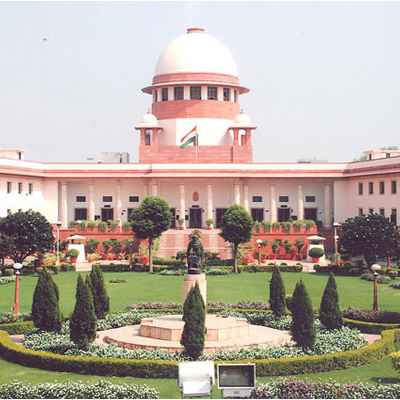
  • Supreme Court to hold final hearing in NTO 2.0 case today

    Supreme Court to hold final hearing in NTO 2.0 case today

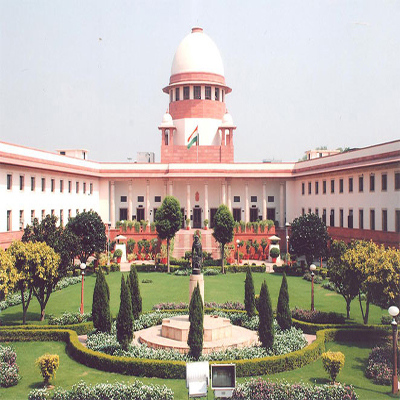
    Mumbai: The Supreme Court is all set to hold the final hearing in the NTO 2.0 case on Tuesday. The matter pertains to a bunch of petitions filed against the Bombay high court order regarding the implementation of the New Tariff Order (NTO) 2.0 issued by the telecom regulator.

    After a legal tussle that lasted over a year, Telecom Regulatory Authority of India (Trai) had managed to get a green signal from the Bombay high court on 30 June on the implementation of the amended NTO 2.0. The division bench of Bombay HC had upheld the constitutional validity of NTO 2.0, but partly struck down the second provision of the twin conditions as “arbitrary”. As per the second provision, the a-la-carte rates of each pay channel (MRP), forming part of a bouquet, shall in no case exceed three times the average rate of a pay channel of the bouquet of which such pay channel is a part.

    The Indian Broadcasting and Digital Foundation (IBDF), an umbrella organisation of private TV broadcasters and a couple of other private channels had moved the SC in July against the Bombay high court judgment which had upheld the constitutionality of the NTO 2.0.

    The NTO 2.0 passed in January 2020 seeks to cap the pay channel price at Rs 12 from the existing Rs 19.

    Earlier this month, the Telecom Regulatory Authority of India (Trai) moved the deadline for implementation of NTO 2.0 to 1 April 2022 from 1 December 2021. Distribution platforms like DTH and cable will have to seek subscriber choice till 31 March 2022. 

    As per Trai, broadcasters will have to publish new reference interconnection offers (RIOs) to Trai by 31 December, and simultaneously publish the required information about channel and bouquet offerings and their MRPs on their websites. Broadcasters who have already submitted their RIOs in compliance with NTO 2.0 can revise it by 31 December, it said.

  • DoT permits laying of overhead fiber ahead of 5G roll out

    DoT permits laying of overhead fiber ahead of 5G roll out

    New Delhi: The Department of Telecommunications (DoT) has amended the Indian Telegraph Right of Way Rules (RoW), 2016 by way of a gazette notification permitting laying overhead optical fiber cable (OFC).

    This will be applicable to all digital infrastructure (including Digital CATV & Broadband distribution).

    Optical Fiber is a fundamental and structural part of both mobile and fixed broadband networks. Faster rollout of fiber is important for backhauling a large amount of data at high throughput, improving reliability, and reducing latency. The decision paves way for creating the necessary infrastructure to cater to forthcoming 5G rollouts in the country.

    “These amendments will ease RoW-related permission procedures for establishment and augmentation of digital communications infrastructure across the country,” a statement issued by the DoT said. “To achieve the objective of universal broadband connectivity at 50 Mbps to every citizen, fiberisation of telecommunication networks is essential.”

    The amendment prescribes a one-time compensation of Rs 1,000 per kilometer for laying overhead OFC, which will bring further uniformity in charging of fee/ levy by local authorities for grant of permissions for this critical infrastructure.

    Digital Infrastructure Providers Association (DIPA) director-general T R Dua told IANS, ” We are sure this is just the beginning and this amendment will pave the way for other major reforms in line, encouraging investments and faster deployment of critical broadband infrastructure in the country enabling rollout of 5G and various new technologies.

  • Trai vs broadcasters: Impact could be larger than expected

    Trai vs broadcasters: Impact could be larger than expected

    Mumbai: The TV industry is eagerly awaiting the outcome of the court battle between the Telecom Regulatory Authority of India (Trai) and TV broadcasters led by the Indian Broadcasting Foundation (IBF) on the new tariff order (NTO) 2.0 case that will be heard on 30 November.

    The decision taken by the Supreme Court in the final hearing will significantly alter the dynamics of the TV broadcast industry that have been in place for more than a decade. The conflict essentially from Trai’s point of view is the fight for consumer’s choice that is being taken away by broadcasters.

    There are 346 pay-TV channels available to consumers, out of which leading broadcasters own and operate 255 pay channels. It’s standard industry practice to offer their pay channels in a bouquet that has a significant discount. This way the broadcasters can cross-subsidise their channels in a way that even a weak channel has an opportunity to get viewership.

    There are driver channels whose viewership is self-driven and niche channels that have a small but dedicated viewership. Trai’s contention is that broadcasters are pushing these ‘extra’ channels on to consumers to increase their revenues from advertising which accounts for two-thirds of their overall revenues.

    A senior expert in the broadcasting industry remarked that this view of Trai does not consider the complexities of the sector and understand what the broadcast consumer wants. “India is a price-sensitive market – we want everything to be free or at the cheapest but, at the same time, the best-in-class service,” he said requesting anonymity.

    There’s always going to be content on TV that the consumer doesn’t want to watch. On linear TV if the consumer wants to watch different content, he/she may switch the channel and watch something else. That’s why it makes sense for the consumer to have the option of multiple channels available.

    With the agenda of allowing consumers to pay only for the channels that they want, Trai mandated that broadcasters announce a-la-carte tariffs of their channels. To ensure that broadcasters do not entice consumers into opting for bouquets that are heavily discounted it created provisions in the amendment order to counter the practice. It mandated that a channel must have MRP no greater than Rs 12 to be included in a bouquet. It also prescribed a linkage between the a-la-carte price and bouquet by mandating that the sum of the a-la-carte price of channels in a bouquet will not be more than 1.5 times the bouquet price.

    Whatever consequence Trai had intended, the outcome of the NTO 2.0 has been very different. While the case is being fought in the SC, on 15 October broadcasters announced their reference interconnection offers (RIOs) and new channel rates adhering to the regulator’s order. If the consumer chooses to keep the same number of channels, then his/her content costs are likely to go up when the new tariffs come into effect on 1 December. They have listed the MRP price of their popular channels greater than Rs 12 which means that none of these channels will be a part of the broadcaster’s bouquets.

    There isn’t enough data to predict the resulting consumer behaviour after the implementation of the amendment order. The only example of a-la-carte implementation is the conditional access system (CAS) in 2007. CAS is a digital mode of transmission of TV channels via set-top-box (STB) and was rolled out in select metros – Mumbai, Delhi, Kolkata, and Chennai.

    “When CAS was implemented on a small population the consumer had opted for about 5-15 pay channels,” said a senior official from a leading cable operator on condition of anonymity.

    Note that this was a period when Star India was offering about eight channels versus 76 it is offering today. “Back then you had to offer every channel a-la-carte and Trai had fixed a ceiling price for pay channels at Rs 5,” he added.

    NTO 2.0 implementation will have an impact on a much larger scale. There is a huge economic divide between TV viewing audiences in India. As the official from the cable company puts it, “On the one hand, you have a consumer who decides to be economical and only watch FTA channels. We estimate that there are 30-50 million audiences who only watch Doordarshan on DD Free Dish. On the other hand, you have consumers who are ready to pay Rs 2, 000 to get an OTT subscription including Netflix, Prime Video, Disney+ Hotstar, SonyLIV, ZEE5, and Voot and they will have access to all their TV content as well. The rest of the consumers fall in between these two extremes.”

    So, what will be the consequence of broadcasters pulling their MRP channels out of the bouquet? “Personally, I have yet to see a car (niche channels) run without an engine (driver channels)” said the cable operator spokesperson. “Till date, driver channels have taken other channels to the same viewership level.”

    According to Trai, broadcasters are exploiting the freedom afforded to them by the NTO 2.0 provisions for a-la-carte pricing and have arbitrarily hiked the prices of their channels and that the new tariffs do not reflect consumer demand. The Tamil Nadu Digital Cable TV Operators Association has gone as far as to send a legal notice to Trai demanding that it intervene and ask broadcasters to reduce channel prices. It claimed that the new tariffs may inflate consumer bills by 100-200 per cent.

    “The distributed platform operators (DPOs) have begrudged broadcasters who are not only able to launch more channels, but they also get advertisement revenue. This has led to a corporate rivalry where unfortunately Trai has lent an ear to DPOs without understanding what’s best for the consumer and the larger creative ecosystem,” said an expert from the broadcast business.

    “The success of over-the-top platforms proves that without an overzealous regulator and fragmented/unruly intermediary, the content creators are able to know the pulse of their audience and cater to their needs and tastes. Additionally, content and carriage are neatly differentiated with transparency and accountability,” he added.

    OTT platforms have a mix of blockbuster and long-tail content that they offer to consumers. Most consumers come to OTT platforms to watch their blockbuster content, and some may also enjoy their longtail content. The OTT player can continue making enormous investments in fresh content because of the steady monthly subscription fee that it charges the viewer.

    It’s clear that the implementation of the NTO 2.0 based on the tariffs announced by leading broadcasters will essentially increase content costs for the consumer. The consumer must either opt for fewer channels to keep TV bills at the same levels or pay a higher cost in subscriptions. Trai has said that it will keep an eye on the industry and ensure that consumer bills do not go up. 

  • SC posts the final hearing on NTO 2.0 to 30 November

    SC posts the final hearing on NTO 2.0 to 30 November

    New Delhi: The Supreme Court has posted the final hearing on a bunch of petitions filed against the Bombay HC order regarding the implementation of the New Tariff Order (NTO) 2.0 to 30 November. In the meantime, the court has also asked the Counsel of all parties to file their written submissions before 12 November.

    When the matter was last taken up for hearing on Friday, senior advocate Mukul Rohtagi appearing on behalf of the Indian Broadcasting and Digital Foundation (IBDF) put forward brief arguments based on the rejoinder filed previously by the Indian Broadcasting and Digital Foundation (IBDF). However, due to paucity of time, the arguments could not be concluded.

    The Indian Broadcasting Foundation, an umbrella organisation of private TV broadcasters and a couple of other private channels had moved the SC in July against the Bombay high court judgment which had upheld the constitutionality of the NTO 2.0. According to the broadcasters, the new tariff order “impinges” on the broadcasters’ fundamental right of freedom of speech and expression under Article 19(1)(a) of the Constitution

    The NTO 2.0 passed by the Telecom Regulatory Authority of India (Trai) in January 2020 sought to cap the pay channel price at Rs 12 from the existing Rs 19. The move was vehemently opposed by the broadcasters, who challenged the order as “arbitrary and in violation of their fundamental right”, who moved the Bombay HC against its implementation.

    However, on 30 June, the Bombay HC had upheld the constitutional validity of NTO 2.0, but partly struck down the second provision of the twin conditions as “arbitrary”. As per the second provision, the a-la-carte rates of each pay channel (MRP), forming part of a bouquet, shall in no case exceed three times the average rate of a pay channel of the bouquet of which such pay channel is a part.