Category: Regulators

  • MIB warns news channels against airing disturbing footage or images

    MIB warns news channels against airing disturbing footage or images

    Mumbai: The ministry of information and broadcasting has issued an advisory to all television channels against reporting incidents of accidents, deaths, and violence, including violence against women, children, and the elderly, in manners that grossly compromise “good taste and decency.”

    The advisory was issued after the ministry observed several instances of television channels’ lack of discretion.

    According to the ministry, television channels have shown dead bodies and images/videos of injured people with blood splattered around, people, including women, children, and the elderly, being mercilessly beaten in close shots, and the continuous cries and shrieks of a child being beaten by a teacher, shown repeatedly over several minutes, including circling the actions, making it even more ghastly, without taking the precaution of blurring the images or showing. It has also been stated that the manner in which such incidents are reported is distasteful and distressing to the audience.

    The advisory emphasised the impact of such reporting on various audiences. It has been stated that such reports can have a negative psychological impact on children. The advisory also emphasises the critical issue of invasion of privacy, which could be potentially maligning and defamatory. Television, as a platform typically watched by families in households with people of all ages (old, middle-aged, small children, etc.) and from various socioeconomic backgrounds, instils a sense of responsibility and discipline in broadcasters, as enshrined in the programme code and the advertising code.

    The ministry has observed that most videos are taken from social media and broadcast without editorial discretion or changes to ensure compliance and consistency with the programme code.

  • Trai issues amendments to the regulatory framework for broadcasting and cable services

    Trai issues amendments to the regulatory framework for broadcasting and cable services

    Mumbai: The Telecom Regulatory Authority of India (Trai) on Tuesday issued the telecommunication services tariff order, 2022 and the telecommunication services interconnection regulations, 2022.

    In consonance with the complete digitisation of the cable TV sector, Trai on 3 March 2017 notified the new regulatory framework for broadcasting and cable services. After passing legal scrutiny in Madras High Court and Supreme Court, the new framework came into effect from 29 December 2018.

    As the new regulatory framework changed quite a few business rules, many positives emerged. However, upon implementation of the new regulatory framework 2017, Trai noticed some inadequacies impacting the consumers. To address certain issues that arose after implementation of the new regulatory framework, after a due consultation process with stakeholders, Trai on 1 January 2020 notified the new regulatory framework 2020.

    Some stakeholders challenged provisions of tariff amendment order 2020, interconnection amendment regulations 2020 and QoS amendment regulations 2020 in various High Courts including in the High Court of Bombay and Kerala. The court upheld the validity of the new regulatory framework 2020 except for a few provisions.

    The provisions related to network capacity fee (NCF), multi-TV homes and long-term subscriptions of new regulatory framework 2020, have already been implemented and due benefits are being passed on to the consumer at large. Every consumer now can get 228 TV channels instead of 100 channels earlier, in a maximum NCF of Rs 130. It has enabled consumers to reduce their NCF for availing a similar number of channels as per 2017 framework, by an estimated cost varying Rs 40 to 50. Additionally, the amended NCF for multi-TV homes has enabled further savings to the consumers to the tune of 60 per cent on second (and more) television sets.

    However, as per RIOs filed by the broadcasters in November 2021, the new tariffs reflected a common trend i.e., the prices of their most popular channels including sports channels were enhanced beyond Rs 19 per month. Complying to the extent provisions, as regards the inclusion of pay channels in a bouquet, all such channels that are priced beyond Rs 12 per month are kept out of the bouquet and are offered only on a-la-carte basis. The revised RIOs as filed indicate a wide-scale changes in composition of almost all the bouquets being offered.

    Immediately after new tariffs were announced, Trai received representations from distribution platform operators (DPOs), associations of local cable operators (LCOs) and consumer organisations. DPOs highlighted difficulties likely to be faced by them in implementing new rates in the system and migrating the consumers to the new tariff regime through the informed exercise of options impacting almost all bouquets, especially due to upward revision in the rates of pay channels and bouquets declared by broadcasters. Therefore, Trai engaged with all the different associations and consumer groups including representatives of LCOs.

    To deliberate on the various issues related to implementation of new regulatory framework 2020 and suggest a way forward, a committee consisting of members from Indian Broadcasting & Digital Foundation (IBDF), All India Digital Cable Federation (AIDCF) & DTH Association was constituted under the aegis of Trai.

    The purpose of the committee was to facilitate discussions among various stakeholders to come out on a common agreed path for smooth implementation of Tariff Amendment Order 2020. Stakeholders were advised to come out with an implementation plan with minimum disruptions and hassles to the consumers while implementing the new regulatory framework 2020.

    The committee listed several issues related to the new regulatory framework 2020 for consideration. The stakeholders, however, requested Trai to immediately address critical issues which could create impediments for smooth implementation of tariff amendment order 2020.

    In order to address the issues as identified by the stakeholders’ committee; Trai issued a consultation paper for seeking stakeholders’ comments on points/issues which are pending for full implementation of the new regulatory framework 2020. The consultation paper sought comments and suggestions from various stakeholders, on issues related to discount given in the formation of the bouquet, ceiling price of channels for inclusion in bouquet, and discount offered by broadcasters to DPOs in addition to distribution fee.

    The authority analysed the comments of the stakeholders and to protect the interests of consumers has notified the amendments to tariff order 2017 and interconnection regulations 2017. The main features of the amendments are as follows:

    a.    Continuance of forbearance on MRP of TV channels

    b.    Only those channels which are having MRP of Rs 19 or less will be permitted to be part of a bouquet.

    c.    A broadcaster can offer a maximum discount of 45 per cent while pricing its bouquet of pay channels over the sum of MRPs of all of the pay channels in that bouquet.

     d.   Discount offered as an incentive by a broadcaster on the maximum retail price of a pay channel shall be based on combined subscription of that channel both in a-la-carte as well as in bouquets.

    All the broadcasters shall report to the authority, any change in name, nature, language, MRP per month of channels, and composition and MRP of bouquets of channels, by 16 December 2022, and simultaneously publish such information on their websites. The broadcasters who have already submitted their RIOs in compliance with the new regulatory framework 2020 may also revise their RIOs by 16 December 2022.

    All the distributors of television channels shall report to the authority, DRP of pay channels and bouquets of pay channels, and composition of bouquets of pay and FTA channels, by 1 January 2023, and simultaneously publish such information on their websites. DPOs who have already submitted their RIOs in compliance with the new regulatory framework 2020 may also revise their RIOs by 1 January 2023.

    All the distributors of television channels shall ensure that services to the subscribers, with effect from 1 February 2023, are provided as per the bouquets or channels opted by them.

    Trai in the present amendments, addressed only those critical issues which were suggested by the stakeholders’ committee to avoid inconvenience to consumers while implementing the tariff amendment order 2020. The stakeholders’ committee also listed other issues for subsequent consideration by Trai. In addition, the authority held multiple meetings with representatives of LCOs including an online meeting which was attended by more than 200 LCOs from across the country. Several issues were put forward during these meetings. Trai has noted the suggestions and may take further suitable measures to address the ensuing issues, if the situation warrants.

  • Government announces draft bill on personal data protection; proposes penalty of up to Rs 500 cr

    Government announces draft bill on personal data protection; proposes penalty of up to Rs 500 cr

    Mumbai: The ministry of electronics and information technology (MeitY) has formulated a draft bill, titled “The Digital Personal Data Protection Bill 2022.” In a press release published on Friday, the ministry invited feedback from the public on the draft bill. According to the statement, the draft is open for public comment till December 17.

    As expected to be presented in the next session of parliament, the purpose of the draft bill, as stated in the official statement from the ministry, is to provide for the processing of digital personal data in a manner that recognises both the right of individuals to protect their personal data and the need to process personal data for lawful purposes and for matters connected therewith or incidental thereto.

    In addition to this, the ministry has further stated that it has raised the penalty amount to up to Rs 500 crore for violating the provisions proposed under the draft bill. The draft bill, released in 2019, proposed a penalty of Rs 15 crore or four per cent of the global turnover of an entity.

    The proposed bill comes in place of the Data Protection Bill, which was withdrawn by the ministry in August this year. The draft proposes to set up a Data Protection Board of India, which will carry out functions as per the provisions of the bill.

    “The Digital Personal Data Protection Bill”

    The Digital Personal Data Protection Bill frames out the rights and duties of the citizen (Digital Nagrik) on the one hand and the obligations to use collected data lawfully of the data fiduciary on the other.

    In an explanatory document issued by the MeitY, seven principles around the data economy have been listed on which the bill is based:

        The first principle is that organisations must use personal data in a way that is legal, fair to the individuals involved, and transparent to individuals.

        The second principle of purpose limitation is that the personal data is used for the purposes for which it was collected.

        The third principle of data minimisation is that only those items of personal data required for attaining a specific purpose must be collected.

        The fourth principle of accuracy of personal data is that reasonable efforts are made to ensure that the personal data of the individual is accurate and kept up-to-date.

        The fifth principle of storage limitation is that personal data is not stored perpetually by default. The storage should be limited to such a duration as is necessary for the stated purpose for which personal data was collected.

        The sixth principle requires that reasonable safeguards be put in place to prevent the unauthorised collection or processing of personal data. This is intended to prevent personal data breaches.

        The seventh principle is that the person who decides the purpose and means of processing personal data should be accountable for such processing.

        These principles have been used as the basis for personal data protection laws in various jurisdictions. The actual implementation of such laws has allowed the emergence of a more nuanced understanding of personal data protection wherein individual rights, public interest, and ease of doing business, especially for startups, are balanced.

    Financial penalty:

    “If the board determines at the conclusion of an inquiry that non-compliance by a person is significant, it may, after giving the person a reasonable opportunity of being heard, impose such a financial penalty as specified in Schedule 1, not exceeding rupees five hundred crore in each instance,” stated the draft.

    Other obligations included are:

        The draft bill has proposed a graded penalty system for data fiduciaries that will process the personal data of data owners only in accordance with the provisions of the act.

        The same set of penalties will be applicable to the data processor — which will be an entity that processes data on behalf of the data fiduciary.

        The draft has proposed a penalty of up to Rs 250 crore in case the data fiduciary or data processor fails to protect against personal data breaches in its possession or under its control.

        The draft has also proposed a penalty of Rs 200 crore in case the data fiduciary or data processor fails to inform the board and data owner about the data breach.

    Furthermore, in the draft issued by the MeitY, there is a provision to allow entities to transfer the personal data of a citizen outside the country in cases where the processing of personal data is necessary for enforcing any legal right or claim, the performance of any judicial or quasi-judicial function, the investigation or prosecution of any offence, or the data owner is not within the territory of India and has entered into any contract with any person outside the country.

    “The central government may, after an assessment of such factors as it may consider necessary, notify such countries or territories outside India to which a data fiduciary may transfer personal data,” it added.

  • I&B ministry proposes guidelines for encryption of channels

    I&B ministry proposes guidelines for encryption of channels

    Mumbai: In an organised press briefing on Wednesday, the ministry of information & broadcasting introduced revised uplinking and downlinking guidelines for TV channels in India, as I&B secretary Apurva Chandra informed. The earlier guidelines were issued in 2011.

    As per the new guidelines, the encryption of channels is now mandatory for all bands other than C band.

    The following objectives are set to be achieved by the proposed guidelines:

    1. Ease of compliance for the permission holder:

    The proposed guidelines give importance to ease of compliance for the permission holder.

    a) There is no requirement to obtain prior permission for live event telecasts; only the pre-registration of events would be necessary.

    b) The requirement of prior permission for a change of language or conversion from Standard Definition (SD) to High Definition (HD), or vice versa is also not required.

    2. Ease of doing business

    a. The guidelines proposed a specific timeline for the grant of permission.

    b. Limited liability partnership (LLP) entities can also seek permission.

    c. A news agency can get permission for a period of five years instead of one year.

    d. A channel can be uplinked by using the facilities of more than one teleport/satellite, as opposed to only one teleport/satellite.

    e. The new guidelines have removed certain restrictions on the transfer of a channel from one entity to another.

    f. A teleport operator can uplink a foreign channel for being downlinked outside India, enabling earning of foreign exchange for the operator.

    3. Simplification and Rationalisation

    a. One composite set of guidelines instead of two separate guidelines;

    b. The structure of the guidelines has been systematised to avoid duplication, and common parameters, including financial requirements, etc., have been placed in appendices;

    c. The penalty clauses have been rationalised to separate the nature of penalties that have been proposed for different types of contraventions as opposed to the uniform penalty as at present.

  • I&B ministry stops broadcast and distribution of Mangalam and Whistle TV

    I&B ministry stops broadcast and distribution of Mangalam and Whistle TV

    Mumbai: The ministry of information and broadcasting vide its order dated 26 October whereby the broadcast of the channels Mangalam and Whistle TV permitted M/s. G.N. Infomedia is prohibited for a period of 30 days w.e.f under the extant policy guidelines for downlinking of private satellite TV channels in India, 2011.

    According to Rule 6(6) of the Cable Television Network Rules 1994, no cable operator shall carry or include in his cable service any television broadcast or channel that has not been registered by the central government for viewing within the territory of India.

    In a letter dated, 27 October 2010, MIB granted permission to M/S. GN Infomedia to uplink and downlink a news & current affairs TV channel, namely ‘Mangalam’ and a non-news and current affairs TV channel, namely ‘Whistle TV’ for a period of 10 years. The permission granted to G. N. Infomedia has already expired on 26 October 2020.

    “In light of the foregoing, all MSOs/LCOs are directed not to carry the above-mentioned channel on their network during its prohibition period,” MIB stated. “Failure to do so will result in appropriate/suitable action being initiated against the defaulter(s) in accordance with the relevant clause(s) of the Cable Television Network (Regulation) Act, 1995 and rules framed thereunder.”

    The company, in response to the SCN’s vide letter dated 19 January 2022 sought an extension of time.

    Accordingly, the company was informed to apply for a 10-year renewal by 28 February 2022. However, the company did not apply within the prescribed time frame. Therefore, another SCN dated 14 March 2022 was issued to the company.

    The company, in response to the letter dated 28 March 2022 again sought an extension of time. Accordingly, the company was informed to apply for a 10-year renewal by 31 July 2022 but the company, in response to SCN, has again sought an extension of time.

    The company that got the permission renewed was required to apply for the same six months prior to the date of expiry of the permission period. However, the company has still not applied for a 10-year renewal for its two channels despite a considerable lapse of time.

    The company has therefore violated clauses 5.4 & 5.8 of the uplinking guidelines, 2011.

    Clause 5.4 of uplinking guidelines 2011, provides that “The Company shall furnish such information as may be required by the ministry of information & broadcasting, from time to time.”

    “The company shall ensure its continued eligibility as applicable throughout the period of permission and adhere to all the terms and conditions of the permission, failing which the company will be liable for a penalty as specified,” according to clause 5.8 of uplinking guidelines 2011.

    The TV channel Whistle TV is non-operational. Therefore, there is no provision in the uplinking guidelines that permits the channel to remain non-operational. Therefore, the company has violated clause 5.8 of the uplinking guidelines, 2011.

    Further action will be taken for a period of 30 days with the direction to the company to pay outstanding dues and fulfil regulatory compliance, failing which further action will be taken.

    However, if the company applies for a 10-year renewal for the two channels and takes necessary steps to remove the other violations of the policy guidelines for uplinking of TV channels in 2011, during the period of prohibition, the permission to the channel may be considered for restoration.

  • MIB advises digital publishers, private channels against broadcast of online betting ads

    MIB advises digital publishers, private channels against broadcast of online betting ads

    Mumbai : The Ministry of Information and Broadcasting ( MIB) has advised digital media publishers, OTT platforms and private TV channels to refrain from broadcasting advertisements of online betting platforms and/or their surrogate news websites or any such product/service depicting these platforms in a surrogate manner. 

    The Ministry has observed that promotional content and advertisements of betting platforms are still visible on certain news platforms and OTT platforms. 

    The online advertisement intermediaries have also been advised not to target such advertisements towards the Indian audience. 

    The circular said ,”The advisory had been issued for the reason that betting and gambling is prohibited in most parts of the country, and pose significant financial and socio-economic risk for the consumers, especially youth and children. Accordingly, the promotion of offline or online betting/gambling through advertisements is not advised in larger public interest.”

    The ministry also observed that some online offshore betting platforms have started using news websites as a surrogate product to advertise betting platforms on digital media.

    “Betting and gambling is an illegal activity in most parts of India. In accordance with the Paragraph 9 of the Guidelines for Prevention of Misleading Advertisements and Endorsements for Misleading Advertisements 2022 under the Consumer Protection Act, 2019, it has been 
    observed that since betting and gambling is illegal, advertisements of online offshore betting and gambling platforms are prohibited,” the note said.

    The ministry reminded that according to the Information Technology (Intermediary Guidelines and Digital Media Ethics Code) Rules 2021,  advertisements of betting platforms, being an illegal activity, can not be shown on digital media.

    “In respect of the advertisements of the surrogate news websites operated by the online betting platforms, it may be mentioned that the logos of the concerned news websites are strikingly similar to the betting platform”, the note said.

    The concerned betting platforms and the corresponding news websites are also not registered with any legal authority under Indian laws. “Accordingly. the online offshore betting platforms appear to be promoting betting and gambling under the garb of news as surrogate advertising.”

    The Department of Consumer Affairs has also informed that online betting platforms have been advertising themselves as professional sports blogs, sports news websites, etc. while providing an indicative list of online betting platforms which are using news for surrogate advertising. 

    “The provisions of the Guidelines for Prevention of Misleading  Advertisements and Endorsements for Misleading Advertisements 2022 under the Consumer Protection Act, 2019 read with the Information Technology (Intermediary Guidelines and Digital Media Ethics Code) Rules 2021, it is informed that advertisements of concerned news websites, which are infact surrogate advertisements for online offshore betting platforms, do not appear to 
    be in strict conformity with these laws,” the ministry said.

  • Trai has to play a balancing role: advisor of broadcasting & TCSR DG Anil Bhardwaj

    Trai has to play a balancing role: advisor of broadcasting & TCSR DG Anil Bhardwaj

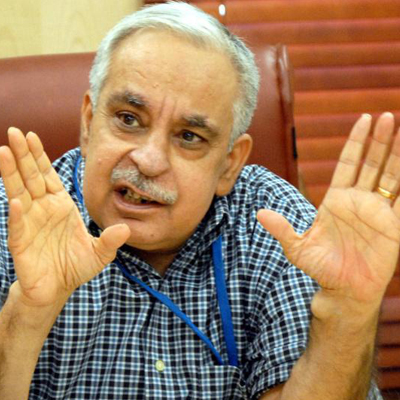
    Mumbai: In an interaction with independent consultant Anuj Gandhi at Ficci Frames Fasttrack 2022, Trai advisor (broadcasting) and TCSR DG Anil Bhardwaj said that the regulator has to play a balancing role. He compared it to making a decision about what to do with a screw. One either loosens or tightens it, he said.

    In addition, he also mentions that a consultation process is going on regarding NTO 2.0. One side wants everything controlled, while the other does not want the regulator to control anything at all. The industry, he said, needs a regulator because they cannot sort out their issues. The aim is to have as light a touch of regulation as possible. That is Trai’s ethos.

    While saying that Trai has done some good things, he admitted that some bad things may have been done. But Trai is willing to review, consult, and come back. He also noted that while content is king, distribution remains extremely important. For the linear TV ecosystem to sustain, the stakeholders have to nurture and support each other. There are 1,00,000 LCOs in the country. Each has two to three people on the ground. That is the kind of distribution power available. “Ignore them at your own peril. Everybody is at a crossroads with everybody else. A linear TV channel needs a content creator, an aggregator, or a broadcaster. You need an integrator and then the last mile operators. If someone is dying and someone else is making money as a result, ultimately, who will suffer? Linear will be dead if one arm starts killing the other. Linear TV will grow if people are willing to nurture and sustain each other,” he noted.

    He said that regulation does not put a cap on pricing. One can charge Rs 100 for a channel. What he is against is the mirage of pricing that happens with bundling. That results in consumers being misled, which is what Trai is completely against. Certain channels, he said, are sold at Rs 6 through reverse deals and have fixed the MRP (maximum retail price) at Rs 19. Privately, he has asked them why this is being done. As a regulator, data is obtained and almost everything comes to Trai. The reason given is that the channel level will go down if it is not priced at that rate. “This is the mentality of the distribution head of one of the largest broadcasters in our country. In that situation, you need a regulator. We have not asked a niche English channel not to price themselves at Rs 50 or Rs 100. They have shut down because they could not sustain their model. They were showing ads and they also wanted to charge a certain fee. Previously, this was being driven through deals done with the distributor, which today is not possible because there is transparency in the system. For bundling, we said a mirage of price was created. So we will have some semblance. We tried Rs 19. We thought of Rs 12. The purpose is not to tell the industry what to fix. It is to avoid misleading the consumer. We are again reviewing that in the consultation. We have kept postponing the implementation of NTO 2.0 till we are through with this consultation process. We want to know if the price of Rs 12 is okay or not.”

    He further said, “We have done certain good things. Maybe we have done some bad things. That is why nothing is cast in stone. We are willing to come back and consult. We are willing to forego regulation provided the market matures. If we reduce or remove regulation, we will find that the market is not functioning as it should.” He noted that in the current consultation, one side says control everything and the other side says do not control anything. One side desires a minimum level of assurance regarding distribution effort. So a balancing role has to be played by Trai. The market is not mature. There are issues, he noted, with broadcasting, with channels shutting down. He also noted that channels are sometimes shut down by distribution as a certain show or content might cause a problem for some people. “This is the kind of country that we live in.”

    He said that as a regulator, Trai has to act strongly, but it cannot be done tomorrow or people will complain of high-handedness. The market has to mature to a level where certain things are known and numbers and facts are known. He gave the example of hundreds of MSOs getting audits done themselves by one of the 52 auditors chosen by Trai. That is, until you reach a certain place. “Without distribution, no ecosystem can survive.” On the content front, he said that Arpu is Rs 273. The ecosystem decides this, not the regulator. “If the industry is dying, please raise prices. Content is king, which is why digital media is paying five times more for content production compared to linear broadcast. So, if broadcasters need more revenue for content investment, then please review your models. Trai has never said not to invest in content. Broadcasters should make models in such a way that the money invested comes back. We will not stop you. Please make good content.”

    He added that numbers for the broadcasting industry are coming down, which could be due to a combination of factors, including OTT, DD Freedish, and Covid. Today, there are 900 or so TV channels. There are 1,000 odd MSOs. DTH is 70 million homes, and cable is not at 70 million. The balance is DD Freedish, which is growing. “Linear TV is finding its own new paradigm, new place. The punch is with OTT. It is important to understand why. Content is king, but distribution remains extremely important,” he said.

    He stated that some consumers believe that content is better on digital or OTT apps. That is why some have cut the cord. A broadcaster should allow a user to have five screens at the same cost or at a much lower cost than what is charged for linear TV. Then users will not go elsewhere. There are millions of smart connected TVs today.

    He also noted that India is unique in many ways. He gave the example of the mandatory content sharing bill for events of national importance. That applies to some sports events, even if the acquisition price is high. The aim is to have the events seen by the masses, and it goes beyond the ambit of commercial deals done. This is something that the Supreme Court has agreed with. “We are a very different country. It is an evolution. I am not saying that we are 100 per cent correct or that the US is correct,” he concluded.

  • I&B Minister Anurag Thakur expects Indian M&E sector to double by 2030

    I&B Minister Anurag Thakur expects Indian M&E sector to double by 2030

    MUMBAI: Indian media and entertainment sector, which is currently valued at $24 billion is expected to grow to $30 billion by 2024.

    “I feel with the growth rate we have and I’m sure it’s going to grow more than that. By 2030 we expect it to double and even more,” Information and Broadcasting Minister Anurag Thakur told an international media publication at the ongoing Cannes Film Festival recently.

    “I think it’s quite lucrative and I expect a lot of people to come and shoot in India because our major focus is to make India the content hub of the world. India has a lot to offer, we still need to grow and go ahead from here. And I expect these incentives may help in the future to attract a lot of business” said Thakur.

    In the interaction, he also spoke about the importance of being competitive. “By the end of the Cannes Film Festival you will see the word has spread that India has announced this much – others may come with better packages and all that,” added Thakur. “In a competitive world, you can’t stop here, you have to keep moving. It has to be on a real-time basis, you have to compete with the world. It is not only the incentive — yes it is going to impact — it is also the locations, skilled and less expensive manpower and a huge domestic [India] market available for them as well.”

    He also spoke about the importance of the country creating content that can travel globally. “We have to create content for the world, not only for the domestic [India] market. Keeping that in mind, I’m sure if they [the West] could have Marvel’s superheroes, why can’t India?”. “We have a 6,000-year-old rich cultural heritage, we can showcase it to the world in a beautiful manner,” Thakur added.

  • 5G auctions likely in May

    5G auctions likely in May

    Mumbai: 5G spectrum auction in India is expected to be held in May this year subject to the Telecom Regulatory Authority of India (Trai) submitting its final recommendations on various aspects of the sale process by March, said a senior official of the telecom department.

    Trai is expected to respond to DoTs request for recommendations on modalities such as reserve price, band plan, block size, and quantum of spectrum to be auctioned by next month, following which the department will initiate the auction.

    “Trai has indicated that they will send it (recommendations) by March. Thereafter, it will take us a month to make a decision around it,” Telecom secretary K Rajaraman told PTI.

    Rajaraman also informed that the DoT has already selected MSTC as the auctioneer for the upcoming auction.

    Meanwhile, the telecom regulator has asked telecom and satcom companies to submit any additional comments before 15 February, especially with details around methods for valuation of the spectrum. While both stakeholders have argued for a steep cut in the band price, they remain divided on other aspects including the auction of a high-frequency range of 27.5- 28.5 GHz.

  • Budget 2022: I&B ministry allocation slashed to Rs 3980.77 crore in FY23

    Budget 2022: I&B ministry allocation slashed to Rs 3980.77 crore in FY23

    Mumbai: The Union Budget 2022 has earmarked a total sum of Rs 3980.77 crore for the ministry of information and broadcasting in the fiscal year 2022-23. This amounts to a decrease of Rs 90 crore from last year.

    With the exception of the Press Council of India that saw an increase of Rs 7 crore, up from Rs 20 crore in FY22 to Rs 27 crore for FY 23, the budgets for all other autonomous bodies under the MIB were slashed.

    Allocation for Prasar Bharati’s declined to Rs 2,555.29 crore from Rs 2,640.11 crore in the last financial year. The same was the case with The Films and Television Institute of India (from Rs 58.48 crore last year to Rs 55.39 crore this year), the Indian Institute of Mass Communication (from Rs 65 crore to Rs 52 crore), Children’s Film Society of India and the Satyajit Ray Film and Television Institute.

    Allocation for broadcasting under the social services head has also gone down from Rs 2,921.11 crore to Rs 2,839.29 crore. There was also a reduction in the budget for ‘information and publicity’ from Rs 971.26 crore to Rs 942.04 crore.

    ‘Information and publicity’ covers establishment expenditure of media units in the country such as the Bureau of Outreach and Communication, Press Information Bureau, Publications Division, New Media Wing, Registrar of Newspapers for India (RNI), Films Division, National Film Archive of India, Electronic Media Monitoring Centre and others.

    Hailing the budget as “beneficial”, information and broadcasting minister Anurag Thakur said that it is a blueprint to fulfil the hopes and aspirations of a new India in the 100th year of its independence.

    The annual budget for 2022-23 was presented by finance minister Nirmala Sitharaman in Parliament on Tuesday.