Category: Regulators

  • OTT aggregation and bundling of services will drive growth: Aamir Mulani

    OTT aggregation and bundling of services will drive growth: Aamir Mulani

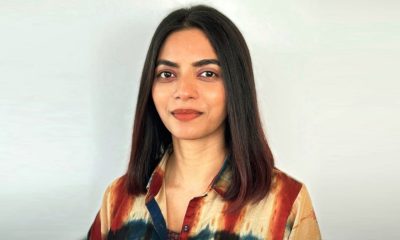
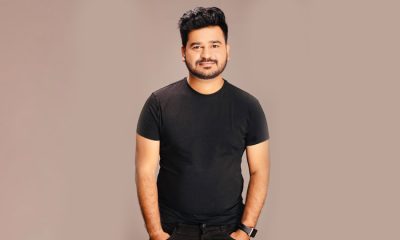
    Mumbai: Aamir Mulani Founder & CEO Playbox TV was speaking at Indiantelevision.com’s annual industry event, The Content Hub in Mumbai on Tuesday, in conversation with Associate Editor, Kalpana Ravi. Playbox TV was launched three years back. Basically, the idea was about bringing OTT and live TV into a single platform so that consumers can pay one single subscription to enjoy their television and OTT on a single platform. Till today, we have almost partnered with 26 Plus apps, and we are selling subscription for them. Similarly, we are activating more than 450 plus live TV channels, Mulani said.

    “So, for a consumer, it is very simple, the consumer Playbox TV subscription is 30 to 40 per cent cheaper from the market. So that is the benefit for the consumer, other than that content creators. We have an existing distribution platform and Playbox TV is being bundled with 600 plus ISPs in the country and they are bundling this with their broadband connection. Similarly Playbox can get smaller ISPs to bundle OTT subscriptions and content creators and use this as a distribution channel. We are available in all the major pin codes in the country and more than 3.5 Crore pamphlets are getting printed every quarter and this kind of branding can be used to reach out to newer audiences.”

    Mulani added on and said, “The subscription is between 399 and 999 and depends on the package a consumer takes. If a consumer has a broadband connection then Playbox TV is free. If you have a 100 Mbps connection and you get six OTT apps and if you have a 200 Mbps connection, you get 14 OTT Apps. OTT is like VAS for the consumer, it is also helping ISP to sell more, because the consumer who is getting a broadband connection for the house is now wanting to watch Prime, or Netflix or any other GEC. A consumer who has been watching only TV is now exposed to broadband, and he no longer wants appointment viewing and does not want to pay different subscription for different platforms. So Playbox becomes very convenient for them. We have partners across India, the reason is we can reach where the bigger Telcos cannot reach to the remotest locations in the country because of the optical fibre dependency. Content creators can use this existing distribution channel to reach out to audiences and also get paid for it.”

    Ravi then asked, content producers with say probably few serials or movies can come onto Playbox TV to reach out to a wider audience, Mulani said, “Definitely in the last financial year, we sold almost 1.8 million subscriptions, and these are from a smaller town, ISP and cable operators who never thought they could also sell a broadband connection bundled with OTT. This is a more granular approach, any OTT player can create content. I believe the best part is that we have almost 180 Plus local channels and they are not available on DTH. So for example, a guy who has a small news channel in the interior of Maharashtra once he comes on to our App, then the content is accessible across India. That is the benefit of Playbox.”

    “My game plan is very simple. I want to be consistent in what we are doing, and I want to add more and more partners to the network. Presently we have 26 OTT Apps, but soon we will be 200 as new OTT Apps are coming into that deal. Apart from that we are also opening channels for individual creators. So for example, if you create a short film, you can come to the App and with a click of a button, you can create your own OTT App on Playbox TV and put your content and that content will be bundled with the existing ISP and Cable Operators. That is my vision.” said Mulani. 

    “Today Netflix and Amazon have not yet realised the potential of New India because Bharat lies in Tier 2 & 3 cities of the country and Netflix and Amazon are still figuring out that Tier 1 is their market. But if they come to PlayBox TV their content will be exposed to a larger audience,” concluded Mulani.

  • Noventiq appoints Satpreet Singh as its chief financial officer in India

    Mumbai: Noventiq (LSE: NVIQ), a global solutions and services provider in digital transformation and cybersecurity, has appointed Satpreet Singh as its chief financial officer for its India division. Satpreet will lead Noventiq India’s finance strategy and operations.

    With 20+ years of experience in the Finance segment, Singh brings a wealth of knowledge and skills to Noventiq. Singh is a seasoned professional and Chartered Accountant with a proven track record of enabling companies to accelerate their growth and to scale up sustainably. 

    Singh will be responsible for developing and leading a team of finance professionals for Noventiq India. He is a seasoned professional who brings a huge expertise in financial strategy in India, optimization of financial resources, and simplification of processes. He will take on this role in collaboration with Noventiq India’s senior management. He will work closely with Noventiq India senior VP Vinod Nair, while reporting to Noventiq global CFO Burak Ozer. 

    Noventiq CEO Herve Tessler said, “We are delighted to welcome our new CFO for our India operations, Satpreet Singh. India is our largest [region/country] and one of our top priority markets. Satpreet will play a critical role in driving our profitable growth and development in the region. With a deep understanding of India’s business landscape and its people, Satpreet is well-equipped to lead on our ambitious financial priorities for Noventiq India. We look forward to working closely with Satpreet who, along with Vinod and the rest of our team in the market, will help Noventiq to achieve our goals and build a better future for our company and the communities we serve.”

    Noventiq India senior vice president Vinod Nair said, “Noventiq has a very significant operation in India and is constantly re-inventing its offerings focused on its clients’ needs and scaling its operations. Finance is a great enabler in this journey and will help drive the accelerated profitable growth that we are targeting. Satpreet’s in-depth understanding of the current accounting practices and trends in capital raising, change management, and business partnering will be incredibly beneficial in guiding the organisation in the right direction – towards success. We are happy to welcome him onboard and look forward to working with him to reach new heights.”

    Singh said, “Noventiq’s strategies, innovation, and use of cutting-edge technology are unparalleled. The company is constantly looking to improvise and streamline its operations to grow and thrive in the market in the long run. I am thrilled to commence the next phase of my career with Noventiq and look forward to working closely with the team to achieve our collective goals.”

    Since 2014, Noventiq India has transformed from a small team of two employees generating $2 million in revenue to a powerhouse with around 2,500 employees and $315M in turnover growth, as published in the first half of our FY2022 results.

    It is one of the fastest-growing and most important operations in the company, and has played a key role in the business’ overall success. The impressive growth of Noventiq India is also due to some important strategic acquisitions, including: Embee, Umbrella Infocare, ValuePoint Systems, and G7CR. These acquisitions have helped to expand the organisation’s reach and capabilities, and have solidified its position as a leader in the industry. With such a strong foundation and talented team, Noventiq India is well-positioned for continued success in the years to come.

  • Nicktoons Abhimanyu and Kanha Set to Wow Audiences with their Adventures: Viacom18 head Anu Sikka

    Nicktoons Abhimanyu and Kanha Set to Wow Audiences with their Adventures: Viacom18 head Anu Sikka

    Mumbai: In a constant endeavour to propel the kids’ category with indigenous stories that are a product of insights, creative storytelling, great animation and endearing Nicktoons such as Chikoo aur Bunty, Happy & Pinaki – The Bhoot Bandhus, Motu Patlu, Shiva, and Rudra, Nickelodeon enjoys a cumulative network share of 31% within the genre with Nick leading the category for 9 consecutive years. Further strengthening its content game and enticing kids this summer, the kids’ franchise gears up to announce the launch of two new IPs, ‘Abhimanyu Ki Alien Family’ on Nick and ‘Kanha – Morpankh Samrat’ on Sonic.

    ‘Abhimanyu Ki Alien Family’, the only alien show in the kids’ category, is a sci-fi comedy series based around the alien Abhimanyu and his team of three, who embark on a mission to learn about the unique cultures and ways of life on Earth. In the series, the alien team faces troubles as they try to blend in with humans in their human form, make friends, hide their identity, and overcome adverse situations and threats. ‘Kanha – Morpankh Samrat’ on the other hand is a captivating mythological series that chronicles the adventures of young Krishna and his famous tales, showcasing his journey as a son, warrior, hero, friend, and brings alive his playful and mischievous antics.

    Indiantelevision.com caught up with Anu Sikka, Head – Creative, Content & Research, Kids TV Network, Viacom18 at the launch of the shows. She speaks to us about the creative idea behind the shows, researches on what children want to watch and much more.

    Edited excerpts:

    On Abhimanyu Ki Alien Family on Nick and Kanha – Morpankh Samrat’  on Sonic. Why on two different platforms?

    We did not want to put all our ammunition on one channel. Nick has been number one for nine years and we want to make sure that Sonic is back to number two. We have two strong shows and the biggest market share; hence the division of two shows on two different platforms. The effort invariably is to offer new shows on both platforms.

    Abhimanyu is a character with various powers and there is nothing like that on Nick; moreover, we do not have any mythological show on either of the platforms. Kanha – Morpankh Samrat goes on on Sonic as there hasn’t been a new show on the platform for some time.

    On doing a mythological Kanha – Morpankh Samrat’ now

    There was a saturation point around mythological content around 2008 – 2009. It is a whitespace and we have created it very differently. There have been characters like Hanuman and Ganesha, but it was contemporary and showcases the character in today’s time. These are pure age-old stories of Krishna, and have been told as is. We have found our own way of storytelling. The soul of the character is intact, and is in pure Hindi. It is not spoken Hindi, which is normally used in most of the other shows. When it comes to music, the name Kanha/Krishna will come to our minds. It is presented in a way that is different from any other show.

    On the language of the show being pure Hindi, especially for Kanha

    Abhimanyu is contemporary Hindi and at times Hinglish. There are certain times when we use English words which kids normally use when they’re speaking to each other. But for a show like Kanha, given that the subject demands it, we haven’t used contemporary language, English or even Urdu. We have been very mindful of this fact.

    We believe that if we have to create a character, then we have to go all the way to make sure it comes across as authentic; whether it succeeds or fails, time will tell. The audience will love the language in Kanha. It is a risk we are willing to take.

    On the improvement of animation and if they are looking at shows beyond animation

    Well, for us, the proof is in the pudding. Being the number one channel and network is proof of whatever we have produced over the years. animation is not going to go out of fashion is another fact. Kanha is a show that we will launch simultaneously on GECs too. Animation as a genre is going beyond kids as well. There is a generation which has now grown up with animation. Today as an adult, they are not averse to watching animation, especially with their kids.

    I see a very bright future and truly believe that animation as a genre will go beyond children, it probably will go even for the youth. Somebody has to pick up the bait and say, I’ll run with it, and say why not create an animated series for the youth. Anime is coming to the forefront and it is available in the market. We have a lot of anime content on Voot Kids, which we know is doing very well among teenagers.

    Abhimanyu is being done for the first time in India, it’s new and has a very different look. We have not just pushed the envelope just in terms of storytelling, or the creation of characters, but even in terms of the animation quality. I think we are trying to push the boundary and trying to say that, we have done this, let’s try something new. Of course, it needs to have good economics behind it. As far as the quality of animation is concerned, you can go on endlessly. We will continue to push the envelope.

    On the thought behind the shows and is there feedback from the kids on what they want to watch?

    Well, we keep interacting with children on a regular basis and conduct various types of research, whether it’s regarding the shows that we launch, or ongoing shows. There are various format studies, which tell which are the characters which are very popular amongst children.

    Kids need to be kept given something new and not old, tried and tested things. If they are going to watch the same content repeatedly on their favourite channel, they will move on beyond a point. We have to be very careful even when presenting a character which has a resemblance to another character. They are the first ones to catch on. So, we have to be very mindful.

    On the characters being very relatable to the young kids.

    The characters have to be relatable or aspirational for a child. A child is very clear when he looks at a particular character, either as a friend he wished he had or a character who could do magical things or who could solve all problems. The show Chico aur Bunty is a classic example; it has been the only show to be the number one in the kid’s category in the first week of launch and it stayed right there. It is because of the relatability every child was able to identify. We’ve tried to stay in that zone, the kids need to have that bonding with the character.

    On the shows being on different time formats. You have also done various genres in various time limits. Is there a formula for this?

    There is a logic which goes behind everything. So, for instance, with ‘Pakkadam Pakkadai’ we have experimented with silent comedy. As a matter of fact, internationally, it’s sold as a silent comedy. When it comes to silent comedies it is very difficult to pull off 11 minutes, it’s not possible to keep the pace of comedy going, and make sure that the audience does not lose interest. Hence, if there is a comedy like that, it could be anywhere from five to seven minutes.

    When there is a good enough story to tell with a little bit of action, and humour then 11 minutes is a good format. For shows with intense drama and action then you will have to take it to 20 minutes to justify those action sequences. If you really believe that the scale of your story and the scale of the show is such that the focus is a lot on the action, then you need that kind of time where you’re able to justify the action and it leaves an impact on the child. There  is a formula as to why we use different formats in terms of time duration for different kinds of shows.

    On bringing an Alien as a centrepiece in Abhimanyu Ki Alien Family

    We believed that aliens as characters resonates very well with the kids and with the adults also because it’s a mystery. We have heard stories about it since our childhood, and have read so many different stories, but it’s the unknown factor. Anything that is unknown always fascinates children and adults. There was also a  need gap as no one had done something like this. We know for a fact that this alien character will appeal to children a lot, and hence, Abhimanyu and his family came along. It took us more than a year to create the show.

  • Passionate fan petitions over the past several years demanded that KC Global Media bring Animax back to India: KC Global Media’s George Chien

    Mumbai: Anime culture in India is on the rise and it’s no surprise as to why. From classic series like Dragon Ball Z and Naruto to the newest and most popular shows such as Demon Slayer, Attack on Titan and Jujustsu Kaisen, anime has become increasingly popular in the country. In India, anime has become a source of entertainment and inspiration for many, with its storylines and captivating art styles.

    Anime is often confused with cartoons, but it differs in many ways. One of the main differences between the two is that while anime uses hand-drawn images, cartoons are created using computer graphics. Another difference between these two terms is that while there are many genres available under the umbrella of anime, cartoons usually fall into one or two categories, such as comedy or adventure.

    With the recent launch of the Animax channel on Jio TV, more people are beginning to explore the culture of anime in India and discover its hidden gems.

    Indiantelevision.com has caught up with KC Global Media co-founder president & CEO George Chien on the launch of Animax and the growing animated content in India.

    Edited excerpts:

    On sharing a brief background about the company

    Co-founded by Andy Kaplan and George Chien, KC Global Media is the leading entertainment network in Asia, with our portfolio of iconic entertainment brands comprising English-language general entertainment network, AXN; anime network Animax; South Korean entertainment network ONE; and Japanese entertainment network GEM. Our networks are available across 20 territories in the region, with each having its own fan following for action, anime, Japanese and Korean drama, and variety. KC Global Media are also proud producers of flagship original content such as Asia Got Talent, Amazing Race Asia, and AXN All Stars as well as unique fiction podcasts like Fey Hollow, and The Fairy Tale Murders.

    On bringing animated content into the Indian market 

    Passionate fan petitions over the past several years demanded that KC Global Media bring Animax back to India, making premium anime content accessible to everyone. India’s adoption as a digital-first and 5G nation has also been key in driving growth opportunities as consumers are open to exploring more as content becomes more accessible across various platforms. The rise of the OTT industry will continue to soar further while affordable prices of OTT platforms in India continue to fuel the growth of demand from consumers across various demographics. Simply put, the fans demanded, and we found a way to deliver it.

    On any remarkable change among the shift in consumer behaviour 

    With a fiercely competitive market, some streaming providers are focused on quantity over quality, which often results in a lack of quality programming. This results in consumers experiencing content fatigue, as options for content become overwhelming.

    As content providers compete for consumers’ attention, consumers have become smarter, and demand premium content at value prices. The key to winning consumers is in creating great value propositions, and KC Global Media has been strategic in partnerships with national players, leading broadcasters, telcos, as well as regional and local platform operators to give the best value for consumers. 

    With the availability of content on various platforms, consumers can be picky in what they watch but are also open to exploring new genres of content. This shift in consumer behaviour has given KC Global Media an opportunity to showcase the best entertainment for our fans as we continue taking a “fan first” approach when we acquire content from studios around the world and bring it to them.  We thrive on creating memorable experiences with our customers.

    On creating animated content of Indian origin 

    We would absolutely be interested in exploring the possibility of developing Indian anime characters in collaboration with Indian creators and companies. As a matter of fact, we are in talks with various artists in India to create Indian originals that we believe can work locally, before we share it with the rest of the world. It’s an exciting process and it takes time to get it right.  

    On plans to collaborate with any major entertainment channel in India 

    Definitely, YES! At KC Global Media we take pride in promoting Asian artists and their works on a global scale. India already has a very robust entertainment industry in Bollywood but we also realize there are tons of passionate stories that are untold. We are talking to all the major entertainment networks as well as producers to find the right stories for our brands. This will again take time, so stay tuned. 

    On the current scenario of animation content in India 

    Anime has gained popularity through many YouTube channels and social media influencers who dedicate their love for anime. Local online anime communities have also grown in the past few years. Anime shown on popular streaming platforms has led to an increased popularity and consumption of the genre. However, the anime libraries of these streaming platforms are not as comprehensive, and more obscure anime are often overlooked, which is where KC Global Media comes in to fill the gap to anime fans through our channel offering and our position as the leading anime channel in Asia.

    On expecting more animated content in the near future

    Yes, of course! Animax is a brand focused on curating the best anime from Japan. However, we have continually expanded our capabilities on original animation creations in partnership with leading animation studios, but our offering will be dictated by the fans. Anime content costs have gone up significantly especially when global streamers are writing big checks. However, as we stay close to our fans, listen to what they’re asking for, KC Global Media will deliver the right content and memorable experiences that they have known to love over the years.  

  • Kevin Vaz steps out of Disney Star

    Mumbai: Disney Star president & head – network entertainment channels Kevin Vaz has put in his papers. His next move isn’t known yet.

    Vaz took up his new role in September 2021. Prior to that, he was the head of infotainment, kids and regional entertainment channels at Star and Disney India. Before taking on that role, Vaz was the CEO – regional entertainment channels at STAR India.

    It’s speculated that Vaz will be joining Viacom18.

  • Content remains king in The Future of Video in India

    Mumbai: The Asia Video Industry Association’s (AVIA) Future of Video  India conference opened to a full house with a keynote conversation with Ministry of Information and Broadcasting (MIB) secretary Apurva Chandra. Chandra stated that with OTT, Indian content has become more accessible and more acceptable to a global audience. “Quality of content has always been very good in India, but now it is easier for Indian content to travel across the world. OTT has helped it in a big way,” said  Chandra. He also reiterated the need for OTT to continue with a soft touch approach, as the three tier self regulatory system has been working well. While there were concerns that light touch regulation has led to less  desirable content, he remained of the view that the industry needed to be more self-aware so that the  government need not step in. Chandra also shared that a National Broadcasting Policy has been in the works, as the industry was becoming more fragmented. However, this would take time in order to balance the conflicting  interests of all the disparate parties.

    With the explosive growth of OTT and original content in India, the MIB also remained committed to the fight against piracy. “The new Cinematograph Bill that is underway seeks to protect the entertainment industry from piracy. We are ready to take action against not only those who record the content illegally, but even those who  are transmitting it online. The websites which stream pirated content will be blocked,” said Chandra.  

    This focus on content was a theme that followed throughout the conference. Prime Video India country director Sushant Sreeram talked about the importance of authenticity in a market as diverse as India. “By being locally authentic, it provides the best opportunity for regional and global success,” noted Sreeram. India also maintained the second largest development slate after North America, signalling Prime Video’s commitment to the market.

    Similarly, Disney+ Hotstar India head Sajith Sivanandan said, “We are building for all India. There is no one  India, there are many Indians and it is important that we speak to all of them.” However, much greater interactivity with the content was on his wishlist for the future, as well as the ability to serve the masses but at a scale of one. “Creative and technology should be working together to serve every single person to get the content they want,” he added.

    Meeting the digital consumers’ demand was also part of the vision for Viacom18. “We have a digital-first mindset  for the foreseeable future. We want to back the digital India vision and put our might behind it,” said Viacom18 CEO Jyoti Deshpande with most of the money spent on content going to digital and not TV. “All formats  will co-exist for the foreseeable future. The consumer should be free to interact with content the way they please,” added Deshpande. Applause Entertainment managing director Sameer Nair also noted that ‘streamers have done a great service to the content industry, making content more easily available to consumers.’ “We are in the business of creating mass-distraction,” quipped Nair.

    MIB Joint Secretary (policy & administration) Vikram Sahay, who participated in a content panel with some of  the industry’s top content leaders, also said that the best thing about OTT was the democratisation of talent. “The  greatest thing is the democratisation of talent which this industry has allowed across all parts of the creative  content chain,” said Sahay.

    However, the jury is still out on the best way to monetize the content that is flooding the Indian market. For Shemaroo Entertainment COO Arghya Chakravarty advertising was highly dependent on the economic climate,  as the advertising markets changed. Hence the sweet spot was always somewhere in the middle, and for long  term sustainability, it would require a mix of both. Warner Bros Discovery APAC director retention engagement & growth strategy DTC marketing Praveen Chaudhury also noted that the high cost of direct customer  acquisition meant aggregation and partnerships remained key.

    As the fragmentation of advertising delivery was continuing to put huge downward pressure on rates, the role of  operator bundling was also super important, said INVIDI CBO Prasad Sanagvarapu. “With very  rich first party data sitting with the aggregator at a level dwarfing what any individual OTT service could manage,  they had a crucial role to play in advertising,” added Sanagavarapu.

    The very important issue of female representation in the television and entertainment industry was discussed by a distinguished panel of female industry leaders. Network18 CEO business news Smriti Mehra highlighted the fact that all too often workplaces had defining gender roles and too many talented former colleagues had dropped out of the industry. There were societal issues at play as well of course, but there was much positive action that could be taken within the corporate context. Earlier in the day. Jyoti Deshpande had defined it as the search for equity, not just equality.  

    Wrapping up the conference, Media Partners Asia (MPA) VP Mihir Shah said that India’s growth story  remained intact amidst global turmoil, with macro tailwinds and digitalization propelling growth for video  advertising, and digital penetration now on par with television. Content spend was also expected to double to  US$10bn in the next five years, with online video content investments catching up with pay TV. Shah also noted  that mergers and acquisitions will continue to fuel scale and profitability for the major incumbents. And with  Connected TV adoption on the rise, premium inventory will fuel the growth for the AVOD segment. “Content is  king, and it’s reigning supreme,” summarised Shah.  

    The Future of Video India is sponsored by AKAMAI, Bharucha & Partners, INVIDI, Magnite, MEASAT,  PubMatic and Samsung Ads.

  • Mahindra Group appoints Kedar Apte

    Mumbai: Mahindra Group has appointed Kedar Apte as chief of international operations – Farm Equipment Sector and Two-Wheeler business. In his new role, Apte will head the company’s global operations for the farm equipment sector and its two-wheeler business. He made the announcement on LinkedIn.

    Prior to this, Apte was with Reliance BP Mobility Ltd (RBML) as the chief marketing officer of RBML. Earlier this month, he stepped down from the post of CMO at the company and mentioned on LinkedIn that he will be starting new innings in ten days.

    He joined the Reliance company in August 2020 after moving on from Castrol. Previously, he had worked with Castrol and Hindustan Unilever.

  • TRA’s MDI Q2 2023: South Zone businesses continue to prioritize digital channels

    Mumbai: The Q1 and Q2 2023 comparison of marketing medium strengths in the South zone reveals a continued focus on digital channels, as businesses in the region prioritize targeting and measurement capabilities for their marketing efforts. TRA’s Marketing Decision Index (MDI) Q2 2023 is a quarterly benchmark report, the second in its series, and a global first that provides leading indicators through primary research conducted with 757 Marketing Decision Makers (MDMs) across 16 Indian cities between January and March 2023.

    Digital Advertising, Digital Search, and Social Media remain the strongest marketing mediums in the South zone, with strengths of 73.08, 73.43, and 70.52, respectively. Despite a decline from Q1, these platforms continue to outperform traditional advertising mediums in the region.

    Radio Advertising strength saw a significant increase in the South zone, rising from 34.33 in Q1 to 59.82 in Q2. This growth aligns with the trend observed in other zones, highlighting the resurgence of Radio Advertising as a cost-effective and region-specific marketing medium.

    National TV Advertising and Public Relations strengths declined in the South zone, dropping from 57.98 to 50.13 and 63.45 to 49.68, respectively. These decreases suggest a shift in focus as businesses in the region allocate resources to digital channels and Radio Advertising, shifting focus from conventional advertising mediums.

  • “Digital has exploded the multiplicity of choice:” Gunjan Arya – CEO – OML Entertainment

    Mumbai: OML or Only Much Louder is a media and entertainment organisation working across various media and experiential formats to impact pop culture. The organisation has pioneered on-ground and online experiences that have resulted in lasting memories shaping how fans know their favourite artists and brands. Apart from continuing to be an artist management company in music and comedy, over the years OML has evolved to include a production house and has also moved into creating television and digital content.

    Indiantelevision.com caught up with OML Entertainment CEO Gunjan Arya. She has been working in the field of media, marketing and design since the age of 16 and started her own brand consulting company ‘Design of Information’ in 2009, which won several coveted awards globally. Arya, who has been part of OML since 2015, was instrumental in building OML’s global creator network over the last three years which now operates across 20+ countries and 700+ content creators that helps artists, brands and platforms build equity.

    On the expectations from the Hypothesis

    I am keen to see how people respond but I think that we have something that has gotten a proven track record. It is no secret that influencer marketing is only growing and has become an important part of the media mix for even traditional brands. So, this is literally the need of the hour.

    Moreover, anything that promises higher efficiency will have a high offtake. I am keen to get it launched. It is about what artists need. Artists are the media brands of today not of the future. Nobody is telling artists things like which creators their fans follow. And, I truly want to build that intel where artists can take that data and work on it. This will not mechanise the process but will sharpen the brief.

    On how the company has benefited from organisational restructuring done a few years back

    Our former founder Vijay moved on and I took over. I even replaced him on the board as well. And, I think that we have done fine. We have been profitable for the past four years and are still growing. We did Rs. 300 crores last year – almost 40 percent of that came from abroad and I do not know how many Indian companies can say that.

    On the contributions of the three business lines

    I would say that brands constitute the highest billing. But given the nature of our work, each business flows into the other because we have a strong artiste roster and various brands come to us. Since brands come to us, artists also want to work with us. Again because we have artistes, platforms work with us. Our teams build original shows and hence artistes come to us. Therefore, each line feeds into the other.

    On how OTT allows for experimentation

    It is about the barrier to entry. In cinema, there is a certain threshold at which they make sense. It costs money to mount a film. If you have to hit that number you need a certain cast, it has to be worth it for them and the producers. On the other hand, digital has allowed a lot more experimentation. The narratives that we get to see and hear and the people as well both in front and behind the camera, are very exciting. Digital has also changed media planning. It is an audience of one.

    Digital has exploded the multiplicity of choices. And because that multiplicity of choice exists, and individual feeds differ because different choices are made, hence it allows for a lot more unique storytelling opportunities. You get to select what you watch. In addition to that, OTT has a richness of data. The data engines have shown that people watch Turkish TV, South Korean content, and even Spanish shows, so maybe it is not all about Bollywood, after all.

    On what OML looks for before signing on talent and working with 70 artists across genres

    They must be super excited to get their original voice out there. Sumukhi went from being a stand-up comedian to creating a show ‘Pushpavalli’ which got a second season. Now, she is writing movies for big Bollywood producers and writing shows that will soon come out on OTT platforms. It is her individual point of view of the world that makes it so exciting for us to work with her. She has now set up her own content company which has a very specific take on the world. That is what makes it exciting.

    Zakir did a video on Mother Dairy. Tanmay has also worked with Netflix. Janice has worked on Social Media Star. There are many examples.

    The name of the show is Swipe Ride – Tinder  which actually started with Youtube and ended up on Voot. We also did a show with Bumble called ‘Dating These Days’ that started on Youtube and is now on Disney+Hotstar. In Poland, we started a show about friends hanging out, which was sponsored by Martini, and went on an OTT platform there. All these are wins.

    This is not a challenge. There is so much more to do. The roster is super wide. We work with a mentalist who got a chance to work to be the face of Vodafone. We work with Dolly Singh who is a creator who came from Instagram. Due to her crooked teeth, she got the chance to work with Colgate. There is also Zakir Khan who is now the highest-paid comedian in the country. It is a really exciting time to work with all these amazing artistes.

    On examples of bringing brands and content creators together

    About five years ago, we looked at Lebanon. A brand wanted to activate there and Lebanon has a really big music scene but not a comedy scene. The brand did not have the budget to collaborate with Lebanese musicians. So, we actually looked around and found a comedian who was willing to do a Youtube show. This show was him wheeling around a channel speaker, a speaker on a trolley.

    He walked into co-working places, bars, nightclubs, and hobby rooms and tried his 10 minutes routine there. This then became a Youtube comedy show with a host, a live audience, guests, and a band on stage. The best part was that in Lebanon when a show is shot, audiences are paid to sit. But here audiences paid ticket money to be a part of the live taping. This was a three-year journey and it happened due to the support of a brand.

    In Poland, four years ago, we worked with a brand that typically activates in the music space. We did a deep dive into the market and felt that hip-hop would explode as people were trying out interesting things. We thought of launching Poland’s first hip-hop awards and this is supported by Bacardi. This year, over 700,000 people voted.

    All these were possible because we always look at content creators as being conduits to culture.

    On whether more brands are looking at live entertainment as an alternative to ATL

    The biggest replacement is digital content. This is where we see the most growth as well. More than two-thirds of our revenue last year came from brands spending on content marketing.

    On the key international markets

    We will look at the US and the UK in a big way. So far, we have looked at the Middle East, all of Africa, Southeast Asia, and India of course. This year, we are adding Japan, Hungary, the Czech Republic, China, and South Korea.

    On the goals that OML has set for itself in 2023

    This will be an interesting year. There is a recovery from the break that all of us had due to the pandemic. Now, there is talk of an international recession though it is not so much India-specific. At OML, there are three lines of business – the number one is artistes, the second is content production and the third is brand solutions.

    Speaking of our first line of business, we started as an artist management company 20 years back and used to manage independent musicians. Our pitch was that fans will pay to watch them and that bet paid off, all thanks to Youtube! Our artist management roster grew to include digital celebrities of all types- comedians, writers, and directors like Zakir Khan, and on the creator side, there are people like Dolly Singh and many more.

    The second line is about content production which was about making videos for musicians. And, now it has become an original content studio for OTT platforms. We work with everyone from Netflix to Amazon to Disney+Hotstar and have altogether produced 76 shows.

    The third line is the brand solutions business. We realised that brands want to participate in culture and artistes are the most effective conduit to various communities. And hence, we activate brand campaigns with creators; it could be about brands supporting tours of artistes. This is a full-fledged brand solutions business that operates in over 20 countries. We can even operate there without having teams in those countries as we have built our own social prediction engine.

    This guides brands on which creators to work with. And, I think it is one of the most sophisticated tools out there in the market. The proof is in the pudding. We have had 300 top trending videos in countries where we do not even speak the language. We are flipping this to a tech play, a MarTech service provider for agencies and for brands who do not want another retainer agency. But they want the intel, the process, and the know-how. So it is a Saas business. It is an off-the-shelf plug-and-play service called Hypothesis. You can use the tool to plan creator content, and influencer marketing etc. It will help with tracking, planning, and measuring ROI.

    Another line that we had was the live events business and we have been known for this due to the B2C angle. We sold this to Nazara last year. We also had Insider which we sold to PayTM in 2018. This was born from an artiste’s need. So today, OML is largely a content business.

  • The catalyst for change in India’s storytelling ecosystem

    Mumbai: The art of storytelling is one of the key factors that is giving rise to OTT platforms in India. Thanks to streaming services, the makers can now put forward their raw thoughts in the most natural ways. This Is possible due to the viewership in OTT platforms that provides a wide range of content to choose from. The Future of Video India event aims to address the change in India’s storytelling ecosystem.

    Vanita Kohli Khandekar, Consulting Editor, Business Standard in conversation with Sushant Sreeram – Country Director, Prime Video, India on the rise of OTT content in India at the AVIA – Future of Video India Summit.

    On where is Amazon Prime Video being positioned today

    It’s an interesting parable of us being the heroes and heroines in the story of taking Indian entertainment globally. And if I were to extend that, I would say I think we are the act of scene one.

    We have been in India for six and a half years and we are still relatively young, we have discovered the customer and the Indian customer has some amazingly delightful intricate nuances in what they see from online streaming entertainment. There are similarities to other forms of entertainment consumption, but at the same time, they are dissimilar. So six and a half years can feel like a lot. I mean, we have launched more than 40 local originals. Launched more than 60 direct service movies, and we have licensed movies, but all of that put together still feels like just getting started.

    On the reach of content globally

    Almost all of our original and local content is launched in more than 240 countries and territories and they get a global reach. And that’s actually one of the things that makes us really compelling for creators because they find a global audience. Take the example of ‘Farzi,’ as you mentioned, and I personally love it, too. At the first launch weekend of the show, not only was it an amazing success in India, customers loved it, but it actually entered the top trending title lists in more than 10 countries worldwide. We are talking about the US, UK, United Arab Emirates, Australia, Singapore, Malaysia, and New Zealand. I think that’s actually one of the big parts of what makes it a bigger proposition and really exciting for the partners that do other licensing. I think we do provide a global reach, but the exact number of countries varies depending on the other distribution agreements. I can give an example, the movie Jai Bheem. It was actually rated on IMDb as the number-one Indian film in 2021. It was launched on Prime Video and it was streamed by customers in India and overseas. That’s the kind of reach that it got.

    On the type of stories that work in the Indian market

    I want to target that Indian sensibility because the thing about India is that it is so delightfully diverse, that it’s actually not one homogeneous set of sensibility. It’s not just about languages, one of the first things that we really discovered is, that there is massive heterogeneity when you look at Indian entertainment whether it is language, genres and things like that, but also the nature of stories that really are local. So the first thing that we sort of discovered pretty early on and we really doubled down on it was in telling stories that are incredibly authentic. I mean, look at ‘Suzhal,’ for example. It was the first long-form scripted Tamil original show, it absolutely stays true to the locale. It stays true to the milieu in that it is located and appeals to an Indian sensibility. We have actually over a period of time realized that the best chance of being truly global is actually being deeply local, with our storytelling.

    On how a show has been received, what is the matrix

    It’s a good question. Let me break it into two parts. The first is, as you rightly pointed out, the form of assessing what our show is doing based on how many people are watching. And it’s pretty and obviously, there are some nuances. We love numbers, we look at all of that, how well it travels and so on and so forth. The other thing that is unique to Prime Video, is its part of a Prime membership program. It’s a multi-benefit membership program. The role that Prime Video is playing as a benefit is not only bringing in new customers into the Prime program. Secondly we look at the success of our entire slate and our content investments as we create a compelling benefit as part of prime. If you look at the Prime program and say this is incredible, it not only has free and fast shipping, it has video entertainment, it music and gaming.

    So that’s the second part of how not only do we engage customers, but actually retain long-term Prime members. The third one, if we have a look at the impact of our shows is let’s call it the three C’s, I don’t I just came up with it. That is the consumer impact on the customer, which is something that we just talked about. The other is the impact on the content partners that we work with. Do we have content partners who feel thrilled by what we bring as a platform that has such a rich audience, not just locally, but globally? We end up having long-standing relationships with them. We take that very seriously not just with established creators and storytellers but the ecosystem that we’re working with.

    On the associations either writer, production has

    Actually, it has made me reflect on what we all do and end up doing. The first is, if you just go back six-seven years like the ecosystem, and how creators looked at storytelling, it was not built for long-form cinematic storytelling for a digital audience. It was predominantly a form of storytelling that is suited for linear broadcast, or movies that are suited for theatrical viewing. So the first thing that we really had to spend time with our creators was in tuning them to visualise really long-form episodic cinematic stories for a digital paid subscribers. I don’t want to say it was not a skill set, it was not an orientation, or that it existed, we really took a lot of effort to get that. The second is, we actually go through the things that you mentioned, we’d go through writers’ workshops, and writing was for the longest time a solitary profession. The third support that we provide, and it’s something that we take upon ourselves is how do we build localization support for shows to travel. In ‘Farzi’, it was all about subtitles and close to 40 languages to find a global audience

    On the budgeting and investing in shows

    We do it in many different ways. But ultimately, it’s a question of what you are investing in the country. And by the way, it’s all one accumulation right across content, distribution and building other products and marketing. In fact, last year in April incidentally, we announced that we’re actually doubling our investments over the next five years and we are absolutely committed to that. But even today, our approach is to have a really good story to tell, why tell the story and why tell the story now? Then look for them both in front and behind the camera.

    On Indian content stand in the global scheme of things

    We have the largest slate in development in India, after the US. We have more than 100 projects right now, as we speak, that are in various stages of development and production in India. At the end of the day, India has one of the highest proportions of Prime members who stream Prime Video every month, because of the Prime benefit.  India is basically a front-runner for the Prime Video locale with the highest number of new customers adopting the service. We have been very vocal about our continued commitment to India by doubling our investment.

    On the next market, apart from US & India which has a big slot

    I can give you the example of ‘Citadel’ because it’s a good example. For ‘Citadel’ we have attempted to create interconnected franchises, it is an original IP and very interesting. But the concern was how we create an interconnected story and what we have ended up doing right now in its first leg is having the story set in three different times and three different locales. So we have ‘Citadel’ that’s launching on the 28 of April, which is the first of the series. We have an Indian version that’s going to be launching soon helmed by Raj and DK with Varun and Samantha in it. So that should give you a sense of diversity.