Category: Regulators

  • Entertainment bigwigs and global IP gurus mull over AI, royalties and rights

    Entertainment bigwigs and global IP gurus mull over AI, royalties and rights

    MUMBAI: Mumbai’s glitterati of lyricists, composers, and legal eagles gathered for a confabulation with World Intellectual  Property Organization (WIPO),  deputy director general Sylvie Forbin, courtesy of the Indian Performing Right Society Ltd. (IPRS).

    The topic?

     Intellectual property rights (IPR), the rise of AI, and how to keep the creative juices flowing in a digital age.

    Held under the watchful eye of legendary lyricist and IPRS chairman Javed Akhtar, the closed-door roundtable was a veritable who’s who of India’s music and entertainment scene. From Vishal Dadlani’s vocal chords to Kausar Munir’s poetic prose, all were present to discuss the future of creativity.

    “The music community has always shown resilience to overcome the challenges brought as well by technological advances,” Forbin declared, clearly impressed by India’s grasp of the AI conundrum. “They have adapted in the best way by showing a strong alliance between them. I am impressed by India’s knowledge and assessment of what would be needed when it comes to the AI revolution and happy to go along with Indian creators to foster regulatory, business, and technological solutions to engage in this new era with the necessary tools and safeguards. Long life to Indian music!”

    Akhtar, never one to mince words, stressed:  “The music industry has always been at the forefront of technological breakthrough. The music community has always shown resilience to overcome the challenges brought as well by technological advances. They have adapted in the best way by showing a strong alliance between them. I am impressed by India’s knowledge and assessment of what would be needed when it comes to the AI revolution and happy to go along with Indian creators to foster regulatory, business, and technological solutions to engage in this new era with the necessary tools and safeguards. Long life to Indian music!,” 

    The session, a proper meeting of minds, covered everything from strengthening IP frameworks to navigating the AI revolution. Key takeaways included the need for robust metadata, empowered collective management organisations (CMOs), and a stronger voice for creators in policy-making.

    “Having WIPO at the table added immense value, bringing international expertise and highlighting collaborative efforts to strengthen IP frameworks across nations. SWA and SRAI as representatives of screenwriters and lyricists strive for the rights of the creators and it is good to see all the stakeholders coming together to discuss the betterment of creators and protection of Intellectual Property,” said  Screenwriters Association general secretary Zaman Habib.

    The event, a veritable feast of ideas, saw participants calling for a unified voice to drive India’s cultural and economic growth. They also emphasised the importance of copyright education, data integrity, and international cooperation.

    “It was a great opportunity to listen to Sylvie and express our thoughts.We truly appreciate the initiative by the one and only IPRS in supporting India’s rapidly evolving entertainment and music landscape,” said Simca secretary general Sridhar J Swaminathan.

    With AI looming large, the roundtable was a timely reminder that creativity needs protection, and that India’s creative community is ready to fight its corner. It’s clear that when it comes to safeguarding artistic rights, they’re not about to play second fiddle.

    Key Takeaways from the Roundtable:
    * IP as a Growth Enabler: Strengthening IP frameworks is essential for fostering innovation and supporting India’s growing creative industries.
    * Global-Local Synergy: Engagement with WIPO highlighted the importance of international collaboration and knowledge exchange.
    * Preparing for the AI Era: A strong focus on evolving digital rights, metadata management, and ethical guidelines to navigate emerging technologies.
    * Institutional Strengthening: The need for proactive government support, legal clarity, and empowered CMOs (collective management organisations) to enforce rights.
    * Building a Unified Voice: The event marked a milestone in uniting diverse voices to drive long-term impact on India’s cultural and economic growth.
    * Elevating the Role of Creators in Policy-Making: Formal inclusion of creators in national IP and digital policy formulation was strongly advocated.
    * Copyright Education & Awareness: Emphasis on educating both creators and consumers on IP rights to reduce misuse and promote informed practices.
    * Strengthening collective management organisations (CMOs): Modernisation and transparency of CMOs were recognized as pivotal for trust and efficiency.
    * Data and Metadata Integrity: The need for robust crediting systems through better metadata was highlighted to ensure fair attribution and royalties.
    * Cultural Exchange and International Cooperation: The role of WIPO in encouraging global partnerships was applauded, with a call for more international dialogue.
    * Youth and Innovation: Recognising the contribution of young creators and startups in redefining the future of creative economies.


  • TRAI warns public against scam calls threatening mobile disconnection

    TRAI warns public against scam calls threatening mobile disconnection

    MUMBAI: The Telecom Regulatory Authority of India (TRAI) has issued a public warning over a rise in fraudulent calls and messages from scamsters posing as TRAI officials, falsely claiming users’ mobile connections will be disconnected due to alleged illegal activity.

    “There have been several media reports in the recent times that the consumers are being targeted through telephonic calls or messages by fraudsters posing as TRAI officials threatening disconnection of mobile connection for being involved in illegal activities and for extraction of money,” TRAI noted in an official statement.

    The regulator clarified that TRAI does not contact consumers regarding mobile disconnections, nor has it authorised any third-party agency to do so. Any such calls or messages should be treated as potentially fraudulent and ignored.

    The responsibility for disconnection of mobile numbers whether due to billing issues, KYC non-compliance, or misuse rests solely with the respective Telecom Service Providers (TSPs).

    Citizens are strongly advised not to panic, and to verify any suspicious calls by reaching out directly to their telecom provider’s official customer care.

    To curb cybercrime and financial fraud, the Department of Telecommunications encourages users to report such scam attempts through the Chakshu facility available on the Sanchar Saathi platform.

  • Kaushik Moitra elevated to partner & practice lead for regulatory, IP &TMT at Bharucha & Partners

    Kaushik Moitra elevated to partner & practice lead for regulatory, IP &TMT at Bharucha & Partners

    MUMBAI: Kaushik Moitra, a seasoned legal practitioner with over 15 years in the technology, media and telecommunications sphere, has been promoted to partner and practice lead for regulatory, intellectual property and TMT at Bharucha & Partners.

    The Delhi-based lawyer, who cut his teeth at Bennett, Coleman & Co. Ltd before sharpening his legal claws at B.A.G Films & Media, has been with Bharucha since the firm’s 2017 merger with Arthe Law—itself a fresh-faced amalgamation at the time.

    Moitra’s ascension up the legal ladder comes as no surprise to industry watchers. Having spent nearly eight years at the firm, his expertise spans beyond mere regulatory matters to include private equity, mergers and acquisitions, and the ever-burgeoning start-up landscape.

    Before joining Bharucha, Moitra helped establish TMT Law Practice, India’s first boutique firm focused exclusively on technology, media and telecommunications—a legal niche that has since become a necessity in the digital age.

    The appointment reflects Bharucha’s continued commitment to strengthening its regulatory and technology practices as Indian businesses navigate increasingly complex digital waters. For Moitra, it’s simply another feather in an already well-decorated cap.

  • Bar Council warns lawyers & firms to refrain from using celebs and peddling on social media

    Bar Council warns lawyers & firms to refrain from using celebs and peddling on social media

    MUMBAI: India’s top legal regulator has launched a blistering attack on lawyers who peddle their services through social media and celebrity endorsements, declaring the practice as tasteless as a barrister in trainers.

    The Bar Council of India (BCI) has issued a stern rebuke to advocates who have been flaunting their legal prowess on digital platforms, particularly those enlisting Indian cinema  stars and “influencers” to hawk their services like common snake oil salesmen.

    “The profession of law, deeply rooted in public trust and ethical standards, is fundamentally distinct from commercial business ventures,” thundered the BCI in its proclamation. The regulator appears particularly vexed by self-styled “legal influencers” who dispense dubious advice on everything from matrimonial disputes to taxation without proper credentials.

    The council’s crackdown follows a landmark ruling by the Madras high court in July 2024, which emphasised that advocacy is meant to be a noble profession driven by societal service rather than commercial motives. The judgment specifically targeted online platforms like Quikr India and Just Dial, stripping them of protections under the Information Technology Act’s safe harbour provisions.

    The BCI’s diktat prohibits lawyers from:

    * Using screen actors or celebrities to promote legal practices
    * Erecting promotional banners at religious or cultural events
    * Dispensing legal advice on social media platforms
    * Any activity that might be construed as “solicitation” under Rule 36

    The strictures apply not just to individual barristers but to firms, companies and business process outsourcing operations that engage “in pith and substance” in the practice of law.

    Legal eagles who have been strutting their stuff online now face the prospect of disciplinary action if they fail to promptly remove their digital swagger. The BCI appears determined to ensure that the only thing going viral in the legal profession is respect for its ancient traditions.

    In an era when even the most solemn professions have succumbed to the temptations of digital marketing, India’s legal watchdog is making it clear: justice cannot be sold with a swipe to the right or left.

  • Parliament panel turns up the heat; asks MIB to give timeline for broadcast bill

    Parliament panel turns up the heat; asks MIB to give timeline for broadcast bill

    MUMBAI: In a  rebuke, the Standing Committee on Communications and Information Technology has demanded that the ministry of information and broadcasting stop dithering and set a firm deadline for the long-delayed Broadcasting Services Regulation Bill, The Economic Times has reported.

    The parliamentary panel, clearly miffed at the glacial pace of progress, wants the controversial legislation tabled in Parliament “at the earliest” – governmental code for “you’ve been dragging your feet for too long.”

    The ministry’s second draft of the broadcast bill had a spectacularly brief public life last year – introduced with fanfare in July only to be hastily withdrawn in August after media stakeholders threw a collective wobbly over the secretive consultation process.

    Industry insiders were particularly hot under the collar about vague terminology that could potentially hand sweeping powers to bureaucrats – a prospect about as popular in newsrooms as a pay cut.

    In its response to the parliamentary committee’s prodding, the ministry promised a fresh draft would emerge after “detailed consultations.” It outlined a tortuous path ahead: consultations will be followed by a draft cabinet note, inter-ministerial ruminations, and eventual submission for the cabinet’s consideration.

    The committee’s action taken report makes it crystal clear that lawmakers’ patience is wearing thinner than a politician’s promises during election season.

    Having previously recommended that the government “expedite” formulation of the law while ensuring adequate consultations, the committee has now upped the ante by demanding a concrete timeline.

    The original draft bill had been available for public commentary from 10 November to 9 December 2023, with the deadline later extended to  15 January 2024 – but more than a year later, a revised version remains elusive .
    Industry observers note that the regulatory vacuum continues to leave India’s vibrant broadcasting sector in limbo, with outdated rules struggling to address the challenges posed by streaming platforms and social media content.

    “At this rate, we’ll have holographic television before we get a broadcasting law,” remarked one cynical media veteran.

  • Indian govt presents Waves 2025 to 100 ambassadors and high commissioners

    Indian govt presents Waves 2025 to 100 ambassadors and high commissioners

    MUMBAI: In a glitzy push to make India the hotbed of global media action, the government rolled out the red carpet for its ambitious World Audio Visual & Entertainment Summit (Waves) 2025  today at Sushma Swaraj Bhawan in New Delhi in the presence of 100 ambassadors and high commissioners. MIB officials made a  hard sales pitch  to prod them and make them realise that the Indian government is extremely serious about Waves 2025 and they in turn should carry this message back to their national governments and ensure robust participation from their respective countries. 

    Waves 2025—set to make a splash in Mumbai from 1 to 4  May 2025—promises to be a star-studded affair that will see the worlds of tech, media and entertainment collide in spectacular fashion.

    Union minister for external affairs S. Jaishankar didn’t mince words about the summit’s significance: “Economic and political rebalancing is moving towards cultural balancing. We are not truly global if we are not truly local. Waves 2025 captures the spirit of this endeavour.”  

    He urged the ambassadors and high commissioners to familiarise their governments regarding the opportunities of global collaborations courtesy the Waves 2025 initiative.

    Meanwhile, information & broadcasting minister Ashwini Vaishnaw turned up the heat, declaring that “the intersection of creativity, media and technology is transforming the media landscape of the world and reaching a new level of convergence.” He teased that “some of the biggest names” in the industry would be gracing the Mumbai bash.

    Not to be outdone, Maharashtra chief minister Devendra Fadnavis jumped into the fray, drumming up Mumbai’s credentials as the “financial and entertainment capital of India” that serves as the “perfect backdrop” for the summit.

    “Waves 2025 is a movement,” Fadnavis proclaimed, while welcoming the establishment of the Indian Institute of Creative Technology which the government has committed to set up in Mumbai with Rs 391 crore being allocated for it. He expressed hope that “media will continue to be a force for good,” in a world where technology and creativity are increasingly getting into bed together.

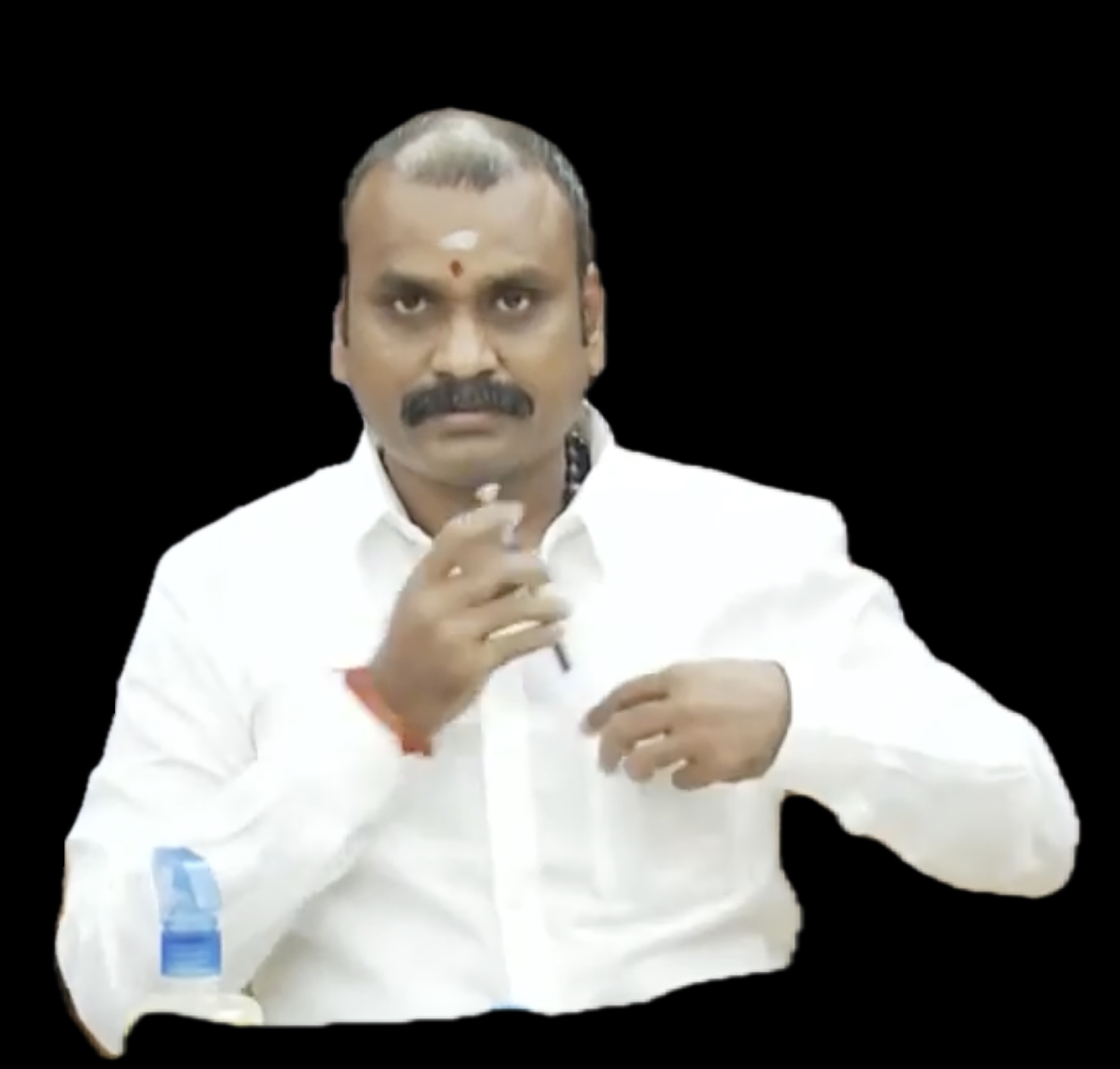
    Minister of state for information & broadcasting, L. Murugan effusively stepped up to say that Waves  2025 will open  the door  “to joint ventures, co-productions, and business expansion, enabling global media companies to engage with India’s creative sector.  We remain steadfast in creating a conducive environment for the M&E industry, supporting ease of doing business, content localisation, and infrastructure development.”

    Information & broadcasting secretary Sanjay Jaju revealed that the four-day extravaganza will feature multiple tracks designed to make waves across the industry:
    * A global media dialogue featuring ministers and policymakers
    * Thought leaders Track with knowledge-sharing sessions
    * Waves exhibition showcasing storytelling innovations
    * Bharat pavilion highlighting India’s media heritage
    * Waves  Bazaar to facilitate business networking
    * WaveXcelerator to back media startups with mentorship and moolah
    * Waves Culturals featuring performances that blend Indian and international talent

    Also present was  Maharashtra government chief secretary Sujata Sauni who exchanged a memorandum of understanding relating to Waves 2025 with Jaju. 

    The organisers are also playing up Waves 2025’s integration with the orange economy, positioning the summit as a catalyst for economic growth and job creation through creative industries.

    With Mumbai ready to throw open its doors to thought leaders grappling with issues from AI to streaming revolutions, intellectual property rights, misinformation, and media sustainability, Waves 2025 is gearing up to be the first summit of its kind to tackle these hot-button issues by promoting cultural diversity, innovation, and equitable access to media platforms.

    As the countdown begins, all eyes are now on whether this media matrimony can truly deliver on its lofty promise of becoming “the biggest unifying factor between country to country, people to people and culture to culture in the digital age.”

  • Waves anti-piracy challenge sparks digital security revolution

    Waves anti-piracy challenge sparks digital security revolution

    MUMBAI: Piracy is the digital equivalent of sneaky pickpocketing—except here, it’s entire films, shows, and creative works vanishing into the dark web. But India has decided to put an end to this digital thievery with the Waves anti-piracy challenge, an ambitious initiative aimed at safeguarding digital content in an era where technology evolves faster than your favourite streaming algorithms. Organised as part of the Create in India Challenges, this competition has drawn a staggering 1,296 registrations, proving that fighting piracy is not just a noble cause—it’s an urgent one.

    The challenge, backed by the ministry of information and broadcasting in partnership with the Confederation of Indian Industry (CII), zeroes in on fingerprinting and watermarking technologies to combat unauthorised distribution, piracy, and content manipulation. And it’s not just a contest; it’s a digital battleground where individuals, research teams, startups, and established organisations are vying to create the ultimate piracy-proof tech.

    A core segment of the World Audio Visual and Entertainment Summit (Waves), this anti-piracy initiative is set to unfold in Mumbai from 1-4 May 2025, where the global media & entertainment (M&E) industry will converge to witness the next wave of content protection. With four key pillars—Broadcasting and infotainment, AVGC XR (Animation, Visual Effects, Gaming, Comics, Extended Reality), digital media and innovation, and films—this summit is India’s bold declaration that it’s ready to lead the fight against digital piracy.

    Why does it matter? Because piracy is no longer just about grainy bootleg DVDs or sketchy torrent sites—it’s an evolving beast that threatens content creators and industries alike. The Waves Anti-Piracy Challenge is a clarion call to India’s brightest minds, encouraging them to develop indigenous solutions that will protect digital content integrity.

    The create in India challenges have already attracted over 73,000 registrations, a testament to the country’s booming interest in media security. With a clear focus on fingerprinting and watermarking, this initiative aims to:

    .  Provide a launchpad for homegrown companies to showcase their security solutions.

    .  Foster novel techniques that improve digital content traceability and protection.

     .  Ensure seamless integration of anti-piracy technologies into media workflows.

     .  Support the development of cutting-edge solutions addressing both current and future piracy challenges.

    Piracy has evolved from sneaky DVD sellers at traffic signals to sophisticated cyber operations threatening billion-dollar industries. India’s response? Unleashing an army of innovators through Waves. This initiative ensures that content creators—from Hindi cinema studios to indie game developers—can secure their intellectual property with robust, state-of-the-art technologies.

    As the Waves summit approaches, anticipation builds for the groundbreaking ideas that will emerge. Supported by industry leaders, policymakers, and tech pioneers, this challenge doesn’t just showcase innovation—it paves the way for real-world applications that will safeguard India’s digital future.
     

  • Priyadarshini Gaddam joins NMDC Board as director (personnel)

    Priyadarshini Gaddam joins NMDC Board as director (personnel)

    MUMBAI: Breaking barriers and setting new benchmarks, Priyadarshini Gaddam has officially stepped into her role as director (personnel) at NMDC. Appointed as a functional director on the board by the Ministry of Steel, her ascent is not just another appointment—it’s a statement. In an industry where leadership roles for women are still rare gems, she has carved out a path that others can follow.

    Before taking on this leadership mantle, Priyadarshini was the chief general manager (personnel & administration), overseeing NMDC’s corporate office in Hyderabad and NMDC Steel Ltd in Nagarnar. Her journey at NMDC began in 1992 as an executive trainee, and since then, she has climbed the ranks with sheer grit and a relentless drive for progress. If ever there was a masterclass in rising through the ranks, she’s the one teaching it.

    Over her three-decade-long tenure, Priyadarshini has championed workplace safety for women, pushed for equal opportunities for marginalised communities, and set new benchmarks in employee welfare at NMDC. She has played a pivotal role in revolutionising industrial relations, recruitment, medical policies, and stakeholder management. Her ability to negotiate wage settlements and her representation of NMDC in the second pay revision commission led to milestone outcomes that shaped the company’s employee policies.

    Her leadership took centre stage at NMDC Steel Limited (NSL), where she spearheaded the R&R policy, advocated skill development initiatives, and swiftly established crucial facilities like the fire department, occupational health centre, and primary health centre. The result? A safer, healthier, and more empowered workforce.

    An alumna of Osmania University, Hyderabad, Priyadarshini holds a postgraduate degree in social work (personnel management and industrial relations) and an LLB. With her at the helm, NMDC is gearing up to aim higher, work smarter, and redefine leadership in the mining industry. 

  • TRAI defends key recommendations on telecom service authorisations framework

    TRAI defends key recommendations on telecom service authorisations framework

    Department of Telecommunications (DoT) regarding several aspects of its September 2024 recommendations on the framework for service authorisations under the Telecommunications Act, 2023.

    The response follows a back-reference from the DoT dated 14 January 2025, in which the government indicated several of TRAI’s original recommendations from September 2024 may require modification or might not be accepted.

    The regulatory exchange began in June 2024 when the DoT requested TRAI’s input on terms, conditions and charges for telecommunications service authorisations under the new Act. After consultations with industry stakeholders, TRAI submitted its initial recommendations in September last year.

    Having examined the government’s concerns, TRAI has now finalised its reconsidered position. The complete response has been published on the TRAI website.

    In a detailed document, TRAI has stood firm on several key recommendations that the DoT had expressed reservations about, particularly regarding the structure of service authorisations.

    The regulator defended its position on introducing separate authorisations for satellite-based telecommunications and Machine-to-Machine (M2M) services, rejecting the DoT’s suggestion to integrate these within broader service categories. TRAI argued that separate authorisations would better promote investment and operational focus in these niche segments.

    “To attract business entities to enter the relatively underdeveloped satellite-based telecommunication service segment in the country, and to preserve the business focus of such entities, a separate service authorisation is necessary,” TRAI stated in its response.

    The authority also reiterated its recommendation that for any substantive changes to authorisation terms and conditions, the Central Government should seek TRAI’s recommendations, emphasising the importance of regulatory stability in a capital-intensive sector.

    Additionally, TRAI maintained its position on the need for sub-circle level authorisations to enable smaller service providers to operate efficiently within limited geographic areas.

    To read the full TRAI rebuttal please click here.


  • Hack the ad spend: AAAI challenges marketers to optimise budgets smarter

    Hack the ad spend: AAAI challenges marketers to optimise budgets smarter

    MUMBAI: The advertising world is no stranger to budgets vanishing into thin air. Enter the AAAI Ad Spend Optimizer Hackathon—an electrifying initiative under the Waves Create India Challenge, where number crunchers, data wizards, and marketing maestros are set to redefine ad spend efficiency. Hosted by the Ministry of Information and Broadcasting (MIB) in collaboration with the Advertising Agencies Association of India (AAAI), the hackathon promises to shake up the world of advertising analytics.

    With 35 eager teams—one even joining from overseas—this hackathon is gaining serious traction. Slated to be a part of the much-anticipated World Audio Visual & Entertainment Summit (Waves), the event is set to unfold from 1–4 May 2025 at Mumbai’s Jio World Convention Centre & Jio World Gardens. With four core pillars—broadcasting & infotainment, AVGC-XR, digital media & innovation, and films—Waves aims to be the melting pot for India’s growing media and entertainment industry.

    The hackathon falls under the broadcasting & infotainment segment, drawing participation from young professionals in advertising, marketing, and tech. Their mission? To use predictive analytics, machine learning, and statistical modelling to optimise ad spend and supercharge marketing ROI.

    This is no cakewalk. The challenge is open to professionals with at least a year of experience in advertising, marketing, or data science. Solo players or teams of up to three can compete, bringing together expertise in data science, machine learning, statistics, and software.

    Their task? To devise an ad spend strategy for TrimMaster, a leading male grooming brand with its flagship PrecisionTrim trimmer. Despite its popularity, the brand is struggling to push its awareness to the next level. Currently, TrimMaster’s unaided awareness score sits at 52. The goal? A solid 75. With a budget of Rs 2 crore, participants must craft a strategy that not only maximises visibility but also delivers measurable impact.

    TrimMaster

    TrimMaster’s marketing team faces an uphill battle, including:

    . Effective budget allocation: Deciphering the best mix of social, search, display, and video ads while accurately measuring impact.

    .   Measuring brand lift: Developing better metrics to gauge how digital ads truly influence brand perception.

    .   Maximising ROI: Ensuring every rupee spent results in substantial brand awareness and sales growth.

    .   Cross-channel synergy: Understanding how different platforms interact and influence each other.

    Winners won’t just bask in glory. The top three teams will present their strategies at Waves, with travel expenses covered. On top of that, the champions will get a chance to attend major advertising festivals and conferences in India, fully sponsored by AAAI. Oh, and let’s not forget the bragging rights.

    AAAI

    The AAAI Ad Spend Optimizer Hackathon is not just another competition. It’s a unique opportunity for professionals to challenge the norms, innovate ad spend strategies, and help brands like TrimMaster break through the noise. With artificial intelligence and data analytics at their fingertips, participants have the tools to redefine advertising in India and beyond.

    Think you’ve got what it takes? Get ready to crunch numbers, outsmart competitors, and craft the future of ad optimisation.