Category: Regulators

  • Radio goes visual to fight threat from digital technology

    Radio goes visual to fight threat from digital technology

    SINGAPORE: Radio has been an audio medium for over 100 years, but the world is now moving towards digital technology and becoming increasingly visual. Consumers are being offered richer and more interactive media experiences, via digital television, broadband internet and mobile telephony.

    Mobile television has become a reality with the launch of services in Korea, the UK and Germany and the mobile internet experience is becoming ever more sophisticated. A number of different developments should happen in order to diversify radio delivery without compromising its unique core values.

    GCap Media digital content manager Nick Piggott dwelled on things that went into making radio a visual medium.

    Said Piggot, “By which I mean, what radio as a visual medium means, how it might happen, and what evidence exists to make such a bold claim.”

    “With this, the unique attributes of radio; personal, portable, pervasive, are under more pressure than ever before. The addition of a visual component to radio adds a new dimension to radio listening, but it should be done sympathetically to avoid undermining radio’s strength as a secondary consumption medium. A variety of ways exist to visualise of radio, and research exists to support the introduction of this new experience,” he said.

    The internet can provide limitless opportunities to enhance radio. While most radio stations streams their audio over the internet, and most now include the playing song information, very few use the rich media capabilities of a browser to enhance it, and commercialise it, with effective visualisation.

    “The internet is increasingly going mobile; mobile phones have fantastic colour screens, connectivity and can pick radio up either via FM, DAB Digital Radio or streaming over 2.5 and 3G networks. The mobile phone displaced the portable radio as the most ubiquitous personal device a very long time ago, and we probably haven’t been as active as we should have been to get back onto such a widely owned device. Mobile internet is predicted to grow hugely over the next year from 1.2 billion to 2.3 billion page impressions per month in the UK,” he emphasised.

    On the other hand, the arrival of DAB Digital Radio has provided another opportunity for visual accompaniment, and whilst DAB is capable of supporting some very sophisticated visualisation techniques, receivers only implement text information, which is known as DLS – Dynamic Label Segment.

    “However, text is not the end of the journey for radio entering visualisation. It is just the beginning of a finely timed dance between us, our listeners and device manufacturers. Adding better displays to radios will be expensive, and we need to educate and inform our consumers on the value of visuals so that they can make an informed decision when buying a receiver, and make a choice to pay more for a receiver with a bigger screen knowing that it’s going to give them more real value. Once we’ve moved listeners to better mono screens showing text only, we’re on the way to colour screens showing graphics – but it’s one step at a time,” Piggott cautioned.

    So how do we persuade a listener to pay more for their radio, or to choose a device that has got radio with visuals over one that doesn’t? “Two things are true. No amount of great technology will make bad content better. And radio programmers need a lot of persuading to divert any attention or resource away from what comes out of the loudspeaker. Radio works on very short-term targets, with survey results every 4-12 weeks, so trying to get a programmer to think about something that might need two-three years to develop is a big ask,” he said.

    While the demand for visual radio is there, it needs to be commercialised too in order to generate additional revenue. “One starting point for understanding the value of this proposition is to identify the value in adjacent opportunities and extrapolate that out,” he said.

    In the UK, The Outdoor Advertising Association (OAA) and the Radio Advertising Bureau (RAB) have co-operated to study the effectiveness of a campaign that combines radio and outdoor images. Their conclusions are that the two media are entirely complimentary and that a combination of the two accelerates the learning of new brand messages.

    “It also reconfirms that radio continues to have the lowest ad-avoidance rating of most mainstream media, with only 16 per cent of radio listeners categorised as “Ad avoiders,” compared to 68 per cent for newspapers and 44 per cent for TV.

    Piggott said that studies showed that people were more likely to look at a screen to know about something they are interested in. “So from an advertising point of view, it appears that visual radio can be positioned as extending the benefits of combining radio with on-line and outdoor, and benefit from the methodology used to measure the delivery on outdoor video screens. UK figures show that advertisers spent as much on on-line advertising in 2005 as they did on radio (£ 624 million); the outdoor digital screen market isn’t reported separately yet, but is estimated to be worth about £ 34.5 million in 2006,” he said.

    “We don’t have time on our side. We can’t wait much longer. If the consumer demand for visual accompaniment continues to grow, and the traditional radio companies don’t provide it, someone else will,” he added.

    In conclusion, he said, “Media is going through unprecedented change created by technological innovation. Radio has the opportunity to create a new visualised radio product that listeners want and like and use, but needs to create some technology to make it happen. We haven’t been very good at that in the past, and there are no guarantees that new entrants won’t be far better at it than incumbents. The lines of battle in the radio business are broadening and the smart will deploy some troops there now.”
  • Delhi High Court restrains 92 cable operators from unauthorised telecast of World Cup

    Delhi High Court restrains 92 cable operators from unauthorised telecast of World Cup

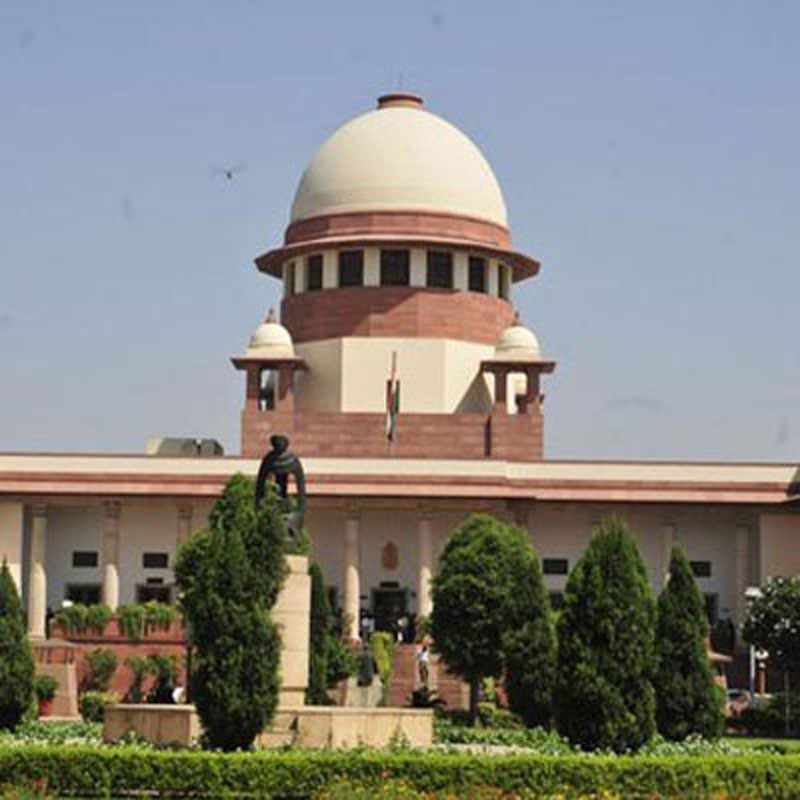
    NEW DELHI: The Delhi Court granted stay to ESPN Star Sports, the official broadcaster of the Fifa World Cup, in favor of its application for a civil suit filed against 92 cable operators across the country for unauthorised broadcast of the Fifa World Cup restraining all the cable operators from showing Fifa through any other channel other than ESPN Star Sports.

    The channel has an exclusive deal with Fifa to telecast all the matches of the Fifa World Cup in territory of India. After this order anyone still showing FIFA World Cup through any other channel will be held in contempt of court and liable for prosecution, says an official release.

    Elaborating on this, ESPN Software India Pvt Ltd AVP Affiliate Sales Rajesh Kaul says, “No other channel, whether pay, free to air or terrestrial is authorised to provide, show or distribute the Fifa World Cup Germany 2006 in the territory of India. Also carriage, reception or distribution of the Fifa World Cup Germany 2006 by any MSO, Cable Operator, Sub-Operator without written authorization from ESPN Star Sports is a violation of copyrights and hence an illegal activity. Strict and legal action will be taken against the operators who violate the court orders. Post the order; police raids have already been started.”

    The 92 cable operators restrained from the unauthorized telecast are from Tamil Nadu, Jharkand, Maharashtra, Gujarat, Assam, Tripura, Karnataka, Kerala, West Bengal, Bihar and Punjab, adds the release.

    “The 92 cable operators across the country were broadcasting by means of wireless diffusion the services of free to air international channels like TV 5 Cambodia TV, CC5 Channel, CCTV1, Super Sports, Multi-choice and Dream Satellite, thereby infringing the copyright of ESPN Star Sports. Today after an application in the Delhi High Court, the judge has restrained these operators from carrying and distributing the World Cup by any means whatsoever, without authorized permission from ESPN Star Sports. Operators showing the Fifa World Cup through other channels should stop this to avoid legal court action,” adds Kaul.

  • Trai drafts standardised interconnect regulations

    Trai drafts standardised interconnect regulations

    NEW DELHI: In a bid to streamline the cable industry, sector regulator today released the proposed standard forms of interconnect agreements for CAS areas between broadcasters and multi system operators and between MSOs and local cable operators (LCOs).

    The reason for this being suggestions from the industry stake holders to the government that a standard form of interconnect agreements be formulated.

    On 10 March, 2006 the Delhi High Court had directed the government implement CAS in Kolkata, Delhi and Mumbai within a month’s time.

    Subsequent to this order, a series of meetings were taken by the information and broadcasting ministry.

    Taking note of suggestions emanating from the meetings, the Telecom Regulatory Authority of India (Trai) has decided to finalise a standard format for interconnection agreements for CAS in consultation with the industry.

    Accordingly, a draft of the standard forms has been placed on the website of Trai today. The draft agreements contain a number of sections and provisions.

    One of them relate to revenue sharing. The actual revenue share percentages have been left blank in the draft and are proposed to be filled up after getting comments of the stakeholders.

    Trai has also asked for feedback on the following:

    •Should there be a uniform revenue share percentage between all broadcasters and MSOs and MSOs and LCOs. If yes, what should be the revenue share percentages? What is the methodology, data and principles on which these are based?

    •Should the revenue share percentages be different for different broadcasters? If so, should the rates for different broadcasters prevailing in Chennai be adopted in other CAS notified areas?

    •Is there any other alternative method of arriving at the revenue share?

    A draft regulation has also put on the website for comments containing the provisions for the standard agreements as well as a clause for prohibiting minimum subscriber guarantee. The deadline for sending comments is 27 June.

  • Trai proposes to amend Cable TV Act

    Trai proposes to amend Cable TV Act

    NEW DELHI: Broadcast and telecom regulator proposes to amend the Cable Television Networks (Regulation) Act, 1995 and the existing telecom licenses to facilitate growth of IPTV services in the country.

    The Telecom Regulatory Authority of India (Trai) today released the proposed amendments in the Cable Television Networks Act and other material for industry feedback.Giving the reasons for this proposed amendment, which will have to be okayed by the government, Trai said, “During consultation process on issues relating to convergence and competition in broadcasting and telecommunications, certain problems were pointed out, which are likely to arise if IPTV services are to be governed by the existing Cable Television 
    Networks (Regulation) Act, 1995.”

    It added, “The possible solution for resolving the regulatory problems is amending the existing telecom licenses and the Cable Television Networks (Regulation) Act, 1995.”

    After holding a series of meetings with various stakeholders on the issues involved, Trai has finalized a draft of the proposed amendments in relevant rules.It had been pointed out that the following problems are likely to arise if IPTV services are to be governed by the existing Cable Television Networks (Regulation) Act, 1995:

    i. Technological requirement of IPTV to deliver content through a set top box leads to non-compliance with the requirement of Section 4A of Cable Television Networks (Regulation) Act, 1995 about free to air channels not needing an addressable system.

    ii. Use of different protocols by different companies and lack of standardization for IPTV services violates the requirement of Section 9 of the Cable TV Act about use of equipment conforming to Bureau of Indian Standards.

    iii. Applicability of FDI norms, downlinking guidelines and programme codes on a unified licensee providing IPTV services with same content as cable TV needs clarification.

    Trai said that the problems have come up as the Cable Television Act was formulated when IPTV service was not even conceived.

    One of the amendments proposed by the regulator includes defining `cable service’ as means the transmission by cables of programmes including retransmission by cables of any broadcast television signals, but does not include video service offered under Unified Access Service Licence by the Unified Access Service Licence holders on their networks.

    This part is aimed at keeping IPTV services outside the definition of “cable services” so that such service would not get hit by Section 4A(6) of the Cable Television Act on basic tier programming not requiring a box.

    The details of the proposed amendments are available on the regulator’s website, www.trai.gov.in, for feedback from the industry.

  • FM radio: PMO forwards grievances to I&B

    FM radio: PMO forwards grievances to I&B

    NEW DELHI: The Prime Minister’s Office (PMO) has forwarded the grievances of private FM radio operators in India to the information and broadcasting (I&B) ministry for “appropriate action.”

    Pointing out that it is a “positive step,” the Association of Radio Operators of India (AROI) convenor and CEO of BAG Films radio division Rajiv Misra said, “We have received a communication from the PMO, which has not struck down our demands.”

    Misra added that the PMO has forwarded the demands of the nascent FM radio industry to the nodal ministry for suitable and appropriate action on the matter.

    The demands of AROI included permission for news and current affairs programming on private FM radio stations and rationalization of music royalty fee, which has been termed by the radio industry as “too high” and “arbitrary.”

    A FM radio operator termed the development as a “step forward”, adding that the I&B ministry is likely to be more receptive to the idea of news on private radio stations once it has heard from the PMO.

    The government and the Union Cabinet have been divided over the issue of news on private radio stations with one section saying that if this is allowed, it could compromise national security as monitoring of all FM radio stations all the time could be a Herculean task.

    However, a government panel under the chairmanship of Ficci secretary-general Amit Mitra had recommended giving the green signal to news on private FM radio stations as it would bring about variety in programming and is a standard global norm.

    Meanwhile, AROI is continuing to negotiate with music industry bodies to rationalize music royalty fee.

    The I&B ministry, however, has washed its hands off the music fee issue, saying the matter relates to IPR, which is in the domain of the human resources development (HRD) ministry.

    The HRD ministry, these days pre-occupied with reservation-for-backward-classes-in-educational-institutions issue, hasn’t reacted too warmly to AROI’s presentation on high music royalty.
     

  • Trai’s Open House to discuss commercial tariff for broadcasting and cable TV

    Trai’s Open House to discuss commercial tariff for broadcasting and cable TV

    Subject: Open House Discussion and posting of Gist of Comments on issues relating to Commercial Tariff for Broadcasting and Cable Television Services.

    The TRAI will be holding Open House Discussion (OHD) on issues relating to Commercial Tariff for Broadcasting and Cable Television Services. The OHD will be held on 25.5.2006 at the Banquet Hall, 3rd Floor, Ashok Hotel, Chanakyapuri from 11.00 Hrs to 13.30 Hrs.

    2. The consultation paper issued on 21.4.2006 on the issue and gist of comments received from stakeholders on the consultation paper are available on TRAI’s website www.trai.gov.in. The consultation paper can be seen by using the link
    http://www.trai.gov.in/trai/upload/
    ConsultationPapers/71/consult21apr06.pdf.
    The gist of Comments can be seen using the link
    http://www.trai.gov.in/whatnew.asp and
    http://www.trai.gov.in/pressreleases_list_year.asp .

    3. The Issues posed for consultation will also be available at the venue of the Open House Discussion. All interested agencies /individuals are invited to participate. For any clarification, please contact Shri Rakesh Kacker, Advisor (B&CS), Ph 011-26713291, Fax no 011-26713442, E-mail:
    rkacker@trai.gov.in

  • I&B minister to take CAS review meeting

    I&B minister to take CAS review meeting

    NEW DELHI: Information and broadcasting minister Priya Ranjan Dasmunsi will review developments on CAS vis-a-vis court cases.

    The meeting was scheduled to happen either today or early next week. Pointing out that the government is committed to implementing CAS, Dasmunsi told indiantelevision.com on Friday, “I’ll review CAS in a meeting and try to understand the issues that have beset it.”

    The minister however, refused to spell out in detail his agenda on CAS. “The ministry’s broad stand on CAS has been conveyed to the (Delhi) high court.”

    In a reply filed before the Delhi HC some days back, the government sought eight to nine months’ time to implement the court’s order on rolling out addressability in Indian cable homes in select cities.

    Dasmunsi also hinted that a big roadblock in the way of smooth implementation of CAS are the different voices in which the various industry stakeholders are speaking.

    “There hardly seems to be a consensus amongst them,” the minister said on the sidelines of a book release function in the capital.

    On 10 March 2006, the Delhi HC had directed the government to roll out CAS in Delhi, Mumbai and Kolkata within 30 days time.

    The directive came on a petition filed by a bunch of MSOs, including Hathway and INCablenet, alleging that a delay in implementing CAS since 2004 has resulted in huge financial losses to them.

    The I&B ministry held a series of meeting with the industry, NGOs and consumer bodies soon after the court order, but said in view of inconsistency in the approach of the stakeholders, more time would be needed to iron the differences.

    The next date of hearing of the CAS case is 24 May.

  • I&B ministry helpless on high music royalty

    I&B ministry helpless on high music royalty

    NEW DELHI: The government has literally washed its hands off radio FM players’ plea on high music royalty fee.

    In the absence of a single collection agency for music rights fee from FM radio stations, mangers of the 287-odd new FM frequencies had asked the government to intervene and help form a single company for music rights collection as this vexed issue was threatening to throw many a business model off gear.

    An official of the information and broadcasting ministry said, “The issue relates to IPR, which is in the domain of the human resources development (HRD) ministry. We cannot intervene on every aspects of a business.”

    The official added that the concerns of the private radio FM operators have been conveyed to the HRD ministry and now it’s up to it to do address the issue.

    Explaining further the I&B ministry’s helplessness in this regard, the official said, “Our business is to frame a regulatory framework. We cannot really help if other aspects of the business (in this case FM radio) fall within the jurisdiction of other government agencies.”

    Why is the music rights issue snowballing into a major controversy? First, multiplicity of organizations that claim to be protecting the rights of performing artistes and their works and second, the absence of a regulator, which could go into such matters in details quickly to come out with feasible solutions.

    For the FM radio companies, the music rights fee could well range between Rs 1.2- Rs. 1.5 billion this year and could touch Rs 7 billion by 2010 as operations expand and new programming lineups are rolled out.

    The new FM operators have also urged the I&B ministry to help rationalise the music right rates for A+, A, B, C and D category cities on the lines of target population as opposed to the fixed fee regime currently practiced.

    According to the Association of Radio Operators of India (AROI), since the levels of operations would differ from city to city, paying a flat fee for music rights for smaller players would not make business sense.

    According to AROI convenor Rajiv Misra, if a FM operator with a licence in Hissar (population approximately 150,000) in Haryana state, for example, pays Rs. 5 million as music royalty for basically film and Indipop songs, the “overheads would increase dramatically.”

    AROI had suggested in a petition to the I&B ministry that music fees should be graded on the lines the cities had been graded for licences, depending on socio-economic factors.

    Presently, to access music, fees have to be paid to the Phonographic Performance Limited (PPL) for sound recordings, Indian Performing Rights Society (IPRS) for musical works and T-Series, a music company that has a huge library of film and devotional music.

    Because most FM radio stations depend heavily on film music, T Series, which began as a small company manufacturing cover versions of popular Hindi film songs, commands the leading market share of over 50 per cent.

    The I&B ministry official while expressing helplessness in intervening in such issues, said these are commercial deals that the industry players should try to sort it out themselves instead of approaching the government.

    Meanwhile, the ministry also made light of AROI’s protest against satellite radio operator WorldSpace seeking clearance for technology that would help it to broadcast terrestrially.

    Pointing out that the government is looking into the issue of WorldSpace, the ministry official said, “Private FM radio operators had existed earlier also and had competed well against satellite radio service. Why is this hue and cry now suddenly when the government hasn’t given any clearance to WorldSpace (to broadcast in the terrestrial mode)?”

  • Former I&B minister Pramod Mahajan shot at by brother, remains critical

    Former I&B minister Pramod Mahajan shot at by brother, remains critical

    MUMBAI / NEW DELHI: Senior BJP leader and former information & broadcasting (I&B) minister Pramod Mahajan was shot this morning (Saturday) and remains in a critical condition.

    Mahajan was shot at by his youngest brother Pravin with a Brownie pistol after an argument at the BJP leader’s apartment in Mumbai’s upscale Worli area at around 8 am, news channels have reported.
    The 56-year-old former I&B minister reportedly has four bullets lodged in his body and has suffered grievous injury to his liver, pancreas and intestines. He underwent a nearly four-hour operation at Mumbai’s Hinduja Hospital where he was administered nearly 25 bottles of blood due to the heavy internal bleeding he suffered in the attack. Doctors have not removed the bullets yet and will take a call on that only after keeping him under observation for the next 48 hours.

    It was on Mahajan’s watch that Star India in 1998-99 made its first concerted effort to get a direct-to-home (DTH) broadcast service going with its ISkyB venture. Mahajan had in end-1998 indicated that DTH clearances would come within two-and-a-half months.

    Doordarshan’s news channel is also a brain child of Mahajan, who floated the idea in 1999. The idea of starting such a channel was mooted immediately after the BJP came to power in March 1998. Mahajan gave the green signal for starting the channel after he became I&B minister in December.

    It was also Mahajan who got the idea to upgrade the facilities of Kashmir DD centre to counter Pakistani propaganda unleashed by Pakistan’s state broadcaster PTV in 1999-2000. Though a dedicated Kashmir channel was started with the help of private broadcasters when Arun Jaitley became the I&B minister after Mahajan in 2000, the former had sanctioned a $100m package for the upgradation of DD Kashmir’s centre.

    After Mahajan was shifted to the telecom ministry, holding also the infotec portfolio, he expressly scotched an idea of merging the telecom and I&B ministry to form an ICE ministry for the proposed convergence era.

    It is not wise to make one out of three important ministries of telecom, information and broadcasting and information technology, especially in view of the amount of work involved and number of employees associated, Mahajan had said while opposing a merger of the three ministries.

  • Film & TV Producers Guild submits draft for proposed Entertainment Export Promotion Council

    Film & TV Producers Guild submits draft for proposed Entertainment Export Promotion Council

    MUMBAI: Standing by its commitment to strive for the welfare of the entertainment industry at large, the Film & Television Producers Guild of India Ltd. recently submitted the draft for the proposed Entertainment Export Promotion Council to the Information & Broadcast Ministry.

    The Guild had received a notification from the Information & Broadcasting Ministry with a request to consider the finer details of forming a Special Export Promotion Council for the entertainment industry as suggested by the ICE (Information, Communication and Entertainment) Committee recently constituted by the Prime Minister’s Office. The Guild had been advised to give its proposals in accordance with the requirements of the Department of Commerce, states an official release.

    Accordingly, the Guild has set up a Sub-Group comprising representatives of eminent members having specialization in exports. At their first meeting, members of the Sub-Group had extensive deliberations on the subject, transpiring in the finalization of the draft.

    This draft was formally presented to the Information & Broadcasting Ministry recently by the Guild president Amit Khanna at a meeting in Delhi. The Ministry urged for some time to scrutinize the draft but readily assured the Guild president that the proposed Entertainment Export Promotion Council would be formed under its auspices.

    This development establishes the strong foothold occupied by the Guild in the eyes of the establishment.

    Established in 1954 by the stalwarts of the Indian film industry, The Film & TV Producers Guild is today the most progressive body in show business. From the studio barons like Yash Chopra and Subhash Ghai to the new diversified media companies like UTV, Nimbus, Zee, Sahara and Adlabs. From the leading TV production houses like Star TV, Sony, TV Today, NDTV, TV Eighteen, BAG Films to the young turks like Ashutosh Gowariker, Karan Johar, Farhan Akhtar, Rohan Sippy are all symbols of the Indian filmed content. Offering genuine stakeholders in the business an opportunity to work for the betterment of the entertainment industry, the Guild is now the cornerstone of Indian entertainment.